
Vierville during the German occupation
Michel Hardelay’s recollections introduce life in occupied Vierville alongside photographs of the village and beachfront taken before the landings.
The Yves Cordelle collection · 63 documents
Residents’ memories, military accounts, journalists’ reports and documents shared by families. Each text records a particular experience, with its author and sources.
Michel Hardelay’s recollections introduce life in occupied Vierville alongside photographs of the village and beachfront taken before the landings.
Letters and recollections describe Vierville at the beginning of the war, including mobilisation, evacuated children and relations under occupation.
Jean-Paul Hausermann recalls Hans, a young German soldier in Vierville, life under occupation, the events of June 1944 and their reunion after the war.

Michel Hardelay recalls everyday events in Vierville on the two days before the landings, including the parish’s first communions on Sunday 4 June.
Edmond Scelles, who was sixteen in June 1944, describes occupied life around the Prieuré at Saint-Laurent before recounting the landings elsewhere in the collection.

Michel Hardelay recounts the night before the landings and the first hours of 6 June, with sketches and editorial notes comparing his remembered timings.

Recollections of the Coliboeuf family describe the night and dawn of 6 June at Vierville’s former station, with family photographs and local context.

Extracts recount the Piprel family’s experience around the Hôtel du Casino and Vierville during the night of 5 June and the morning of D-Day.

The De Loÿs family’s account describes D-Day at the château de Gruchy, where family rooms shared the building with a German company headquarters.

Fernand Olard recalls D-Day as a five-year-old child in a large family living on Rue Pavée in Vierville, with preparations to shelter from bombing.
Lucille Hoback recalls the news received by her family in Bedford, Virginia, after her brothers Bedford and Raymond landed with Company A/116 at Omaha Beach.

Michel Hardelay recounts the arrival of the first American soldiers in Vierville, with sketches and photographs locating houses, shops and streets in his account.

Marguerite Dubois and her daughter Jeanine recall the first American soldiers passing their farm west of Vierville, after watching the crowded sea and seeking shelter.
Schoolteacher Victorine Houyvet recalls an unexpected encounter with an American soldier at the Vierville school after a sleepless night of bombardment on 6 June.
Bernard Lecornichon recalls bombardment, family shelter and an encounter with American soldiers near Vierville, drawing on his experience as a nine-year-old child in 1944.
Madame Ygouf describes leaving her home at Les Isles with her children and household, then sheltering through the bombardment and fighting around Vierville.

Michel Hardelay recalls the afternoon and evening of 6 June in Vierville, with meals interrupted by shellfire and brief periods of relative quiet.

Charles Lepelletier's account recalls 6 June 1944 at Englesqueville-la-Percée, preserving a local mayor's personal testimony of the landings and their effects.

Michel Hardelay recalls Vierville on the morning of 7 June, accompanied by photographs of ships offshore, the village crossroads and local wartime scenes.
The Piprel family recalls 7 June at L'Ormel and Vierville, including the careful transport of a wounded American soldier towards a medical aid post.

Michel Hardelay records events at Vierville bus station on 7 June, drawing on the Coliboeuf family's memories of searches, shelter and identity checks.

Charles Lepelletier recalls 7 June at Englesqueville and a journey to Vierville, with uncertainty over the date of his search for an American doctor.
The de Loÿs family's memories describe events at Gruchy château around 7 June, with an editorial note explaining the uncertainty in dating an encounter.

Michel Hardelay recalls the afternoon of 7 June in Vierville, preparations to evacuate civilians and the shelling of the village crossroads that evening.

Press extracts published in June 2001 relate the story of American serviceman Joe Bossi, who was billeted at the Ferme des Isles in Vierville.

Michel Hardelay recalls evenings near Omaha Beach, antiaircraft procedures, barrage balloons and the daily hazards surrounding the developing harbour.
A letter dated 23 June 1944 passes on indirect news from Vierville to people cut off from the village, identifying the witnesses on whom its account relies.
Michel Hardelay recalls exploring Vierville on 8 June, alone and with Captain Gardiner, amid air alerts, harbour construction and the aftermath of the fighting.

Michel Hardelay recounts a visit to the Manoir de Than and Le Vaumicel with Captain Gardiner on 8 June, with photographs and notes on the German positions.

Michel Hardelay recalls travelling towards Vacqueville on the afternoon of 8 June, searching for a borrowed bicycle and observing the consequences of the fighting.

Michel Hardelay describes Vierville from 9 June onwards, with an account involving the damaged church tower and views of the village crossroads.
Canon Bertreux's account describes the battle of Trévières, with bombardment, fires, civilian flight, casualties and efforts to care for the wounded.
Hans Heinze describes D-Day from the perspective of a young German officer serving with the 916th Infantry Regiment near Formigny and Omaha Beach.
Private Wegner’s recollections place a German machine-gunner near WN72 at Vierville as troops watched the Channel and prepared for a possible Allied landing.
Franz Gockel recalls service with the 726th Infantry Regiment at Colleville before the landings, including billets, letters home and contact with residents.

Franz Gockel recalls the alert and fighting at WN 62 on 6 June 1944, offering a German soldier's personal account from the Colleville strongpoint.

Royal Navy officer George “Jimmy” Green recalls leading the LCA flotilla that carried Company A of the 116th Infantry towards Dog Green on D-Day.

Extracts from S. L. A. Marshall’s Battle at Best recount the landing of Company A/116 and its devastating consequences for men from Bedford, Virginia.
Extracts from Stephen Ambrose’s D-Day bring together accounts concerning Company A/116, including a Navy beachmaster’s observations as landing craft reached Vierville.
Thomas Valence and George Roach describe the approach and landing of their Company A/116 section, recalling rough water, exposed obstacles and unseen defensive fire.

Radio operator Robert “Bob” Sales recounts landing with Captain Zappacosta and Company B/116, describing the fire on the ramp and his struggle to reach cover.
Lieutenant Nance describes landing with Company B’s command boat while accompanying men of Company A/116, and his shock at the losses on the beach.
Sergeant Bill Presley’s account describes reaching the sea wall with a small group and using a recovered radio to request naval fire on a rocket battery.
Interviews conducted by Lieutenant Shea after the battle record Company C/116’s planned boat organisation, special assault sections and movement towards its objectives.
Sergeant Robert Slaughter recalls the approach to Omaha Beach with Company D/116, including shellfire and an argument over taking the loaded craft closer to shore.

Sergeant Felix Branham of Company K/116 recalls the rough crossing, the approach to Dog White and the fire striking his craft as it neared the beach.

Lieutenant Bob Edlin recalls the landing of Company A, 2nd Ranger Battalion, describing a grounded craft, deep water and casualties before reaching the shore.
Members of the 5th Ranger Battalion describe leaving their landing craft, reaching the shingle and encountering scattered assault troops already on the beach.
Don McCarthy of the 1st Battalion, 116th Infantry, recalls his LCA taking on water and capsizing before he swam towards the Vierville shore.
Coast Guardsman Seth Shepard’s English account describes the loss of LCI 92 and the crew’s experience on the Normandy beach after abandoning the burning ship.
Further extracts from Lieutenant Shea’s interviews follow Company C/116 from the beach towards Vierville, including the opening of passages through the wire.
Extracts from Stephen Ambrose bring together recollections of the 5th Rangers’ departure from the beach, the wire obstacles and encounters with General Cota.
Lieutenant Francis Dawson recalls the approach to Dog White, a mined obstacle narrowly avoided and the run towards the sea wall with Company D, 5th Rangers.
Captain Robert Walker recounts leaving the burning LCI 91 and climbing inland alone, finding equipment on the way and giving water to a wounded German soldier.

Sergeant Dube of the 121st Engineers recounts his approach to Vierville and the work associated with demolishing the anti-tank wall in the first part of his testimony.

Lieutenant George Itzel’s testimony describes the engineers’ work at Vierville’s anti-tank wall and the delivery of explosives by a bulldozer along the exposed beach.

Sergeant Dube recalls the night of 6–7 June and the German counterattack, with a sketch of a bivouac field whose exact location remains uncertain.

Sergeant Dube continues his account of fighting near Vierville on 7 June, with photographs of the Manoir de Than and a description of movement under cover.
Richard Willstatter, an engineering officer aboard LST 133, recalls treating casualties offshore and the ship's attempt to unload at Vierville on 7 June.
Captain MacGrath recalls landing with the 116th Regiment's communications group, displaced from the intended beach and faced with congestion and a rising tide.
Accounts by M. Conti and Miss Tierney concern Saint-Laurent airfield, including the engineers' search for a site, construction work and the first aircraft arrivals.
Ernie Pyle describes the human and material aftermath on Omaha Beach, observing the dead, sleeping soldiers, wrecked vehicles and damaged landing craft.
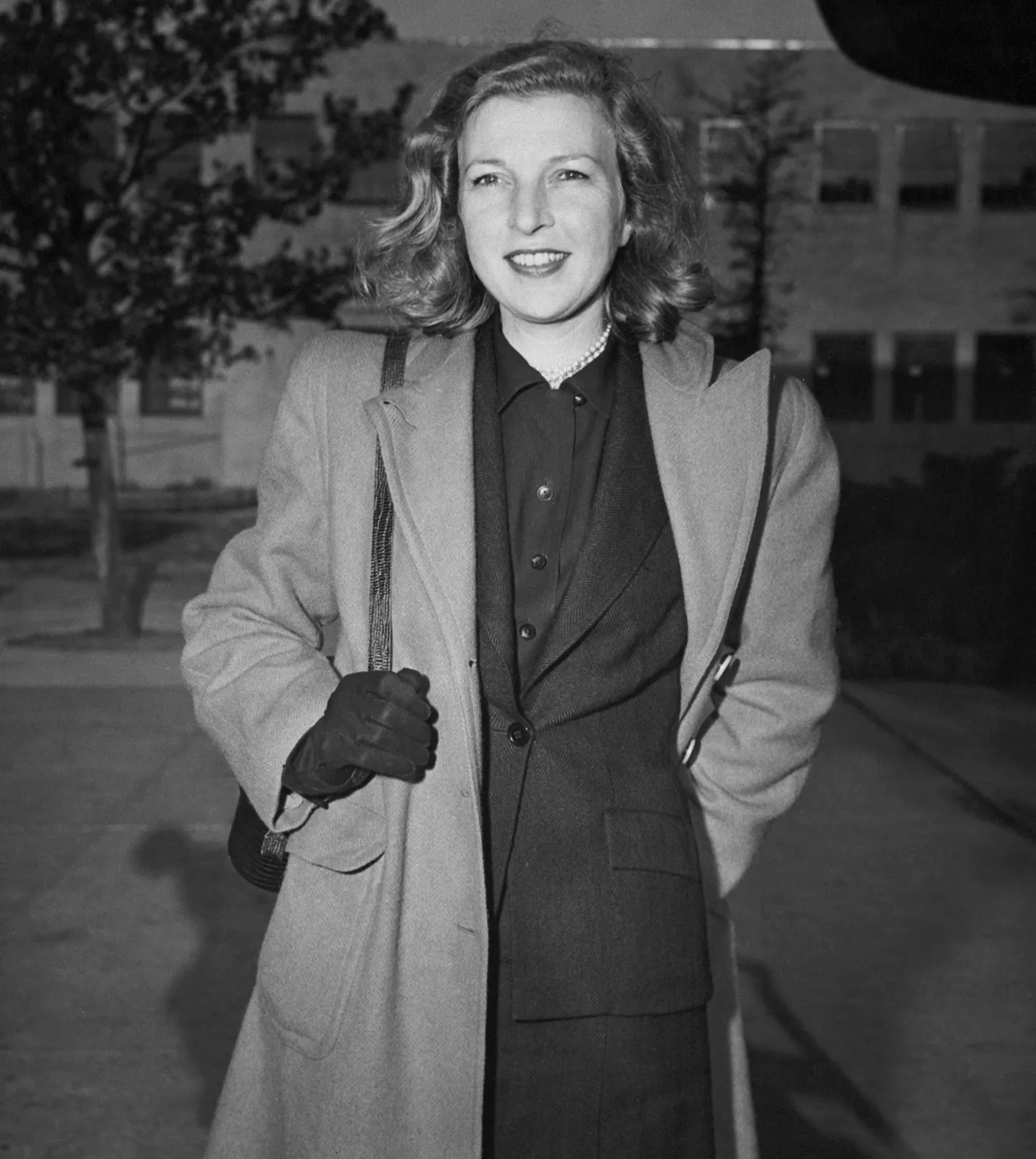
Martha Gellhorn’s report on evacuating the wounded from Normandy aboard a hospital ship, with a portrait, biography and historical context by Yohann Cordelle.