A word from Yohann
Passing on memory, preserving peace
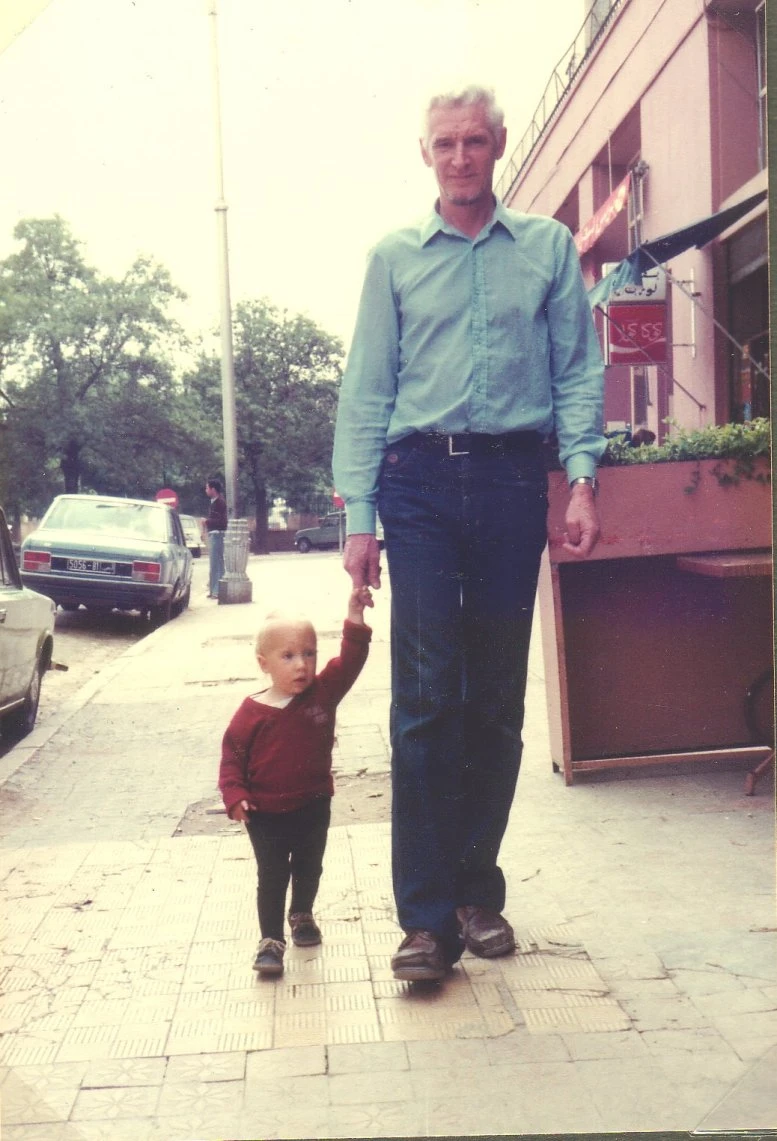
As a child, while playing with Lego, I would listen as my grandfather welcomed veterans and historians. I watched him open the large notebooks he had put together, filled with photographs, maps and witness accounts gathered over the years. He listened, asked questions and compared accounts.
My grandfather was passionate about the landings at Omaha Beach. As with everything that mattered to him, he approached the subject with great care and rigour.
To me, he was simply my grandfather, with his love of precision and detail. I had to grow older to understand that he had witnessed this history himself. He was fourteen when the Americans landed, and his family came from Vierville. The events he sought to understand had touched his own life.
There are different ways of studying history. Some historians cover long periods, tracing political movements, decisions and strategies across nations. Others devote their research to a place, a single day, sometimes just a few hours.
Yves Cordelle was one of the latter. He had not trained as a historian at university. He had thrown himself wholeheartedly into research, meeting witnesses, bringing documents together and comparing their accounts. His focus was Omaha Beach, D-Day and the following day.
By listening to survivors, he sought to reconstruct the precise sequence of events: who was there, where, at what time, and what each person might have seen or experienced.
It was patient, detailed work. A photograph had to be placed in its context. A witness account had to be compared with other accounts and sometimes questioned. Behind a unit name or a movement on a map, he looked for the people. Wherever possible, each person who had died should have a name again. Every account deserved to be heard with care.
He patiently collected and cross-checked the words of American and German soldiers, as well as those of local residents. Everyone was welcome in his home, in a spirit of reconciliation. He recognised the courage of those who fought while also showing the suffering, destruction and shattered lives. His interest in the landings remained deeply rooted in an awareness of the horror of war.
One memory often comes back to me.
For the fiftieth anniversary of the landings, he had received a pass to attend the commemorative speeches. I was fifteen. He said, “I’m old!”, then gave me his place. In his own way, with his familiar reserve, he wanted me to understand that it was my memory that needed nurturing. He already carried those events within him.
Today, I understand the significance of that gesture. He was giving me the chance to receive this history in turn. He was passing on something of his interest in those events, but also the responsibility to remember them.
My grandfather died two weeks ago. He entrusted me with his work, an intangible inheritance whose scale I am only beginning to understand.
I redesigned this website and made it available in other languages with that intention: to keep these documents accessible, so they can be read, studied and shared. Caring for this collection is also, for me, a way of sustaining our bond.
For a long time, the words “Never again” seemed self-evident to me. I grew up feeling that peace was secure. Today, I realise how fragile that feeling was.
The war in Ukraine fills me with anxiety. I think of people living under bombardment, separated families, children growing up in fear, those who lose a loved one, their home or their village. As I look through the documents my grandfather brought together, these lives being lived today also come to mind.
The rise of nationalism in France and other European countries deepens that concern. I see the growing emphasis on rearmament in Europe, when I so wish those resources could go towards education, care and everything that helps people live and understand one another.
We need peace. A peace that allows us to talk with one another as the distinct individuals we are, to listen to one another, and to grow up without fear of weapons.
My grandfather’s archives bring us back to the concrete consequences of war: people killed or wounded, homes destroyed, lives changed for years to come. They preserve traces of what human beings endured, achieved, lost and tried to rebuild.
This is the memory I want to keep alive, with gratitude to those who shared their experiences and with the concern for reconciliation that shaped those encounters.
May the collection my grandfather left behind help us become wiser, recognise what war destroys, and care for peace.