541
Memories of the De Loÿs family
June 7 at the château of Gruchy (2)

The movements of 7 June

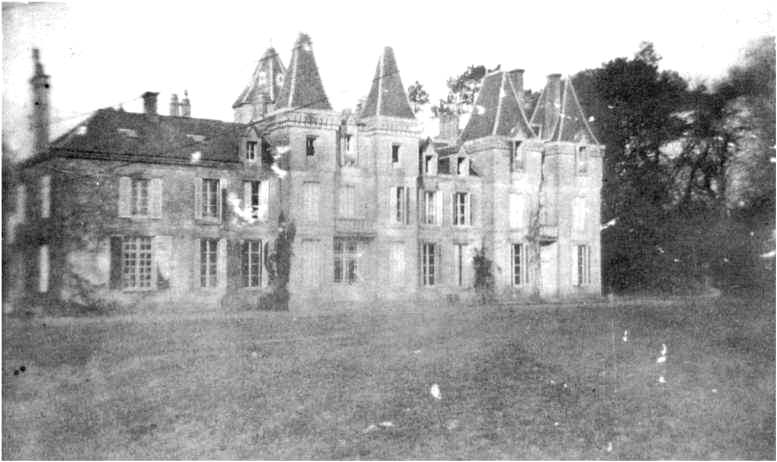

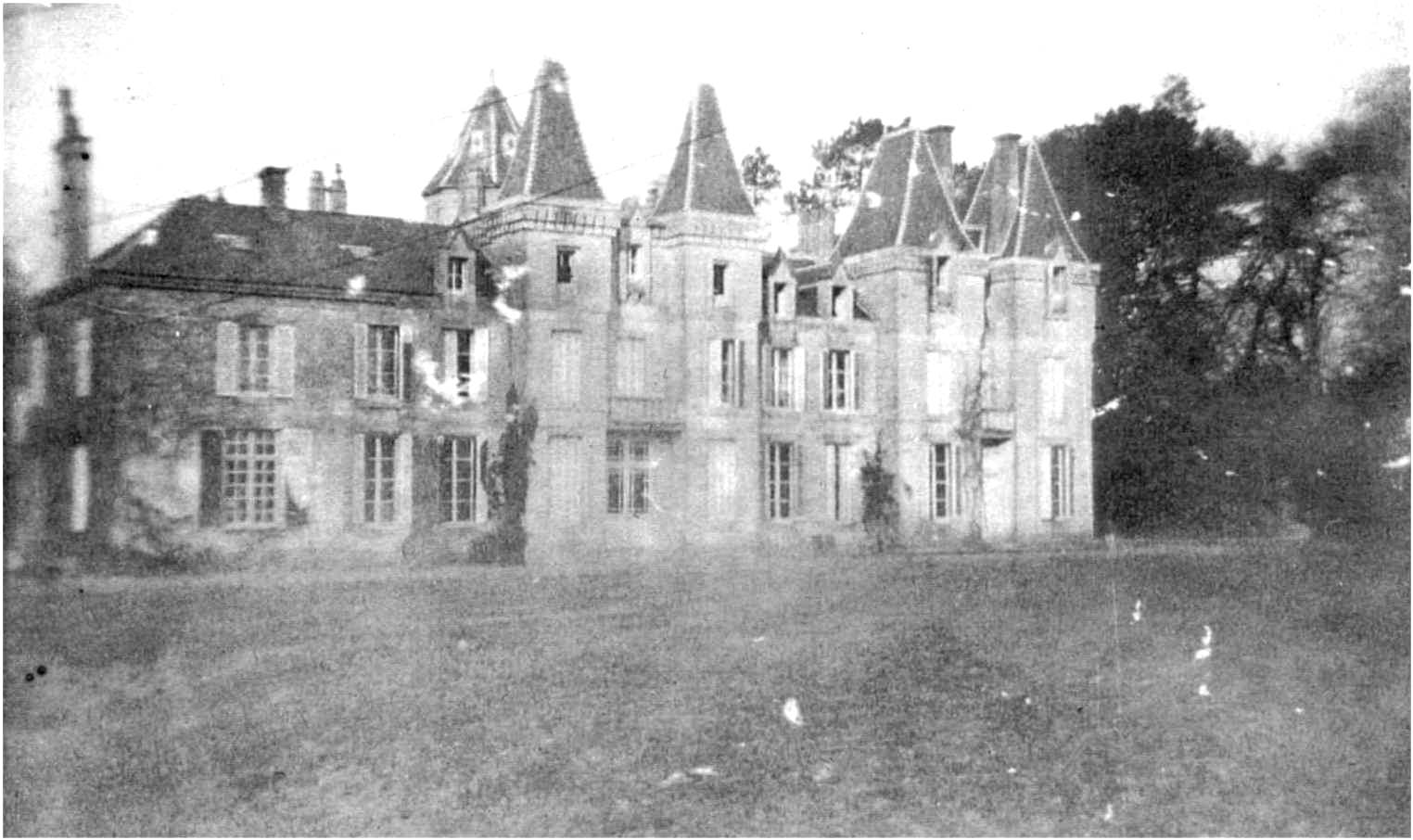
Extract from "The Madest Day" (by E. Coquart and P. Huet, at Albin Michel)
(on 7 June) (See the page of the de Loÿs family’s recollections, 6 June at Gruchy (2))
Early evening.
Guy's trying a new food outlet.
He ran into the park plowed by bombs and shells, but passing the entrance gate, saw the silhouette of a soldier who, standing still, parked by the roadside.
(it's probably June 7, because the Americans didn't get past Vierville before the 7th, plus the story is told, but in a slightly different form, by Captain Miller of 175th Regwhich passed to Gruchy on the 7th evening).
He (Guy) notes as soon as he does not wear a German helmet, no English helmet, with this shape of overturned bowl that he saw drawn on Nazi propaganda posters. A fulgurant deduction crosses the young boy's mind: he is an American!
Guy stops clean, tries to get in touch, shouts at random a few words of sympathy. But the soldier, with a gesture from his arm, makes him sign to get away. Guy's coming down to the underground at all speed. Excited to the extreme. But empty hands.
"You have nothing?
- No, I mean, if... I have news: the Americans are here."
No one else but Mrs. de Loÿs heard.
"You go back up there," she said to her son. You get in touch with them, you find out. I mean, you're doing fine. But most importantly, don't tell them anything about what's going on here. Not until I've had time to prepare everything."
Guy goes up to the surface. This time, cross an entire GI's patrol that explores the park. He feels them nervous, tense, ready to fire at any alert. In his English as a schoolboy, he manages to explain himself, to assure them in particular that the castle is empty of any occupant. They invest in the home, grab a few trinkets, which makes the teenager better understand why his mother has, for a long time, put the valuables in a safe place. Inspected, the soldiers relaxed, settled in the rooms of the castle, and fell into the armchairs. Rest...
Indefatigable estafette, Guy returns to his mother as discreetly as possible.
But no one cares about him anyway. For how long? Being in this underground with these 20 German soldiers is like sitting on a barrel of dynamite. If you're at the top of the line, it's all gonna blow up.
Madame de Loÿs chooses to reveal to the wounded the presence of the enemy. In the castle, just above their heads, she said, "to face them," "would be suicidal, would be to be massacred. It's hopeless. And then you have to think about civilians, women, children."
She's in parliament. She smells like the Wehrmacht infantrymen at the end of the roll, tired, worn out.
"If you surrender, you will be treated. Your most severely affected comrades will certainly be evacuated."
The soldiers are talking to each other. They are apparently unwilling to fight, but not convinced either to stay alive if they surrender. Propaganda has done its work.
One of the Germans detachs himself from the group and gives one last and - amazing - condition: "We agree, but a German soldier cannot surrender to the enemy arms in hand."
Madame de Loÿs does not bother to epilogue on the external and derisory signs of honor: "What to do, she exclaims, can be arranged. The other exit from the underground leads into the woods. Close by, next to the wash, there is a well you just have to throw your weapons there."
The soldiers asked for a new time of reflection and, after another conciliabule, finally agreed to surrender without fighting. Under the direction of the chestnut, they exit the underground in Indian line, snuck into the crates, and threw their rifles and other warbaskets into the well. Back in the shelter, they're waiting wisely.
Ms. de Loÿs then convenes her favorite liaison agent "It's over. You can go, they're ready."
Guy goes back to the Americans. It's a delicate mission: it's not a question of being wrong, of making them believe that a few meters away, some twenty enemies are waiting for them, ready to jump on them. Guy explains himself slowly, laboriously, but manages to make himself understood: the allies descend into the underground, pick the Germans gently. As Mrs de Loÿs had promised, the most serious wounded were immediately evacuated to a British hospital. Among them, of course, a man with a broken cranial box who had so impressed Guy. He'll survive.
One year after his capture, he will write to Madame de Loÿs to thank her for saving her life by binding him on his stretcher. For a long time, every end of the year, the miraculous of June 6 will send a Christmas card to the château of Gruchy.