516
At the bus station on June 7 - souvenirs of Michel Hardelay (5b)
FOR MEMORY, these memories have been dispersed into several chapters chronologically classified:
011 - Vierville under occupation (0)
1101 - The day before and the day before June 6 (1)
2321 - The night of June 5 to 6 and the dawn of June 6 (2)
2322 - At the same time, at the bus station of Vierville, at the Colibeufs (2bis)
3131 - The morning of June 6, from 6:00 a.m. to noon (3)
401 - The afternoon and evening of June 6 (4)
511 - The morning of June 7 (5)
516 - At the bus station on June 7, at the Colibeufs (5b)
561 - In the afternoon and evening of June 7 with the bombing of the crossroads (6)
701 - On June 8, in the village of Vierville, with Captain Gardiner (of the Civil Affairs) (7)
7011 - June 8 at Than Manor and Vaumicel (8)
7012- June 8 in Vacqueville (9)
702 - June 9 and subsequent days (10)
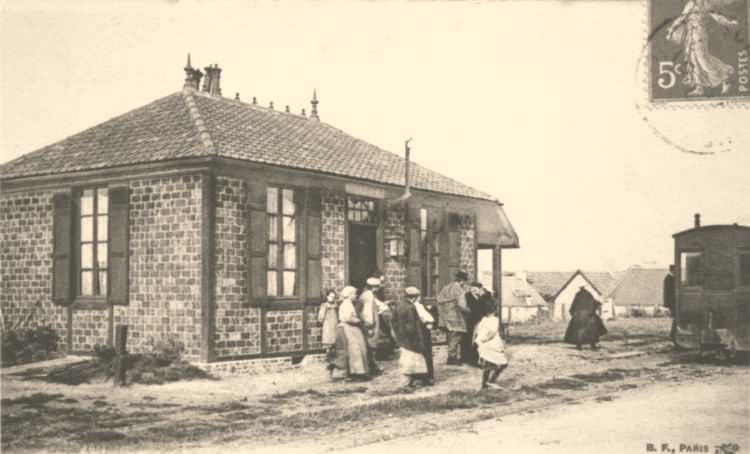


At the bus station:
("This information was collected from one of the two sons of Father Louis (Colibeuf), who became my brother-in-law fourteen years later.")
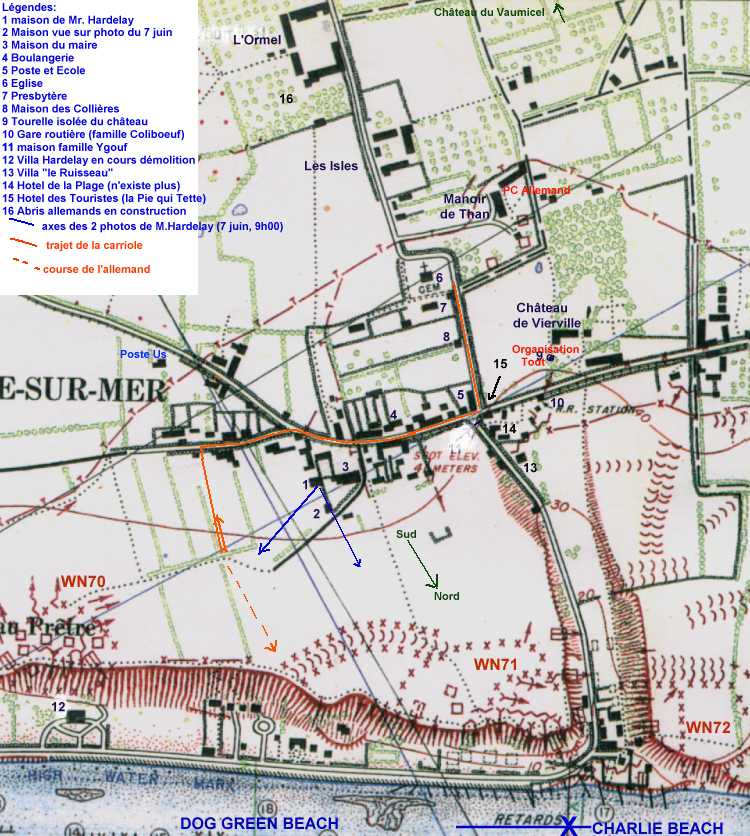
"Following the incident which blocked the crossroads at the passage of the infantrymen, the command - installed the night before in the small quarry of the rue de la Mer, a career which was later to be greatly exploited by the U.S. Engineer. to drop in access gaps - decided to search the houses and temporary internment of civilians living west of the crossroads, for identity verification.
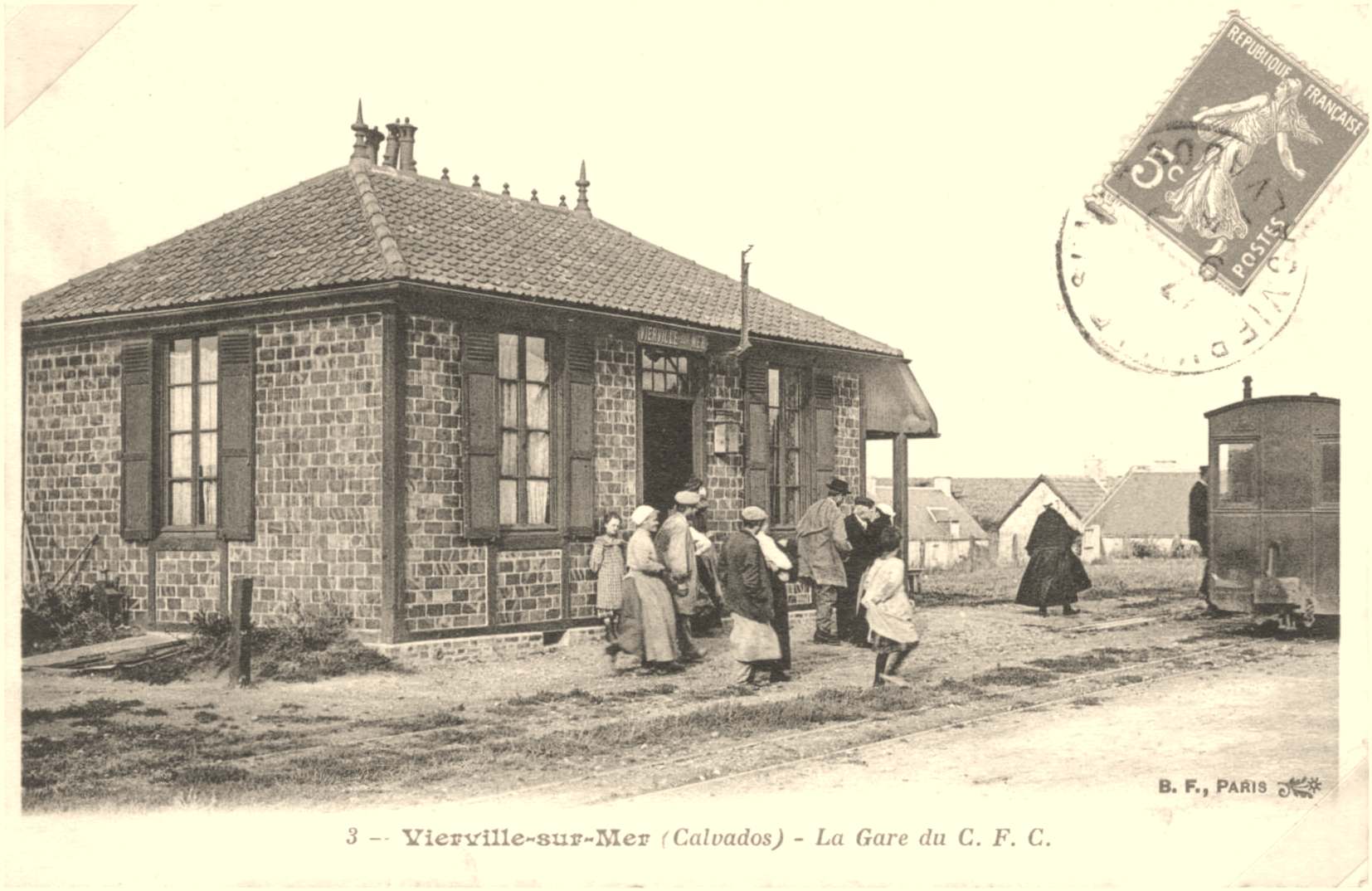
At the bus station each unit passing in front of the building and seeing the black hole in the entrance of the cellar had its occupants brought out who had spent the night there in the company of their dog and a pig they were fattening. Some had even fired some gunshots, the bullets ricocheted on the walls and caused the exit of mother Jeanne (Colibeuf), furious. She had taken the two sides of the officer's batle-dress and shouted to him, "There are children in this cellar, you want to kill us all?"
According to the decisions made, Father Louis and his two sons were therefore asked to leave the cellar and, accompanied, were led to the quarry. The men had been ordered to put both hands on the neck, but Father Louis had refused by saying:
"It is not a Frenchman who made the war 1914-1918 that an American must ask for this."
So they were all taken to the quarry at about 101/2 a.m. and there they found some 50 men from the TODT company who had evacuated the castle, at least I suppose the workers from allied countries, the managers and others preferring to follow the Germans.
The troop left for the banks of the Ruquet River at Saint-Laurent at about 11 a.m. The route was without history and relatively easy, except for the wrecks of material to be bypassed and the sight of many G.I. corpses. piled on the sidewalk bordering the sea, especially in the area "DOG RED" (in front of St Laurent) where they were sometimes on four thicknesses.
Arriving at Saint-Laurent, following an order given to the convoy leader without their knowledge, they were told that they could all return to their home in Vierville.
But the way back was quite different from the way back, a calvary instead of a walk. The Germans had begun their counter-attack and mortar and larger-calibre cannon shells fell at random on the beach; they lasted, many times, flattening in catastrophe, sometimes next to a corpse, to escape the shrapnel. They took more than two hours to return to the beach exit of Vierville and returned to their cellar shortly before the gathering of civilians where they were not invited (at 17:00).