511
Memories of Michel Hardelay (5)
Cleaning in Vierville on the morning of 7 June
FOR MEMORY, these memories have been dispersed into several chapters chronologically classified:
2321 - The night of June 5 to 6 and the dawn of June 6 (2)
2322 - At the same time, at the bus station of Vierville, at the Colibeufs (2bis)
3131 - The morning of June 6, from 6:00 a.m. to noon (3)
401 - The afternoon and evening of June 6 (4)
511 - The morning of June 7 (5)
516 - At the bus station on June 7, at the Colibeufs (5b)
561 - In the afternoon and evening of June 7 with the bombing of the crossroads (6)
701 - On June 8, in the village of Vierville, with Captain Gardiner (of the Civil Affairs) (7)
7011 - June 8 at Than Manor and Vaumicel (8)
7012- June 8 in Vacqueville (9)
702 - June 9 and subsequent days (10)
(details)

(details)
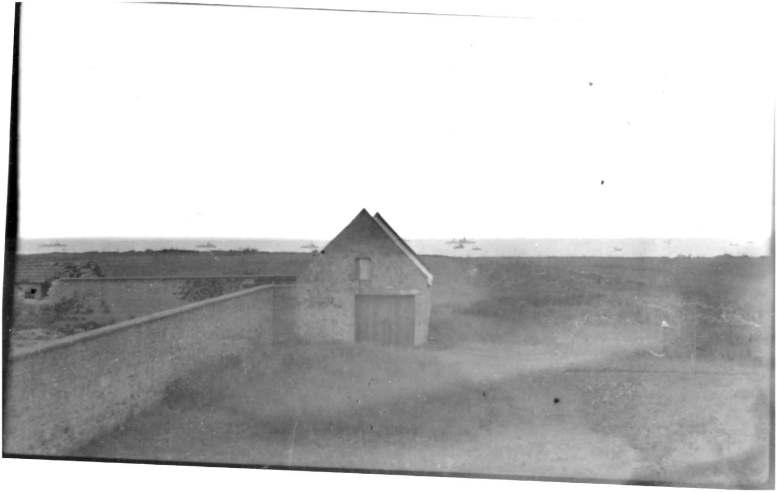
the 2 photos taken by Michel Hardelay from his house in the village, on June 7 at 09:00
On the first one, we distinguish the battleship "Texas", 5 destroyers and 1 patroller type SC

(details)
On the second, taken in the direction of the NE, many ships including 2 destroyers


(details)
the old tobacco office and the villa "Le Ruisseau" from which a German sniper pulled towards the crossroads
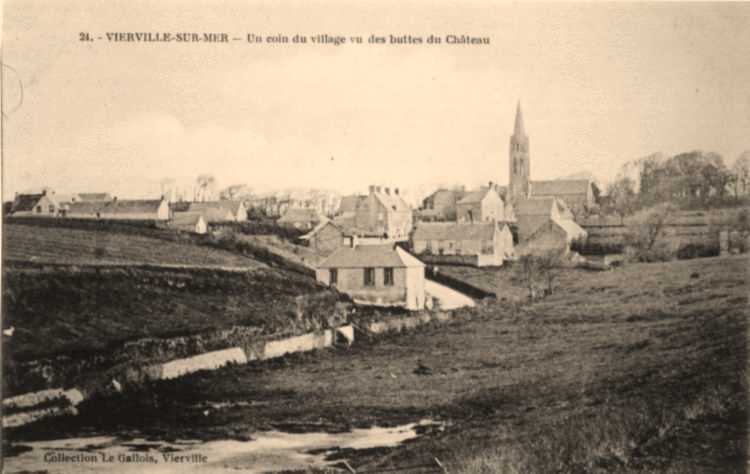
(details)

(details)
The crossroads
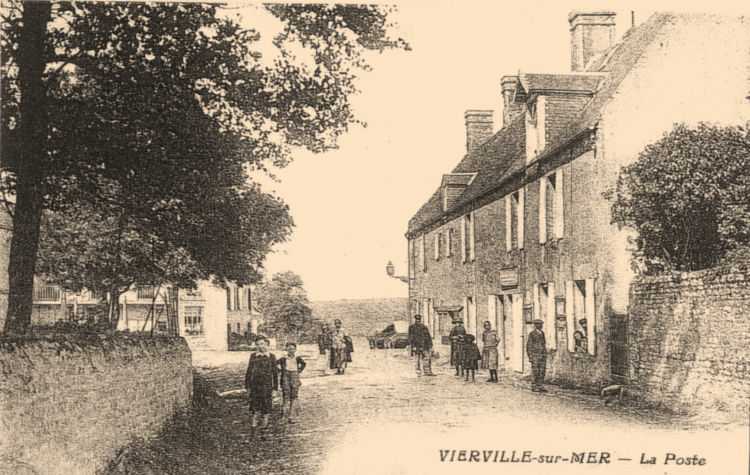
(details)
The crossroads
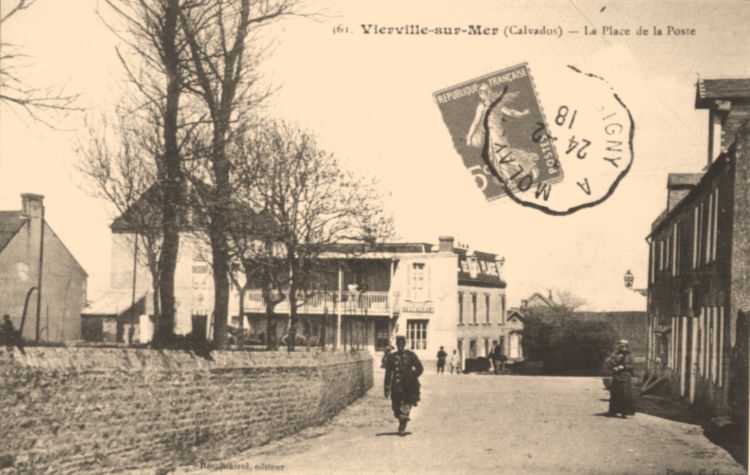
(details)


Mayor of Vierville, Mr. Laterrier, in a lively discussion with a G.I. who's trying to understand it. Behind him, two soldiers armed with a Thomson Gun (11.43mm US handrails) and an M1 rifle
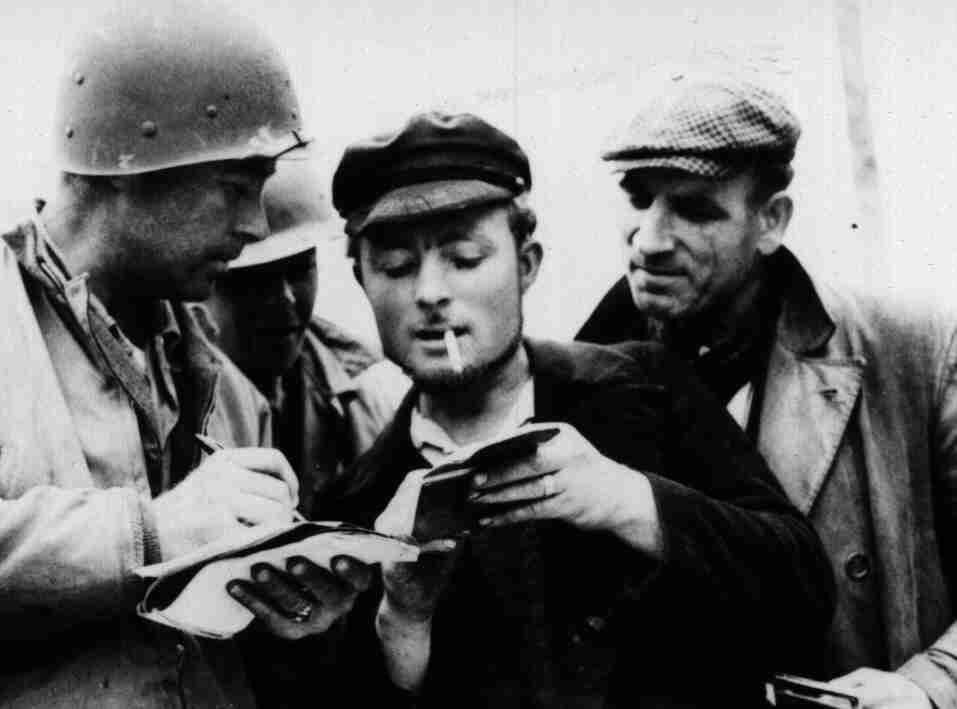
This would be the registration of civilians on 7 June.
(details)
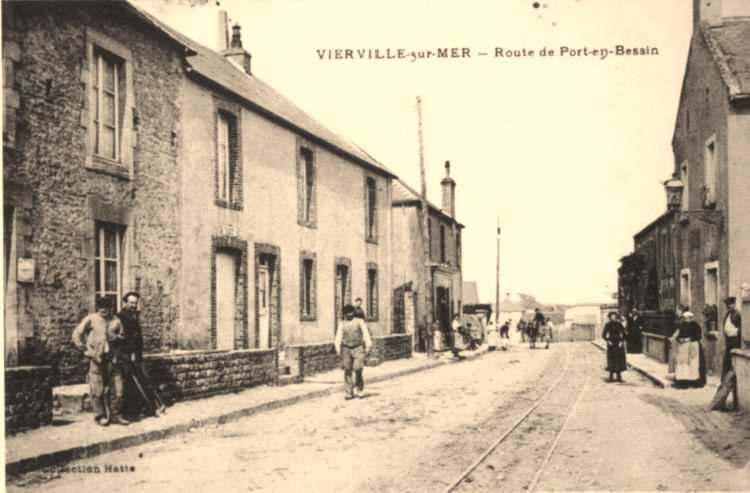
Pavée Street

(details)
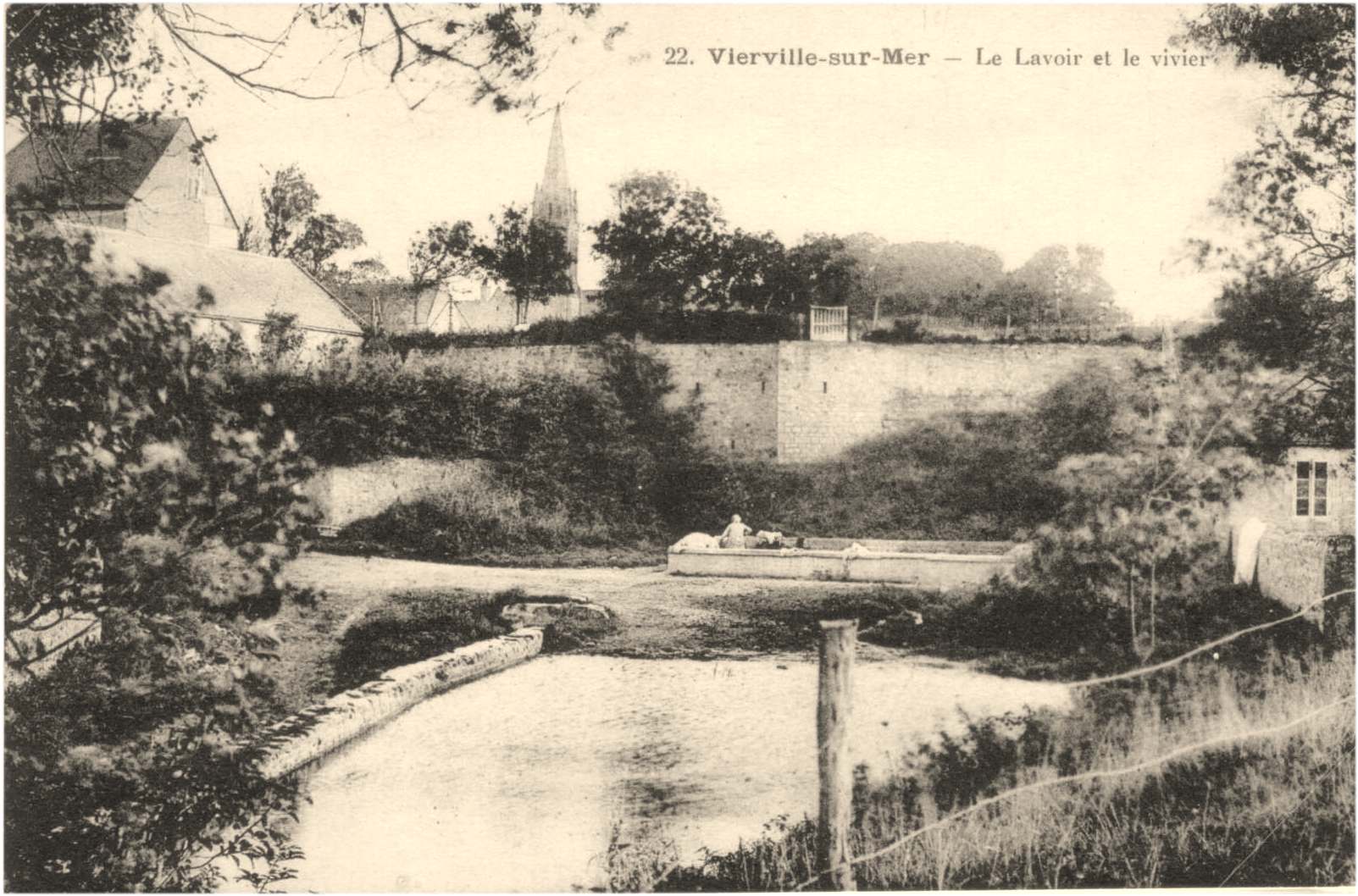
Washing it, below the crossroads
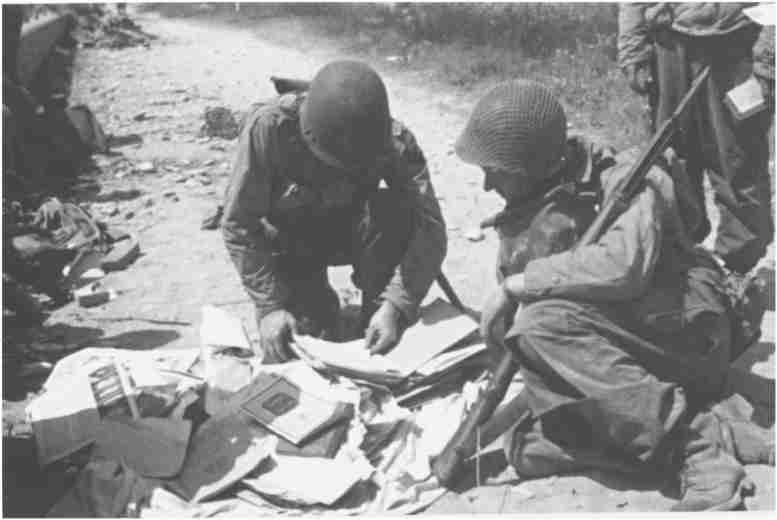
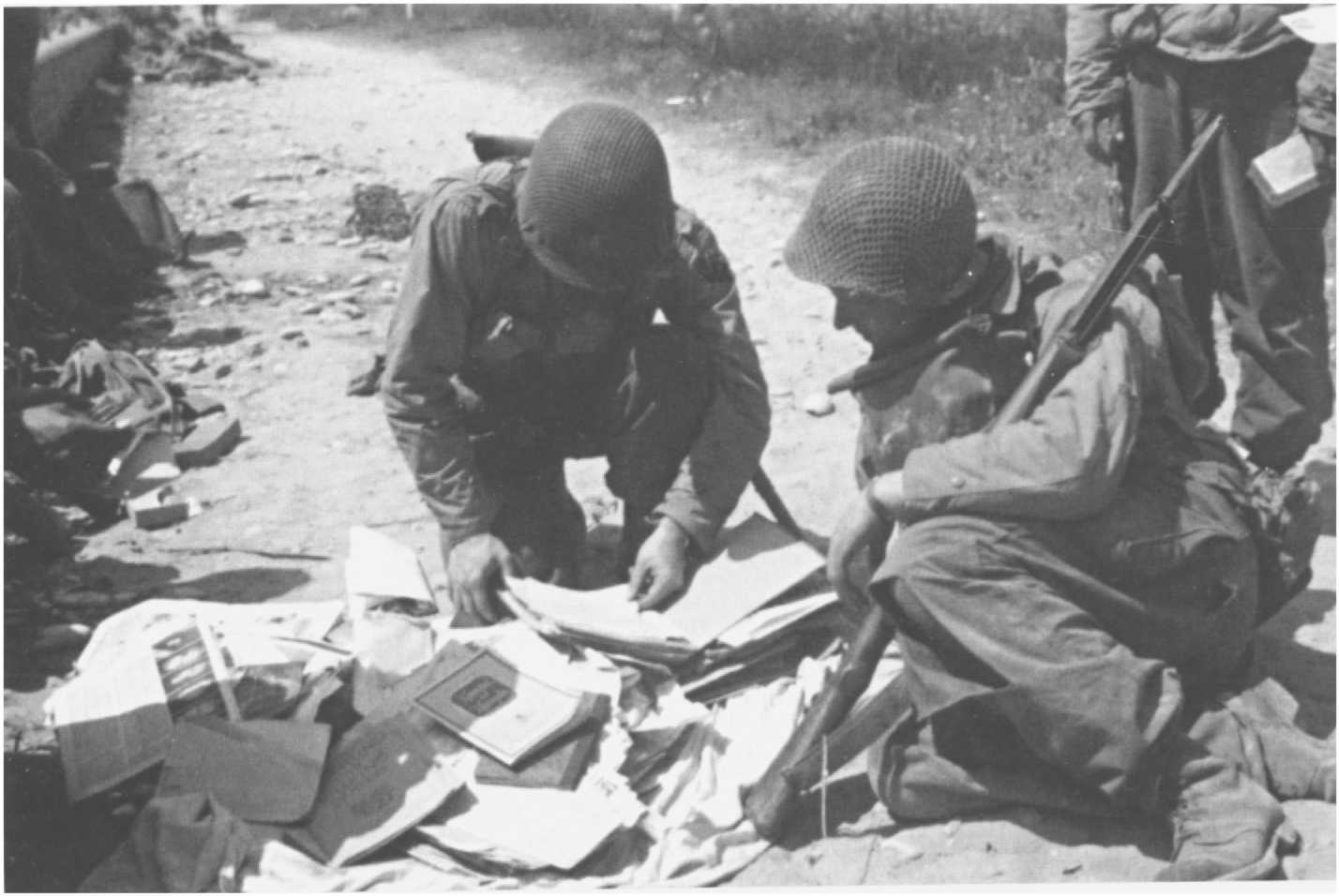
(details) Men from the CIC
(Counter Intelligence Corps or counter-intelligence) examine papers seized on Germans
(details)
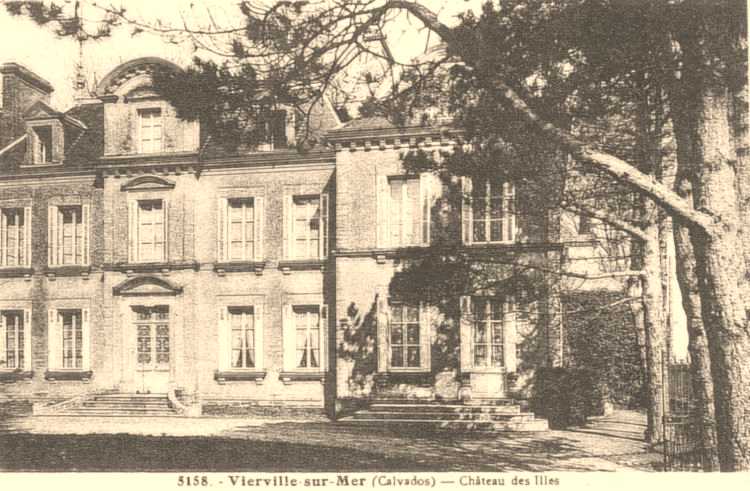
The Castle of Isles
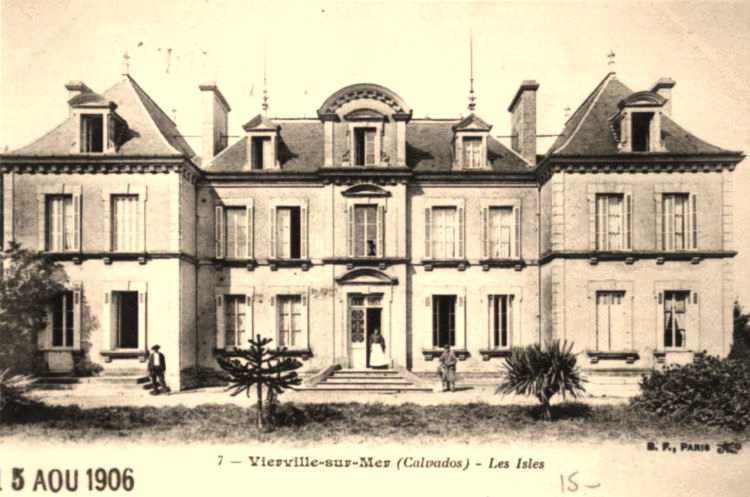
(details)
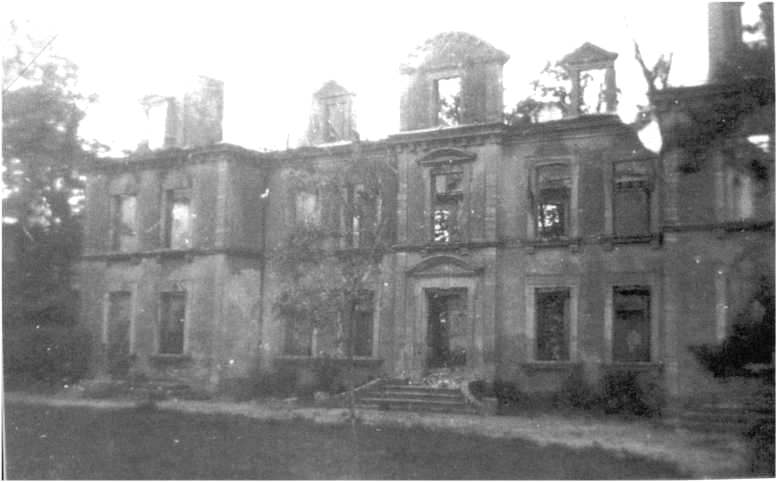
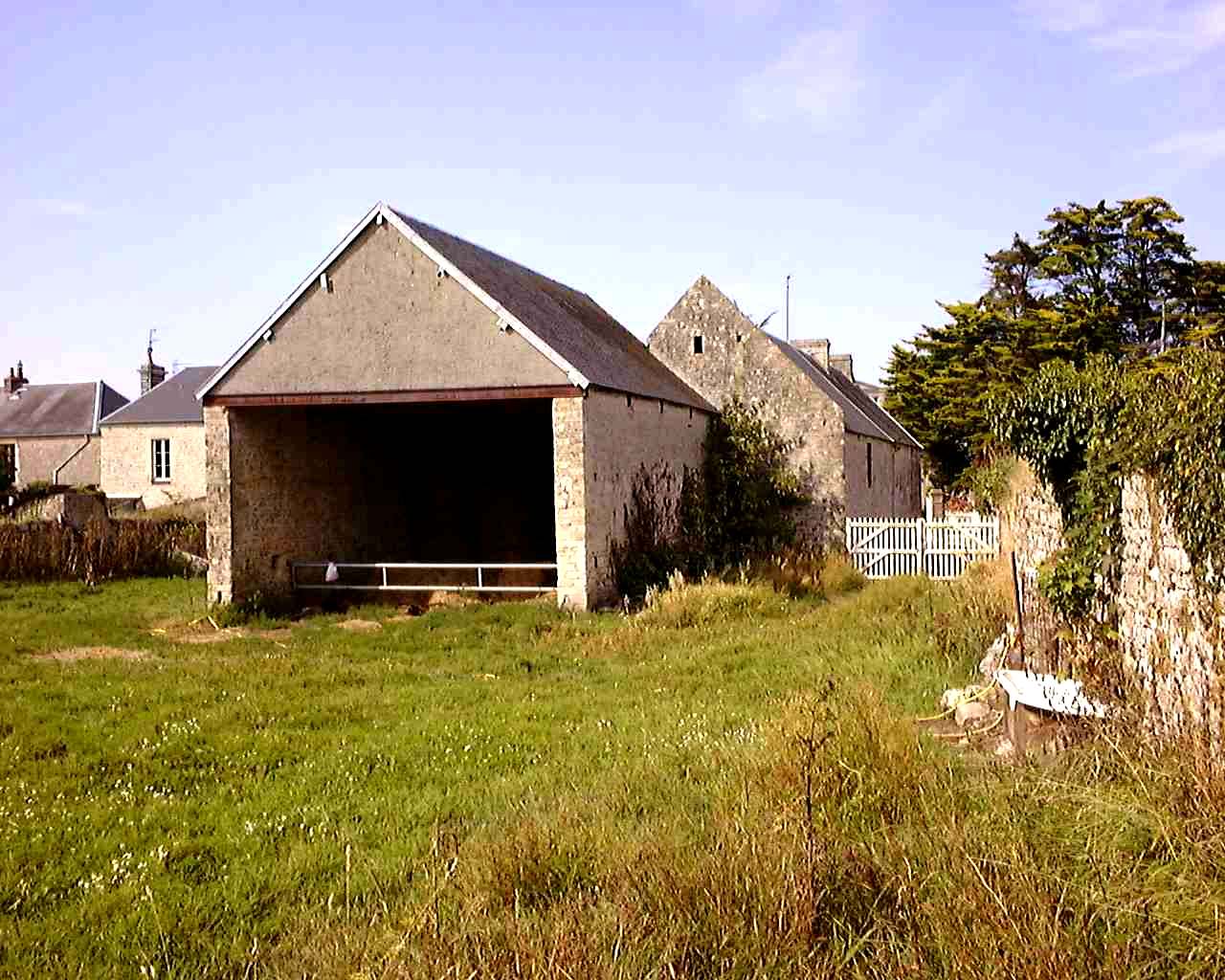
(details) Isles burned on June 6 or 7
"The night was relatively quiet and, on foot at six o'clock, we could have a normal breakfast. I went up and looked at the sea covered with boats, and took advantage of it to take two pictures on the two poses that remained on the roll of film.
"Some of our neighbours returned from their night spent in the beautiful star accompanied by a few soldiers who were walking on the side of the road, with regular spacings, as they had had to be taught in their military school; they came from Saint-Laurent and were followed by the first Sherman, a true ball of tangled wires because he dragged with him all the telephone and electric wires collected on his way and entangled in his caterpillars.
At that time came "the Rupee" to the news and who asked me to see the boats and the sea.
We went up to the first floor and leaned to the window that was facing the door of my room, closed at that time. Some boats fired on targets designated to them by radio and two American soldiers were on cliff ridges near the holes dug the previous day by the plane bombs, their rifles in their hand; one saw us and supported his weapon, I heard a whistle and a shock on the door behind me, before the shot. I immediately understood and jumped to the side behind the wall as "La Rupie" went down the stairs in disaster. The second bullet followed just about the trajectory of the first, crossed the door of my room and... My pants hung behind and went, like the previous one, to fuck in the front wall.
I don't know how far the first bullet passed from us, certainly between us, given the impacts left in the door.
As for the two G.I.s. They wanted to see the effects of their shooting and came to the house; I let them approach and when they were about ten meters away, I put myself in the window and told them "You are crazy", they laughed and I found them in the garden, where they offered me a cigarette.
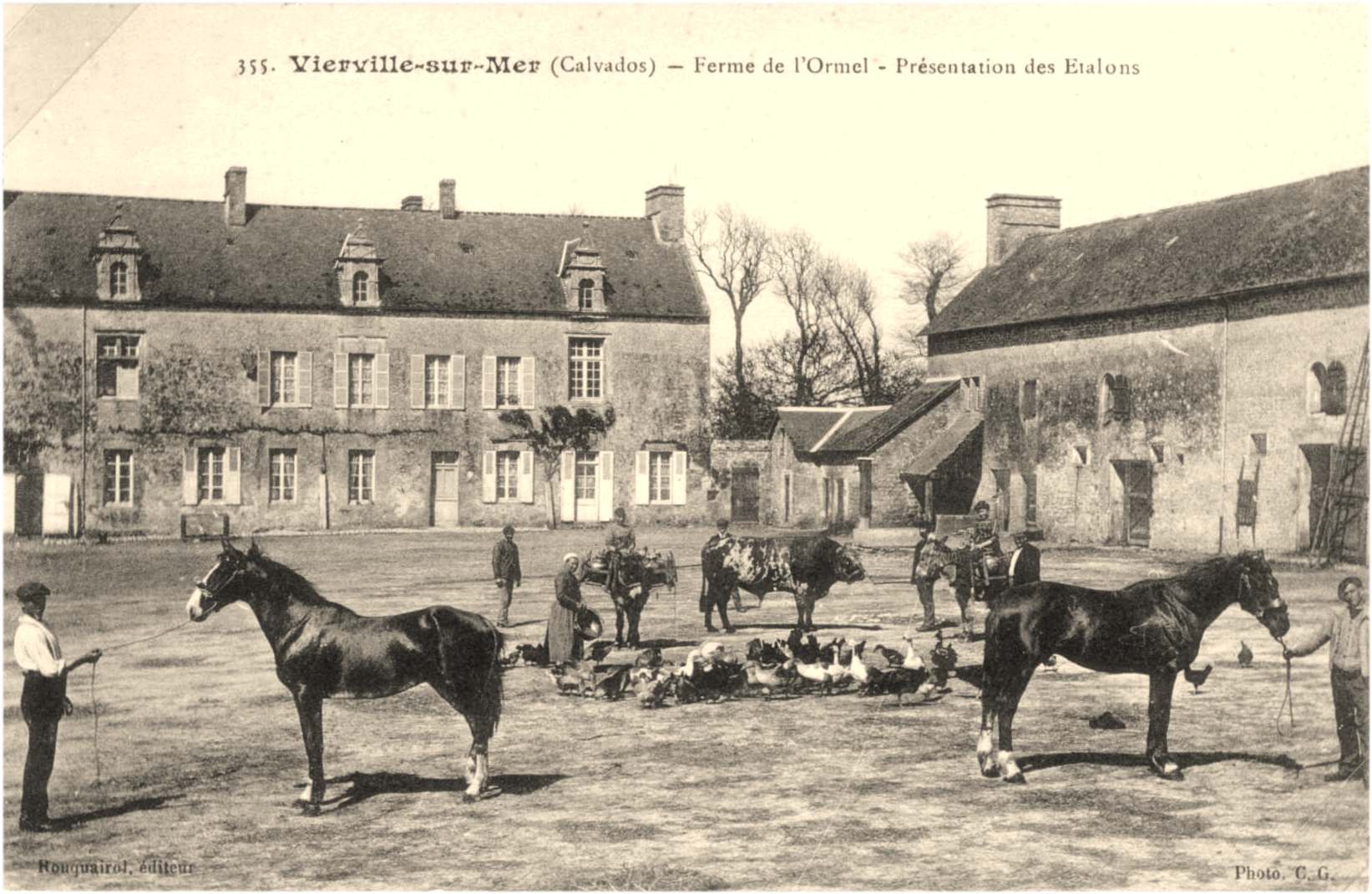
At that moment the shots became more numerous and the neighbors in our dead end and I heard them shouting: "The Ormel". In fact, smoke rose from the roof of the house, and a few seconds later the flames burst. But almost as soon as other fires arose in the Isles neighbourhood, without being able to say which houses it was.
(This is the time when the Americans cleaned Isles, Ormel and Than Manor, after the German attack in the early morning; these large houses may have been burned down in these circumstances).
Then I saw a U.S. captain arrive. with his two lieutenants and five or six men. He was a jovial man with a fine mustache cut like some American actors. I received him in the living room; he made me understand that he was very bothered: every man who wanted to cross the crossroads of the Post had descended by German snipers ambushed and he came to ask me where they could shoot. I told him that I didn't know anything about it, that it could come from the Hotel de la Plage (he who was burned a few years ago, just under the crossroads of Vierville), or from a house located below and, to seem interested in his case, I presented him with the cadastre of the commune, in deposit at this time with me for the plans requested by the town hall.
I learned later that the massacre came from two German shooters cut off in the basement garage of the villa "la Ruisseau" who had seen the crossroads and also on the wash, where the Americans tried to surprise them, but without success. The principal of the school lived in the corner house which also included, in return to the church, the Post Office. She was also town hall secretary and had her office, an annex to the town hall, in the corner room; behind her window she was helpless to the G.I.'s efforts. to discover the den of the German shooters; from time to time the tank turned its turret towards its window and the mouth of its cannon was then ready to enter its office.
The captain, in possession of this information, left me and finally came to the end of the two shooters, and after his departure I found in my access driveway to our house a German aviator cap whose provenance I could not explain.
But why did he address me? Other French people were on his way, including the mayor and La Rupie. Was I already reported to provide useful information?
This incident was onerous: he delayed the American advance to the West, and the U.S. soldiers incited him. to beware of the gunmen, led them to search every house and to verify the identity of every civilian they met.
The proof was given to us a quarter of an hour later; a detachment of four or five men had undertaken the inspection of the houses north of Pavée Street (the main street of the village) and passed in front of the kitchen window by putting in play, ready to fire, the stove with its stoves, bypassed the house, came into the garden, and a large Negro demanded to be able to make sure that no isolated shooter was in the attic. I had to execute myself, precede him on the ladder leading to it, open the hatch and show him our bric-à-brac.
Two examples, demonstrating the ease with which they had to press the trigger of their rifle, had occurred (June 7):
In order to avoid any broken windows by explosions or shrapnel I had left all the windows of our house open. An GIs that passed on the road at the entrance to our impasse thought that one of our windows saw an individual passing through the field behind our house. He returned to his steps, the quidam too, hoping to be the fastest he supported and fired, and that was how the great ice that was on the fireplace of our living room was broken.
The mayor had, opposite his entrance and on the other side of the street, a house perpendicular to that street, comprising three housing units followed by a barn open to the south. During the Wednesday morning operation, a senior officer of the inspection platoon ordered two soldiers to go around the building, each on a different side. Arriving at the same time at the end of the quickest barn killed his comrade.


The ships of the Allied fleet were still firing at targets on land and shells were passing over our heads, but it seemed to us that other projectiles were passing there, but going towards the sea. If that were the case, it would be that the Germans would have launched a counter-attack, and gained ground.
It promised tough fights for the afternoon.
Would the Americans resist, while on the radio the situation seemed much better on the other landing beaches?
About eleven o'clock an American captain from the C.I.C. (the information) who spoke French perfectly, had advised the mayor that it was necessary to clear the forage street and had asked him if it could be put in his garden. The mayor had consented and, putting us together, we managed to do so. A quick examination of the papers was done by the captain, who consulted mainly the documents marked "SECRET" in German; he traveled them quickly by saying, for most of them, "we know this text".
At that time he was no longer passing by soldiers from Saint-Laurent and the unit that had been hung at the crossroads of the post had continued his journey to Grandcamp to, we learned later, come to the rescue of the Rangers from the point of the Hoc.
A friend of our neighbors, whose house had collapsed, came to ask us for some troubleshooting clothes for his son while waiting to be able to recover its effects after clearing.
I went as far as the bakery, empty of its living occupants, and discovered on the floor of the storehouse the bakery employee holding in her arms the baby of the L. household; she seemed to have been killed net as well as the child, she was lying on her back, a section of a wall had fallen and the light was flowing through the opening thus created in this usually dark place.
We had lunch quite quickly because the shots seemed to be repeated in the vicinity and returned to our shelter.
"Following the incident that blocked the crossroads at the foothills' passage, the command - installed the night before in the small catroir on the rue de la mer, a quarry which was later to be greatly exploited by the United States Engineers (for the intertwining of roads and the encroachment of new roads) - decided to search the houses and temporary internment of the civilians living west of the crossroads, for identity verification.
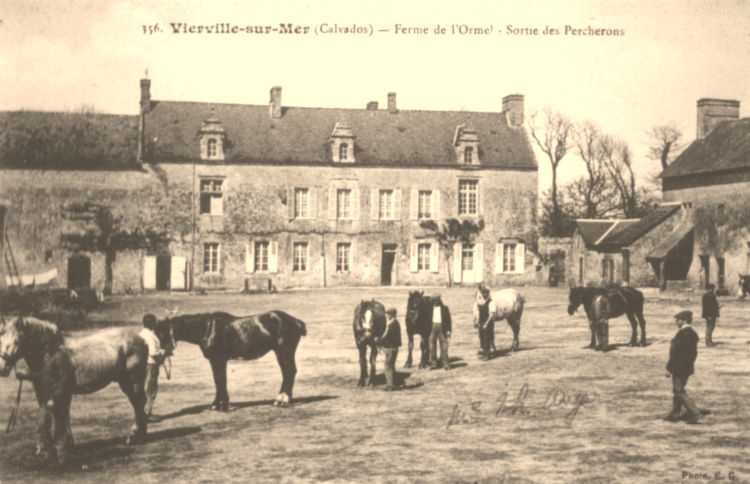
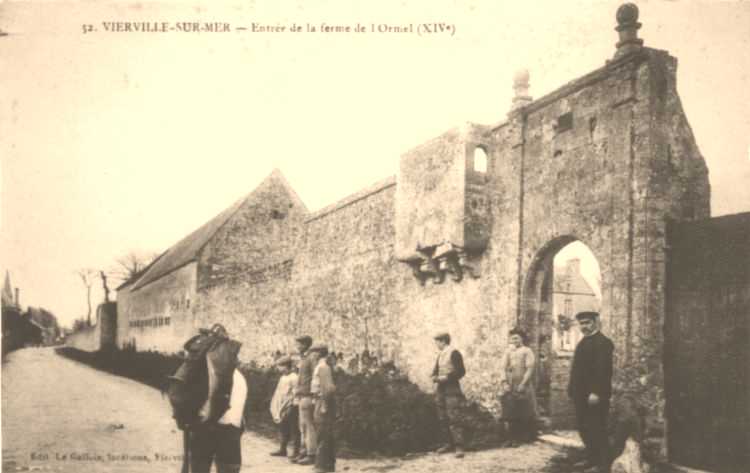
The command had been reinforced in this decision by what had just happened at the Ormel:
The Germans had begun to dig a large housing block behind the housing building, trees had even been transported there to serve as a summer and roof, so they knew very well the places and paths covered to get there without being seen.
A German had hidden himself in a car and had fired at passing GIs; in this case the Americans were using a simple method, i.e. an incendiary grenade to flush out the shooter (so the housing building of the Ormel was burned). But they saw only the farmer and some of his employees go out and were obliged to carry out a systematic inspection of all the appendices that surrounded the farm yard on the other three sides. Finally the German was discovered and went without opposing resistance."
"The next day (June 7th) it was the wanking-down fight, a German broke the window and he asked my grandmother to open. He was completely crazy, his eyes were exorbitant. He looked everywhere, under the bed and the wardrobe. He was alone, I don't know if there were any Germans out there. He screamed and my grandmother quietly replied that there were no tommies. We were paralyzed. My sister got into the attic with him, as there was nothing, he left and we never saw him again. The fight started again outside and it was daylight."
"At one point, a marine shell fell into the garden and there I was caught with a stroke of madness. I said, "It's no longer possible, we can't stay here anymore, we're going to get killed." We went out in Indian, Grandma, Grandpa, Mom, Sister and I. At the corner of the house, there was an American who had shot through the window towards the fields because there had been noise. The poor guy when he saw that there were civilians, his arms fell. I told him we were going into the ditch. He fucked me up, but we didn't care because we didn't understand. He wanted us to go further. It was a baffling everywhere and whistled in our ears, but we didn't get anything. We left to the Houyvet farm. (before the last farm on the left on the road to Grandcamp) Looking back on the way, I saw the farm of the Ygouf (Les Isles) blazing."
"We spent the night in the Houyvet barn. In the morning, the "Petit Paul" (the son Houyvet, a young child) came and said to me: "Come see!" I went with him and we climbed to the second and there he said: "Look!". There was a ray of sun and then I saw the sea with all the boats. It was extraordinary."
"The command had been strengthened in this decision (beware of the freemen and systematically clean the village by checking the population) by what had just happened at the farm of "l'Ormel":
A German man hid in a car and shot G.I. In this case, the Americans used a simple method, i.e. an incendiary grenade, to flush out the shooter. But they saw only the farmer (Mr.Louis Leterrier) and some of his employees go out and were obliged to carry out a systematic inspection of all the appendices that surrounded the yard of the farm on the other three sides. Finally the German was discovered and went without opposing resistance.)
The Germans had started digging a large shelter behind the housing building, trees had even been transported there to serve as a summer and roof, so they knew very well the places and paths covered to get there without being seen.