862
Memories of Michel Hardelay (8)
Visit to Than Manor House and Vaumicel on 8 June
with Captain Gardiner
FOR MEMORY, these memories have been dispersed into several chapters chronologically classified:
Vierville under occupation (0)
The day before and before June 6th (1)
The night of 5 to 6 June and the dawn of 6 June (2)
At the same time, at the bus station of Vierville, at the Colibeufs (2bis)
The morning of 6 June, from 6 a.m. to 12 noon (3)
Afternoon and evening of June 6 (4)
The morning of 7 June (5)
At the bus station on June 7, at the Colibeufs (5b)
In the afternoon and evening of 7 June with the bombardment of the crossroads (6)
On June 8, in the town of Vierville, with Captain Gardiner (of the Civil Affairs) (7)
June 8 at Than Manor and Vaumicel (8)
June 8 in Vacqueville (9)
June 9 and subsequent days (10)


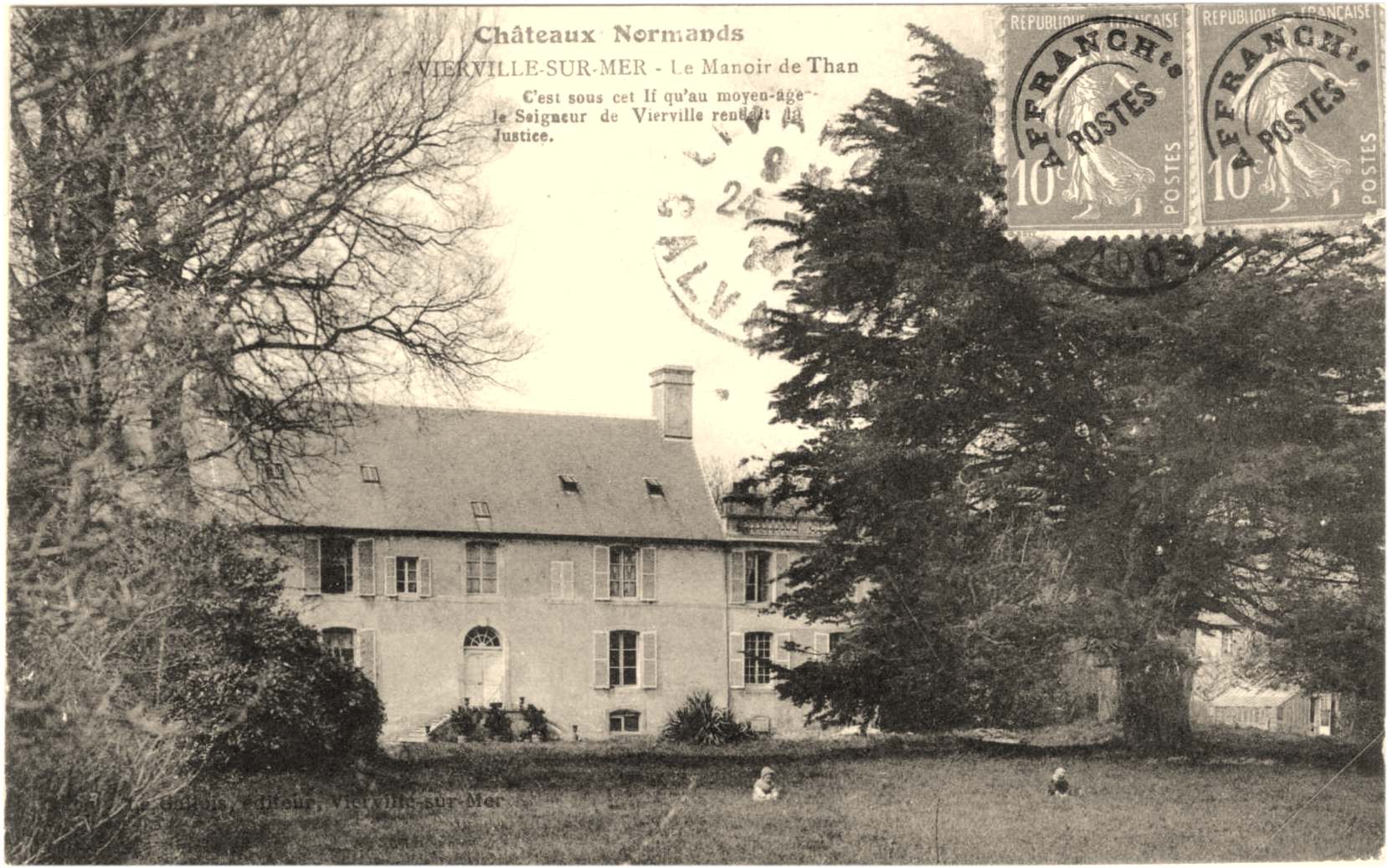

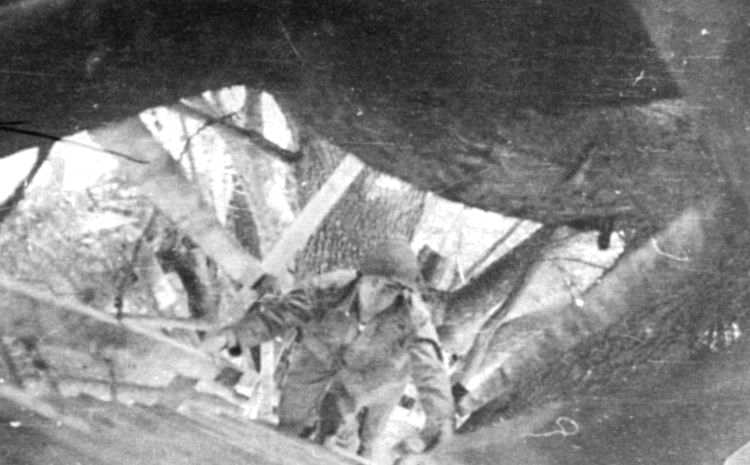

Illustration not available in the transmitted fund.
(details) On top and on the left, the large cypress, around 1970. We see the first one.
Platform built by the Germans, about 10m high.


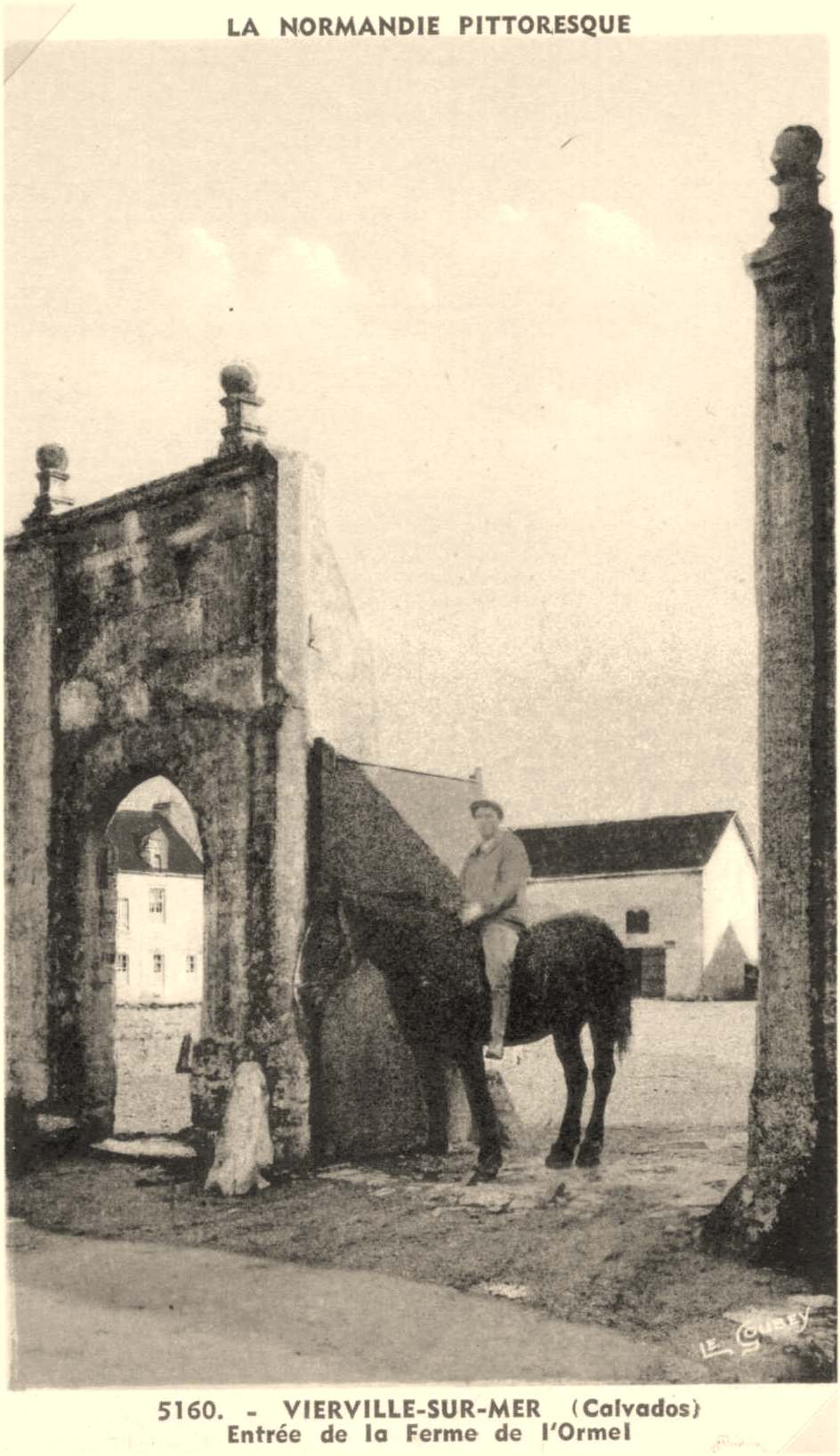
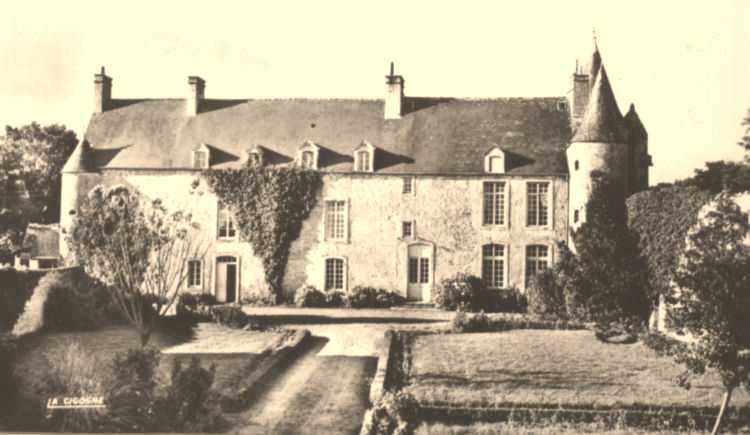


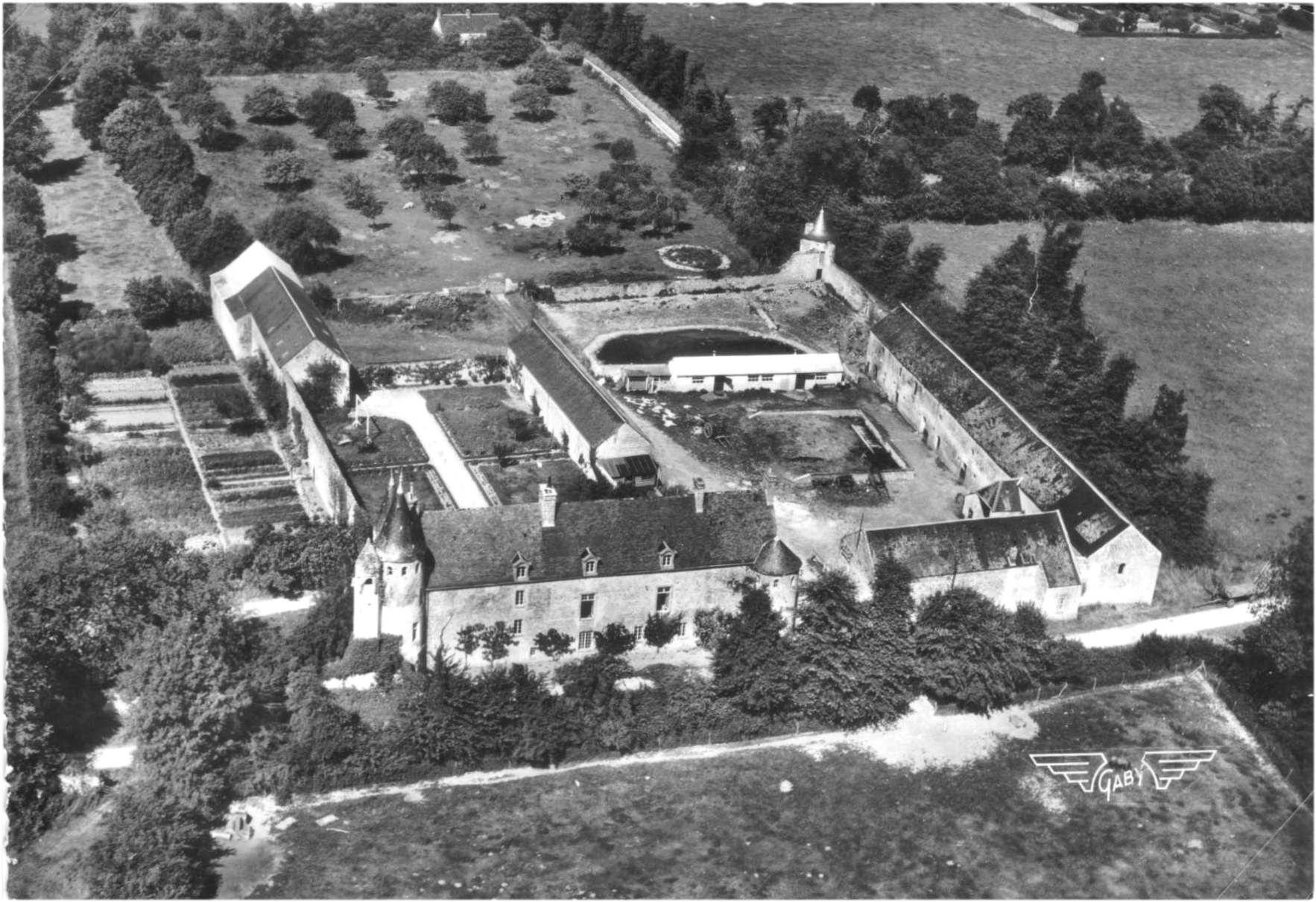
Than mansion
The Germans had dug in the wall closing the Than Manoir Park four murderers allowing them to shoot both towards the crossing of the post as well as corners and the cemetery, but there was no trace of combat on the road.
We advanced to the entrance of the park; one of the gates of the entrance was on the ground and was folded, we could see the traces of a caterpillared machine but it had turned around at the end of ten meters. (perhaps an American tank)
At the foot of the second tree bordering the aisle, to the left, was a soldier (American) in the position of the shooter on his knees, but his rifle had fallen next to him; he had received a fatal bullet while he was probably looking for a shooter hidden in the tree (the very large cypress of the park) where was nestled a machine gun (located at the top, the view was on Vierville and the sea). Captain Gardiner picked up the rifle and detached the cartouche.
The calcined remains of the mansion soon stood in front of us. There was no smoke out of it; had he burned on the 6th or 7th, who had set him on fire? An armed bazooka, the trigger held by a piece of white cardboard was placed at the left corner of the walls, on a kind of terminal we looked at the two concrete casemates, adjacent to the house of the guards. As required for a chore, I had worked on the excavation of the first with seven other men, including the two interns with master François (F.de Bellaygues), with well-French names (it seemed to be fugitive English), the innkeeper and his clerk, and two carters who carried the earth extracted.
The feldwebel who commanded us had told us to dig up to the water table; it was to be found two meters twenty-five, but I had the opportunity to return during a permission in the spring of 1945 (MH had engaged in the army for the end of the war), I found that the water covered the second step of the descent staircase. While waiting for the feldwebel to come back to find that the lowest level was reached, I had, with yellow clay of the hole made Hitler's head, quite resembling. I kept it as a souvenir.
Illustration not available in the transmitted fund.
(details) 1970

the plan of the numerous shelters built by the Germans
in the park.
We continued towards the commons: in an open shed to the left of the posterior entrance, the body of the feldwebel had been placed on a door supported by two trestles; his iron cross had been placed prominently on his chest. We advanced to the entrance overlooking the road serving the "Morocco" district. Two Germans were lying in the back of the wall, on the right. One was very young, the other had gray hair. They held their rifles in hand pointing northward, the captain picked up both Mauser and the cartouches.
I asked him to wear a part of it; he replied that a civilian should not carry weapons, but a little later, having recovered again, he consented to give me the cartouches.
At the Château des Isles (at the Ygouf)
" We made the opposite journey and returned to the road of Formigny we went along the property of the Y family. (Ygouf), burned the day before, passed before the entrance of the Ormel without going back.
Raymonde Hue's house
"I don't know what instinct made me enter the house on the left. Maybe the door open and the shutters closed? It was the house inhabited by the communicant on the blue bicycle (Raymonde Hue, 12 years old), In the dark, the first thing that struck me was the big red satin edredon on which was lying a dead German; another was slowly moaning in a corner to the right. I went one step further: along the door was lying a German soldier who murmured, through the reddish foam that came out of his mouth "I want to see an american officer"!!! I said to him, "Wait a minute, he is very near, I call Him." He seemed relieved, and I went out and said to the captain, "a wounded man asks you." He entered into the house, came out a moment later, heave a soldier, gave him an order, and came to meet me on the road to Vaumicel. We didn't make 50m that a jeep stopped in front of the house and left after a moment.
At that time, we crossed the girl's mother with the blue bicycle. I couldn't help but say to him, "Wait 5 minutes before you go to your house, it's not pretty at the moment."
Raymonde's account reads: "The next morning, June 8, two American officers with Louvières Field Guard told us that we were freed (at that time Raymonde Hue is in the commune of Louvières). So we went home and by going back by the way, we could see all the damage and the dead. On returning home, it was found that it was demolished and the walls were broken. Inside, there were two German soldiers dead and a third injured. My mother knew the wounded soldier, he was at Kommandantur and he slept at Monsieur Lelarge's house in the evening, where the Germans had requisitioned rooms. This German soldier who was dying in the house, was in Vierville for two years, he had always told my mother that he was the treasurer-payer, when he came to my parents' house in the evening to pick up a litre of milk. He asked my mother to drink, she went to get him a glass of water. At that time, Mr. Hardelay arrived with two American officers. She then told them that she had given him a glass of water. The American officers contacted the dying soldier and then told him that she had done well to give him a drink because he was a wounded man and an American spy."
"The next day, when the Ygouf family told me about the anecdote of the German troops who did not seem to know this language, I could not help but make the rapprochement with this wounded German speaking in English and demanding an officer as an interlocutor.
Were these men parachuted at night? I had the opportunity to consult the detailed map of the parachuting. This one notes a parachute of a man of the 2 divisions dropped on the Cotentin, at a point between Vierville and Formigny, in the bottoms of Veret, by a plane lost. The book on Pointe du Hoc talks about a few men, who, mistakenly parachuted out of the area, took the Rangers to the fort. A farmer would have seen a parachute late in the evening of the 5th landing in the meadows of Veret. But only one, not one detachment.
It must therefore be assumed that the company which, coming from Saint-Laurent, confined itself to Isles on the evening of 6 June had brought with it GIs which wore a German outfit, which had German weapons and created a bloody diversion the next day, because it seems that there were many deaths on both sides, having seen, during my passage to Isles on the 8th, dark masses through the high grasses.
Having had during many official commemorative ceremonies and inaugurations, the opportunity to speak with senior officers and even generals of the National Guard, I asked them this question:
"Have there been any American soldiers dressed in Germans to create a diversion on June 6?"
In the first years, they seemed scandalized by the question, then gradually their denials became less firm, finally, rather recently a general replied "it is possible".
At the Vaumicel castle
(We) came to the road of Vaumicel. We were approaching the Vaumicel, everything seemed calm and no damage was visible. And we entered into the courtyard, and gained the dwelling-house; and I opened the door, and called; and no one answered.
We went all the way to the recently burned barn at the back of the garden, no one either. I saw a small door in the high wall closing the vegetable garden and pushing it; along the wall there was a large shelter and three men came out as soon as they saw us: Master François (François de Bellaygues) and his two trainees. I introduced the captain and the two interns were named. I say to them: "You can now give your true names. They executed themselves. The captain then took a small notebook out of his pocket and seemed to check both names.
I informed the owner of the premises about the events of the previous two days; he told me that his wife, himself and the farm staff had been in the shelter for 48 hours and that no one had come to see them before us."