Memories of Michel Hardelay (7)
June 8 in Vierville
Communal explorations with Captain Gardiner or alone
FOR MEMORY, these memories have been dispersed into several chapters chronologically classified:
Vierville under occupation (0) The day before and before June 6th (1) The night of 5 to 6 June and the dawn of 6 June (2) At the same time, at the bus station of Vierville, at the Colibeufs (2bis) The morning of 6 June, from 6 a.m. to 12 noon (3) Afternoon and evening of June 6 (4) The morning of 7 June (5) At the bus station on June 7, at the Colibeufs (5b) The afternoon and evening of June 7 with the bombardment of the crossroads (6) On June 8, in the town of Vierville, with Captain Gardiner (of the Civil Affairs) (7) June 8 at Than Manor and Vaumicel (8) June 8 in Vacqueville (9) June 9 and subsequent days (10)

The DCA of ships in action at night against German bomber incursions (guided bomb carriers, systematically scrambled by the Americans, and marine mine-layers, who have been more effective)


Deposits in the fields within the land

JUNE 8 - COMMON EXPLORATION
"During the night (June 7-8) only one notable event, German aviation attempted a raid on the fleet, but the D.C.A. The American fleet, as well as the fleet that had landed and settled on land, was intractable. The dam balloons proved their usefulness and we could go back to sleep without having received any shrapnel.
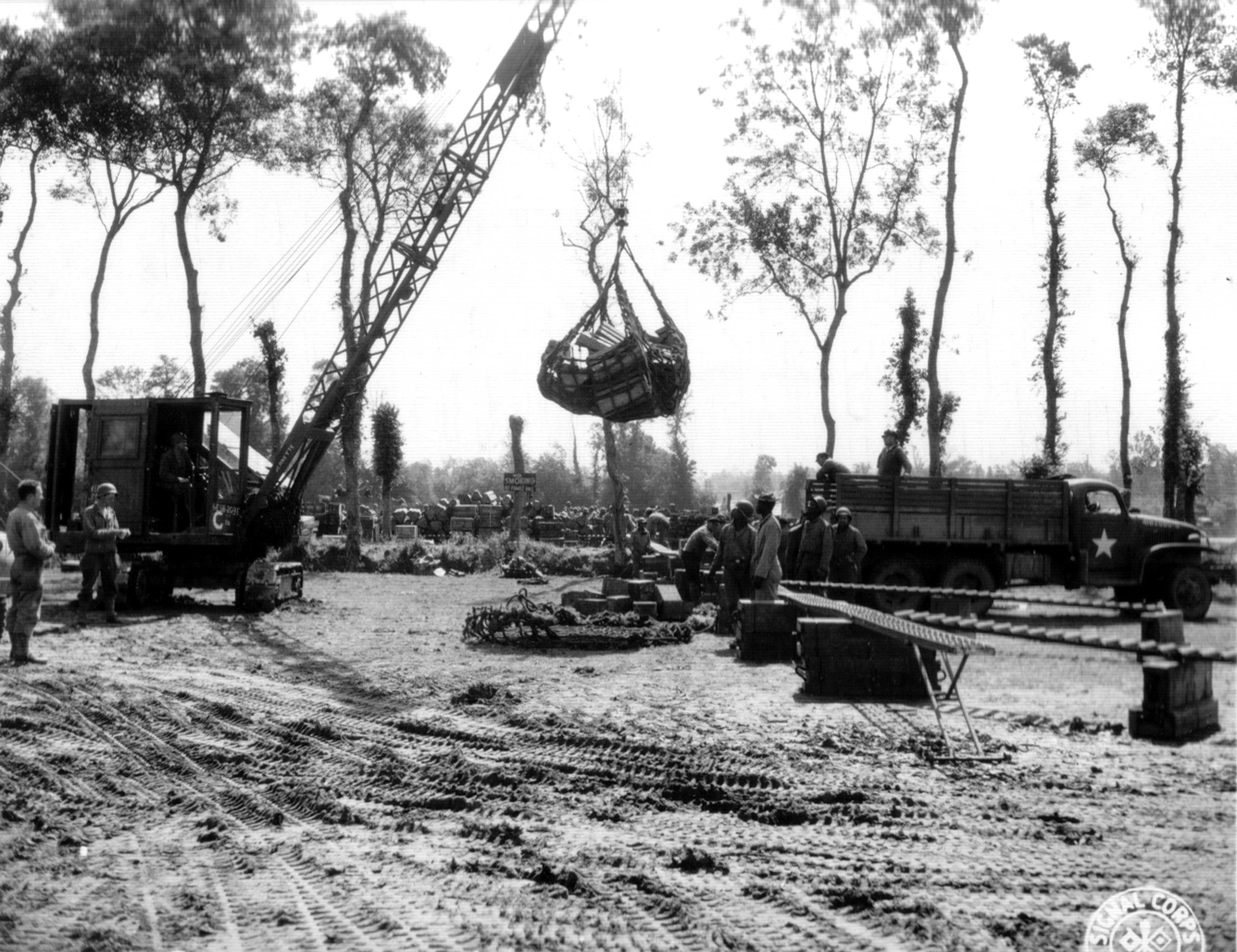
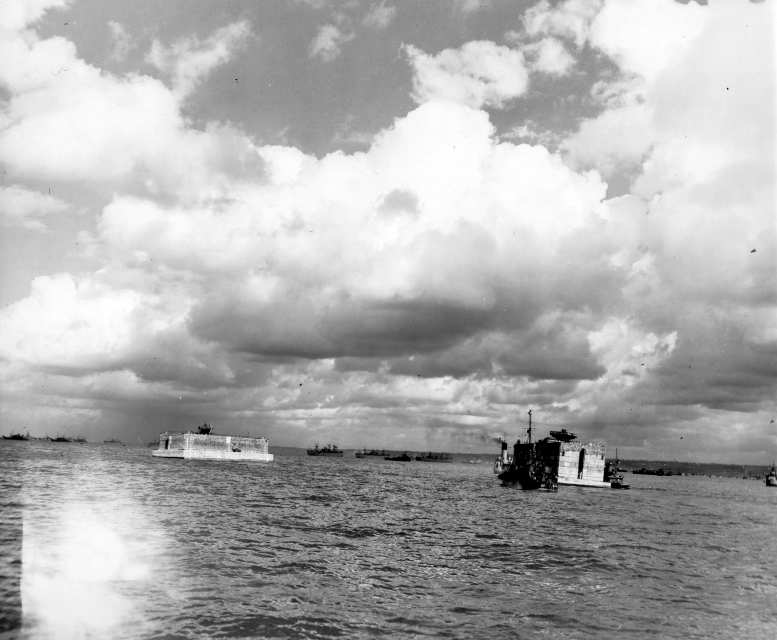
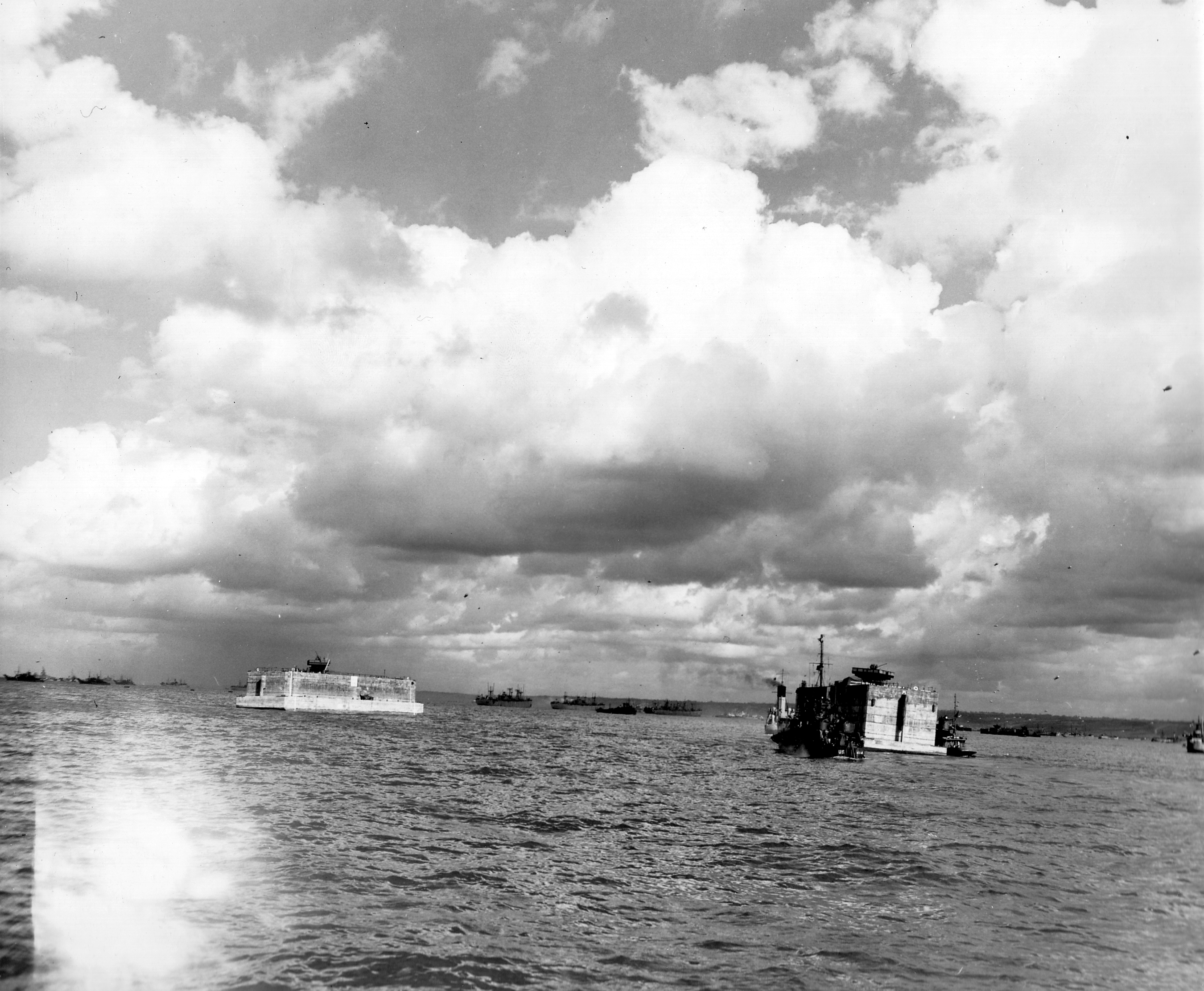
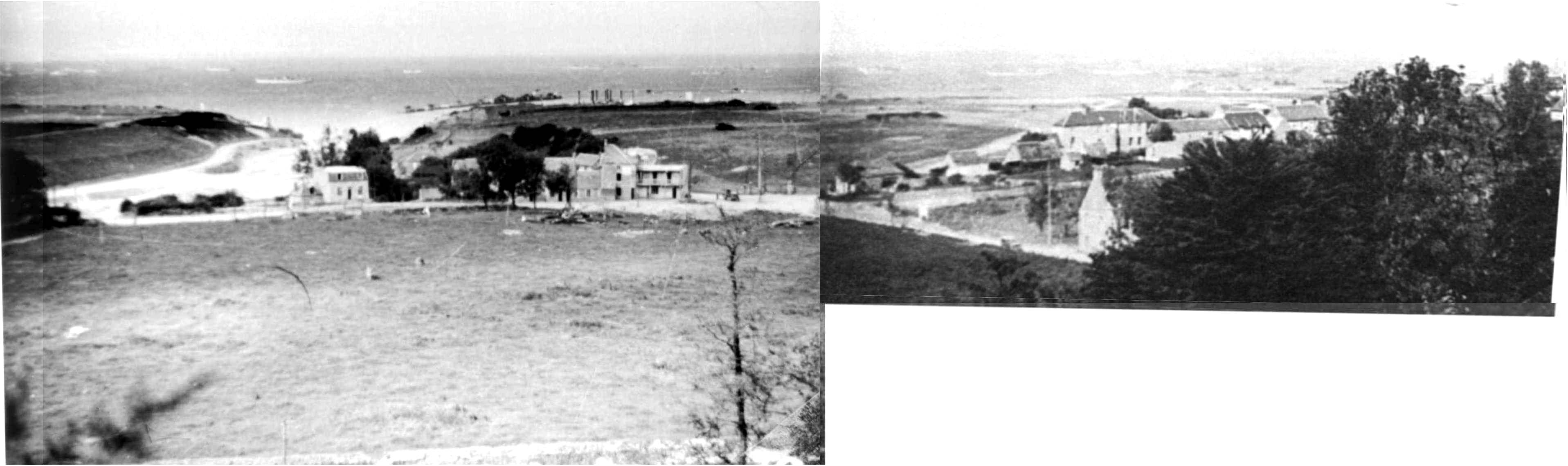
As soon as I woke up I went up to my observatory and what was not my astonishment to see, going far above the mayor's fence wall, a pile of crates and the arrow of a crane (a depot of material, as there will be everywhere in all the fields of Vierville), while on the sea one could perceive tugs pulling gigantic cubes, (the pontoons "Phoenix") surmounted by a platform armed with a small calibre gun (1 Bofors anti-aircraft of 40mm).
After breakfast I listened to the English radio that confirmed Bayeux's capture, parachuting on the Cotentin and the advance on Caen. I was typing a short press release and was going to post it on one of the grocery stores.
The mayor was on the road and was discussing with Captain Gardiner and several of the neighbourhood residents. I went to them; Gardiner asked the mayor to have the burial of all the cattle killed and which were beginning to inflate; it was decided that they would be thrown into the vast excavation dug behind the Ormel and that the Americans would cover them with land; it was then referred to requisitions, the castle for the services of the port (the 11th Port, Colonel Witcomb), all the lands of the commune should be rid of the animals that were feeding there; a building was needed to install the service of the military post there. This question was immediately resolved, as the engineer offered his garage which would not serve for a certain time.
A battery radio station was proposed to the mayor to be aware of military instructions and news. The captain announced that the fire of the post and the school would be used to widen the crossroads, but as, curiously, the small corner room, which served as the town hall secretariat, had not burned, he asked that it be cleared as a matter of urgency. The mayor decided to transfer the town hall and secretariat to the former German infirmary. (where?)
Finally the captain asked for a man to accompany him on a visit from the southern part of the commune to the Vaumicel; the mayor, turning to me, asked me whether I accepted this role of guide and on an affirmative sign of my head the captain told me that he would pick me up at 10 a.m.

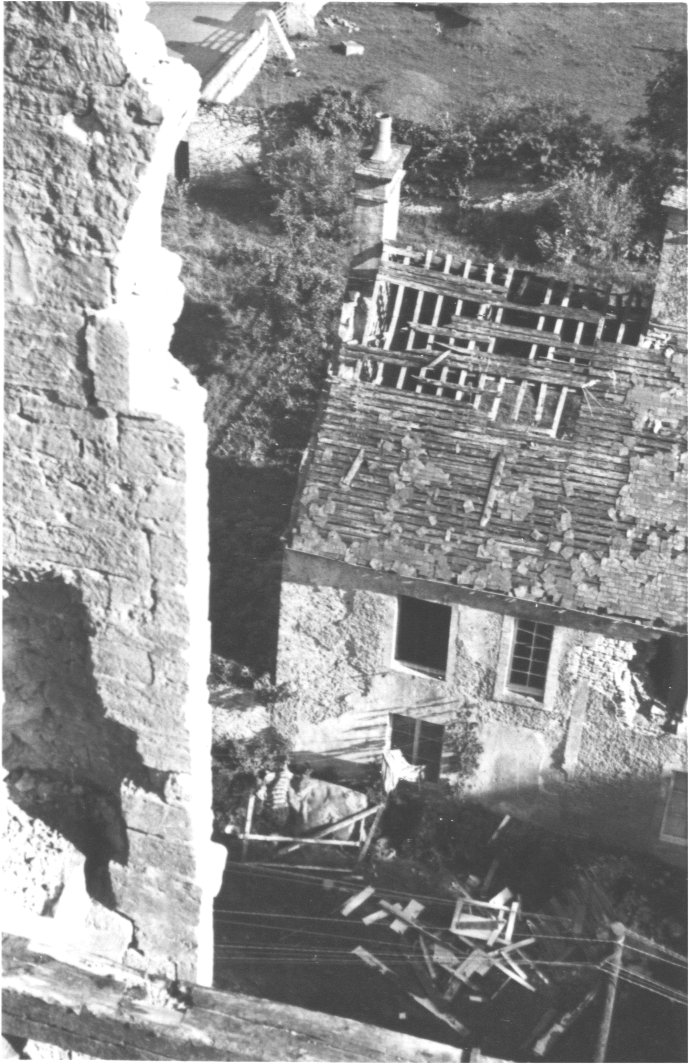
It was true, too, that we arrived at the crossroads of the post where nothing had yet been cleared, two jeeps had burned and their drivers, according to the lessons taught, had fallen under and their bodies were seen, as well as those who accompanied them. Soldiers walking along the convoy were lying on the slopes and the halftrack burned was parked in the field where the school was later to be built.
The tourist inn (the "Pie qui tette") was half destroyed and the ruins of the bus station were seen further away.
Continuing our road I found that Collières was a pile of stones.
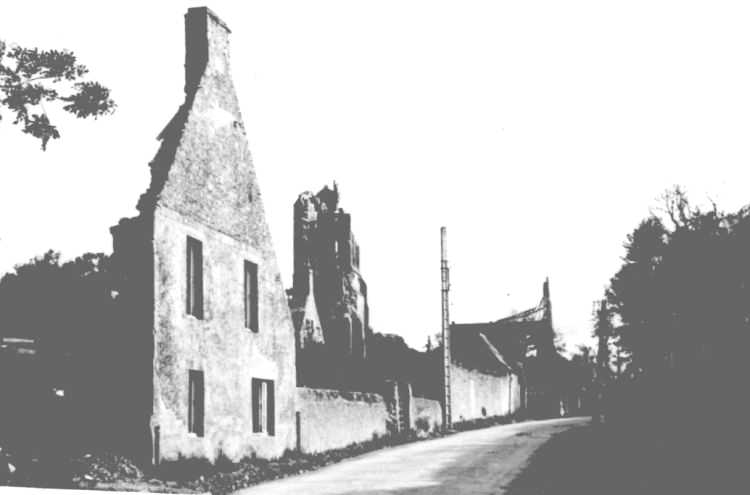
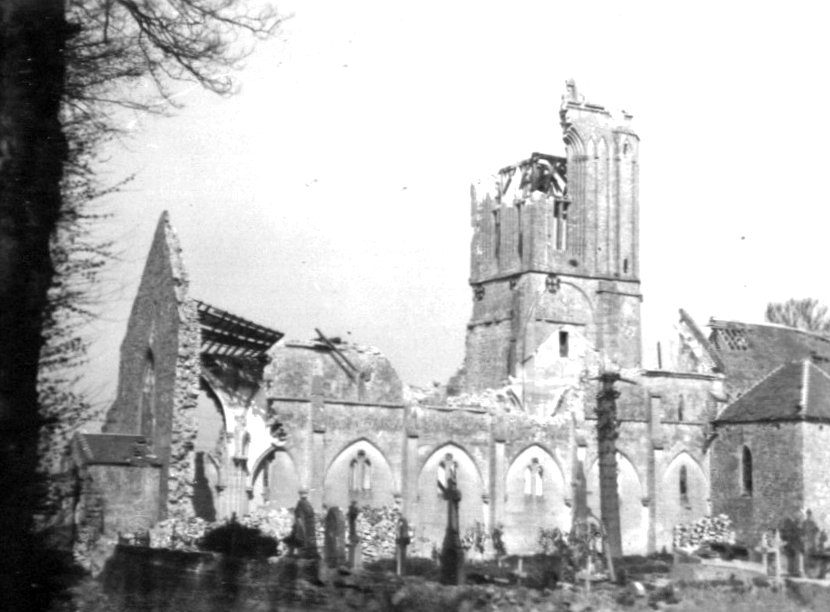
We looked at the church, the nave had suffered a lot, especially the north wall, but the choir was almost intact, and if the bell tower's arrow had collapsed vertically on the intermediate floor, the bell tower's staircase still existed up to the top of the tower.
The presbytery, next to the church, had a lace roof. (This is where much of the castle furniture was stored at the time of its occupation in March 44 by the Todt Organization, it came out seriously damaged by shrapnel and rain) The great if of the cemetery had its trunk cut to two meters and the falling branches had cut down the cross.
Some steles had tilted and gravestones had deep marks left by shrapnel.
At that time the road to Formigny did not pass behind the church but in front of the porch and made two right-angled turns to bypass the cemetery.
Then Michel Hardelay was visit Than Manor House and the Vaumicel (page 7011) With Captain Gardiner. After this visit, they came back:
"We went back to the village. During our walk a great deal of work had been done: the burning material had disappeared, except for the half track, the corpses had been taken to the first temporary cemetery (apart from the beach) and even the calcined debris from the post and the school had begun to be cleared; on the ground some kinds of corkscrews could be seen, the remains of the selfs and coils of the radio stations (those which had been seized in June 40 and deposited in the town hall) which had burned in the attic of the town hall.
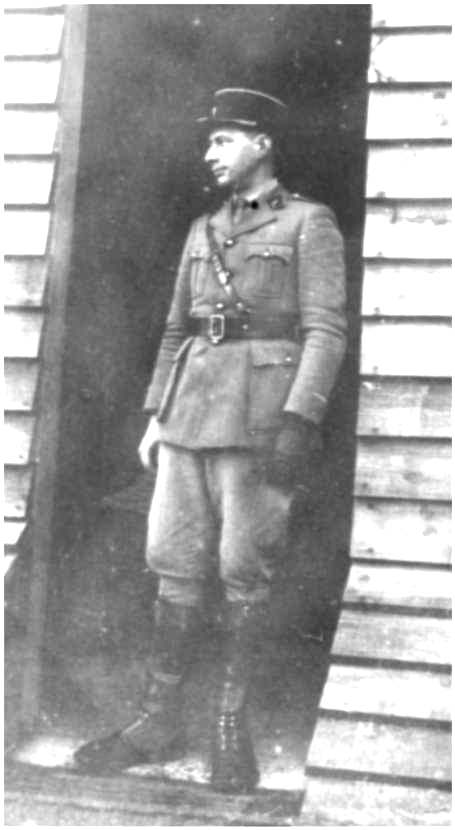
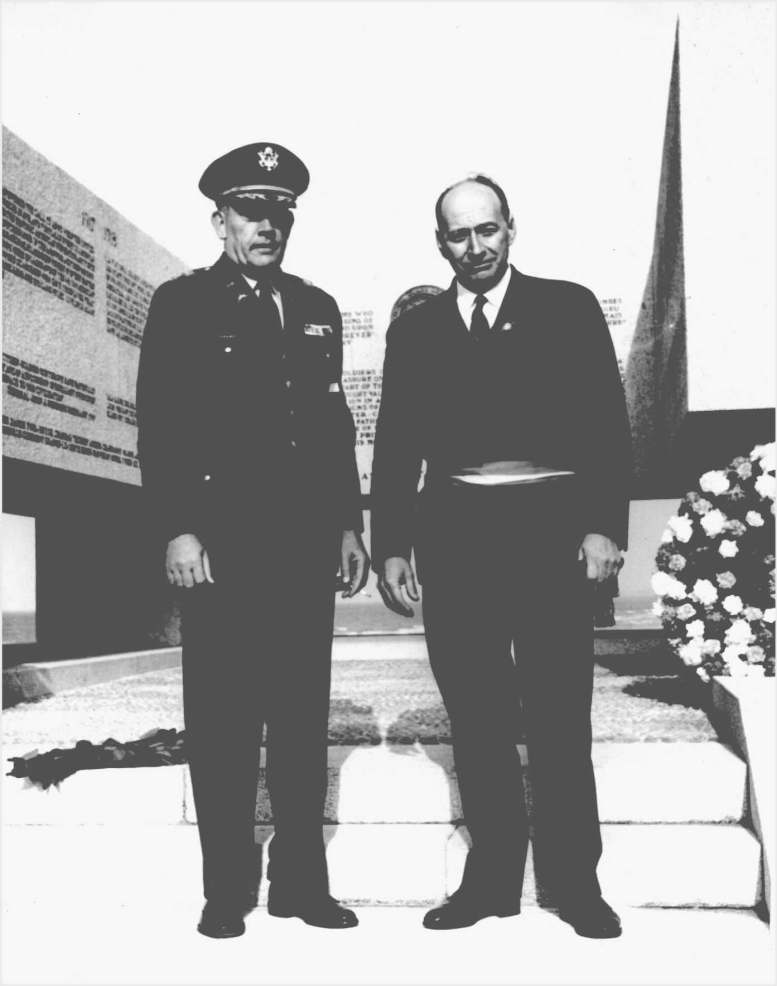
(details)
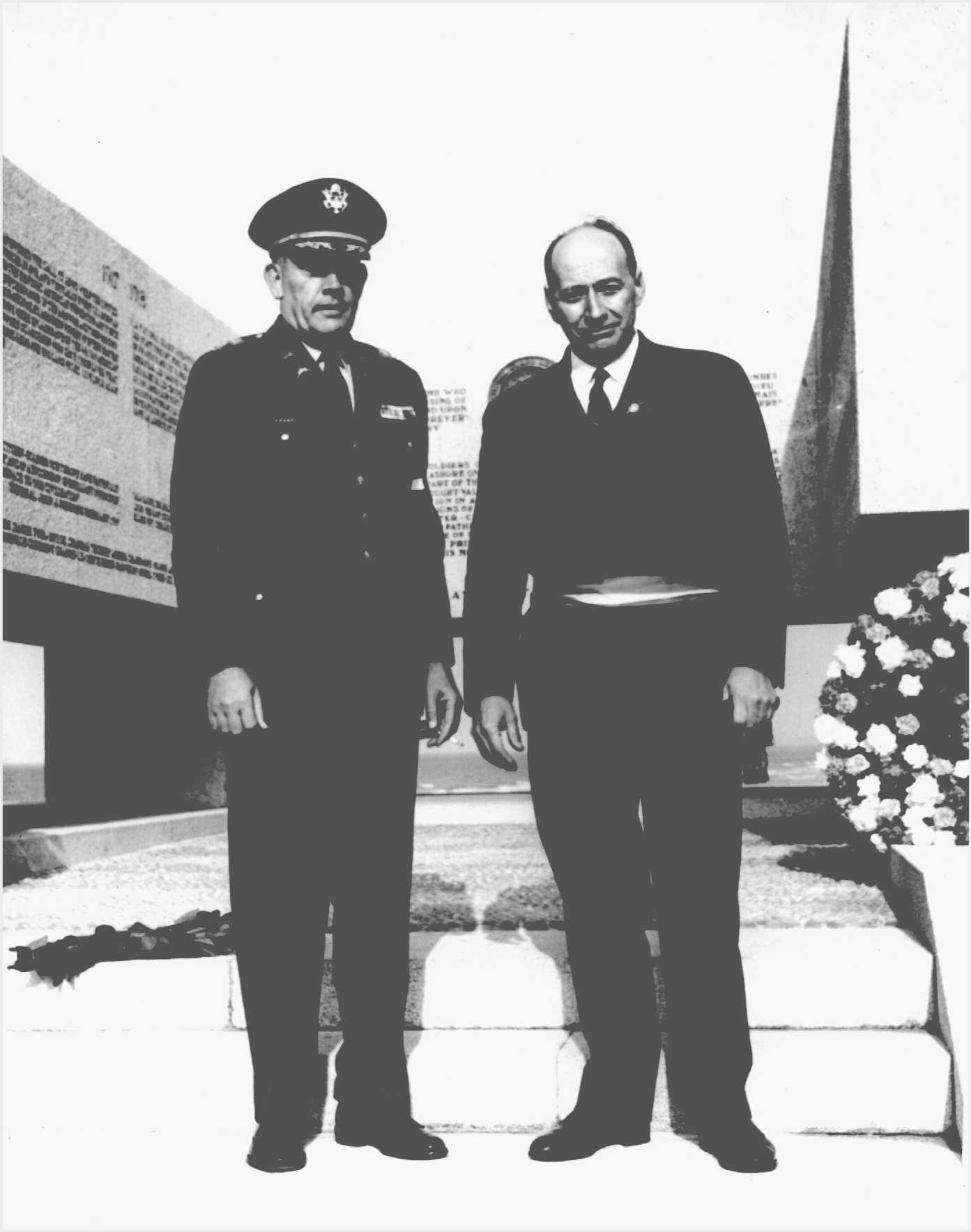
in 1969, Michel Hardelay is
mayor

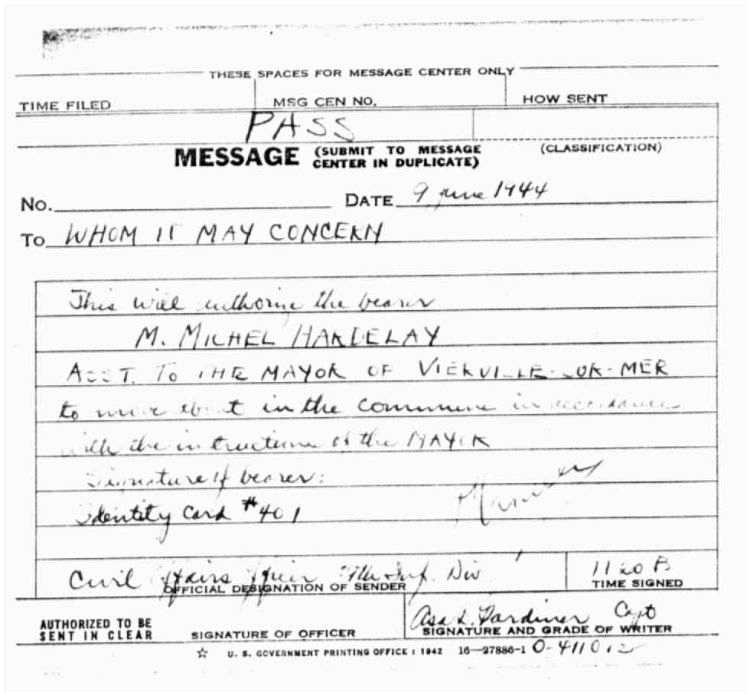

I left the captain. I didn't have to see him again, but before he went down the street of the sea he took his message book, wrote a few lines and handed over the sheet; it was a "pass".
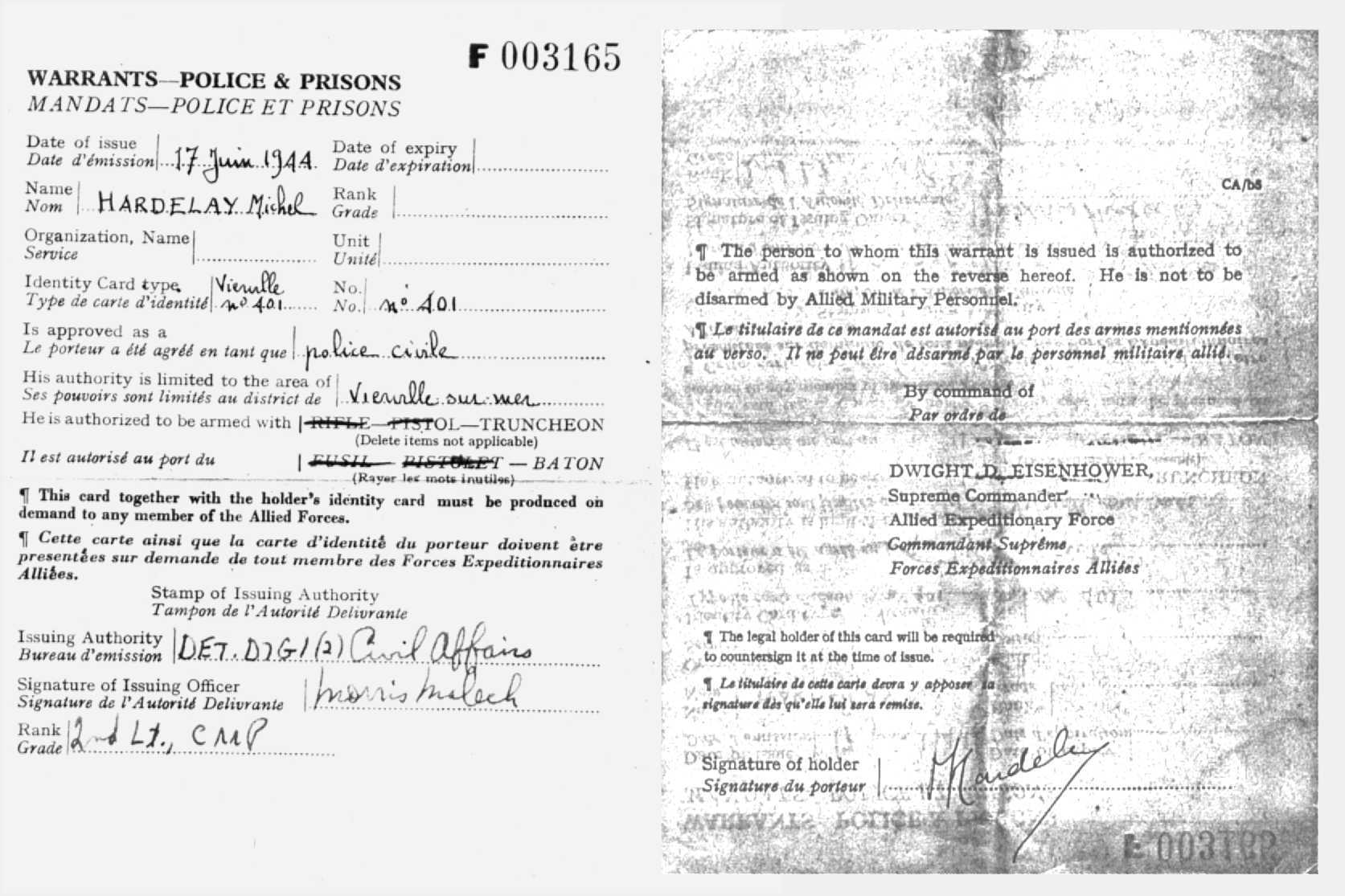
This "pass" was later to be confirmed by an official print calling me "civil policeman" with permission to carry the stick, signed Eisenhower, and telling me that my role was to prevent the curious from seeing the artificial port from the top of the cliffs, difficult work on some days when I led small groups sheltered from the tall grasses by asking them to stay squat for a few minutes, then to return to the village, and I was starting again with half a dozen other people.
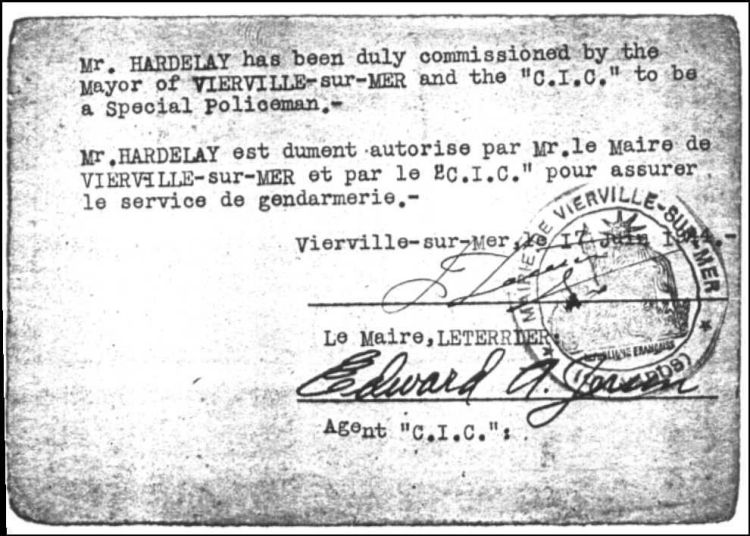
Designation of Michel Hardelay as a police officer, authorized to wear a "Truncheon" (a baton)
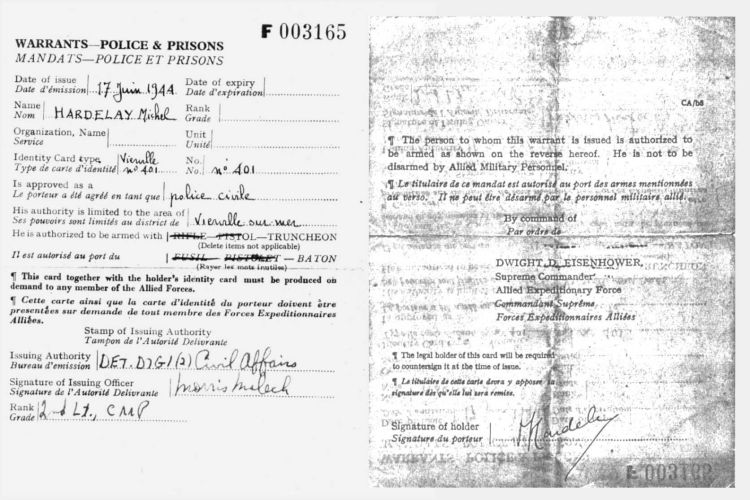
(details)
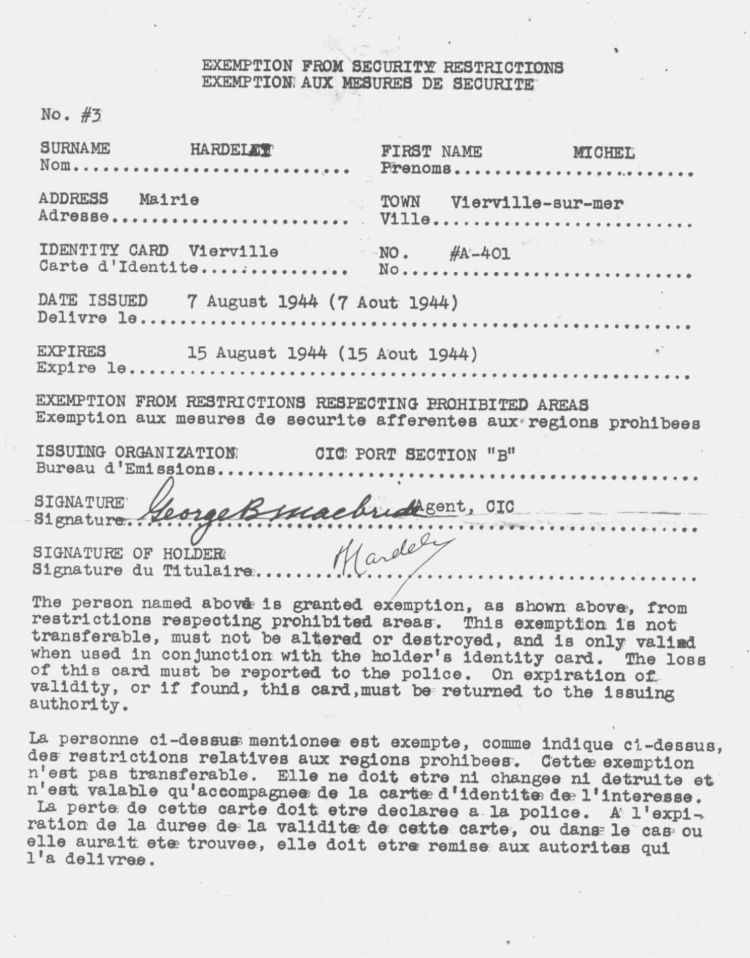
Permission to travel in areas prohibited to civilians (the beach) for Michel Hardelay
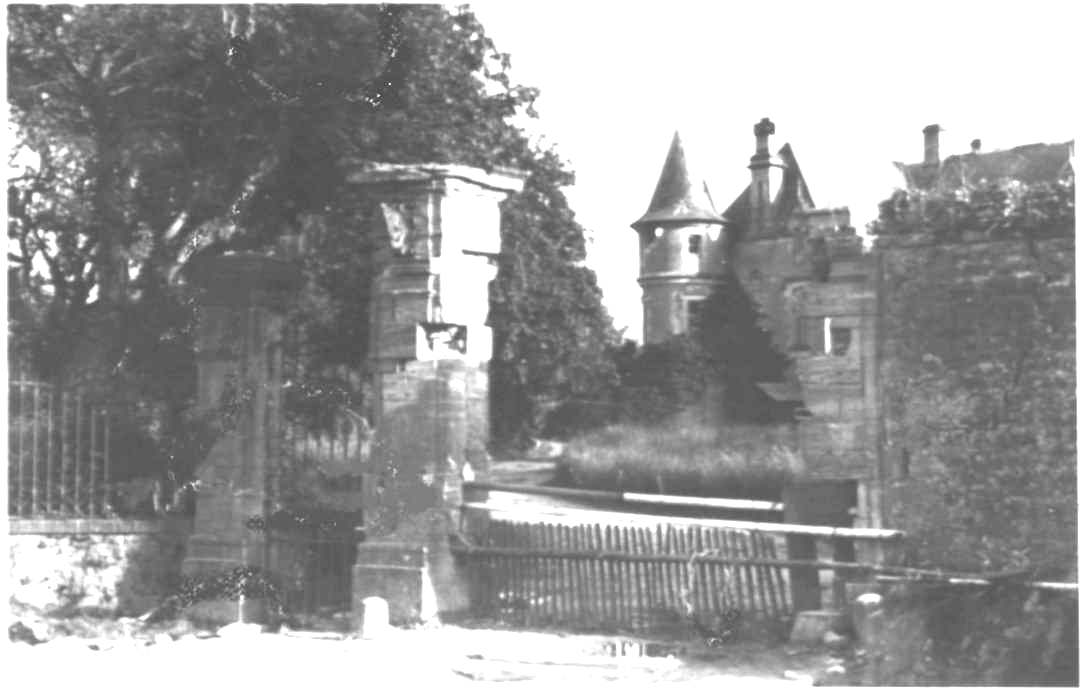
Then visit the castle:
When I went home I found my mother in great conversation with the two teachers. They, who lived in the post office building, had lost everything in the fire the night before.
We decided to make a reconnaissance to the castle, hoping to find some effects left by the workers of the Todt company during their hasty departure.
There was a great disorder and I was very surprised by the number of women's dresses scattered on the floor. The school principal found a large flag with a swastika in which she later cut herself, skirt and corsage, of a violent red of course.
When we went out we told an army roller ready to make soup; out of curiosity I pulled a sort of recessed compartment on the right, it was full of real coffee. The school principal, who was very fond of coffee, could not be found at that time, filled her pocket; as for me, I told my mother that I would come back after our lunch with a bag. But when I came back after dinner there was no coffee.
Fortunately, the "K" ration cartons that were subsequently found to be profusion contained, in addition to three cans, each one of coffee pouches."
Then Michel Hardelay carried his steps to the South and Vacqueville (page 7012).
On his return, he witnessed the burning of a village house:
"A quarter of an hour after my arrival I heard my neighbor shouting, "At the fire, Mr. L.'s house. Burn!"
I rushed with him; the corner house, between rue du Hamel-au-Prêtre and the road to Saint Laurent, in front of the grocery store, had its two small corner pieces in flames, but the fire did not seem to have won the whole, the doors of communication with the other rooms, closed, having played the role of firebreaker. When the frame collapsed, the only risk was that, due to the failure of the roof connection, the flames would win the rest of the frame, then intact.
So we each took a bucket and, after they had been filled at the nearby well, threw them on the burning beams. At the end of six buckets these were extinguished.
I then told four soldiers who had been hidden by the high grasses from the ditch in which they had thrown themselves, their heads alone exceeding. They were rather comic to see, their cross helmets on two Laurel heads and two Hardy heads, trying to each have a boyfriend in front of him to protect themselves, so constantly retreating. They had thought they saw someone from the hostile in the corner room and had thrown a fire grenade into it, after which they had retreated and waited for the result of their action; but no one had gone out and they had seen us extinguish the fire. Je leur criai: "Come, it was probably a cat".
US DCA in Action:
On the evening of this 8th June we learned what was to become the ritual of dusk: an anti-aircraft artillery piece fired a smoke shell at a point clear of the sky, if possible at ten thousand feet, then each battery settled on this high-flying shell that provided the direction and speed of the wind. That was the time when you had to have a roof over your head. Finally, the dam balloons were installed.
In the event of a night storm, the balloons, with a metalized canvas and a thin steel cable attached to the winch, acted as a lightning rod and it was strongly advised to move away from the winch.