Destruction of the Vierville Anti-tank Wall
Testimony of Sergeant Dube (Part 1)
(Sergeant Dube's testimony also includes Part 2, Part 3, Part 4)

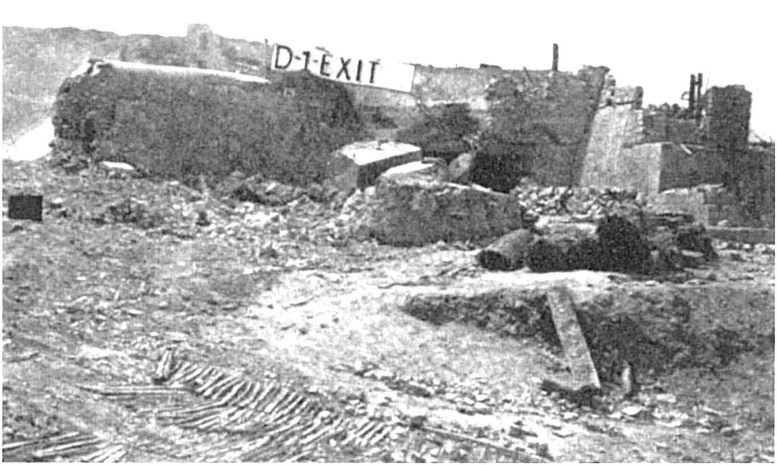
(details The main bunker in Vierville on 7 June, showing the broken debris of the anti-tank wall

(details)


(Excerpts from the story of Sergeant Dube of the 121st Engineer Battalion)
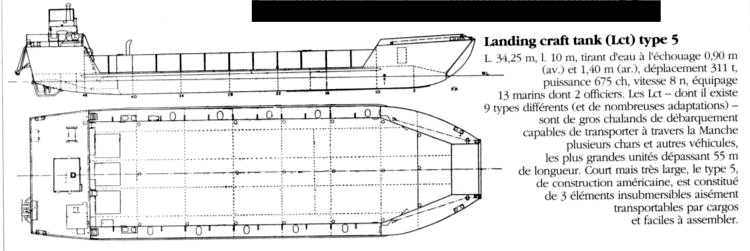
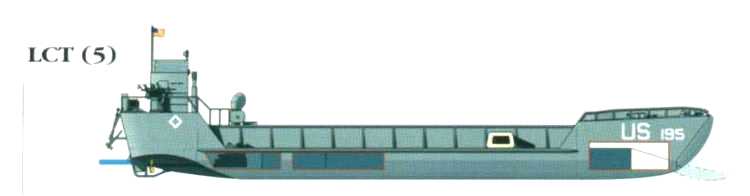
"I was the 9th squad leader of the 3rd platoon, Cie C/121e Batillon du Génie. We were on board a LST. It's the type of boat that has big front doors. A little before the dawn, (about 05:00) another boat, of type LCT was placed along our board. We went down to his ship with rope nets hanging from our basting.
(Dube made the crossing in a better equipped LST to house soldiers, but heavy equipment had been loaded into the LCT in England)
As the day rose, (around 06:00) we saw the bell tower of Vierville and the road that climbed from the beach to the village.
{Our mission was to land (on Dog Green, just ahead of Vierville), climb to Vierville by this road, turn right up, and 400m further remove the mines from two fields to the left of this road and behind a farm to allow our vehicles to park and our platoon to bivouaquer for the night.}
A little later we saw men in the water. We saved everyone we could. A number of them were in poor condition, on the brink of exhaustion. We were part of the 6th wave of landing (which was to approach Dog Green at 7:30 a.m.). We first turned round, then we headed towards the coast.
Our route took us about 150m from the arrival of the road coming down from Vierville; we were on board an LCT when we heard shouting from another LCT: "Back, back, we hit a mine". The pilot of our LCT immediately turned back and the boat began to sting violently back.
(It is likely that the officers in charge of the LCT had found that approaching Dog Green Beach in the critical state where it was at that time was suicidal. Colonel Schneider of the 5th Ranger had done the same 1 hour before)
I can't say that if we had continued straight ahead, we would also have hit a mine, I'll never know. We went backwards for a time that seemed to us an eternity, then we went forward to the left, moving away from Vierville. Throughout this time shells fired at us fell without damage for us, but very close to us (it was at this point that the landings were suspended by order of the "Beachmaster" until around 10:30 am).
We landed (on Dog White, around 11 a.m.) finally about 1500m from our objective which was the road of the climb to Vierville. We had to follow this road, as I said before, turn to the right and find on the left a large house with a field behind, where we had to spend the night.
It was at this time that the first event occurred in which the prayers I had spoken in previous years were answered. I don't know how to swim a single breast, even naked. You realize how lucky I was to be left with a wet uniform, heavy equipment and a load of about 25kg on my back if my boat, like many ships that morning, had dropped its landing ramp in deep water to avoid hitting a mine or an obstacle.
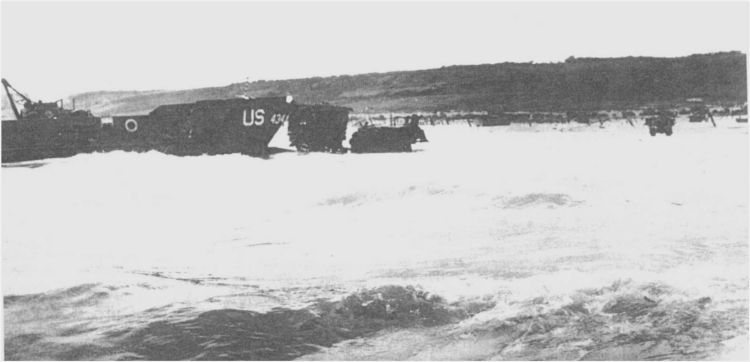
(the vessels that were hovering in deep water almost always hit a sandbank, and the ramp was lowered in the channel following the sandbank. Here the LCT approached around 11:00 am at sea completely high, and it had to pass over the benches and obstacles to approach directly on the pebble slope. It was a rare chance).
Well, in our case, we hit so close to the beach that none of us was wet further than the sole of his shoes. We were far away (on Dog White) from our goal of serious fighting. As soon as we left the boat, my Lieutenant (Lieutenant Pope) told us to wait there while he was trying to get back in touch with the company commander (later the Lieutenant told me that the Captain had been shot in the head while disembarking).
We moved pebbles to dig shelters. Many, of whom I was, lay on their backs, our head on the helmet, looking towards the sea. None of us had been hurt so far.
A simple soldier named Boscelli, in my boat, was loaded with two Bangalore torpedoes (explosive perch longlines) to destroy the barbed wire networks that we had to find on the coast, near the anti-tank wall that barred the road to Vierville. When the boat hit the pebbles, he threw both torpedoes into the water, before someone stopped him. He didn't think he needed it anymore, because it didn't look like a real war. While I was lying down, a few bodies floated at my feet. Then I realized that people were dying a little further. For us the war consisted of an artillery duel whose blows were approaching us dangerously.
A little later as we waited for Lieutenant Pope's return, General Cota passed (probably around 2:00 pm, returning from Vierville by the normal descent) close to the beach (the sea had begun to descend) and said, "Let's go guys, leave, the Americans who stay here will soon be dead, ahead of the 29th! ". We all got up and headed for the ascent to Vierville.
The tide was high at the time (the sea was descending, there was still little sand) and it was dangerous to walk along the beach. As they approached (from the descent of Vierville) the shots increased. The artillery, the mortars, the German machine guns placed at the top of the cliffs fired at us, not to mention the 88 mm guns placed in the bunkers that took the beach enfilade. (it is still likely that the German fire was reduced at that time, compared to the early morning, the WN of the Vierville descent were neutralized, but the German field artillery was still firing from time to time, especially on D1).
It was very difficult to walk because of the numerous bodies and vehicles destroyed.
I remember passing by a house many remember. It is shown in a photo in the book on the history of the 29th Div. U.S. infantry. I thought on returning to Vierville this year (1994) that it should be a casino. (??? probably the villa Hardelay) A little later we were able to resume our progress towards Vierville, on the coast road, and towards the anti-tank wall. That's when I first saw one of the most horrific shows of the war: an officer shouting "A doctor, a doctor!" He was standing but staggering, a part of his face carried away. I was torn up, either stopping to rescue him, or going looking for a doctor to treat him. I helped him sit down so that he would become a less visible target and I called my men to look for the nurse attached to our unit.
It was about 4:30 p.m. or 5:00 p.m. (probably much earlier around 2:00 p.m. or 2:30 p.m. when we arrived at the anti-tank wall. The head of the 2nd section of Cie B/121 was waiting standing by the wall for sappers to arrive and blow him up. Nothing could go up from the beach because of this wall, all types of vehicles, tanks, half-tracks, trucks were blocked on the beach like still ducks.
When I was seen with my intact section and a Bangalore pole, the officer commanding CieB/121, whose name I cannot remember, said to me: "Sergent, make a reconnaissance beyond the wall and prepare to blow it up." I asked for volunteers; Franck Wood (still alive, and who lives in Arlington, VA), a young man named Gronden, who was later killed on the road to St-Lô, and another soldier, introduced himself.
We went towards the wall, cutting barbed wire, paying attention to mines and avoiding falling into the anti-tank ditch. As we approached, we saw that it was a double wall with a chicane that allowed us to walk to the other side. We did not see any German soldiers until we looked at the top of the cliff on the left, we saw German soldiers running in trenches. We shot them and missed them.
On returning to the beach along the wall, we started preparing for its demolition, although it was not the mission that had been assigned to me in England. It only became so when I was standing in front of the wall. We made sure that all the Americans present were out of reach of the explosion, safe.
On the beach, not too far away, there were 2 US engineers, bulldozer drivers: Albert Valleco and Joseph Drags. Each bulldozer carried 10 boxes of TNT (approximately 500 kg). My demolition specialist in the 9th section was John Oleneck of Scranton, Pennsylvania. I lost John's trail when I was injured in Germany and left the unit, so I don't know if he's still alive. Valleco and Drags both live in New England, USA. Immediately after clearing a road to the wall, Oleneck wondered how many crates would need to blow everything up.

Both walls were high (2m50) and thick (1m) and reinforced (armed concrete). He decided to use 10 boxes on each wall, making a big U, like this one.
He broke the lid of one of the crates and installed a detonator in a TNT bread in the centre of the case. He pulled the wire to the sea.
After putting all the men in shelter and checking that no one was in the area, I ordered John to press the handle of the firing device. I can't remember if he or I executed the gesture after the "All clear!" signal.
Anyway, a fireball rose to at least 60m in the air. It seemed to us that concrete debris and stones fell for long minutes! When the smoke cleared up and we were able to get out of our shelters, we saw that the two walls had been pierced and dislocated. Immediately the bulldozers began to fill the anti-tank ditch (it was 50m in front of the wall, across the road) and the tanks began to widen the hole of the walls to allow the beach vehicles to pass. It was about 5:00.
I don't remember seeing General Cota near the wall. It was the Commander of B's Company who ordered me to blow up this obstacle. He was a major. I know what I'm saying is contrary to what we're showing in the movie "The Longest Day." I'm not saying General Cota wasn't around, I'm saying I didn't see him again after he came by us on the beach telling us to leave where we were."
(the general had crossed the wall on his way down from Vierville at about 1:00 p.m., continued on the road, met Sergeant Dube on Dog White at about 1:30 p.m. before continuing on Saint-Laurent and Ruquet. Everywhere in his passage, he stimulated and encouraged the troops met, while making them take initiatives)