512
Fights of 7 June in Vierville
Following the testimony of Sergeant Dube (4)
(see also Parts 1, 2 and 3 memories of Dube)

The movements of 7 June



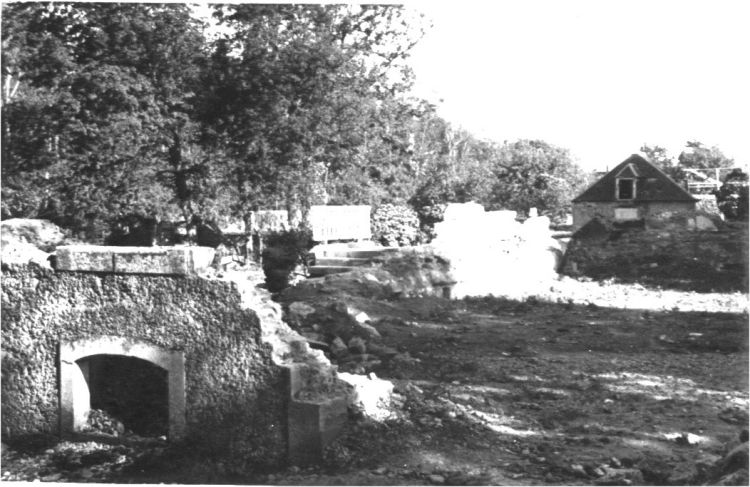
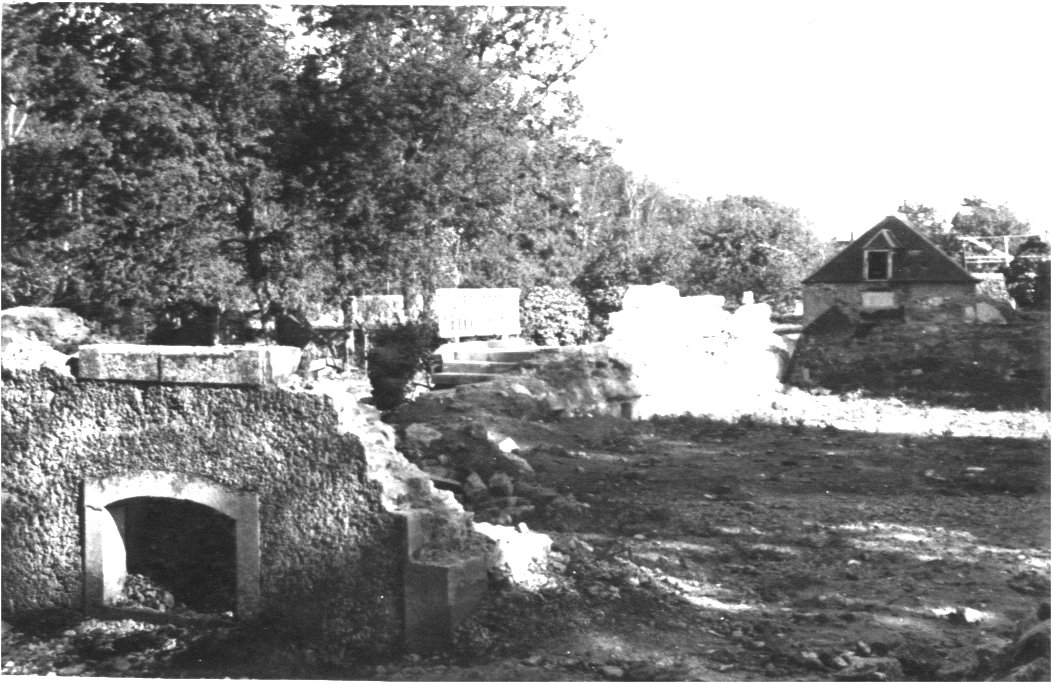
Further letter from Sergeant Dube, surprised by the German counterattack south of Vierville, see previous part of the letter (page 501):
"I said to my squad, we're leaving, but we're gonna crawl under the hedge to the end of the field. We will try to reach the farm hoping to get back in touch with Americans.
We finally found Lt. Pope, Staff/Sargaent Margousski, platoon sergeant, and Bob Champagne, heavy weapons sergeant at the end of the field, had also lost contact with US troops.
I told Lt.Pope, I'm taking two volunteers with me, the same guys introduced themselves, and we're gonna see if we can find any Americans. We walked away. I told Lt. Pope that I could speak a little French, I could have them tell them where the Germans were and whether they had seen Americans or not. Every time I met French people, they were very friendly, but they always warned me to be wary of a blonde girl who was always with the Germans.
Before the end of the day, we hung on with a few Germans I had seen installing a machine gun at the corner of a small field behind a farm. A few moments after 2 Americans passed, one of them with a cal.30 machine gun. I stopped them at the corner of the field, opposite the Germans, and they put up a battery to hire them. I don't remember who fired the first one, but in the meantime 3 young French girls with their little stools had entered the field and started milking the cows. When the machine guns started, you would have thought they would have run home, no, they just kept milking the cows like the machine guns weren't there.
Thinking about it, it's probably what saved them, because it seems that the machine guns on both sides were careful not to touch the young girls or cows, while watering their bullets all around. I've never seen this anywhere else in my life. Now maybe if they had risen up to run home, they could have been hit and killed by the bullets sweeping everywhere.
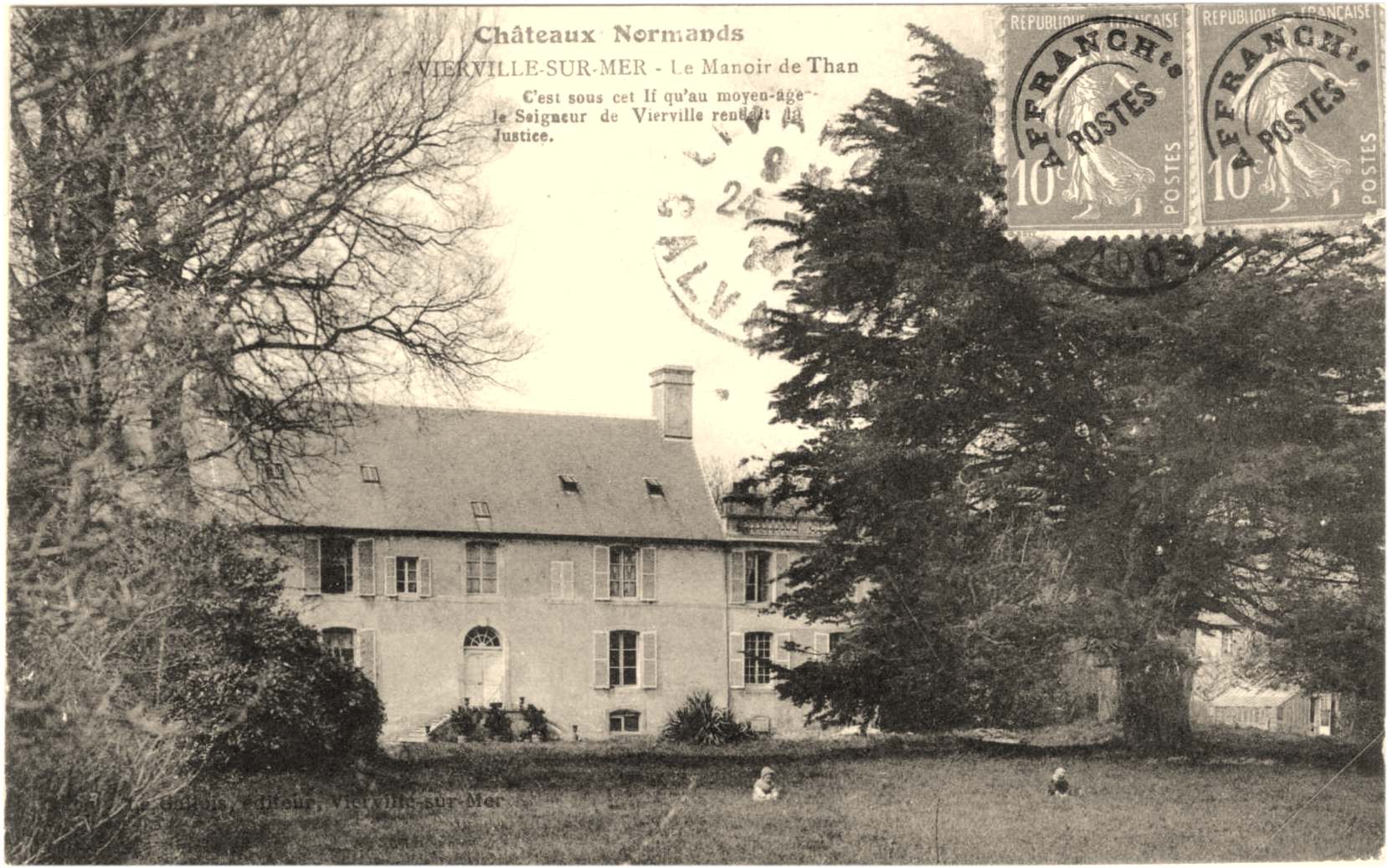
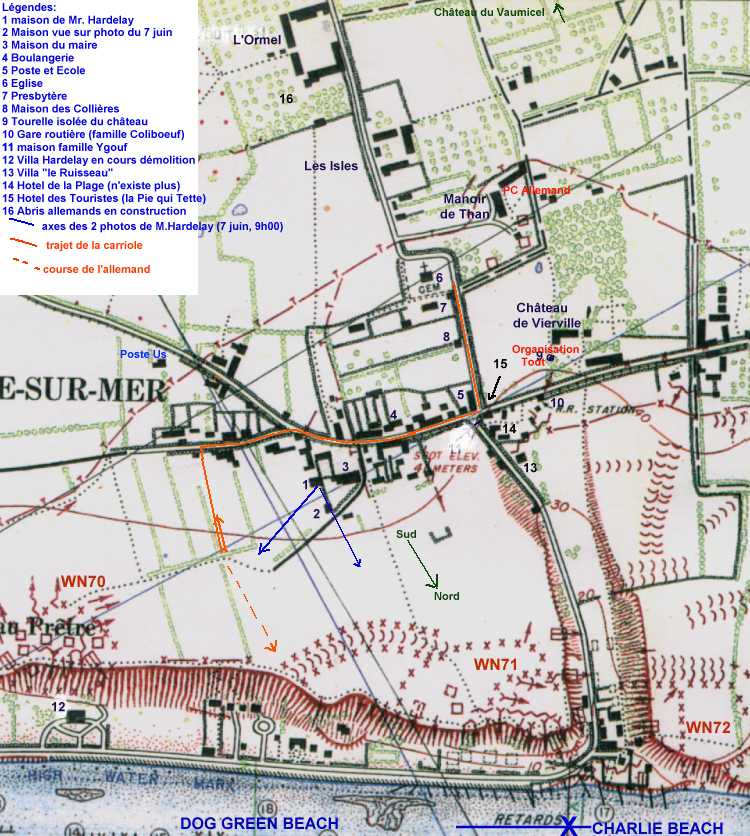
We arrived in this wide driveway with large trees forming vaults. The driveway led to this castle (probably Than's mansion?) which, I knew later, served as a PC for the Germans in Vierville. On the right side of this driveway, there was a shelter against bombing, I thought, given its size, that it must have been made for the whole community. I realized when I came back last June for the 45th anniversary, that the shelter was only for the Germans who lived in the castle. The blonde I was always told was a woman who lived with them.
While I was in the alley with some French trying to get information about the Germans, I got shot by a sniper in the trees over the driveway. The blow crashed on the floor at my feet. An American neighbor heard the blow, looked up and saw the sniper. He shot and sniper and fell, but hung in the branches.
Shortly afterwards, the woman I was talking to told me to look behind, that the blonde girl was approaching. I waited for her to arrive and had her taken by American soldiers to the beach as a prisoner, after having talked to her.
I also learned that the wall was a section of the Maginot line, which Rommel had transported on platform trucks and placed at the bottom of the Omaha Beach valleys. (it seems unlikely that such concrete masses were so transported in 1943, there must be confusion, perhaps with the "C elements" of the obstacles of the beach, which were indeed recoveries of the Belgian Maginot line, the "Cointet line")
That's all I remember about...

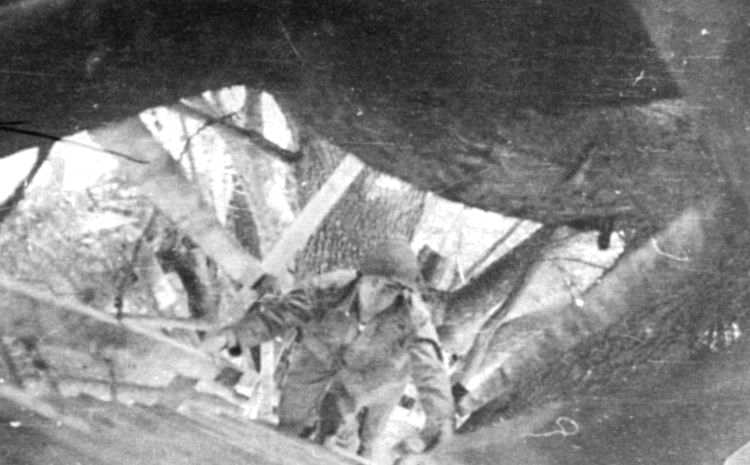

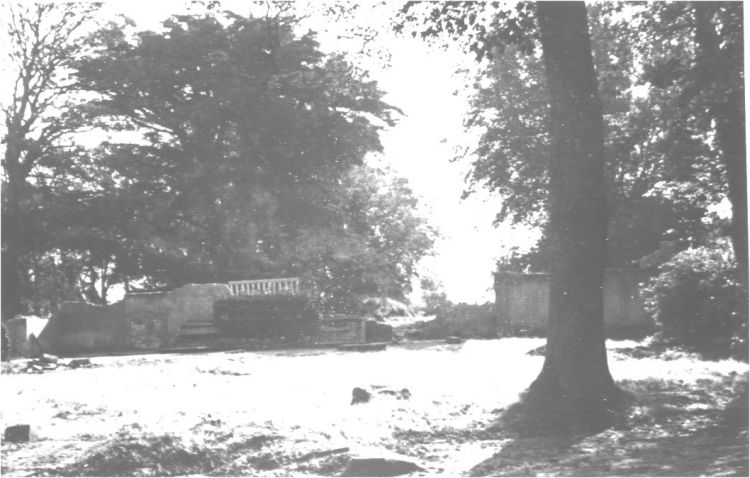
Illustration not available in the transmitted fund.
(details)
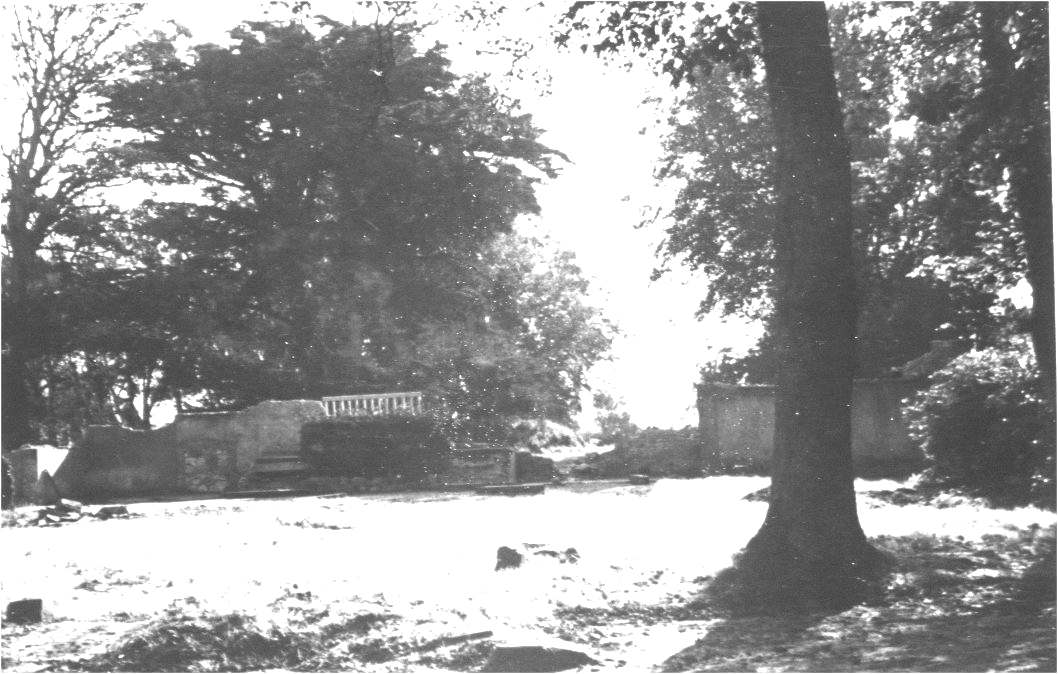
Illustration not available in the transmitted fund.
(details) Above and to the right, the large cypress, around 1970. The first platform built by the Germans, about 10m high, is visible.