After 7:40 a.m., the waves of assault that followed the Infantry were to land Genie, Artillery and the first Command groups,
But all the initial forecasts were upset for 3 reasons:
- Dog Green Beach was still under destructive fire,
- beach obstacles were not removed
- the ferry current was increasing (maximum at 9 a.m.) and poorly controlled by barges, especially the smallest.
Dog Green beach, the 900m east of the Vierville descent, has therefore been systematically avoided,
The tide climbed into the obstacle belt and covered them (high tide at 10:30 a.m.). The barges then had to look for a suitable place, and then break through by avoiding the mines. A few have been heeled on sandbanks in the middle of the obstacles and have had to lower their ramps in deep water. Others managed to manoeuvre in the ressack and arrive at the shore, more or less damaged.
Most small vessels (types DUKW, LCM, LCVP and LCA) were deported to Saint-Laurent and beyond.
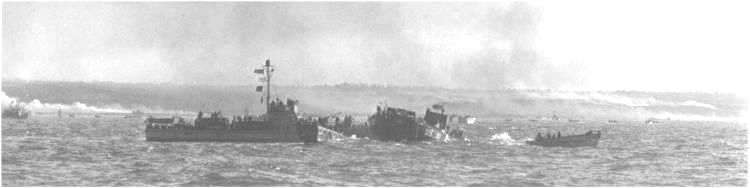
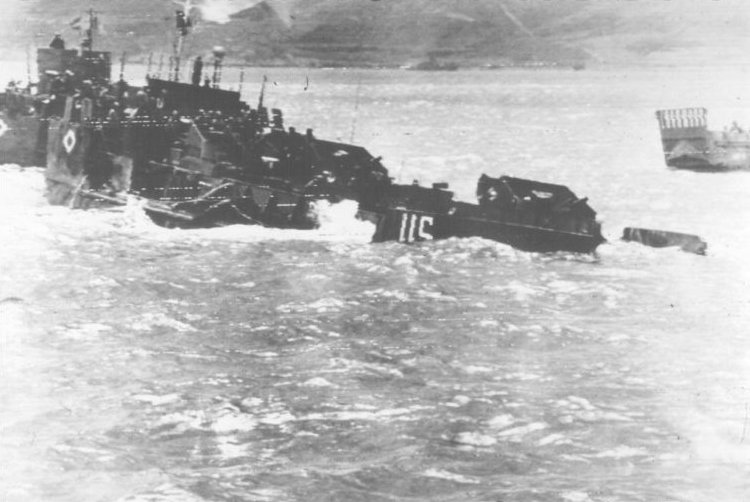
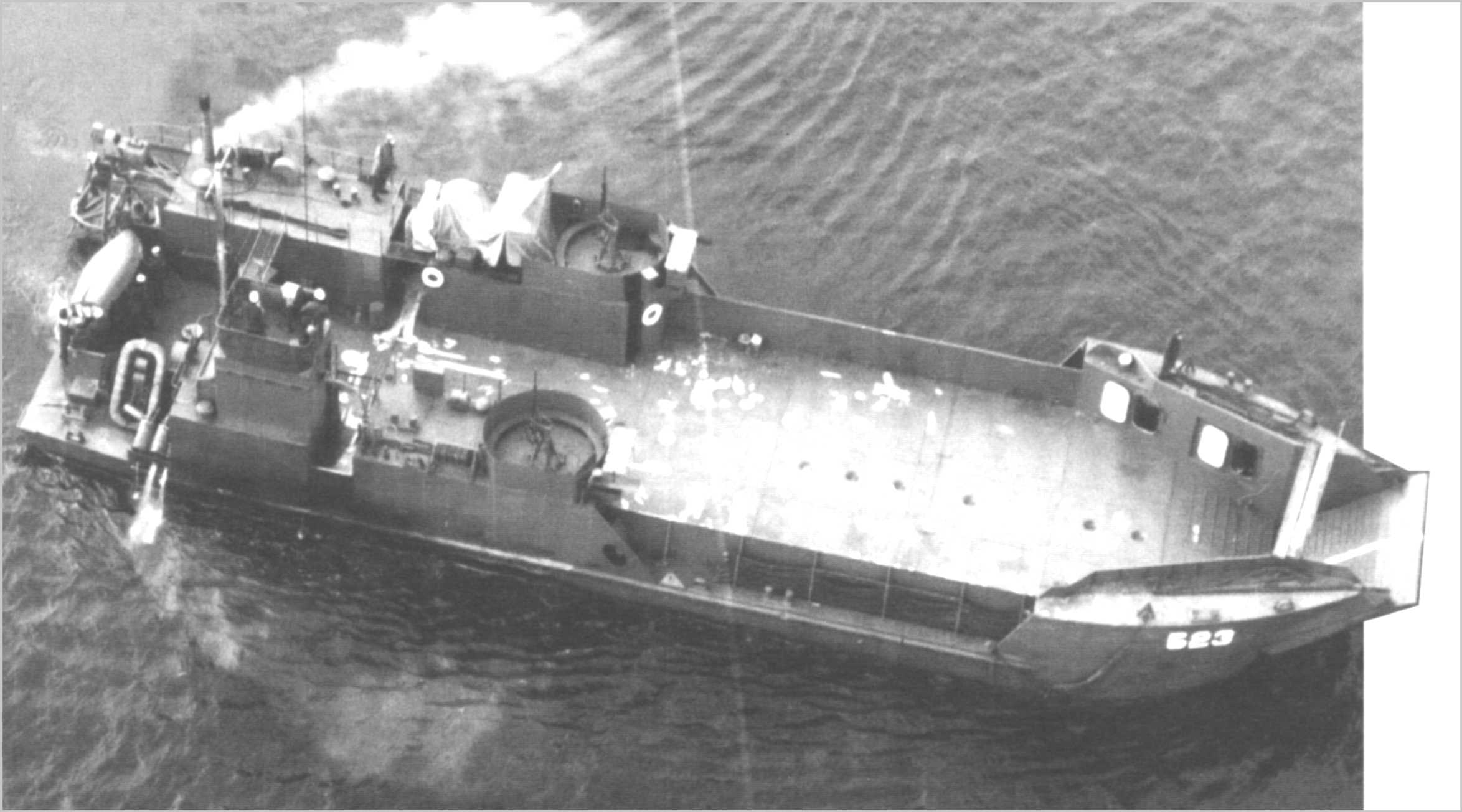
Two large LCI 91 vessels (91 and 92), approached Dog White, touched obstacles, attracted artillery fire that burned them.
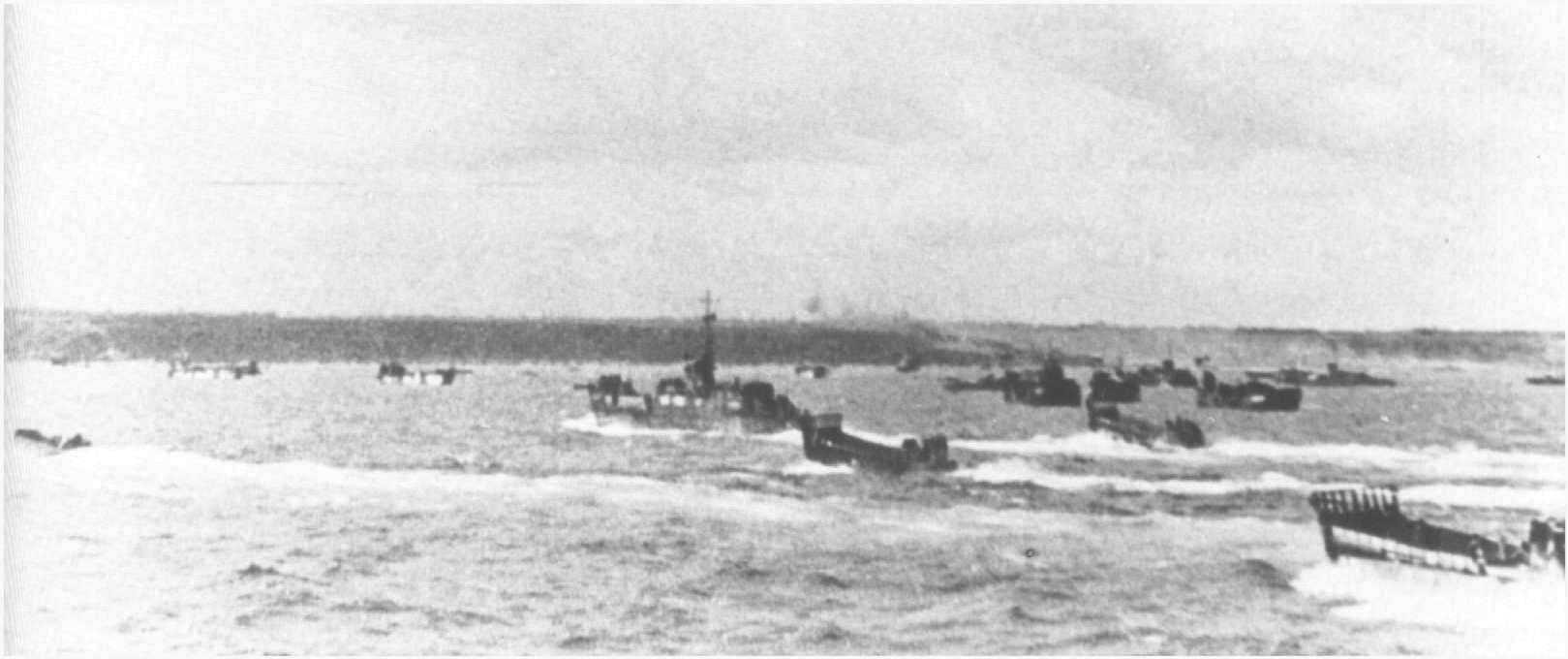
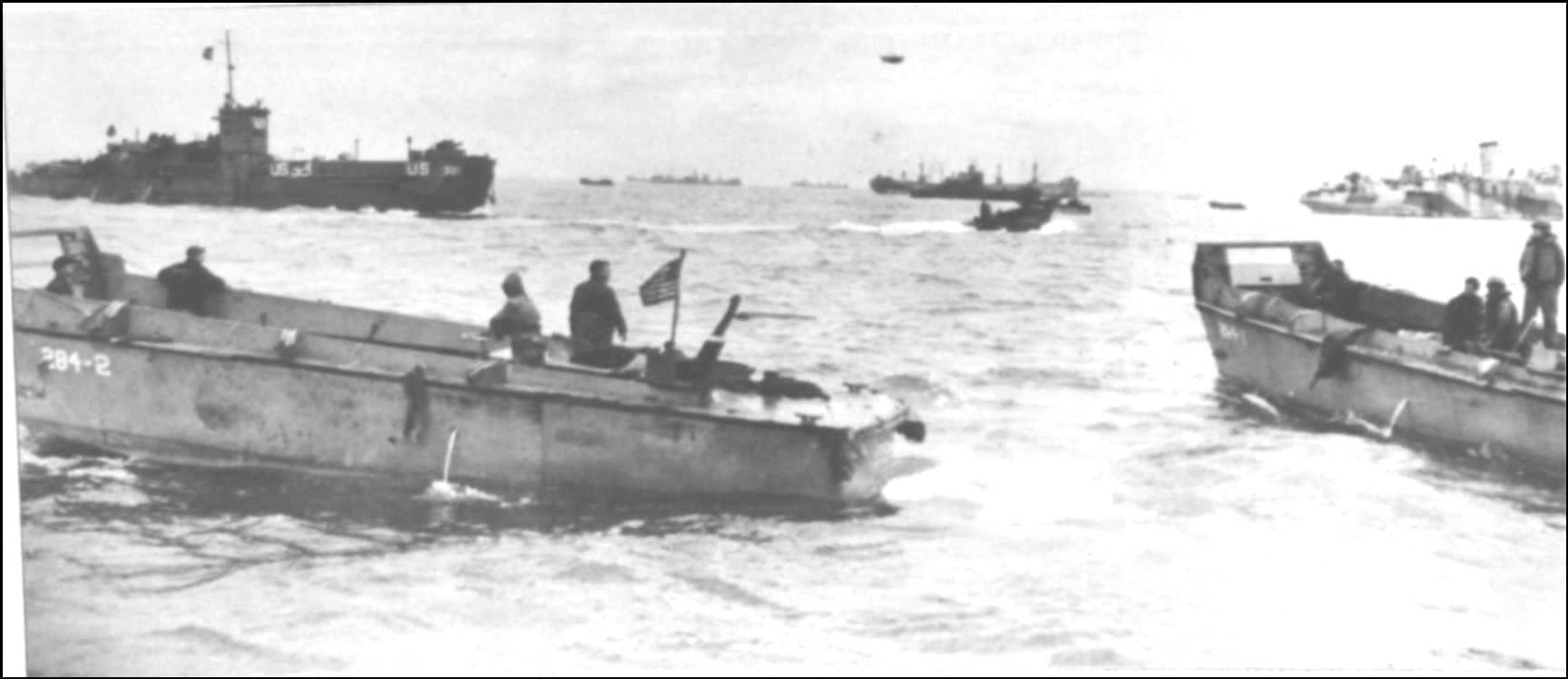
The large LCI and LCT that followed did not dare to get into the obstacles of Dog Green and Dog White. In the face of these difficulties, the "Beachmaster" of the 7th Naval Battalion of Plage even ordered the suspension of vehicle landings at around 8 a.m. The LCT and DUKW then started to circle ahead of Omaha Beach.
{The DUKW "Canards" had difficulties with the bad sea and they had to move forward at more than half their maximum speed to keep their ability to govern. The resulting fuel consumption could empty the tank in 10 or 12 hours, leaving the vessel in danger of sinking due to the lack of a exhaust pump.}
At high tide, from 10:30 a.m., some LCT tried unsuccessfully to force their passage into the obstacles on Dog White, with significant losses and damage. All the others moved to Saint-Laurent and especially Le Ruquet where there were important cleared corridors and where the 2 WN of the German defence had been neutralized since mid-morning.
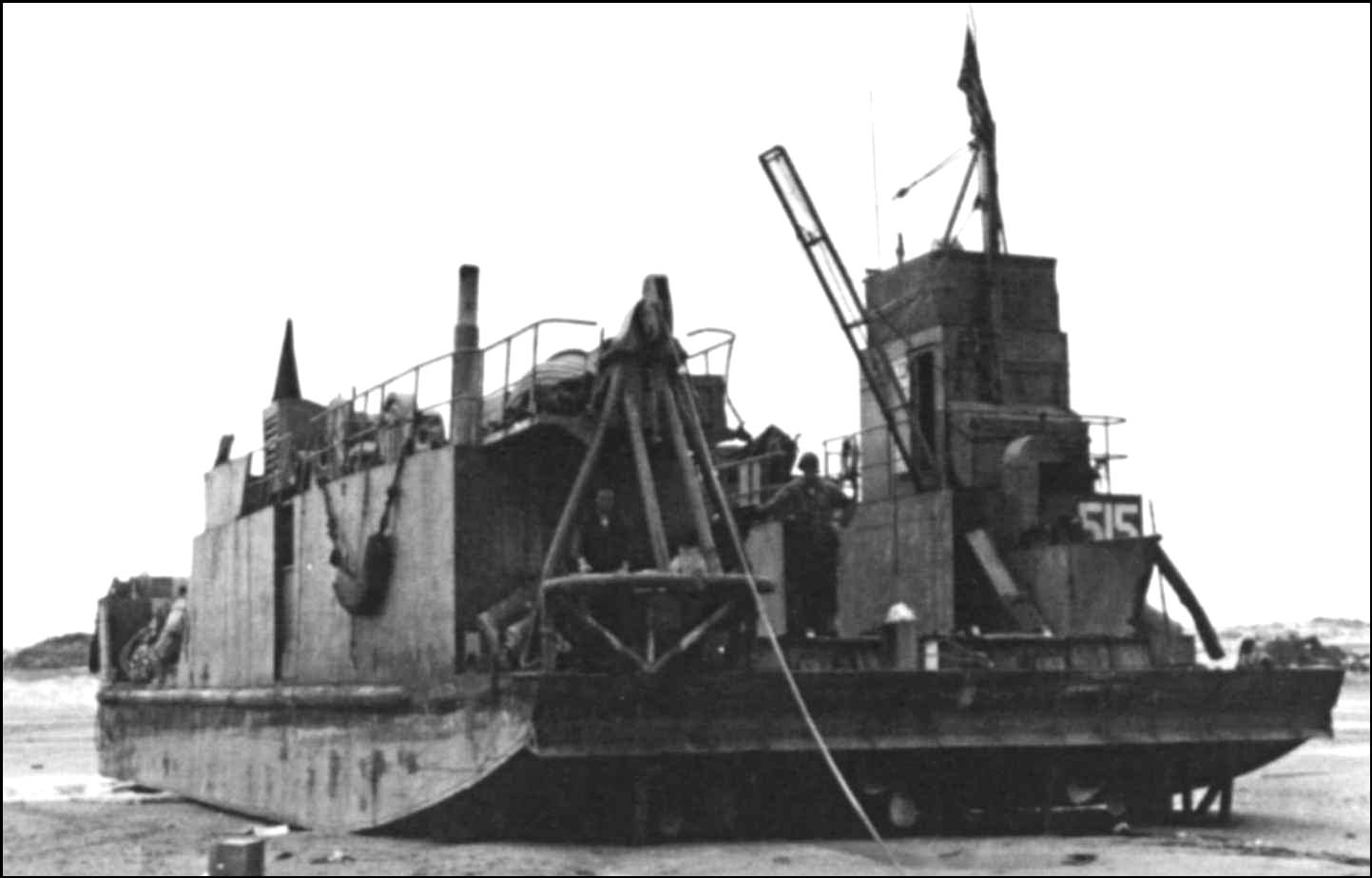
There were few barges cast directly on the obstacles. But their mines have inflicted damage, often during their efforts to leave after having hit the ground, not to mention the blows to artillery, Nebelwehrfer rockets and mortar. Finally, several of the large barges destined for Vierville were finally destroyed (2 LCI and half a dozen LCT destroyed or sank) as a result of damage to the mined obstacles).
In this confused situation one can try to analyse the fate of each of the units forming part of these waves of assault which were to land in the morning from 7:40 am:
---- The LCVP 71, landed at 7:30 a.m., on Dog White, 116th Regiment Command Group Colonel Charles Canham, CO. of the 116th Reg, Colonel Metcalfe, Cdr. of Battalion 1/116, and Brigadier-General Norman Cota, representing the Commander of the 29th Division (who had not yet on 6 June authority over the 116th Regiment.
The group was grounded with limited losses and was perfectly positioned to play a major role in the immediate aftermath of operations and the capture of Vierville.
Indeed, to its left and right, the Cie C/116 and some elements of the 2°Bataillon of 116°Rég. had just landed, massed along the slope on a front several hundred meters long. In addition, the main force of the Rangers was about to arrive (8h00) in this area where German fire was masked by smoke, coming from distant and inefficient WN.
In total, 700 infantrymen and Rangers had had relatively few losses, available and grouped.
. ---- Immediately after, around 7:50, arrived on LCI 91, with elements of the 116th Regiment HQ, and sappers of the 121st and 147th Engineer Battalions.
---- Then came the LCI 92At about 8:10 a.m., with the General Staff of the 6th Special Engineering Brigade, in charge of land operations for landing, along with other sappers of the 121st and 147th Engineer Battalions.
These two large vessels were specifically targeted by artillery and were set on fire upon arrival at the beach. Despite significant losses, they were able to disembark their troops.
---- Behind the previous three, the LCI 84, carrying the head of the 6th Special Engineering Brigade (Colonel Thompson), the 116th Regiment Communications Group and a medical group (104th Med. Bat.), was scheduled for 9:00 a.m. on Dog White. He could not approach Dog White where 2 LCI were already in flames, but he moved to the Dog Red - Esay Green boundary, (Les Moulins à Saint-Laurent).

Most of the artillery and engineering units that were to arrive on Dog Green and Dog White between 0730 and 10:00 were delayed and generally moved to Saint-Laurent and Le Ruquet, including:
---- on 121° Engineer Combat Battalion, (which was to accompany Battalion 1/116), with its heavy equipment on 7 LCT (scheduled between 7:30 and 10:00). 4 LCM had to arrive earlier, at the same time as LCI 91 and 92.
---- on 147° Beach Engineer Battalion, (from the 6th Brig. Spec. In charge of Dog Green and Dog White beaches), with heavy equipment (bulldozers, track cranes, trucks...) planned at around 10:00 am, on 8 LCT. 1 LCVP and 1 LCA were scheduled to arrive earlier, along with LCI 91 and 92.
Finally, very few barges from these 2 major engineering units actually approached Dog Green or Dog White, others were cast or destroyed and the rest were sent to Saint-Laurent or Le Ruquet, with the precious bulldozers destined to open the beach exit of Vierville.
Artillery and the DCA had similar destinies:
---- The B Co. of the 81st Heavy mortar Battalion (105mm), which was to arrive with 4 LCVP on Dog Green at 7:30 a.m., drifted to the Ruquet at about 9:30 a.m.
---- The 116th cannon company (6 short 105mm) and the anti-tank section of the 1st battalion (3 57mm cannons), which was to arrive on 10 DUKW ducks on Dog Green at 8:20 a.m., was sent to the Ruquet late in the morning. In particular, at the Cannon Co, 5 DUKW, 3 out of 6 cannons and 3 halftracks were lost in the meantime, as the "decks" had difficulty spreading in the rough sea.
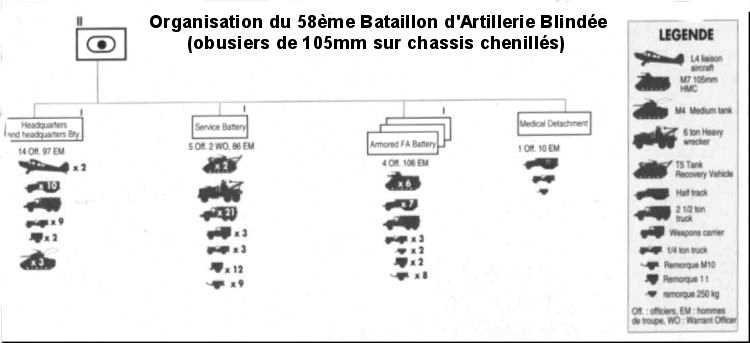
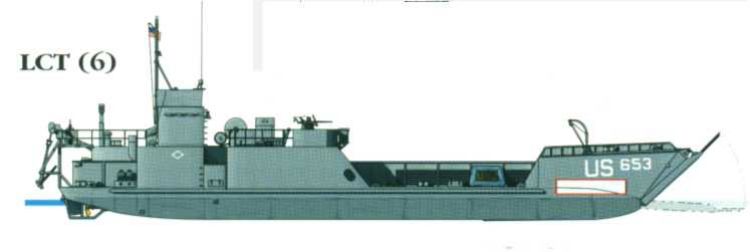
---- The 58th Armoured Artillery Battalion (105mm howitzers self-ported on M7 tracked armored chassis) was to arrive on 5 LCT on Dog White at 8:00 a.m. The failure was complete. 3 of the LCTs fell on mined obstacles and sank. The LCT 29 and 207 survivors only landed later and at the Ruquet.
His chief and reconnaissance officer had been killed shortly after disembarking at about 7:30 a.m. under the point of the Percaea with the 1st Infantry Battalion Staff Team.
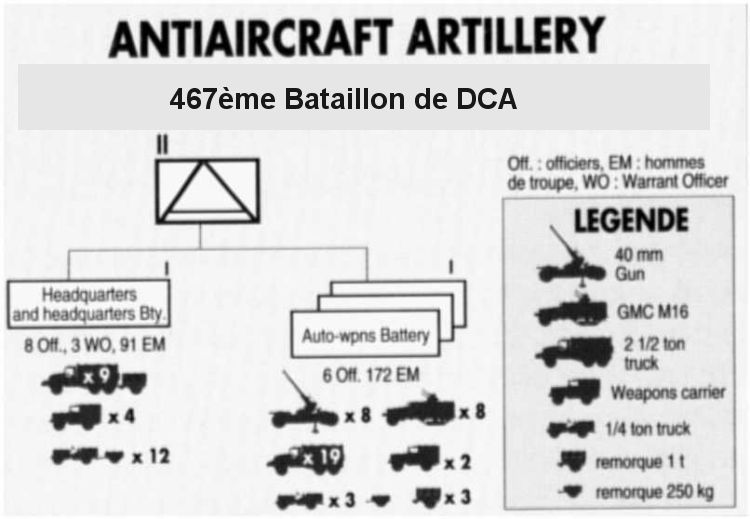
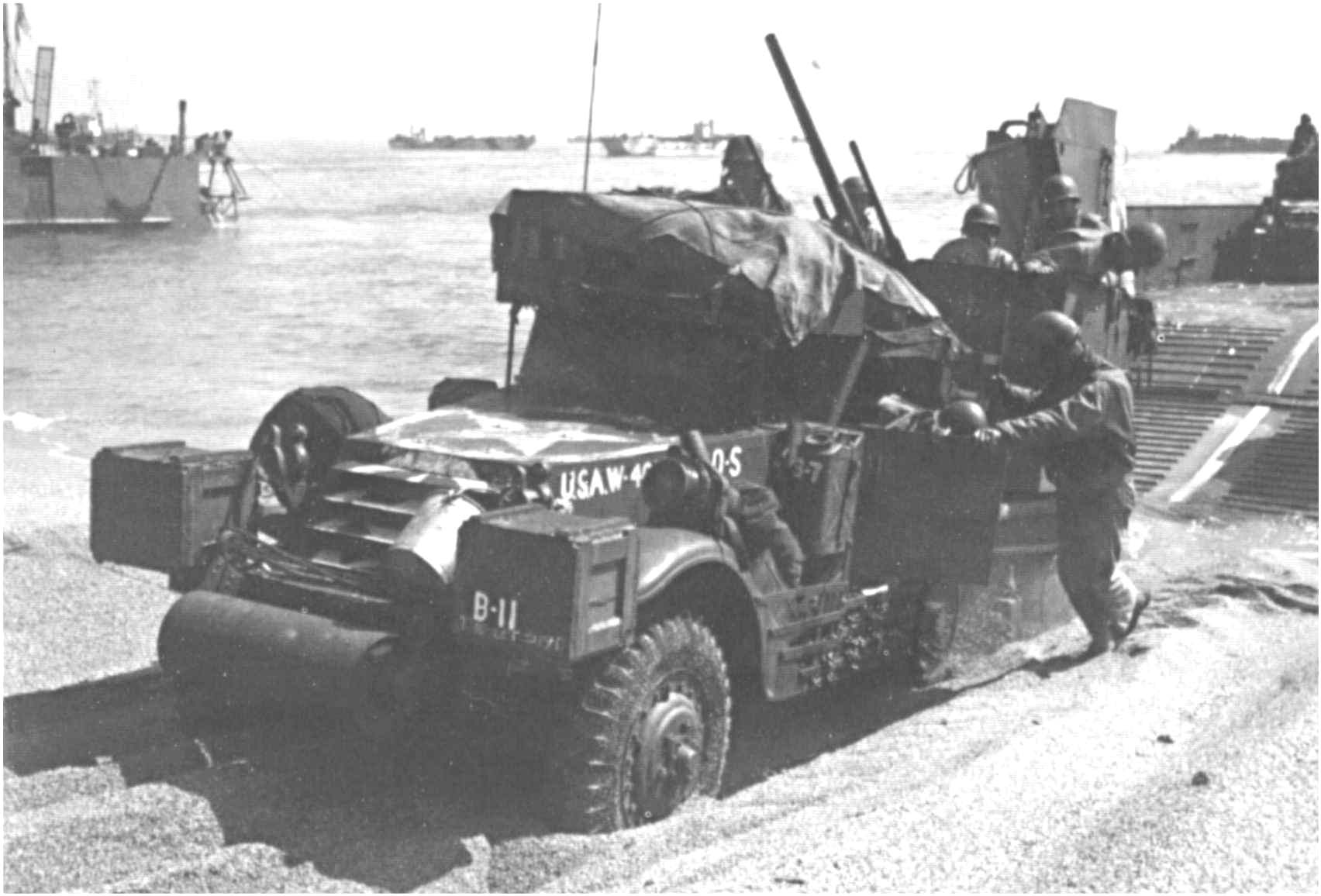
---- DCA units, intended for Dog Gren and Dog White, were scheduled at 0700 hours: 3 LCVP with 3 DCA half-tracks, and at 0830 hours, 4 LCT Nos 27, 147, 153 and 214 with half of the 467° Anti-Aircraft Battalion. (The battalion was equipped with 24 40mm guns and 24 M15 halftracks (with a 3D 37mm and 2 12.7mm machine guns) and M16 (with a 4D 12.7mm machine gun sharpener)
These vessels only approached during the afternoon low tide in Saint-Laurent and Ruquet. .
---- land-based units of naval fire control, transmissions, military police, etc. in general mixed with Engineering on LCI 91 and 92.
---- medical detachments, in particular the 104th Medical Battalion, on the LCI 84 scheduled at 9:00 am on Dog White, in addition to nurses in all units. This LCI gave up approaching Dog White, where LCI 91 and 92 were already burning, and moved to its left between St-Laurent and Le Ruquet. He was able to leave, but with damage and losses on board.
Assessment after the end of landings in Vierville, late morning
Between Vierville and StLaurent, at the end of the morning and after the departure into the cliff of the infantrymen and the Rangers, only 20 to 30 tanks remained of the 743rd Battalion, engineers (dispersed and with very few equipments) of the 121st, 146th and 147th Battalions, some medical posts poorly sheltered and without equipment, and some units of various services. There were also the dead and wounded, including infantry units that had been destroyed under Vierville between 0630 and 0800.
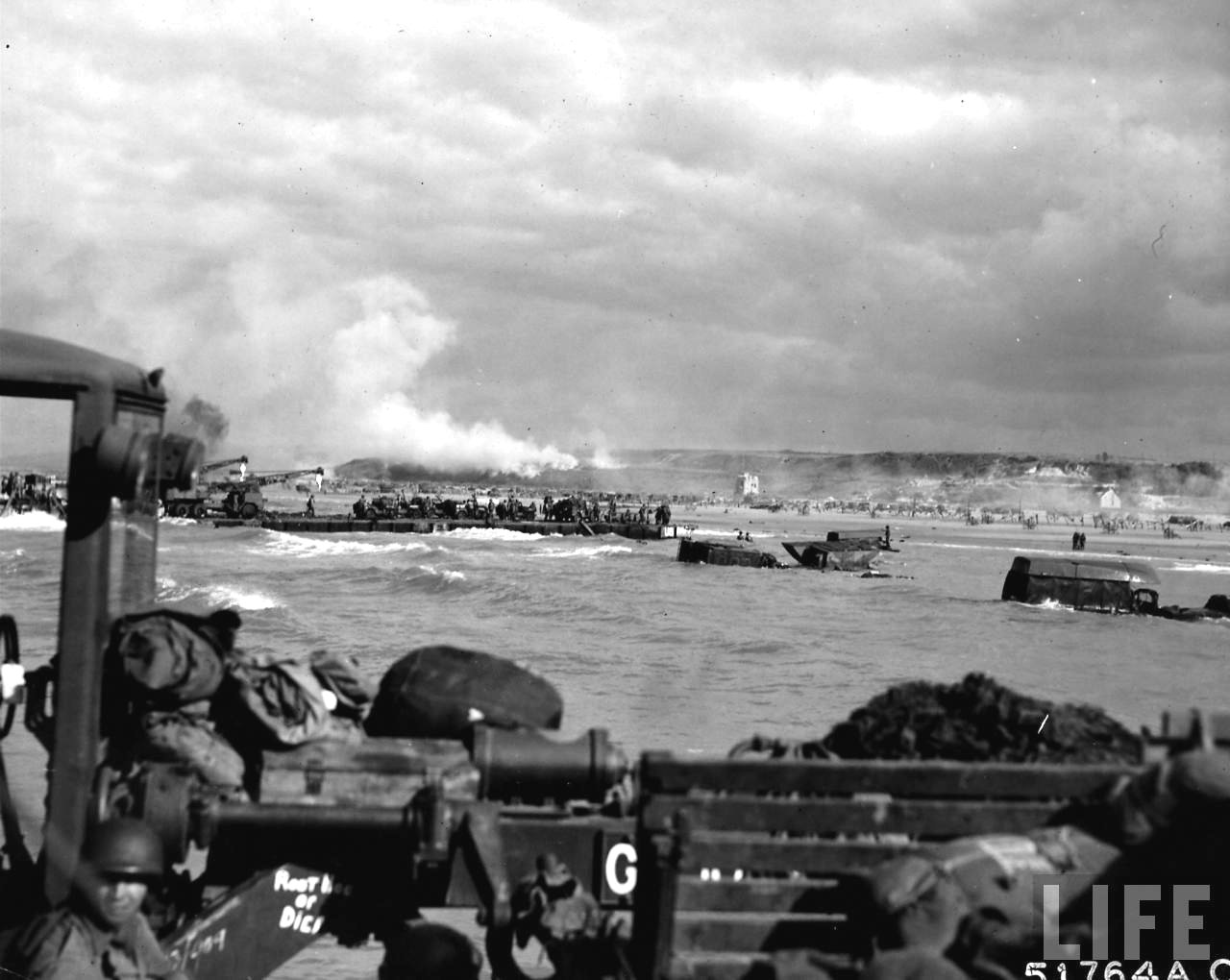
Many shipwrecks, equipment and vehicles were scattered all over the beach.


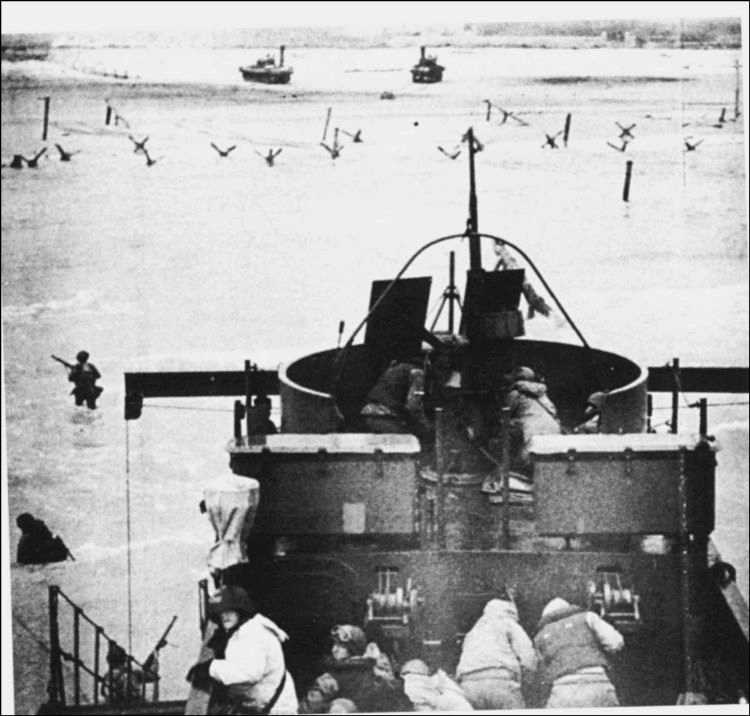

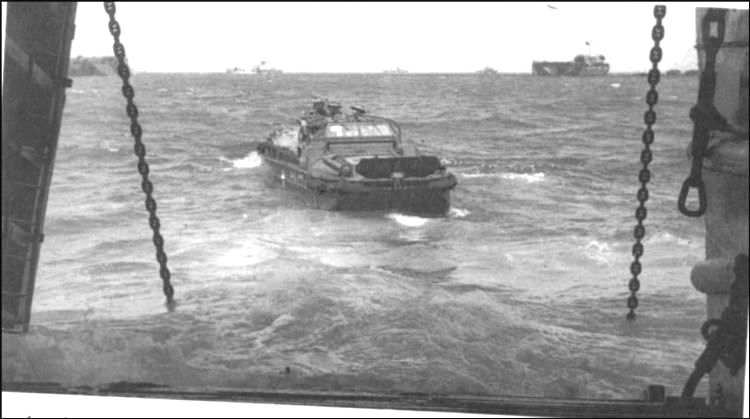
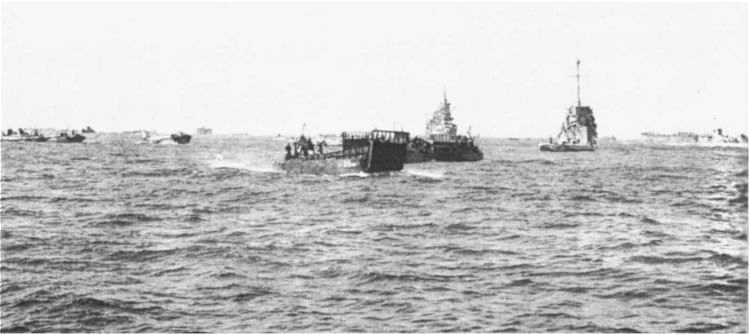



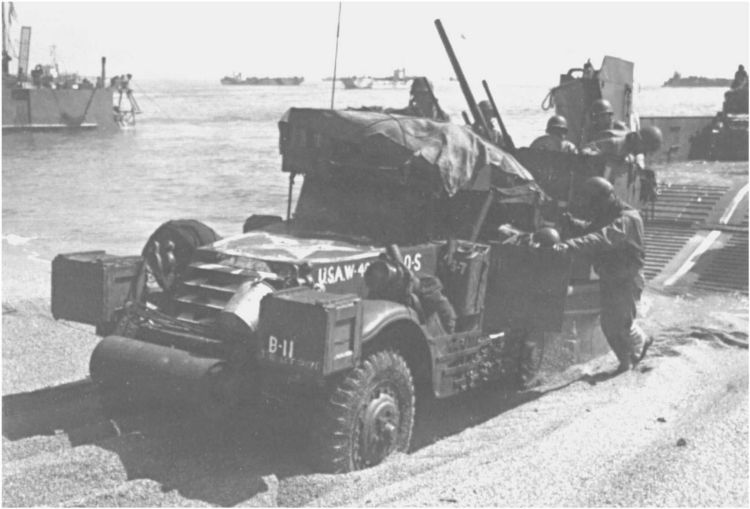
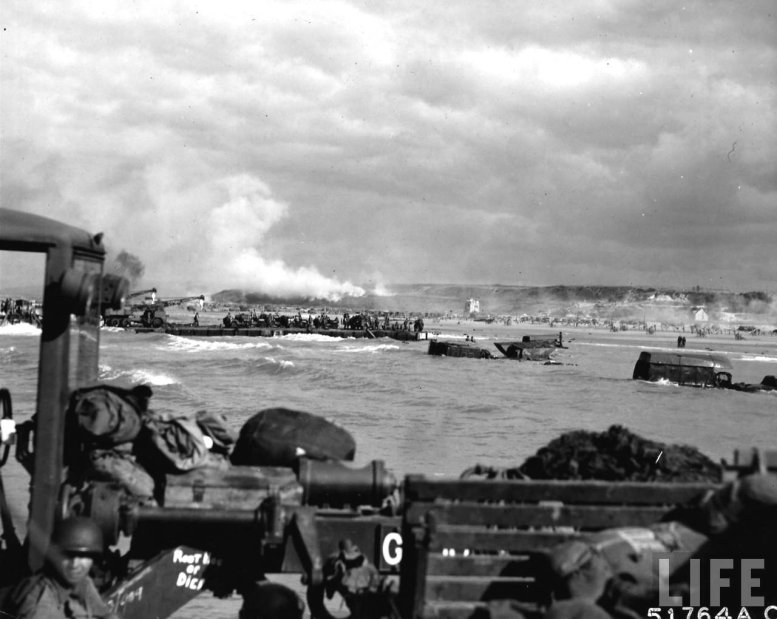

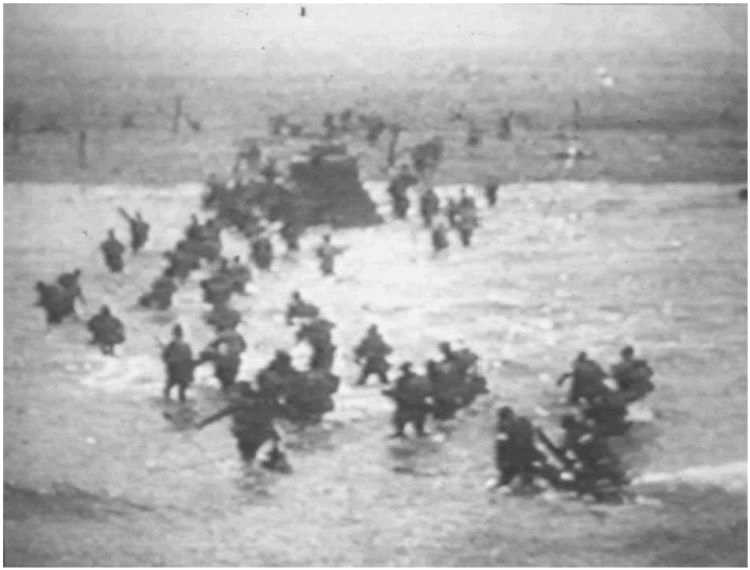
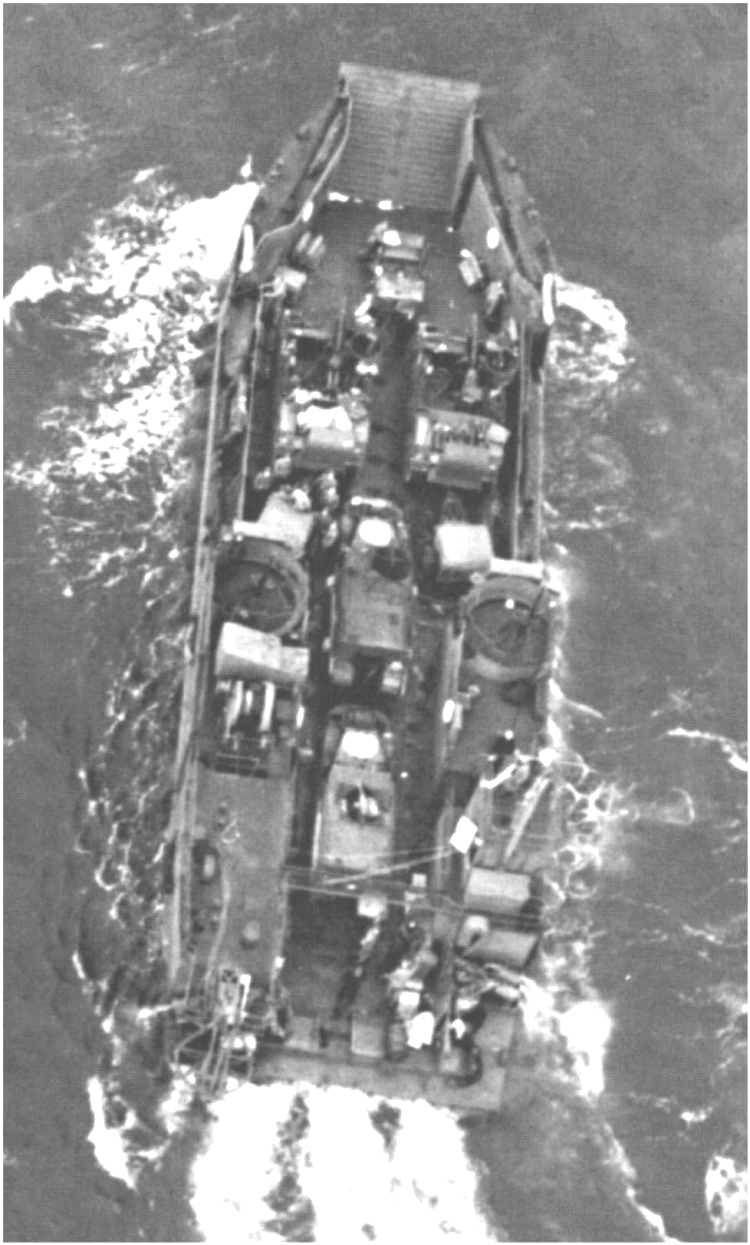
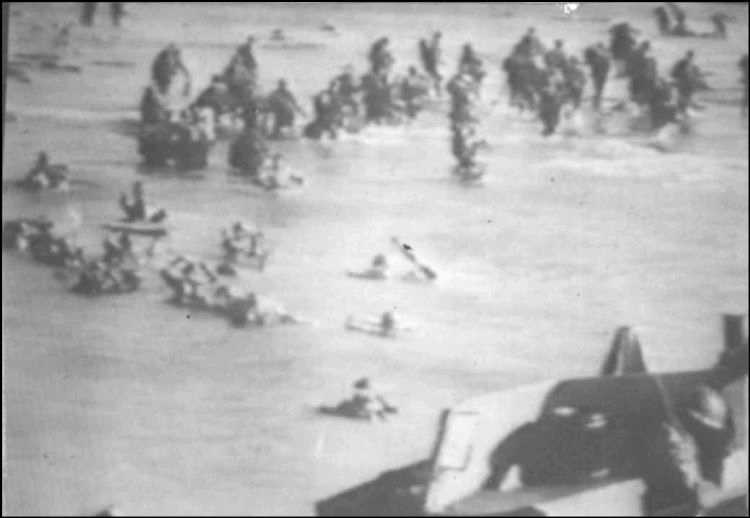
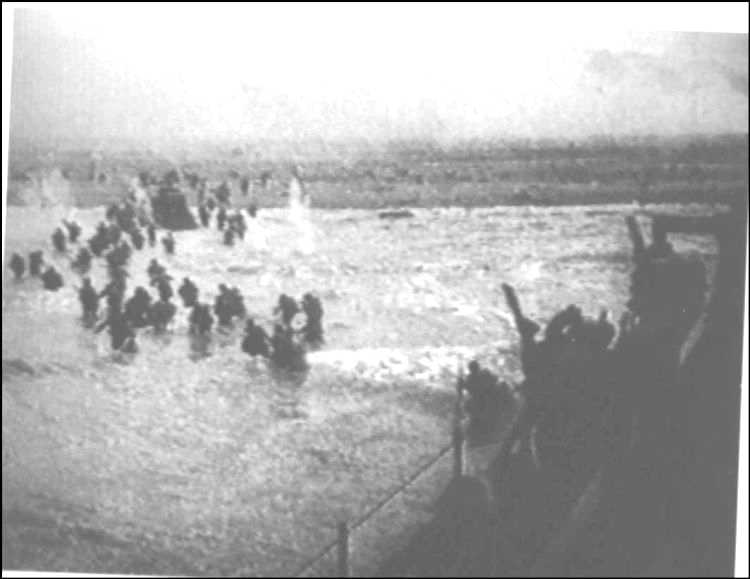
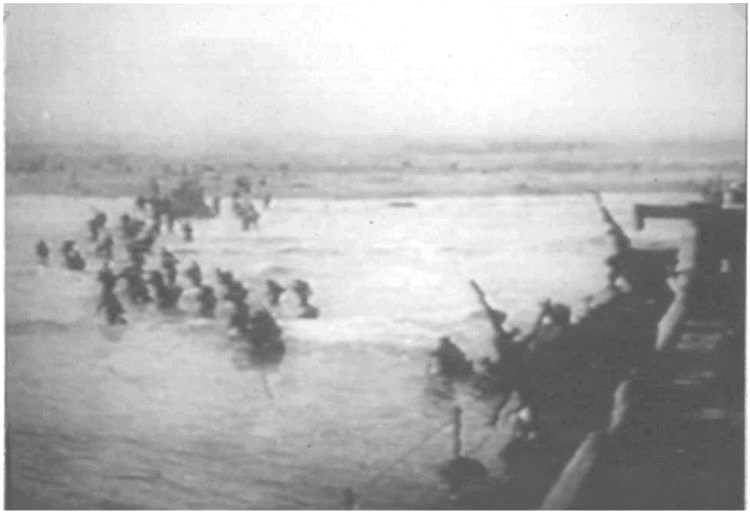
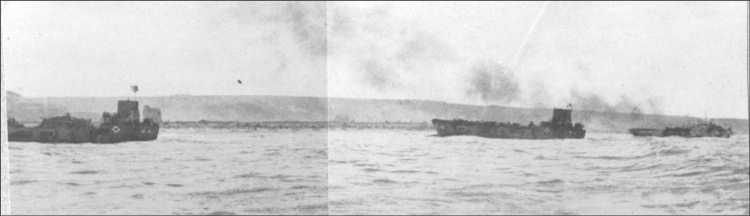
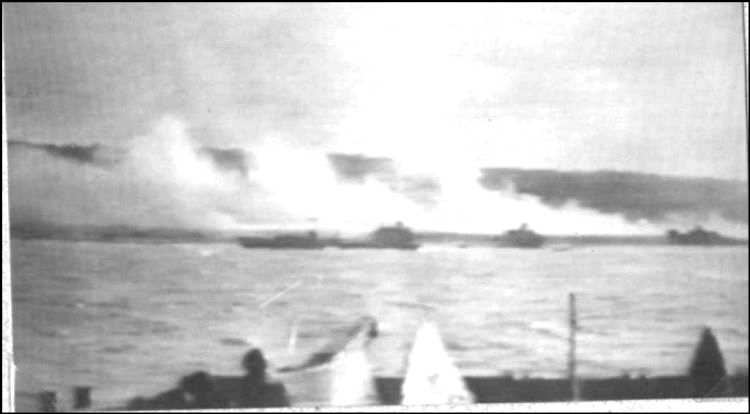
GIs disembarking from an ICL (all of the following images are extracted from film, probably from the Ruquet)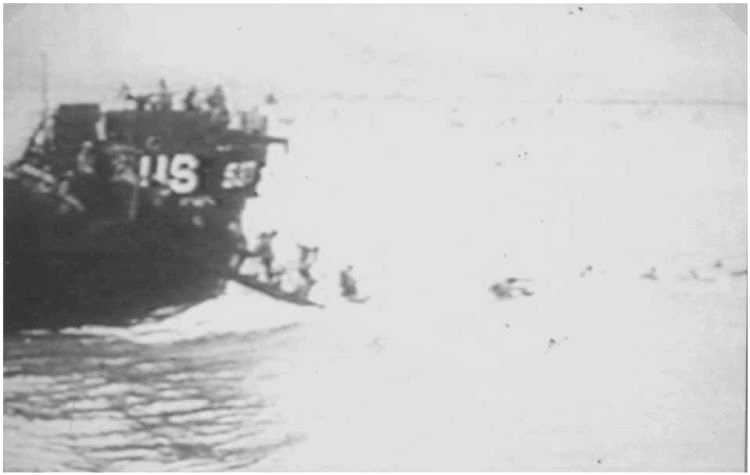
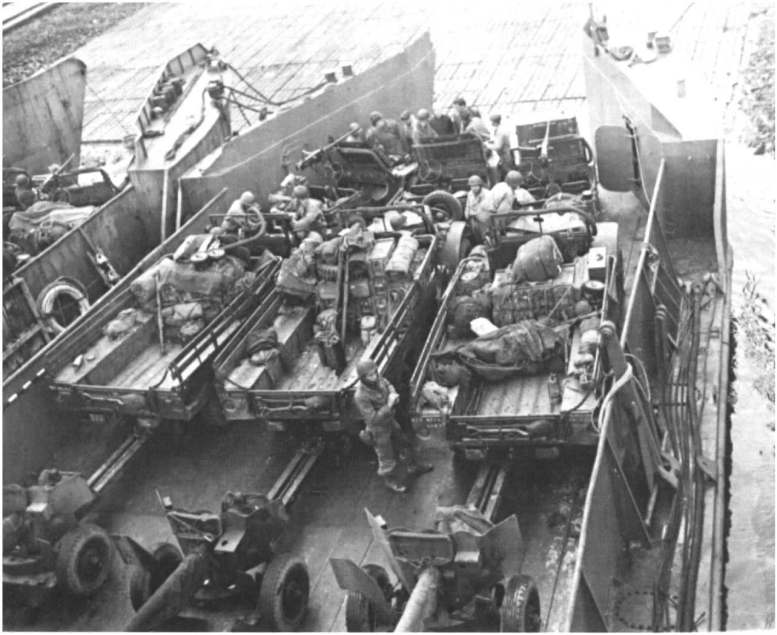












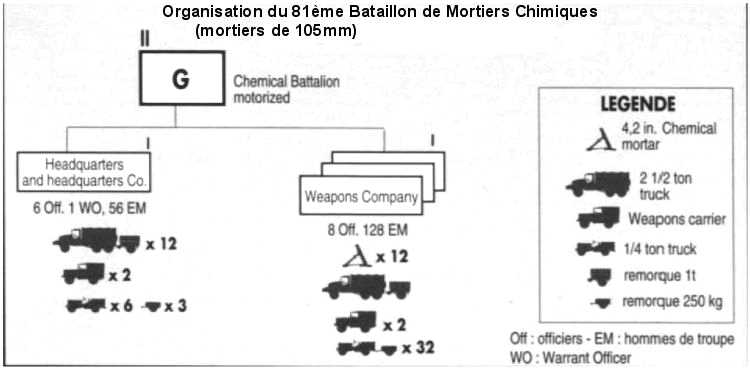
Organization of a 105mm chemical mortar battalion

(details)
(details)120mm heavy mortars in battery (at Utah Beach?, or Colleville?)