

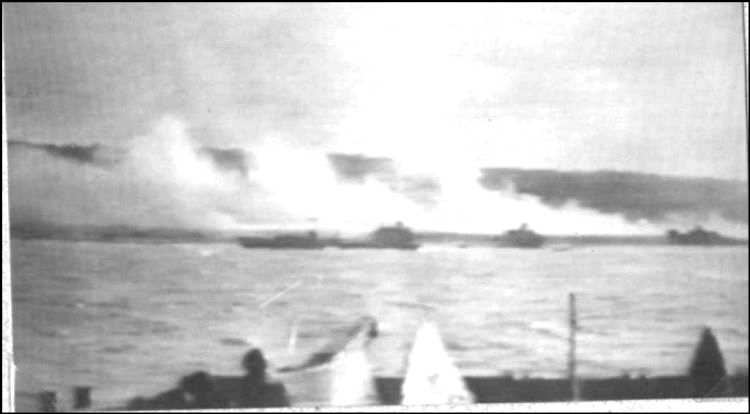
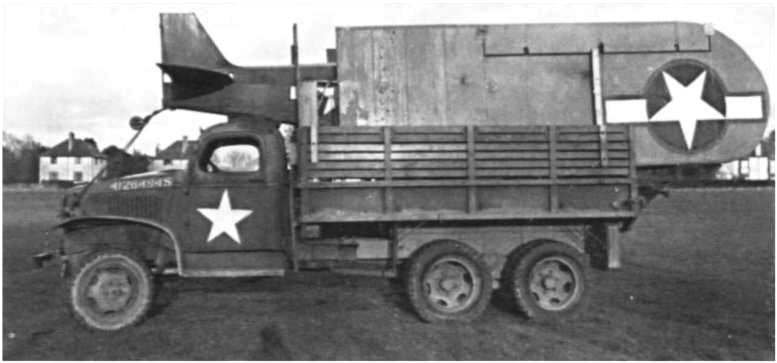

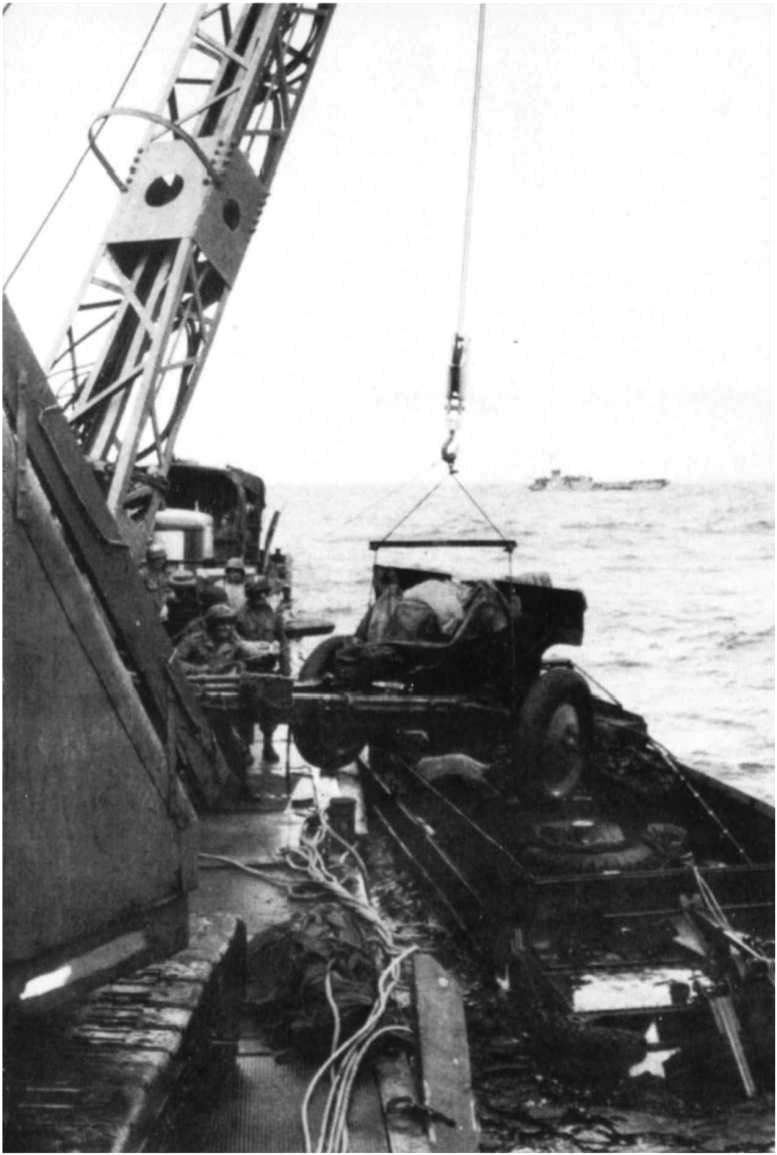
(Armoured artillery, DCA, 105mm short guns, 57mm anti-tank)
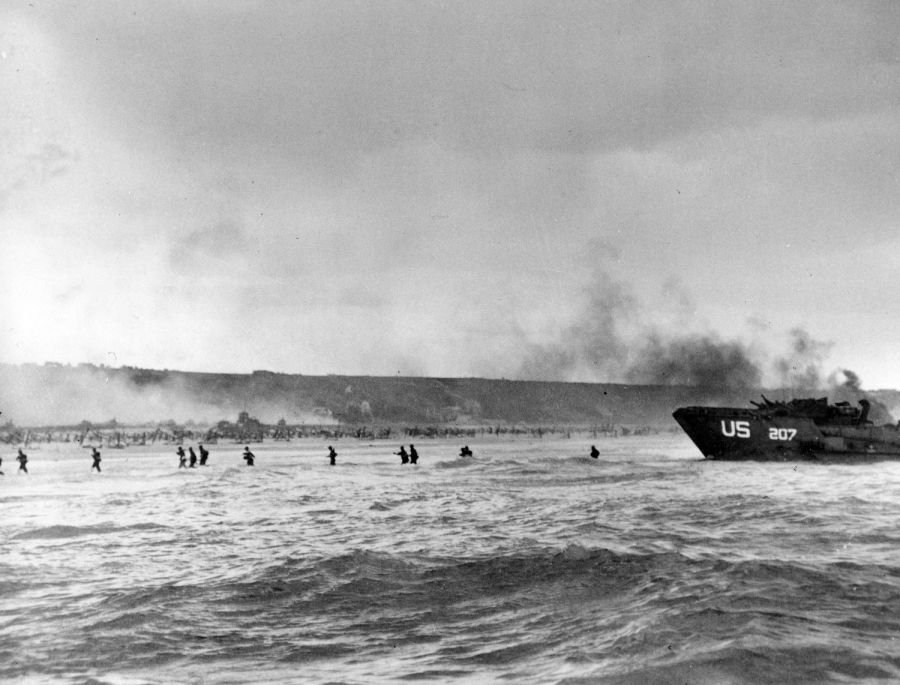
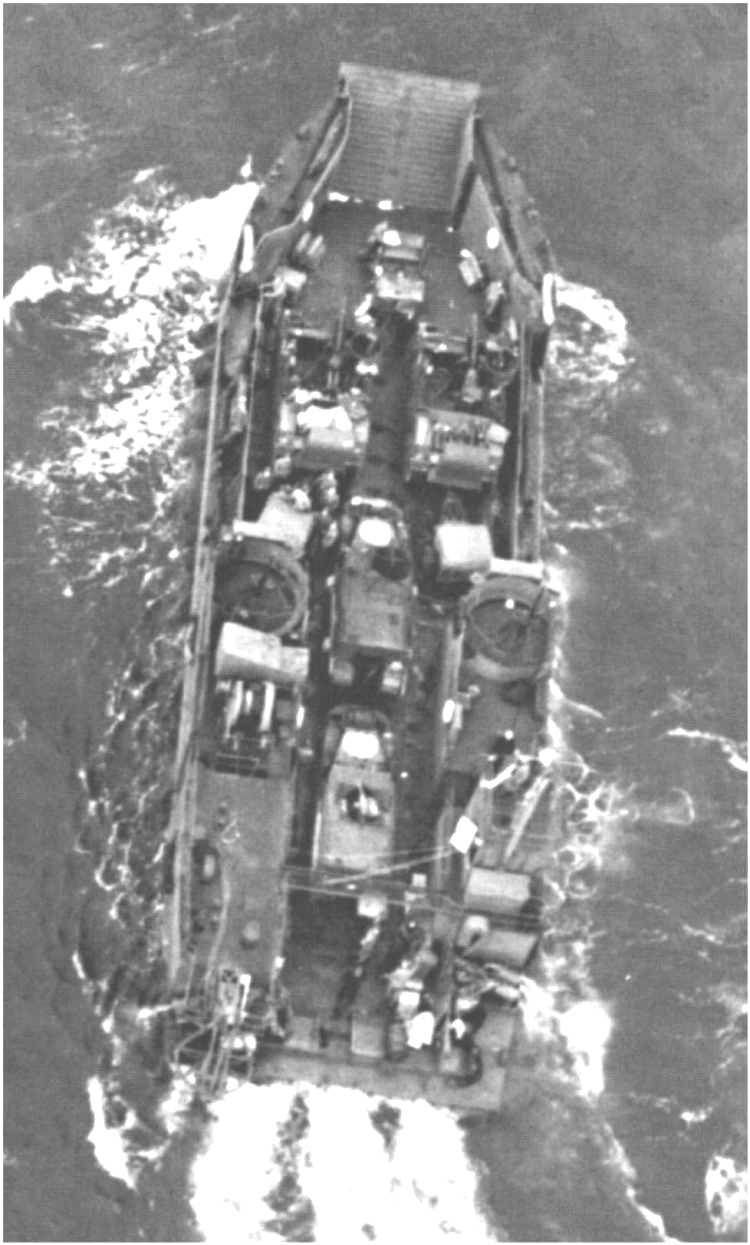
The 58th Armoured Artillery Battalion was to arrive on Dog White at 8:00 am on the 5 LCT: 29, 197, 207, 332 and 364. It was equipped with 105 mm self-ported howitzers on M7-tracked armored chassis.
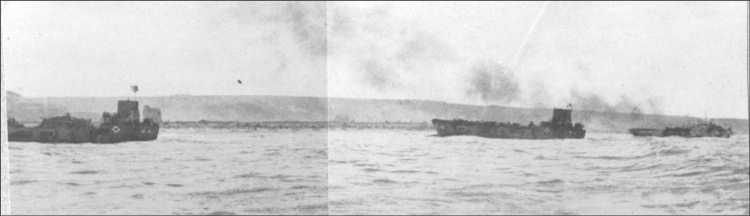
The failure was total. In a first attempt at around 10:00 a.m., the LCT fell on mined obstacles hidden by the high tide.
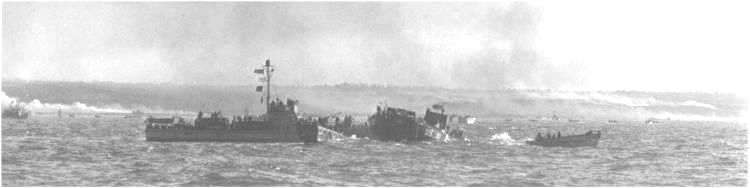
CTA 197 has affected mines in obstacles. [LCT 197] The back section began to fill with water and the vessel took a bad gite on port. The hold pumps started working until the vessel reached ATR4 (a tug workshop) which was able to use its more powerful pumps. After 90 minutes the ATR4 was sent elsewhere. LCT 197 then made three unsuccessful attempts to beach, with only one of its three engines working. All attempts to save the ship have failed. The vessel then headed offshore to try to transfer its load to a LST. At 2035, the last out-of-service engine, the port rear deck was drowned. All Army personnel had already been pre-emptively transferred and at 2055 the ship was abandoned with its full load of 4 armoured howitzers. Almost immediately the vessel capsized on the port and sank slowly about 4 miles off Omaha Beach. An officer was reported missing, the rest of the crew survived.
The LCT 364 struck a mine that exploded through the crew's quarters and the pilot's room, creating a hole of about 1/2m2. Simultaneously the vessel was reached below the flotation line by a shell that put all the engines out of service. There were no casualties. Coated by 2m of water, the 4 armoured self-propelled cargo were subsequently recovered.
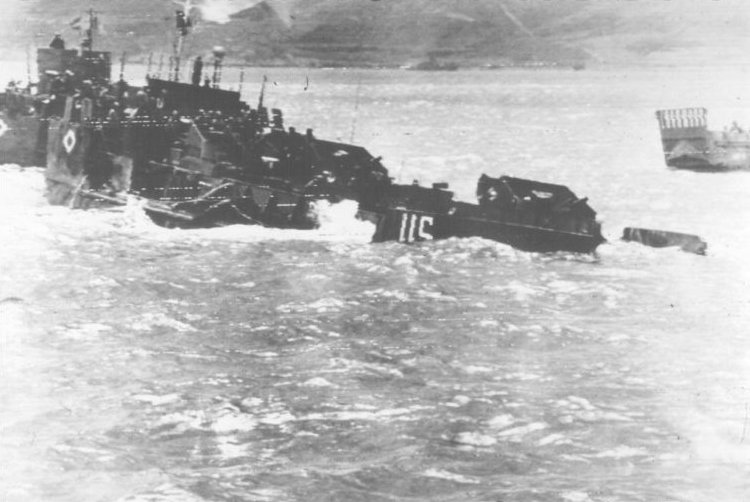
The LCT 332 when attempting to approach the beach touched a mine that exploded just below the bow, blowing the ramp and a portion of the starboard hull of 6mx1m50. The deflagration apparently affected the structure, as the middle section of the vessel deformed. This situation has worsened in the strong sea. A sheller was passed overboard to try to keep the barge afloat, but the LCT 332 finally sank after abandonment. No loss of life
LCT 207 abandoned its attempt to reach Dog White after trying there in the morning. It was finally sent to Dog Red at Saint-Laurent at 16:00, where it unloaded its four howitzers at low tide. He then provided assistance to LCT 27 (carrying DCA equipment) in perdition at 5:00 p.m., and took over his Army and Navy personnel, just before LCT 27 capsized and sank, with all the vehicles on board.
The LCT 29 also gave up on Dog White in the morning and landed its howitzers later and at the Ruquet.
The battalion leader and the reconnaissance officer had been killed shortly after disembarking at about 7:30 a.m. under the point of the Percaea with the 1st Infantry Battalion staff team.
DCA units, intended for Dog Gren and Dog White, were planned at 0700 (3 LCVP loaded with 3 DCA half-tracks and at 0830 4 LCT No. 27, 147, 153 and 214 with half of 467° Anti-Aircraft Battalion.
There is no indication of the fate of the three half-tracks loaded on LCVPs.
With regard to the 467th battalion of DCA, none of the 4 LCTs were able to land in front of Vierville, one sank, the remaining 3 landed in the afternoon at Saint-Laurent:
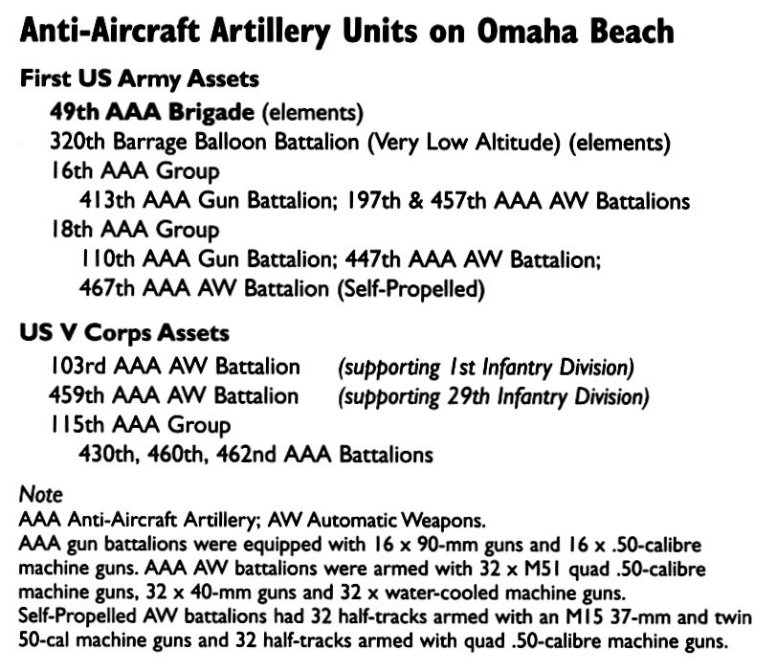
Organization of DCA forces in Omaha Beach
The LCT 27 took shelter during the journey across the Channel on 5 June, for an indefinite reason.
At 04:00 on June 6, he lost his starboard propeller and the time that the barge arrived at 08:30 near the beach, the gite increased much despite the pumping efforts in the ballast tanks.
Shots hit the first engine, preventing it from approaching.
The LCT 535 returning from the DD tank landing on Dog White towed it to a tug-workshop, but attempts to pump ballasts were unnecessary.
Two large opening holes were created as a result of the impact on the hull of the tug. After continuous efforts to empty the ballasts, the tug was called for another mission.
Shortly afterwards, a destroyer positioned 25 m from the LCT and fired 6 127mm slats towards the coast. The shovels affected the vessel, which had a great deal to starboard, the fully flooded bow.
The LCT 207, returning from unloading its 4 M7 armoured howitzers on St-Laurent, attempted to tow it to the beach, but it had to be abandoned, the personnel transferred to LCT 207 and then to LCF6 (a LCT transformed into a DCA vessel). At 1700, the LCT 27 capsized at 1500m from the beach, with all its half-tracks of DCA on board. There were no casualties. The tide pushed the ship to the beach where it ran off, turned back. The subsequent storm made rescue impossible.
The LCT 147 could not find any passage in the obstacles and withdrew under enemy fire. He finally approached at low tide at about 4:15 p.m. at St-Laurent. The first vehicle left sank in deep water. The LCT withdrew and recommenced, this time successfully for unloading.
The LCT 214 approached the beach at about 8:30 a.m. and received the first of many orders to give up addressing. He offered his assistance to LCT 332 in difficulty after touching a mine, which was denied (see below). At low tide, at 4:57 p.m., sent to Dog Green, he approached the starboard side of LCI 91 stranded on Dog White and was ordered to withdraw. Finally, he approached Dog Red on St-Laurent in 1730, and was able to unload his vehicles and half-tracks without loss.
The LCT 153 also appears to have been delayed and discharged in the afternoon at Saint-Laurent tide.
At about 8:20am, 10 DUKW "decks" were to land 6 105mm short howitzers and 3 57mm anti-tank guns (Cies of cannons and anti-tanks attached to the 116th regiment). None of these guns were able to land in Vierville. Here is the story of the sergeant, leader of a 57mm anti-tank gun:
Story by Bill Lewis, Chief of Peloton Antichar
Chief of Anti-tank Peloton Bill Lewis was 12 miles from shore on a LST when his gun and his men were loaded on a DUKW duck to go to the beach.
"We had never been trained on DUKW. It's like a truck, and we had a heavy load on it. The guy who was driving was very busy driving him straight, if we fell across, we could capsize. He let the waves in the back push him.
"When we arrived in the obstacle zone, there was a man hanging on one of them. He was calling for help. We couldn't control the DUKW perfectly, and when we got close to him, Lt. Van de Voort shouted, "We're here to kill people, not to save them. Jump in if you want." He jumped and arrived on board.
"Then we broke a pin and lost power. We were drifting in the Tellerminen area, going in the middle of, across. They pointed a few centimetres above the water. We hit more than one, hit on it, but I think the salt water had deteriorated them. They didn't explode.
"We were about 2 hours after the first wave and they started firing the DUKW. We jumped and the DUKW sank with the anti-tank gun and the rest. When I jumped, I could stand on the tip of my feet, except when a wave broke on me. The closer we get to the shore, the stronger it has to be, you might think so. But it wasn't true, the sand was accumulating around some obstacles and I fell into a hole.
"I continued in the water. I didn't go back to sea, but I just went with the rising tide. The water around me was constellated with machine guns."
Lewis and another managed to run to the parapet, where, cooled and frightened, they rested until a third man came to pile up on them. "Is it you Sergeant who tremble?" I said "Yes of course" he replied, "My God, I thought it was me!". "I was looking at him, he was shaking too. We were both shaking.
"We got stuck there, just trying to survive. There was nothing we could do but flatten. Nowhere to go. And the shots were getting stronger. All those who arrived saw the parapet and came upon us, stacking up and trying to keep under the carnage."
Bill Lewis ended up leaving the beach by the Vierville Valley, after the engineers opened the road. "We headed towards the Pointe du Hoc with a disparate group, some Rangers, some sailors of assault barges, some guys of the 29ème and 1era Division.
We crossed Vierville and then vigorously dug our individual holes along the hedges for the night. When I got up in the morning, I could see the huge fleet, and I understood how the Germans had to do it: "Look at them all, how could we ever stop them?"