LCI 92 is destroyed at 8:00 am on Dog White Beach

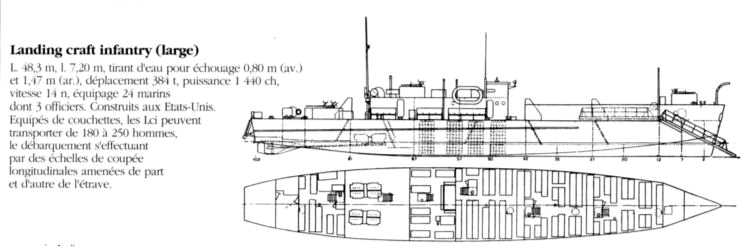

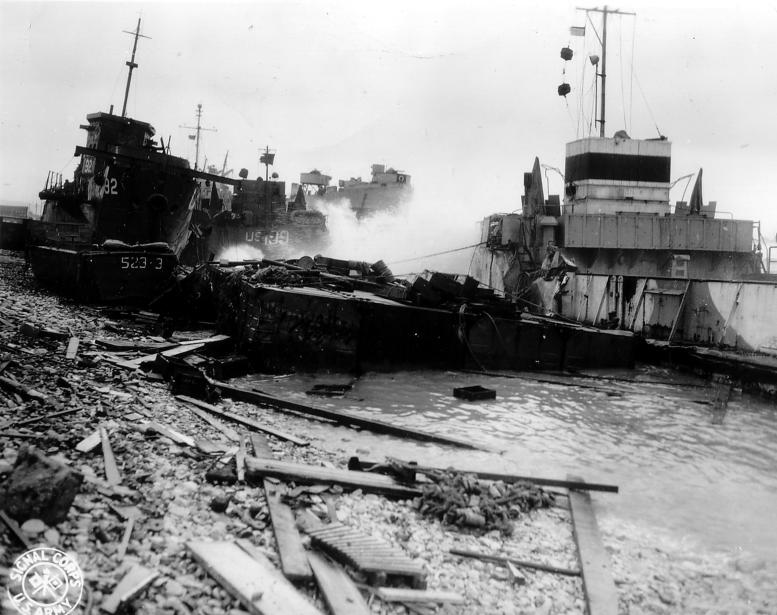
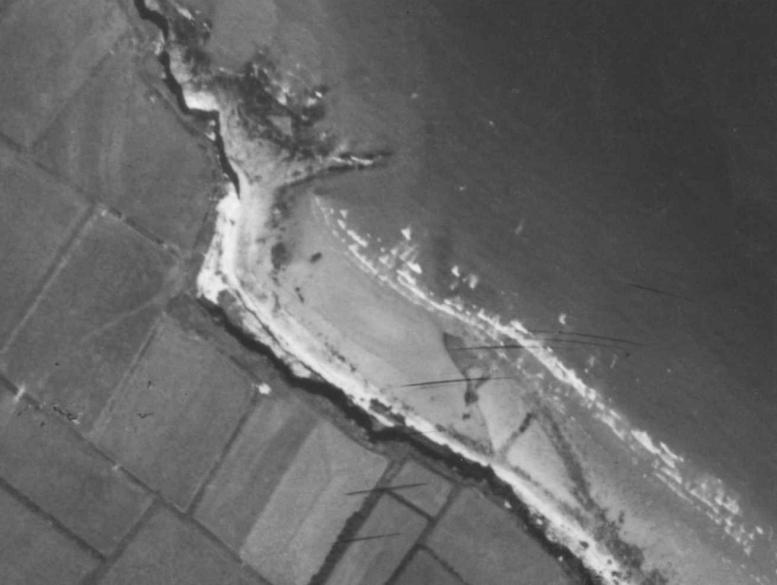
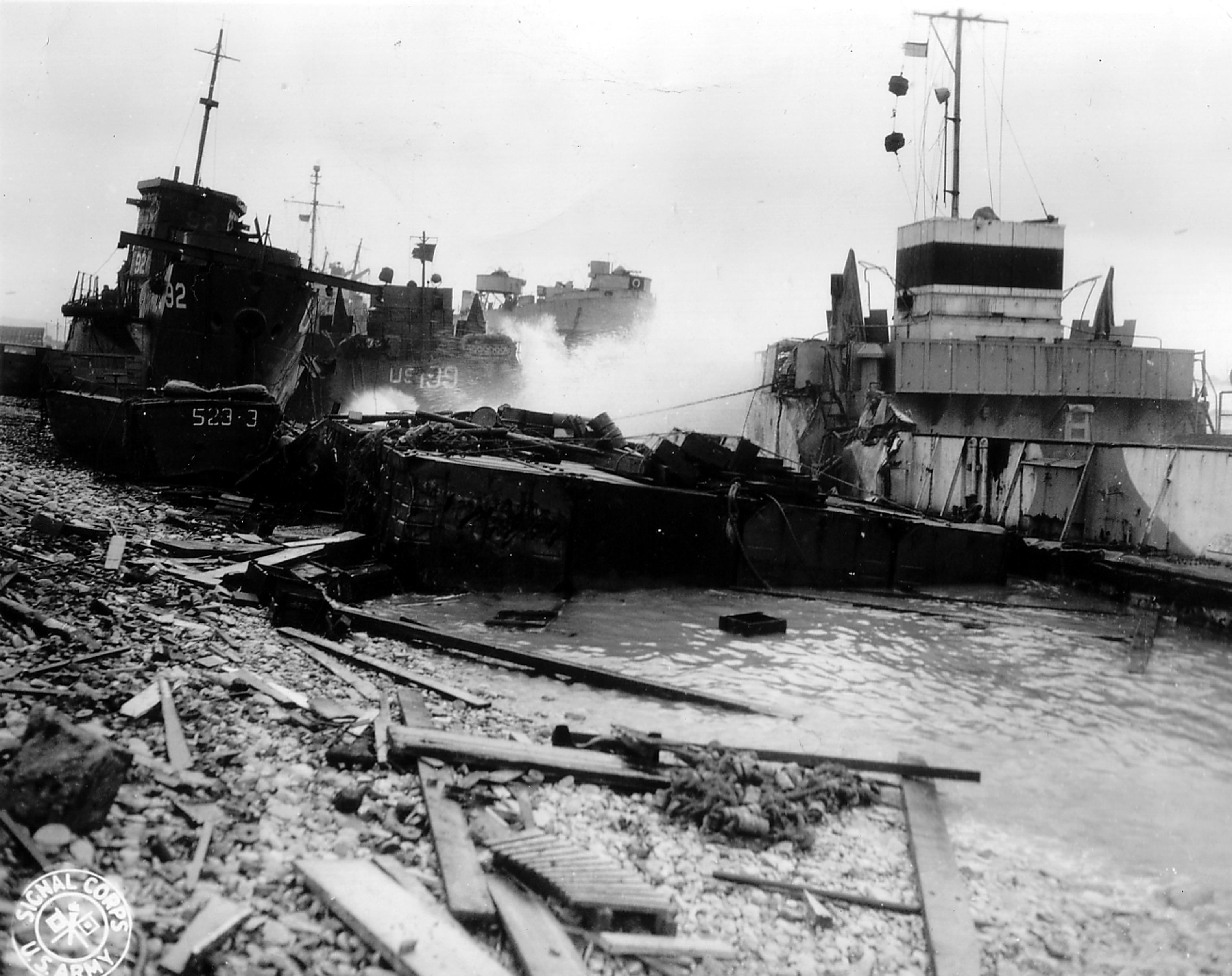
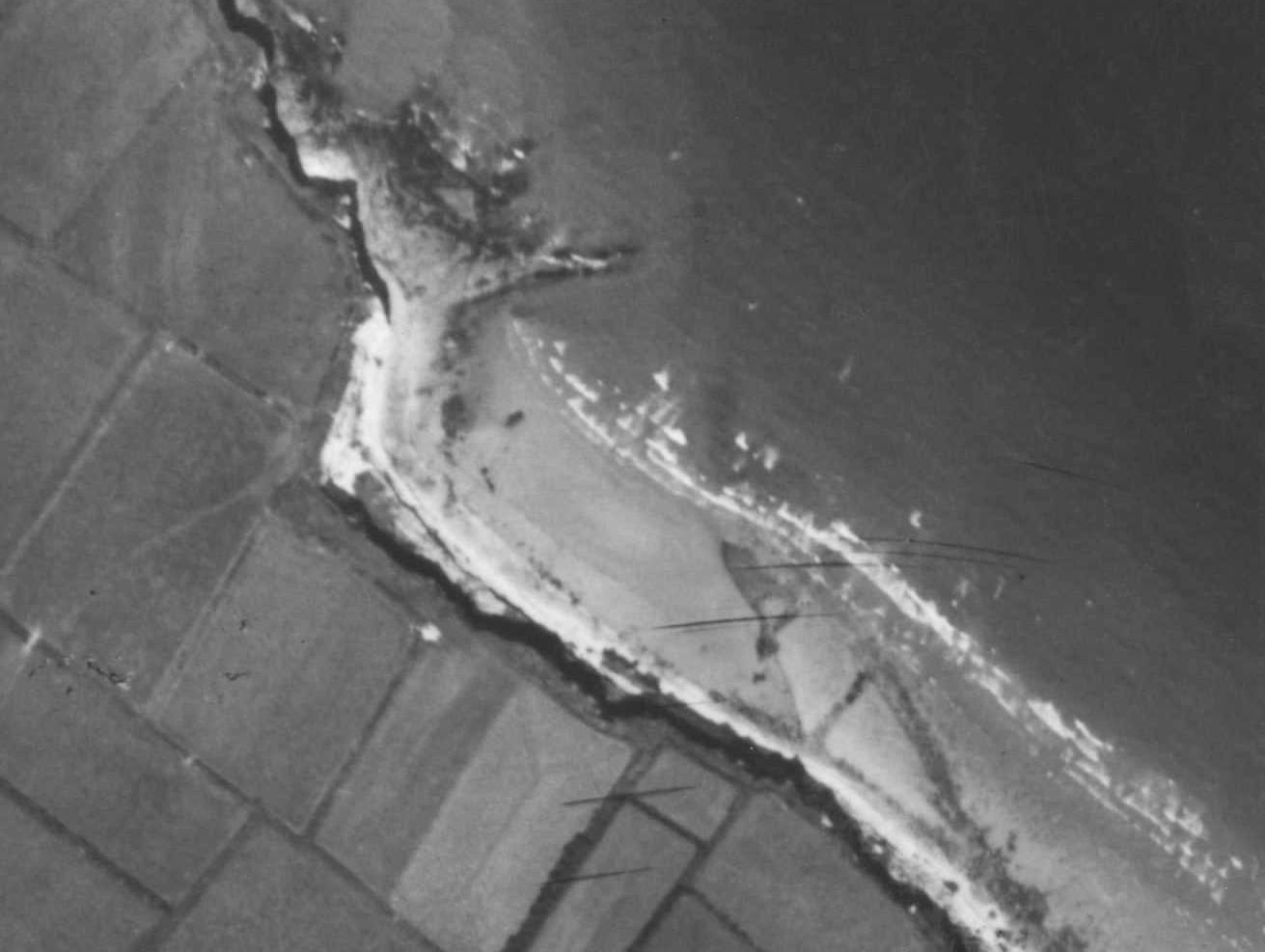
Around 8:00 a.m., a few minutes after the LCI 91, another large ship, the LCI 92, carrying men from the 121st and 147th Battalions of Engineering and the 6th Special Engineer Brigade arrived in the same area (at the Dog White and Dog Red border, about opposite the current Richard tennis). He arrived behind LCI 91 and placed himself under his wind in the hope of being hidden by his smoke. He suffered almost the same fate, an explosion broke the front hold, setting fire to the fuel tanks.
Many of the men who arrived at the shore were badly burned, including Colonel Chase, Cdr's deputy to the 6th Special Engineer Brigade.
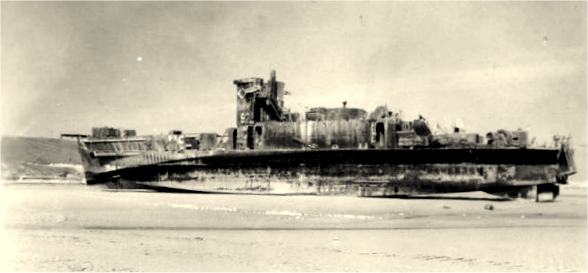
The LCI 92 crew fought the fire for several hours, but finally the evacuation order had to be issued at about 1400. The vessel had been pushed back by the tide to the pebbly slope.
(the wreckage of this LCI was stranded there for several months before being towed down the cliff before the Percée where it remained for several years, until it was recovered by the Van Loo Company scrapmen)

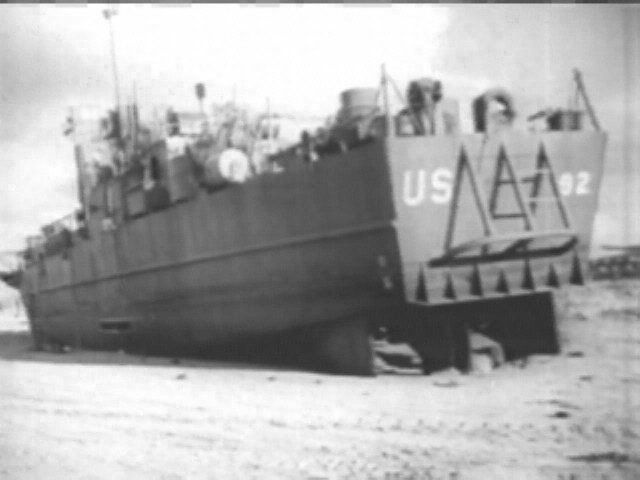

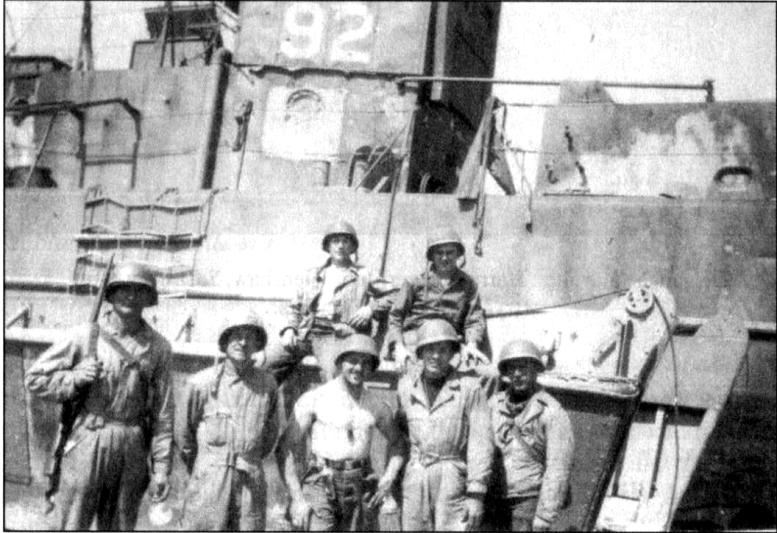



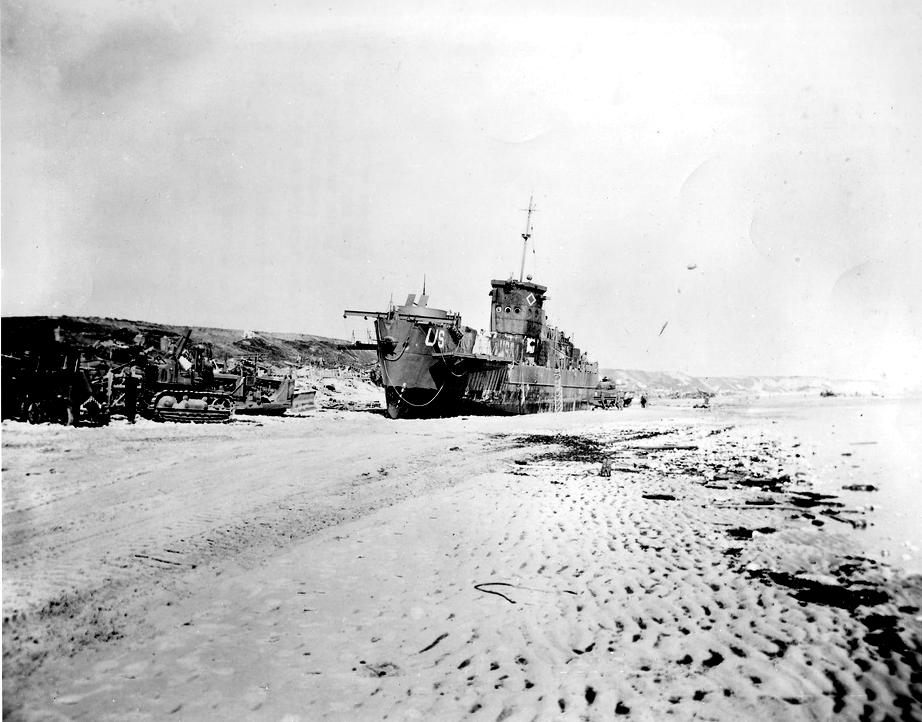

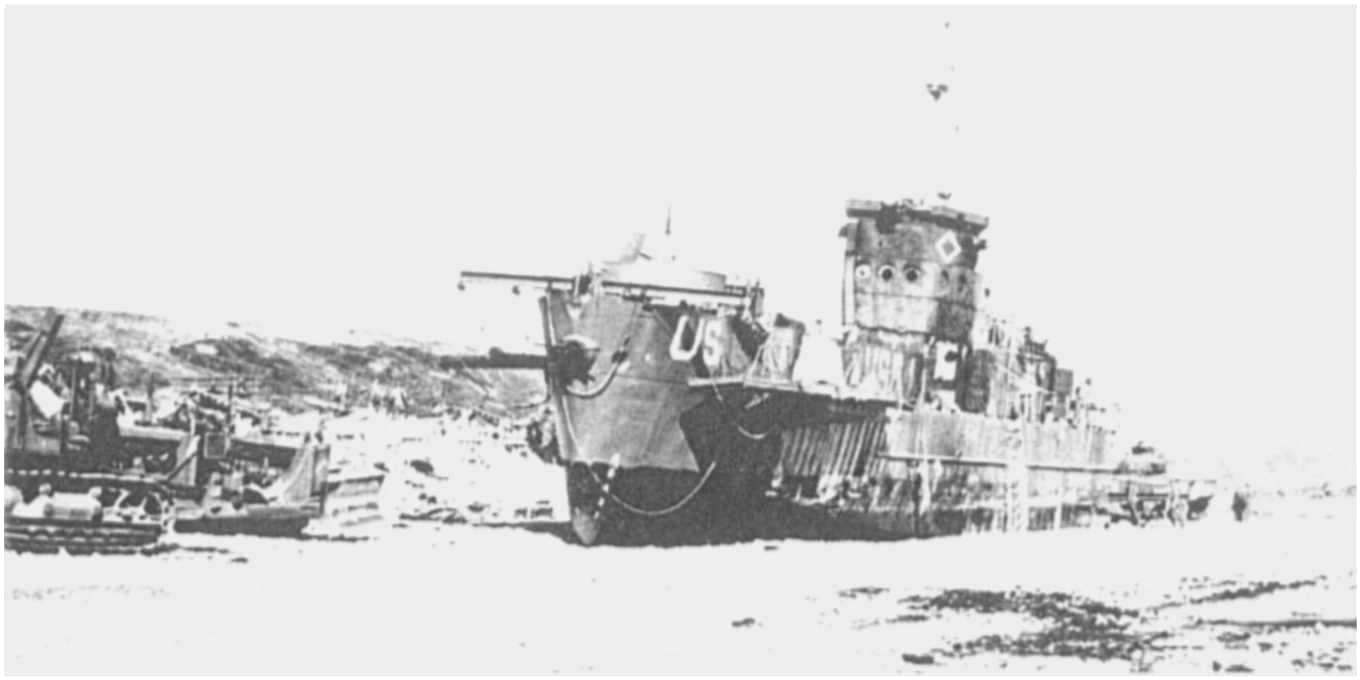
Here is the testimony of a sapper landing from LCI 92:
This LCI 92, approaching Dog White at about 8:10 a.m., was hit at the bow by a shell 300m from the shore, while he was making his first attempt to cross the obstacles. Sergeant Debs Peters of the 121st Engineer Battalion was on board. He recalls: "We put ourselves through the blades, parallel to the beach for a few moments. We were hit in the middle, there was an explosion. Those who were on deck were caught in the flames of the burning fuel oil and we rolled overboard. I fell into the water, immediately dragged to the bottom." He inflated his MaeWest belt and resurfaced.
"The Germans were ripping the whole area with their machine guns. I hung on to one of those pious men to get my breath back, and then I went on to another. Finally, I found myself 50 m from the shore. The tide was high now, the water almost reached the road."
When Peters came on the sand, "I was so heavy with sand and water that I was dragging myself." He sat behind a tank that was hit by a shell. A man was wounded by shrapnel, and he was hit in the cheek. He was lucky.
(It was an experience that many soldiers did on that day; sheltering in emergency behind a damaged tank or a half track, or another machine, but it was a mistake because the tanks were also targets for German guns.)
Peters reached the pebbly slope. There he found Captain John McAllister and Major Robert Steward. "We realized we shouldn't be here, and Major Steward told me to move on and look for the mines." Peters didn't have a detector, only a trench knife, but he went there anyway.
"I jumped on the road, crossed it, fell into a ditch, raised me through an area of brush, and then I climbed on the cliff." He climbed cautiously, testing the terrain with his knife, leaving behind him a white strip to point out the runway. Near the top, he began to receive machine gun fire. Shots tore his bag and another one made a hole in his helmet. He threw a grenade in the direction of the casemate and the shots stopped. He had done his job and more.
Another testimony, from a 6th BSG sailor, also disembarking from LCI 92:
Master Master Garwood Bacon of the 7th Naval Beach Battalion was on LCI 92 which struck a mine at 8:10 a.m. on Dog White. There were many injuries; the ship was burning. Along with the others in his group, Bacon launched an inflatable raft; he boarded the boat while they placed a radio, medicine in addition to their weapons and ammunition. As rifle and machine guns whistled in their ears, they drove the raft through the obstacles to the shore, and unloaded its contents on the sand.
"Hey! Bacon," called sailor Johnakin, "Do you think we could go back to the boat? There are wounded people who will not be able to make it by themselves so far."
"If you want, we'll try," Bacon said.
They gathered their stuff, Thompson machine guns, helmets on the beach, took over the raft and guided it back into the obstacles, trying to avoid the bullets, while picking up wounded people in the water. "In a few minutes, about fifteen wounded and non-dangers were hoisted in or hung outside, and with the help of the arms and feet available, they managed to return to the sand where several valid soldiers helped them to pull the wounded out of the pebble slope and give them first aid whenever possible."
Bacon caught a rifle (someone had already swiped his Tommy Gun) and he went to the pebbly slope. He saw a group of about fifty men, "all prostrated on sand and pebbles. Thinking that they were there to protect themselves from shooting, I threw myself on the ground between two soldiers and put my head in the sand. All of a sudden I realized that there were no bullet whistles above and I raised my head cautiously looking around me. What I saw iced my blood. One of my neighbors was headless, the other almost cut in half. They were all dead." (they were probably GIs killed in front of the Vierville descent and that the tide and currents had pushed towards Saint-Laurent)
He couldn't take care of the dead and he went to his group.