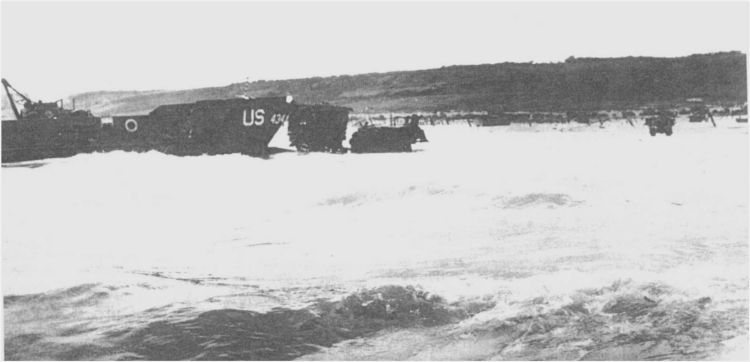
(details) LCT shows up a bulldozer
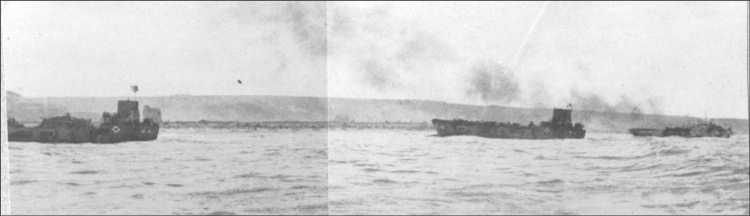
(details) 3 LCT appear in front of St-Laurent and Vierville, around 11:00 a.m.
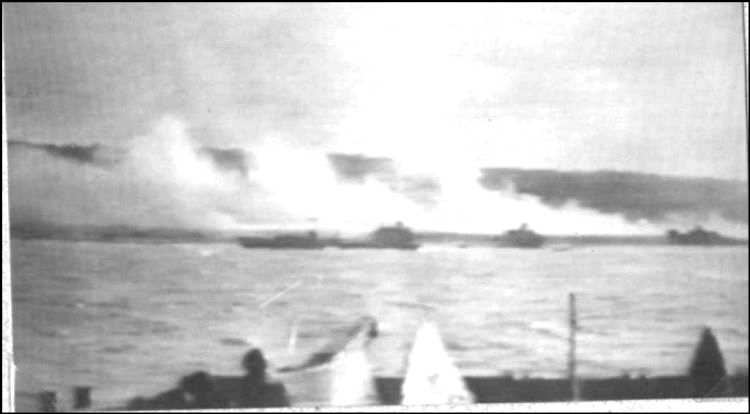
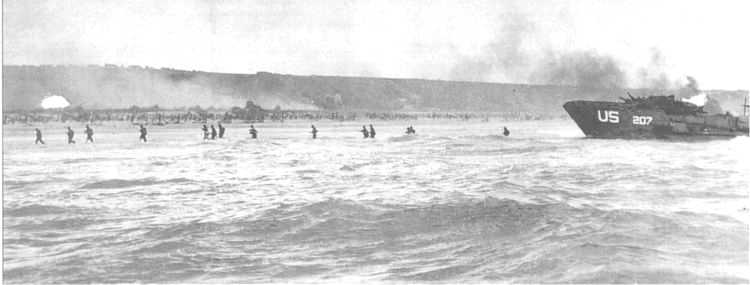
(details) LCT discharge in front of St-Laurent, LCI 92 is seen at the coast on the Dog White/Dog Red boundary


(details)
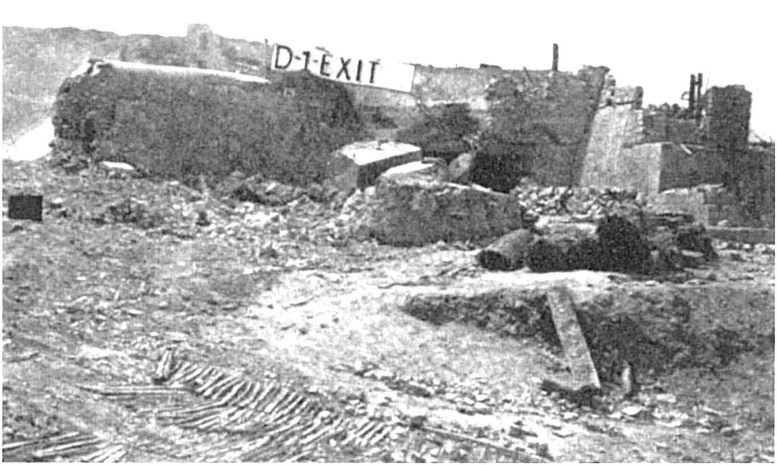
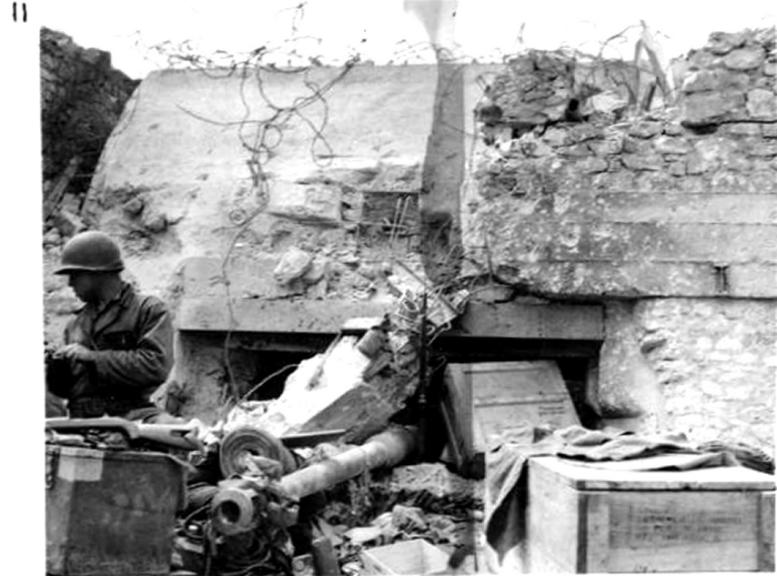
(details) The main bunker in Vierville on June 7, showing broken debris from the anti-tank wall
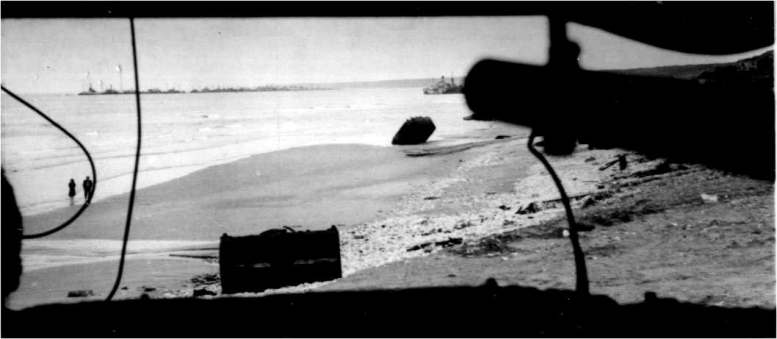
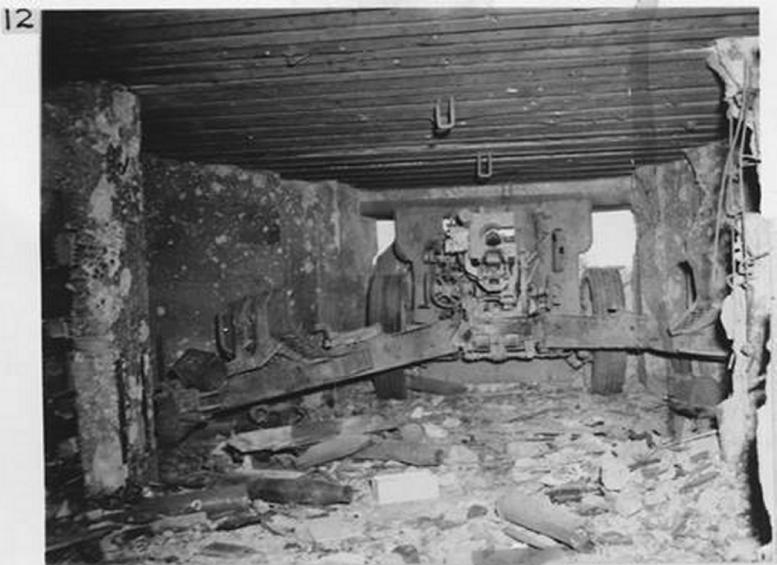
(details) It shows the 50mm KWK short gun, directed to the East Embarrassure
351
The 121st Engineer Battalion brings together
its scattered sappers
and destroys the anti-tank wall of Vierville
The 121st Engineer Battalion was part of the 29th Division. He was assigned more specifically to support the 1st Battalion of the 116th Regiment. His landing beach should have been Dog Green and he had to demolish the anti-tank wall and open the road to Vierville.
Various sections of Cies A and B/121 had landed LCI 91 and 92 on Dog White at about 8:00 a.m. under artillery fire, but they did not have large equipment or explosives in quantities (sappers were usually only 5 kg of TNT). So it was necessary to recover explosives from the beach wherever possible.
Colonel Ploger, who commanded the battalion, landed with 53 sappers from the LCM 1098 in deep water at about 0730, the battalion's first forward detachment. Instead of landing on Dog Green, they had drifted with the current to Dog White and suffered significant losses.
Arriving on the pebbly slope, Ploger found himself alone with a shrapnel of shells in his leg. His concern was to gather enough forces (sapers, bulldozers, explosives) to remove the obstacles of the descent of Vierville. There was a wall of 2m50 high there, which stretched from the cliff to a bunker, barring access completely.
In the middle of the morning, on Dog Green and Dog White, all infantry forces had left by the cliff. There were only tanks left from Dog Green to Dog White.
Ploger therefore set out to Vierville by walking along the beach and grouping its scattered units. He installed a PC under the Dog White cliff between Vierville and St-Laurent, which served as a gathering point. Some groups had followed the infantry to Vierville via the cliff.
The battalion received its first large equipment when, at approximately 11:00 a.m., two sections of the CieC/121 landed from an LCT on Dog White bulldozers each loaded with 500 kg of explosives. The other LCTs had gone further east, far too far to allow the equipment disembarked to quickly come to Vierville.
After the Navy and tanks removed the guns of the big bunkers of Vierville and machine guns from the strong points, the isolated snipers defending the wall remained to be rid of.
Around 1 p.m., a patrol of the 121st Genie received the surrender of 30 Germans near the anti-tank wall, shortly before the passage of General Cota. The position was then silenced.
With the help of the sappers of the 147th Battalion of the Beach Engineers, the 500kg of explosives calculated in advance were finally gathered and placed at the foot of the wall. At about 3:00 p.m., in front of Colonel Ploger, the wall was demolished and the road to Vierville became accessible to clearing equipment. The explosion had destroyed concrete and scrap metal all along the road. Many buildings destroyed by artillery behind the wall also had to be cleared (notably what was left of the Casino hotel). The debris was repelled with bulldozers from both battalions and with a tank dozer.
The testimonies of the sappers of the 2 battalions are somewhat different but sometimes complement each other. This is Sergeant Dube of the 121st (page 3411), he tells about his landing on Dog White at around 11:00 and the destruction of the wall.
Colonel Ploger's account: "I was told that a CieC bulldozer was on the beach with 1000 pounds of TNT, we brought it in as soon as possible. I don't remember who the driver was (witnesses say it was perhaps soldier Joseph Drago, where then Al Velleco). In general the bull drivers were hard to cook, but I was always surprised at the courage of this driver under fire, with a TNT load sufficient to turn the bull into a large hole. It would have been a mortar shell.
I didn't know if the concrete on the wall was armed, but I assumed it. So we've planned to use a large amount of TNT. Sergeant Dube of Cie C did a lot of work, fixing the detonators, the cords, the wires. He also led the development of a wooden structure to increase the efficiency of the load by raising it above the road. Sappers from several units participated. When everything was in place, they all folded in at a safe distance. After warning the charge jumped at about 3:00 p.m. I approached. The wall was demolished along the entire width of the road. There was a 4 or 5 cm indenture in the pavement. A huge pile of crumbled concrete was all around, pieces small enough to be carried to man's arm. I was surprised to see how the wall had completely disintegrated. The Germans didn't have to arm him. It was a serious mistake on their part. The wall would have been much better if it had been reinforced concrete. In addition, the reinforcements would have been very difficult for us to remove."