Preliminary bombardments
The aerial bombardment was a complete failure. Liberator quadrimotors had been planned, but they were flying at high altitude and above the clouds. As the accuracy was already poor in clear weather, the Allied Major States had to resolve to prescribe an additional margin of safety for the target, which led the centre of gravity of the impacts to several hundred meters and sometimes several km south of the target. It was then certain that the bombs could not reach the landing craft flotillas that approached the shore at full speed at the same time.
As a result, the bombs dispersed in the countryside, without any effect on German defences.
Naval bombardments have been more effective, especially for conventional warships, battleships, cruisers and destroyers. On the other hand, evidence indicates that rockets launched by LCT(R) have generally fallen into the sea. It was indeed impossible to aim and adjust the firing of this kind of gear. The duration of the bombardment by the other ships was too short for the German defences to be disrupted.
All in all, these bombardments had a very limited effectiveness.

The chart of landings in front of F1 and E3
Assault infantry
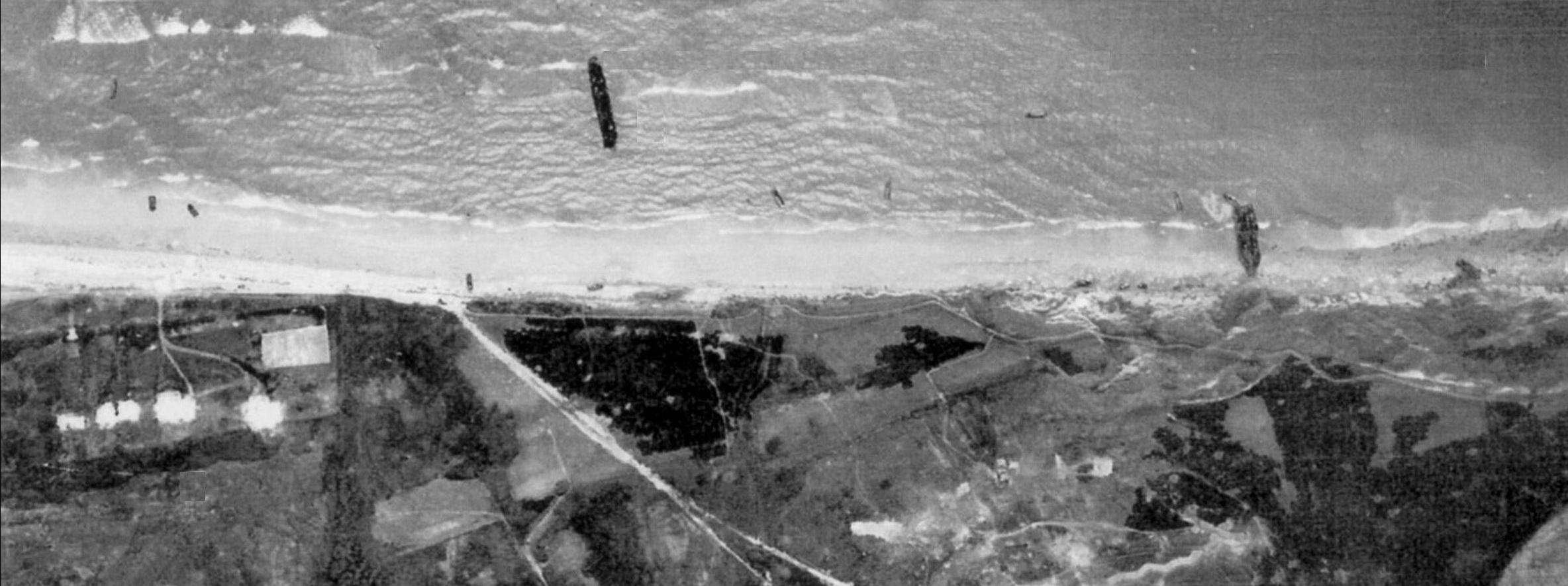
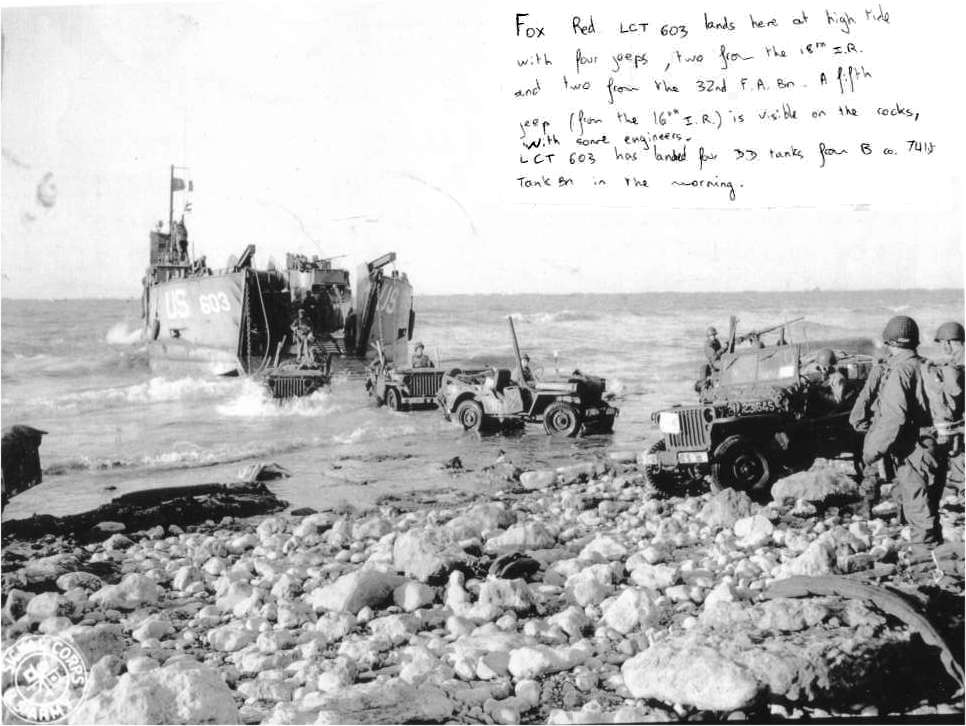
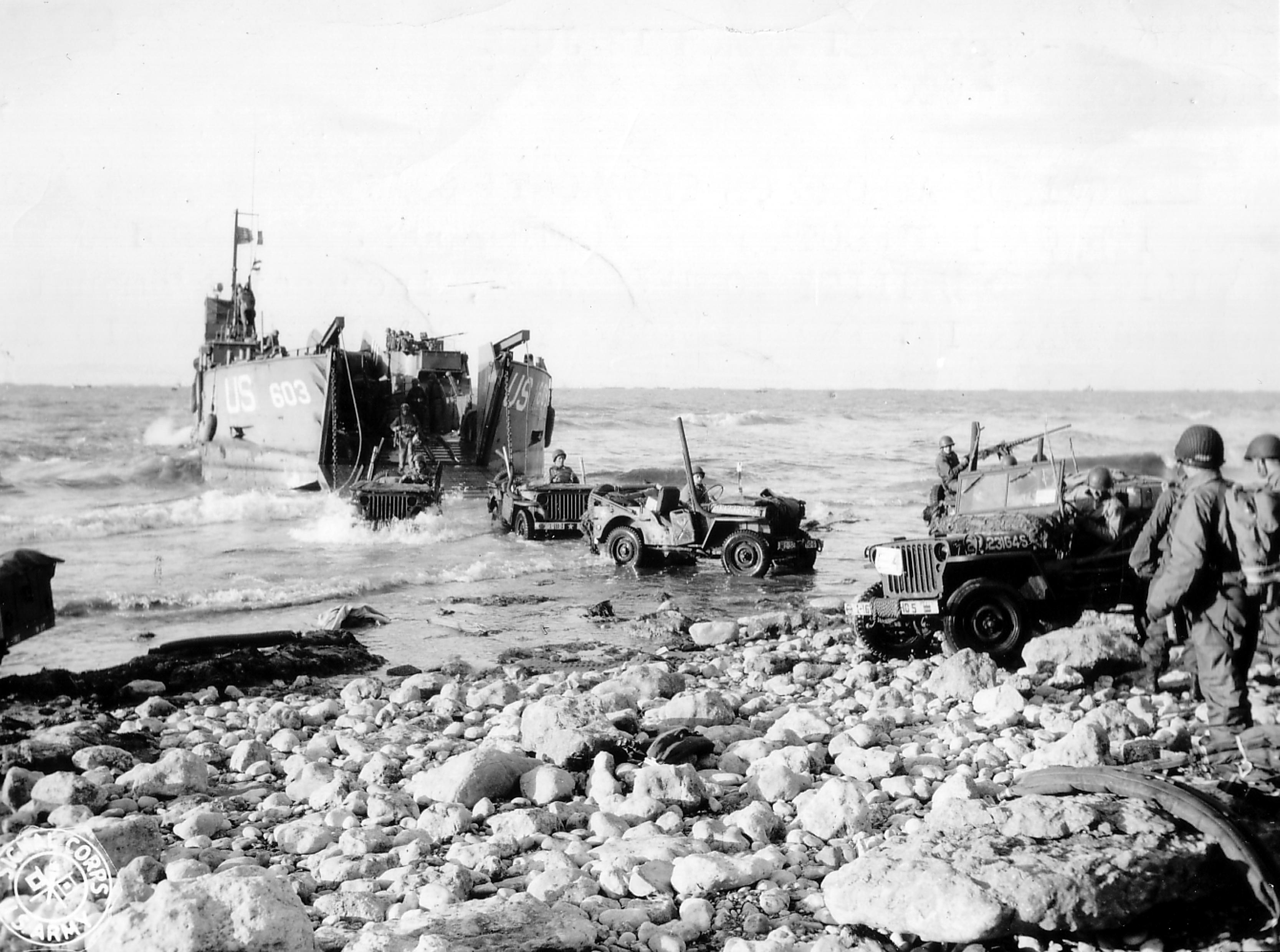
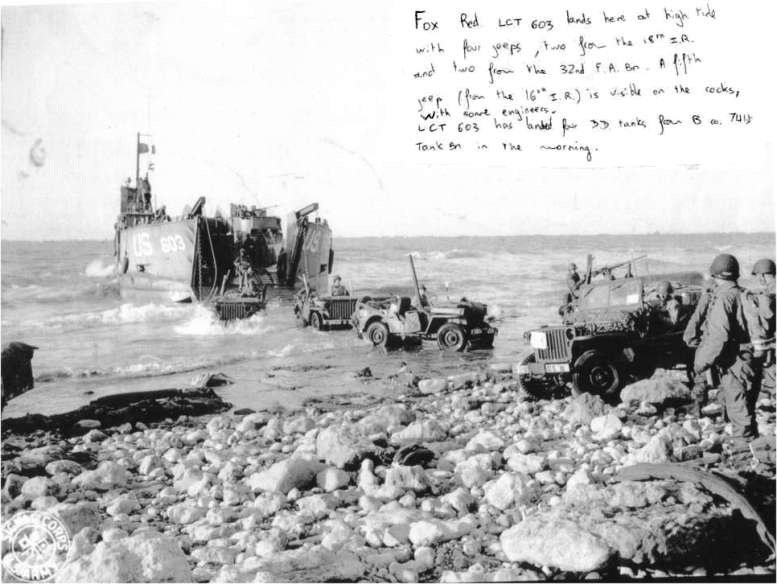
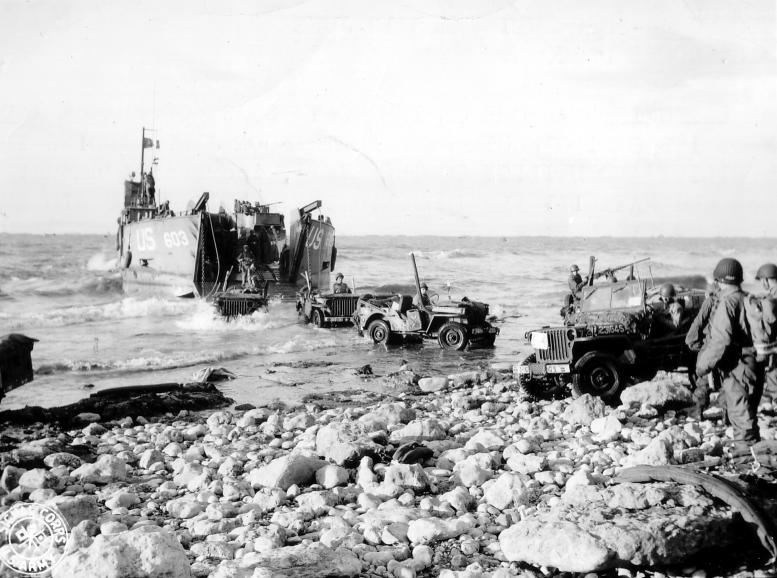
On the Fox Red sector no landings were scheduled, the beach was narrower and narrower to the east, without the pebble bank that left the place to a platter of rocks. In fact, the circumstances have decided otherwise.
For tanks, it appears that only one LCT, the LCT 2037, landed its 3 tanks (2 standard and a tankdozer) on Fox Red.
The 2 assault infantry companies destined for Fox Green Beach, completely disoriented by smoke and tidal currents, arrived on Fox Red, and very late.
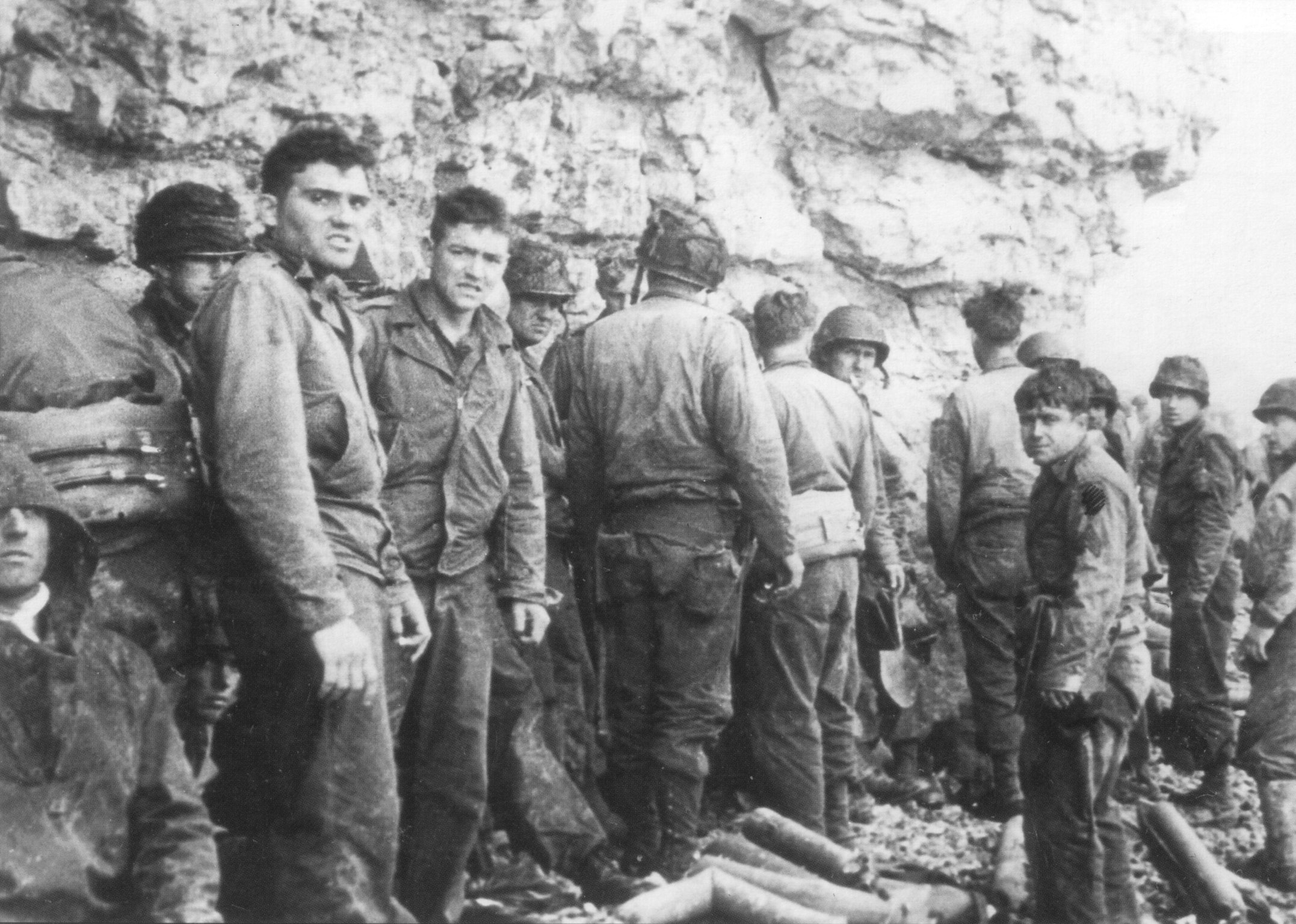
The L/16 arrived at about 7:00 a.m. just under the WN60, having lost one of its 6 LCA. The men had to travel the 150m of beach under German fire and the losses were heavy before they reached the shelter of the cliff. About 150 out of 200 men remained valid.
The I/16 had deviated even further from its objective, finding itself only in front of Saint Honorine. She arrived at about 8:00 a.m. on the west side of Fox Red, losing two of her 6 LCAs. So she arrived long after the 2nd wave of assault companies and between the WN61 and 60, suffering their fire.
The fall of the WN 60
When the 140 to 150 men of the L/16 Cie arrived in the shelter of the vertical cliff, their only alternative was to move west to the right of the F1 valley, where it was possible to climb a small lift of ground before colliding with a barbed wire covered by the WN60 fire over them.
To go further, they needed artillery support to muzzle the WN shooters while the infantry would cross the barbed wires and engage in the valley to bypass the WN60 and take it back.
This artillery support came from 2 isolated tanks of the 741st Tk Bn. These tanks were outside the 88mm range of WN61, but visible from the WN machine guns and rifles. To designate the targets, Captain Armellino, Cd. L/16, tried to talk to the tanks but was seriously injured. Finally it was Lt Monteith who managed to go to the tanks to organize the fire support. In addition the destroyer Doyle, wet at 800m, also intervened, after having had some fragile radio links with a naval support team on land.
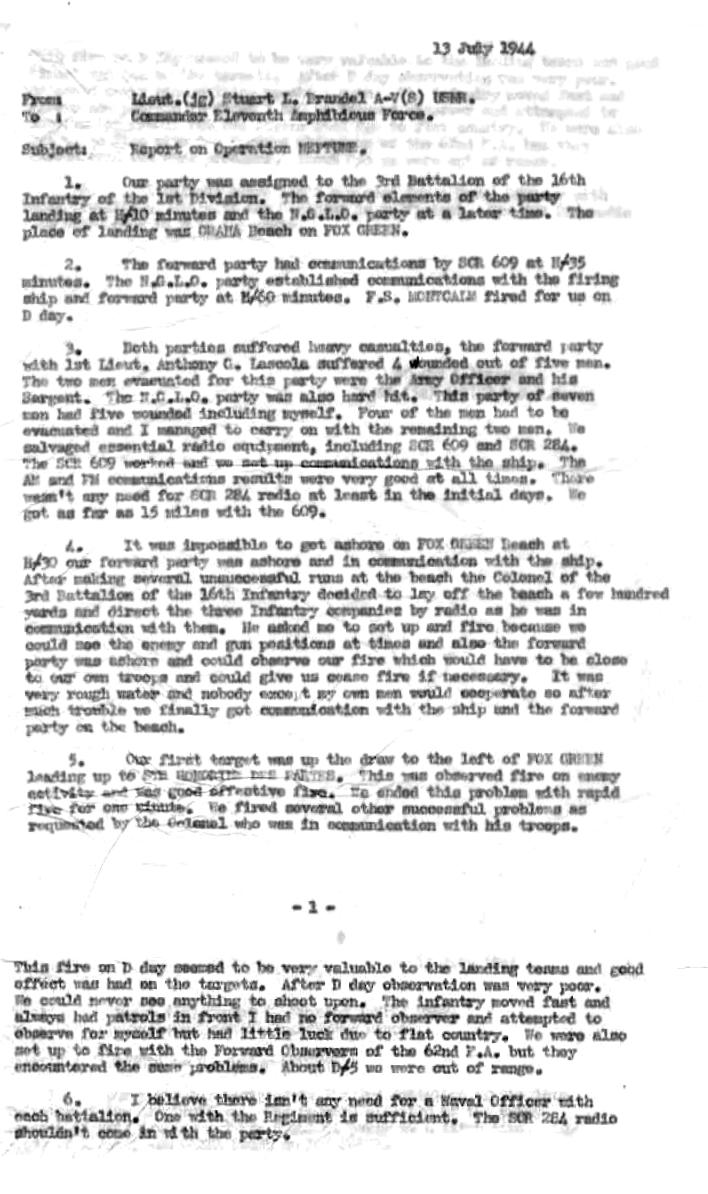
(See Report of Lieutenant Brandel (USNavy), commanding a section of artillery liaison with Montcalm, disembarked in Colleville with battalion 3/16)
The 2 tanks and the Doyle were able to neutralize the 75mm field gun of the WN 60 and force the Germans from the other firing stations to shelter.
Meanwhile, the sections of the L/16 Cie, led by Montieth, went up the valley, shooting with their BARs on the Germans to force them to hide. Arriving above the WN, after stopping the tank fire (with the agreed coloured fumigants), they bypassed the WN from the south, breached the Bangalore in the outside barbed wires, and submerged the Germans of the WN 60, whose survivors surrendered at about 9.30 a.m.
After taking over the WN 60, the L/16 company continued on the path of exit F1, arriving on the plateau it settled on a branch of paths, the one on the right leading to the hamlet of Cabourg, the one on the left to the Grand Hameau, these two groups of houses being located on the coastal road leading from Colleville to Sainte Honorine and Port-en-Bessin. Lt Cutler, who had been in command of the company since Captain Armellino was out of combat on the beach, then sent 2 patrols in reconnaissance to these hamlets.
Toward Cabourg, the three men who were hired lost one injured and were subsequently taken prisoner. Their company only recovered them the following 7 June when they reappeared with some 50 German prisoners. Indeed, during the night one of the Americans, speaking German, had convinced his temporary guards that the best for them was to surrender, which they did without too much difficulty, realizing that the Americans had infiltrated everywhere in large numbers south of Colleville and the Grand Hameau.
In the direction of the Grand Hameau, a four-American patrol managed to approach without being identified, and was able to report a large German presence preparing to launch a counterattack against the L/16 Cie. The battle that began allowed the L/16 Cie to hold its position, but at the cost of the sacrifice of Lt. Montieth, killed after personally destroying several German machine gun posts with grenades and gun granades.
The L/16 Cie was then reinforced by other elements of the 3rd Battalion (the III/16), under the command of Captain Richmond, Cdr I/16 Cie. This allowed to resume the attack and to repulse the Germans who had to abandon the Great Hamlet in the afternoon to a disparate group of the 3rd Battalion (III/16). This lock on the coastal road was effective and several German vehicles were intercepted and destroyed, with GIs taking over documents and radios. This certainly helped to relieve the isolated Americans in Colleville.


The III/16 Bn tried in the evening to approach Cabourg, but he encountered insurmountable resistance. He fell into an orchard from 9:00 pm for the night.
The Germans almost surrounded in Cabourg visited on the morning of 7 June.
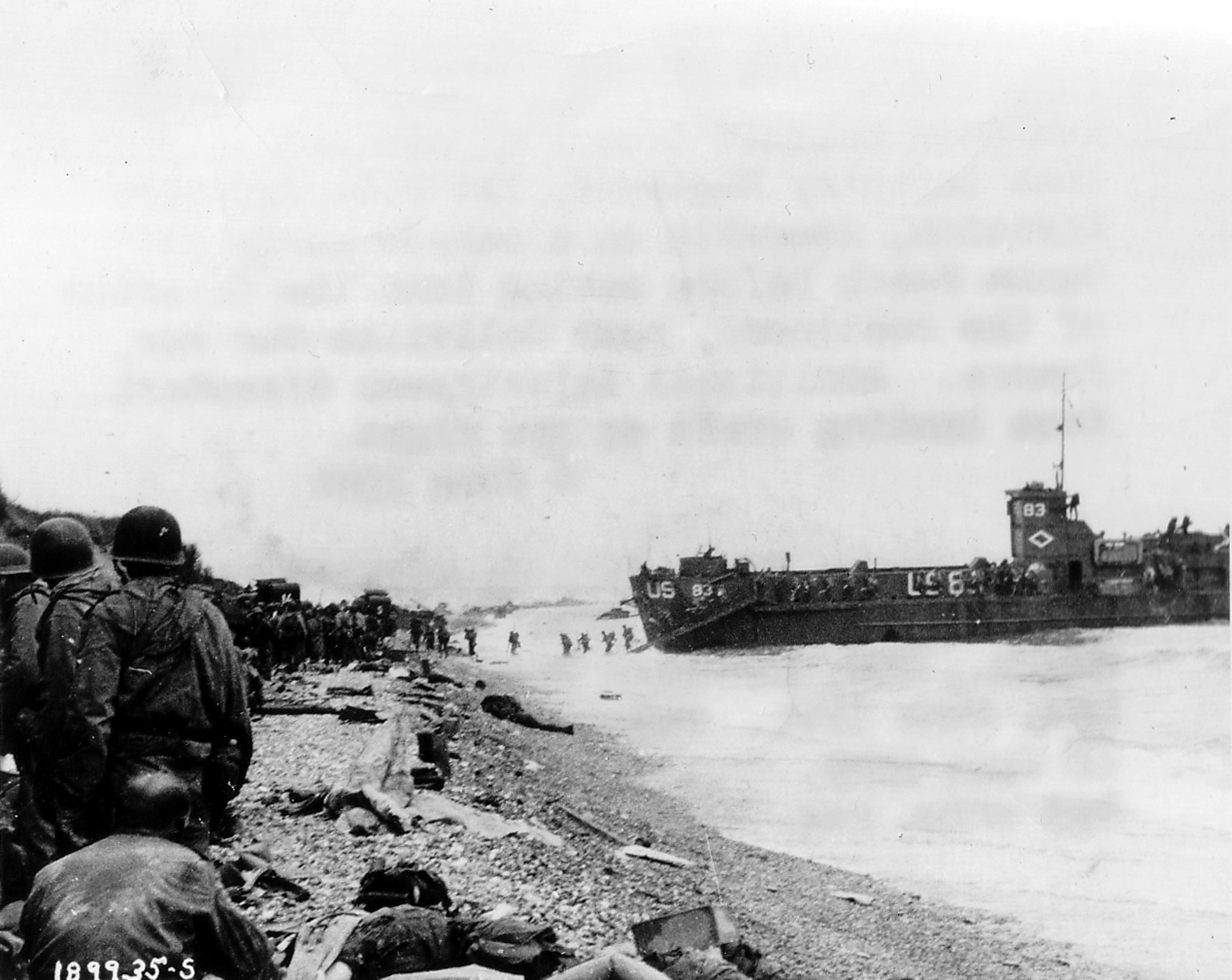
Meanwhile the division's reserve regiment, the 26th RCT, approached with 12 LCI, from 6:15 p.m. at the foot of E3, on Fox Green. His previous orders were to push southeast towards Bayeux after leaving the beach. But it was too late and the orders were changed and only the I/26 Bn was sent to push towards Cabourg and then Port in Bessin. At night he placed on the cliff above the WN61, before leaving on June 7 for his goals.
On the beach, at the end of the day, arrived the 336 EngrCB, responsible for opening the F1 road, but landed in part on Dog White in the afternoon. The 336 CBS spent the afternoon on F1, getting shot at in front of Les Moulins.
The F1 exit, at the foot of the Cabourg valley, was not privileged in the American plans, it was too narrow and steep. But the difficulties on the other four valleys led to the acceleration of the work on F1 which the Germans had been delocalized in the morning (fall of the WN 60 and 61).
It was the 336th Engr Bn (of the 5th BSE) who was responsible. Unfortunately his landing was complicated by dispersal, certain companies being unloaded on Dog White (see Marshall account) 3km west at the beginning of the afternoon. Finally, clearance began at about 4.30 p.m., with bayonets (due to the presence of wooden mines, and also because the "frozen stoves" were missing (of 24 planned, 7 were in working order).
The existing track was far too steep, and a new road had to be cut in the valley, with a reduced slope. At 8:30 p.m. it could be put into service in the direction of the Grand Hameau and Cabourg (always held by Germans). A group of 745th Tk Bn (disembarked on Fox Green in the afternoon) borrowed it overnight.

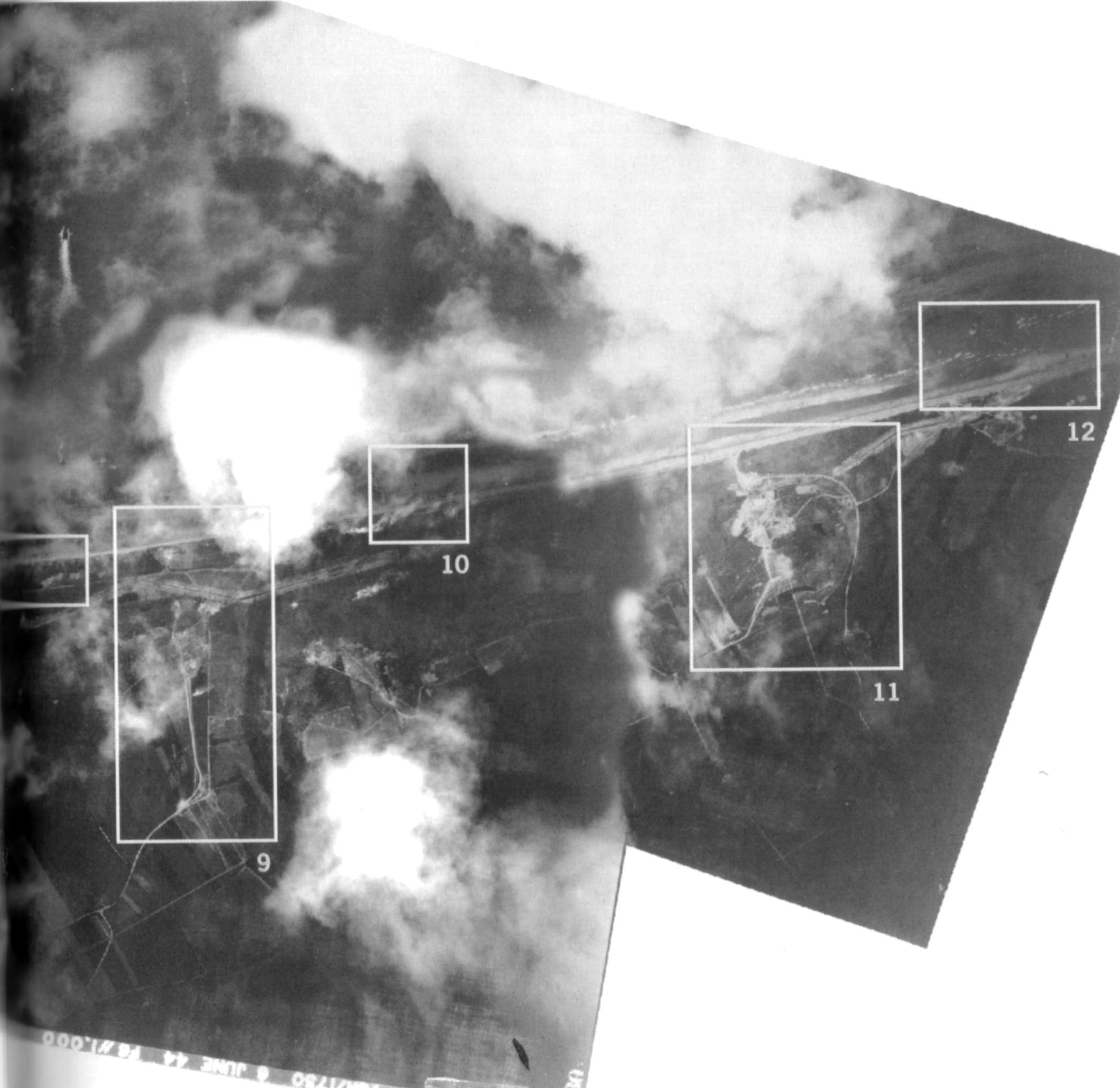
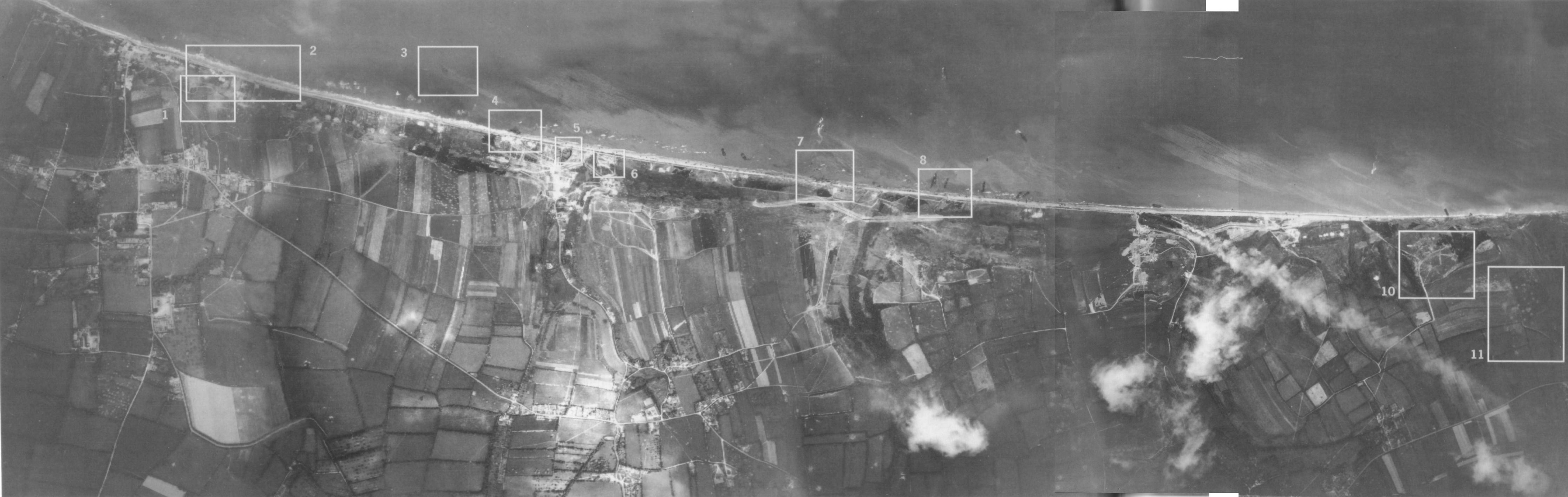
(details) Positions on the evening of 6 June in the Cabourg sector
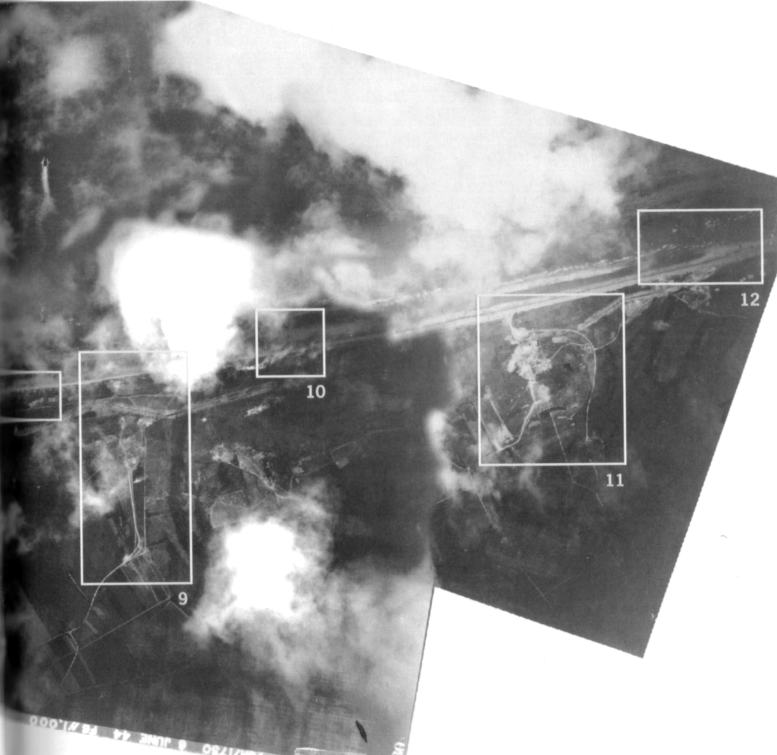

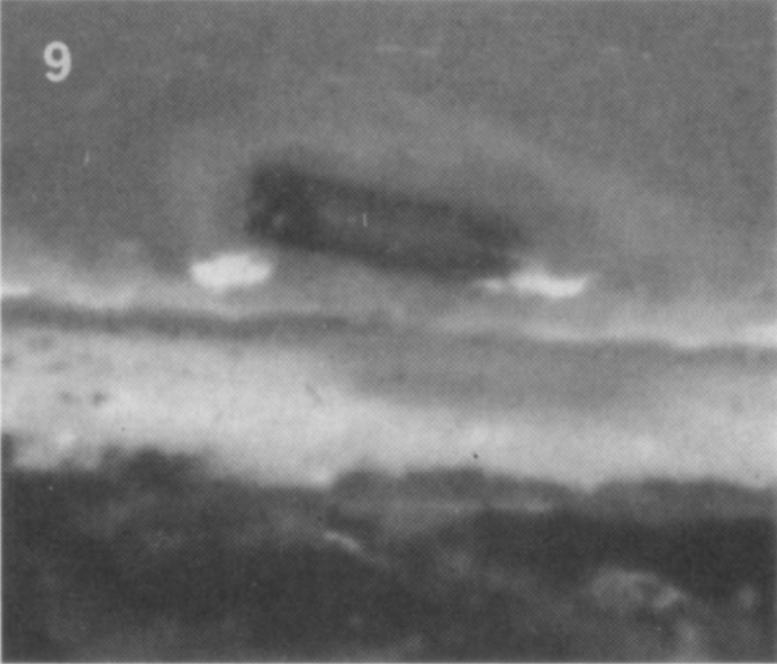


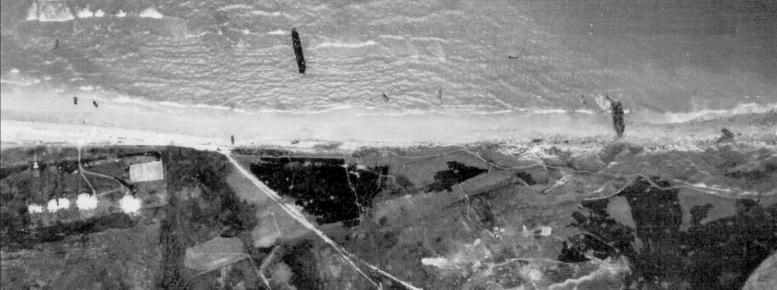

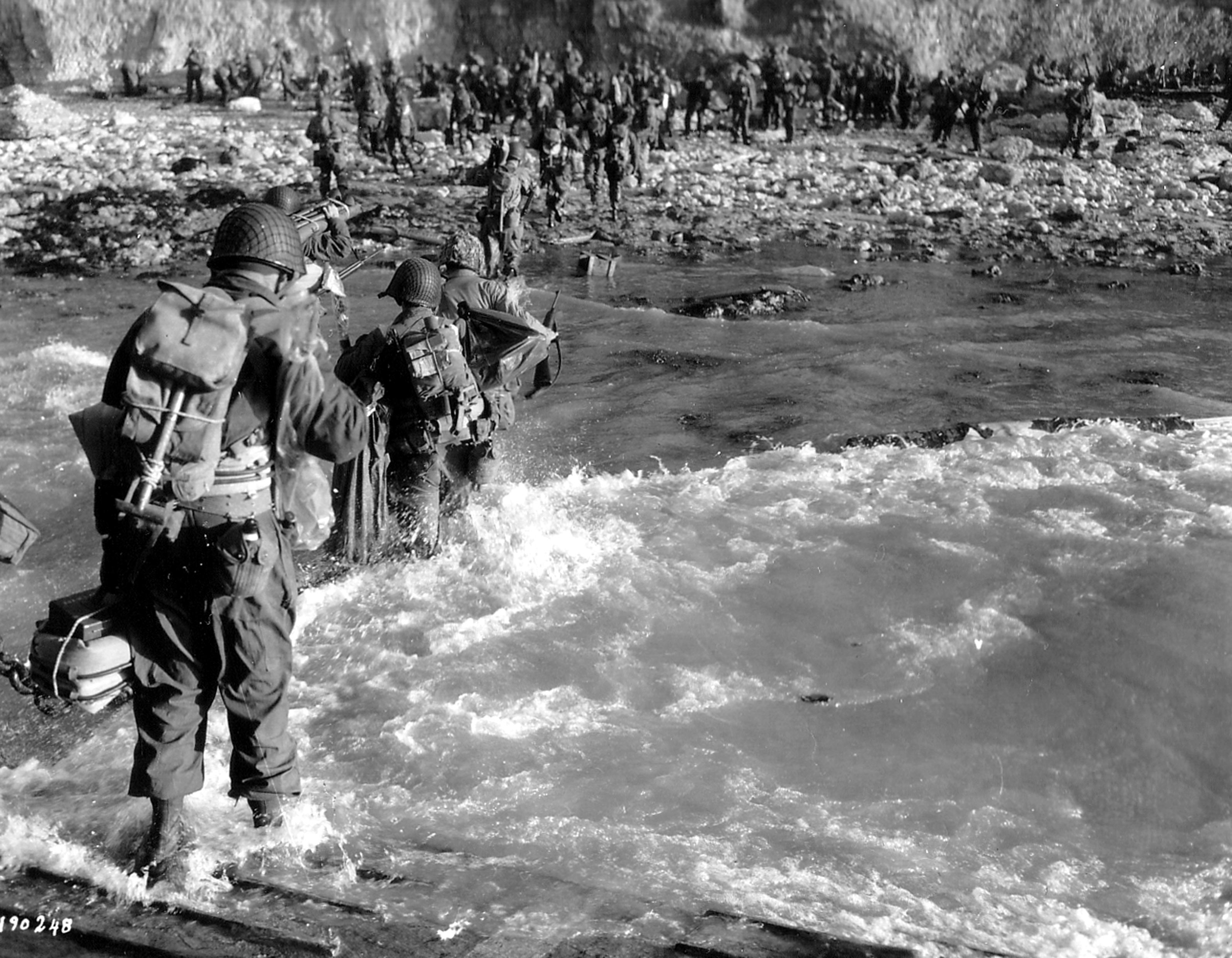
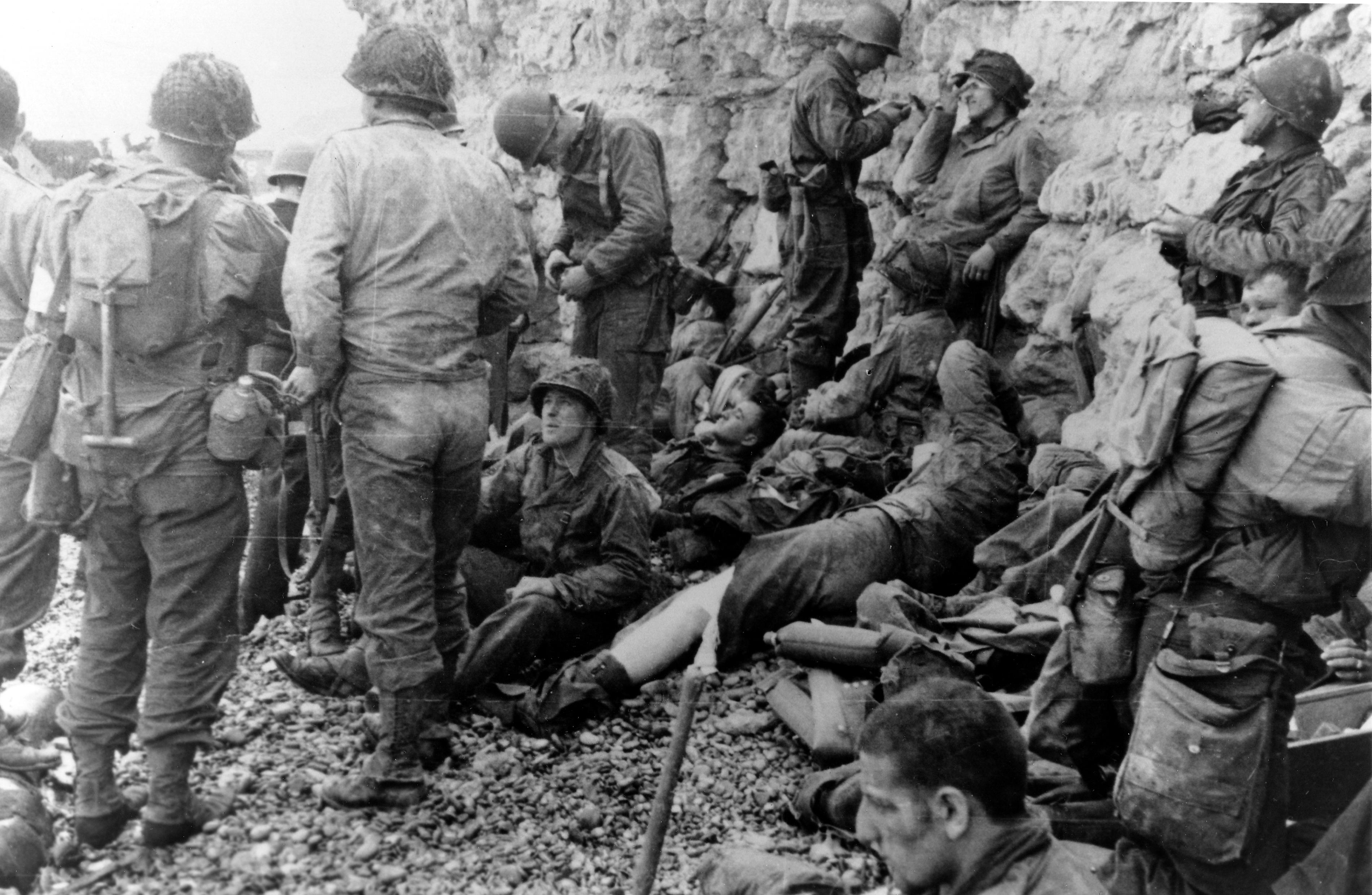
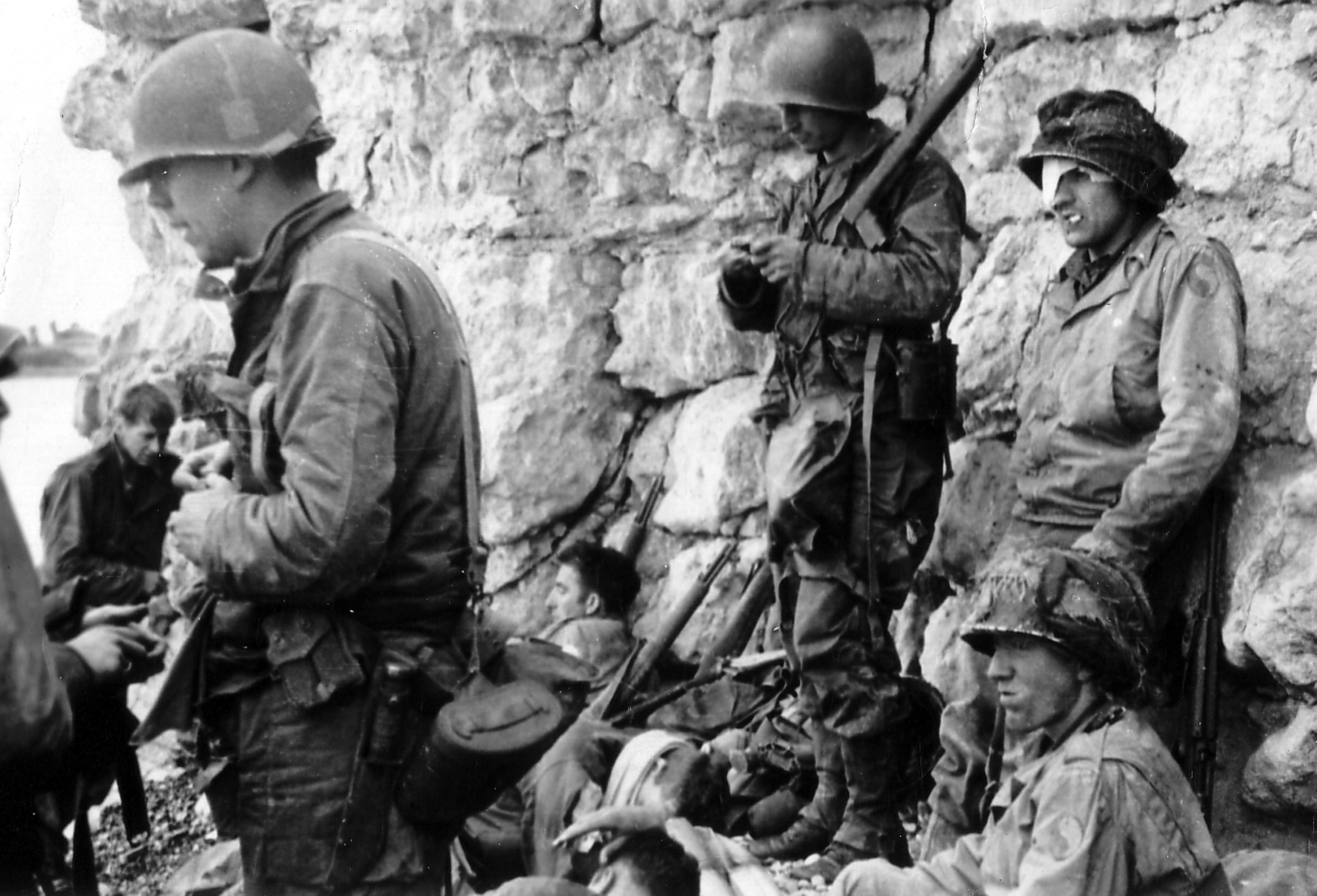
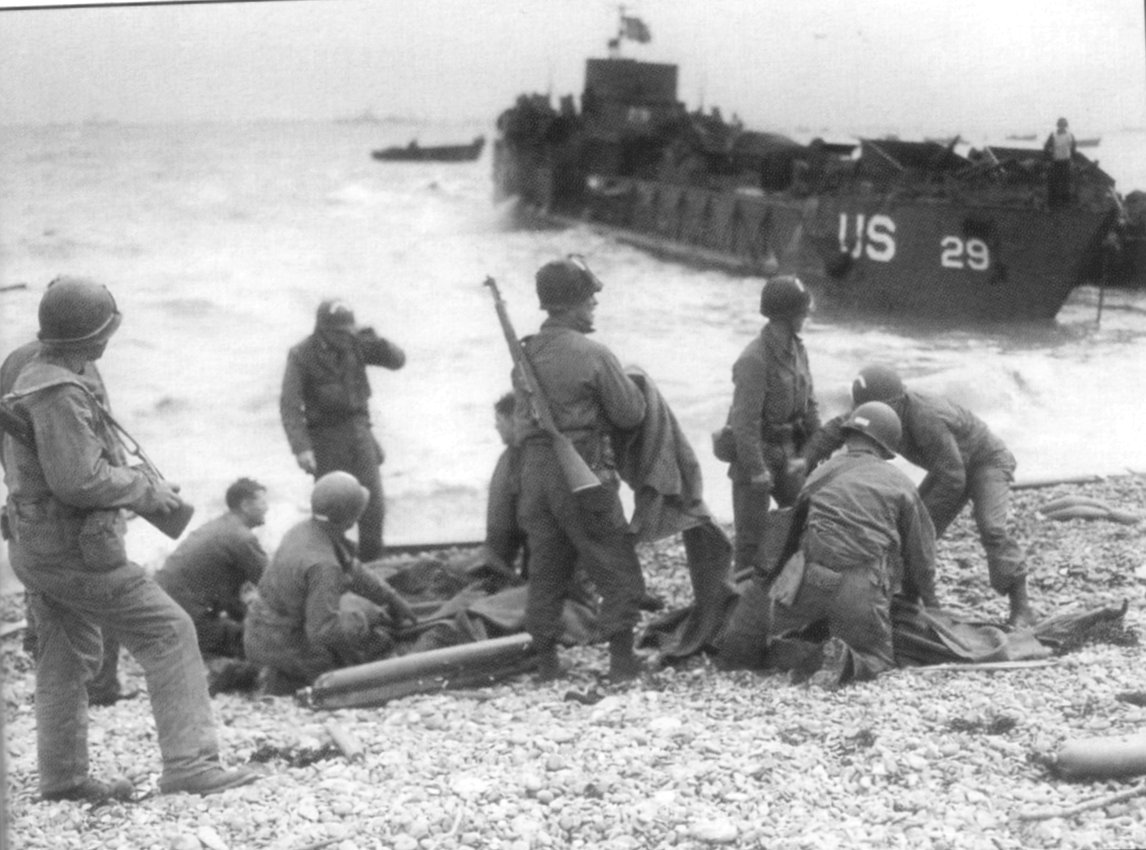
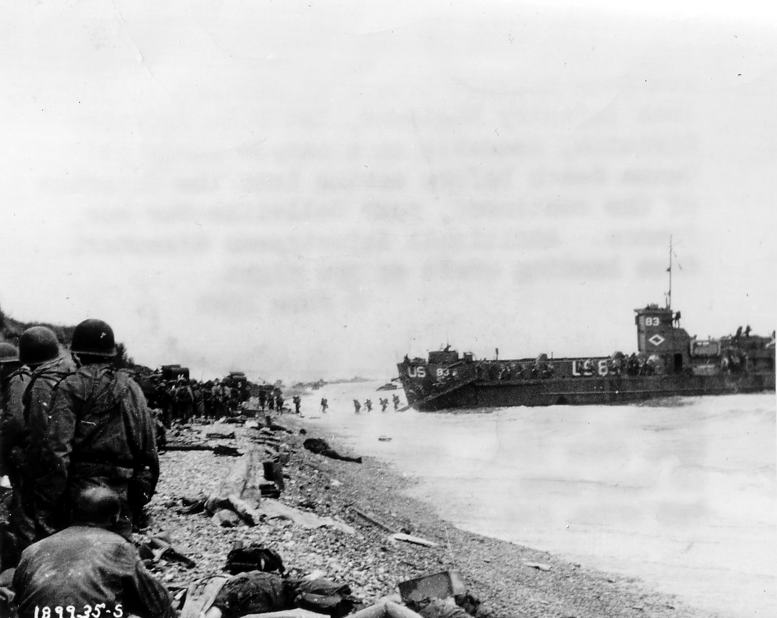
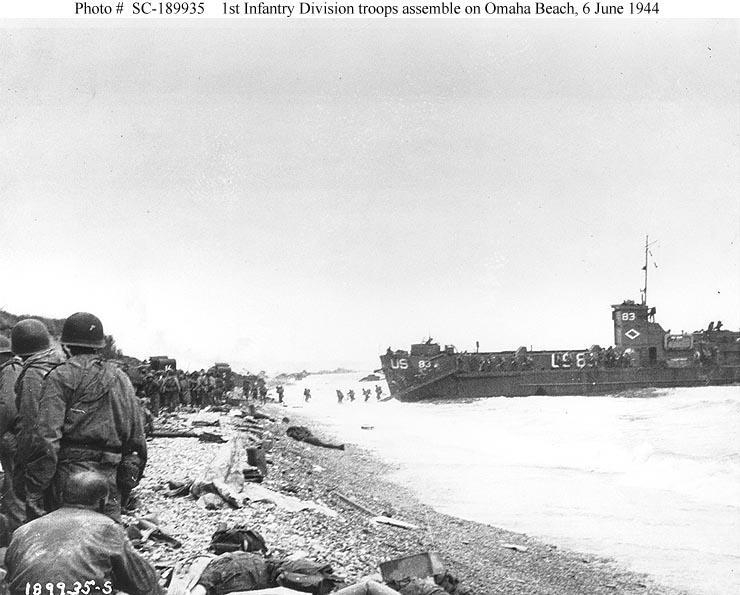
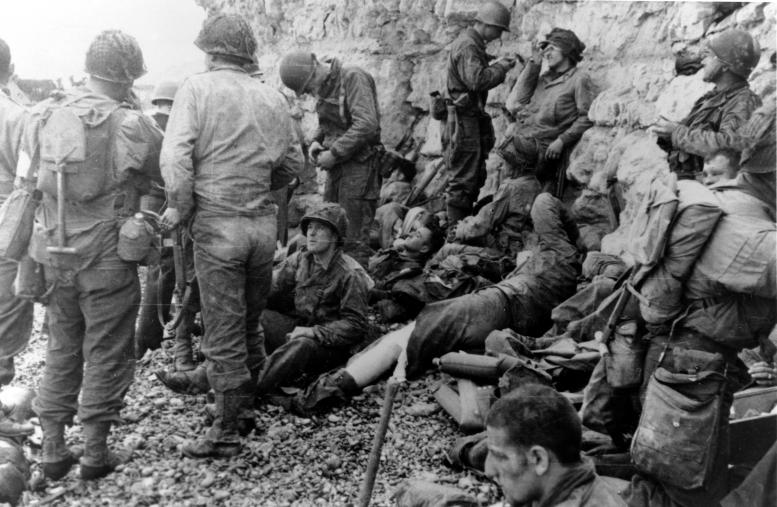
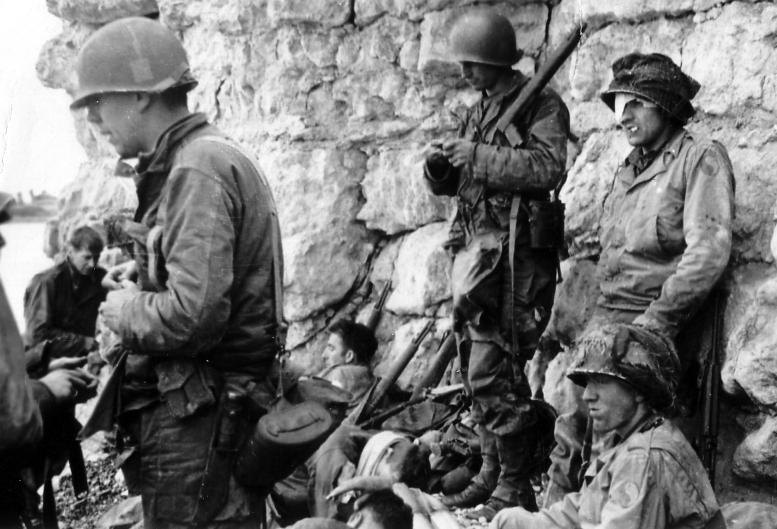
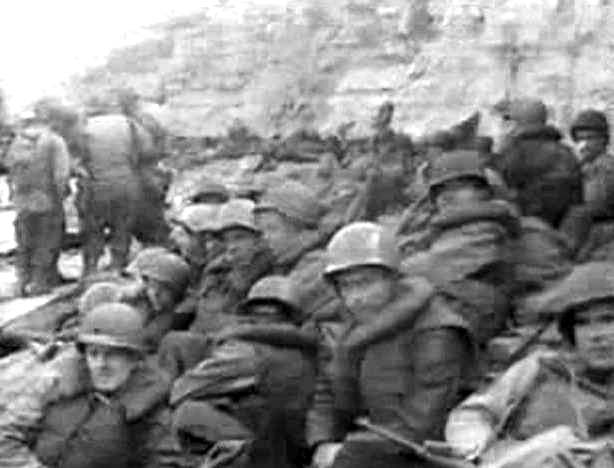
(details) GIs disembark, sheltered from
sight of the Germans, at the foot of the cliff, at high sea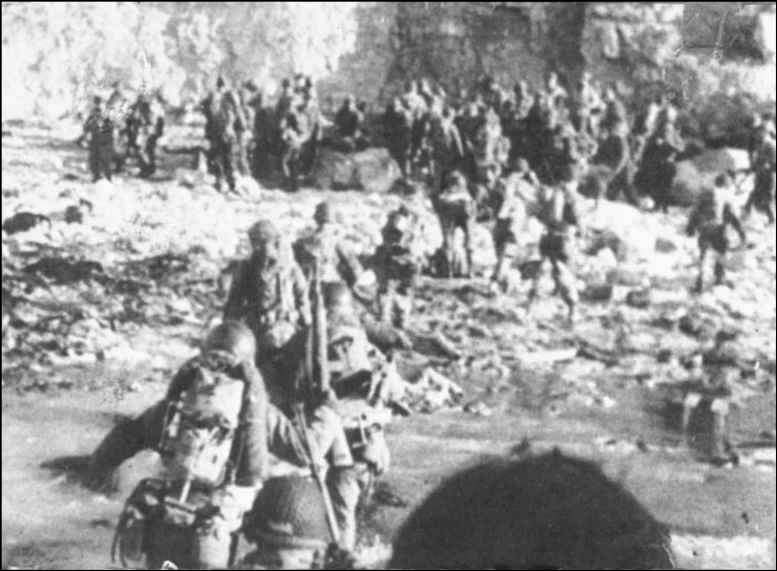




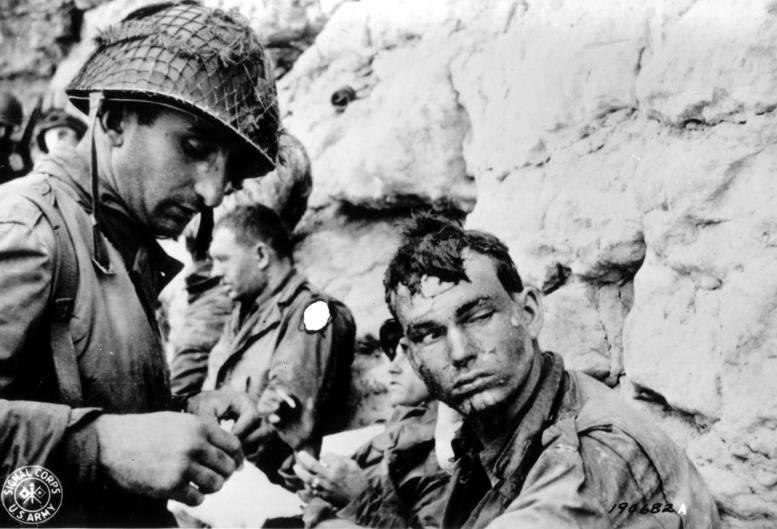
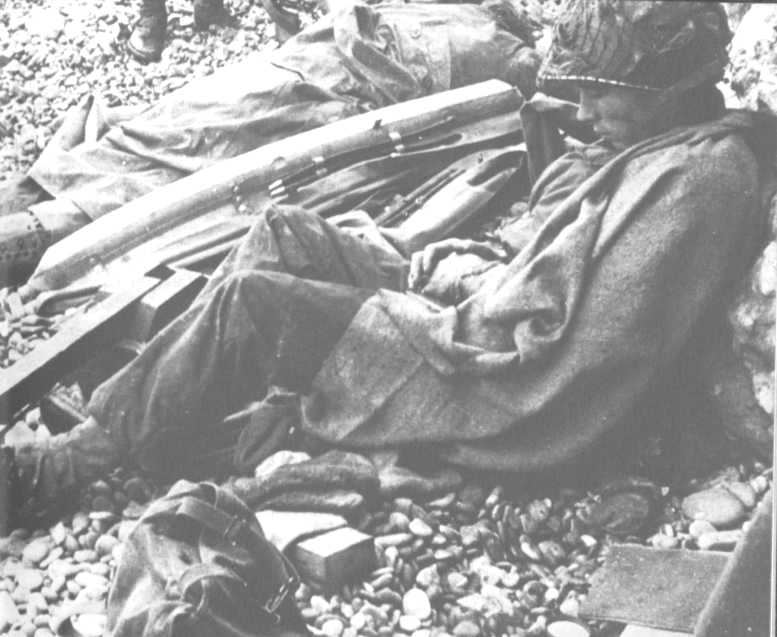
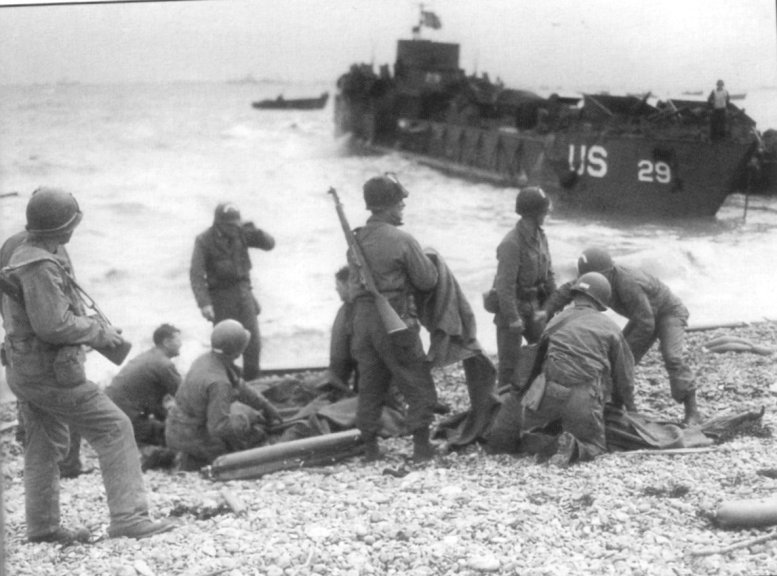
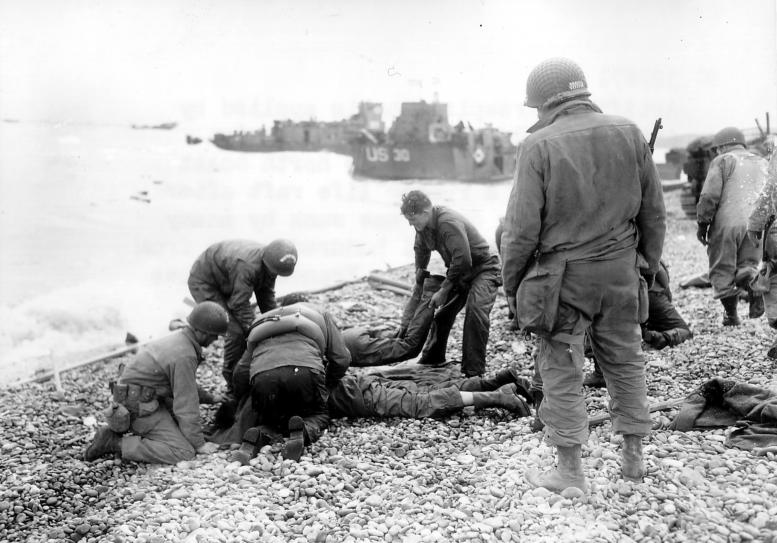
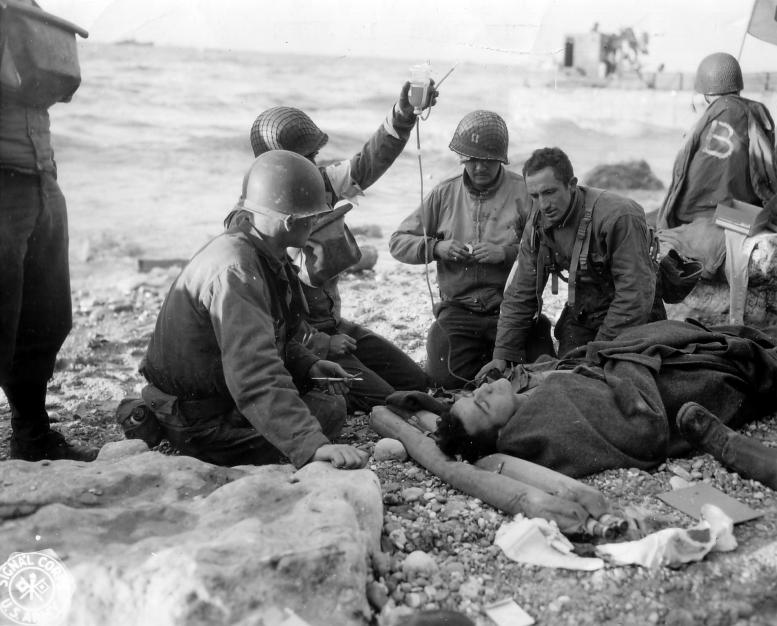
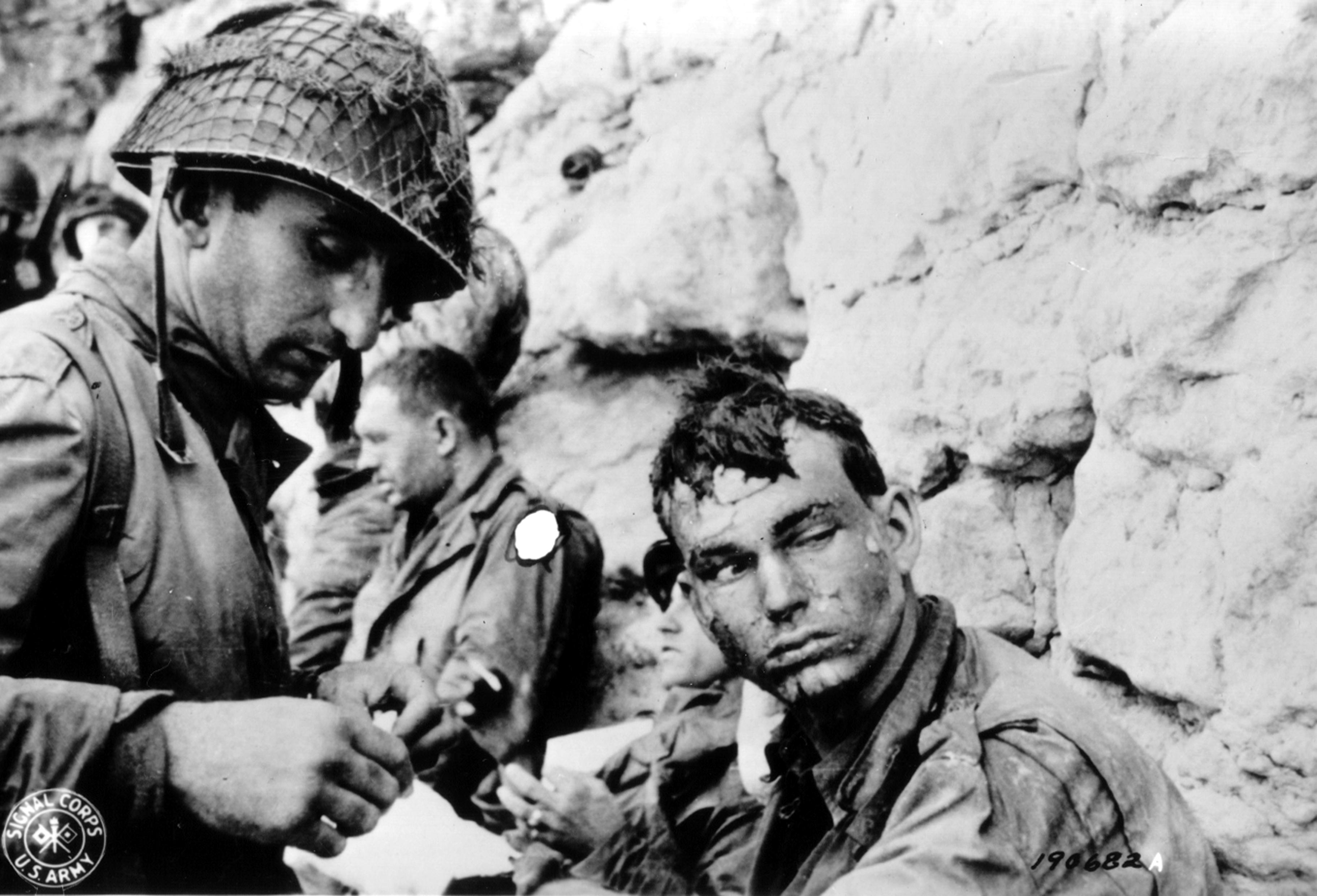
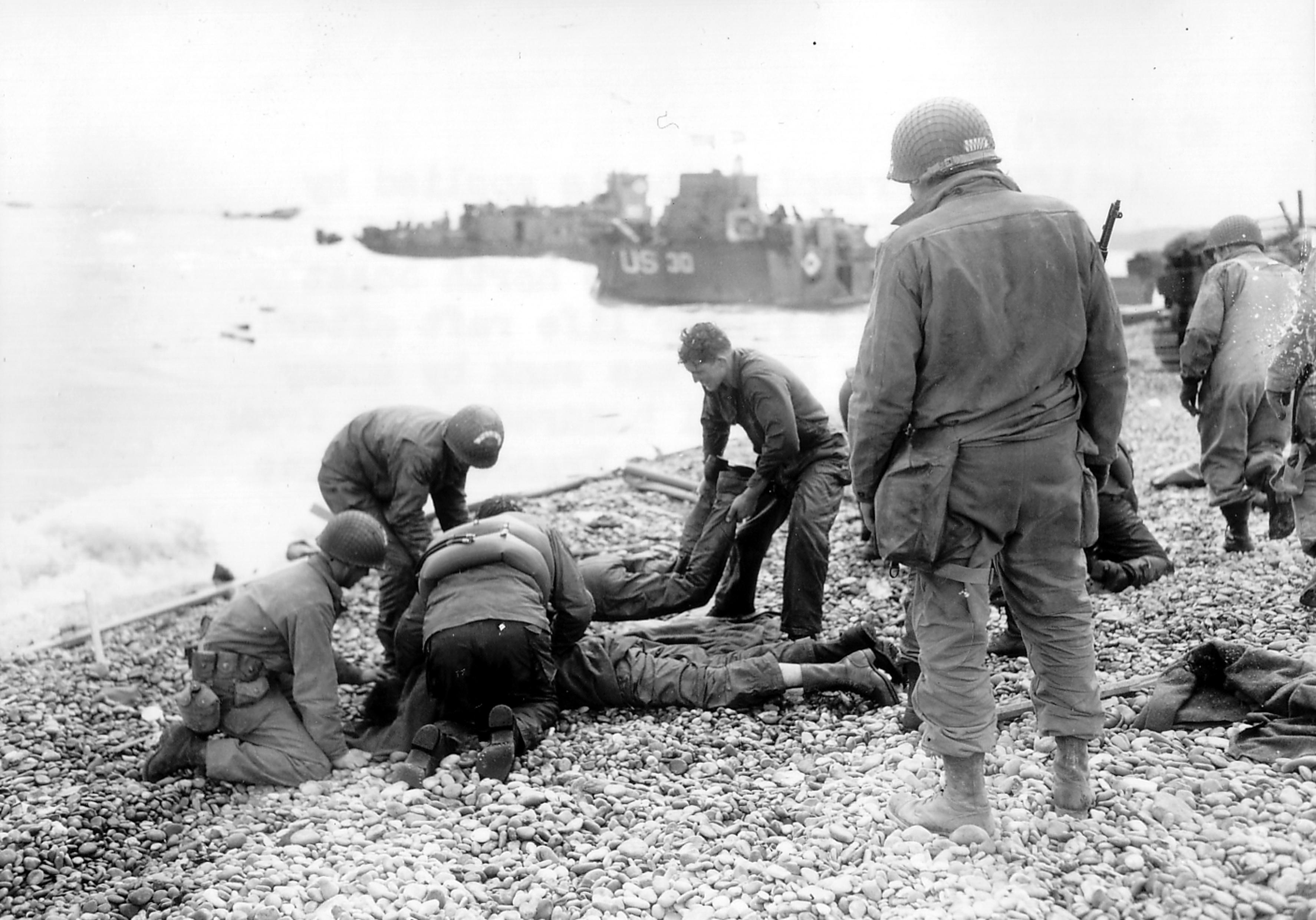
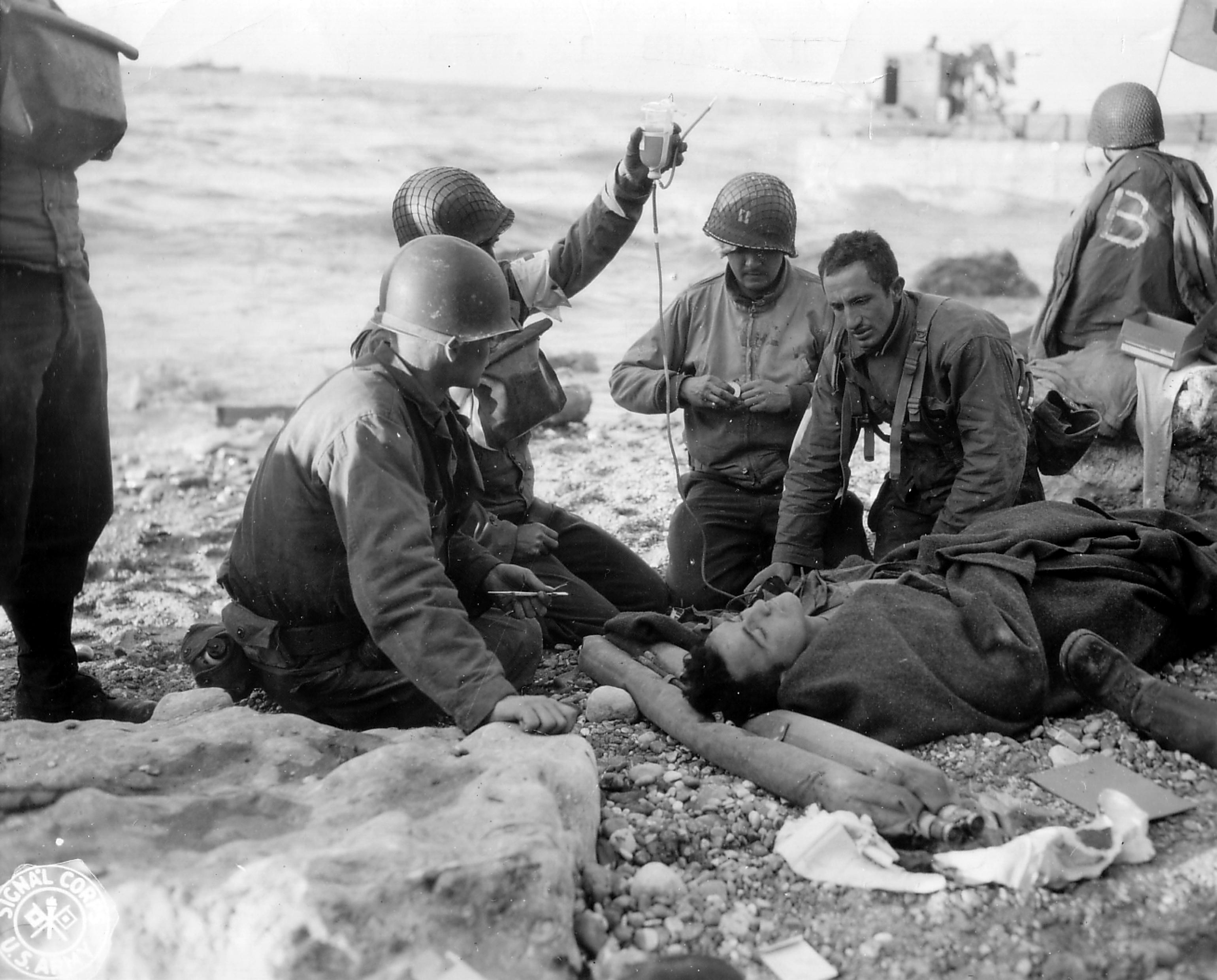
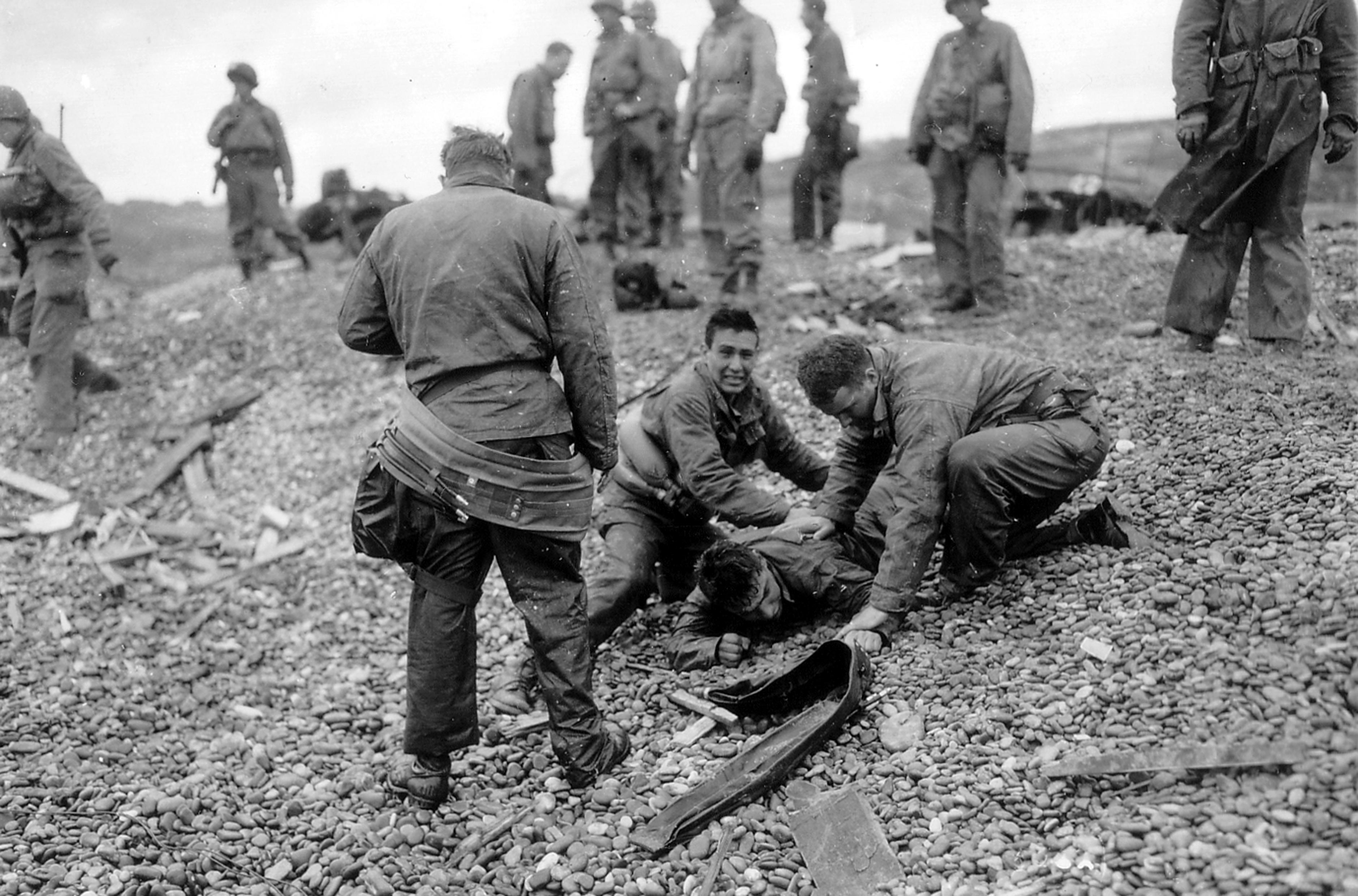
An emergency station is installed, sheltered under the
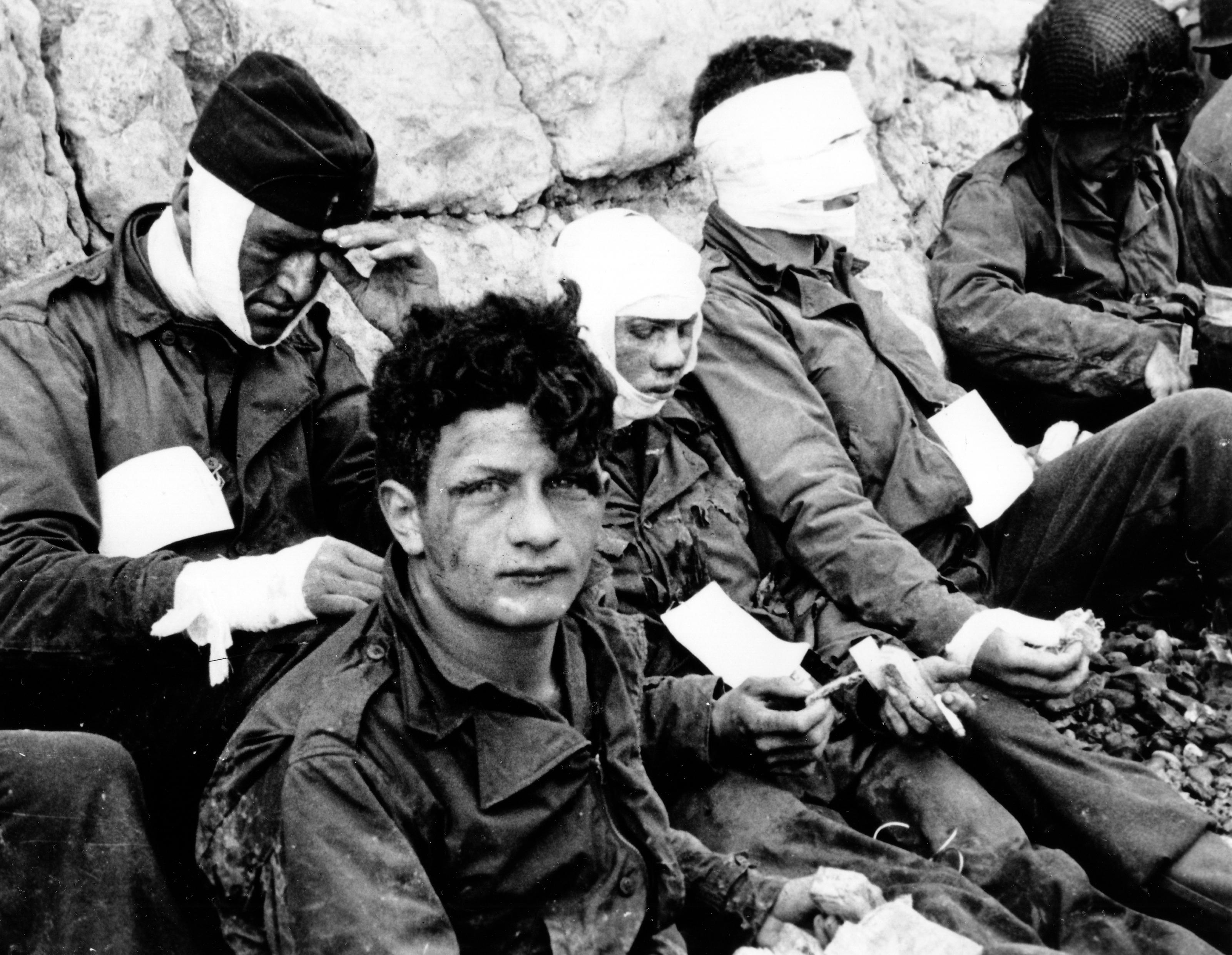
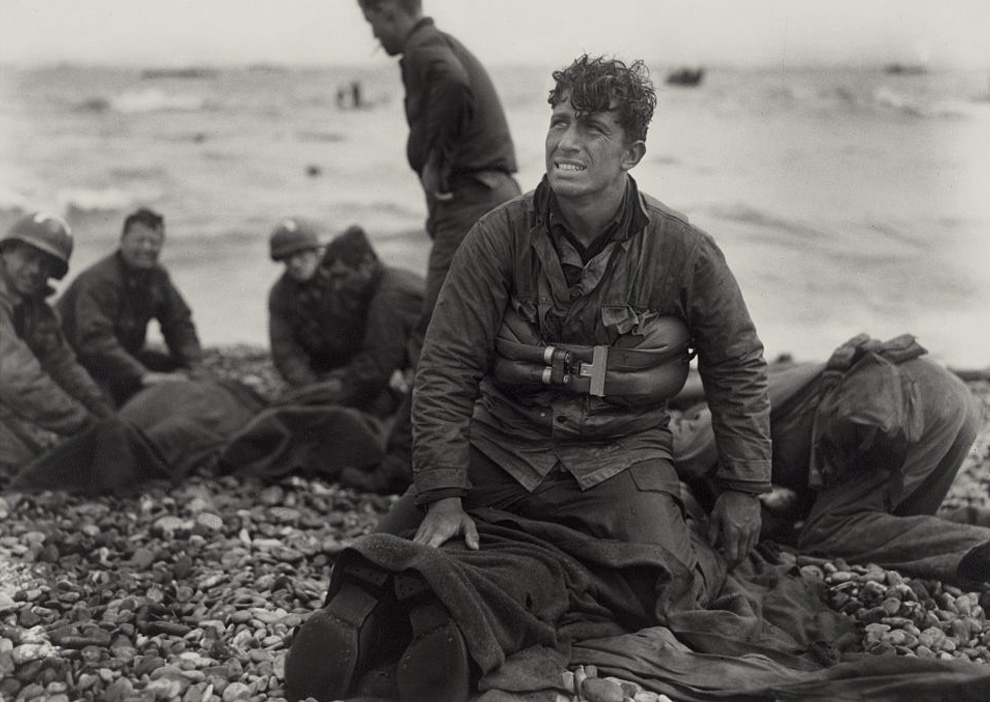
cliff, where injured or shocked GIs are treated
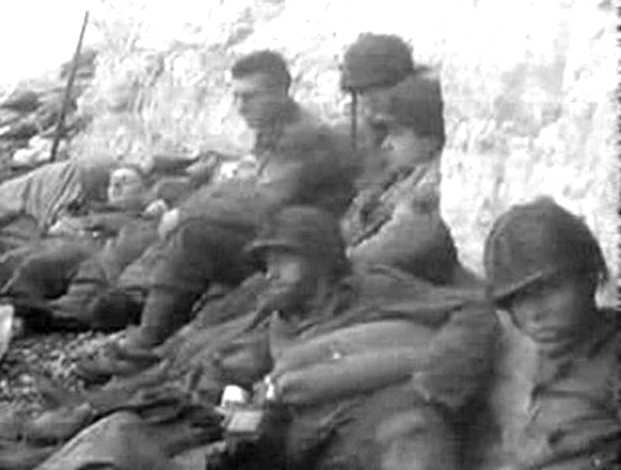

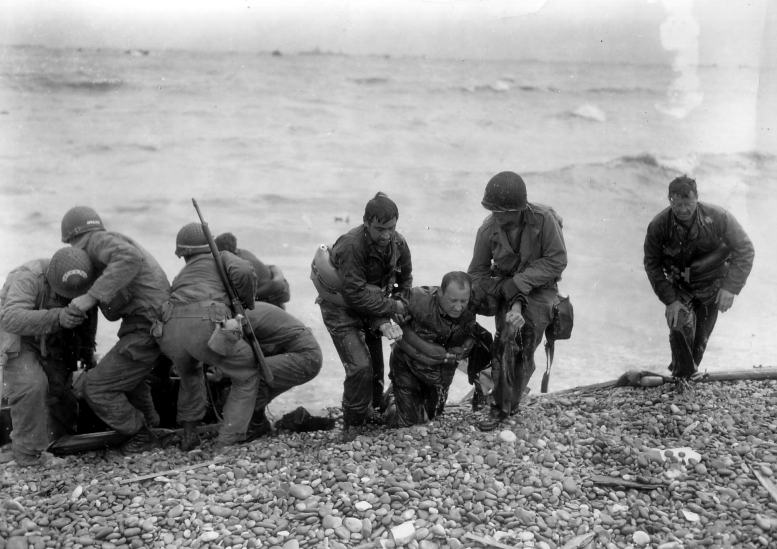
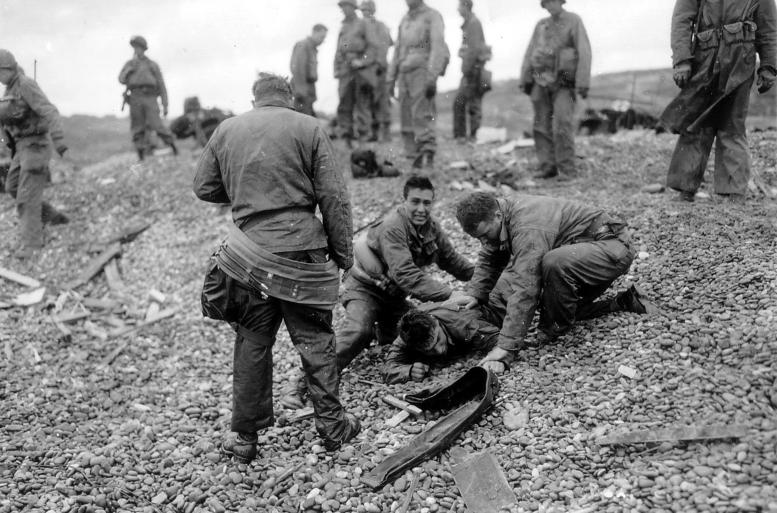
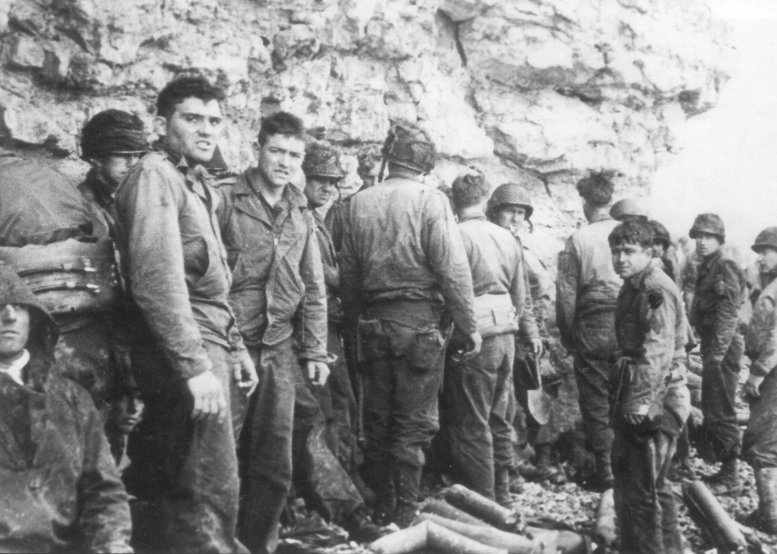
(details) Injured men of the 3rd Battalion, 16th Infantry Regiment, 1st Infantry Division, receive cigarettes and food after their attack on Omaha Beach on "Day-J", June 6, 1944.
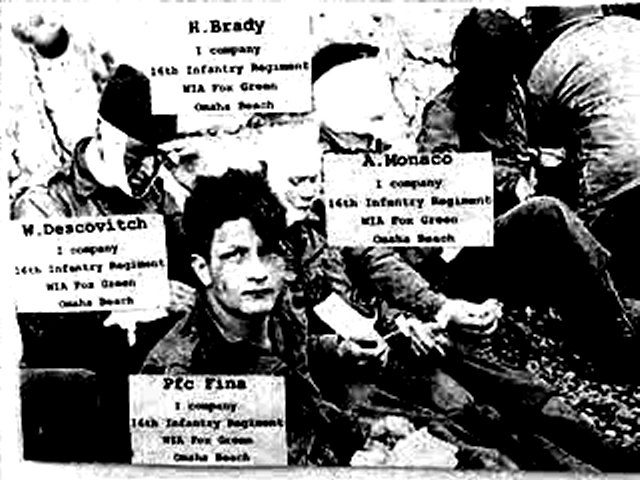
identification of soldiers in this photo
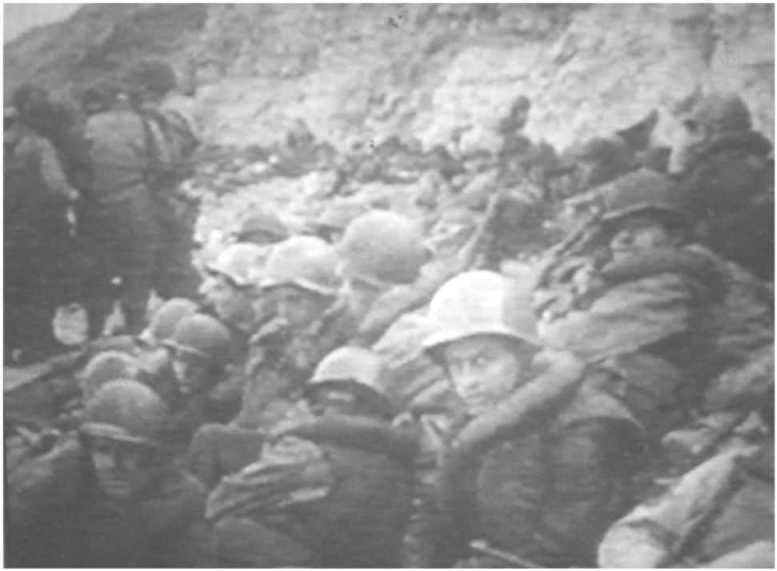
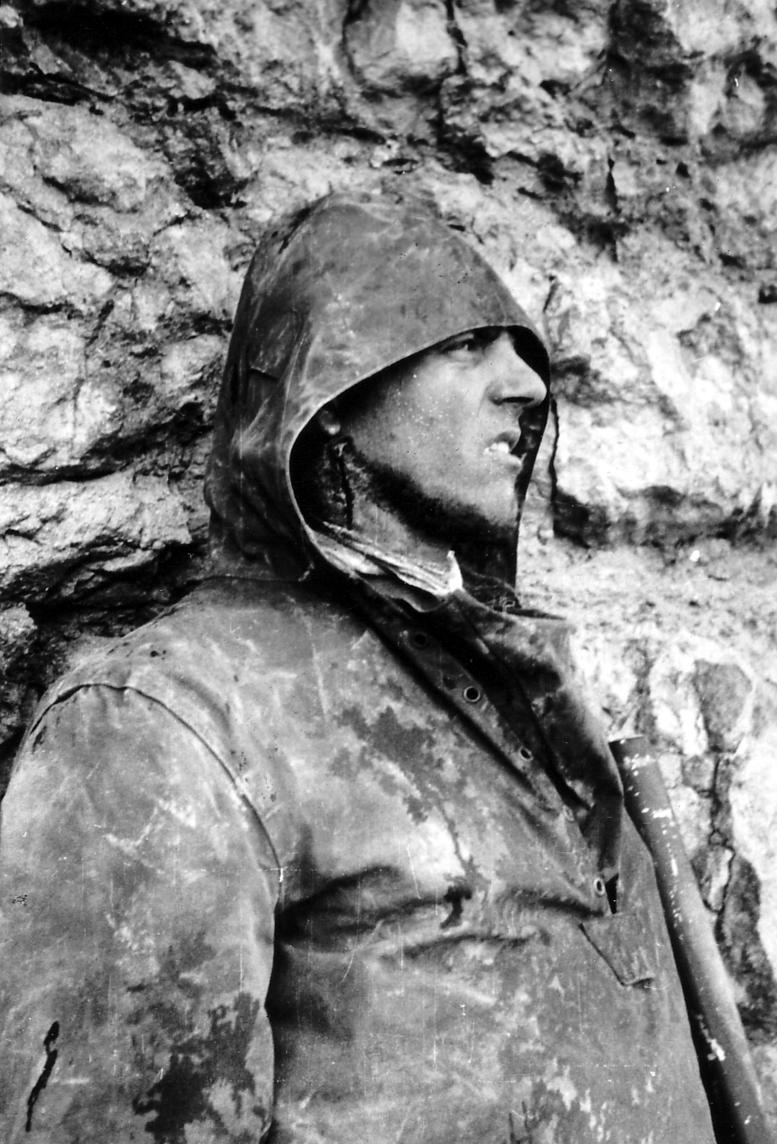
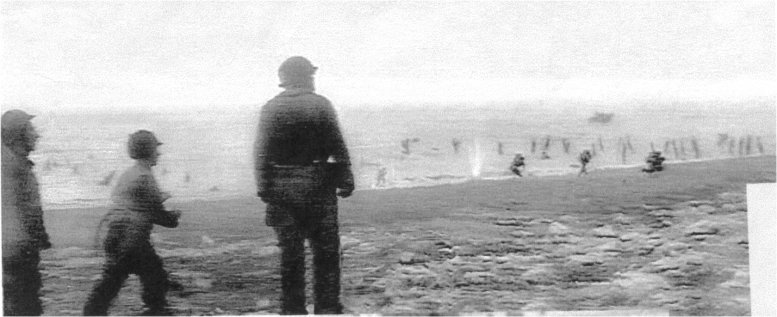


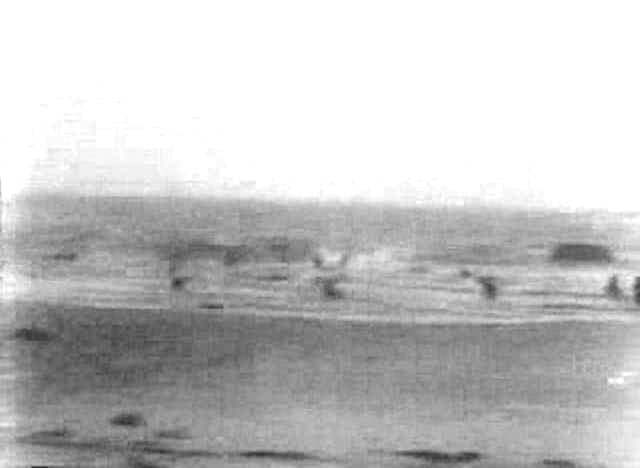
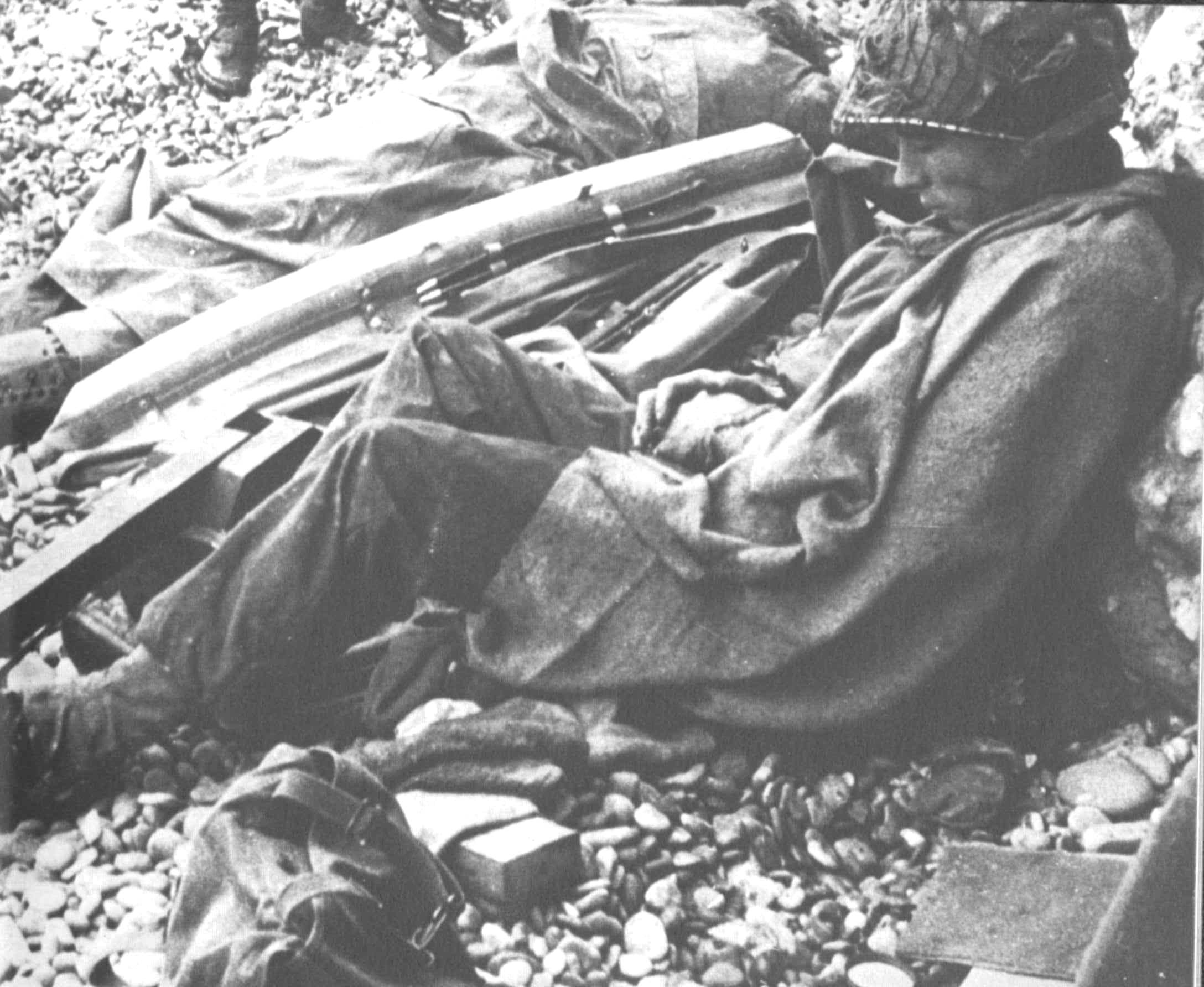
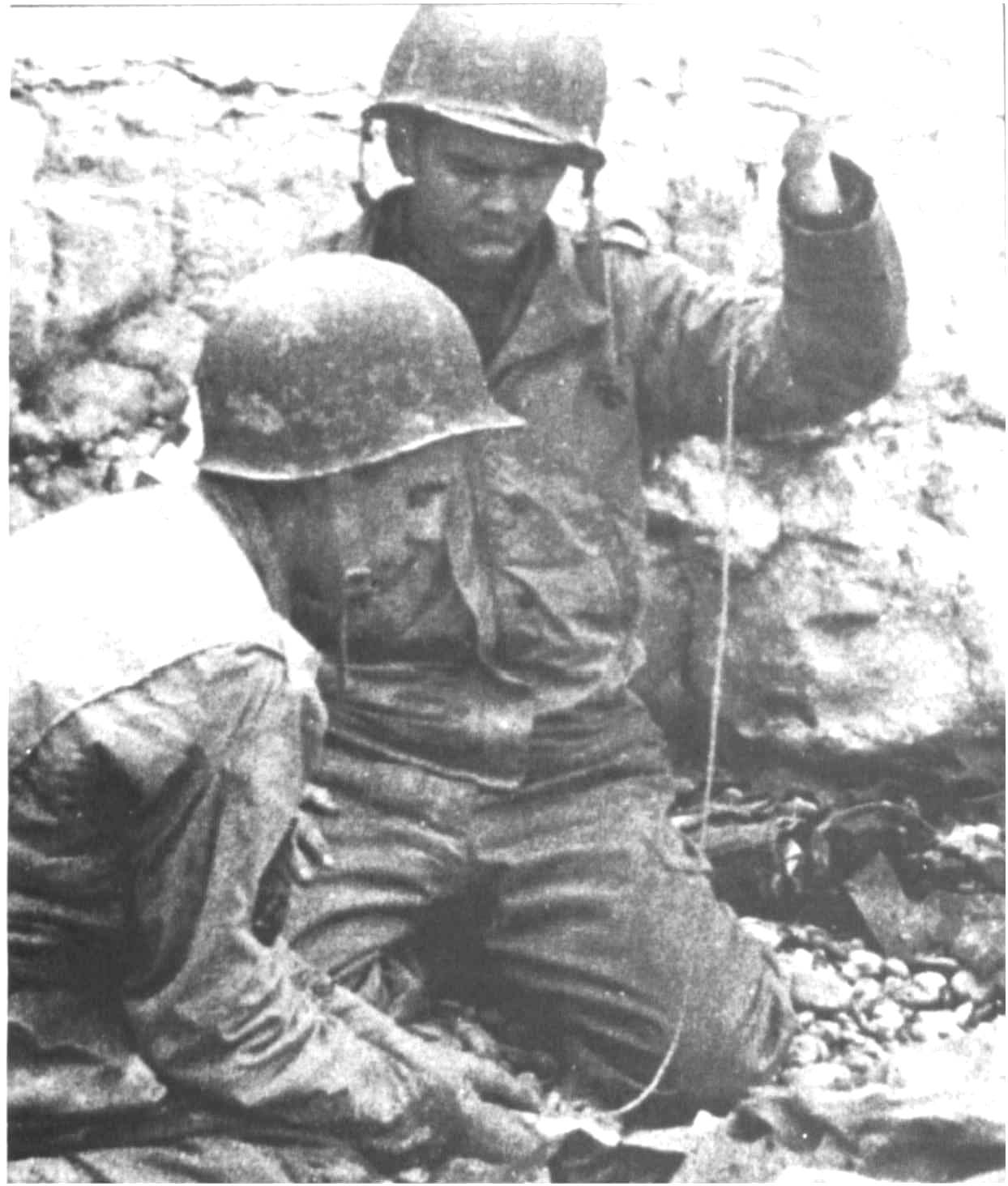
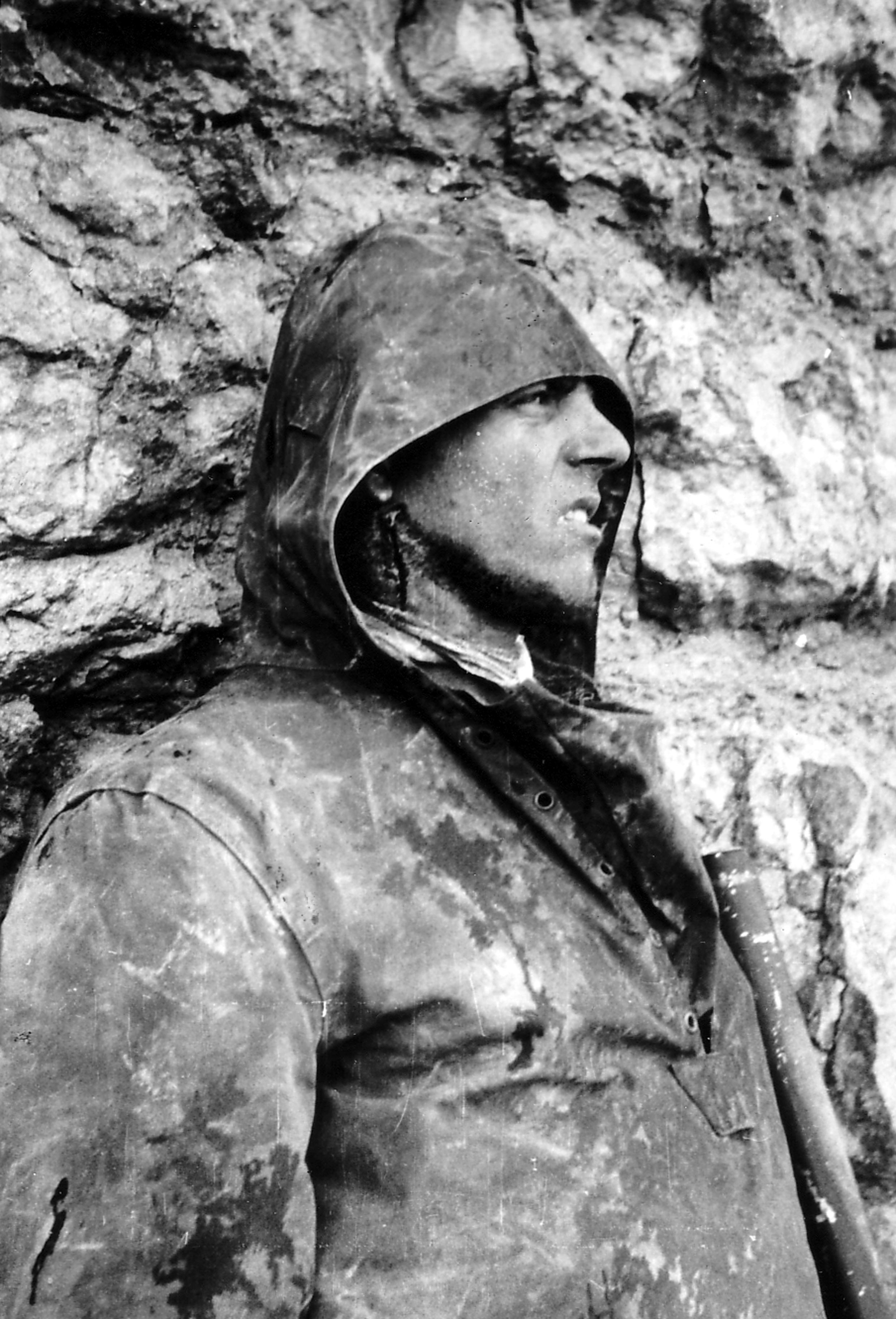
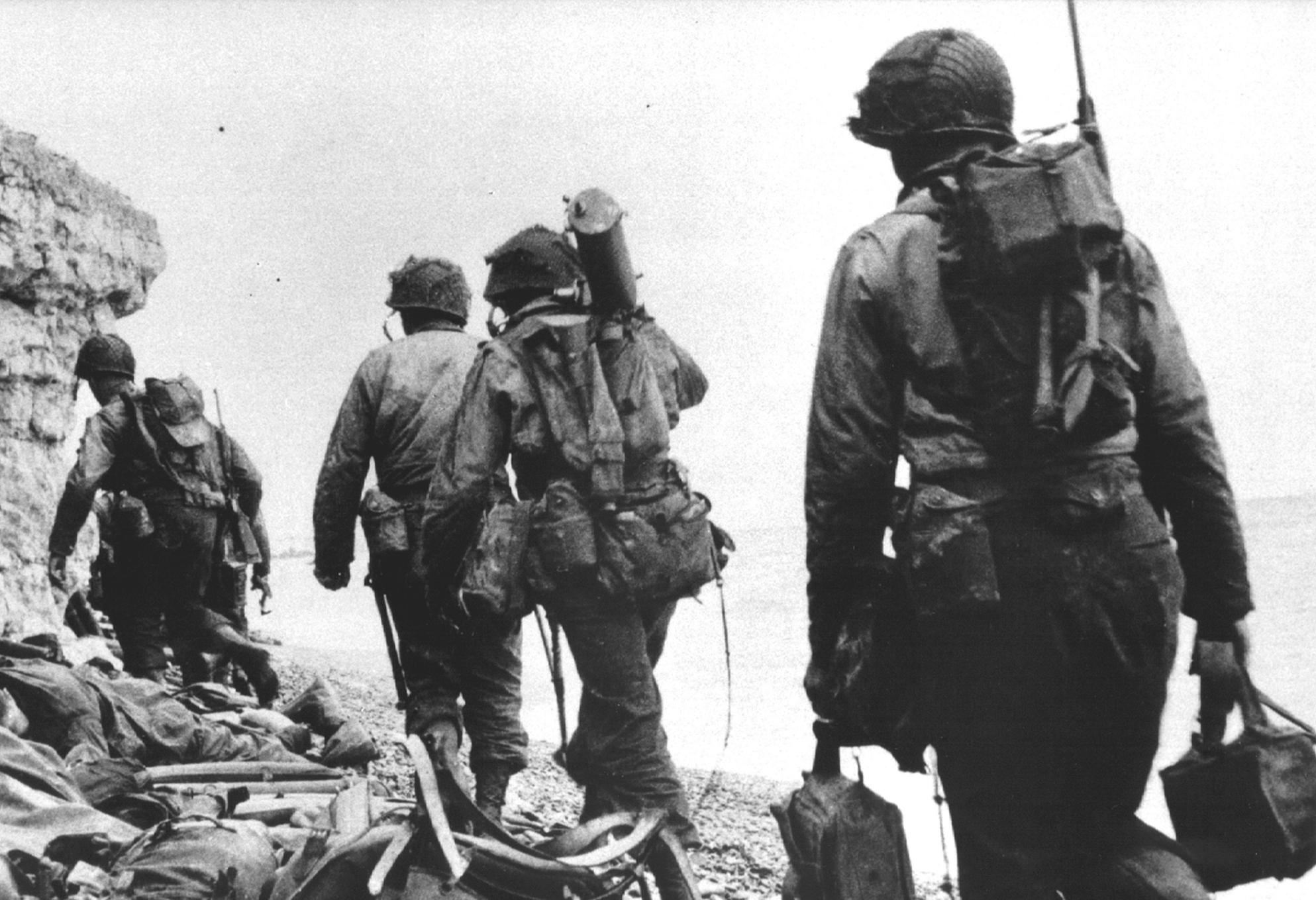
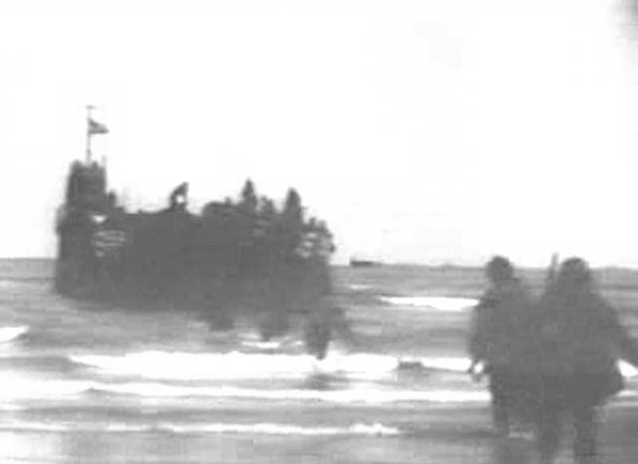
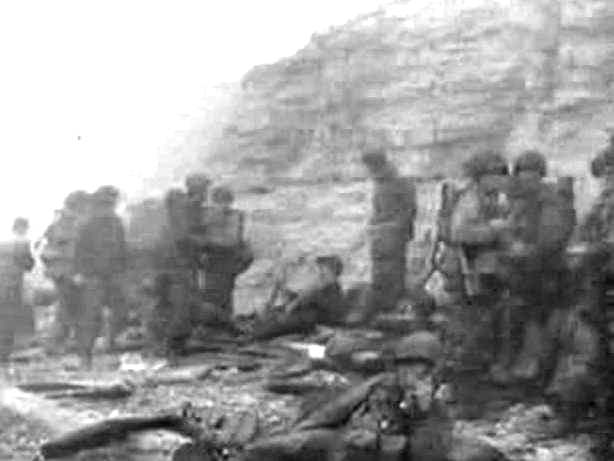
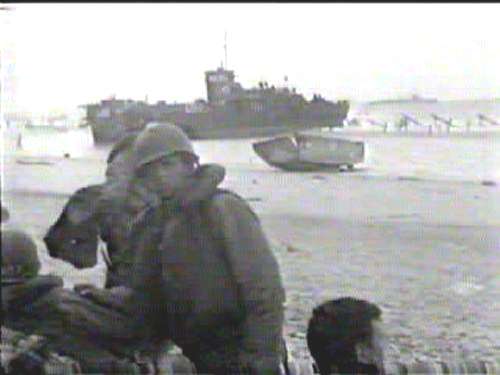
Ashore a group of infantrymen.
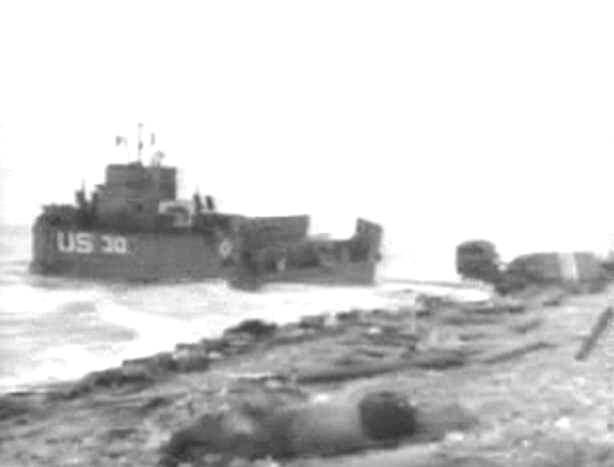
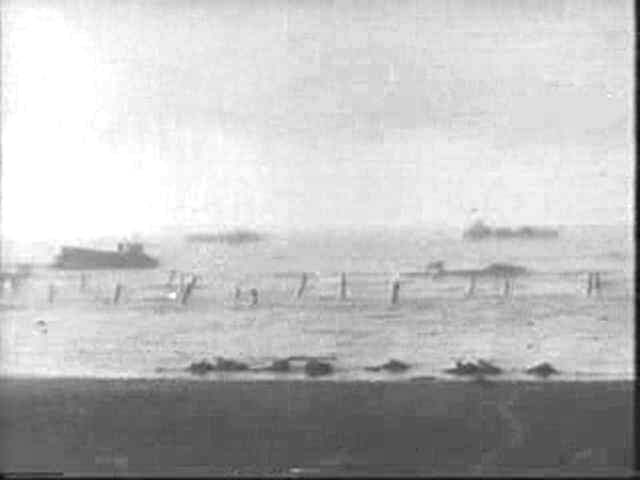
The defenses are made up of piles only, which suggests that the scene takes place at the eastern end of the beach, where a filmmaker was actually present.
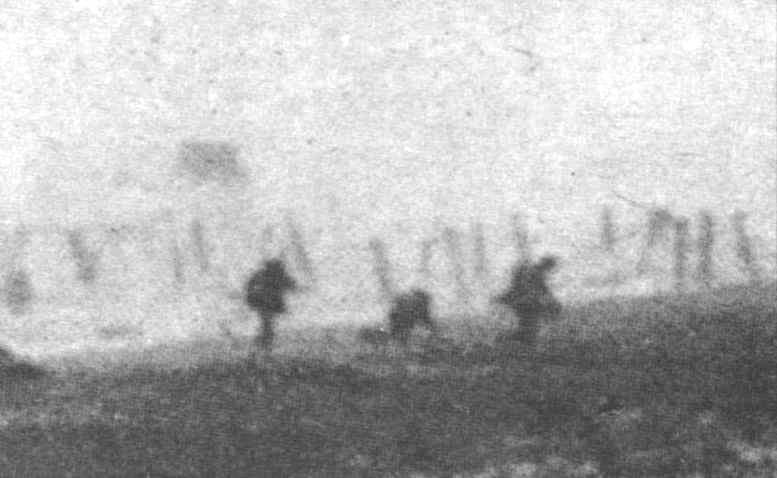
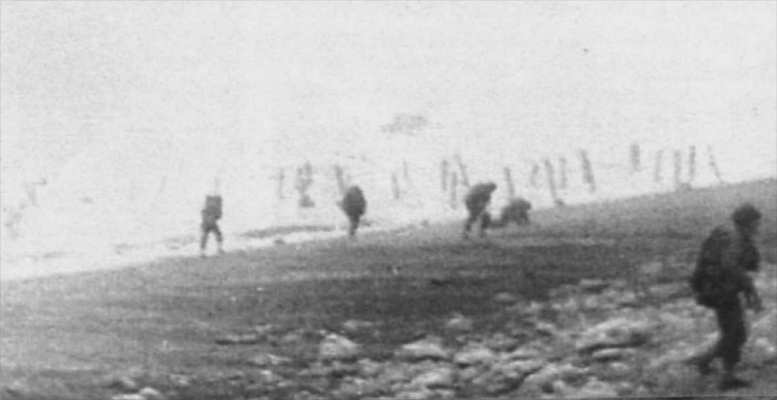
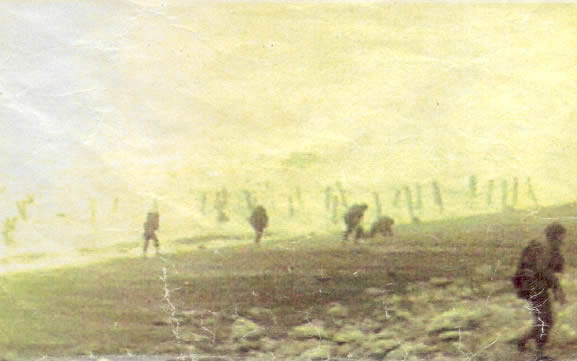
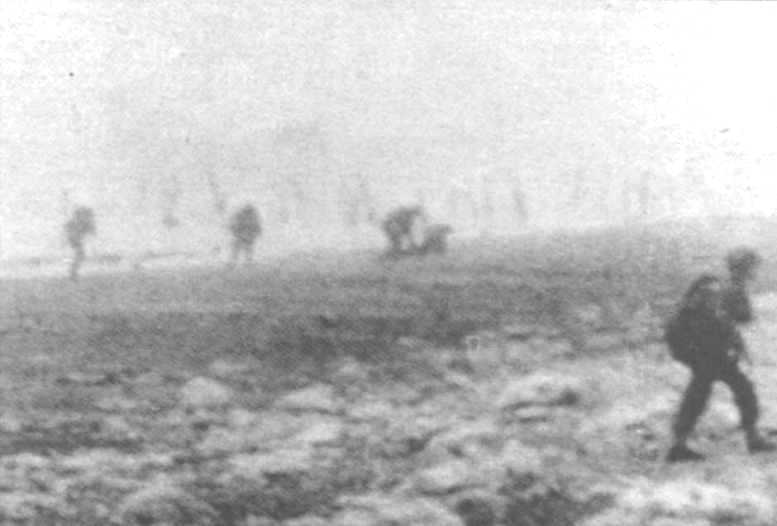


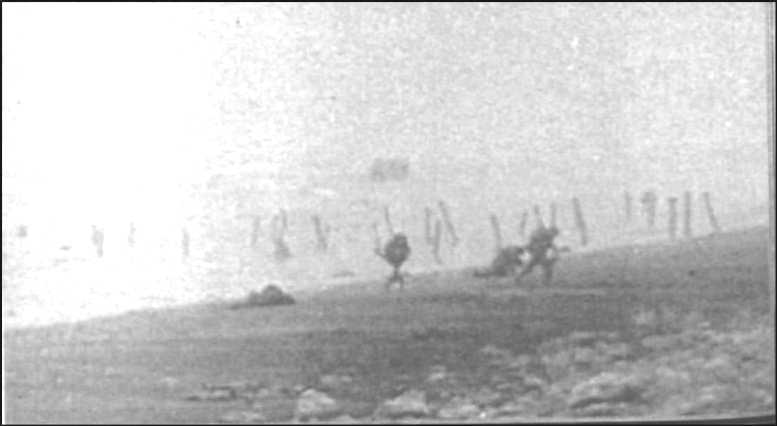
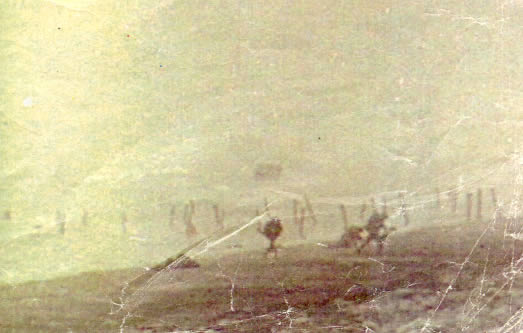
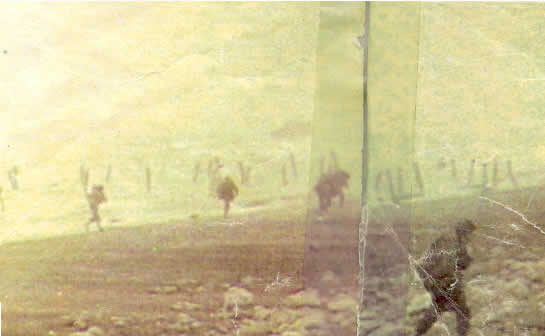
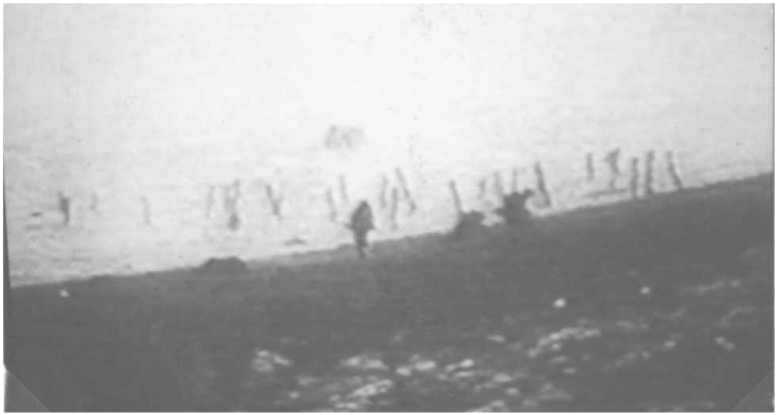

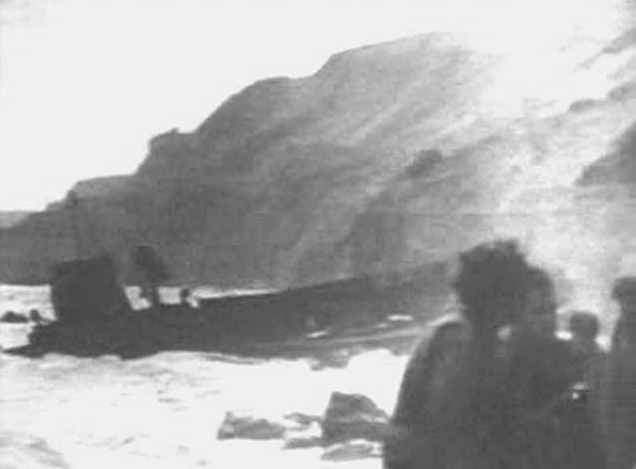

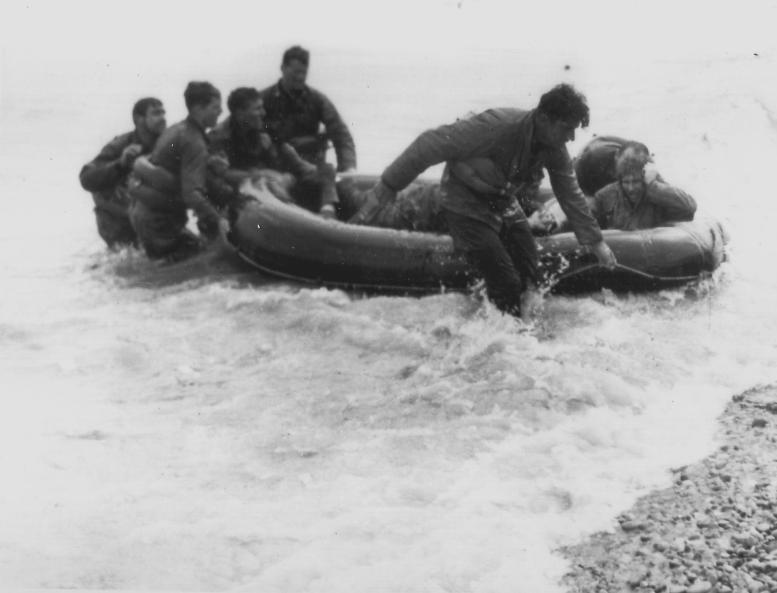
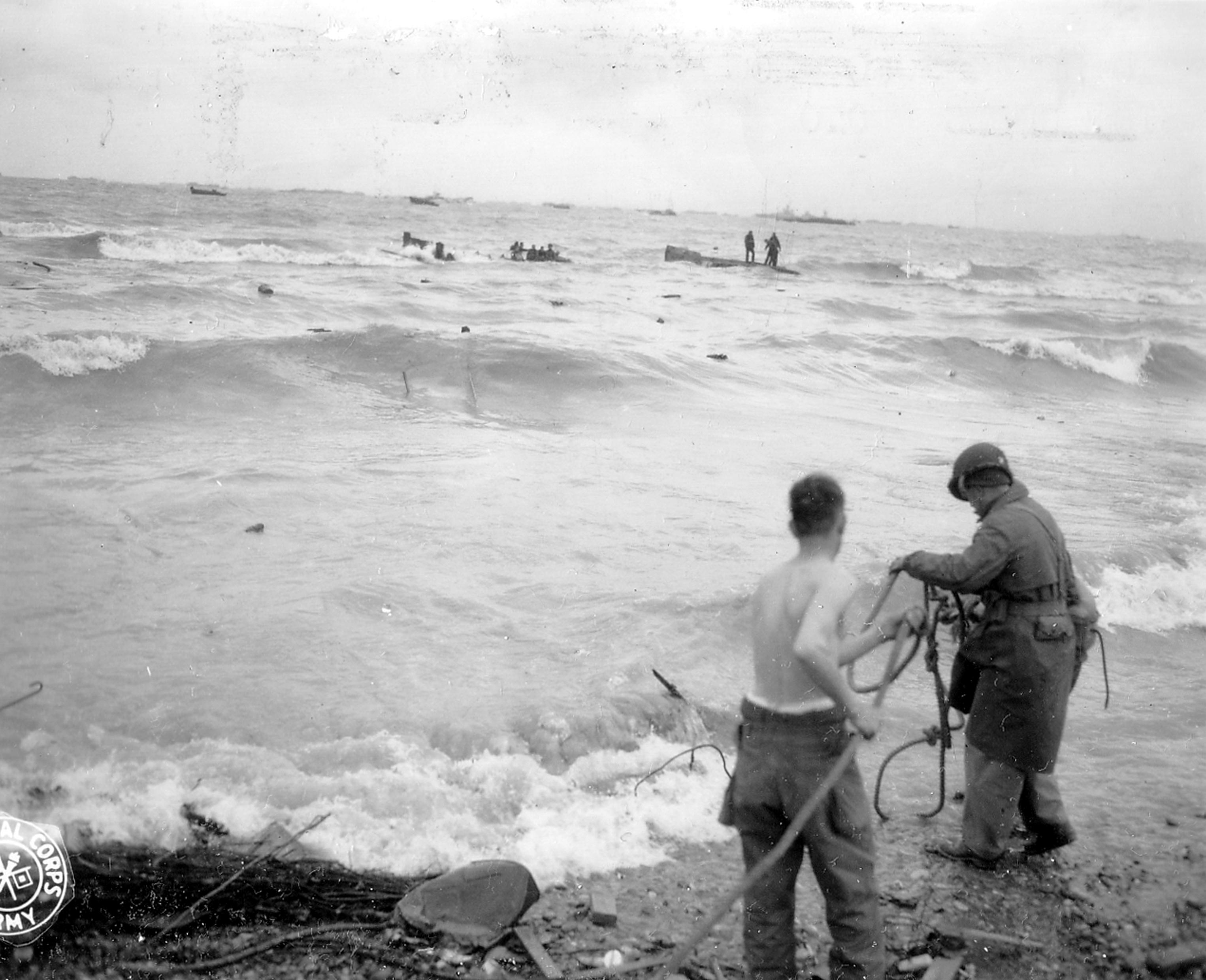
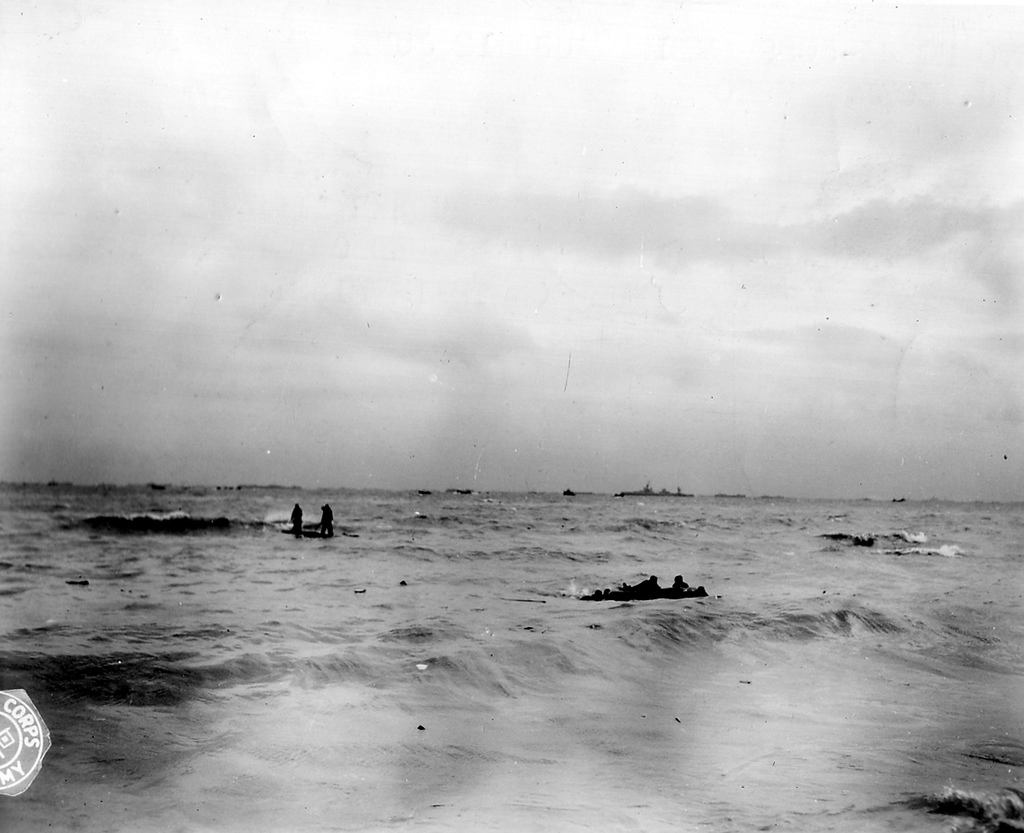
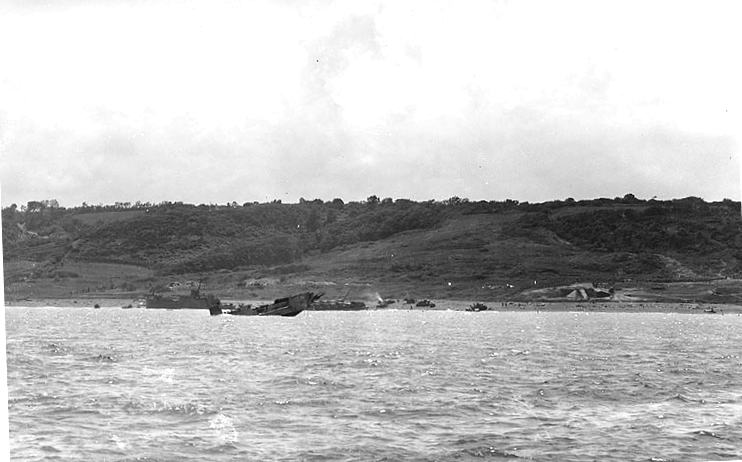
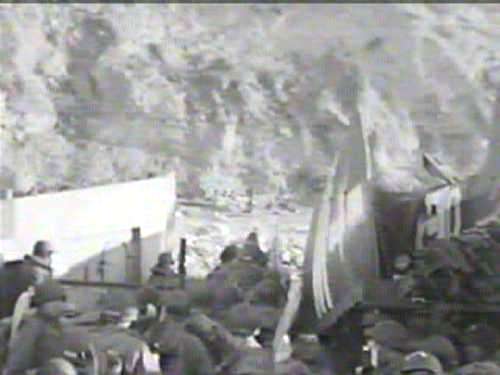
A LCM approached on large rocks a little further east (Fox Red sector) and failed. Men return to Colleville
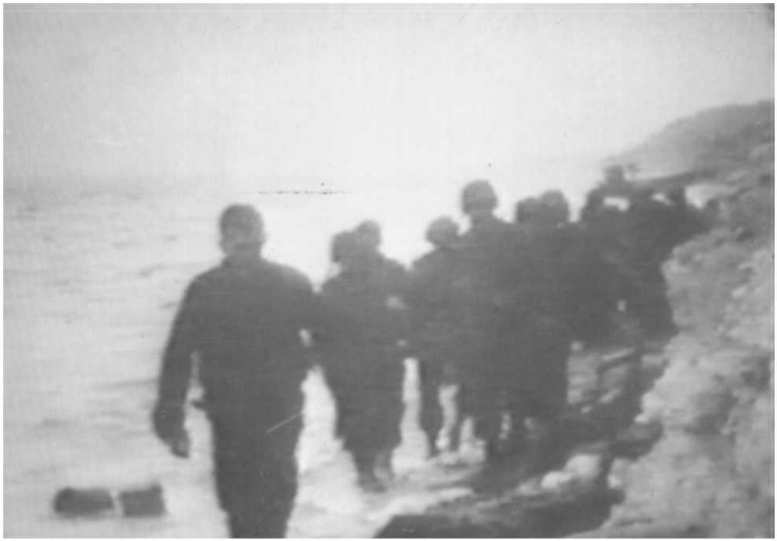
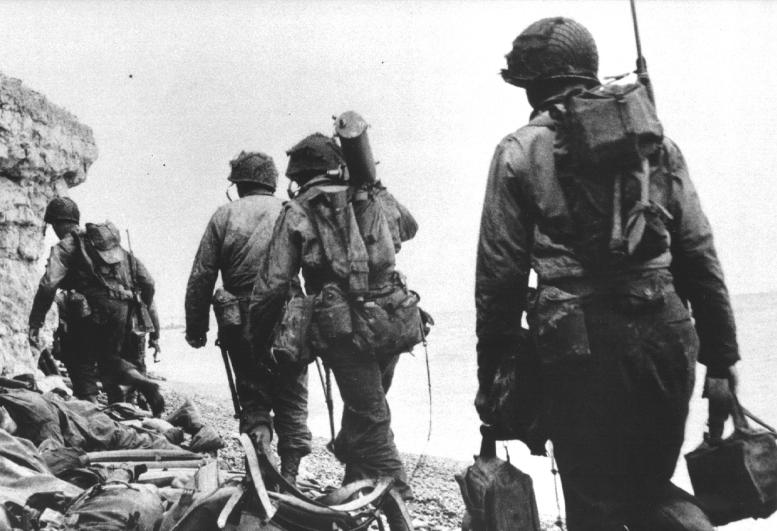

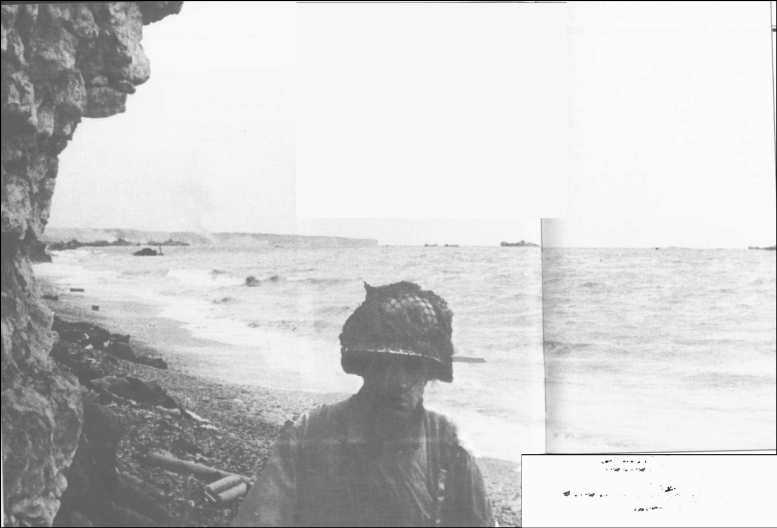
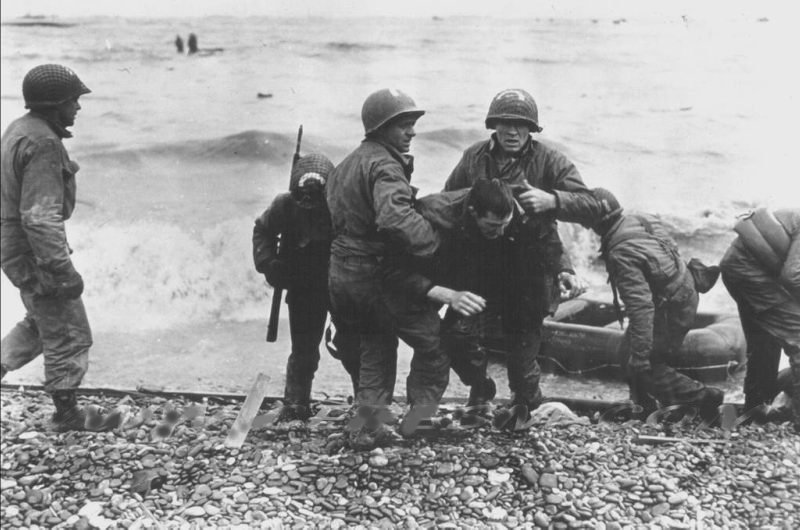
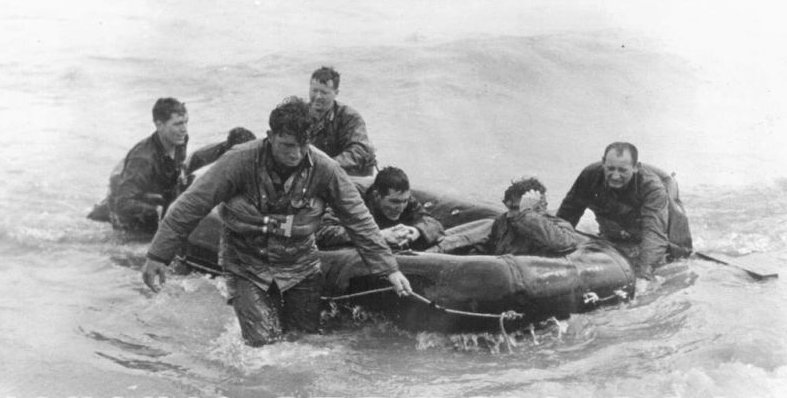
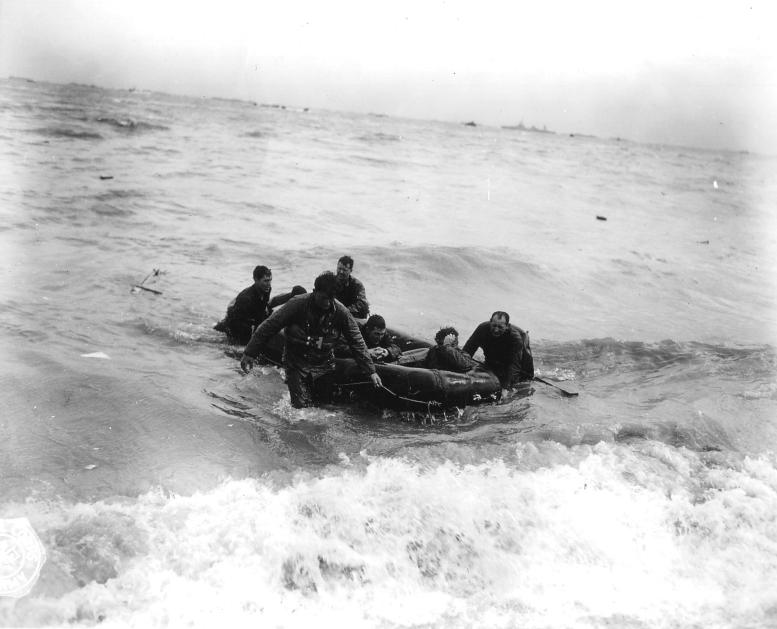
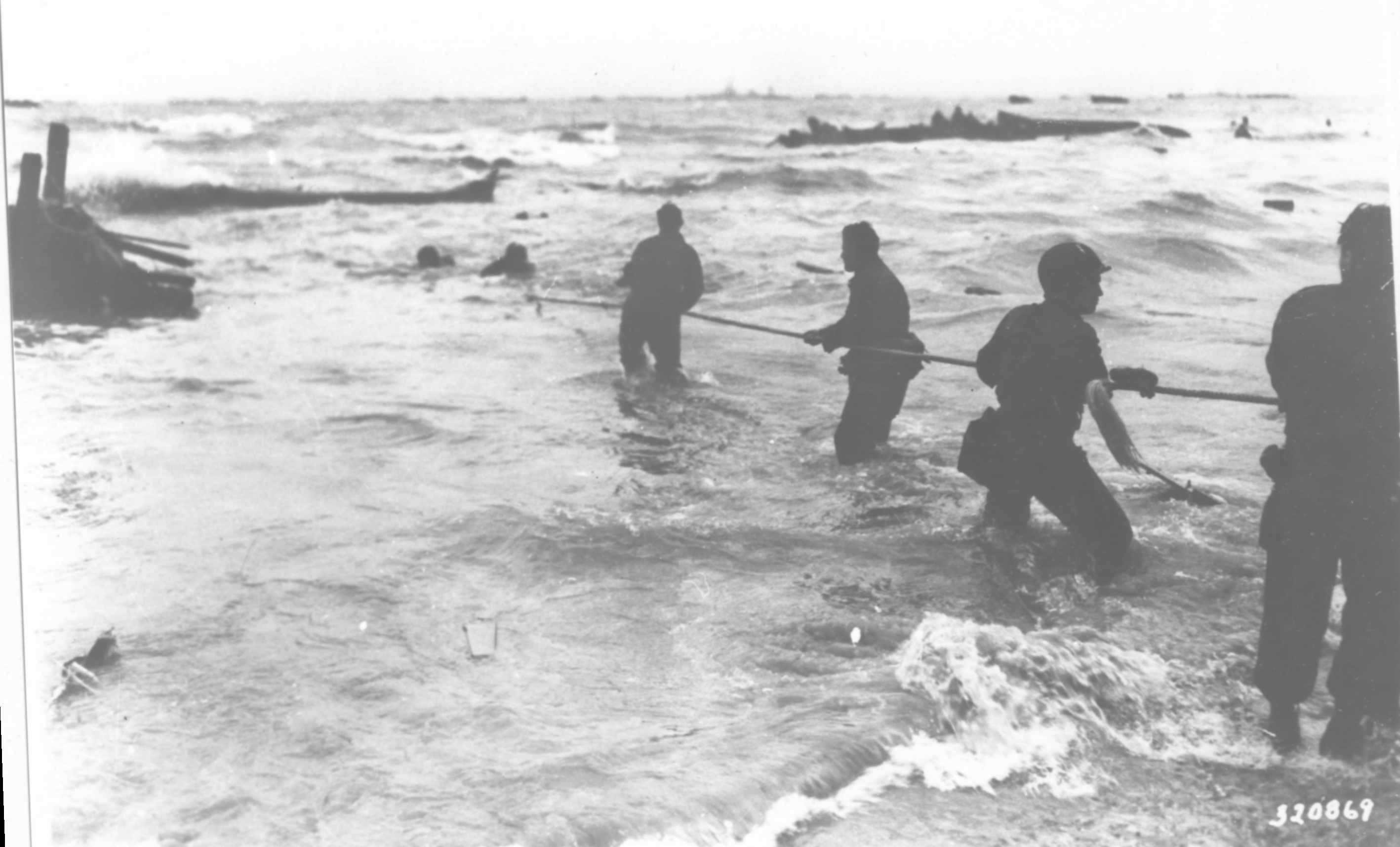
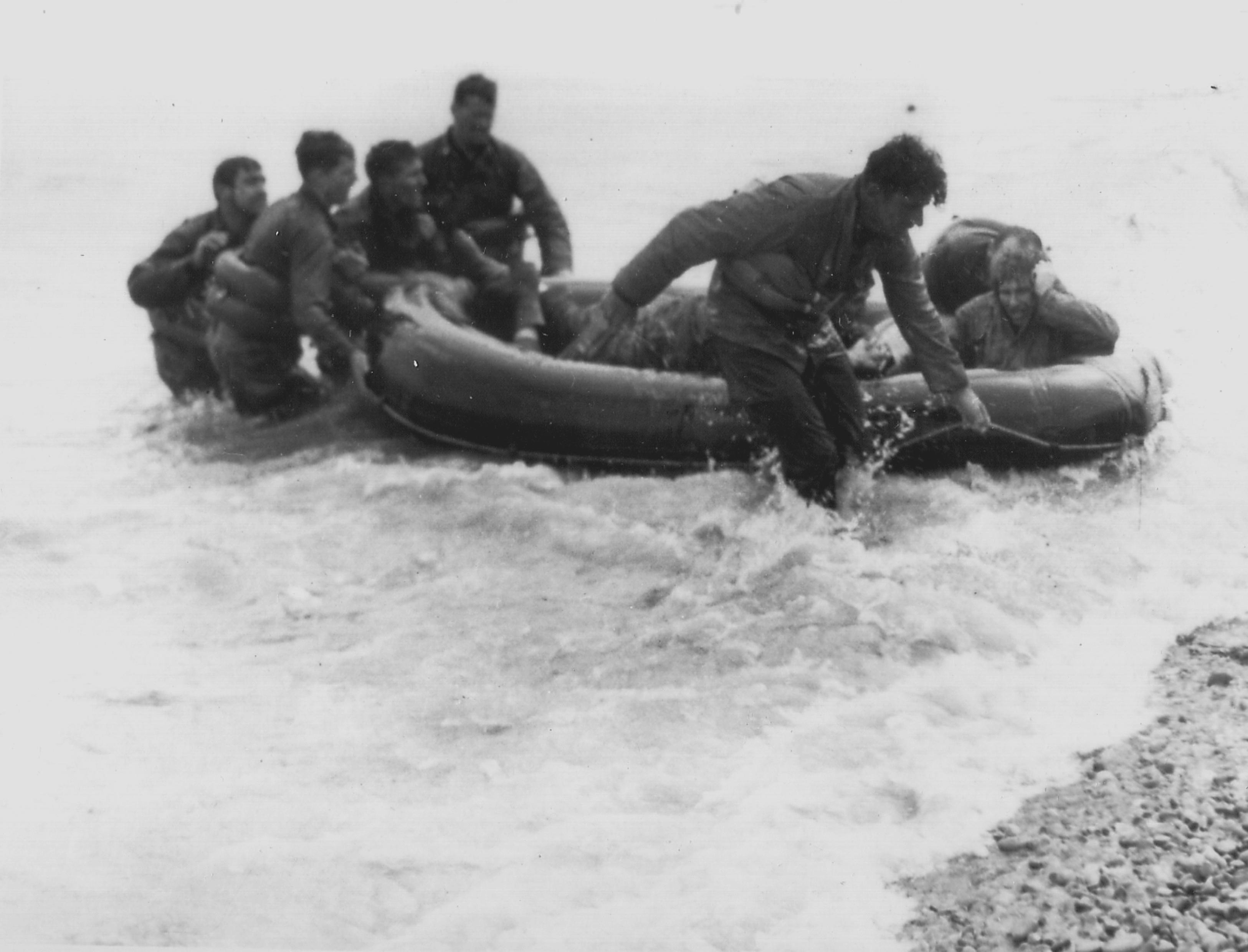
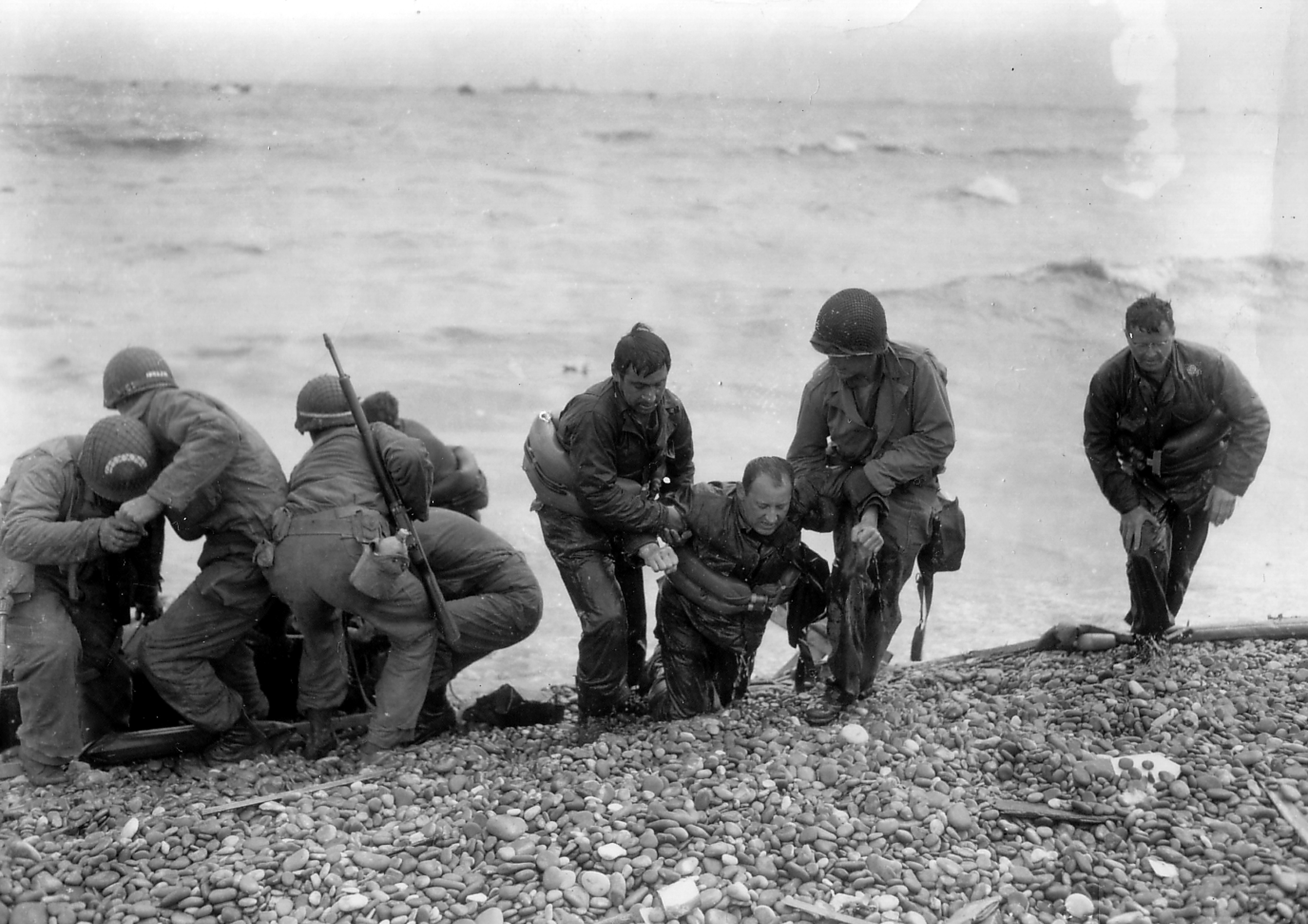
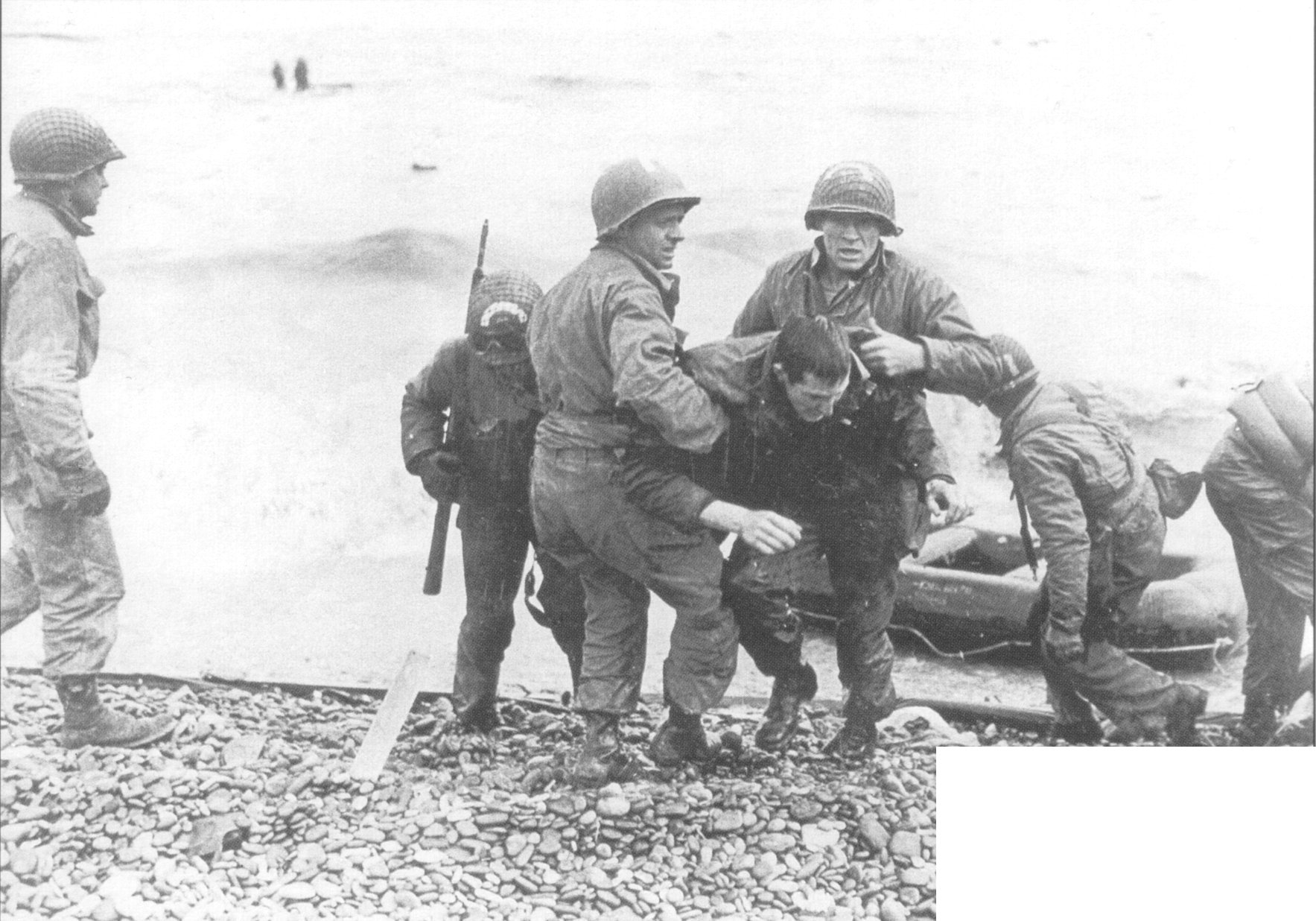
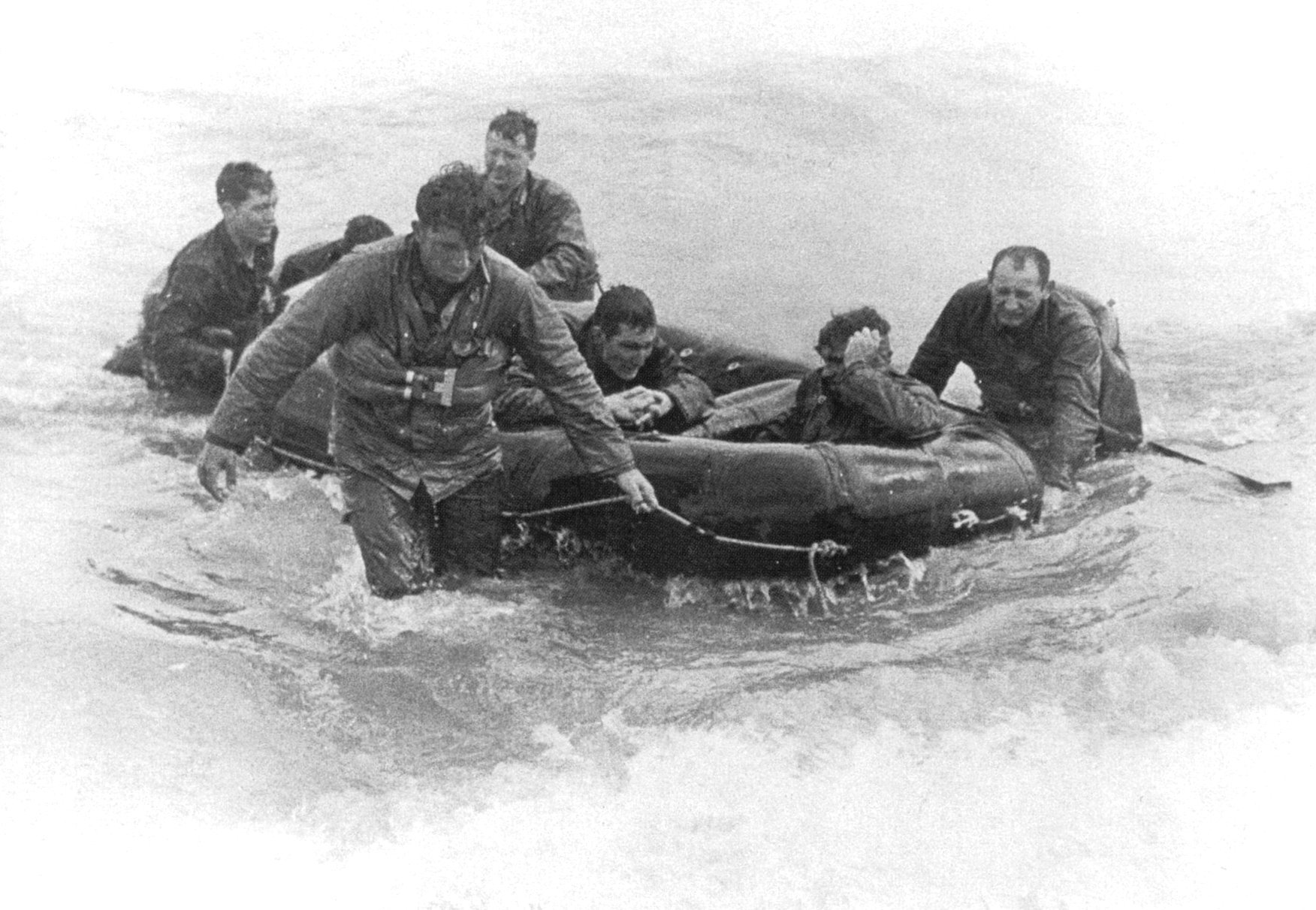
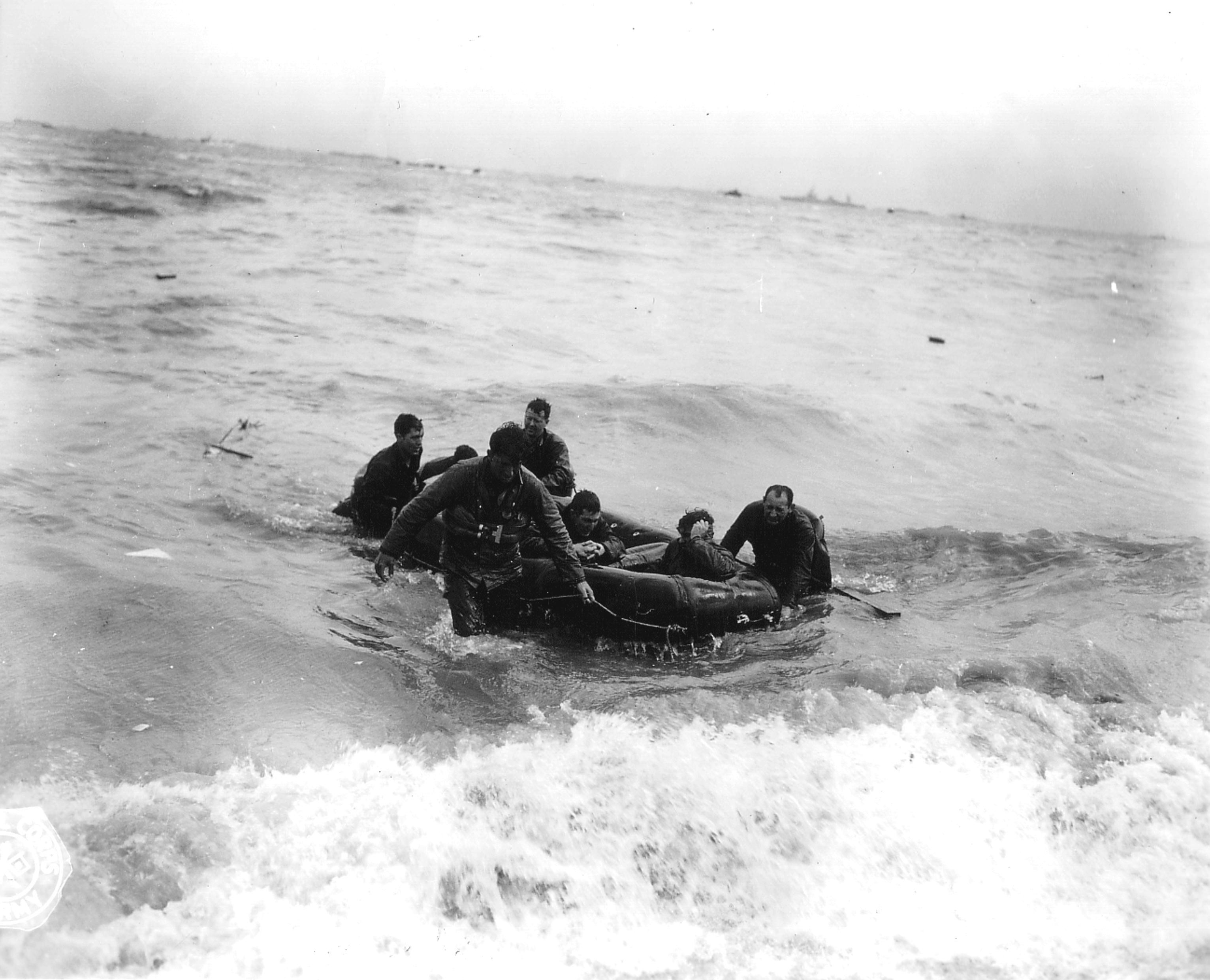
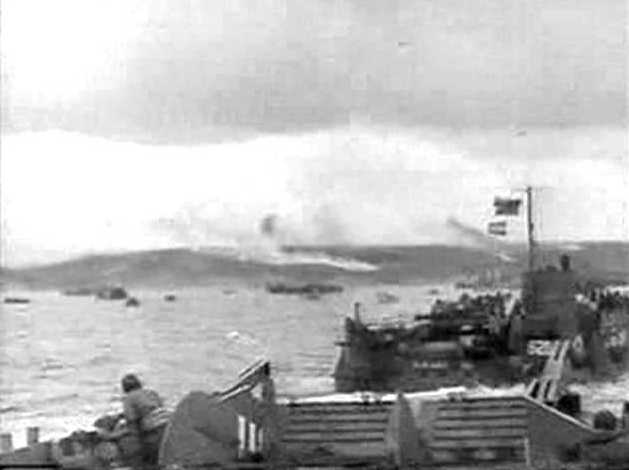
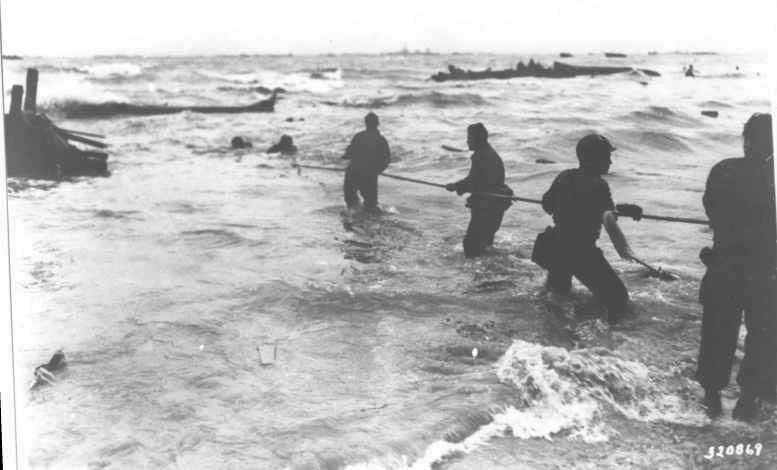
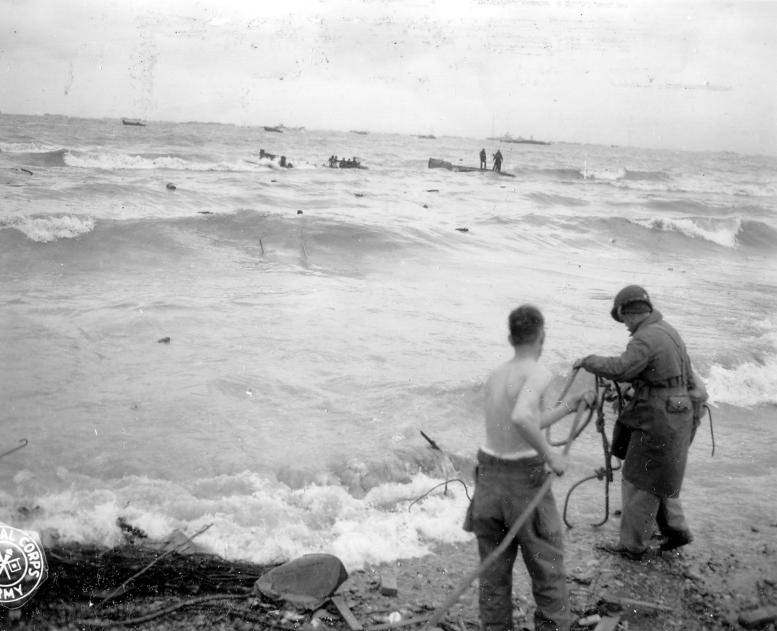
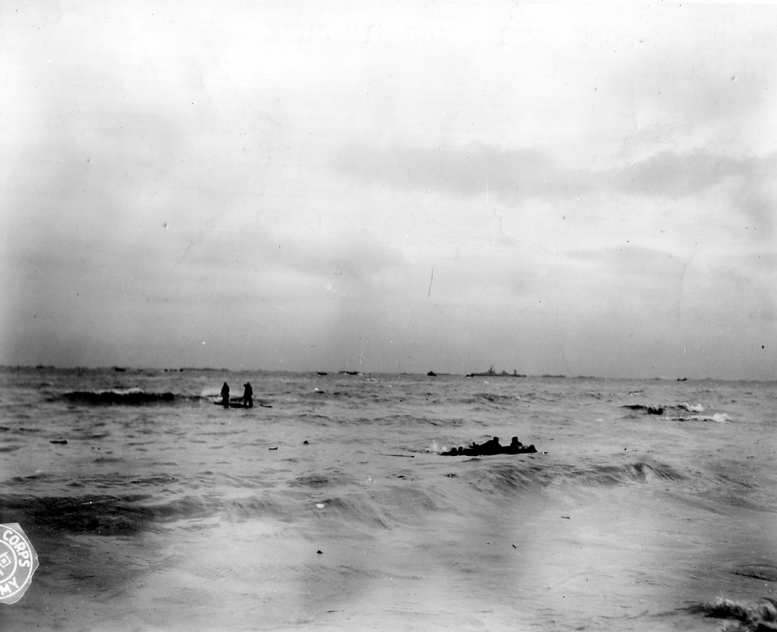
A cast LCVP, rescue of survivors

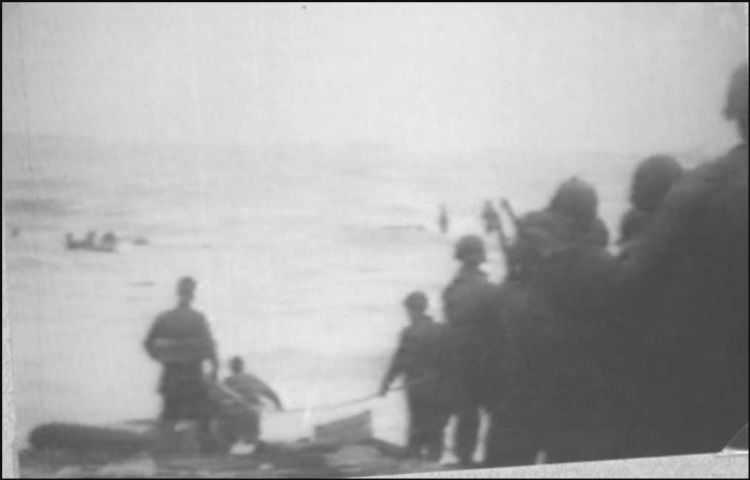
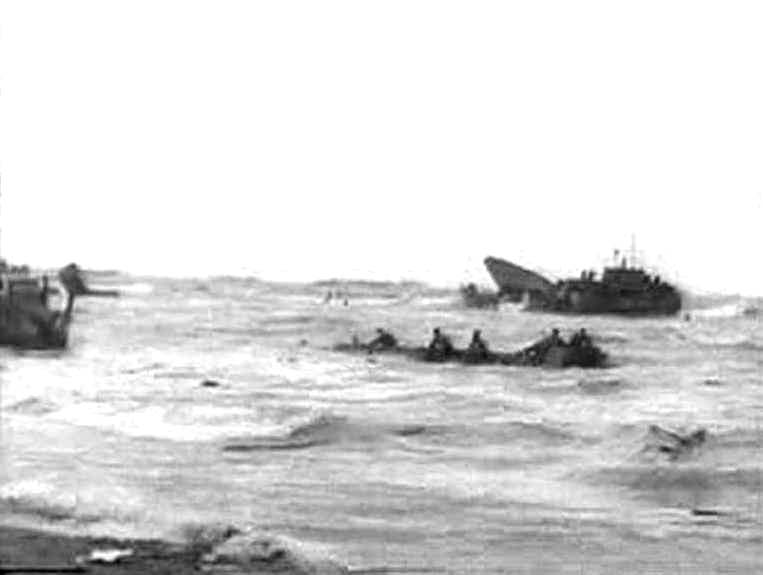
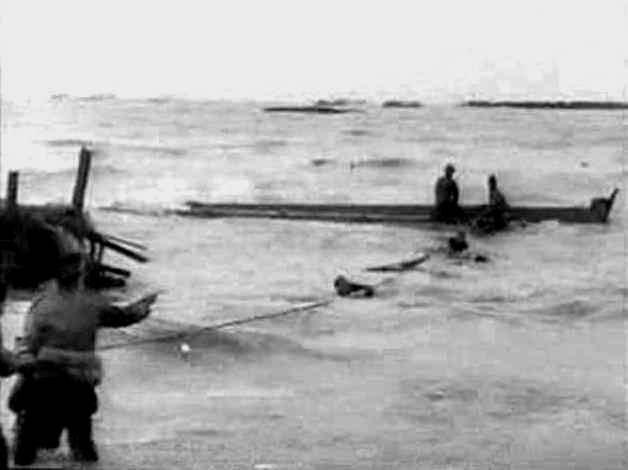
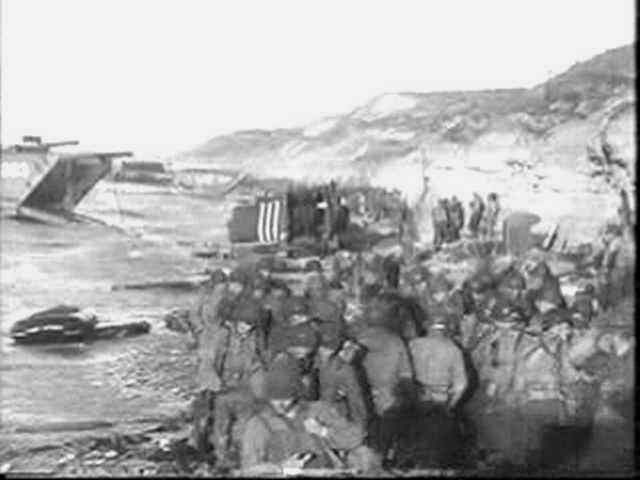
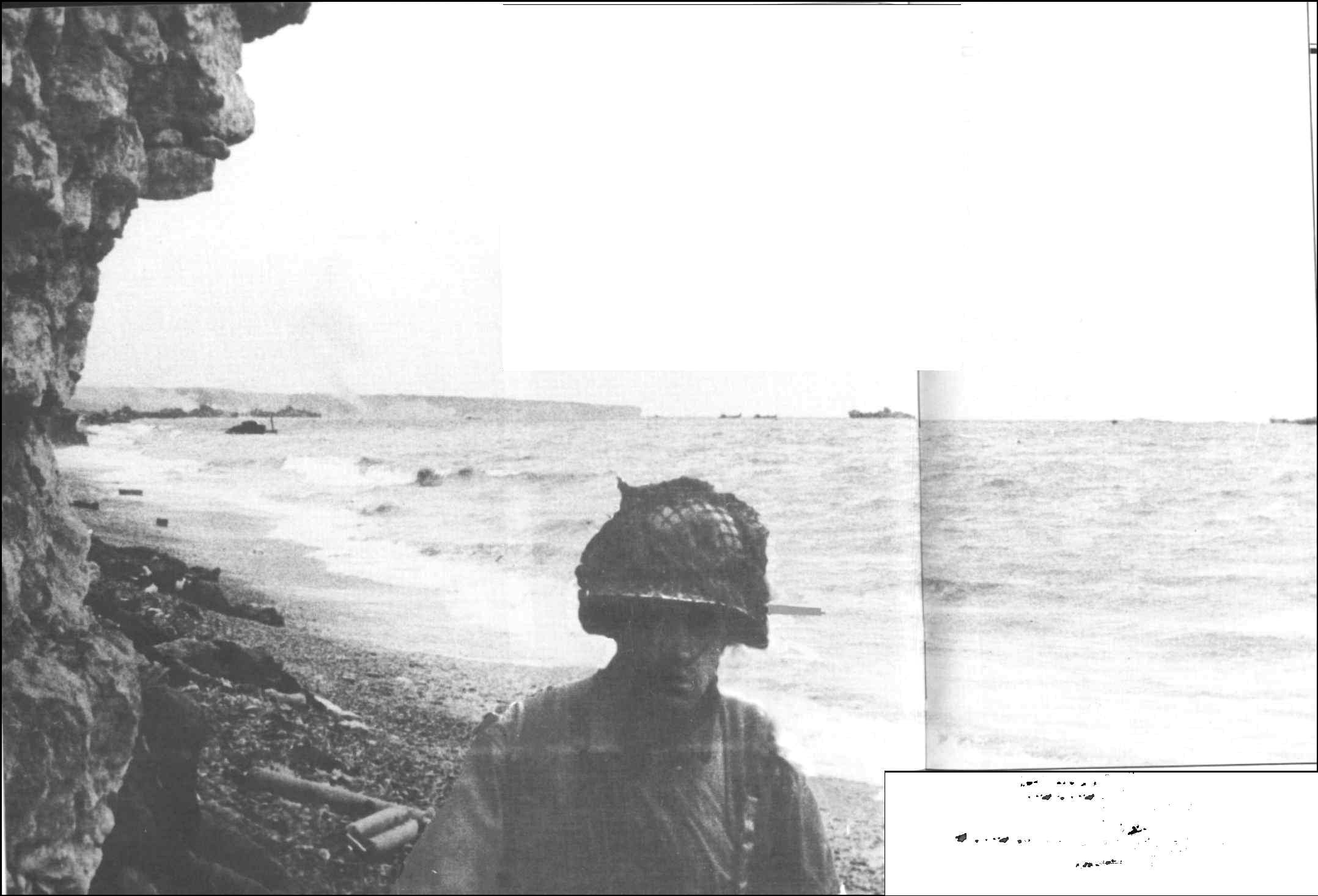
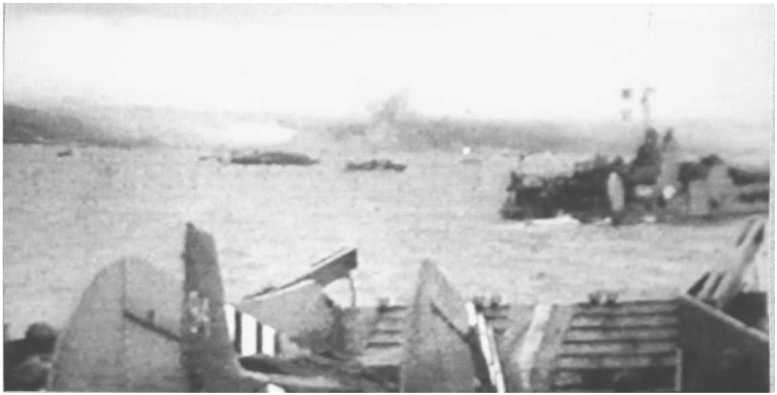
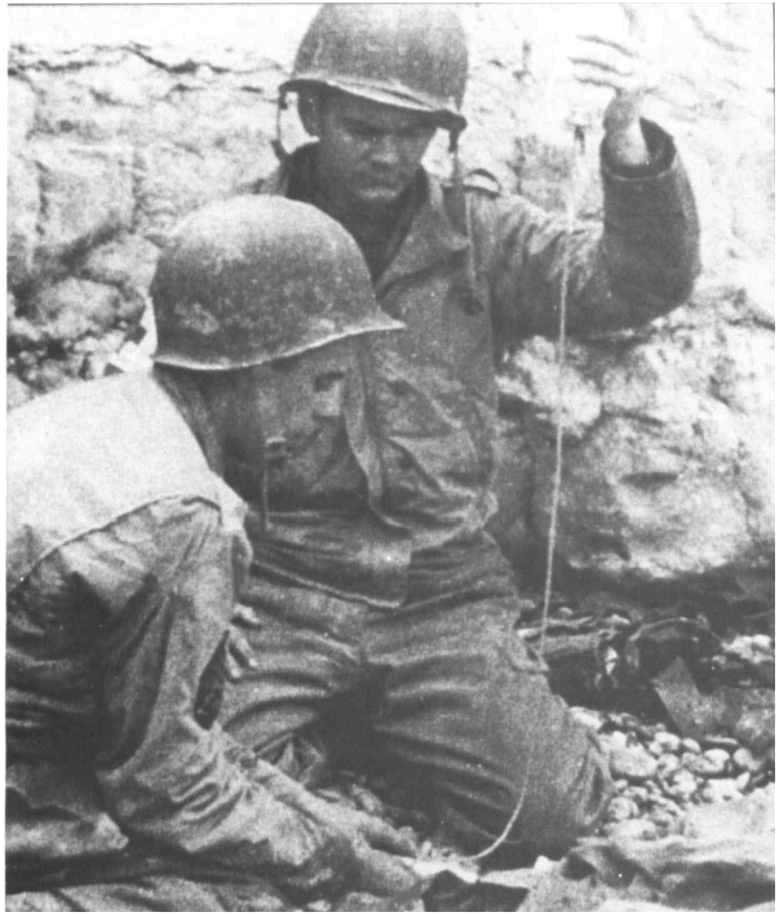
GIs just landed under the cliffs of Colleville. The wing painted with white stripes from an artillery observation aircraft was seen unloaded in the large pebbles.




The sappers of the 5th Brigade of the Engineers leave the shipwrecked from the sea