The artificial port of Omaha Beach
100
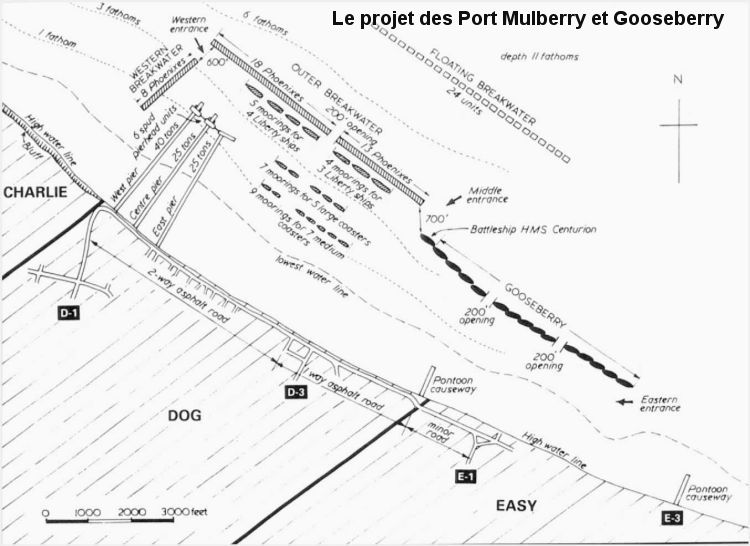
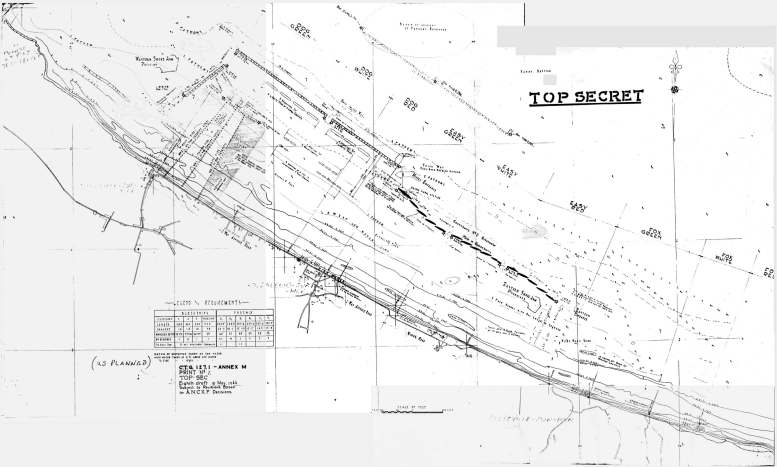
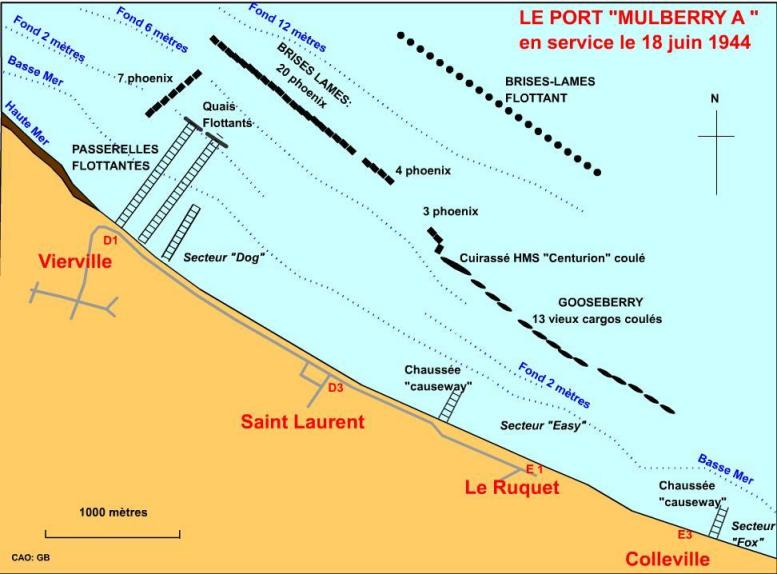


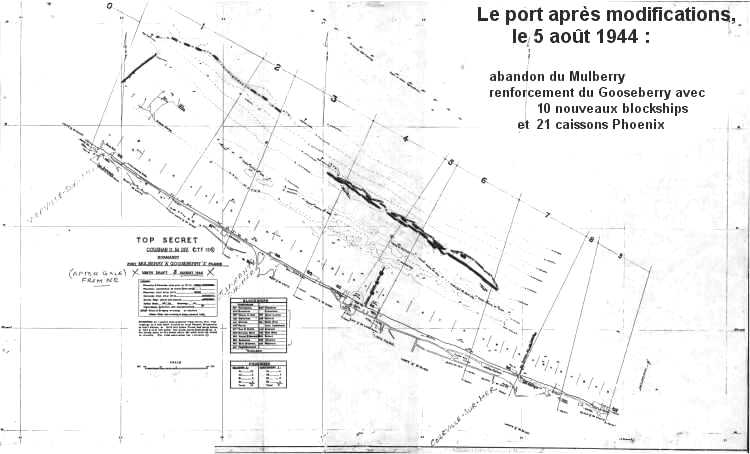
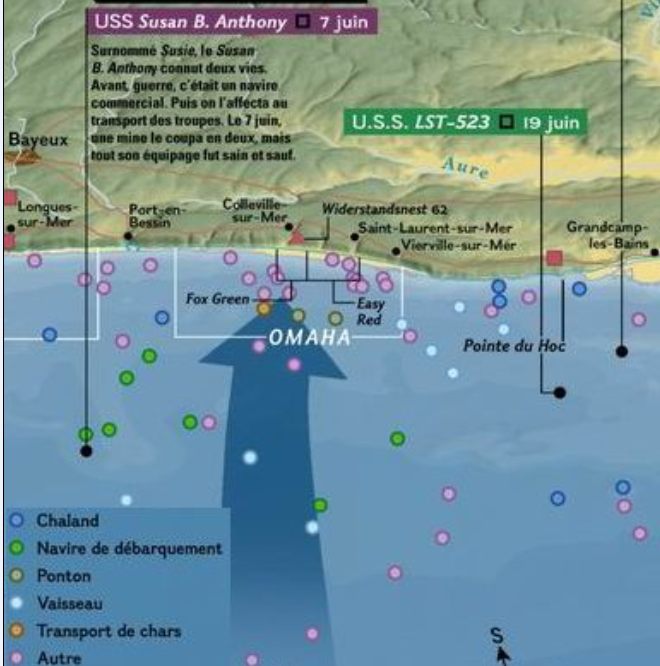
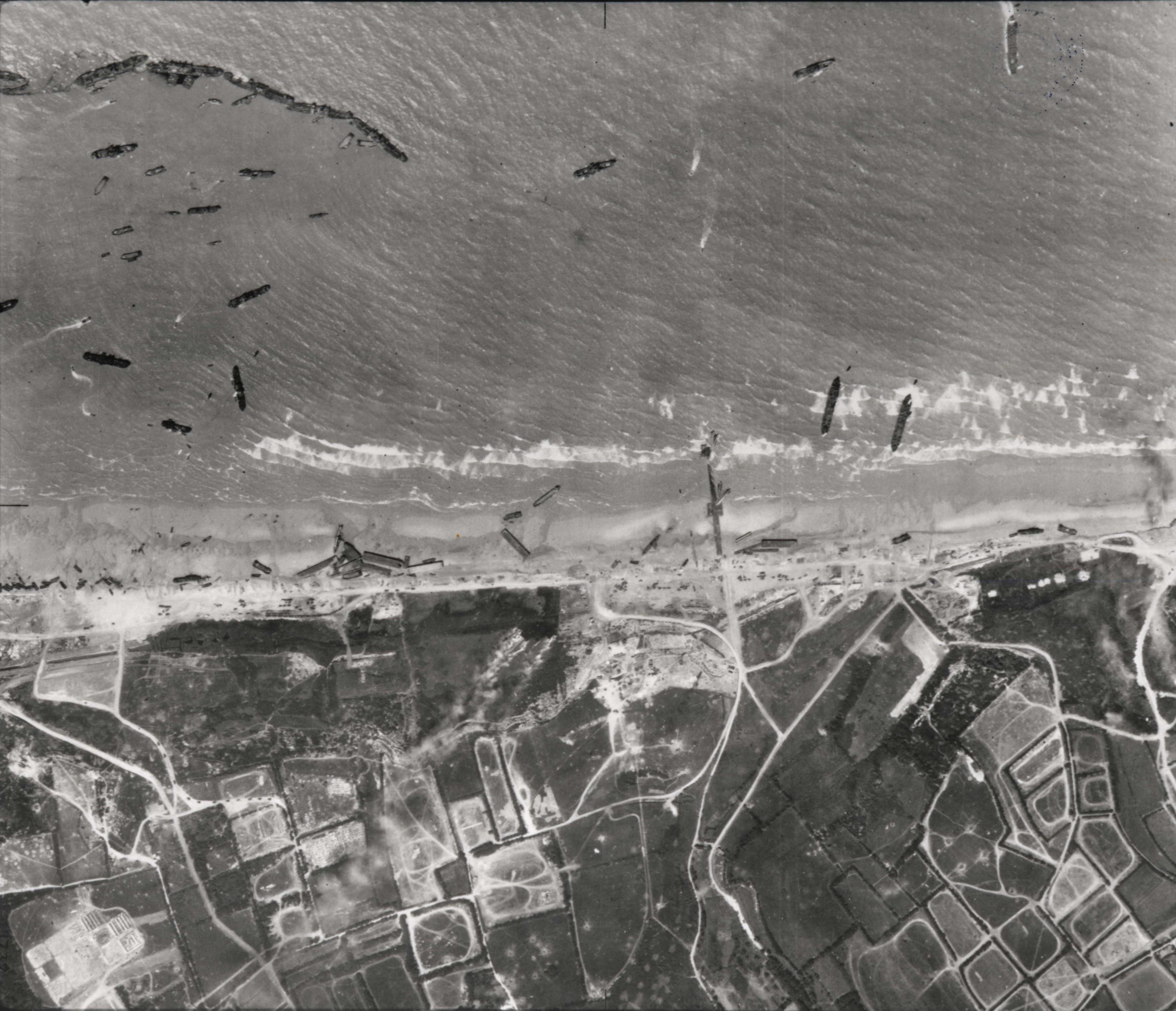
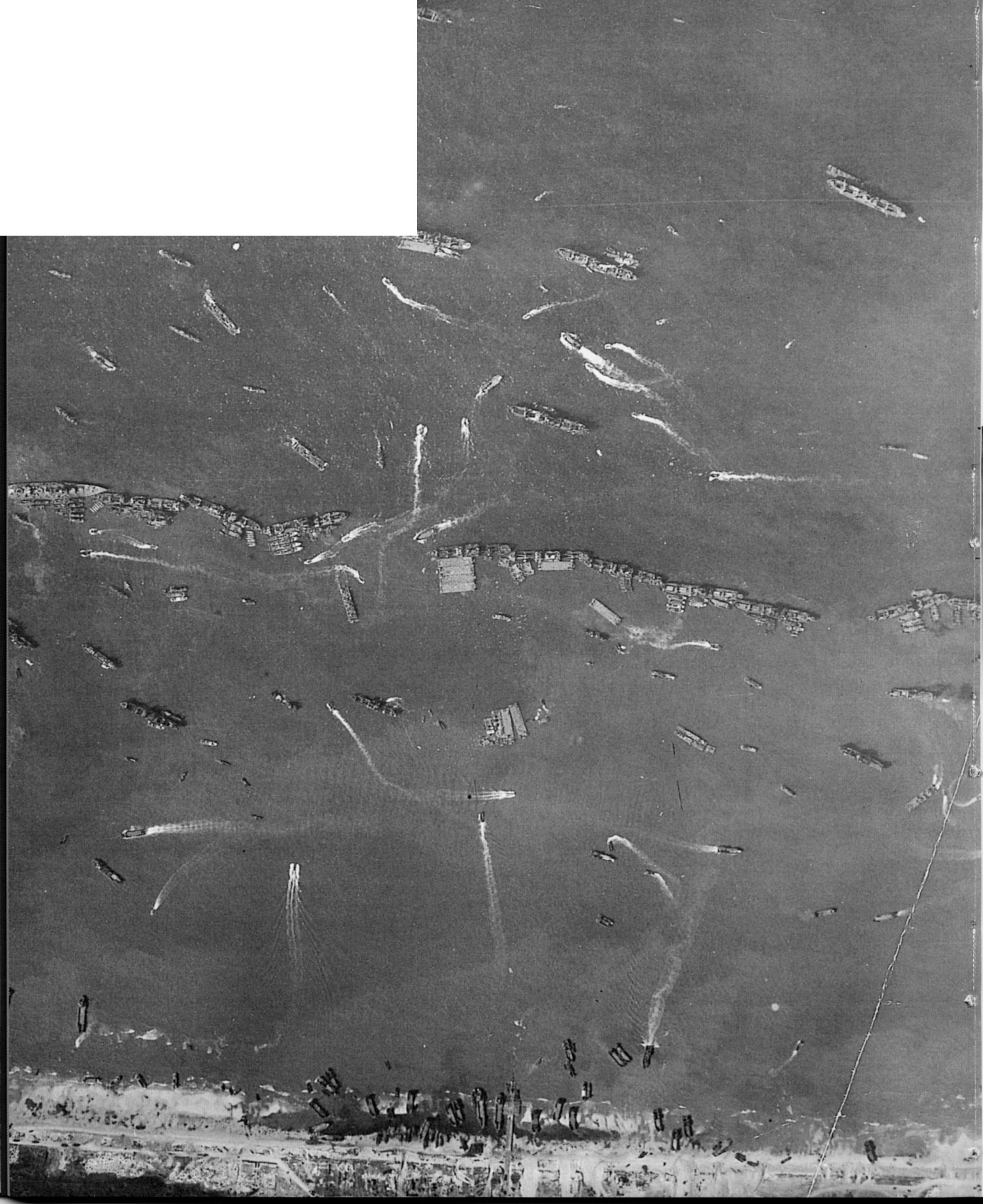
To ensure the arrival of reinforcements and supplies on Omaha Beach in the following months on June 6, 44 and until the commissioning of real ports like Cherbourg or Le Havre, the Allies had planned to build artificial ports on their landing beaches.
Designed to serve in summer only, they had 2 shapes:
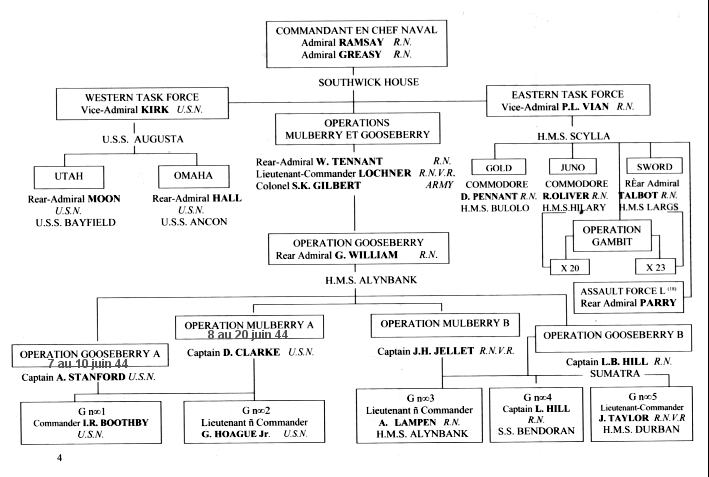
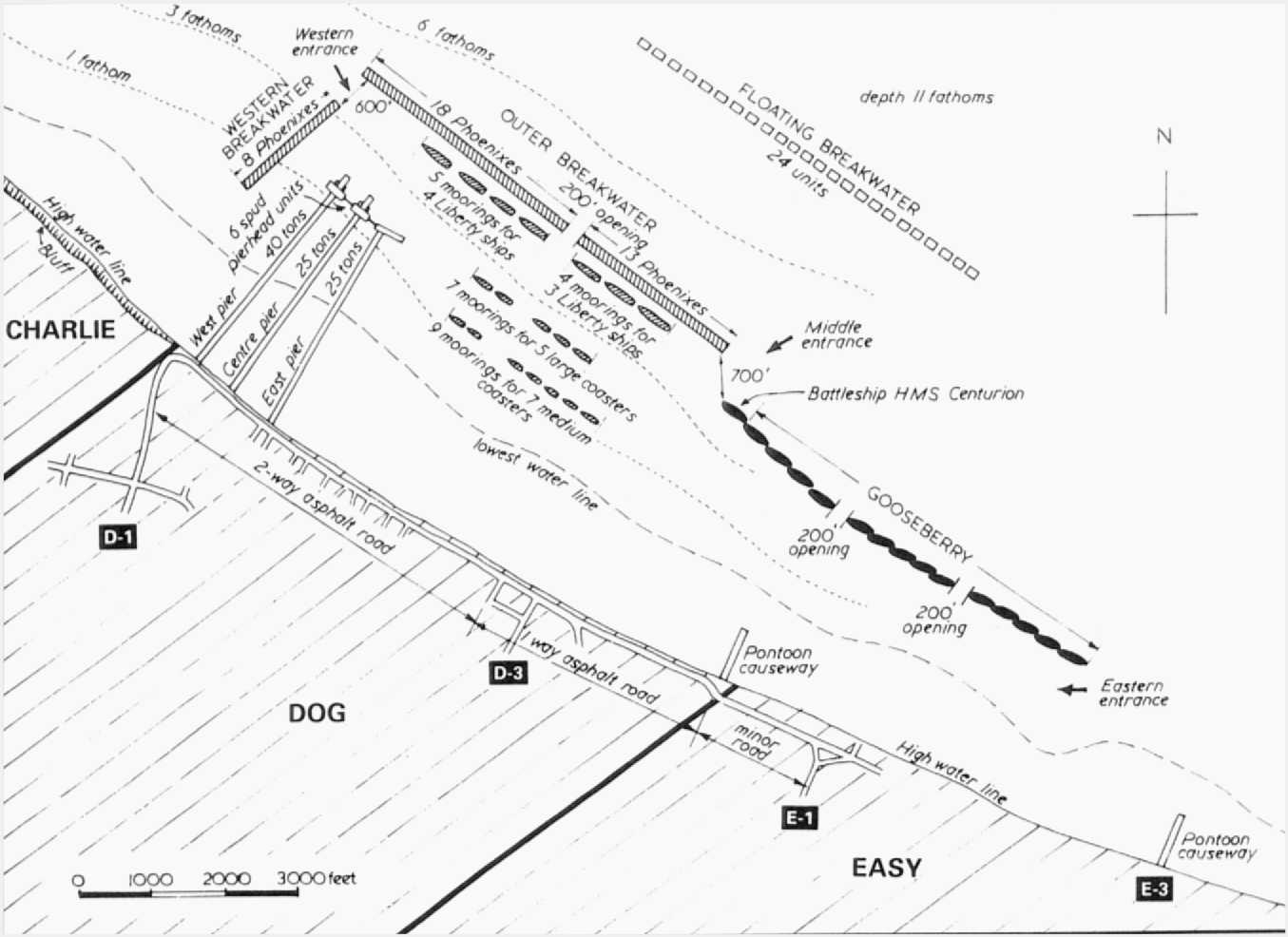
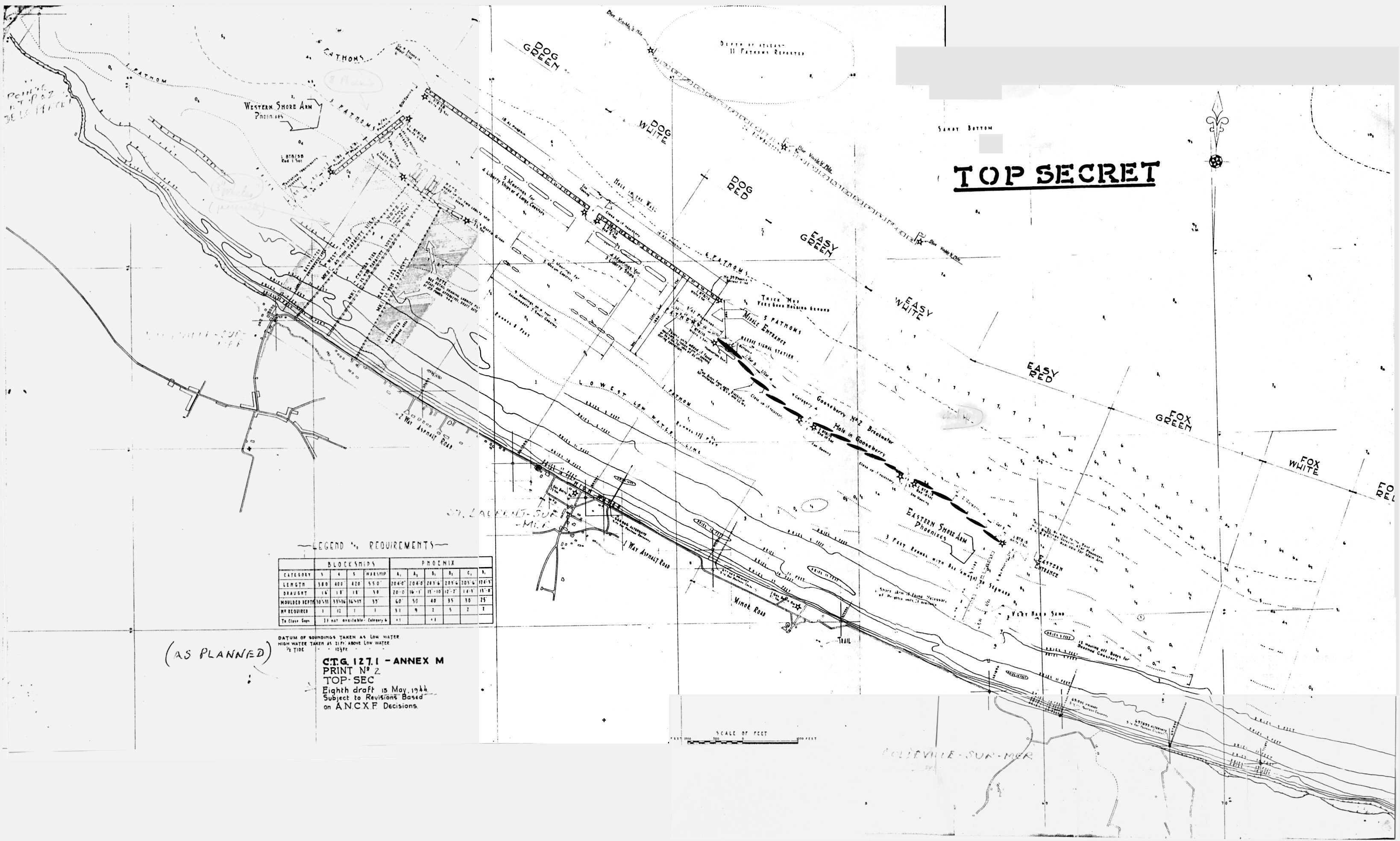
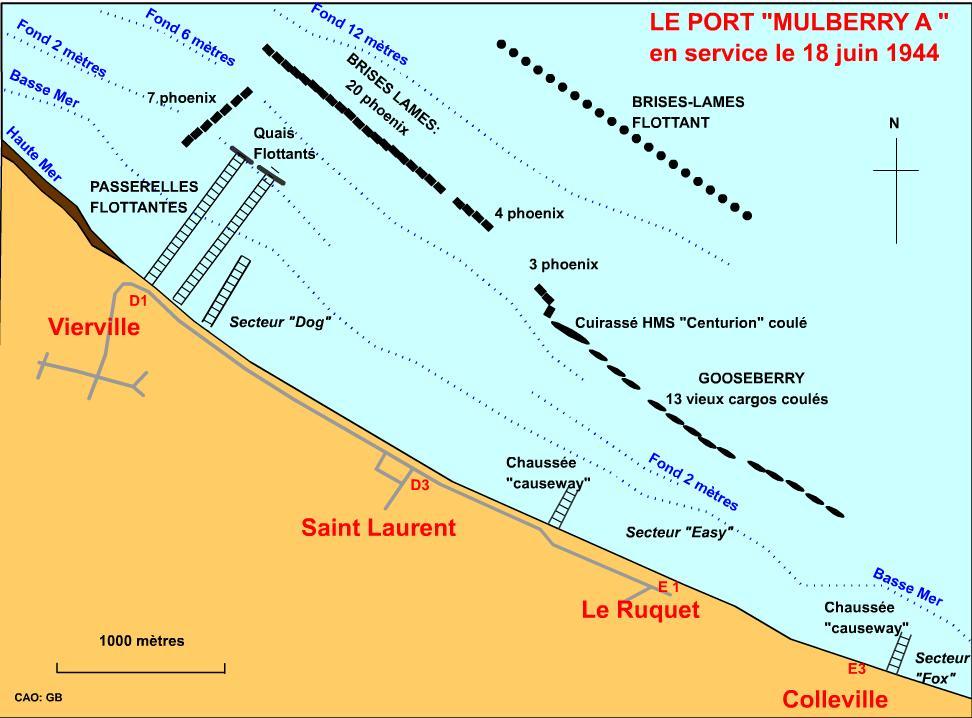
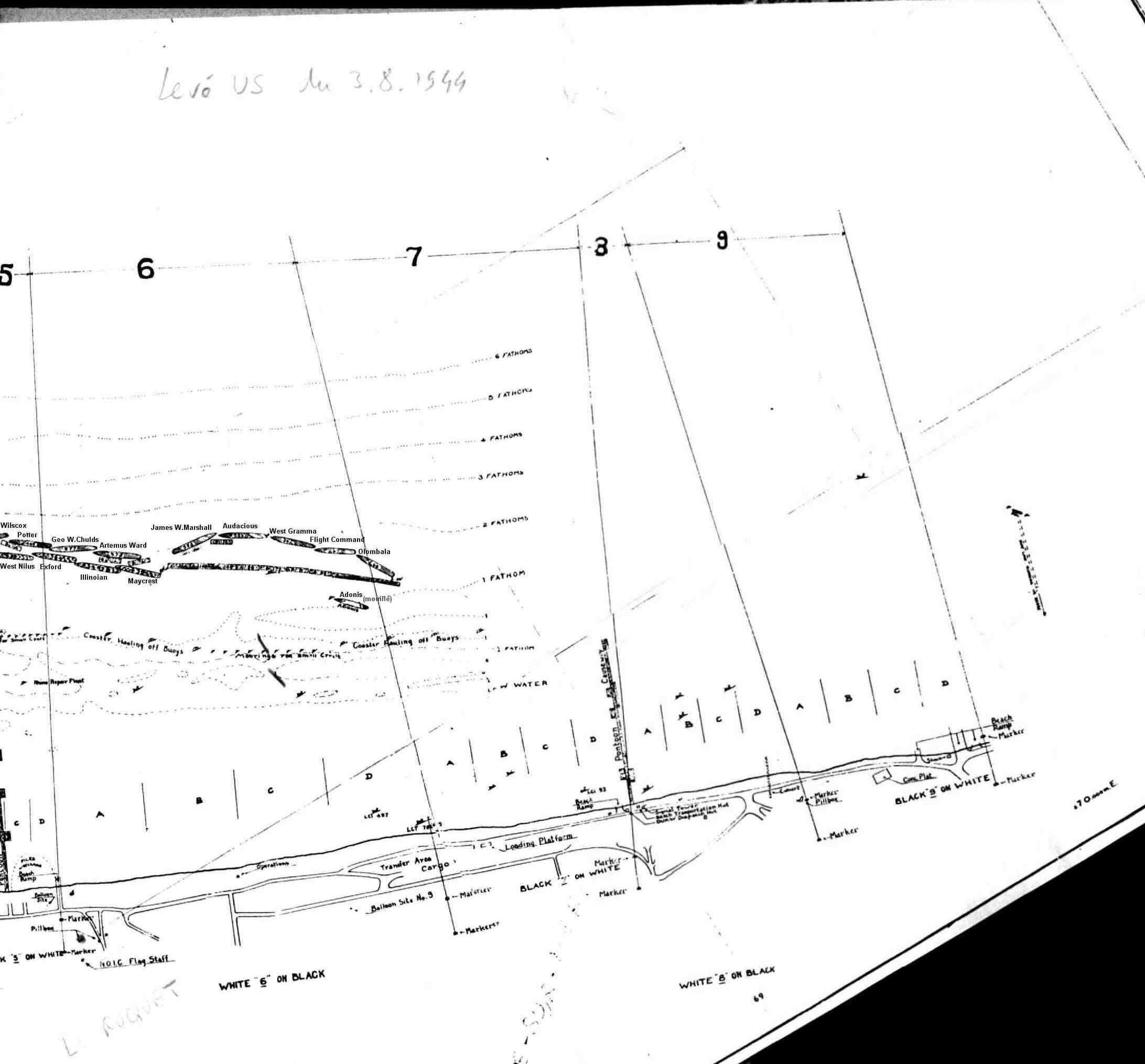
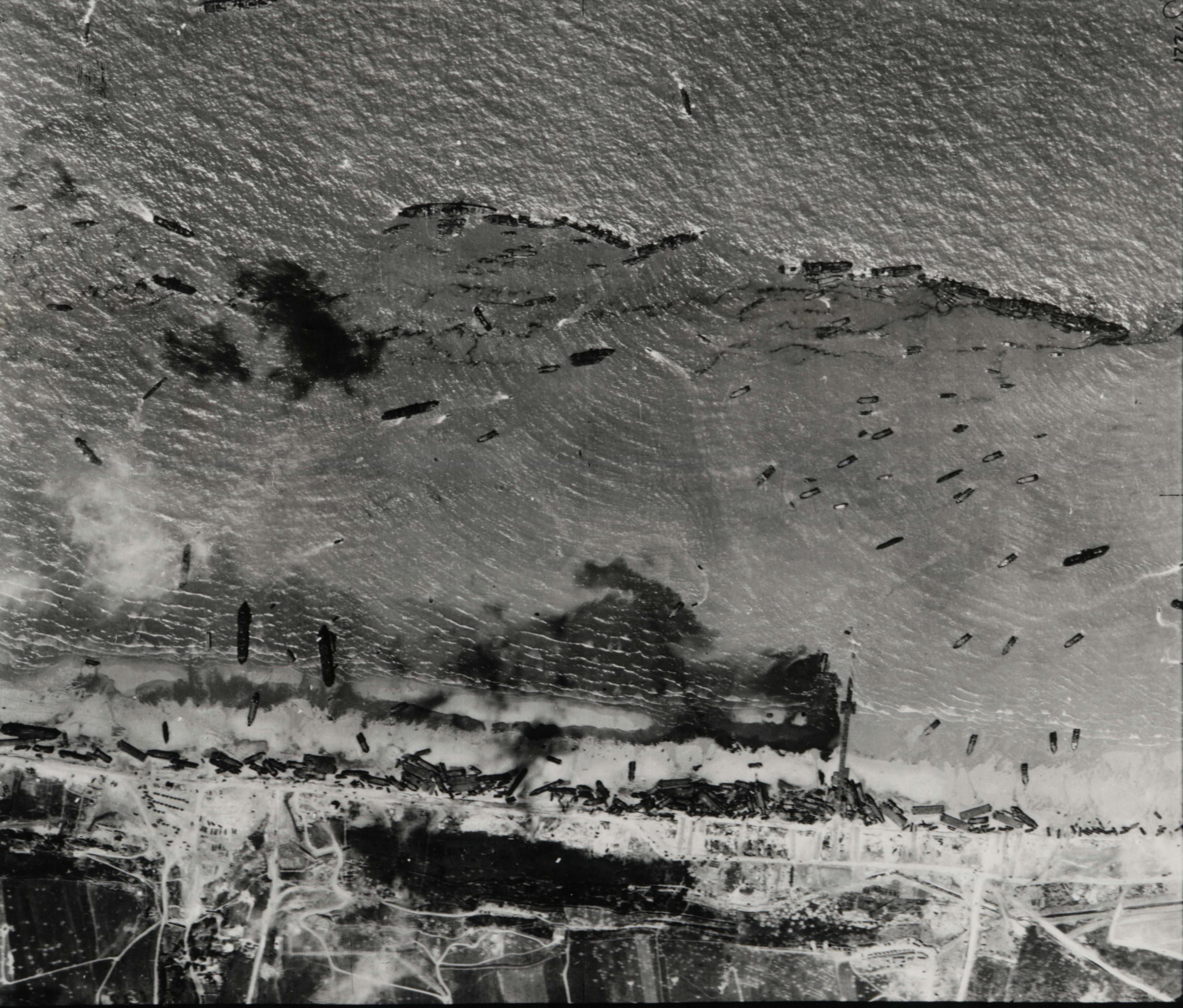
The "Gooseberry" were simple dykes of old ships sacrificed and sunk: blockships, nicknamed "Corncobs". The Omaha Beach dike was called "Gooseberry 2". There was also a "Gooseberry 1" at Utah Beach and on the British beaches the "Gooseberry 3, 4 and 5". These dykes were used as a shelter for small buildings. They were to be installed between 7 and 10 June 44. They were supplemented by carriageways of metal caissons (the "Causeways" made up of NLP, Navy Ligntered Pontoons), stranded on the beach at low tide and floating at high tide.
But two much more elaborate harbours were to be installed with a large dock protected by dykes of fixed caissons (the "Phoenix") and floating breakwaters (the "Bombardons"). A complex system of floating docks (the "Lobnitz") and floating bridges (the "Whale") connected them to the coast.
These artificial harbours were named the "Mulberry", the "Mulberry A" in Omaha Beach and the "Mulberry B" in Arromanches. They were to be installed between 8 and 20 June 44.
The first elements of Omaha Beach harbour arrived on 7 June and their implementation began immediately, under the direction of Captain Clark's CTF Task Force 128 and his deputy Captain Stanford, who had battalions of Navy Engineers the "CB" or "Seabees" (i.e. the Sea Bees) - especially the 108th and 1006th CB-.
The port was operated by other Seabees battalions, equipped with Landing Craft (LCT, LCM, LCVP), Landing Barges (LBV), and 20 self-propelled "Rhinoferry" pontoons (of 111st CB). All of these vehicles were capable of unloading wet cargo vessels and LSTs (open-door vessels). The goods and vehicles were then unloaded either on the beach or on the "Causeways".
Small coasters and LSTs could also be docked directly at Lobnitz floating docks, or stranded on the beach.
As early as June 8, following the American advance to the inside, and the work of the engineers, the situation on the beach had improved considerably.
On the one hand, the enemy batteries were no longer firing at the landing area and on the other hand, the 2 Special Engineer Brigades had worked effectively. The beach was almost completely cleared of mines and debris, the side road at the beach was arranged for double-way traffic. Many access tracks had been built through the pebble slope or dyke to the side road to facilitate traffic on the beach.
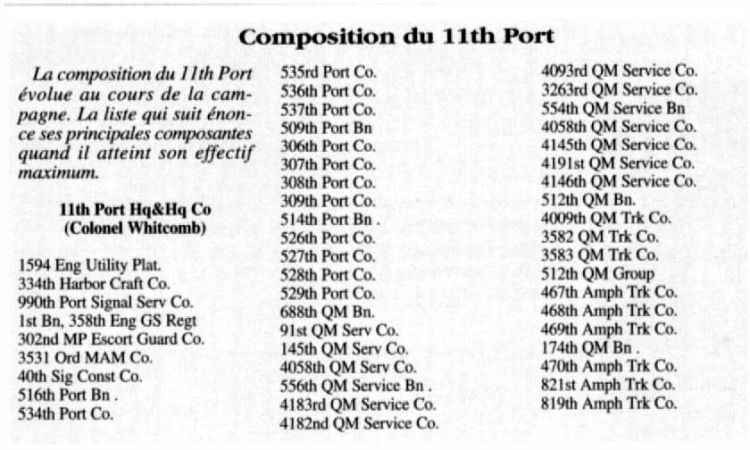
On the ground side, the operations were carried out by the 5th and 6th Special Engineering Brigades (ESB) and the 11th Port (this last unit was under the authority of the Transportation Corps and not the Engineering), grouped under the authority of the Provisional Grouping of the Special Engineering Brigades (PESBG) (General Hoge). These units were responsible for unloading with their Port companies (dockers) and amphibious transport companies (the DUKW or "ducks" amphibious trucks - the "ducks").
- The 5th BSE (Colonel Gullatt) was in charge of the eastern half (from the Ruquet to Colleville).
- The 6th BSE (Colonel Mulligan, after the evacuation of Colonel Thompson seriously wounded on 6 June) was responsible for the western half (from Vierville to Ruquet).
- The 11th Port (Colonel Whitcomb, PC at the Château de Vierville) took care of the artificial port Mulberry from its planned commissioning on June 18 (and also the so-called "secondary" ports of Isigny and Grandcamp). Subsequently, as the Mulberry docks and floating bridges were destroyed on June 21, the 11th Port continued operations, like the BSE, in front of Vierville on Charlie and Dog Green beaches. From the end of July, the 11th Port was withdrawn from Omaha Beach and reassigned to other tasks as part of the extension of the Normandy front to Cherbourg and Brittany.
At the end of June, the Provisional Grouping was dissolved and replaced by the "Omaha Beach Command" which operated, together with the 2 Special Engineer Brigades, the bridgehead of Omaha Beach until its disappearance in December 1944.


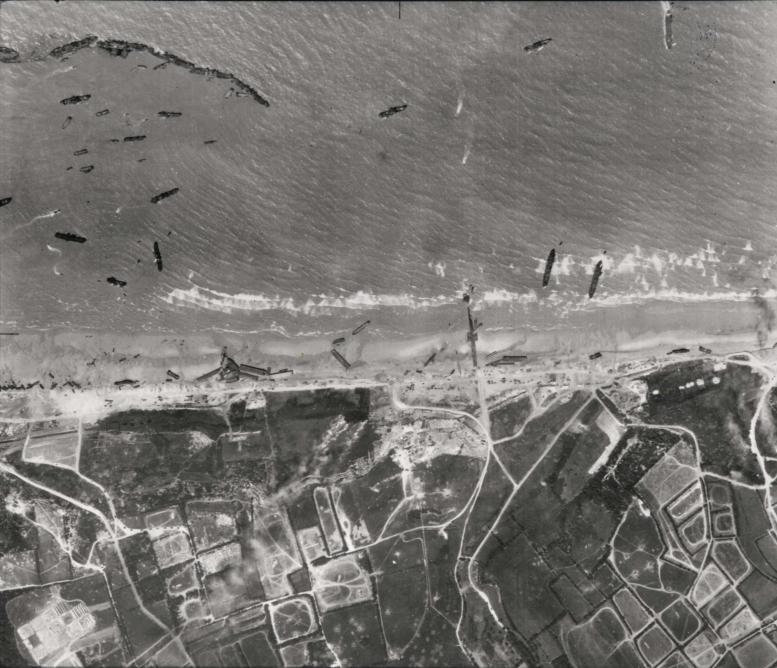
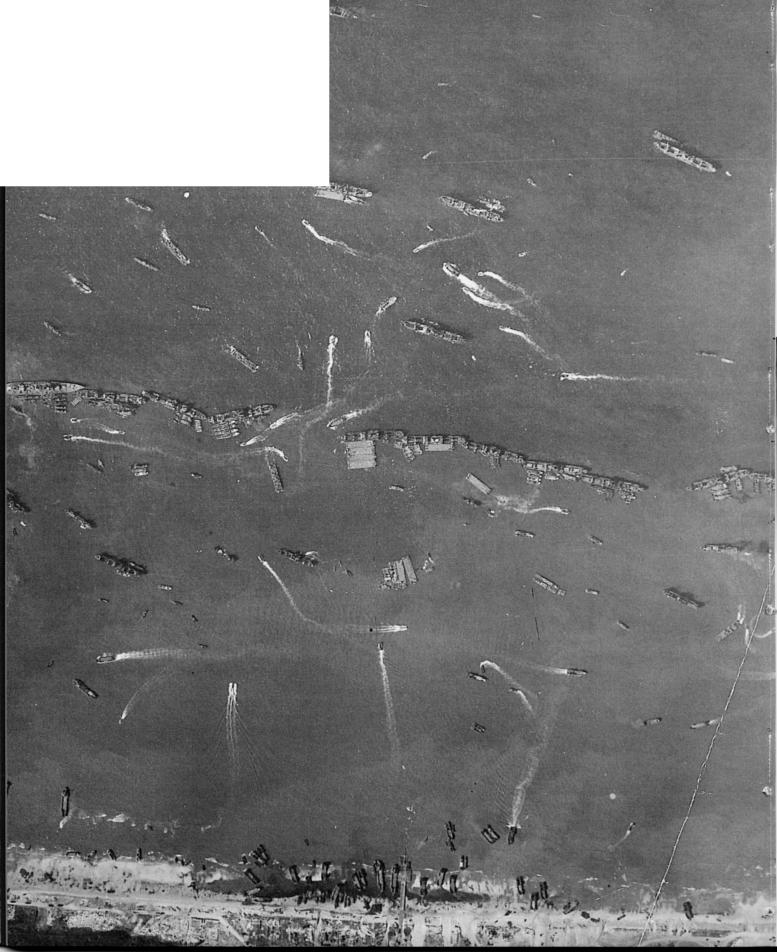
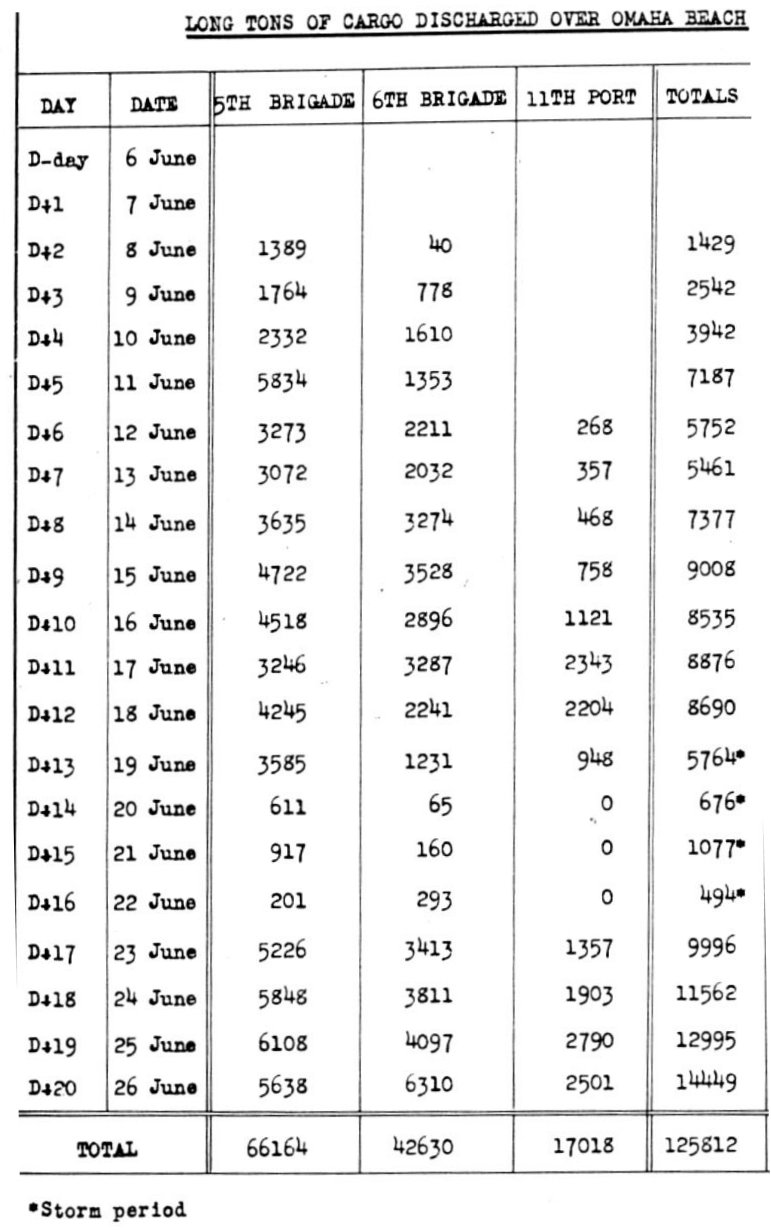
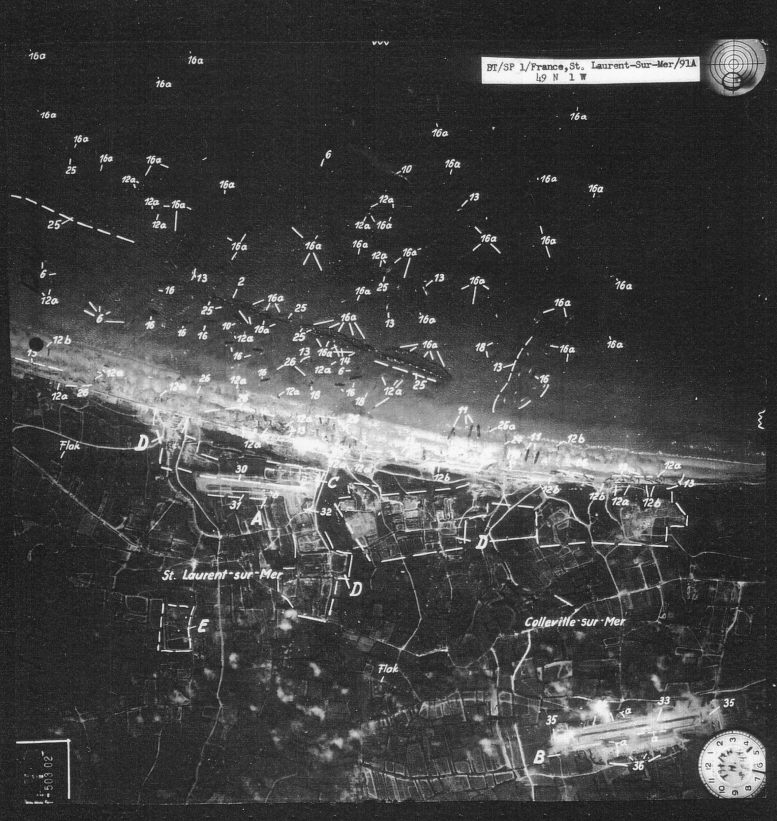
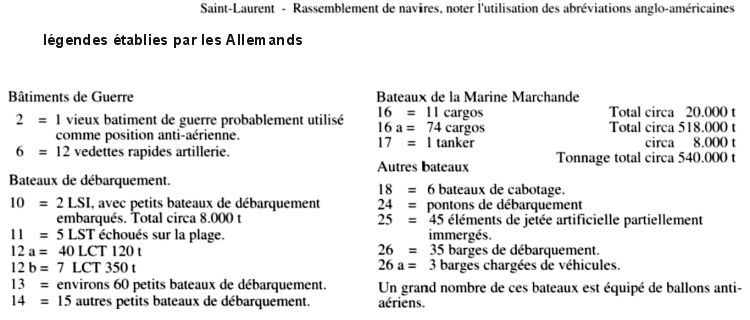
The table below gives the tonnages landed daily until 26 June, distributed between the 2 Brigades and the 11th Port. It shows the fall in traffic during the 4 days of the storm (19-22 June) which irreparably destroyed Mulberry Harbour. The Gooseberry shelter was then strengthened and unloading continued at a good pace, using conventional amphibious means (LCT, DUKW, Rhinoferry, direct stranding of LST on the beach, etc.) and taking advantage of a satisfactory average weather.
The increase in traffic to figures well above the expected theoretical capacity finally confirmed that there was no need for floating docks, complicated bridges and a large sheltered dock to disembark in the summer massive quantities of troops, vehicles and supplies, but weather conditions remained essential regardless of the installations installed.
The attached tables give the traffic statistics of the port of Omaha Beach June to December 1944
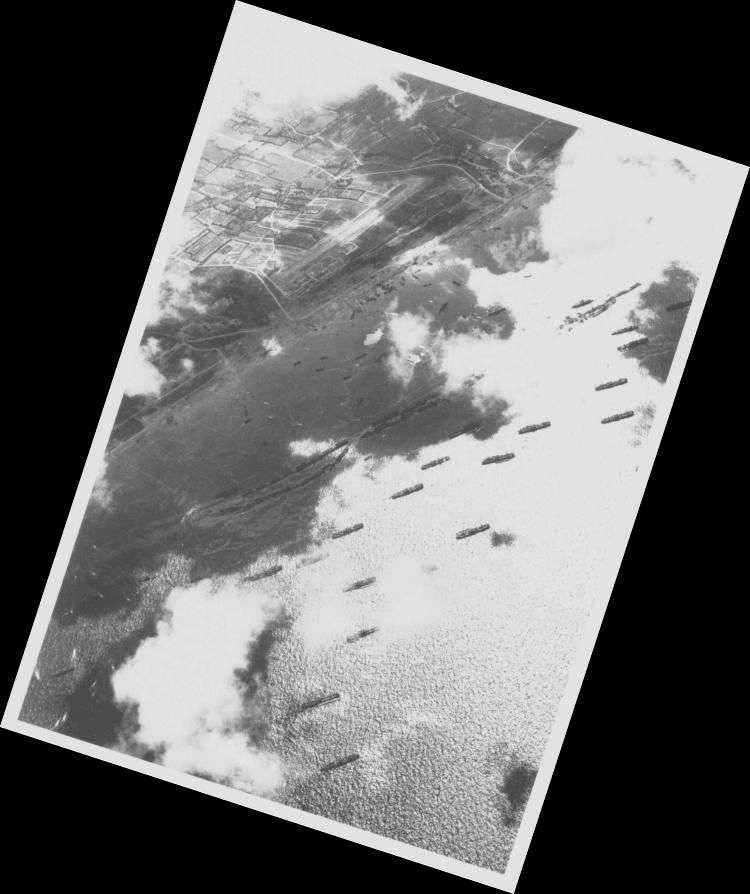
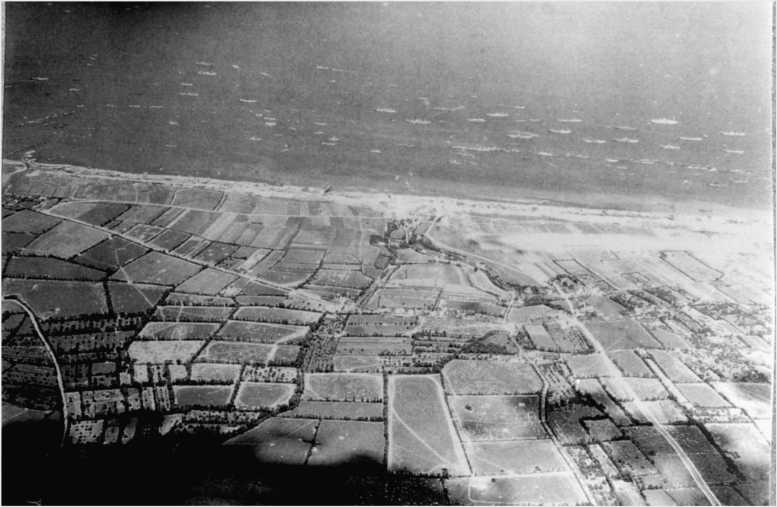
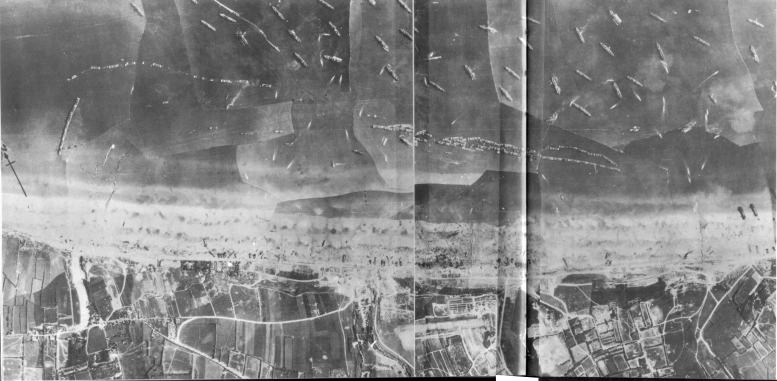
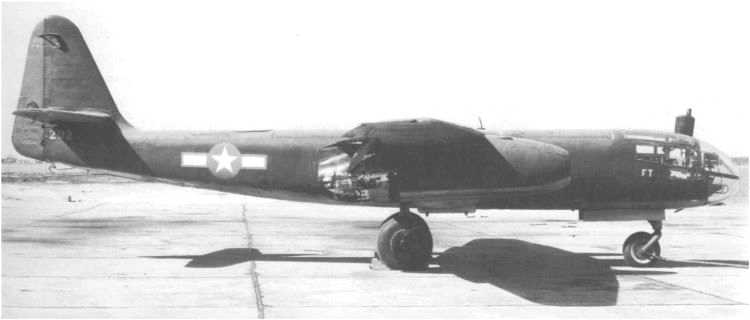
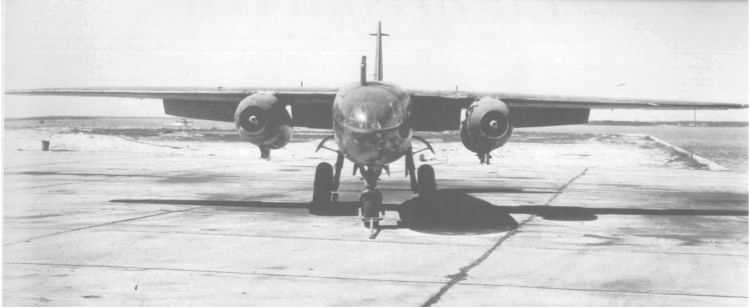
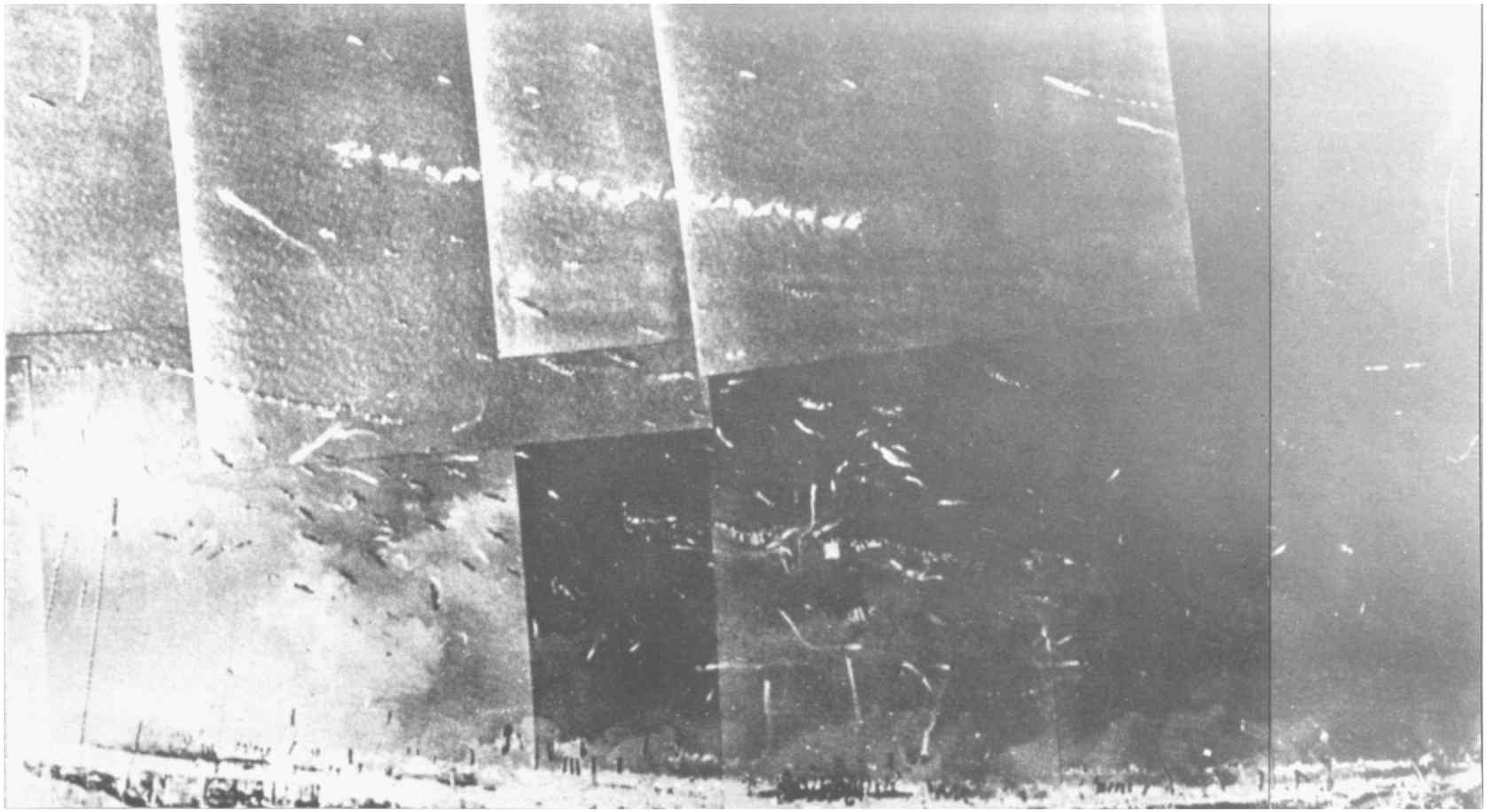
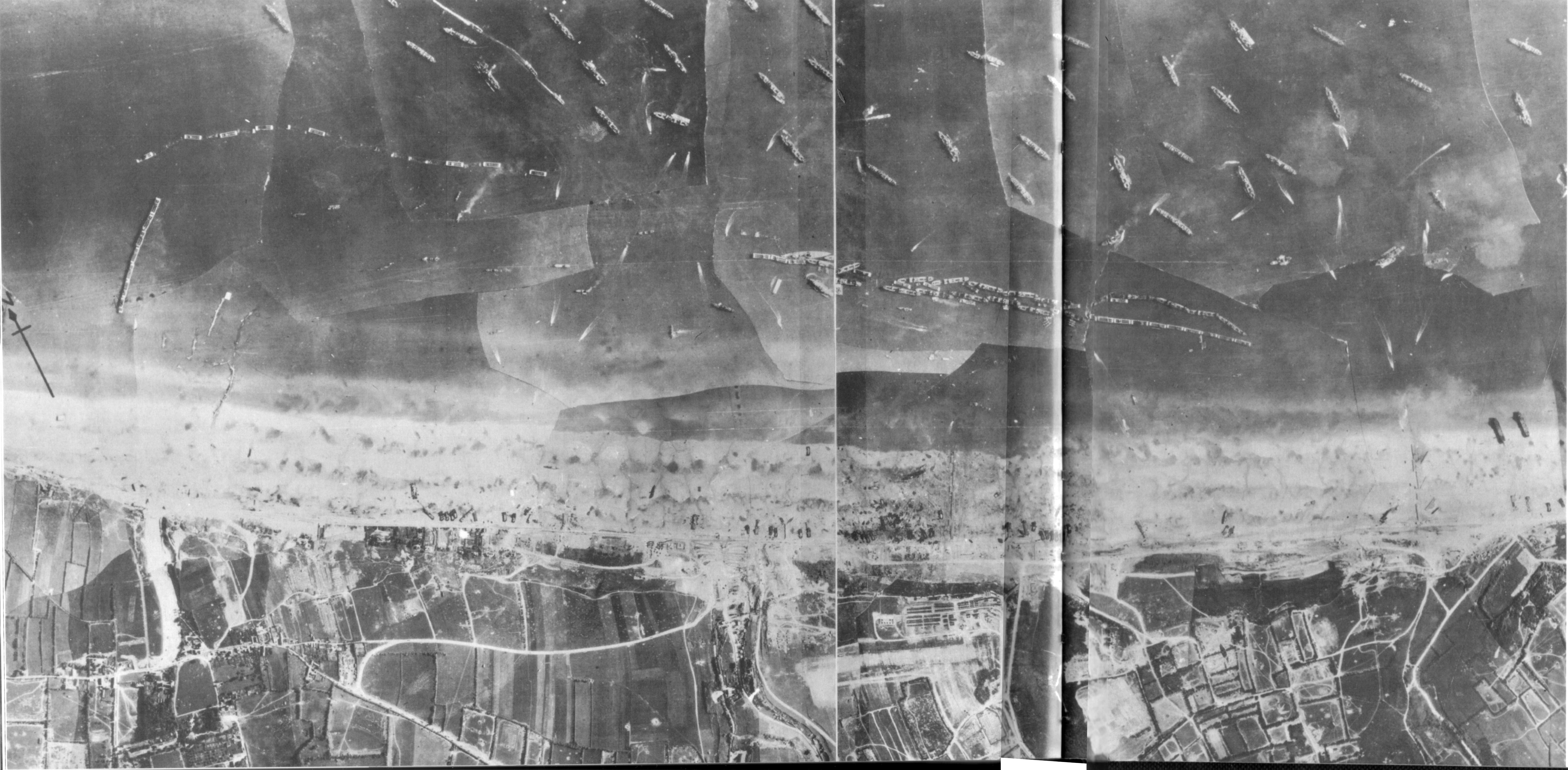
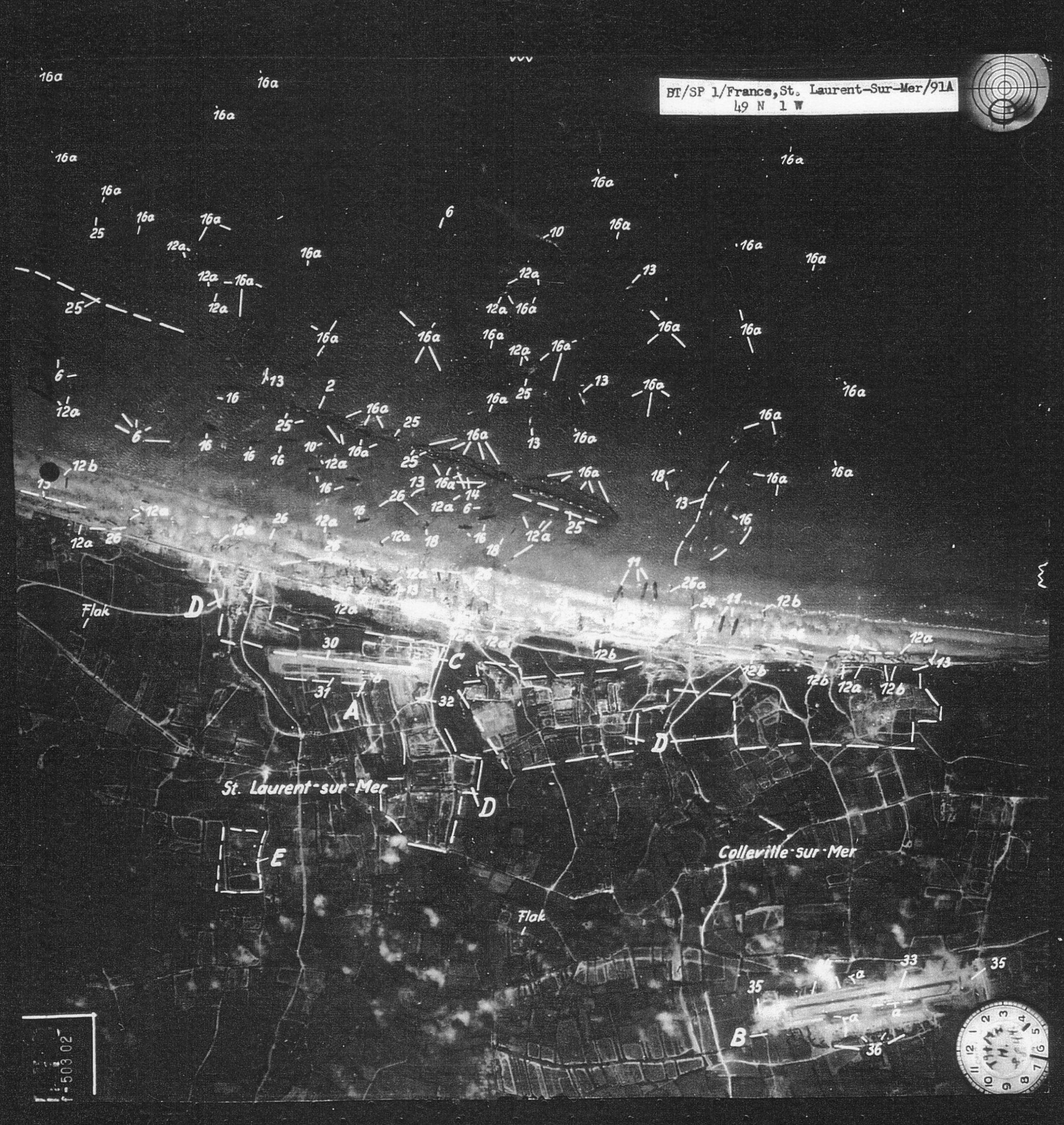
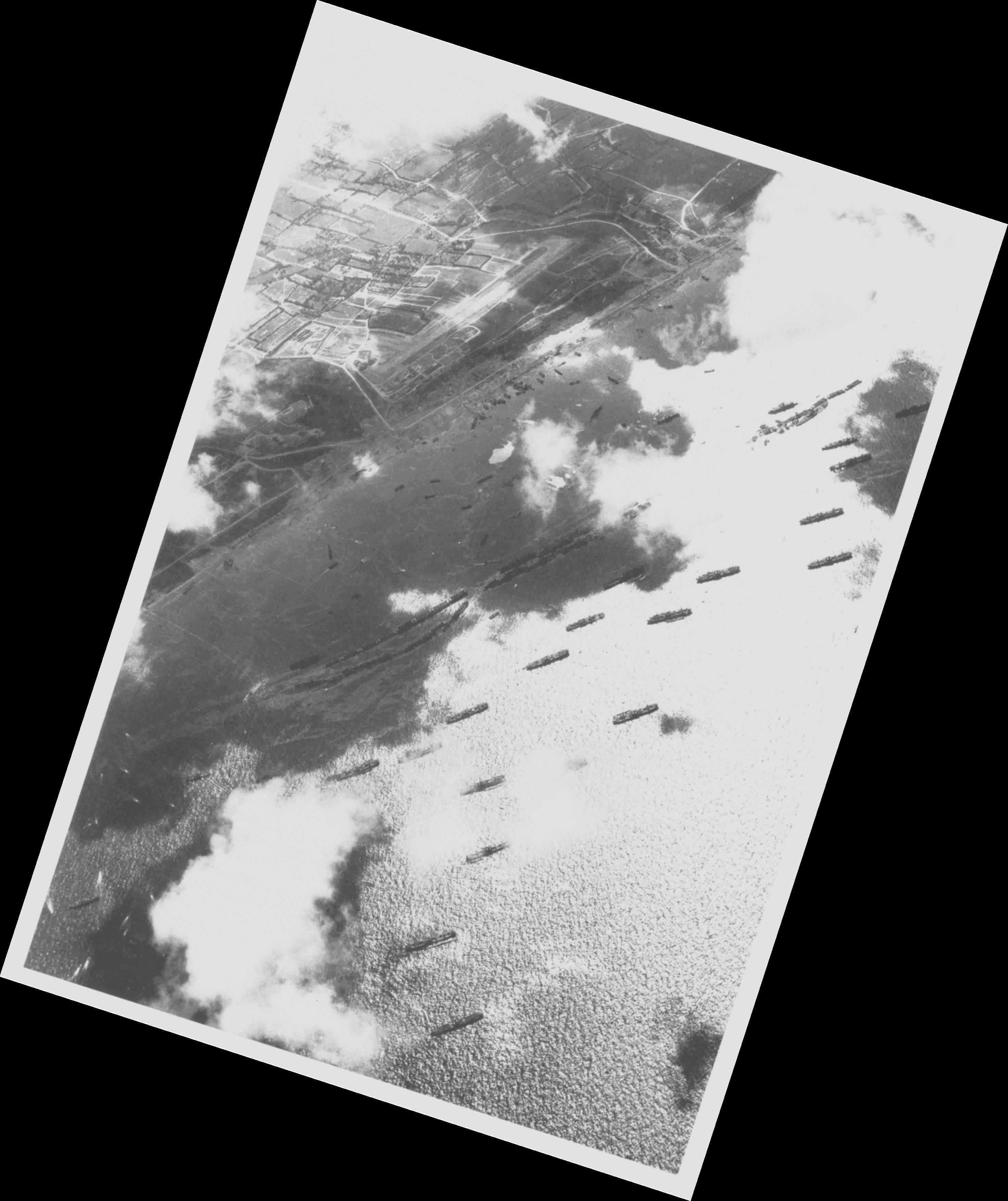
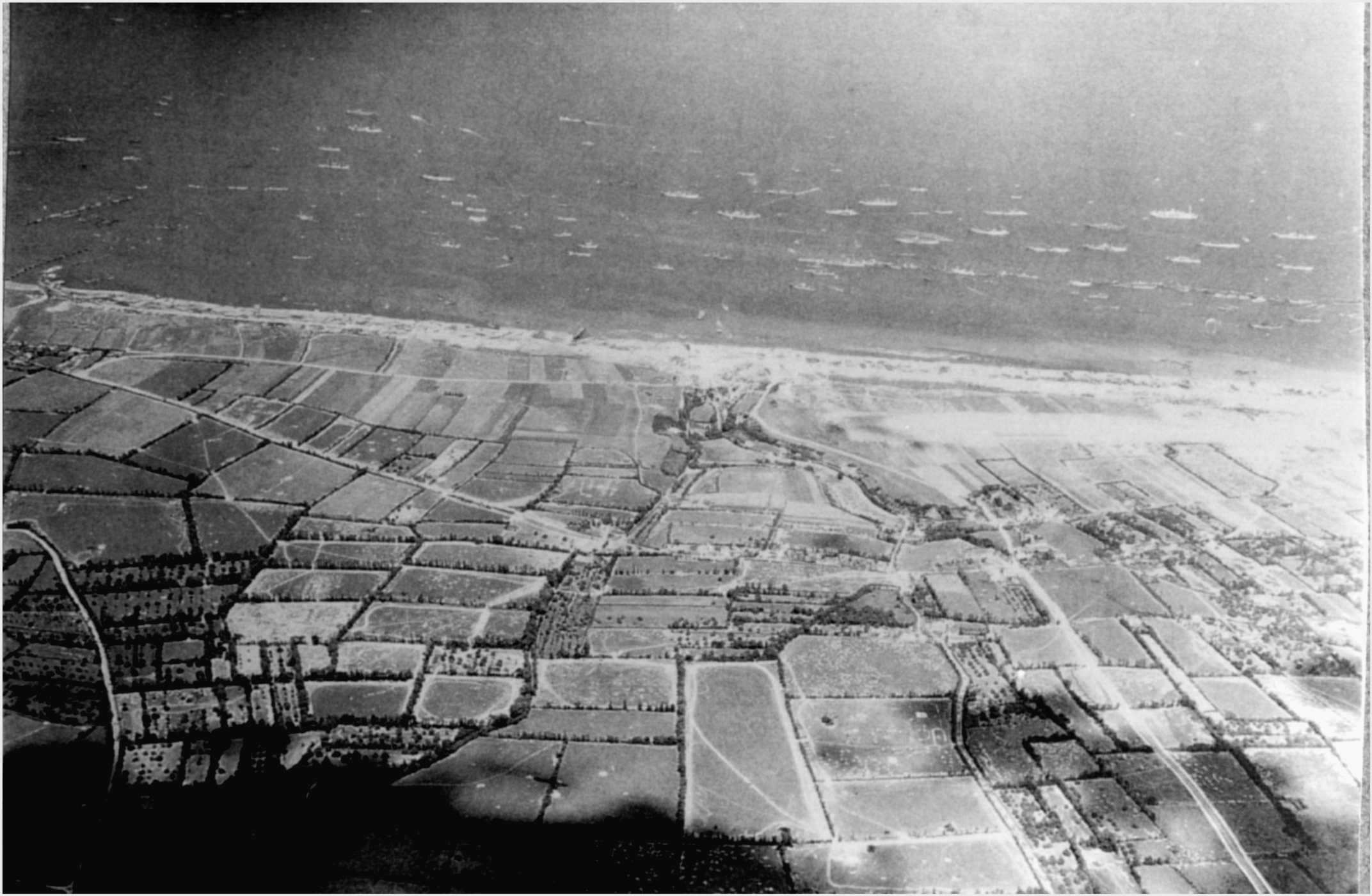
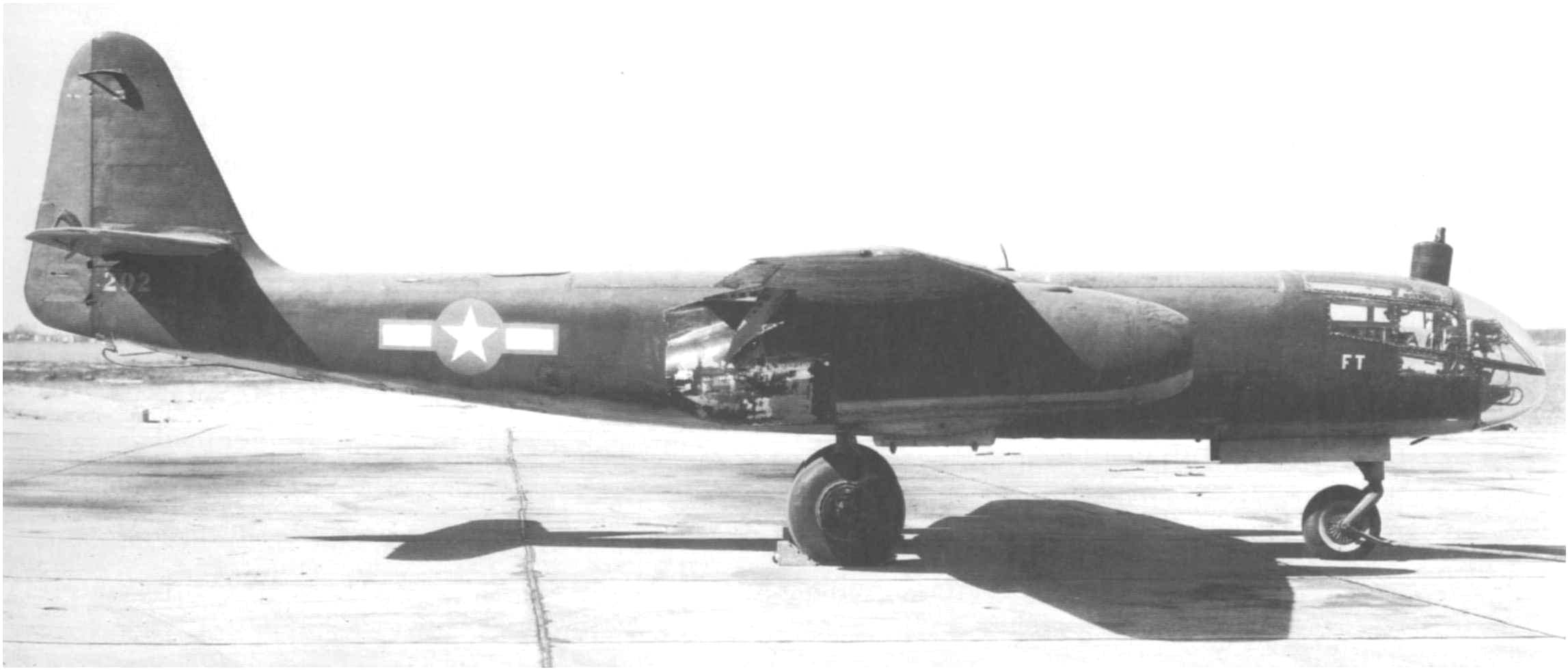
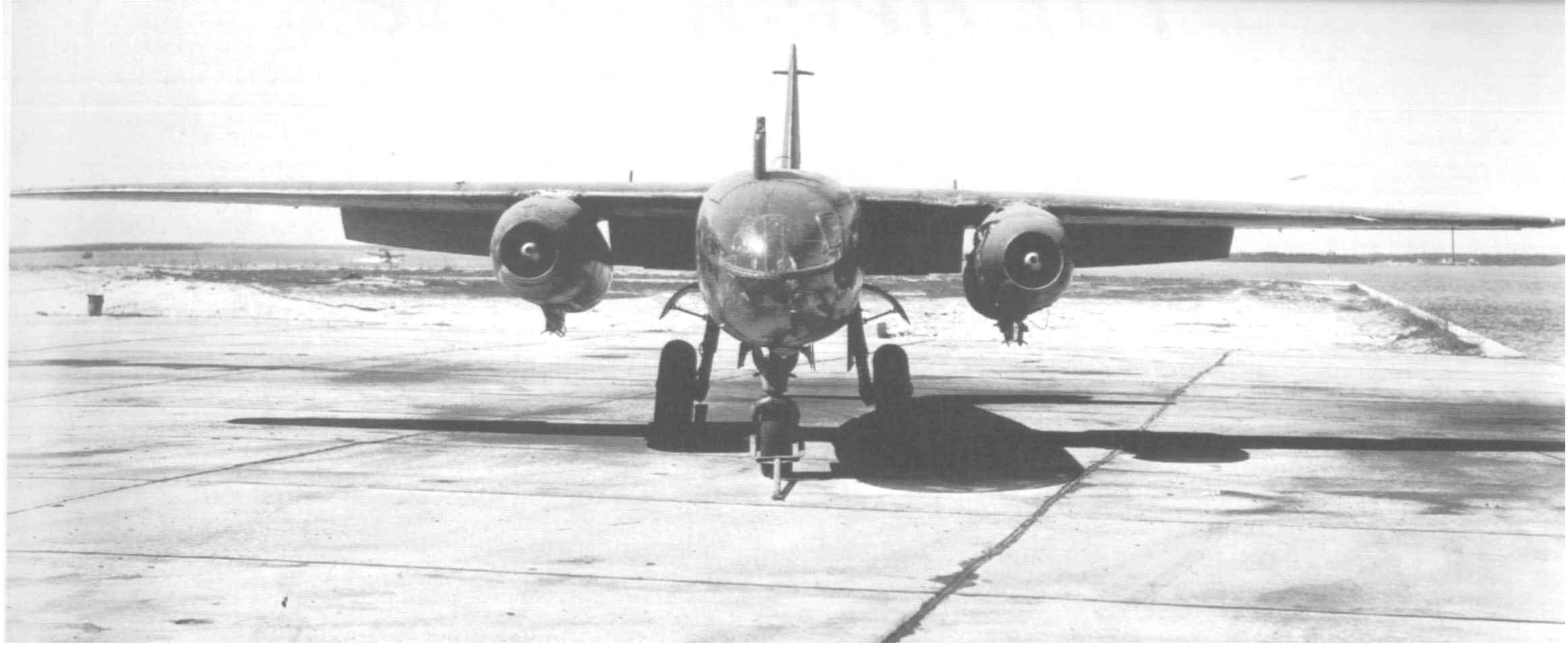
The photo opposite of the Omaha Beach area was taken in August 1944 by a German jet aircraft of type Arado 234. Flying at 800 Km/h and 20,000 m above sea level, it was absolutely invulnerable and even invisible to the naked eye. The picture is very accurately provided by the German services, who knew how to recognize the ships used by the allies.


See the memories of Michel Hardelay about the beach and the Port