






Obstacles on the beach and at the foot of the cliff
In 1944, from March onwards, the Germans had started building obstacles on the whole beach. This network, designed to sink or stop landing boats, was still in the process of complementing D-Day in Vierville, see memories of Michel Hardelay .
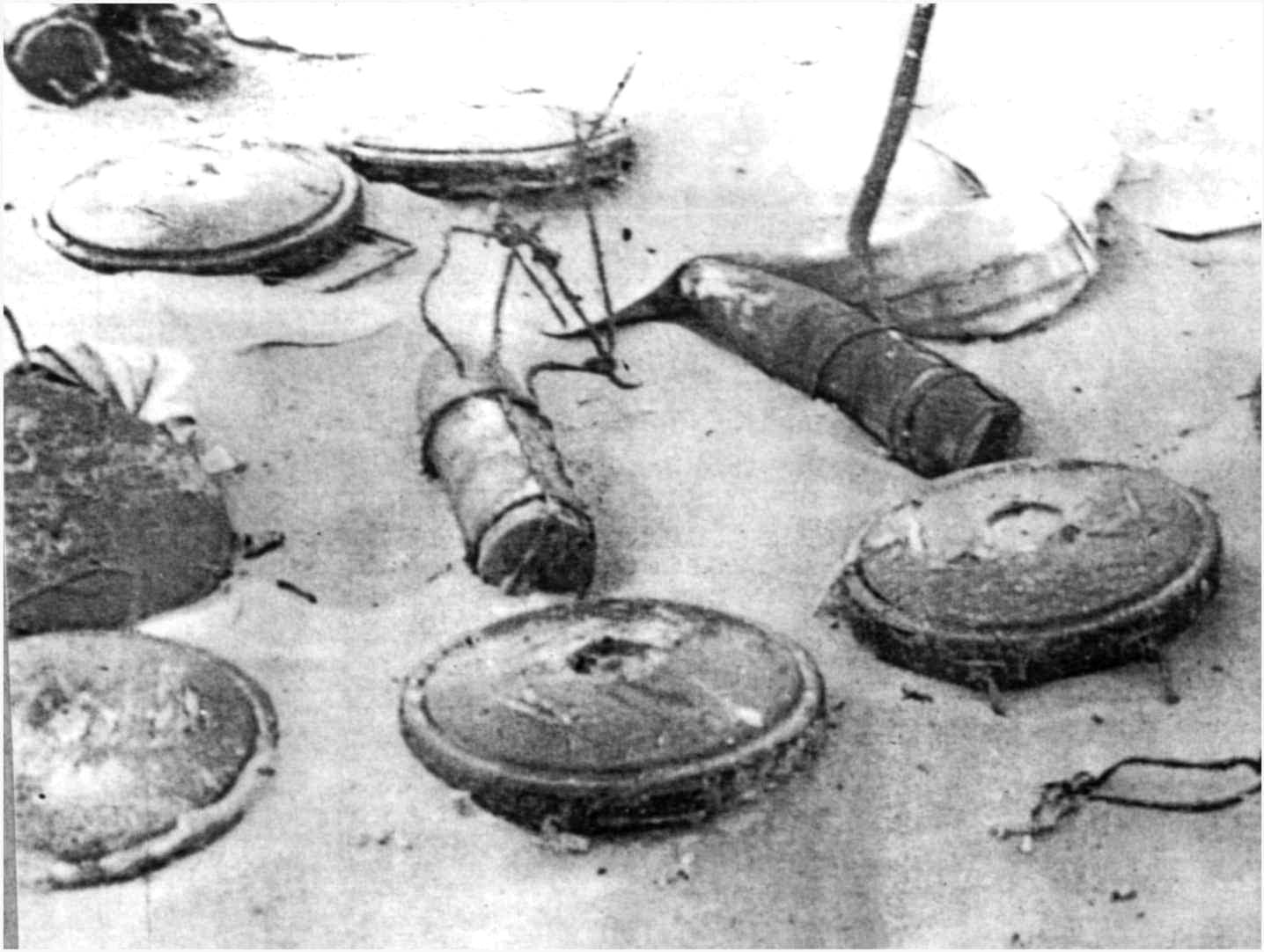
It consisted of several discontinuous lines of various obstacles, often mined and trapped, "elements C Cointets" or "Belgian doors", wooden piles, wooden ramps and steel horn hedges.
These lines were located on the foreshore, between 250m and 100m from the high seas leash.
The attacking troops, after reaching the pebble slope bordering the sand (or the seafront dyke that extended for only 600 metres at the time, from the descent of Vierville to the Hardelay villa), still had to cross a narrow strip of flat ground to reach the cliffs.
Most of the villas there had been demolished by the Germans but some were still being demolished. Indeed, the Germans recovered for their use all the structural parts that could be used in the shelters they built.
The Germans had laid mines and barbed wires to slow down movement beyond the pebbly bed, but these obstacles were not continuous.
Almost all along the beach, a row of barbed wire "concertina" (in hoops) was placed above the pebble slope; at the western end, these barbed wires were placed on the top of the seafront dyke.
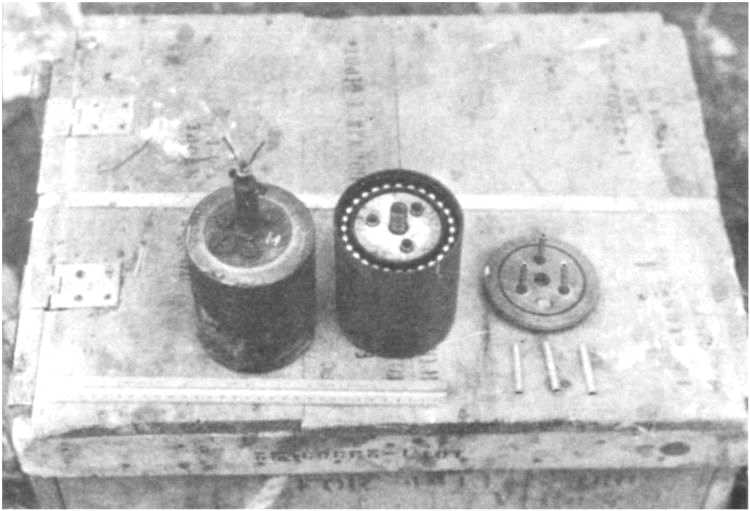
Irregularly scattered minefields, usually marked by signs (but often indicated fictitious minefields), spread on flat ground behind barbed wires and sometimes on cliff slopes. In addition to ordinary German anti-personnel mines (S-Minen or "bundling" mines), there were also traps (T.N.T. charges). Covered with stones and fired by wire, sometimes in the thickness of the concertina), ordinary mines trapped, and various French mines.
Fortified points "WN" ("WiderstandNester" or "nid of resistance")
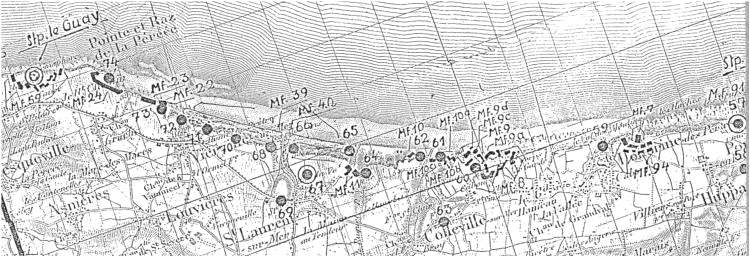
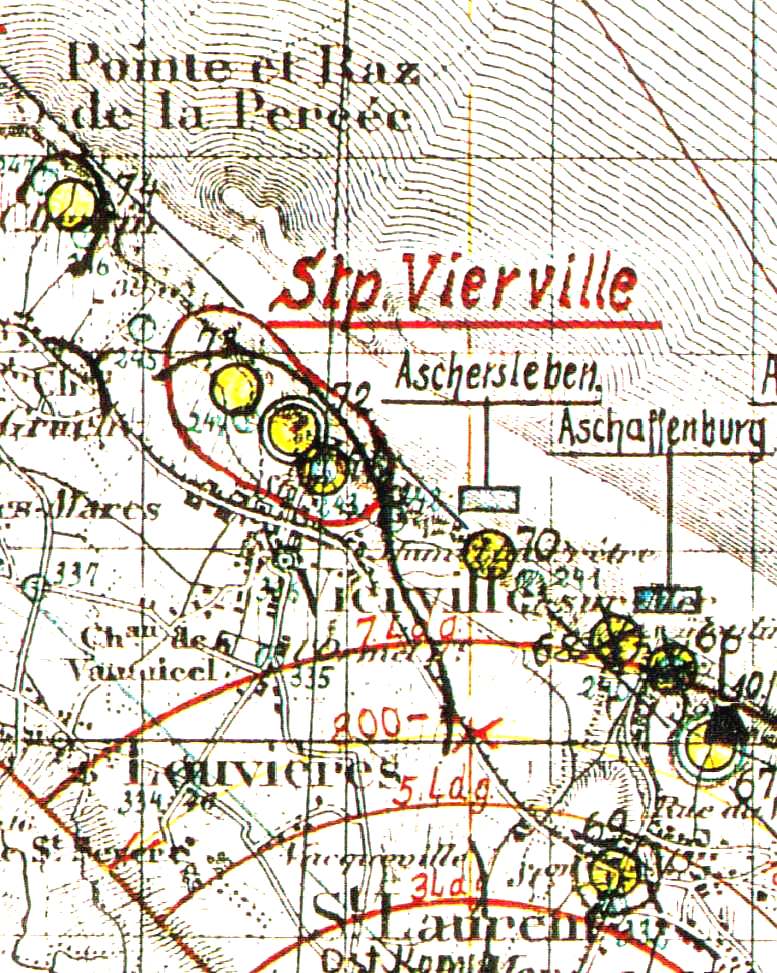
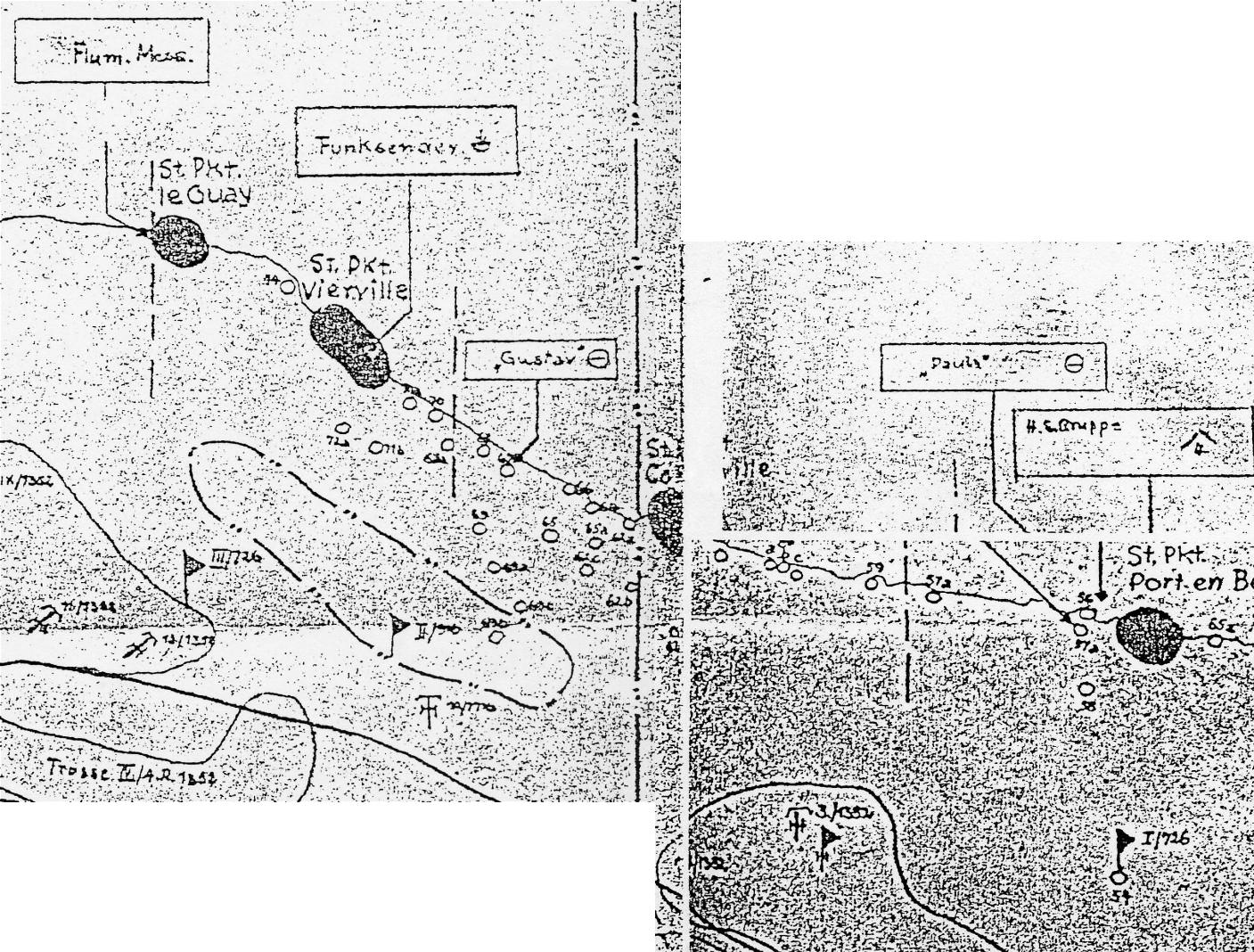
From the west to the east there were many fortified areas known as WN 76 to 60:
WN 76, at the former semaphore (STP Le Guay), he protected the Englesqueville radar station (equipped with Luftwaffe and Kriegsmarine radars)
WN 74, at the Point of Percaea, with 2 76mm field guns.
WN 73, around the Gambier House, with mortar positions and a 75mm PAK gun.
WN 72, west of the descent of Vierville, with 2 concrete bunkers containing 2 cannons (88mm anti-tank and 50mm).
WN 71, east of descent, with mortar positions,
WN 70, above the villa Hardelay, still very succinctly designed, with a large bunker still under construction, and possibly an unprotected 75mm PAK.
WN 69, German PC in the western part of the village of St-Laurent, with a battery of Nebelwerfer.
WN 68 and WN 66, on both sides of the descent of Saint-Laurent, with 50mm anti-tank guns and mortars.
WN 67, a dummy defensive position close to WN 66, north of the village of St-Laurent and on the cliff edge.
WN 65 and WN 64on both sides of the Ruquet descent, with 50mm anti-tank guns and mortars.
WN 63, German PC in the village of Colleville
WN 62, WN 61, WN 60, north of Colleville, with anti-tank or field guns of 88, 75 and 50mm, and mortars.
These WNs formed discontinuous positions, placed almost always on both sides of the valleys that crossed the cliff. Indeed, the Germans did not have enough troops to fill this cliff along its entire length.
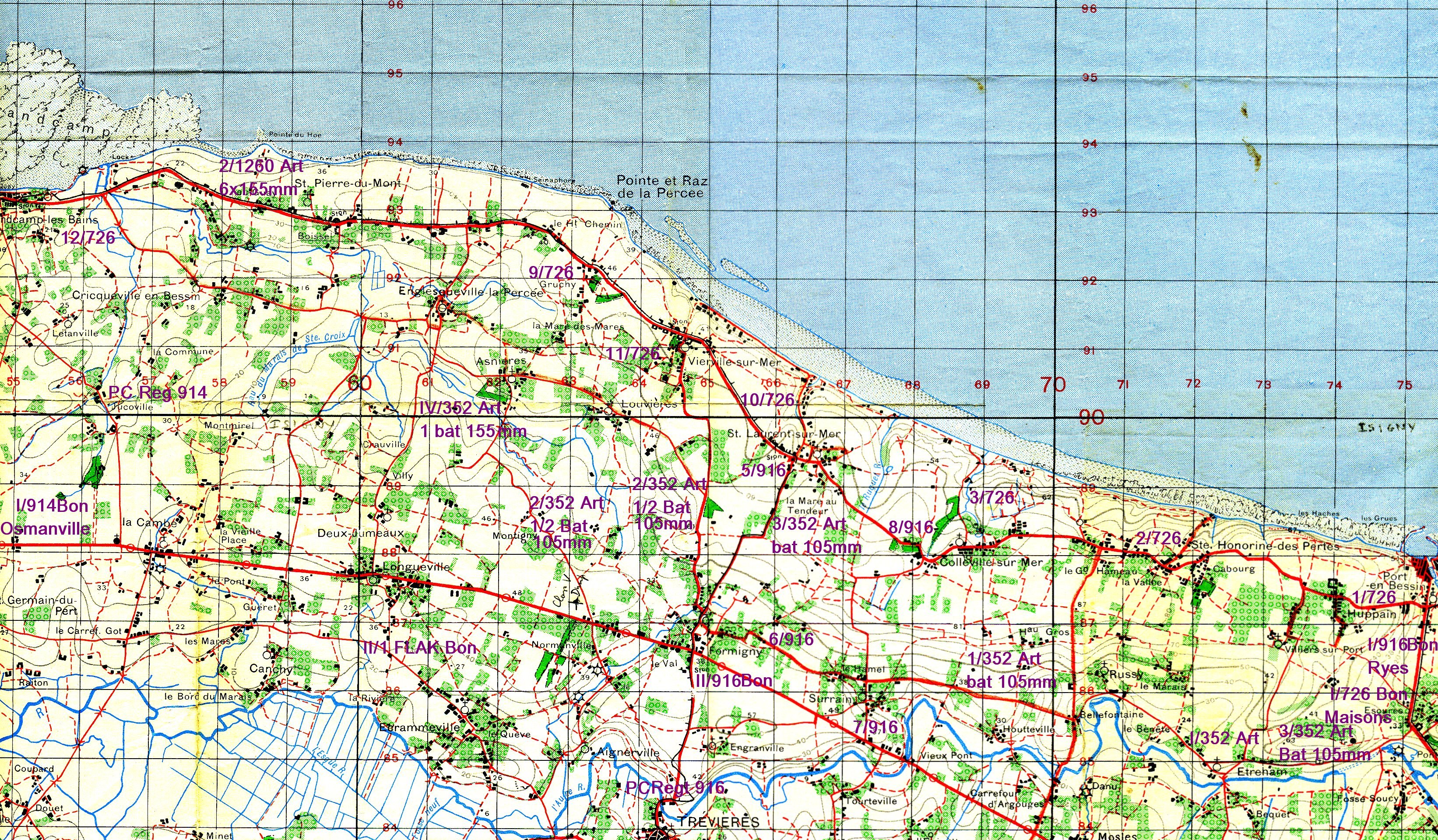
The German fire positions were thus arranged in such a way as to cover the beach and the edge of the beach with a direct fire, from front and flank to side, both plunging and grazing, from all types of weapons, from the gun to the 88mm anti-tank gun, through mortars. Many machine guns were the basic weapons of these locations. There was a Nebelwerfer rocket-launcher position at Saint-Laurent. In addition, several artillery observatories were in telephone contact with the field artillery batteries (105mm and 155mm howitzers) camouflaged inside the land. These batteries could thus effectively beat the entire range in indirect firing.
The observation of the entire Omaha area and the flank fire were facilitated by the crescent curve of the shoreline. The positions between Vierville and Pointe de la Percée were particularly dangerous, taking on the entire beach. However, too long-range shots were not accurate, often generated by smoke, and probably little practiced in relation to shooting at the closest targets.
Each fortified point was a complex system of concrete or unconcrete casemates, exposed or buried positions, trenches, shelters, surrounded by minefields and barbed wire. The elements were connected to each other and to underground shelters and deposits through deep trenches and often through tunnels.
The large empty areas between the strong points were supposed to be protected by flank fire, minefields, and by some trenches, manholes, and machine gun nests along the ridge. The defence line was not continuous, but there were no beach areas that were not covered by the defensive fire network.
Almost all weapons, guns like machine guns, were placed first to fire laterally along the beach. The defence of a given sector depended as much on the flank fire of a nearby position as on the locations in the area itself.
Most of the strengths were located near the entrance of the valleys barred at their feet by an anti-tank wall and an anti-tank ditch.
Memories of Michel Hardelay:
"A large excavation whose bottom was mined had been dug across the road at the beginning of its climb to the Casino Hotel; it was followed by an anti-tank wall one metre wide at the base, two metres high and leaning on a support wall to the South and on the blockhouse of the 88 gun (in fact a long 75mm anti-tank gun) in the North; a 65cm chicane allowed the passage of a man to the centre."
At the beginning of June, the Germans were still in the process of completing and strengthening these strengths, especially the one above the Hardelay villa, which was far from being completed. In fact where the WNs were still in full development as of June 6, 44, and there were many concrete casemates under construction.
These WNs were occupied by 4 companies of the 716th division and 2 companies of the 352nd division, i.e. a total of about 1500 men. It included the Nebelwerfer battery, the field artillery observers, the Englesqueville radars, and a few men on permanent observation of the Navy (at Vierville and perhaps at Colleville?) and FLAK (at Saint-Laurent).
(see also memories of a German soldier in garrison at Colleville from 1943 until Disembarkation)