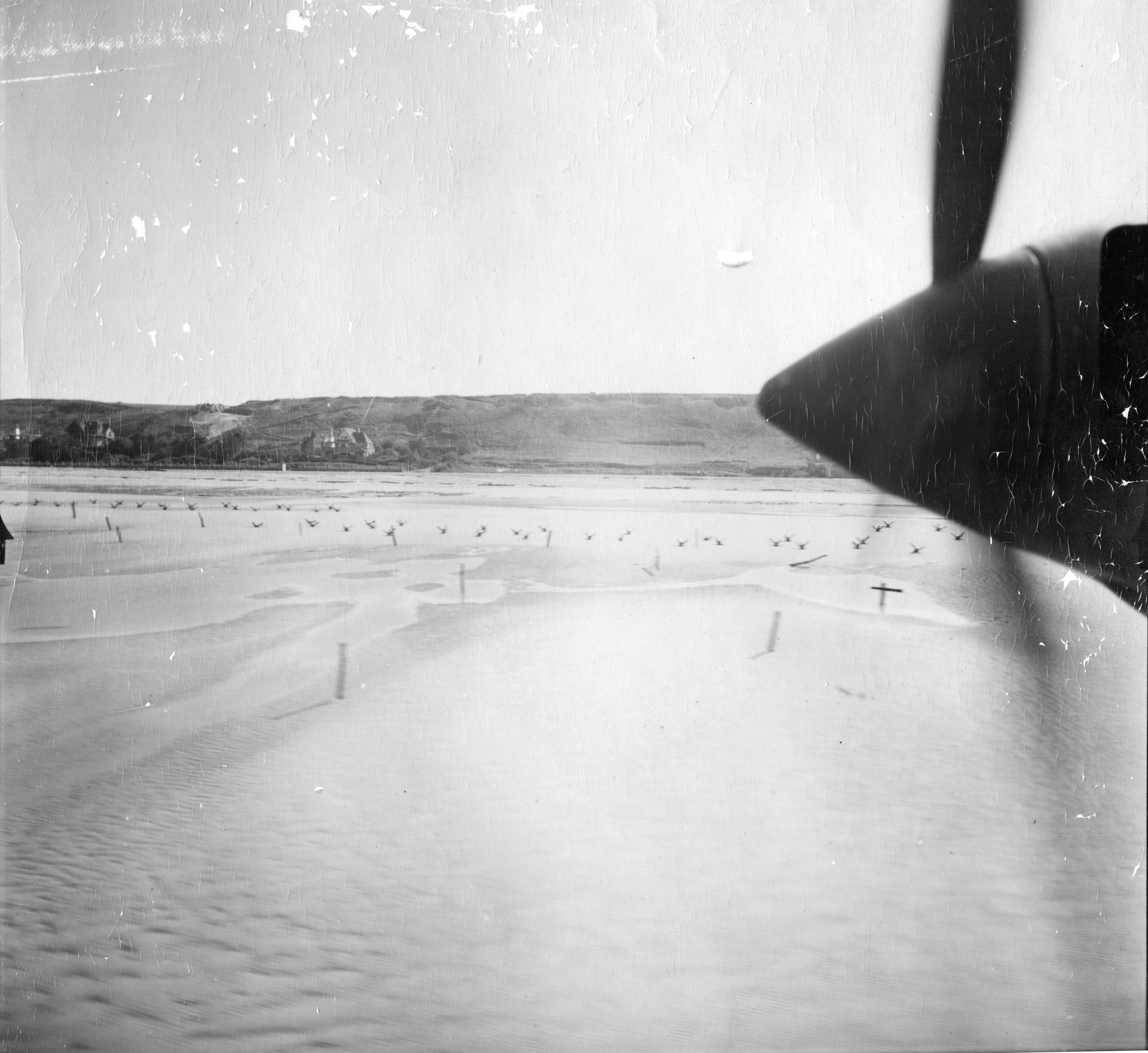
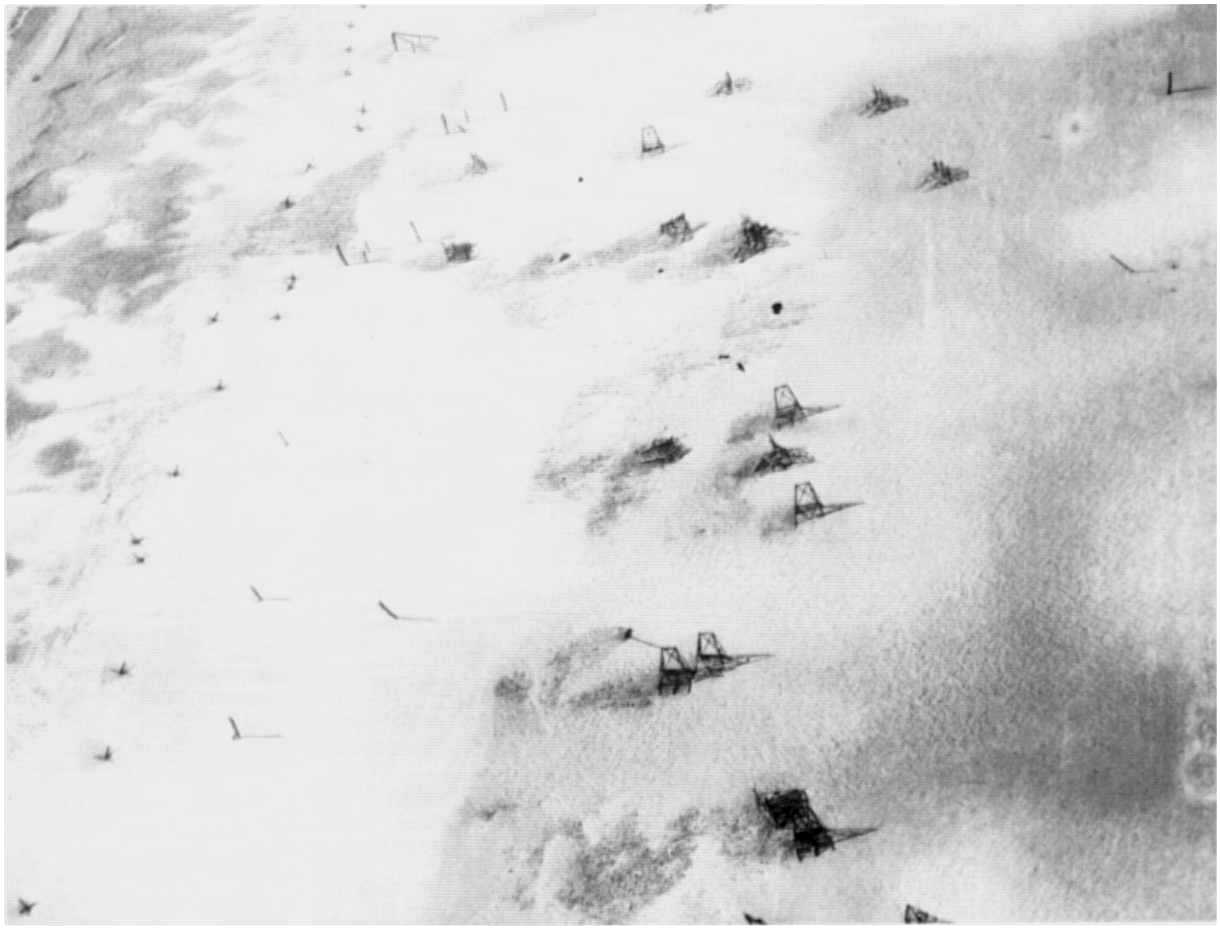
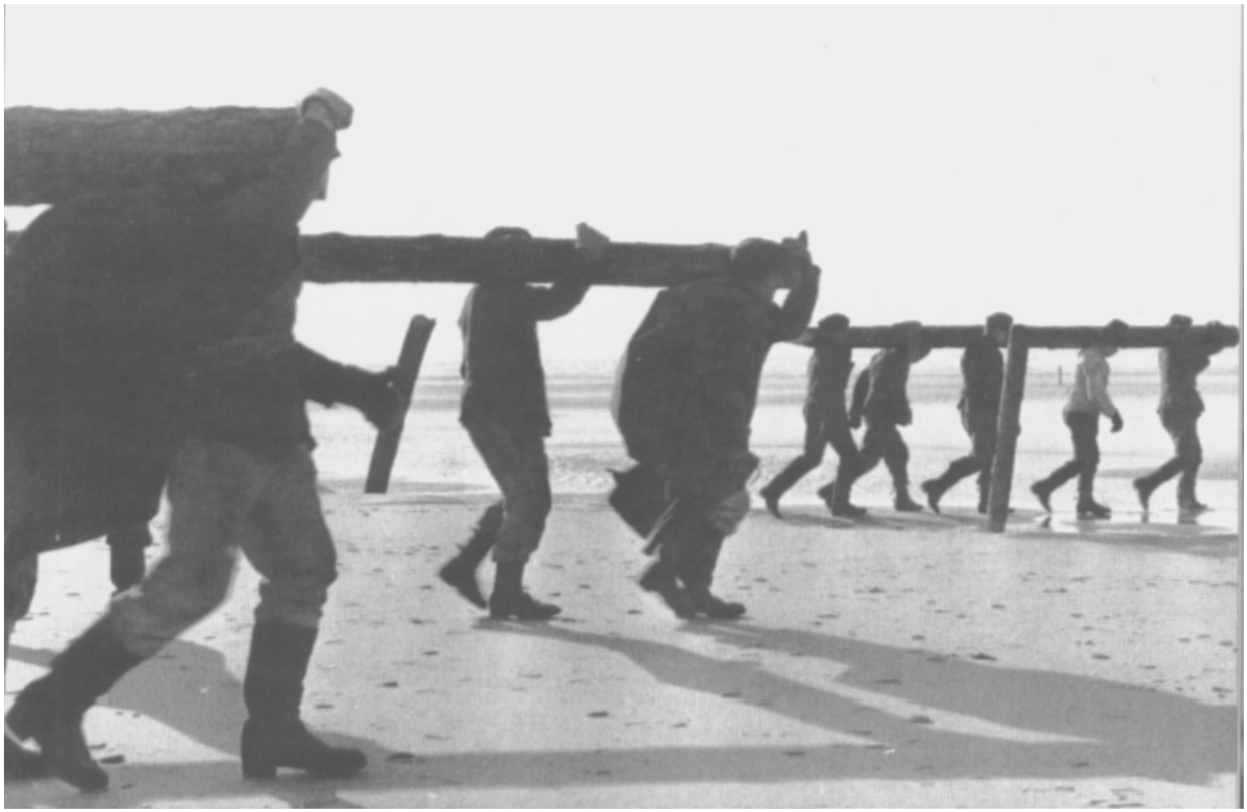
Standard beach barrier cut


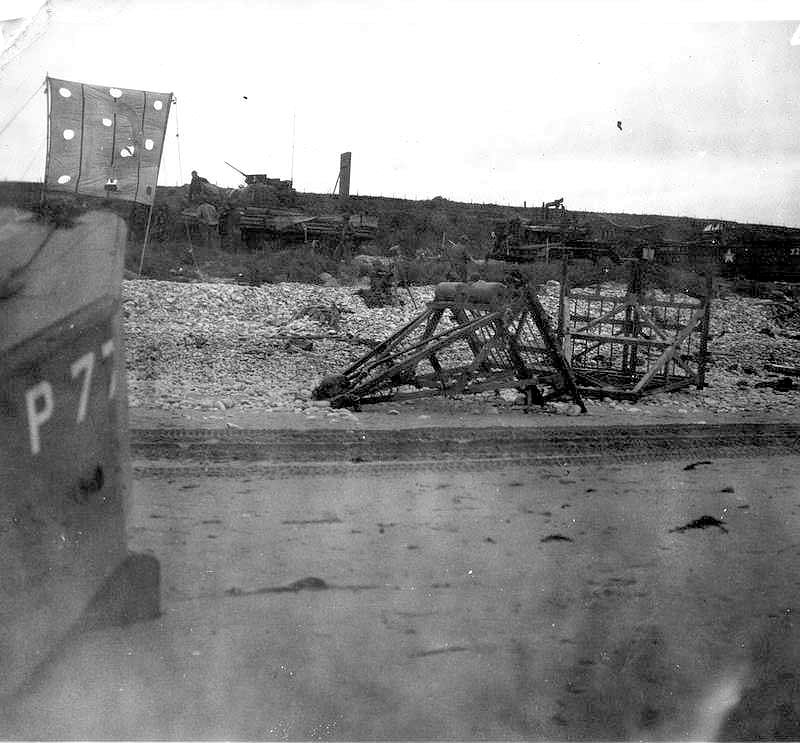
and shelling


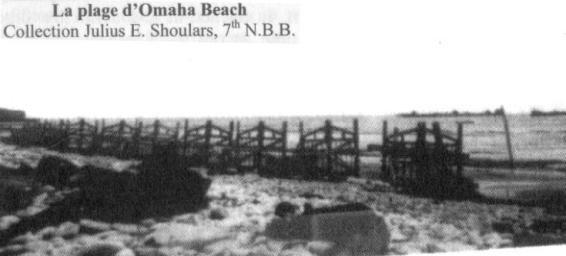

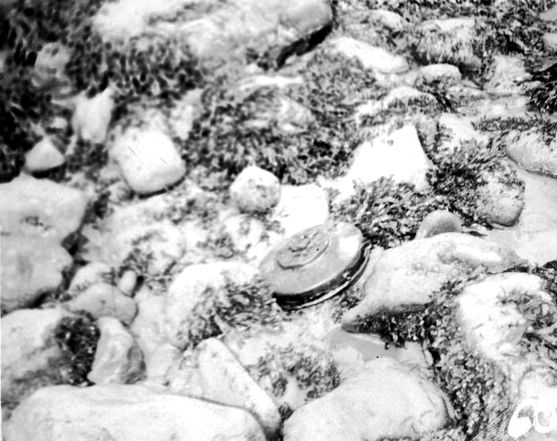
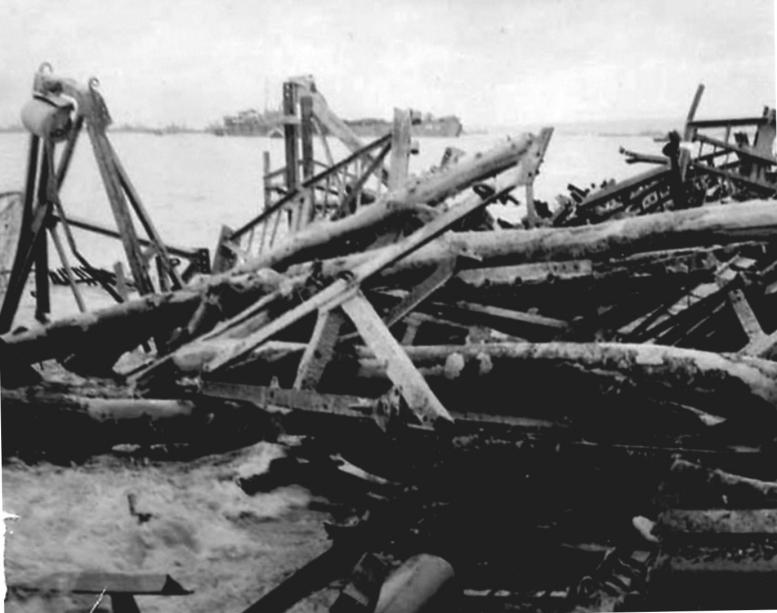
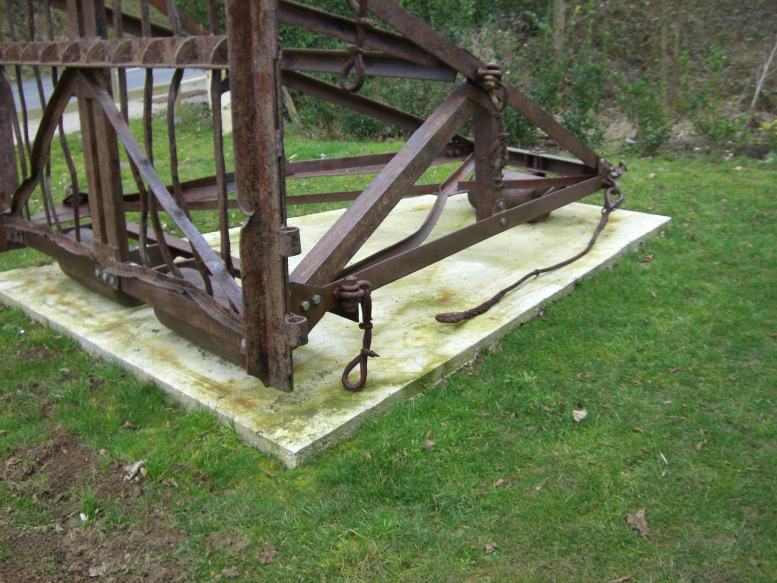
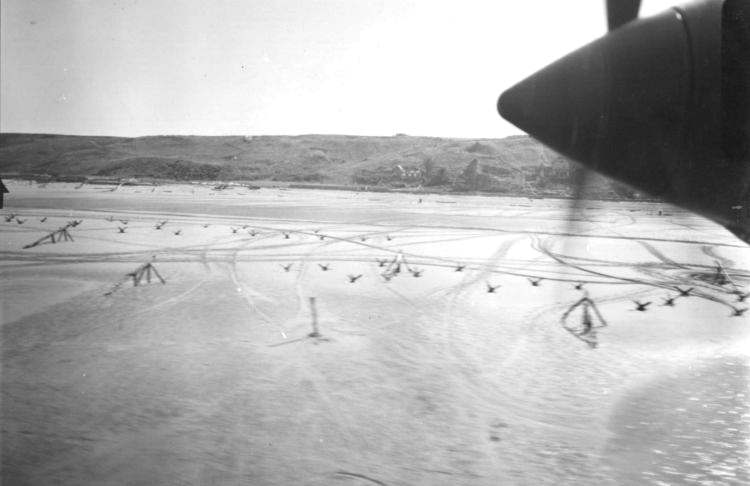
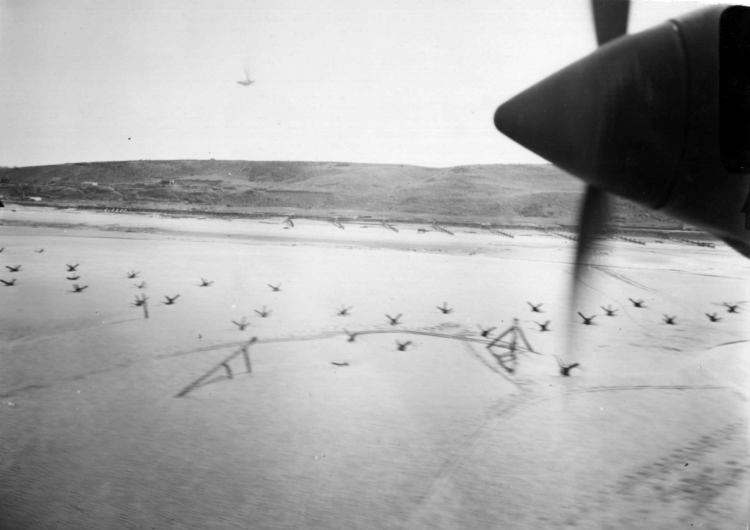
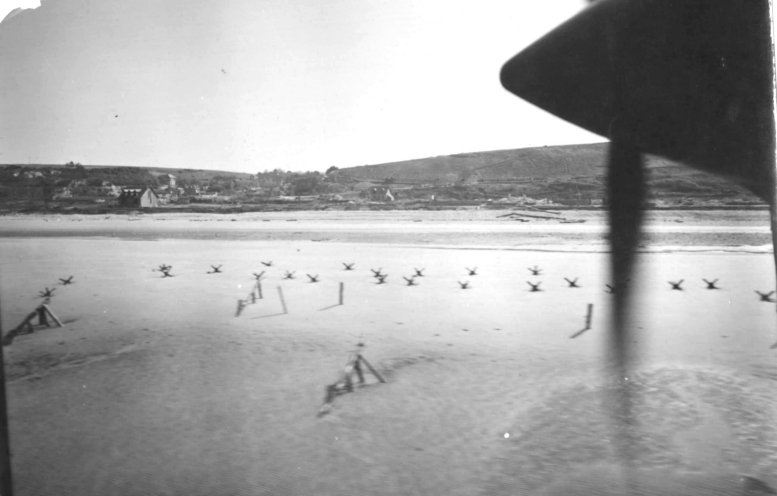
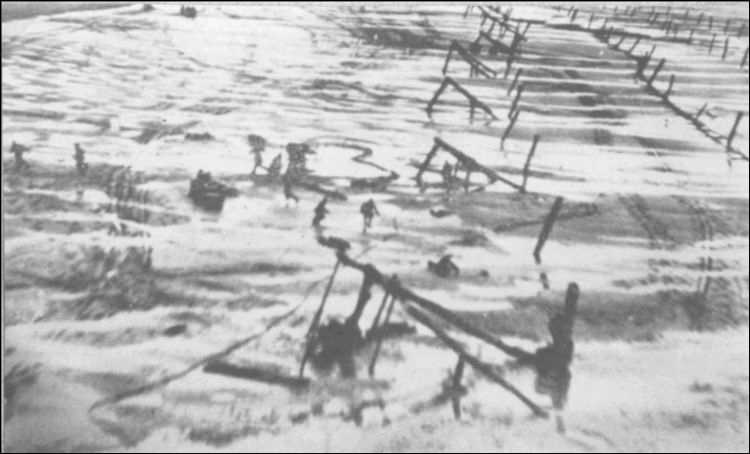
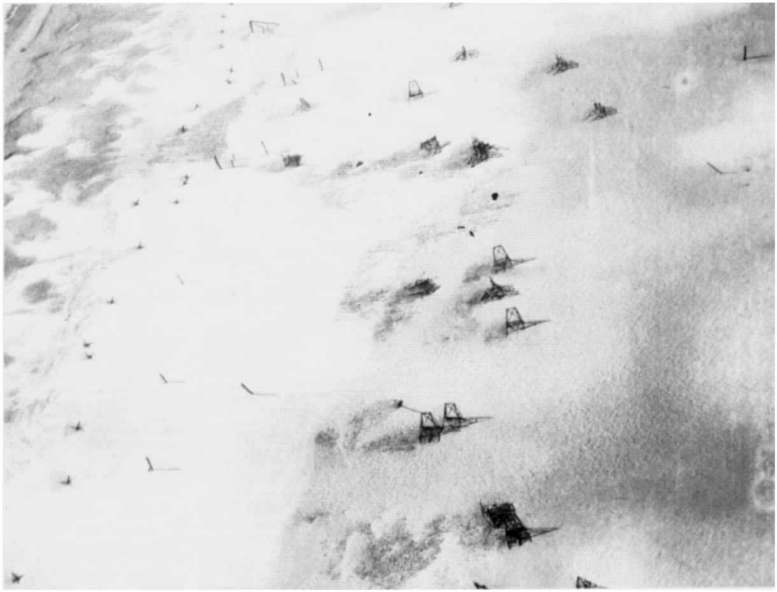
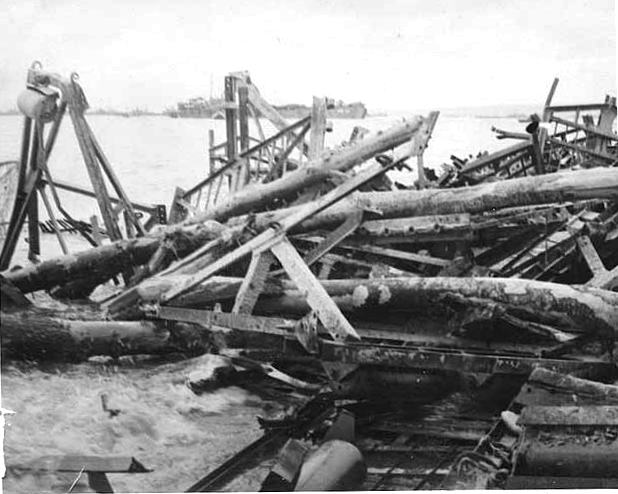
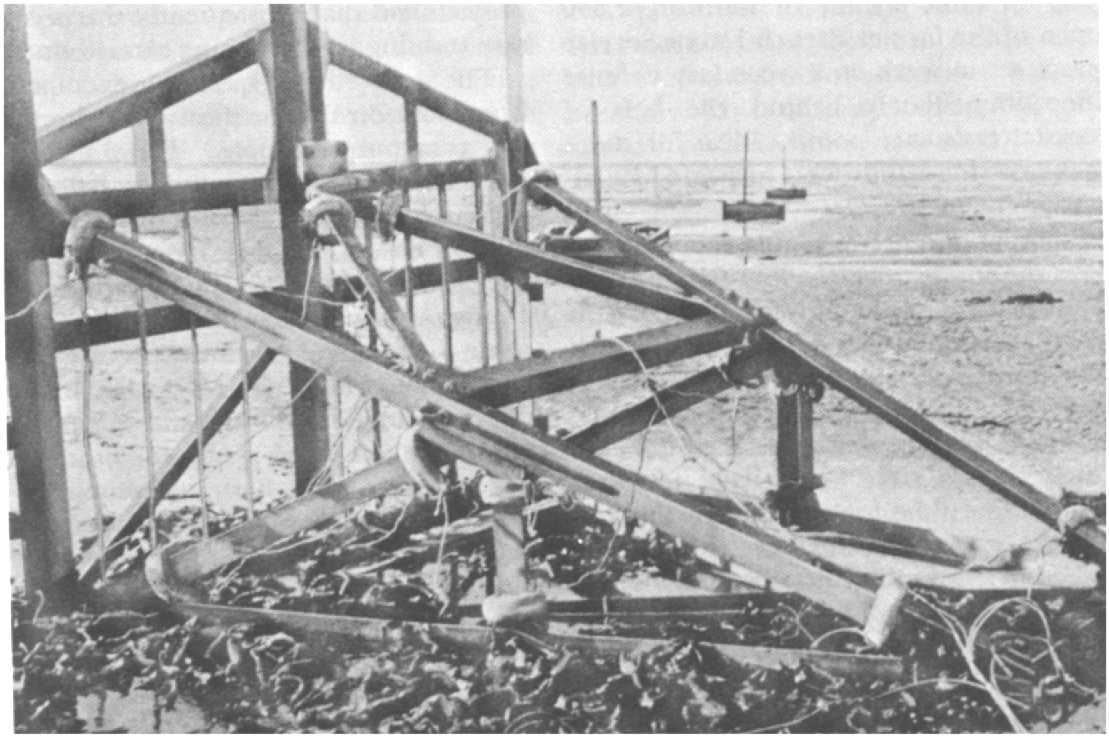
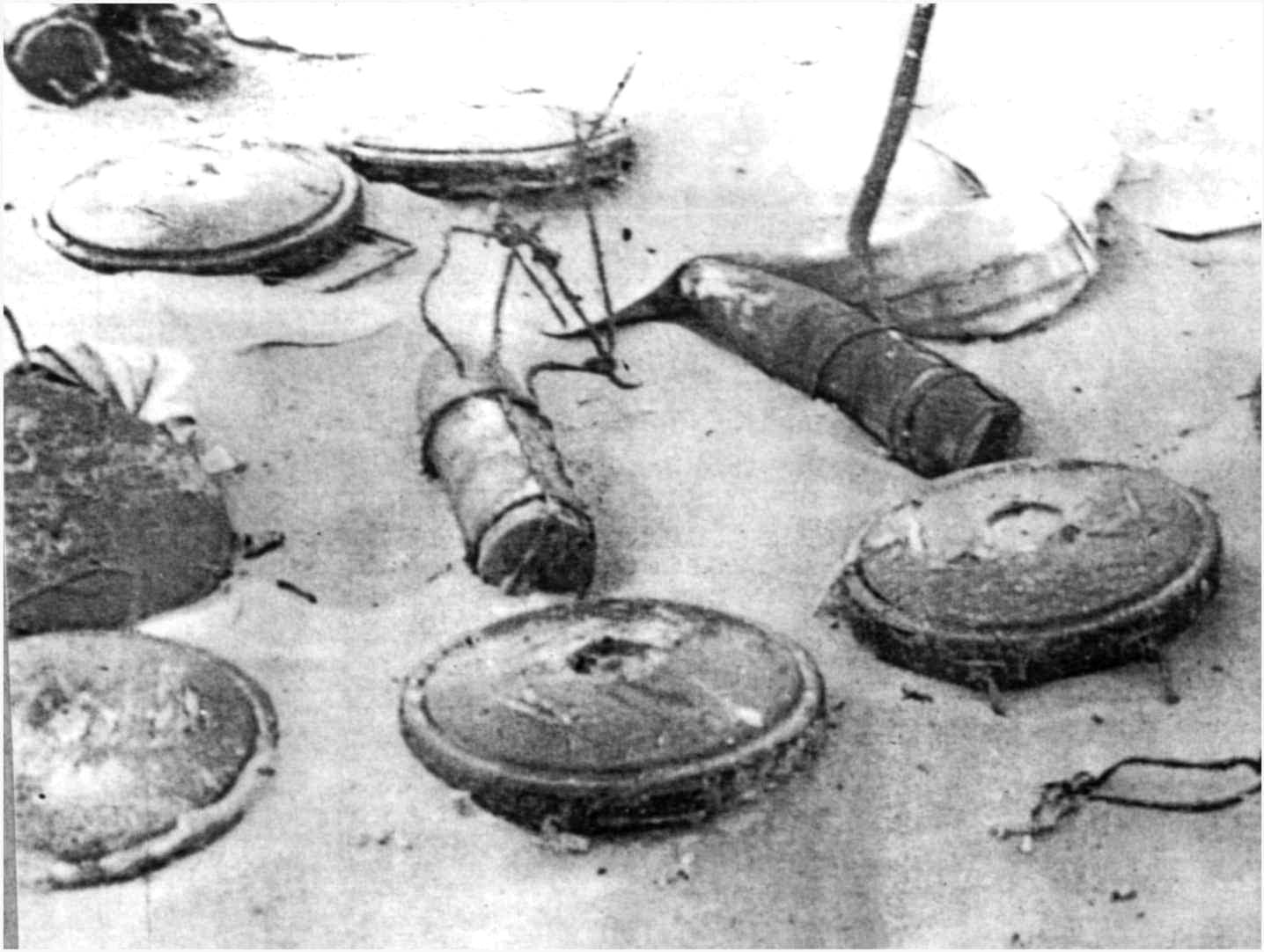
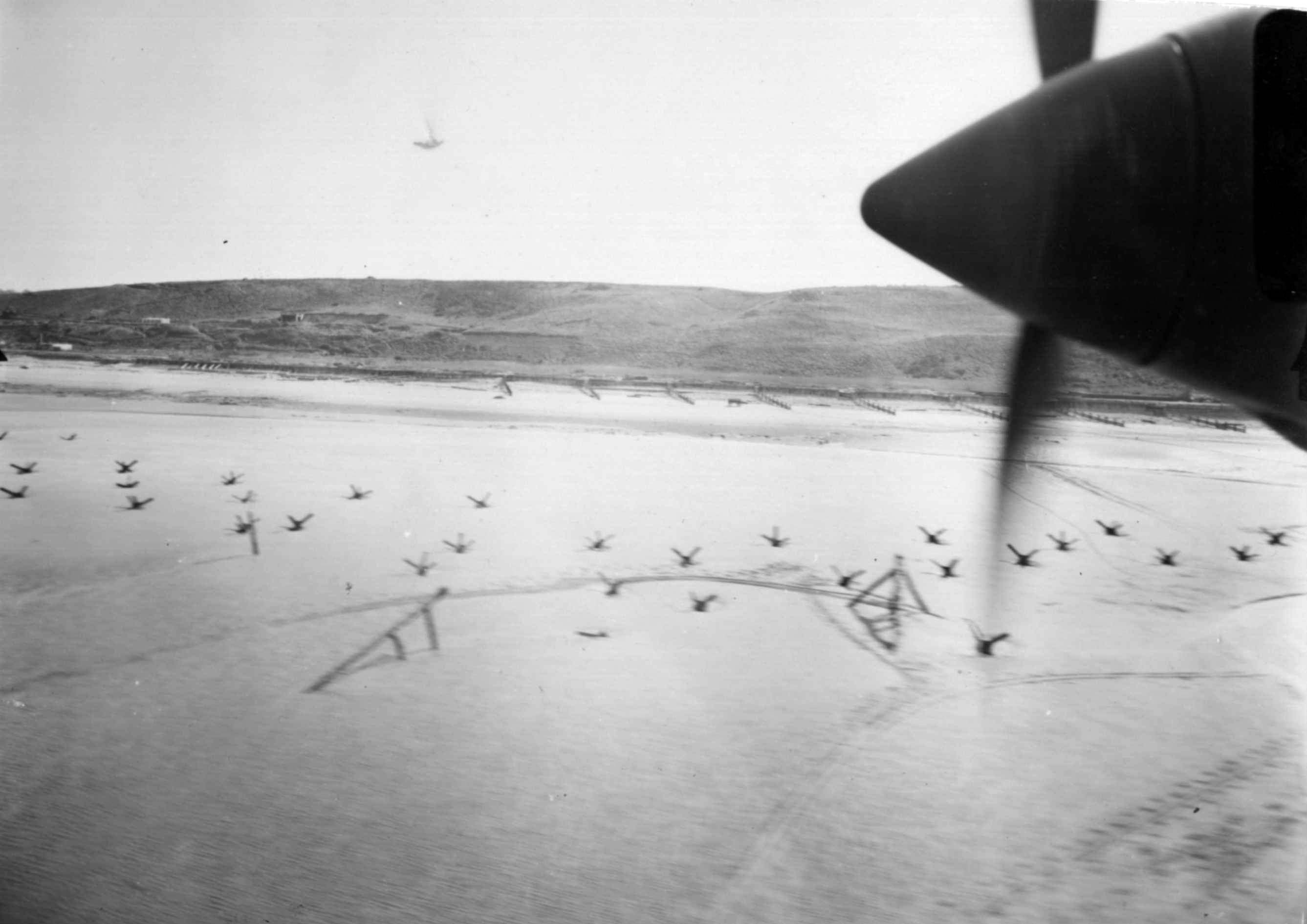
The first line of obstacles consisted of a series of "C elements", sometimes called "Belgian doors", barrier-shaped structures (recovered from Belgian field defences, known as Cointet elements), with reinforced frame and iron supports, mounted on rollers. It was located about 250 m away. High tide line. The main support beams were 3.3m. high. Watertight "Tellerminen" anti-tank mines were attached to the top of the vertical beams.
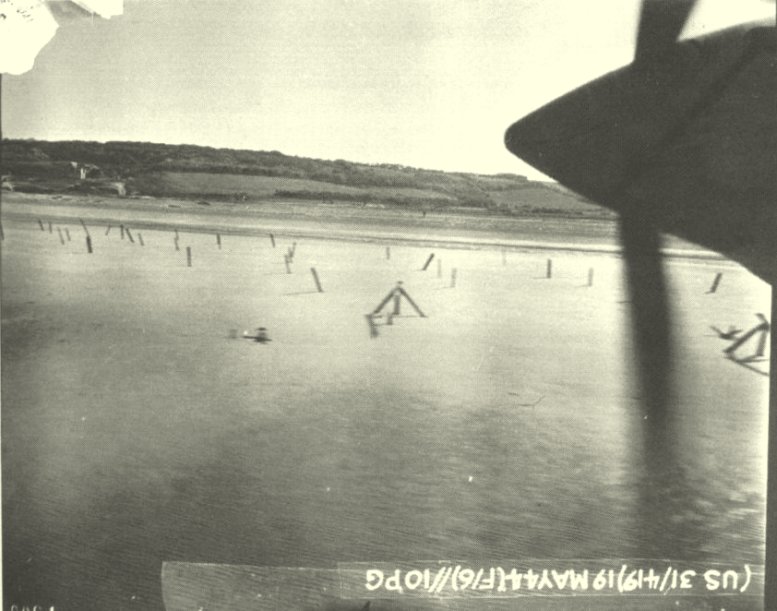
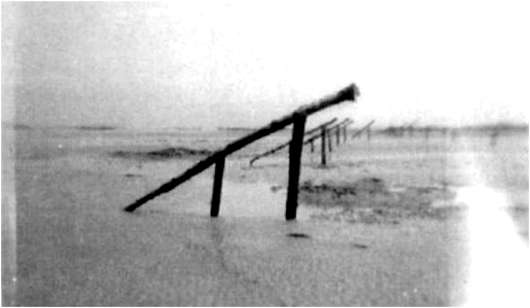
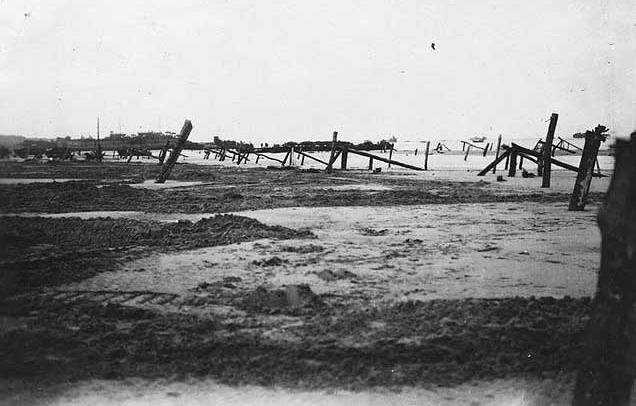
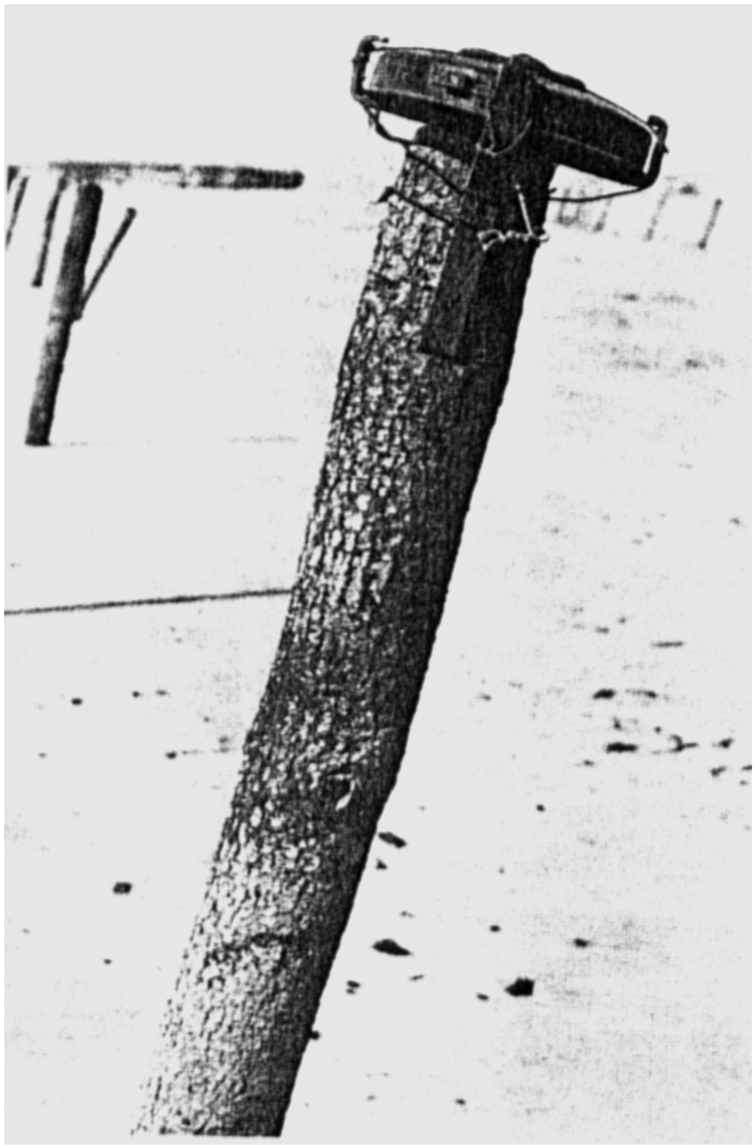
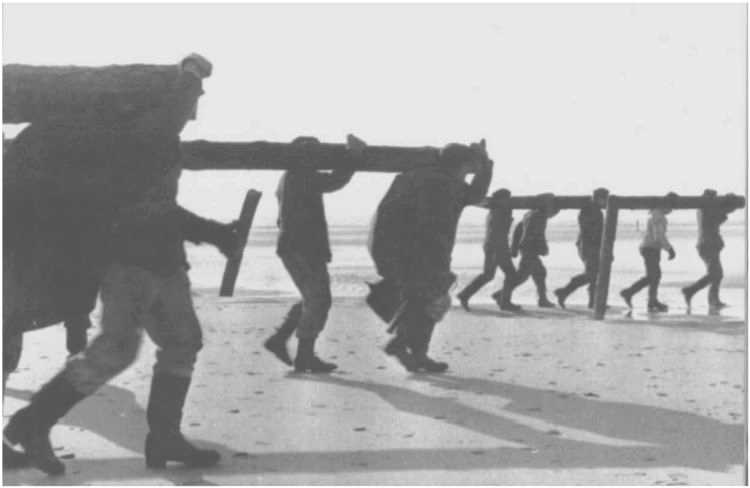
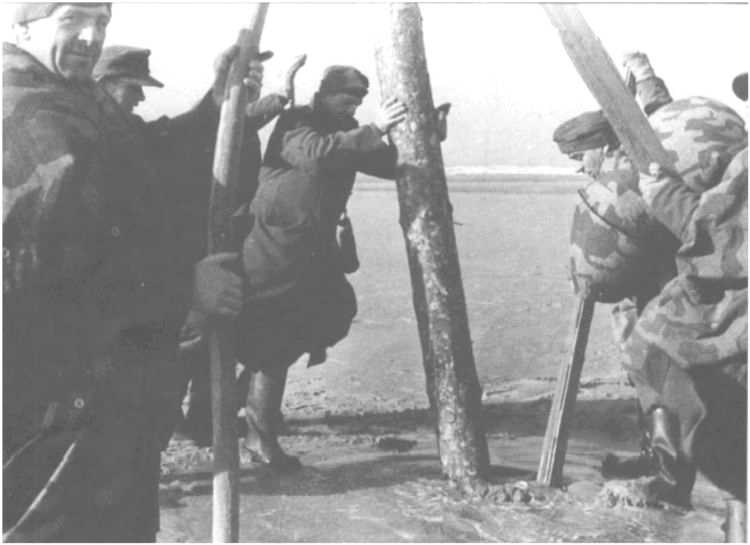
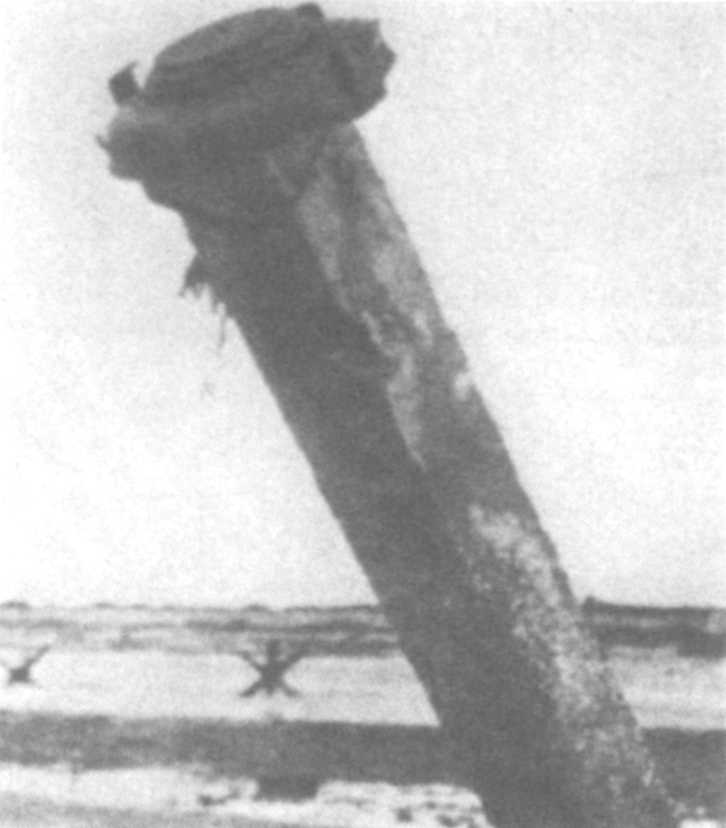
The second line, 20 to 25 m closer to the earth, consisted of large wooden piles embedded in the sand at an angle such as their mined end, pointed towards the sea. At times there were inclined ramps made of wood trunks, reinforced and mined.
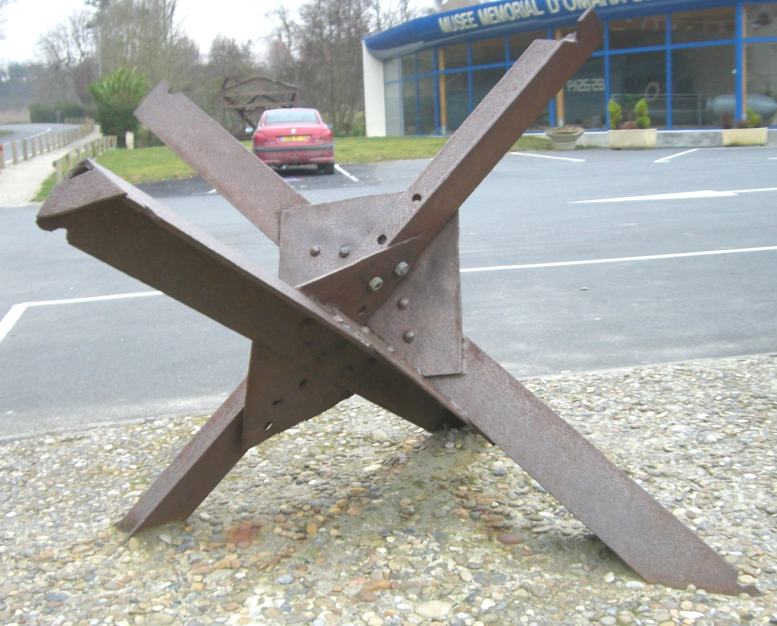
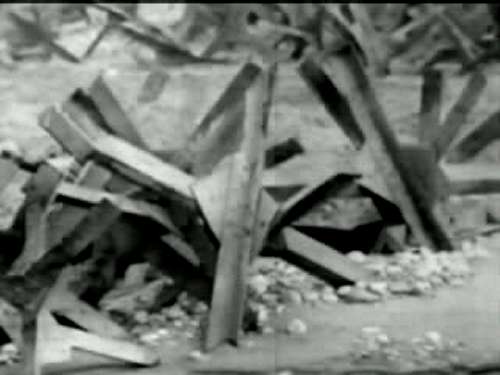
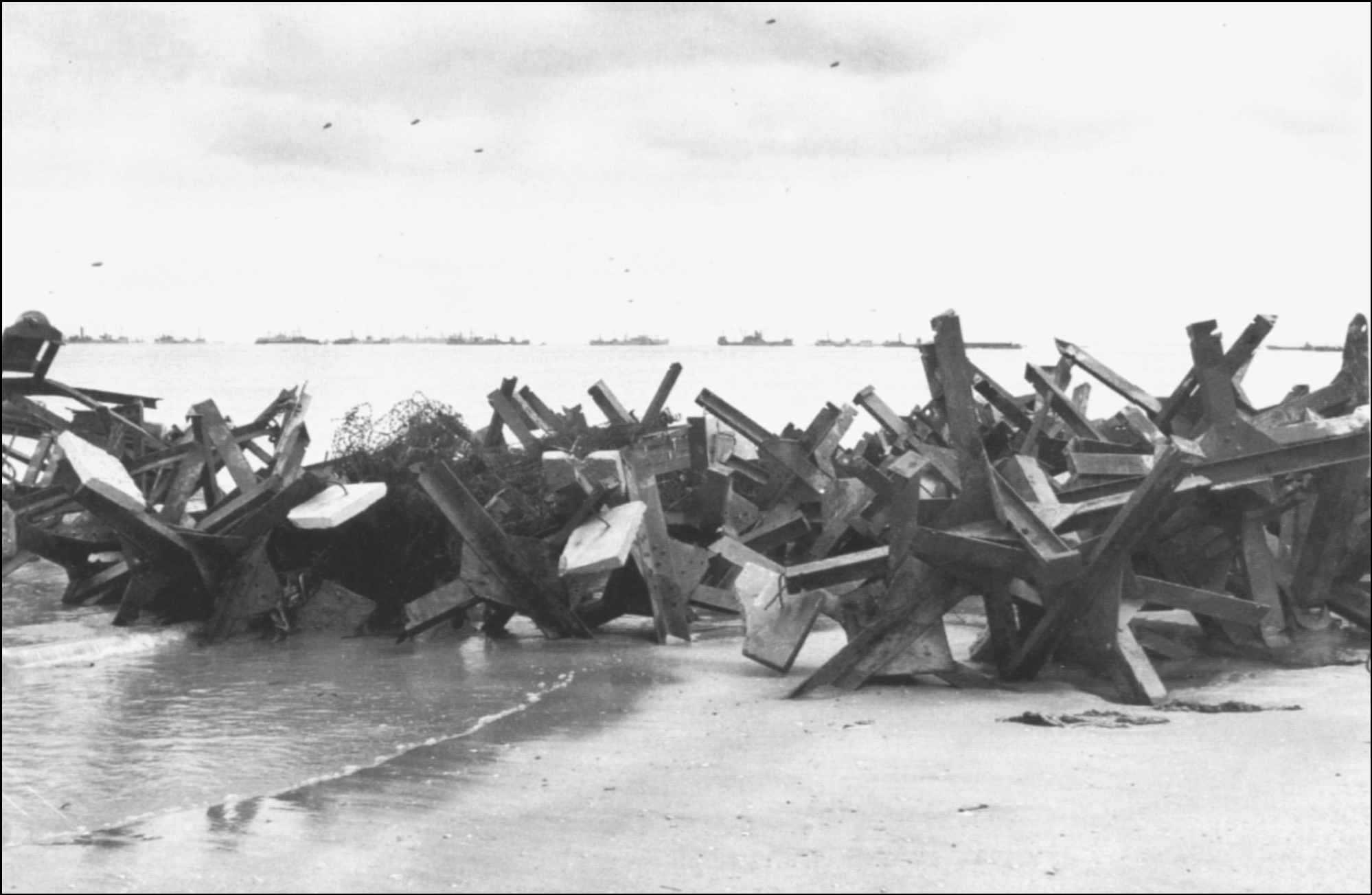
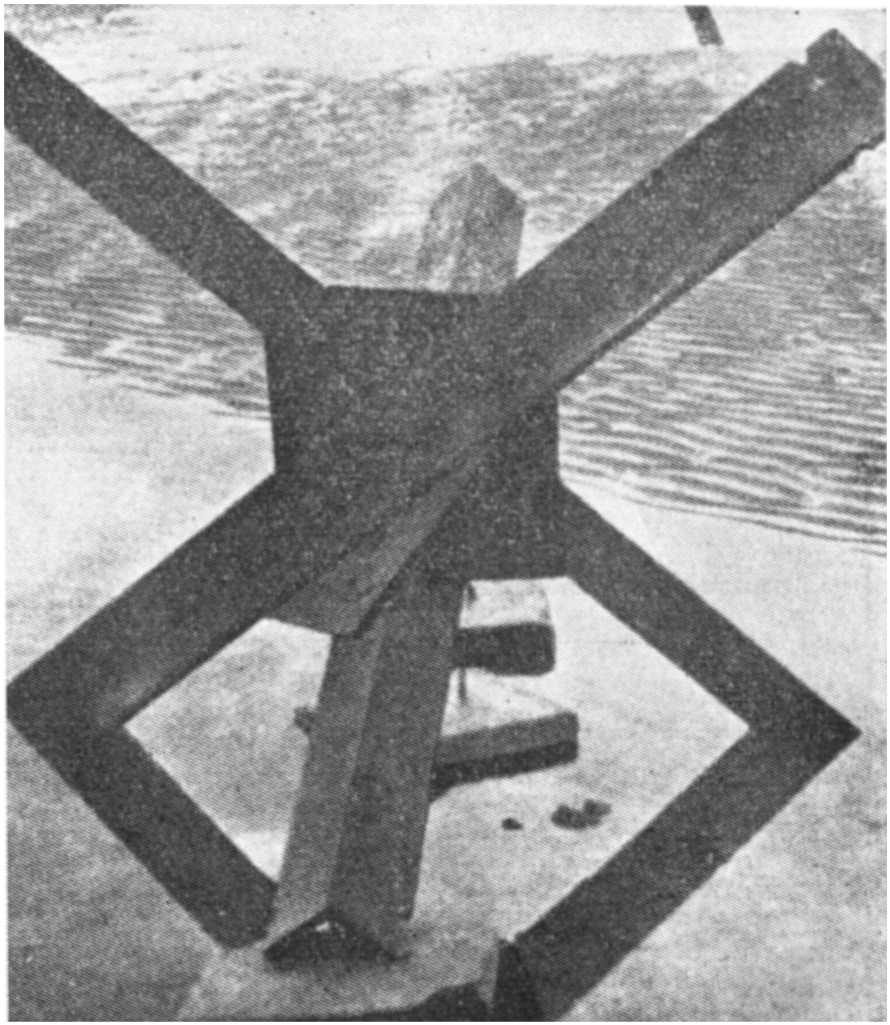
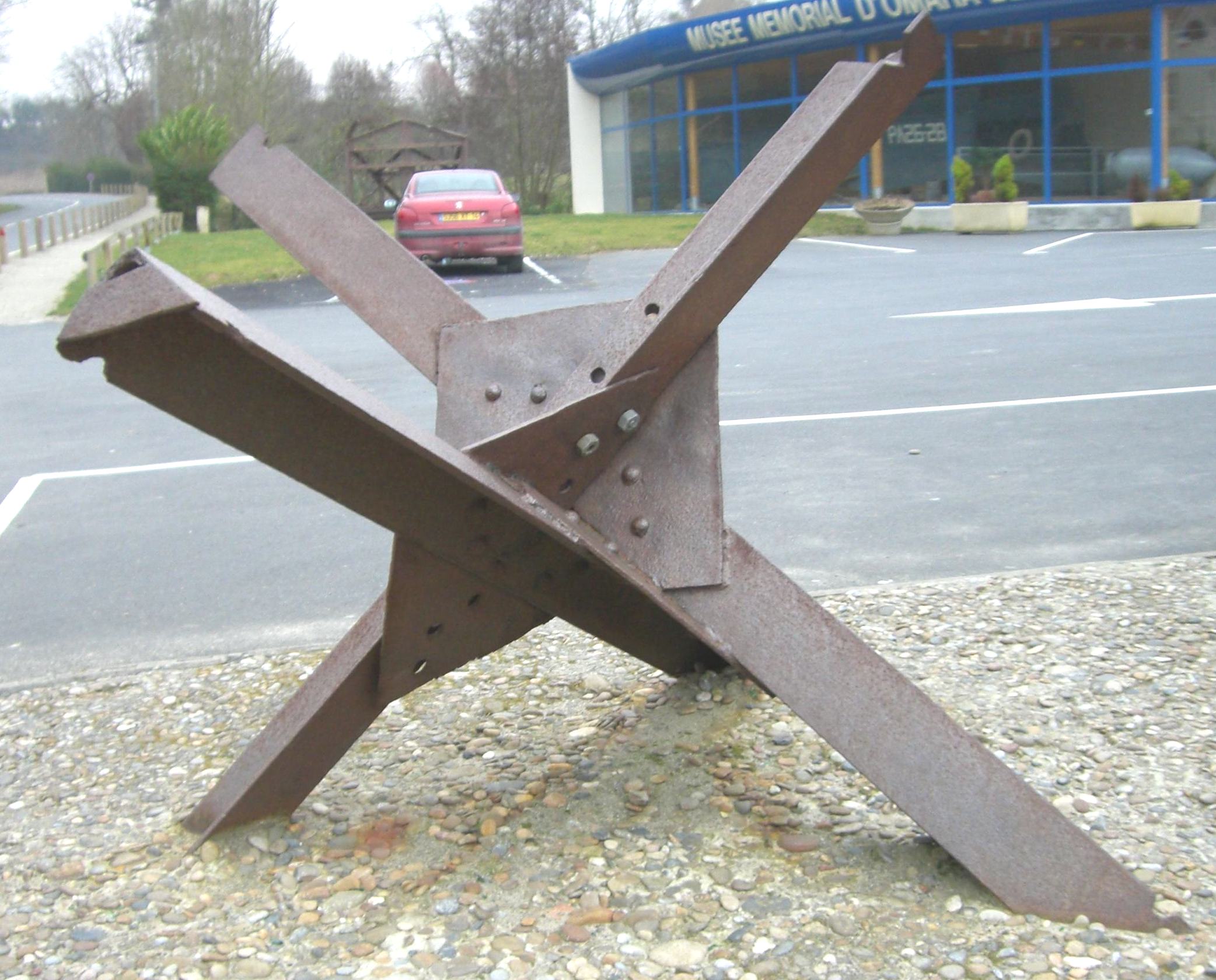
At 130 m from the open sea leash, the last row of obstacles was made up of hedgehogs, (sometimes called Czech hedgehogs) of about 1.70 m. high, consisting of at least 3 steel rails or horns, crossed in the middle and so strong that their ends could perforate the bottom of the landing barges.
None of these lines were continuous, their elements being planted at irregular intervals.
Anti-tank mines attached to obstacles were sometimes inoperative because of the seawater that was attacking their mechanisms.
There were no mines hidden in the sand.
Shortly after the installation of these new obstacles began (winter 1944), the Allies were informed and modified their plans with a low tide assault, to prevent the assault barges from encountering obstacles. This led to the complete abandonment of the original idea of landing at high tide.