11



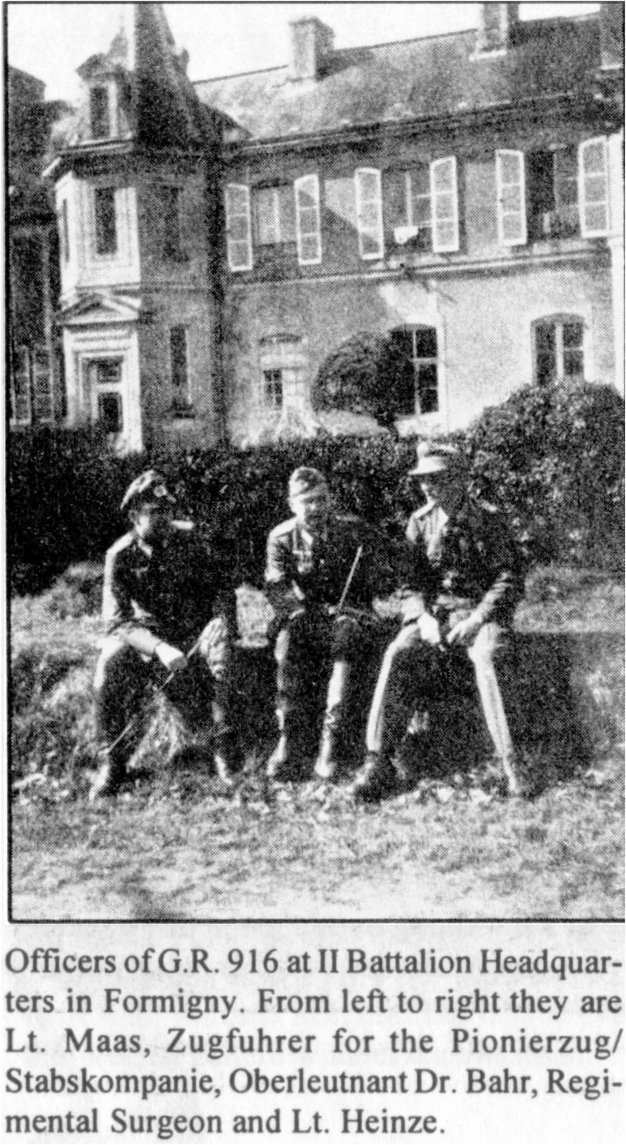
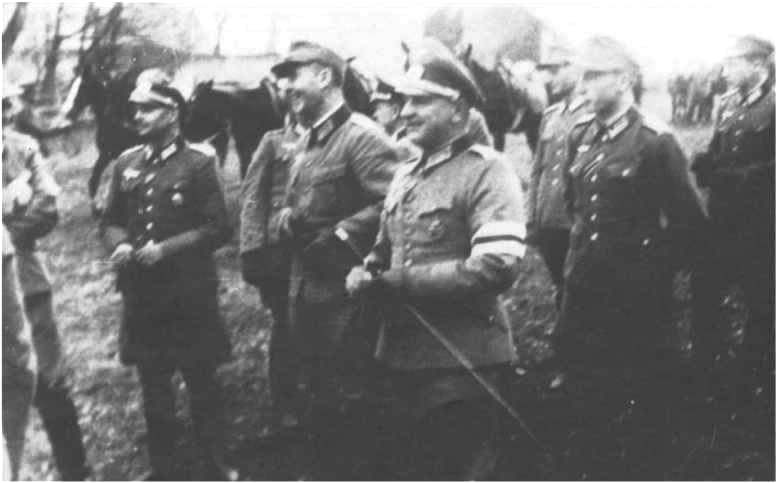
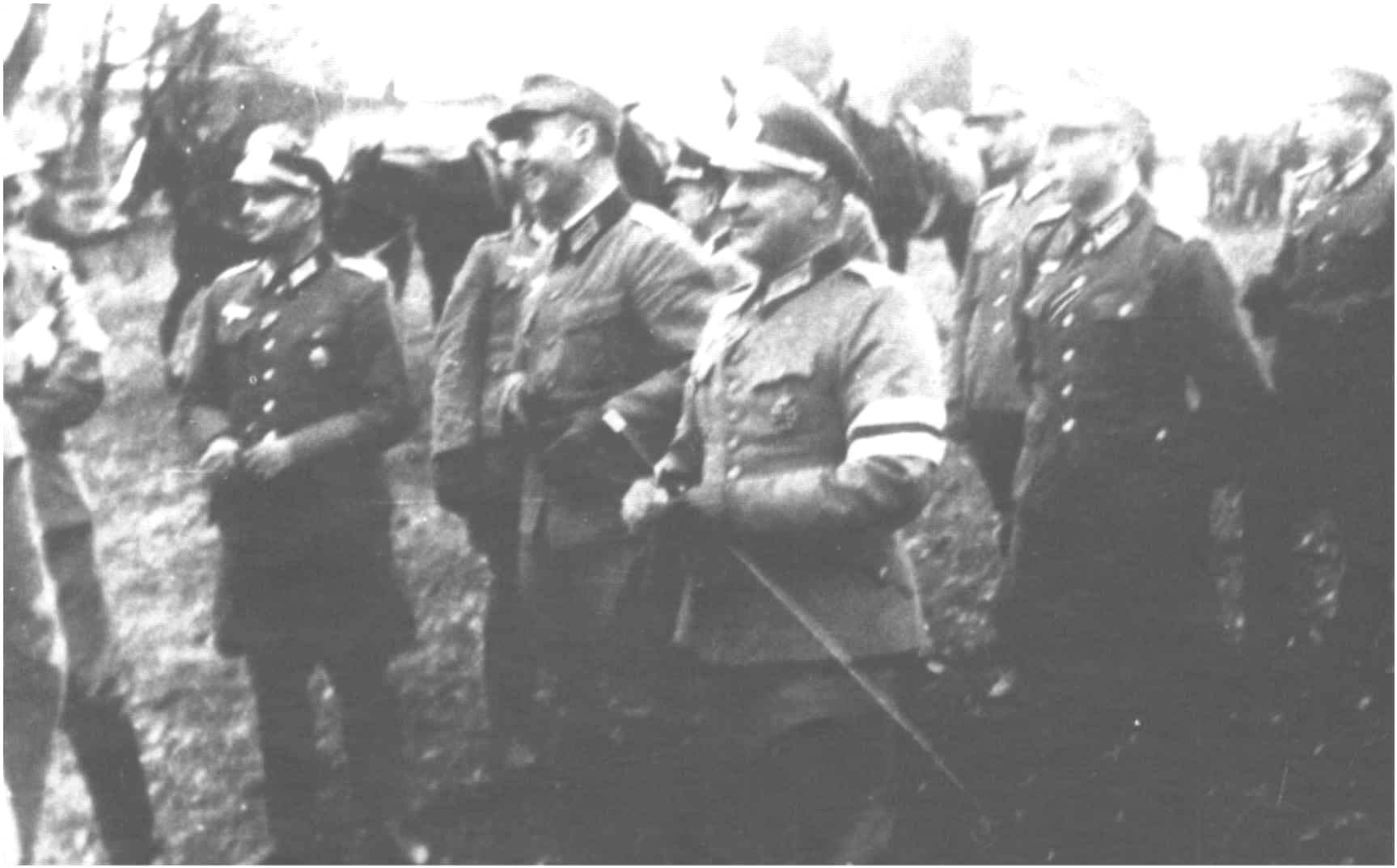
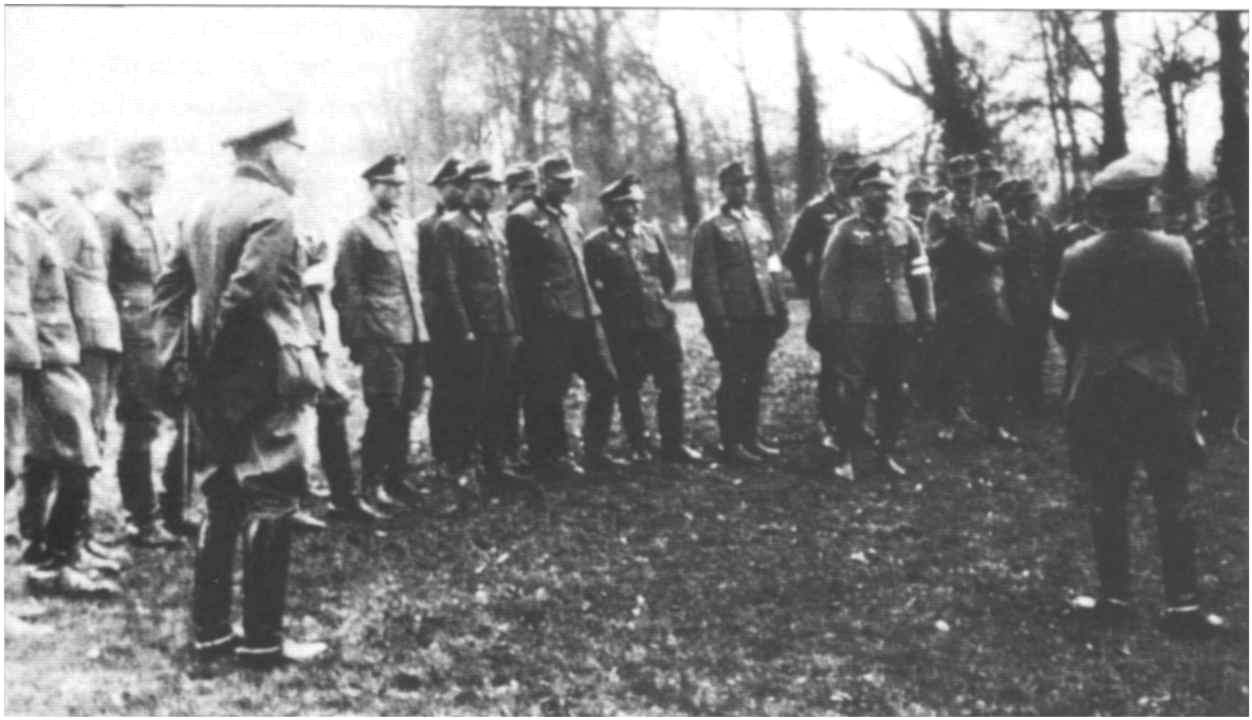
Officers of the 2nd Battalion of Regiment 916. In Formigny, in front of their PC. The castle no longer exists.

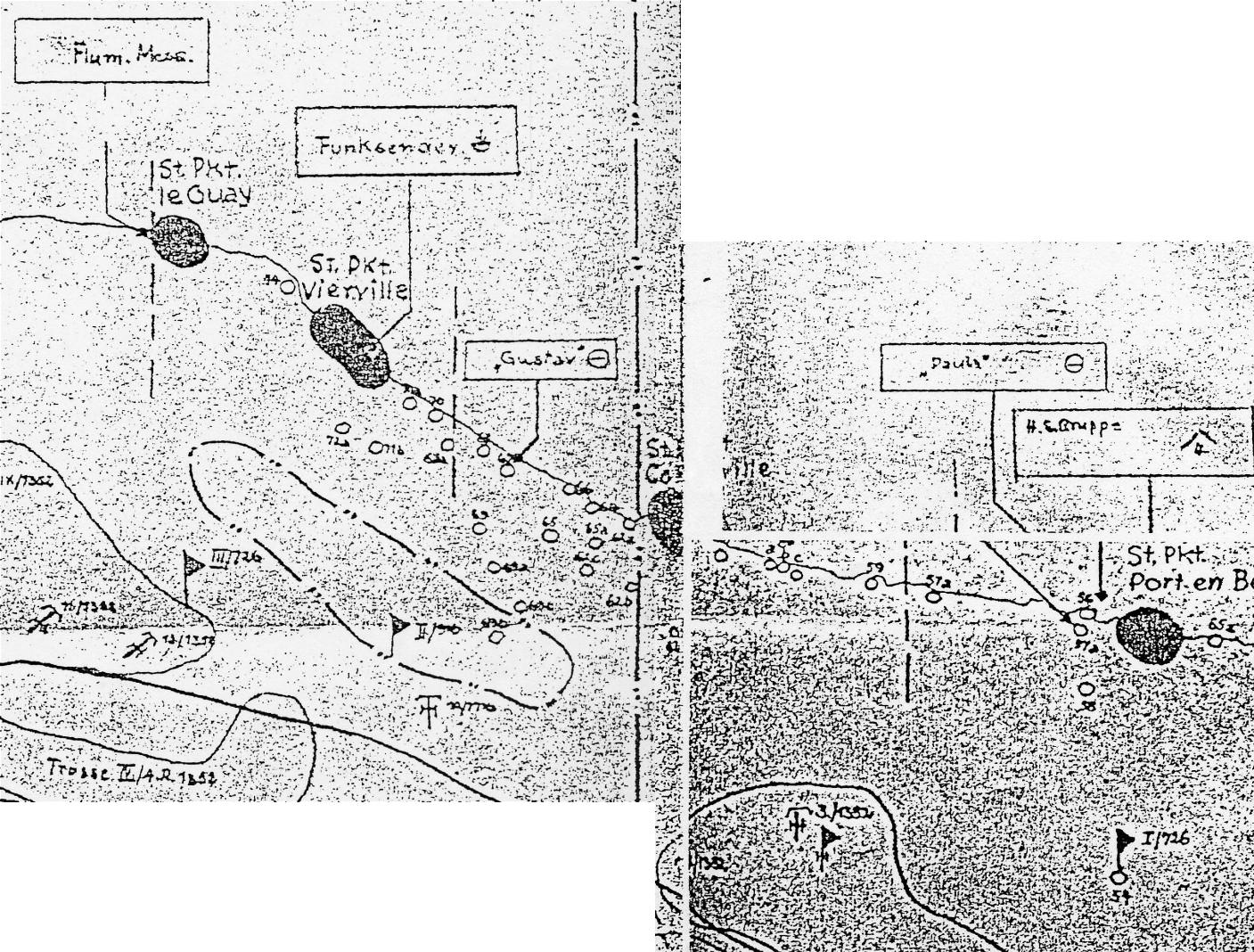

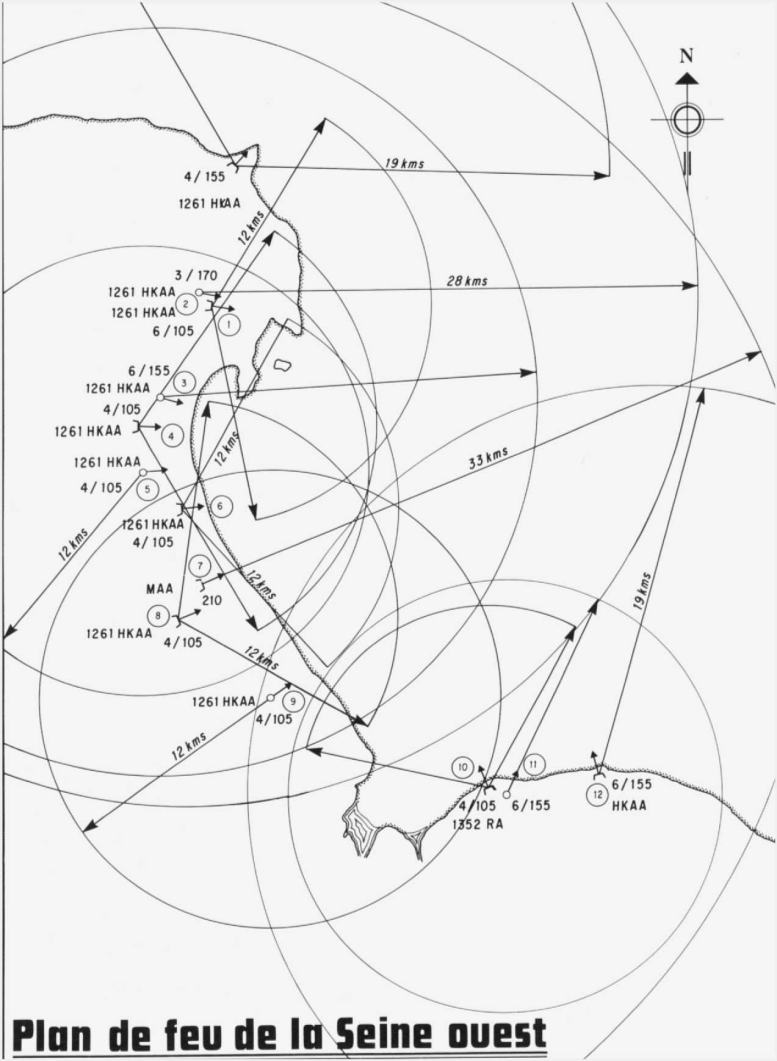
Details German Fireplanes
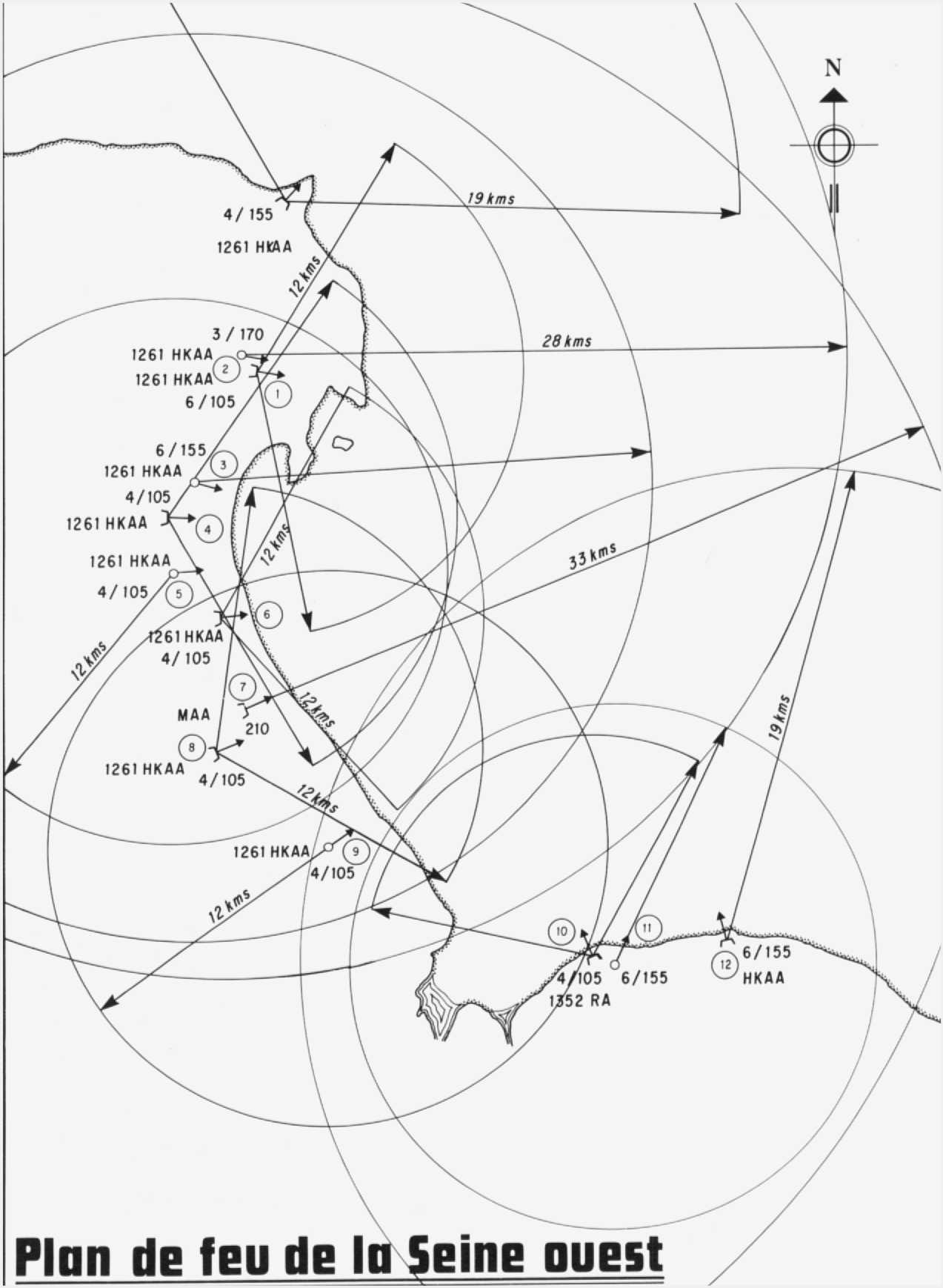

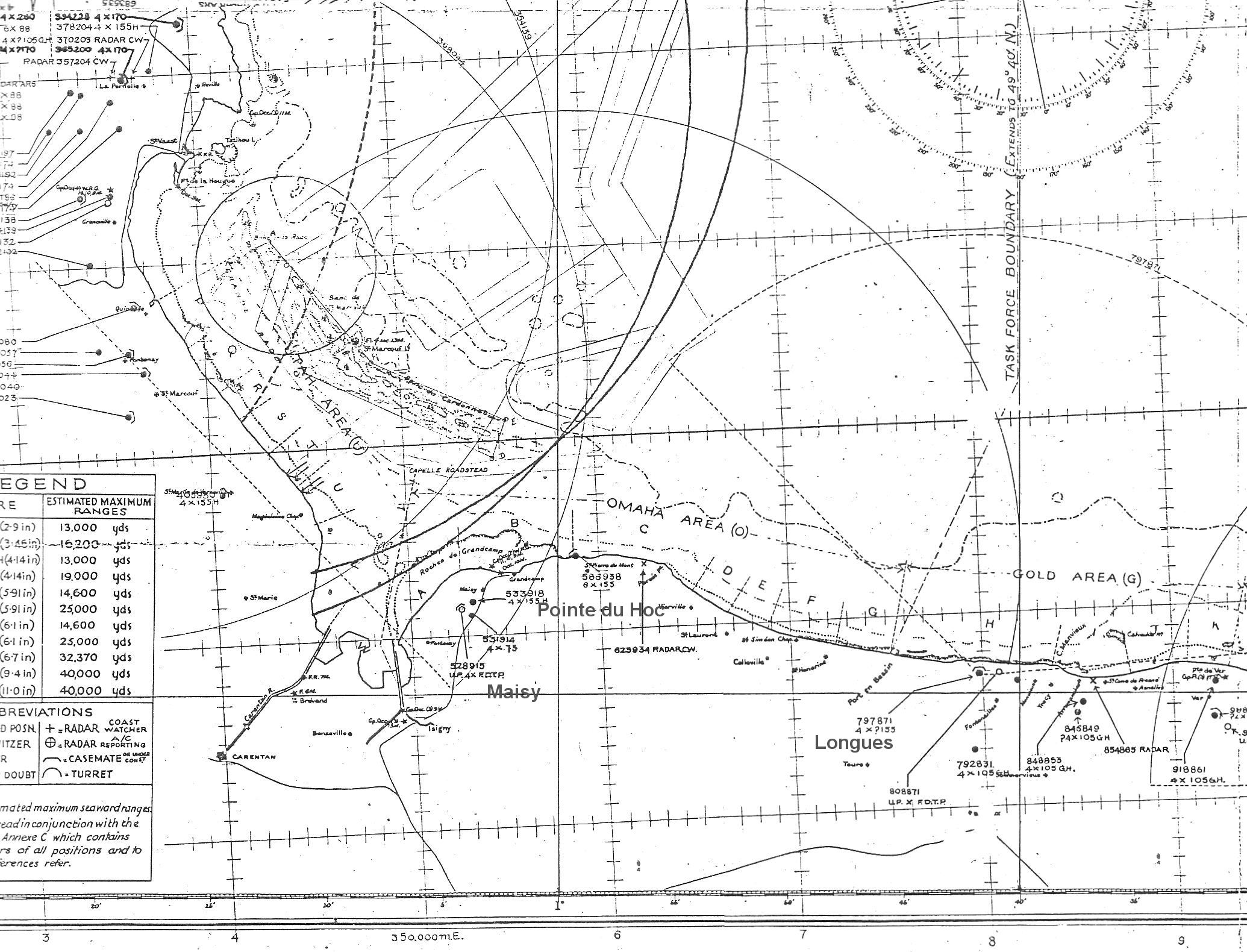
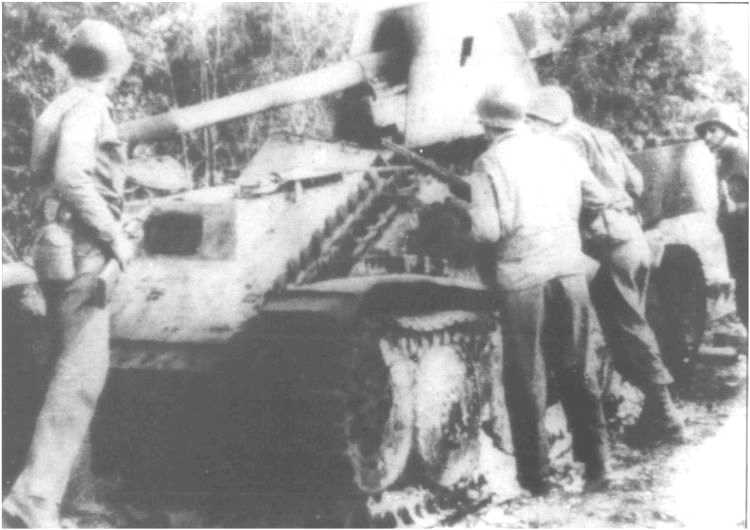

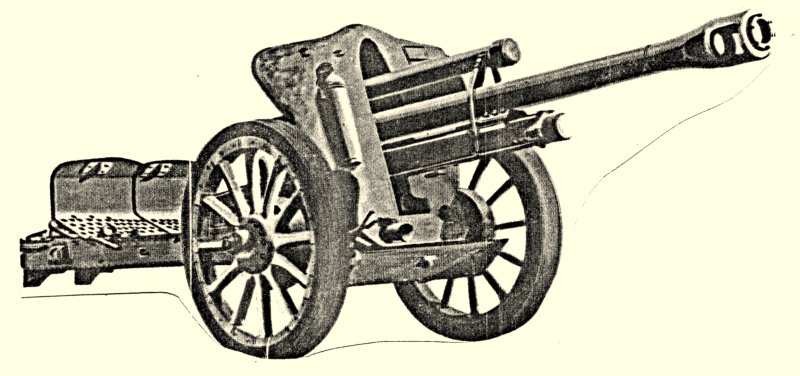
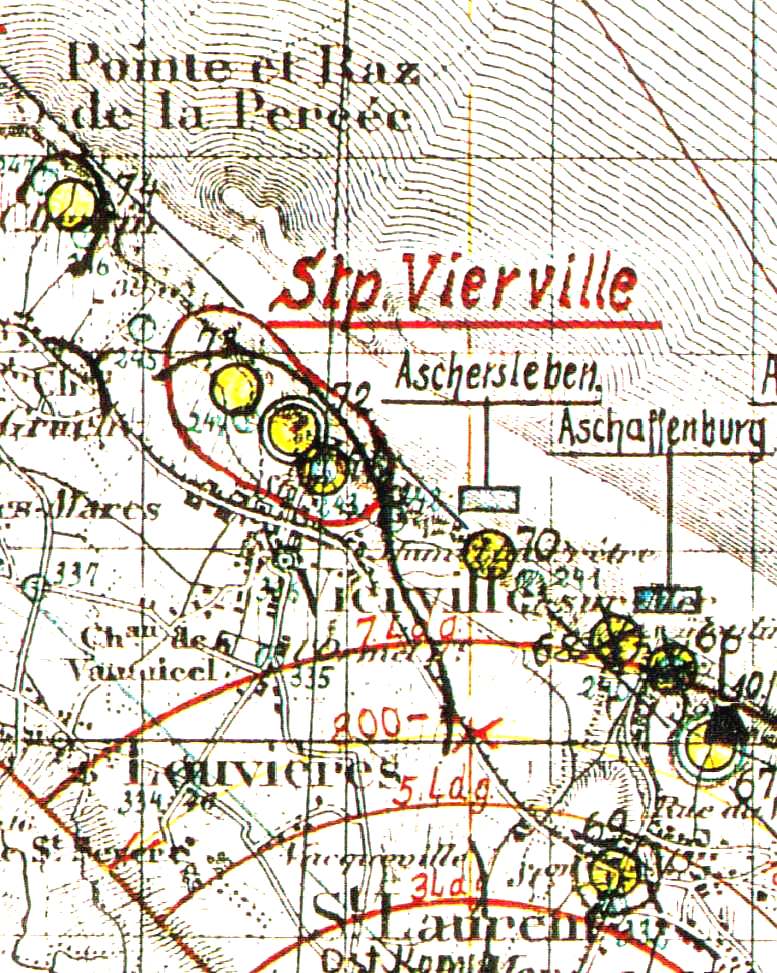
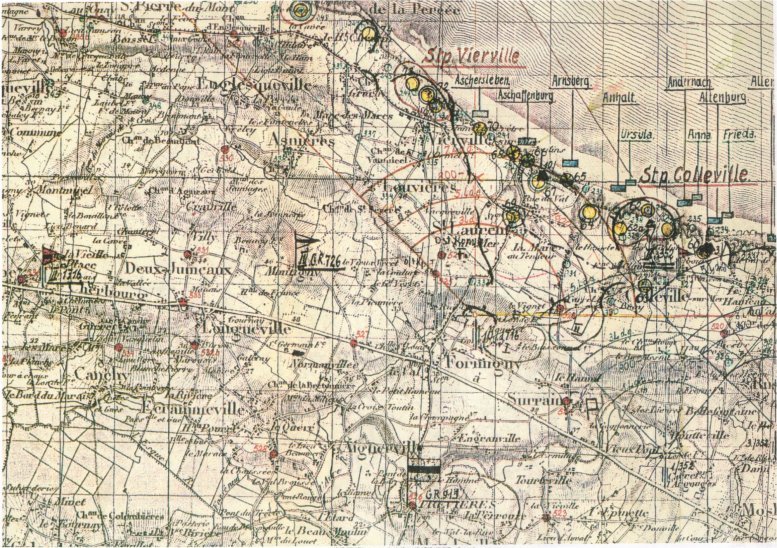
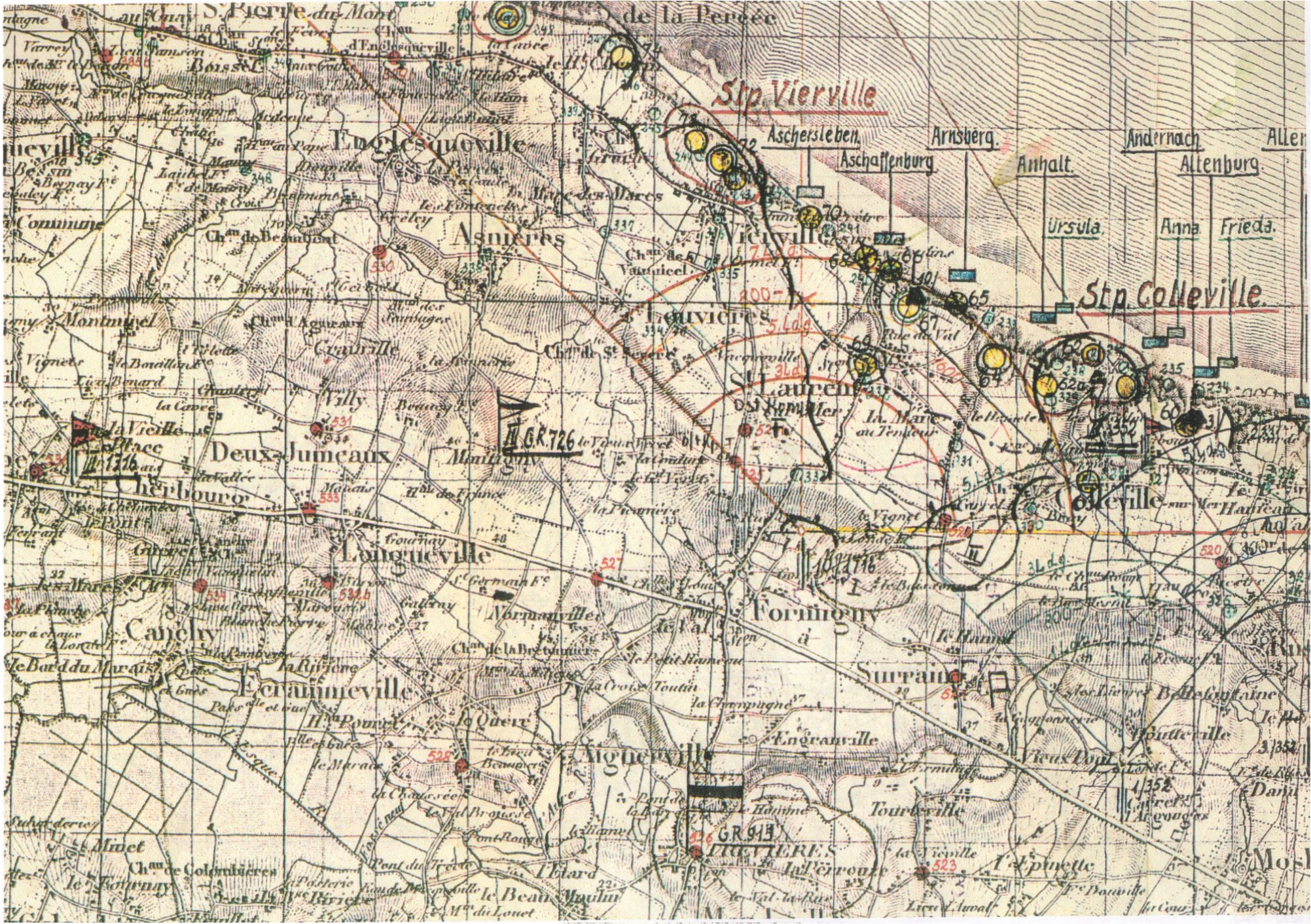
Illustration not available in the transmitted fund.
(details) An example of a camouflage of German field artillery guns. They're in a hedge. Only the path used by the servants, along the hedge and the traces of the trampling behind a cannon are distinguished.
The Wehrmacht (German Army) at Omaha Beach
in 1944
After the visit of Marshal Rommel on the beaches of Vierville-Colleville on 29 January 1944, the 7th German Army had strengthened in March 1944 the garrisons of the coast between the Vire and the Orne, until then guarded by the only 716th DI, of low value (without means of transport, elderly or too young troops, often non-German soldiers, including battalions of Russian troops). It had also given decisive impetus to the defence of the coast.
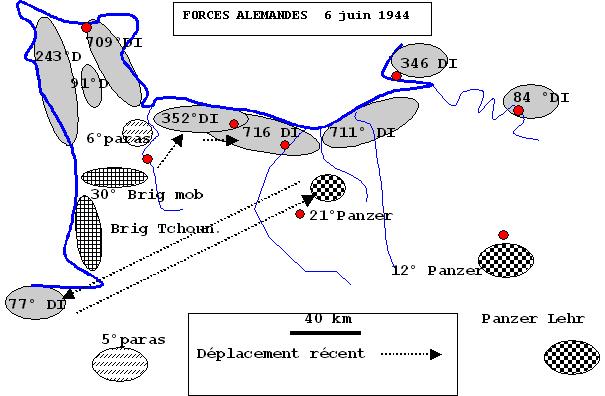
The 352nd Division coming from Saint-Lô had then moved and took care of the area from Isigny to Arromanches, the 716th Division taking care of the coast further east. The units of the 726° Regiment already in place in the strengths of the 352°Div sector remained there and were attached to the 352°Div.
This meant that the fortified points were better equipped with men, that 2 nearby reserve companies were available (in Formigny and Surrain) close to the rear of Omaha Beach to support the main defences. Nevertheless, there was no company assigned to the sole defence of the village of Vierville itself. On the other hand, the villages of St-Laurent and Colleville were each occupied by a company in addition to those in charge of the coastal WN.
The 352nd Division (General Marks, PC at the Molay-Littry) was a fairly good division, with moving elements, and a core of veterans experienced in combat on the Russian front, and the Allies thought it would provide the bulk of the German opposition.
There were 3 regiments, each with only 2 battalions:
Regiment 914 (PC in Neuilly-la-Forêt),
Regiment 915 (Colonel Meyer, PC south of Bayeux), reserve force, "mobile", i.e. by bicycle or on French trucks requisitioned.
Regiment 916 (Colonel Goth, PC in Treviers).
The presence on the coast of this division was a surprise on 6 June, with the Allies still believing it in St-Lô. His movement dated from May and was detected late.
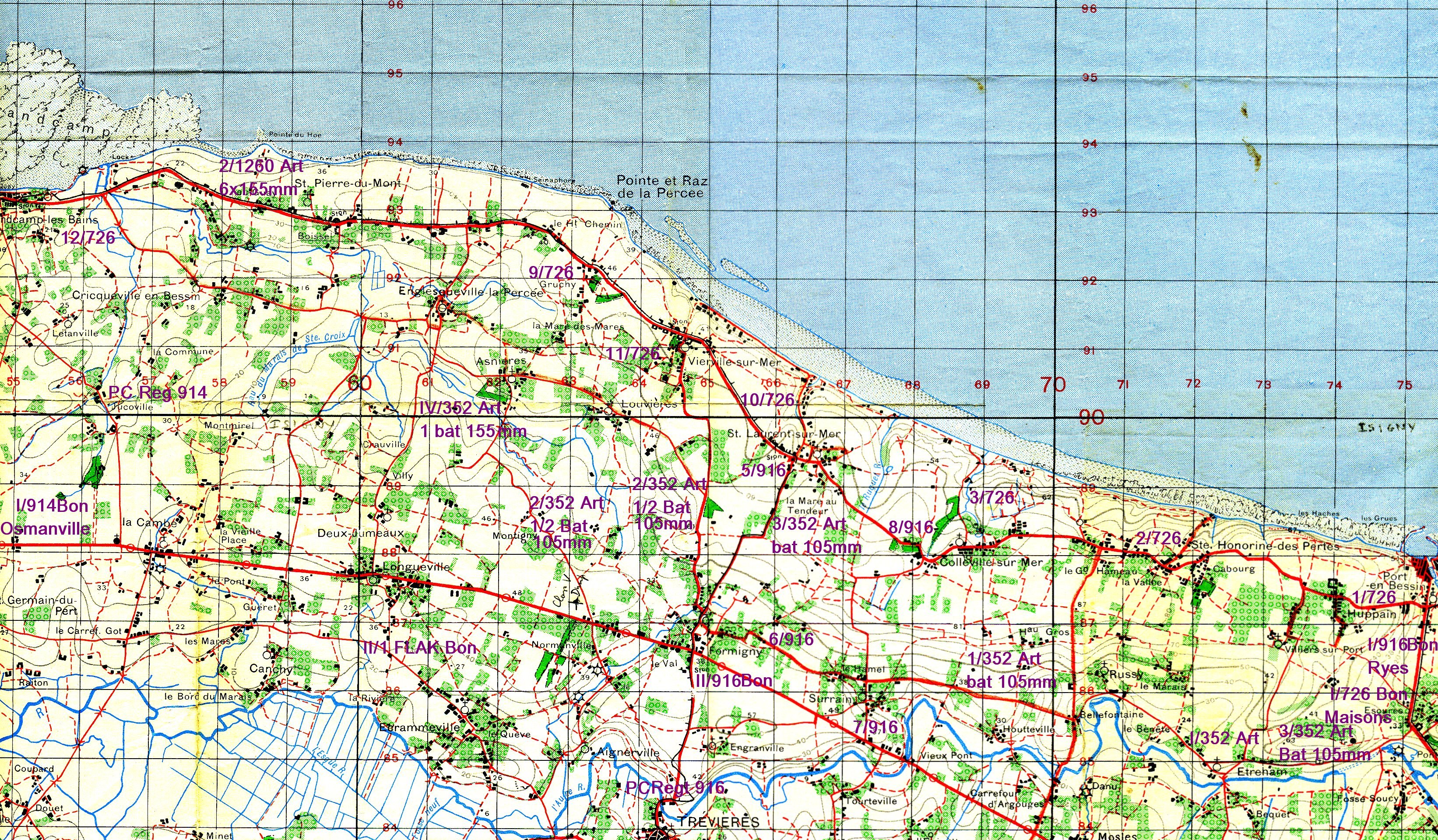
Omaha Beach was particularly concerned with the 2nd Battalion of Regiment 916, whose PC was in Formigny, with 2 companies (5th and 8th) in St-Laurent and Colleville and 2 companies (6th and 7th) in reserve in Formigny (Le Buissonnet) and Surrain.
The 716th was a completely static defence division with two regiments of three battalions each, with a little artillery and a few other small units, all scattered between the Vire and the Orne. The non-German elements (of the "Volksdeutsch") of this division were numerous, most of Eastern Europe (annexed territories of Poland, Czechoslovakia etc.) and their morale was not very high. In fact, when Americans were in close contact with these troops, they sometimes made it easy.
Omaha Beach was concerned by the 1st Battalion (I/726, Home PC) and 3rd Battalion (III/726, PC in Jucoville) of its 726° Infantry Regiment.
The 3rd Battalion was responsible for the coastal defences of Grandcamp to St-Laurent, with 9/726 at Englesqueville and La Percée, 11/726 at Vierville, 10/726 at St-Laurent and 12/726 at Grancamp and Pointe du Hoc).
The 1st Battalion was located between Colleville and Port-en-Bessin, including 1/726 at Port en Bessin, 2/726 at Ste Honorine, and 3/726 at Colleville (WN63).
The troops defending the 4 strengths of Vierville (WN or "fortified points" Nos. 70 to 73) were normally about 180 men. But they had been reinforced on 4 June by the detachment of a few dozen Grenadiers of Regiment 914 of the 352nd which was installed in the South of Grandcamp.
These personnel were by no means sufficient to completely fill the numerous positions built by the Germans on the coast since 1942 (WN 60-74). Many shelters and forts were still under construction.
Moreover, these WNs did not form continuous lines, but were limited to defending directly the approaches to the beach outings and some more strategic points. Between these strong points, unfortified spaces of several hundred meters (up to 1 km) were spreading, spaces in which the Germans had undertaken to shave all the constructions in order to clear out lateral ranges.
In the WN, a few very diverse artillery pieces were installed, including 2 88mm anti-tank guns, 2 75mm anti-tank guns, a dozen 50mm anti-tank guns, a few tank turrets and 75mm French or Czech field guns, many 50-81mm mortars. These disparate pieces were served by men from local infantry companies (352nd and 716th DI).
In addition, 40 Nebelwerfer rocket launchers were located several hundred metres inside (WN 69) in Saint-Laurent, a place known as "the Montmain"), each capable of firing on the beach four 320 mm rockets. These Nebelwehrfers were recently installed and others were still being installed in Colleville at WN62.
A few minefields were placed around the WN. They were far from complete and often limited to signs "Achtung Minen! " (Mining Attention)
Relations between civilians and Germans
The story of Lieutenant Heinze, officer at Battalion HQ 2/916 in Formigny
The story of Private Franz Gockelsoldier at the WN62 in Colleville
Memories of Michel Hardelay:
"The telephone connections ended up in P.C. of the company - (the 11th) in Vierville, mansion of Thaon, - (the 9th) in Louvières, castle of Gruchy; the P.C. They were connected to the Cherbourg line at La Roche-Guyon and to Hitler's headquarters. The connection on this line was ensured in a small casemate which still exists in the countryside of Louvières."
Memories of Raymonde Hue, wife Watel, 12 years old June 6, 1944:
"We lived in the small houses next to the Vaumicel. My mother had about ten cows, and she had been requisitioned to give a can of 20 liters of milk every morning. The Germans paid for that milk. A German came with a military bike, and put the can on the bike frame. They were very unequipped. As far as food is concerned, we have never suffered, because we were raising pigs, chickens... On the other hand, the Germans had little to eat, there was much more water, than potatoes" (in their soup).
Before the landing, there were no more German soldiers. There were those we called "Nicolas, " Russians. We were very afraid of it, because they were very uncivilized, they were mainly concerned with horses.
On May 30, I had passed my certificate of study. My mother made me make an old bike, so she could buy me one. In the 2 or 3 days prior to the landing, thousands of leaflets were thrown, asking the population to leave. With these leaflets, there were brilliant things, I don't know what they were about (tapes of aluminized paper, to blur German radars). Nobody took these leaflets into account, nobody moved. We didn't even pick them up, we had the "snack".
These limited coastal defences were supported by large artillery formations behind Omaha Beach.
The artillery regiment of the 352nd German Division (Colonel Ocker, PC in Tourteville at the NE of Littry), had 2 of its battalions installed to fire on Omaha Beach:
- The 1st Abteilung (Battle) of Major Pluskat (PC at Etreham Castle), comprising 12 105mm howitzers, type LeFH18, in 3 batteries of 4 howitzers, placed at
Houtteville (battery 1/352)
Montigny Hill 29 (battery 2/352)
Etreham coast 63 between Formigny and St-Laurent (battery 3/352) - The 4th Abteilung (PC at the Château des Agneaus, comprising 12 150mm howitzers, type SFH18, in 3 batteries of 4 howitzers placed in Longueville, Deux-Jumeaux and the East of La Cambe.
These 6 batteries scattered throughout the country represented a considerable strike force. They were perfectly camouflaged in hedges and remained undetected. They were connected by buried telephone lines to the WN artillery observation posts on the coast. They retreated on the night of June 6-7.
They caused heavy damage on the beach, especially in the morning of 6 June, where they still had telephone links with their observers (at the WN73 for Vierville), guiding the shootings on the biggest ships approaching the beach. It seems that the observatory at the Ruquet no longer had telephone links (cable cut off at the Prieuré farm in St-Laurent on the night of June 5-6 by a special US unit noticed by locals).
Gradually, they had to slow down their fire, owing to the lack of sufficient ammunition reserves, and were firing only sporadically at the end of the day on the raids, particularly at Vierville, but blindly, as observers were neutralized in their posts in the middle of the morning.
According to reports, ammunition reserves had, a few days earlier, been dispersed as a precaution inward, and could not be shipped in time on 6 June. Several ammunition trucks were destroyed by Allied fighter-bombers.
In addition, heavy coastal artillery was located at Longues and Pointe du Hoc.
The Longues battery (4 x 150mm of marine under casemate) was defeated by the navy (Arkansas, Montcalm and Georges Leygues) and was quickly silenced.
The battery at the peak of the Hoc (6 155mm Schneider long guns including 2 under casemate, battery number 1 of the 1260th Abteilung coastal artillery -PC in Ryes) had been heavily bombarded before D-Day, the 3 guns in running condition had been folded and camouflaged in hedges south of the position, they were oriented to Utah Beach, but they never fired on June 6. That's where they were destroyed around 8:00 a.m. by the US Rangers who landed at 7:00 a.m. According to some German testimonies, the servants of this battery were out of order to fight after an overwatered evening on June 5.
The 2 Maisy batteries (from the 1716th artillery regiment of the 716th Division, the 8th battery at the WN 84 with 4 Chess howitzers of 100mm and the 9th battery at the WN83 with 4 French howitzers of 155mm) were out of reach of Omaha Beach. They had been heavily bombed on the night of 5-6 June and their remaining parts could be used against Utah Beach.
In addition to this inventory, the motorized batteries (1/Sturm Flak Korps) of the anti-aircraft defence, 36 88 mm guns, and 20mm and 37mm guns scattered north and south of the Isigny-Bayeux road (Mosles, Longueville and Colombières), capable of reaching the coastal villages, but not equipped with observatories on the cliffs.
Back from Omaha Beach, the Germans had not prepared any important positions inside for a defence in depth. The defence beyond the beach was largely dependent on the use of local counter-attack reserves.
These reserves of the 352nd Division consisted of the anti-tank detachment, the pioneer battalion (the engineers) and especially the Kampfgruppe Meyer:
The anti-tank detachment of the 352nd, the PanzerJäger Abteilung 352 (PC in Vouilly), with:
- 1 company of 14 or 15 kenneled assault guns Marder (II) 75 mm at the Buhours farm in Bricqueville..
- 1 company of 10 Stud GIIIG tank hunters armed with 75 mm guns at the Château de Colombières
- 1 company of 9 guns of 37 mm Flak on Opel truck carriages in Pont l'Abbé.
A small (500h) battalion of Pioneers (Genia) (352 Pionere Abt.) was in St-Martin de Blagny. He intervened on the night of June 6 to 7 in counter-attack, from Louvières to Vierville.
The division had in the SE of Bayeux a mobile group, known as "Kampfgruppe Meyer", (on behalf of its leader Colonel Meyer) composed of the 2 battalions of Regiment 915 (PC at St Paul du Vernay, battalion 1/915 with its PC at Juaye-Mondaye, the II/915 with its PC at Lantheuil) and the battalion of Fusillers (PC at La Butte?) relatively mobile (one battalion on French trucks requisitioned, the other battalion being on bicycle),
The Meyer Group was first directed at the end of the night towards the false paratroopers south of Carentan, then in the morning, with the tanks of the 352 Panzer Abteilung, it was shared between Omaha Beach and Arromanches where the English breakthrough threatened much more. These marches and counter-walks, slowed down by the activity of the allied aircraft, prevented him from intervening early on June 6 at Omaha Beach.
Later, three small battalions of the 30th Mobile Brigade, including headquarters. was at Coutances, could be used for a counterattack. These battalions, each of three companies, were equipped with means of transport allowing a fairly rapid movement (a few vehicles and bicycles).
The other enemy's mobile reserves, including the 21st Armoured Division, were located in the Caen Lisieux area. The American units were warned of a possible armored counterattack on that side at the end of D-Day. This counter-attack was limited to the eastern (British) areas of the bridgehead.
The three German divisions of the Cotentin were supposed to be entirely occupied by the attack of the paratroopers and the landing at Utah Beach.
German aviation and navy
It was thought that German aviation would make an exceptional effort against Allied convoys and landings. Despite its heavy air losses during the winter, the Luftwaffe was believed to be able to make 1,500 sorties on D-Day, mainly with hunters and fighter-bombers. In fact, the German air activity was very limited on Vierville, with only one passage on the beach, in raze-motte, of 2 hunters in the morning. In the weeks that followed, the Luftwaffe confined itself to night attacks by planes throwing mines at sea (several ships were destroyed) or radio-guided flying bombs (inefficacy because the Allies knew these weapons and how to jam their controls as soon as intruding aircraft were reported).
The Kriegsmarine, in view of the overwhelming Allied naval force, had little chance of success against the assault convoys. The only possibilities were limited to a few raids of harassment by the E-boats on the sides of the convoys and to underwater attacks by the U-boats of the bases in western France. The midpoint of the Omaha beach protected it from any such activity.
A radar position of the Luftwaffe and Kriegsmarine (position "IMME") was installed in Englesqueville, on the cliff, at the location of an old semaphore of the French Navy, with 2 WURSBURG radars, 1 SEEKAT radar and 1 FREYA radar. This equipment was out of use on June 6, 1944 following the bombings of the previous days.