






322
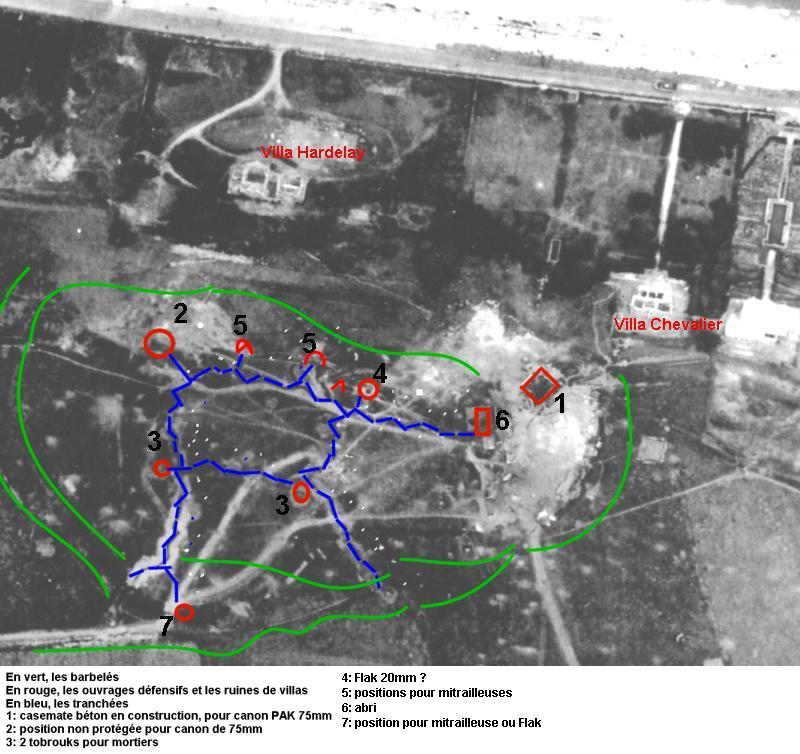
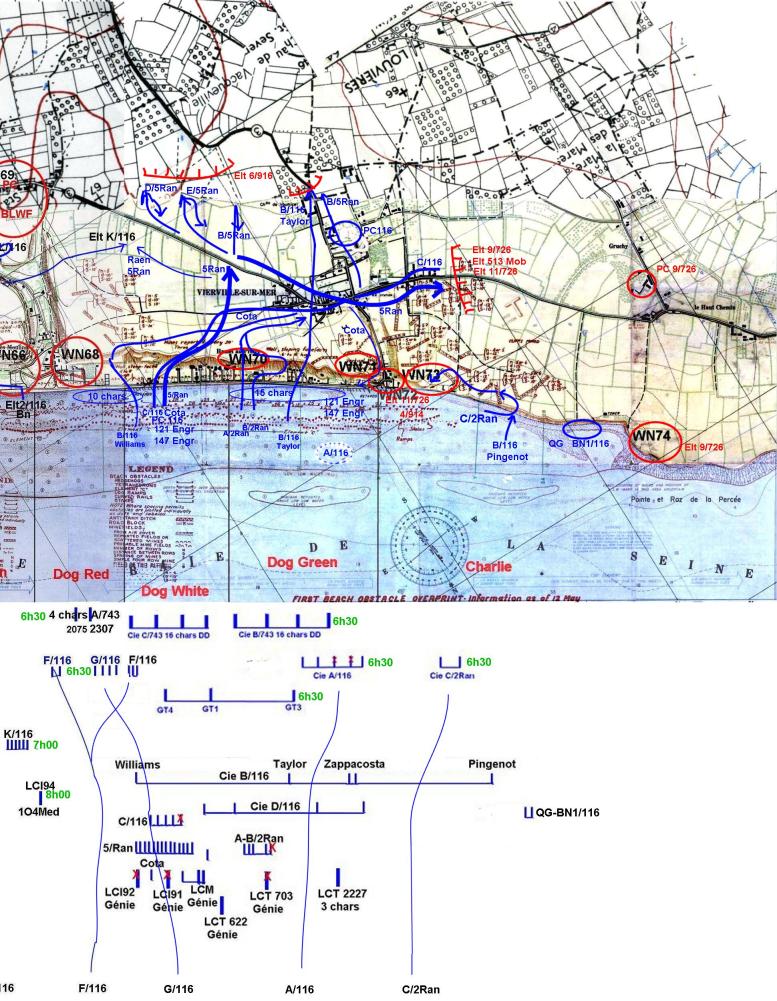
Cies A and B/2Ranger, associated with a section of Cie D/116 neutralize the WN70 fortified zone
above the villa Hardelay then enter Vierville
After their difficult landing on the east of Dog Green, only half of the A and B companies of the 2nd Battalion of Rangers had managed to reach the beachfront shelter at about 7:40 a.m. (between the Hardelay and Robert Lebrec villas).
A few tanks, firing at enemy locations, were scattered along the beach, but the Rangers did not see any other troops and had the impression of being alone on the beach, and yet at least 500 m on their left, the 5th Rangers Battalion took foot on a beach already overcrowded by the 116th Regiment's assault infantry.
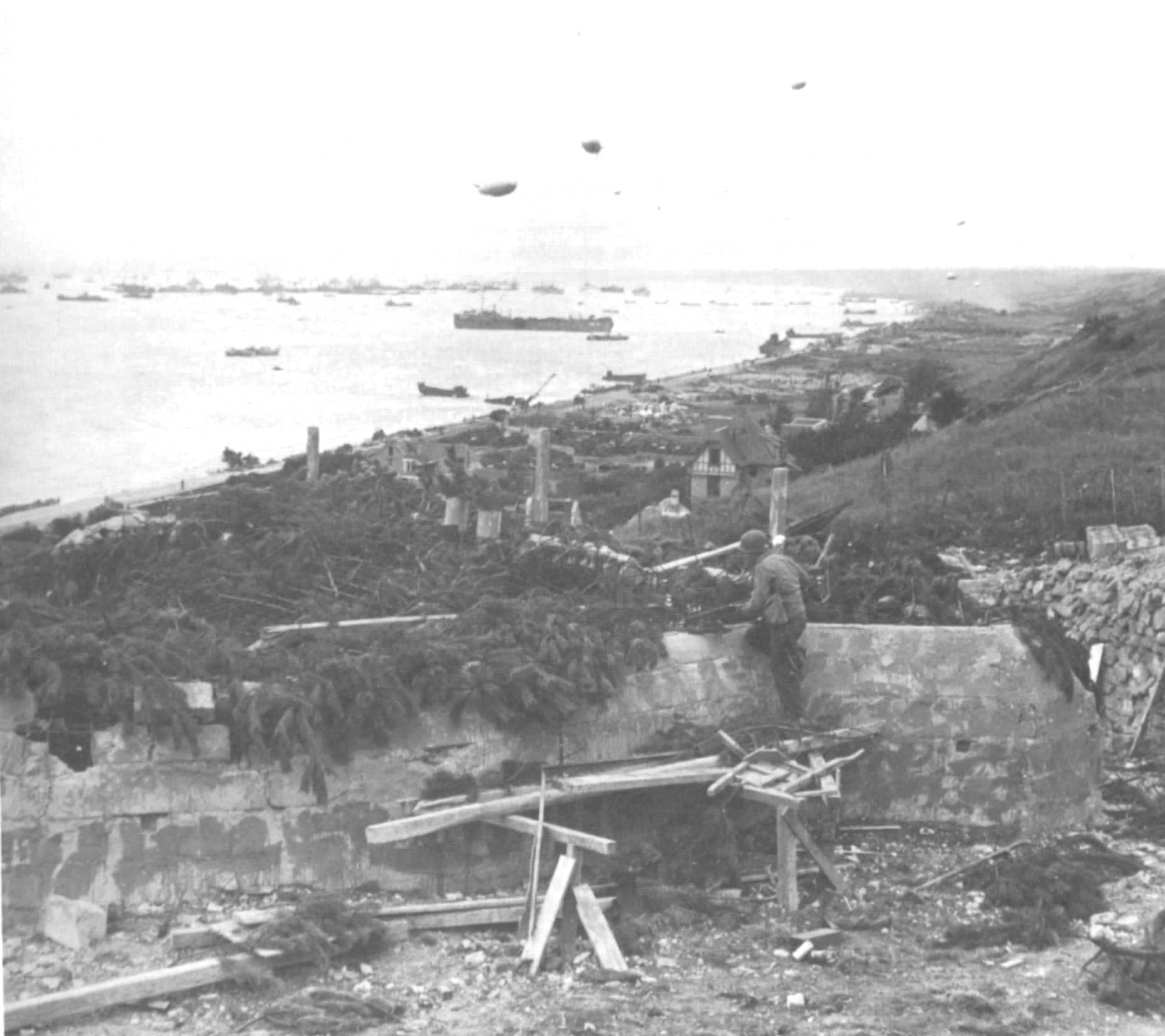
As soon as they could reach the pebbly slope, these 60 men rushed down the promenade road and sheltered themselves in the bushes surrounding the demolished villas along the beach.
The westmost section, consisting of 18 Rangers of B/2Rgr Company, went to the right and, sticking to the foot of the slope, made a few hundred meters towards the valley of Vierville, with the intention of borrowing it, according to their instructions. As they moved forward, they suffered intense fire in an area discovered west of the Hardelay villa and returned to their steps.
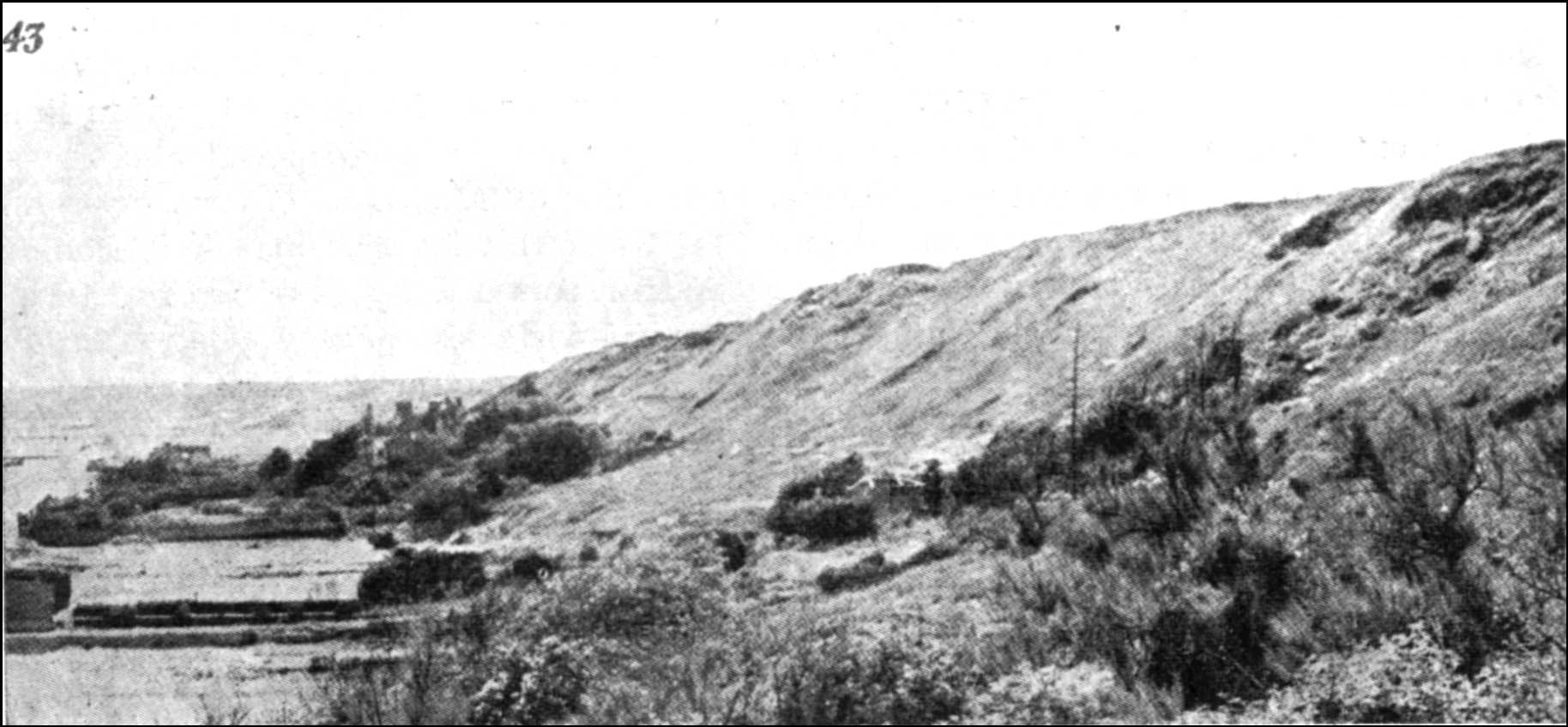
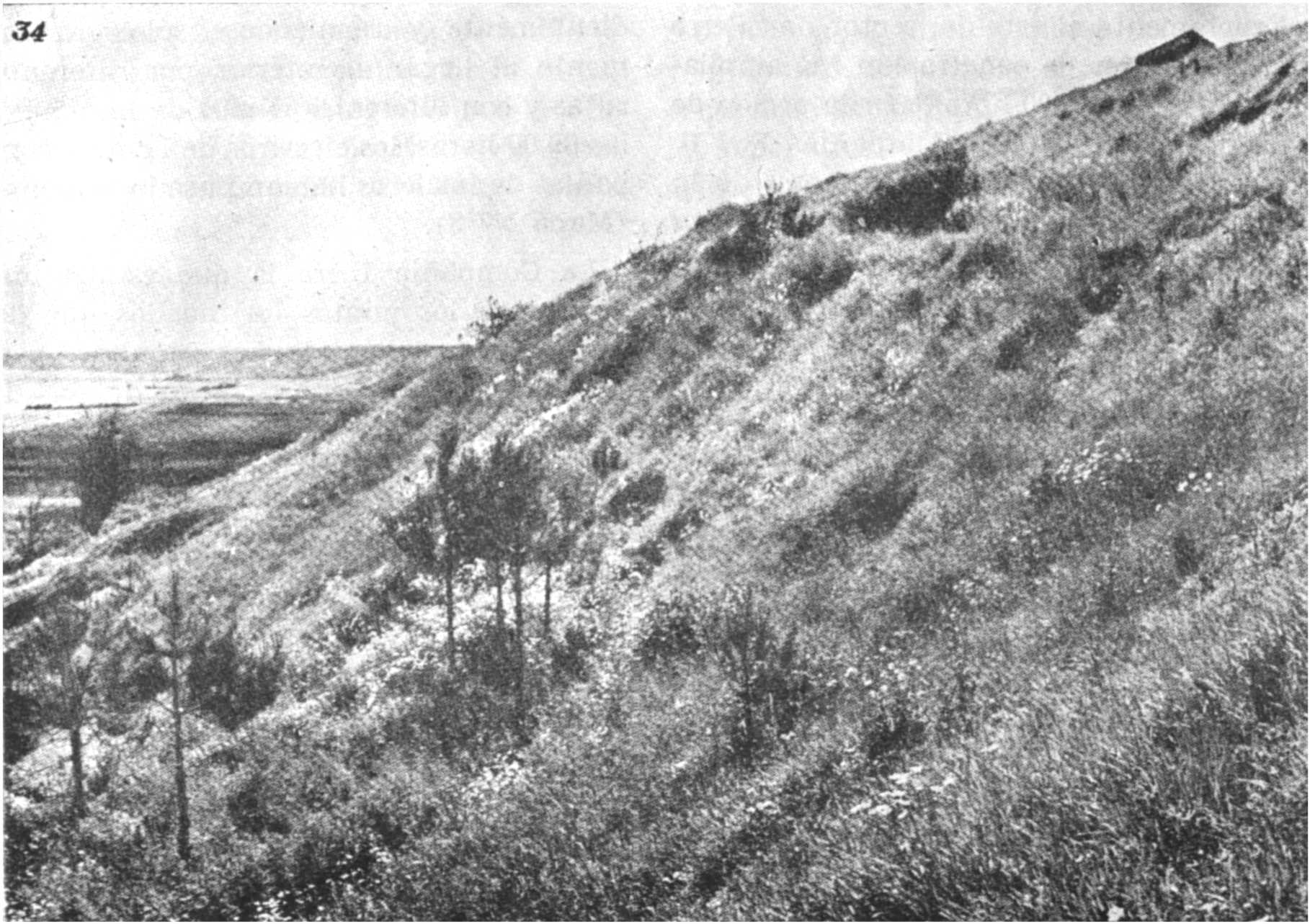
Meanwhile, the Rangers of Company A/2Rgr and the rest of the B/2Rgr, after crossing the road by small groups commanded by non-commissioned officers, had progressed beyond the villas and climbed into the cliff in several places.
At this moment, they were joined by an isolated machine-gun section of Company D/116, commanded by Lt Morse. Rangers and walrus agreed to continue together, with mutual support.
3 DD tanks helped them greatly to silence the fortified WN70 point that was above them.
This is the testimony of Lt Morse, gathered by Lt Shea.
Lieutenant Vern Morse and his heavy weapons section of the CieD/116, programmed to support Cie C/116 in the interior, had also not approached the right place. They found themselves below the WN70.
Morse testified that his men were west of the LCI (LCI 91) that had been hit before his men even spoke. To be more exact, he notes that another Landing Craft was stranded on the beach to his right and that he thought it was not an LCI. (probably an LCA, immobilized in the middle of the beach)
Morse and his men rushed up the beach as soon as the boat had been heeled and the ramp was lowered. He doesn't remember whether there was a wooden wall or not. In any case its section of heavy weapons moved immediately slightly to the right and reached a kind of crossing on the asphalt walk road running along the beach. (a villa entrance?)
They didn't have to take care of barbed wire. Either there were none, or the rockets of the previous bombardment had blown them.
Morse remembers the point where he and his men crossed the road. This was where there were several houses with a garden wall in front (the base was 60/90cm high, surmounted by stakes and a grill. The whole was about 2m high, interrupted by a carriageway entrance to the west of the corner of the wall (it does not allow to identify the place, most of the villas of the beach being thus fenced).
As his troops crossed the middle of the group of houses, Morse met a lieutenant of the Rangers (those of the Cies A/B-2RAN) with a few men around him. He had his Rangers, telling them where to go to climb the cliff.
Lieutenant Rangers asked Morse for his goal. "Gruchy, I had to support Cie C/116 which must go too," Morse replied.
"Well, now you support me," said the Ranger smiling, "we're both going to Gruchy."
Morse gave his consent and returned to his men for instructions. (He wasn't sure, but he thought Officer Ranger's name was "King").
5 Rangers were sent on cover by the Lieutenant Rangers. Their mission was to first reach the ridge, then cover the rest of the column that would climb to the plateau.
Morse reports that the 5 Rangers were followed at 150/200m by the rest of the Rangers column and its section. A resistance of the German positions on the ridge (WN70) killed 2 of the Rangers, injured 2 others, the last one came to rest near the ridge.
Morse and the Lieutenant Rangers discussed quickly. They agreed that this position should be attacked. First their affected area was to the right. They understood that they had landed too far east and that this German position on the summit was a serious threat to the safety of the men who had landed or were going to land below the beach.
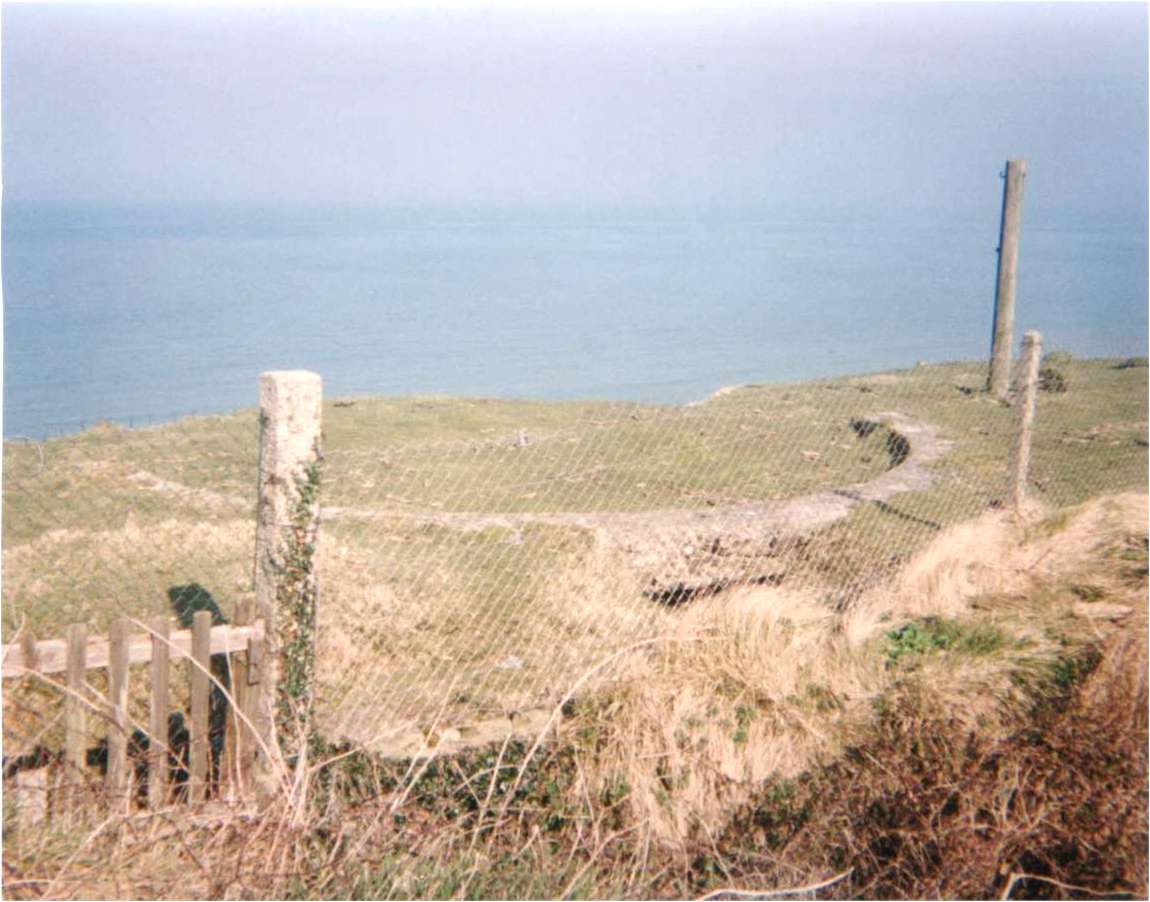
Turning frankly to the right, the mixed group attacked the positions and the machine gun nest that were buried and camouflaged on the ridge.
The heavy weapons were left behind and the group advanced armed with rifles, M1 automatic rifles and hand grenades. In the brief fight that followed 5 or 6 Germans were killed or wounded and about 15 captured.
Morse described these positions: individual holes connected by shallow trenches of communications. There were at least two machine gun positions and several buried shelters.
The group had turned around the position, attacking the Germans from the rear. Morse says that they had already killed Germans "simply shooting", when a Ranger yelled at Morse to give him a hand grenade. The Ranger had seen a German run into a shelter near the end of a trench. Morse passed him a grenade. He threw it away and a German came out with his hands in the air.
"Cover me" shouted the Ranger to the Lieutenant, "I'll disarm him."
Morse covered it and as the Ranger began to turn around the German, he stopped abruptly and showed something behind Morse. Morse turned quickly and saw two German soldiers standing at less than 1m 50, their hands in the air. They had just pulled out of their individual holes and held their hands on their heads. They claimed to be foreigners who had been forced to serve in the Wehrmacht.
Morse disarmed them quickly and drove them back eastward to join the other prisoners gathered.
Morse intended to continue west along the ridge, but as he was approaching a barbed fence perpendicular to his movement, a machine gun blocked his movements (it was at the east edge of the WN70). He tried several times to pass under the barrier, each time forced to land on the ground to avoid a hail of bullets over his head.
"Every time I moved the barbed wire, trying to crawl under this damn thing, they were sending me a gust."
Finally he retreated crawling eastward. He decided to take care of the prisoners first. He couldn't afford to send one of his men to the back, and yet he needed to "get rid of it."
Shortly after, Morse saw Colonel Canham for the first time. He believes that this happened 30/40m west of the rough pines: he met Canham, the regimental officer S3, Major Thomas Howie, Officer S2 (information), Major Asbury Jackson. Jackson took the prisoners away from him and Canham told him that the Cie C/116 column had gone to Vierville. They removed their mixed group from their positions on the cliff, returned to the pine trees and left in the wake of the column entering Vierville.
The question is whether the preparatory bombardment had reached the German positions on the cliff. Most witnesses said that they had noticed little apparent damage to open positions, but at least some Germans had been surprised and killed by the shots. In particular, Morse noticed a German corpse. The soldier was to smoke a cigar; he was sitting around a hedge, where he had fallen, and the cigar was still between his lips. It can also be noted that no one mentioned a 75 gun, which seems to confirm that the WN70 had only small arms and mortars.
From the Rangers' side, it is noted that 2 Rangers of Company A/2Rgr reached the top and found there an empty lacs of enemy trenches with two or three nests of machine guns, in full sight, just beyond the ridge. A few minutes later, six other Rangers joined them and they began to search the trenches. Gunfire started in two places when the Germans came out of their shelters and went back to battery, but they waited too long.
The leading Rangers were less than 20 metres away and other small groups climbed behind them. In groups of two or three, they cleansed enemy positions, making six prisoners and killing much more. There were only three dead among the attackers.
Company B/2Rgr then arrived at the top, returning from its attempt to the valley of Vierville by the foot of the cliff.
German artillery observers in contact with the rear reported at 0846: "It appears that the WN 70 north of Saint-Laurent was taken by the enemy".
The men of 2 Cies A and B/2Ran then made movement to Vierville with the Morse section. They probably got there between 9:00 and 10:00.
Morse had no contact with C/116 before entering Vierville. And it was soon after he first saw General Cota.
Morse was questioned as to whether he had seen any other elements of the 116th before entering Vierville. He remembered seeing Captain Thomas Murphy of Battalion 2/116 just before he reached Saint-Laurent - Vierville Highway and turned right to the west.
Captain Murphy had gathered some scattered elements of his battalion that had landed near him, forming a sort of detachment and he was going to search for the rest of his battalion.
(the 2nd Bat/116 had landed only 3 or 4 sections of the Cies F/116 and H/116 on Dog White, a small group of the G/116 landed at St-Laurent had also joined Dog White. The battalion was widely dispersed eastward, with a slightly larger group between Les Moulins and Le Ruquet, led by Major Bingham).
At that time Morse was looking for the men of Battalion 1/116 who had left for Vierville. He asked Murphy, if he met them, to report his position. Murphy then took the east road, where he thought he'd find his battalion. The two groups separated, Murphy eastward, Morse towards Vierville.