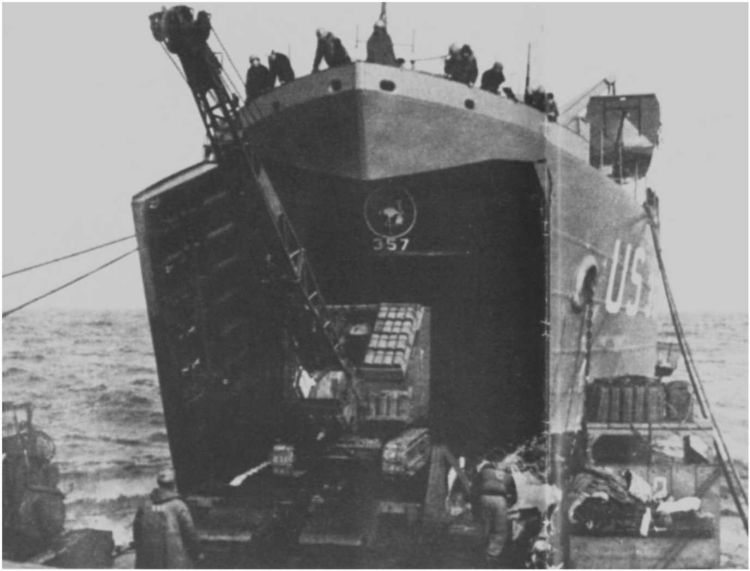
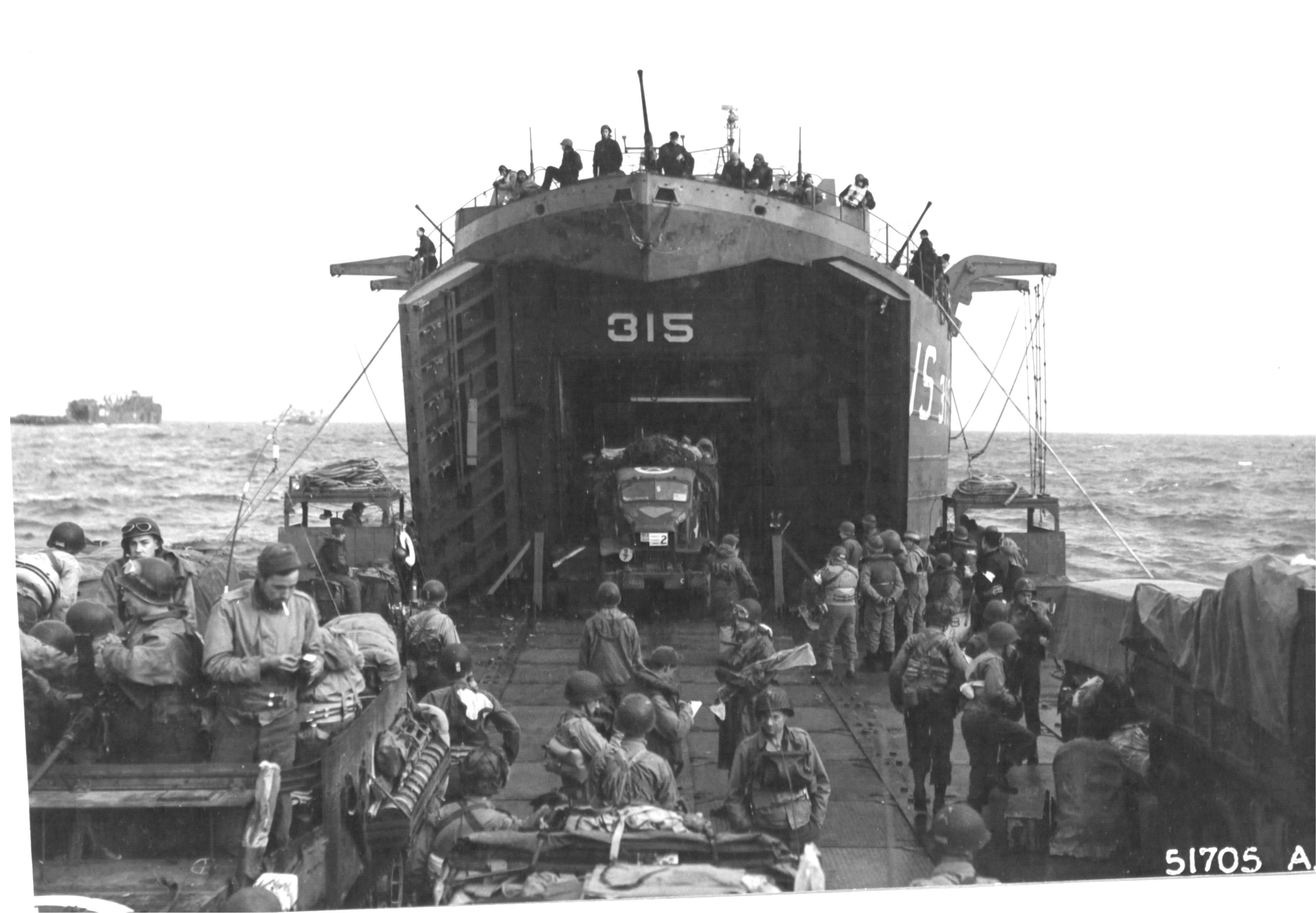
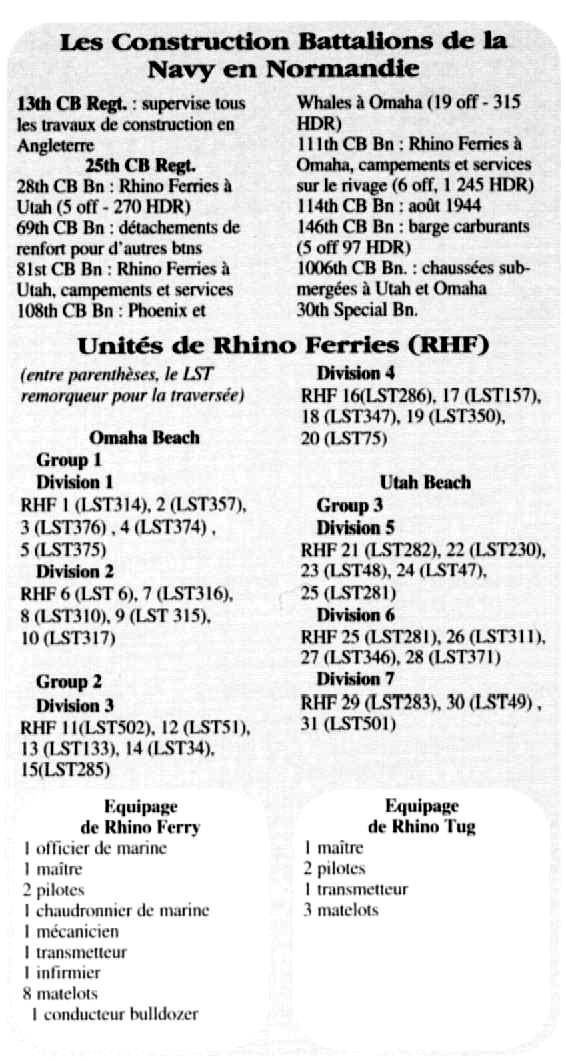
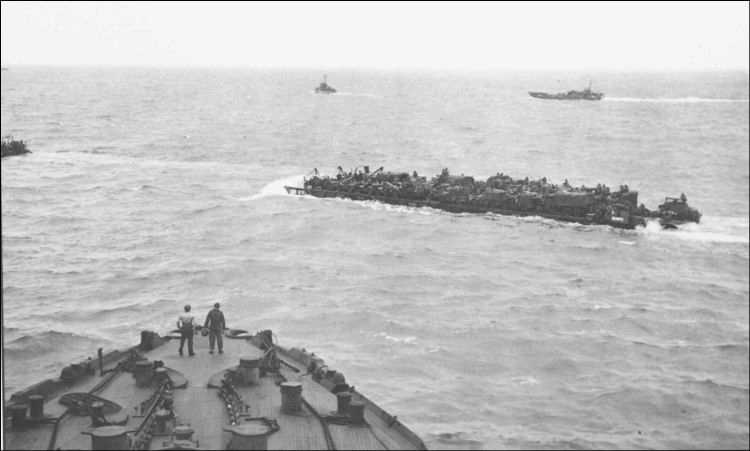
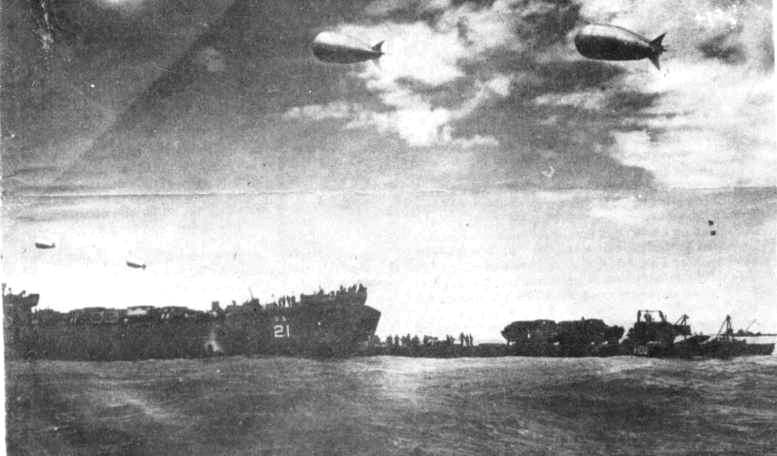
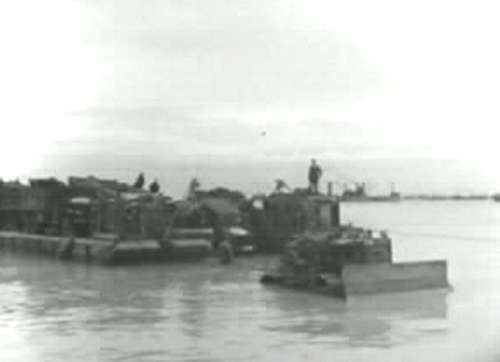
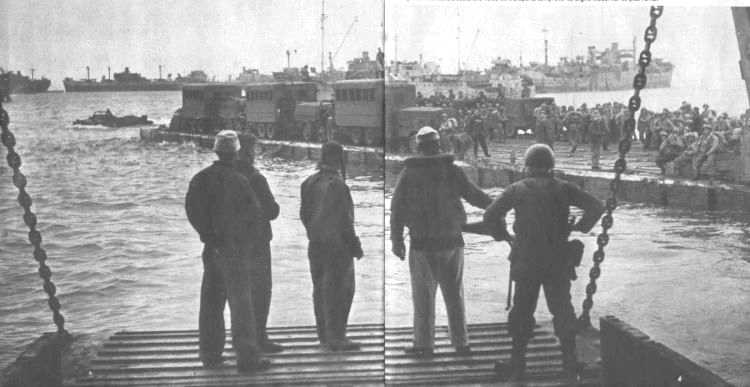
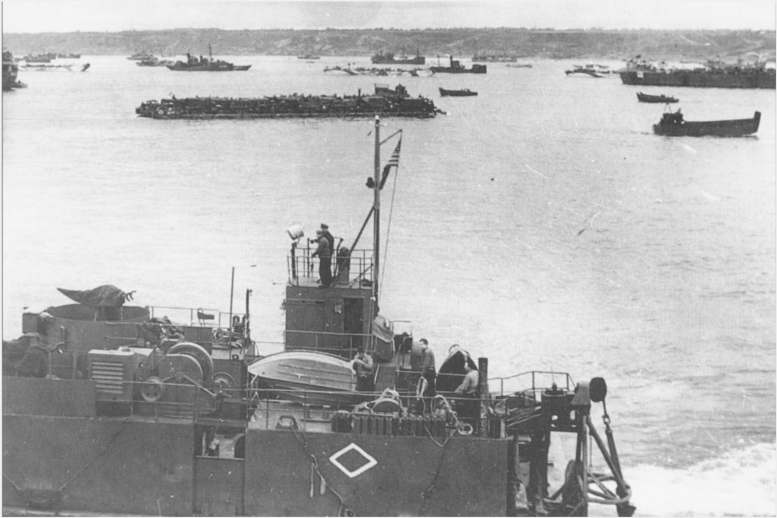
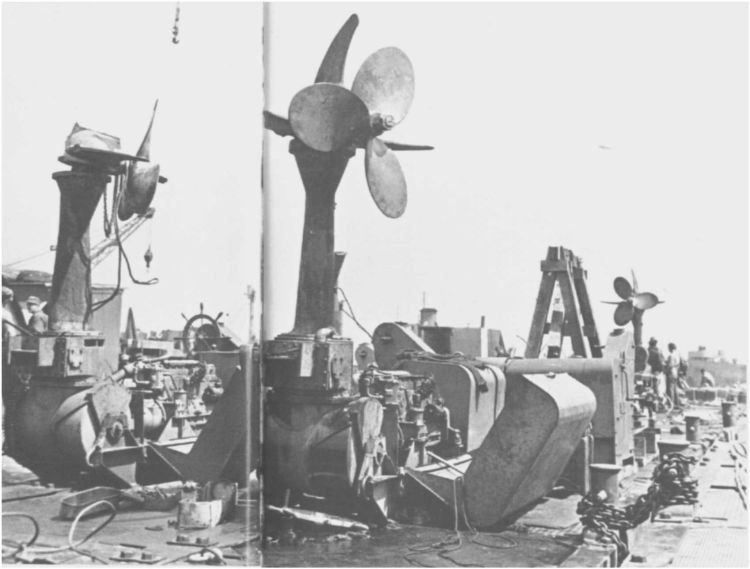
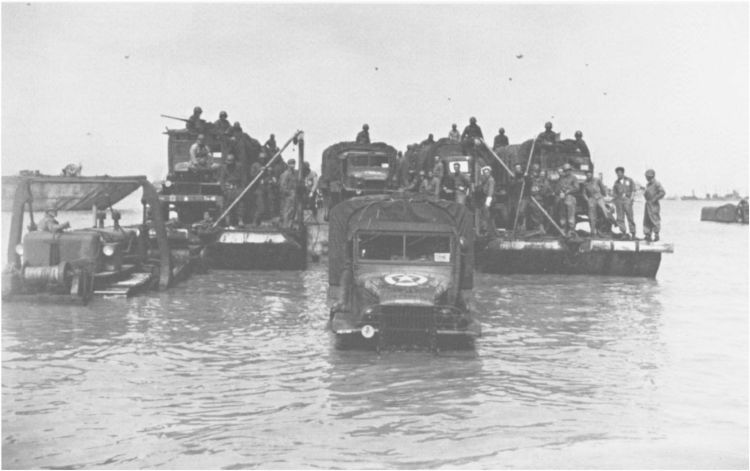
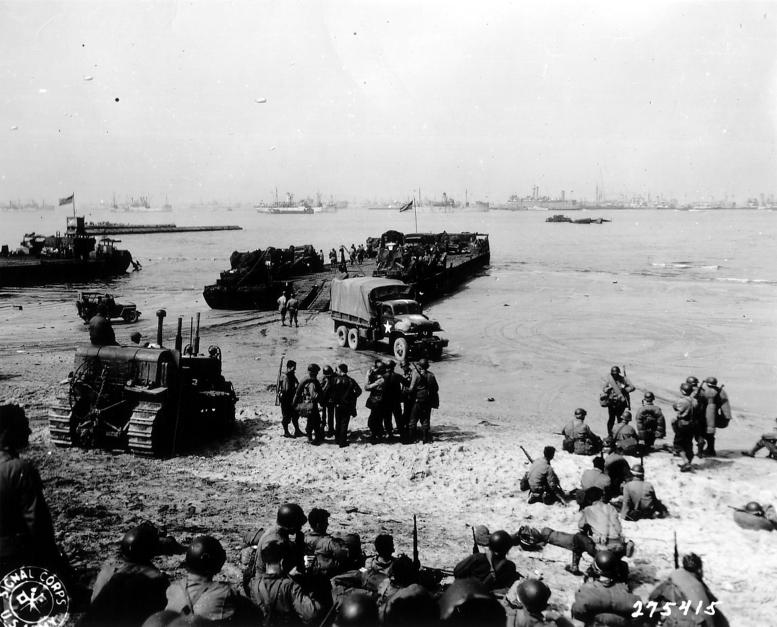
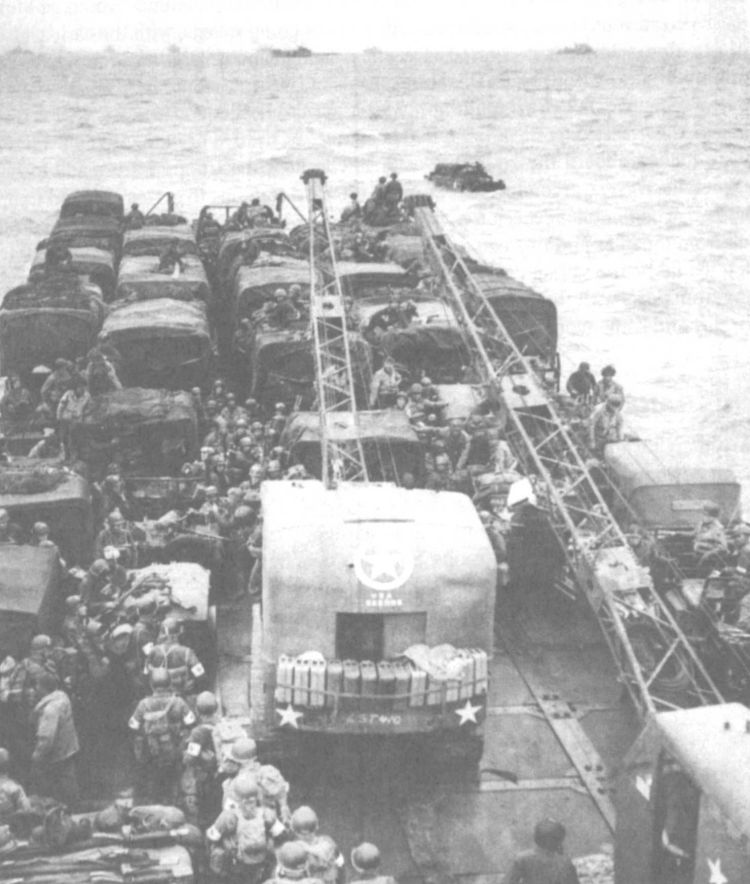
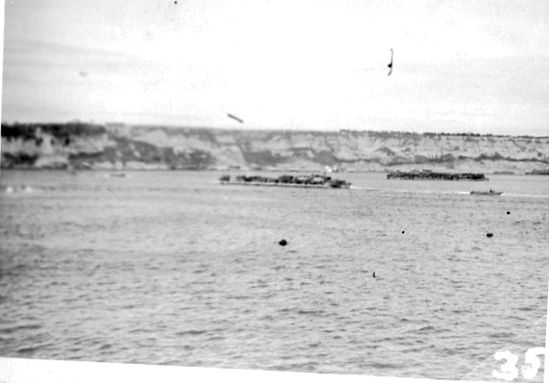
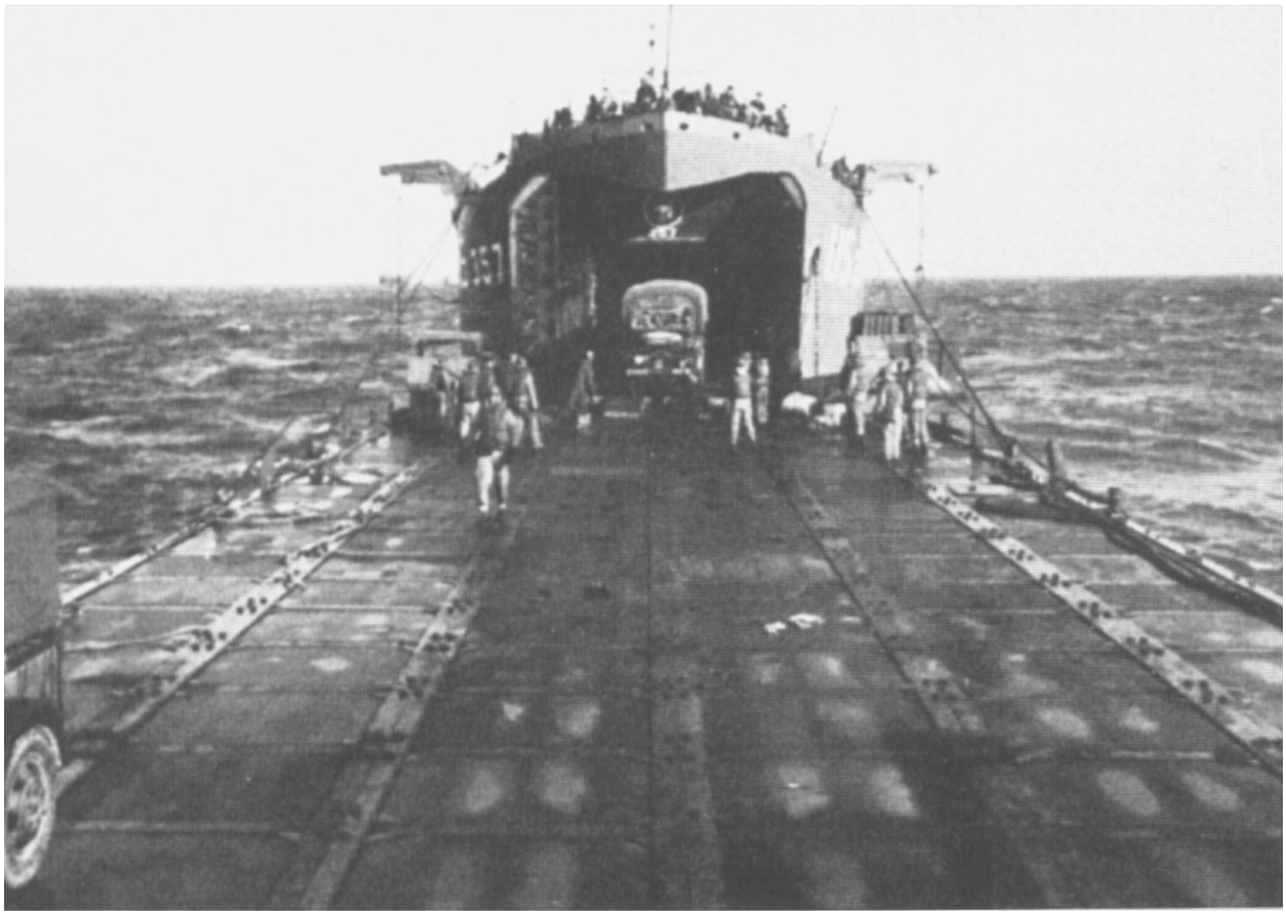
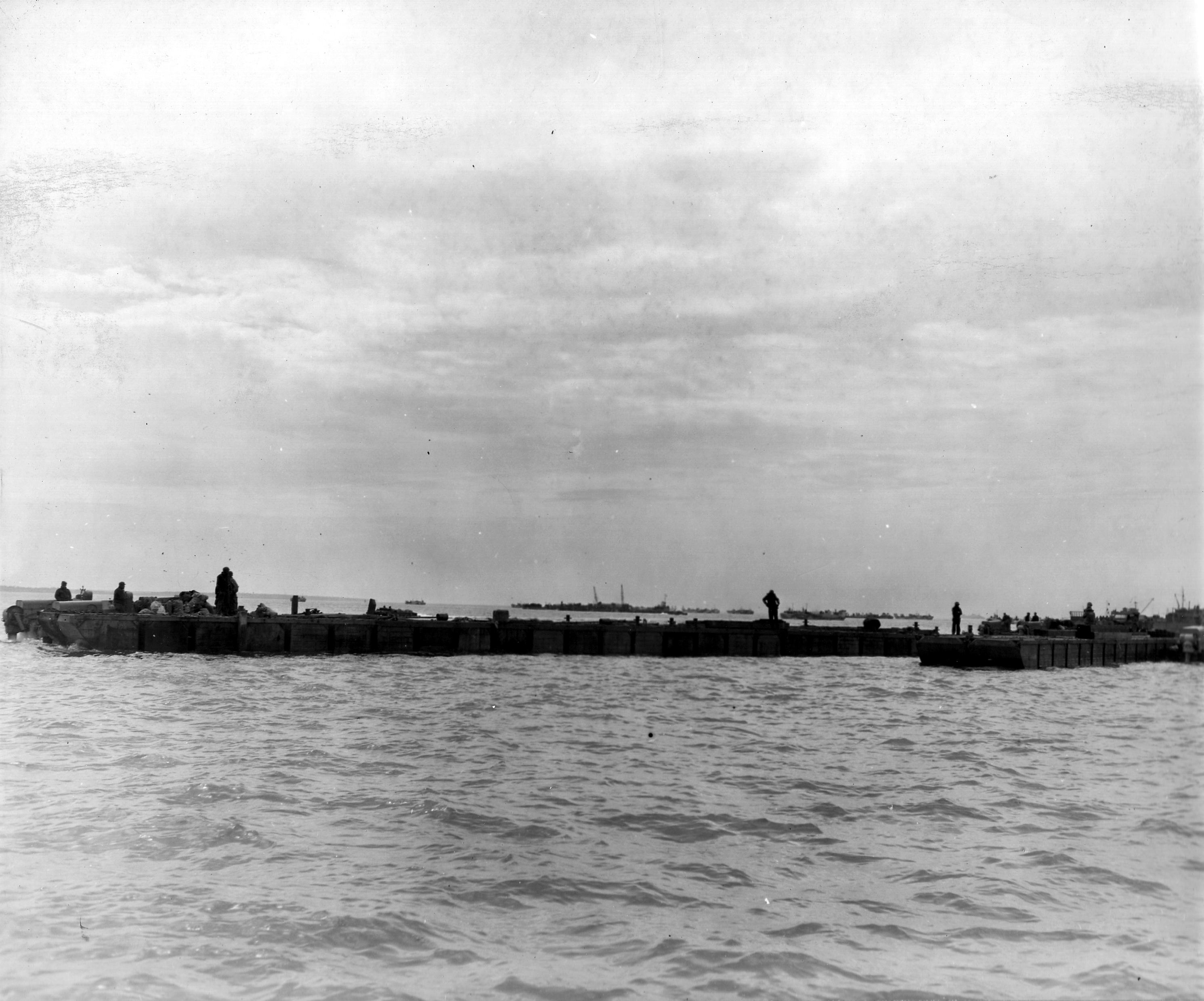
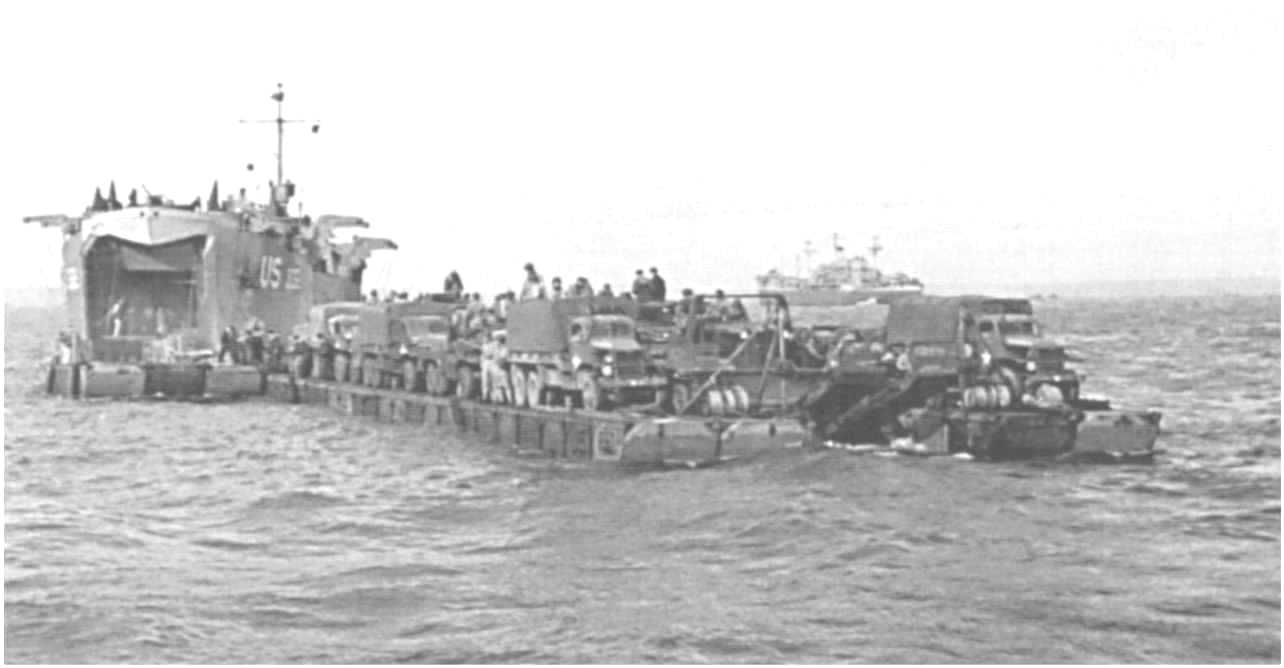
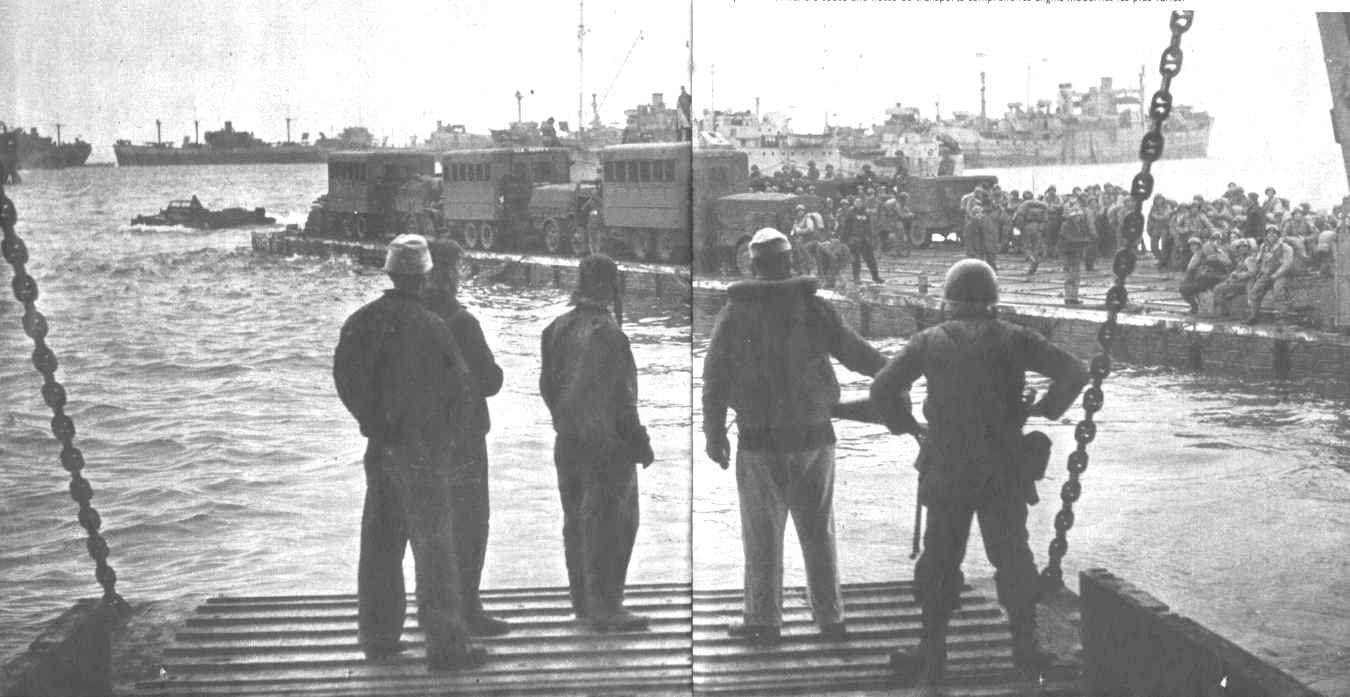
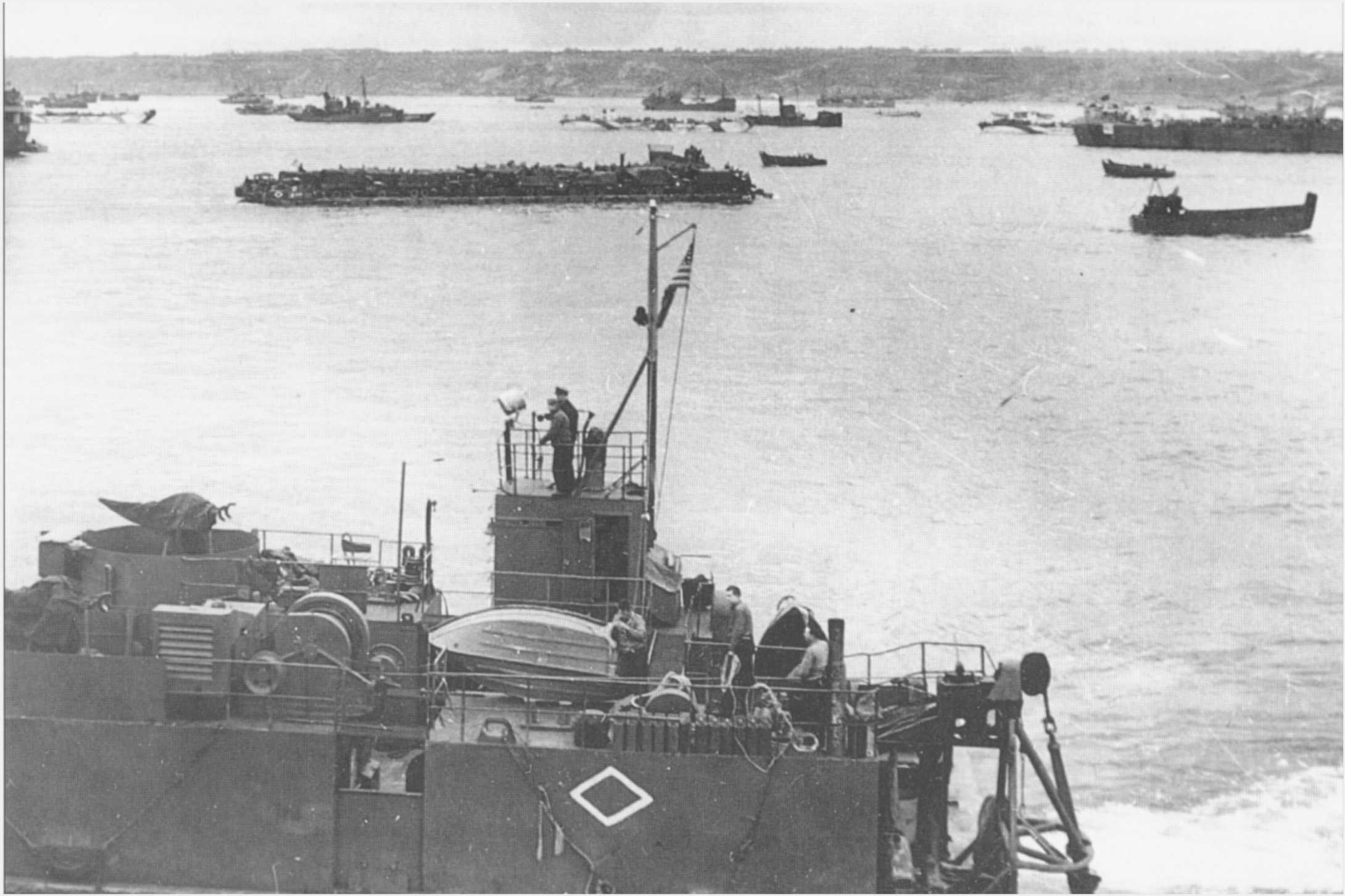
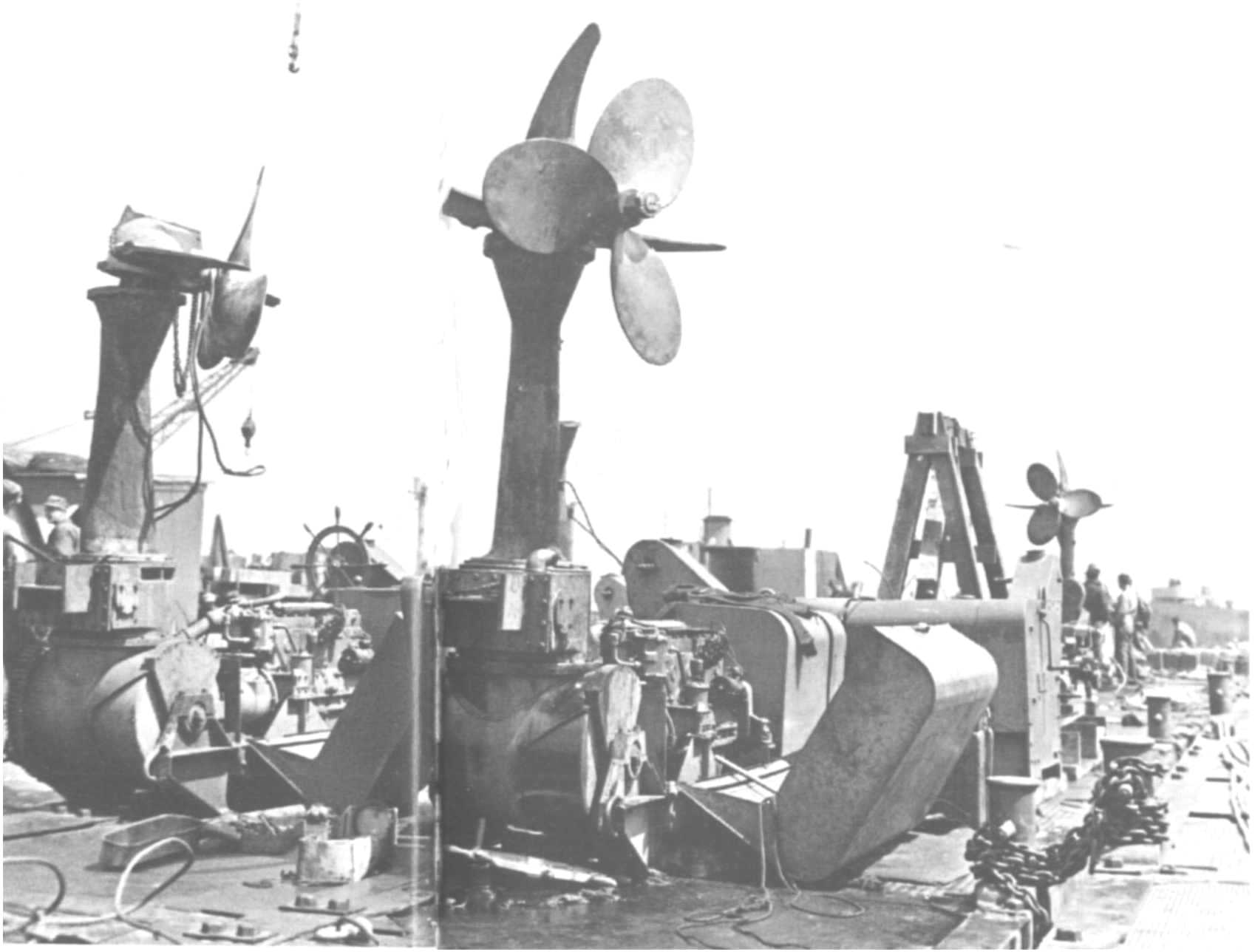
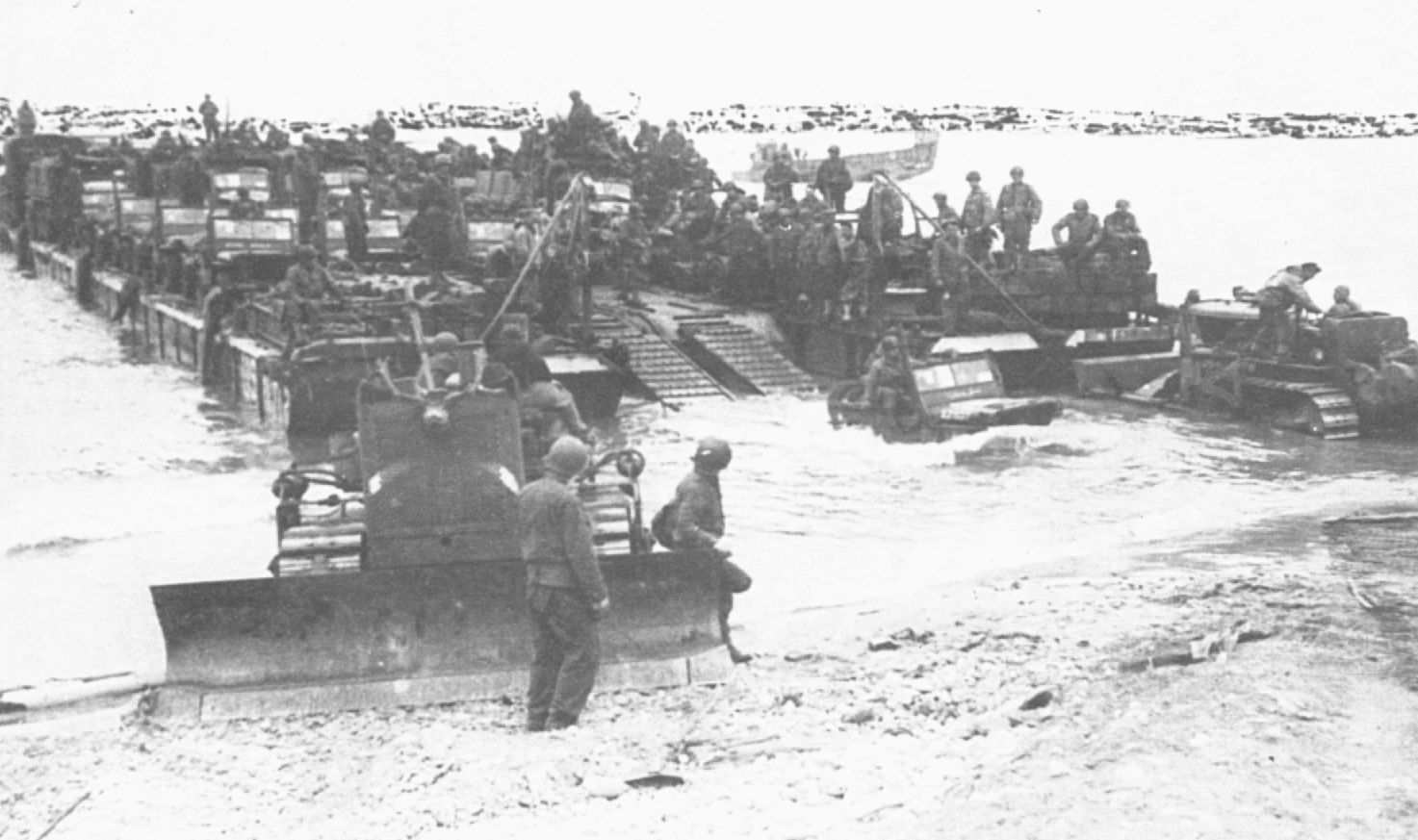
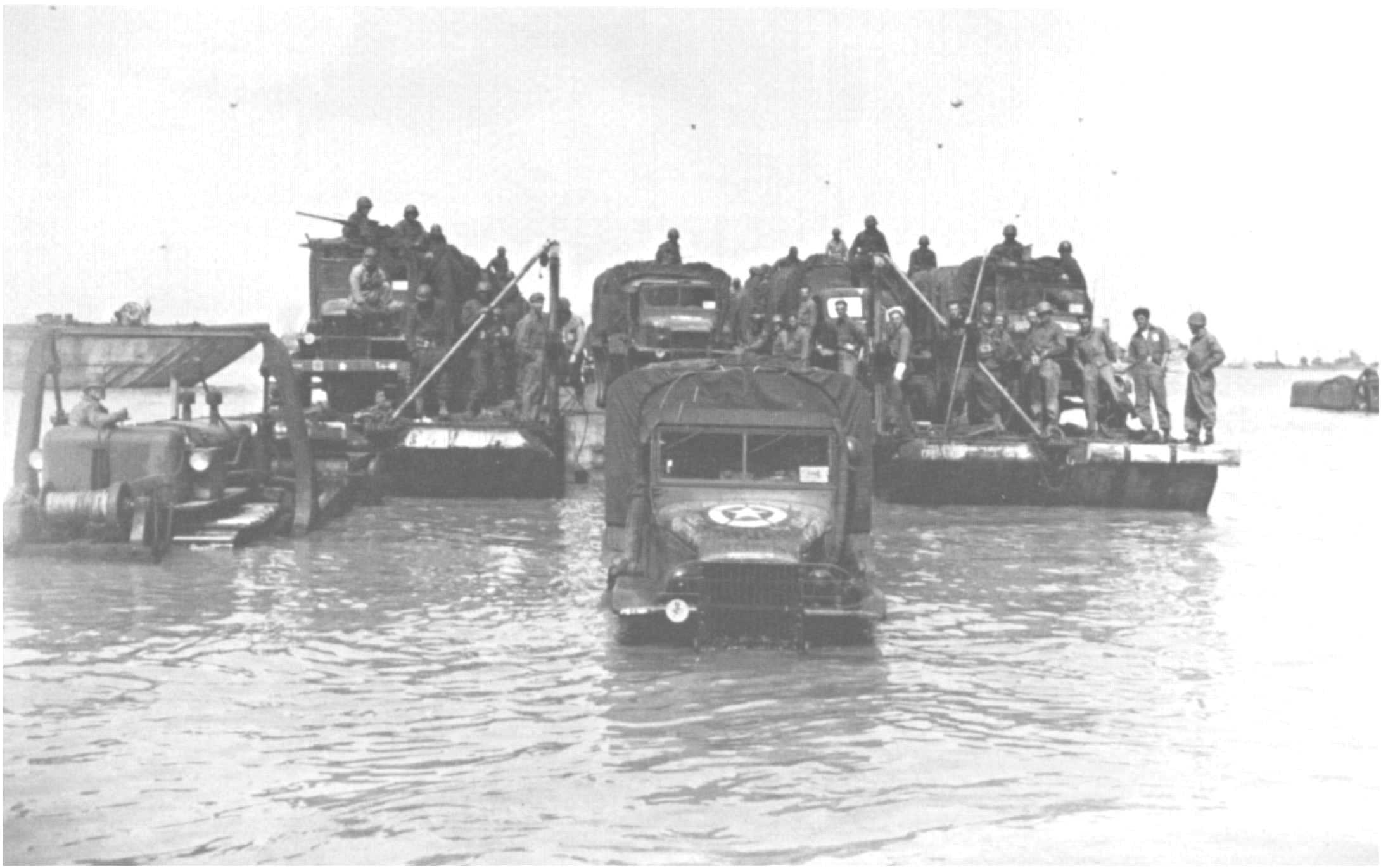
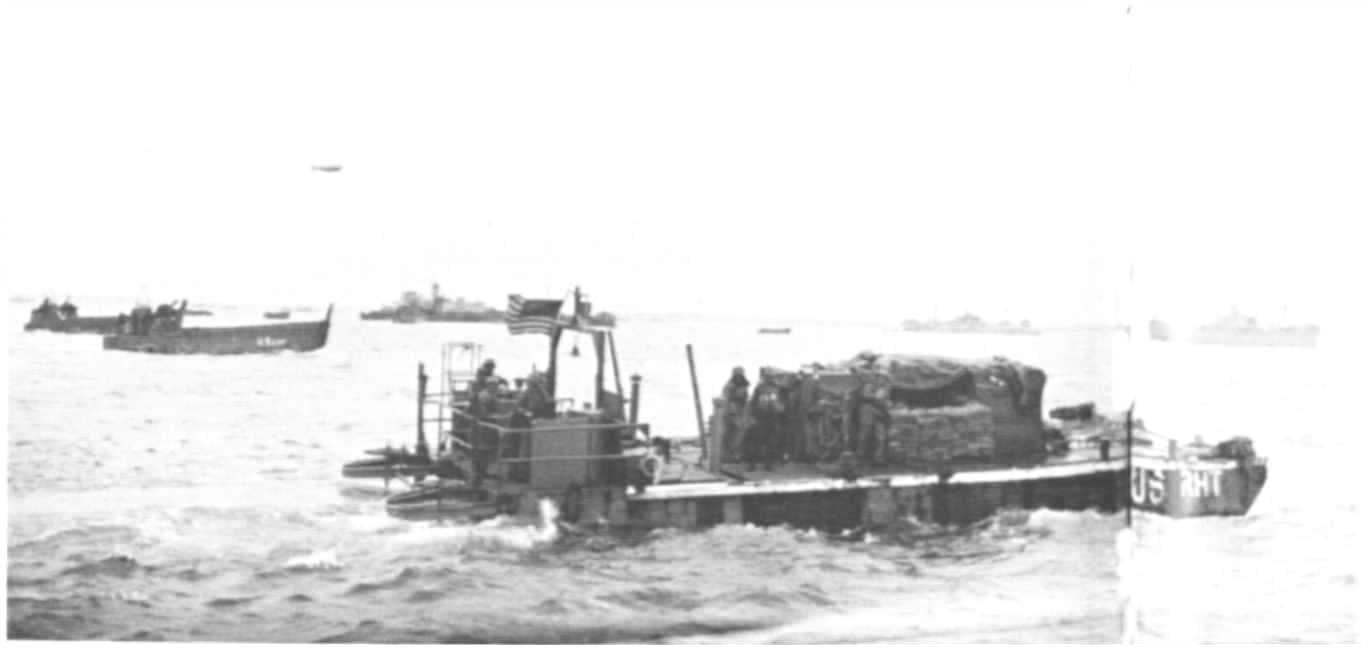
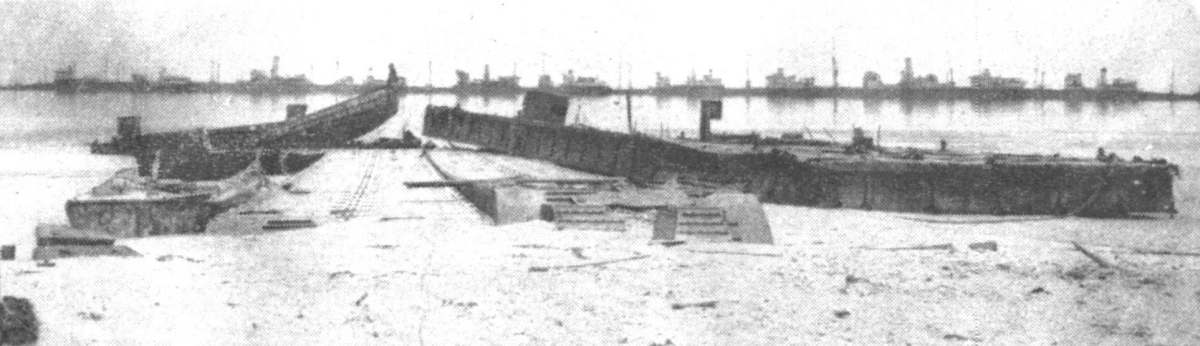
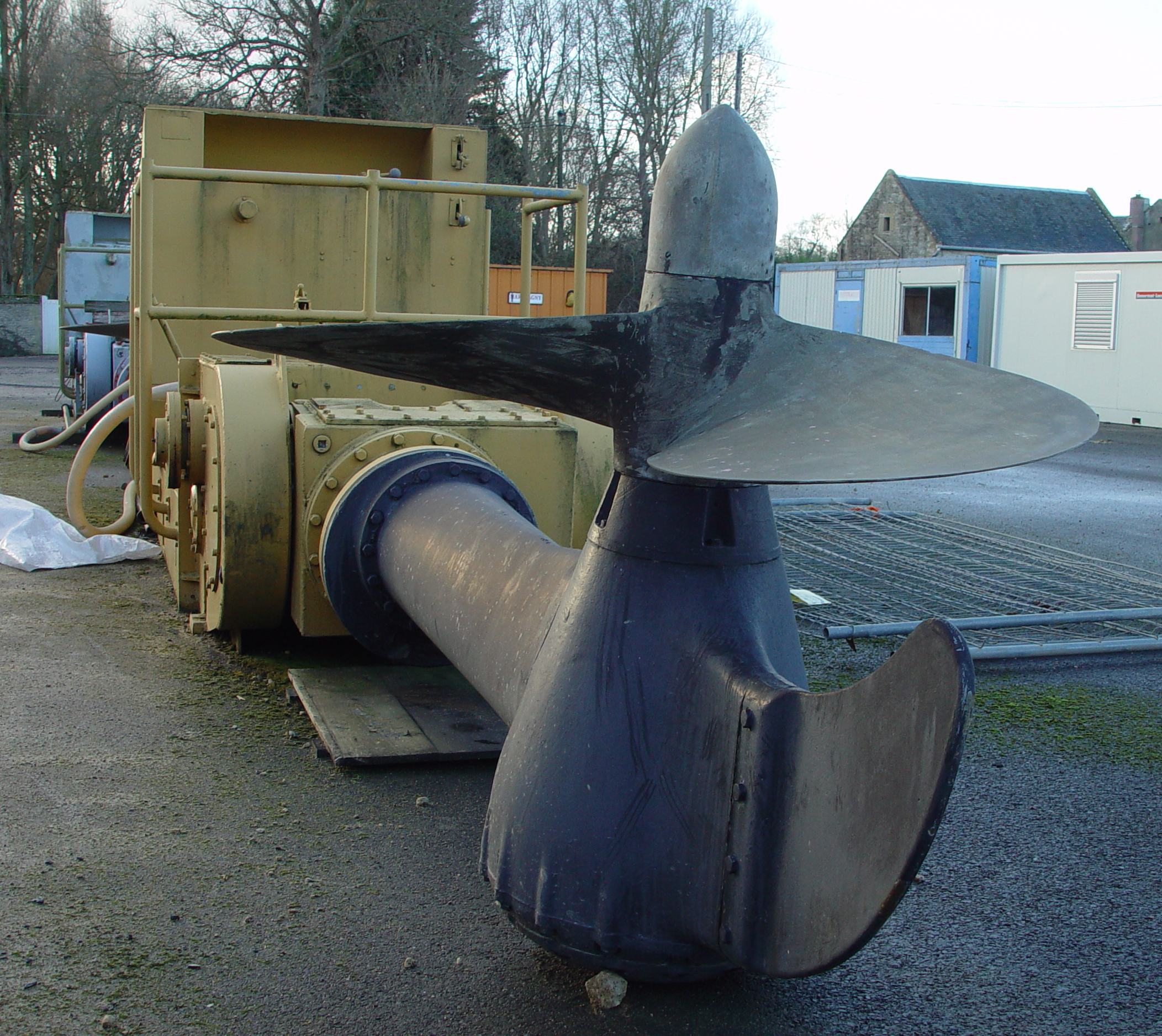
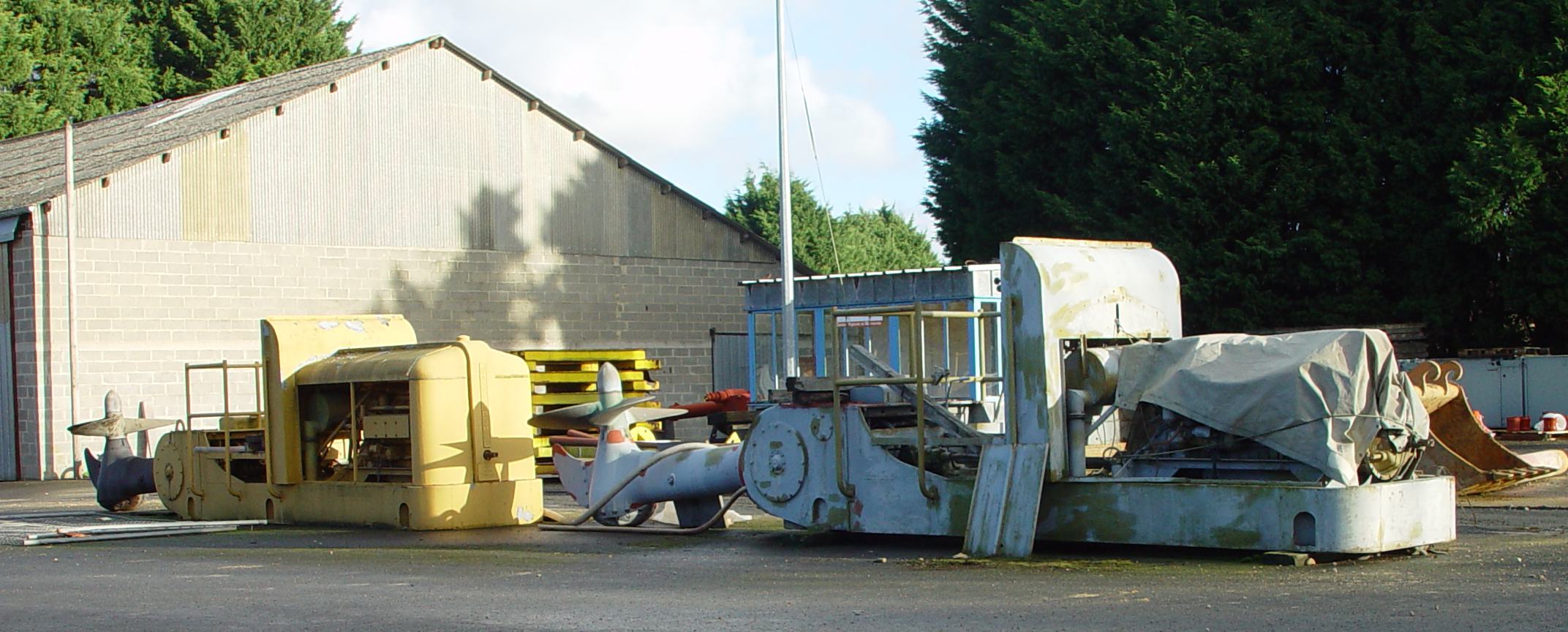
The "Rhinoferry" pontoons consisted of assemblies of approximately cubic metal caissons (about 2 metres of ridges), called NLP or NL (Navy Lightered Pontoon). they played a very important role as a shuttle between the beach and cargo ships or LSTs for unloading vehicles. They have proven to be very reliable, enduring and effective, in particular to quickly empty a LST from its load. There were 20 Rhino pontoons at Omaha Beach, autonomous with their 2 large outboard engines and one or two kennel tractors for shore docking. They were operated by the 108th Battalion of Seabees (the "sea bees", the Engineer of the USNavy). There were also Rhinotugs, independent tugs, which proved to be of little use, the Rhinoferries working very well on their own.
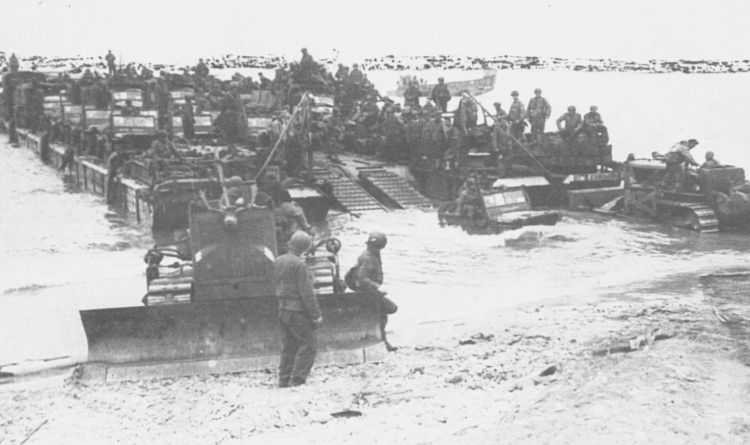
Images of rhinoferries unloading vehicles directly on the beach
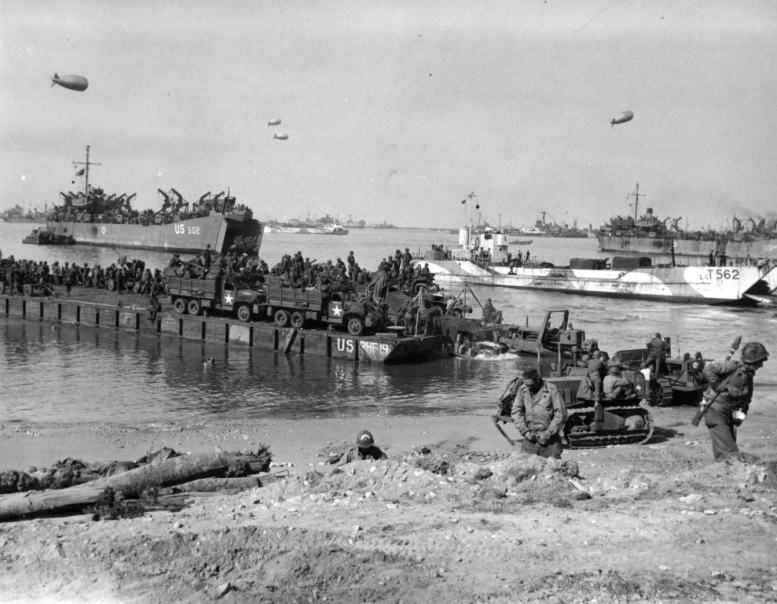
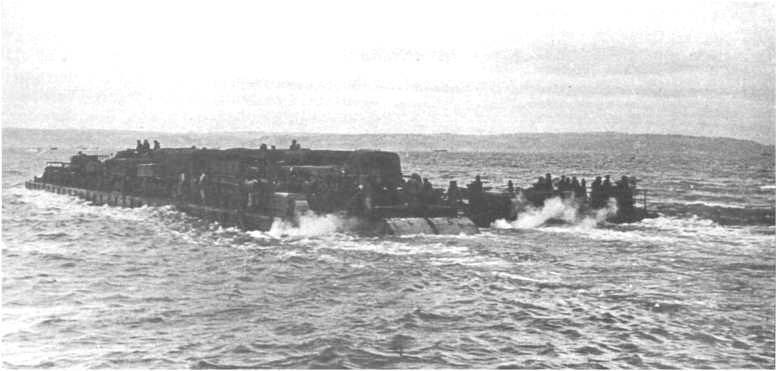
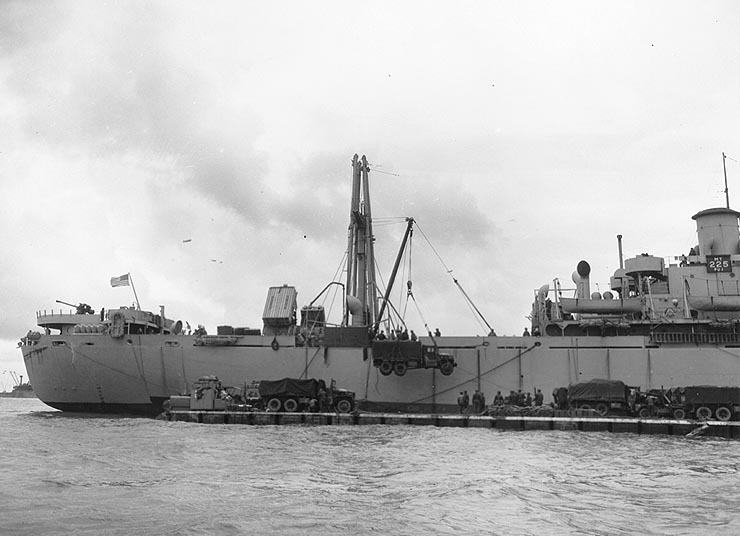
(details) The "Rhino" ferry RHF-19 landed vehicles on Omaha-Beach on June 10, 1944. The LST-502 is located in the background to the left and the British LCT-562 is located on the beach to the right.(details) The "waterproof" jeep runs in the water, you can see its vertical exhaust tube(details) A Rhino in NavigationLiberty ship unloading on a Rhinoferry
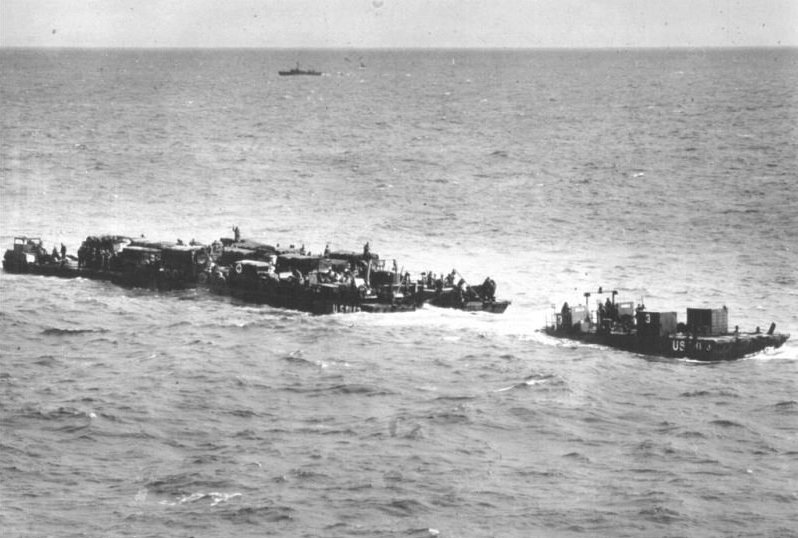
A RF fired by a Rhinotug
(details) a Rhinoferry passes the wet Arkansas battleship(details) The patron of Rhinoferry N°15, an old civilian sailor in peacetime, enlisted in the Seabees.
(details) An RF docks a "Causeway"RF pulled to the ground by a bulldozer
(details) The loaded Ponton Rhino departs from the LST, at its side there is a Rhinotug
(details) RF departs from LST after taking care of it
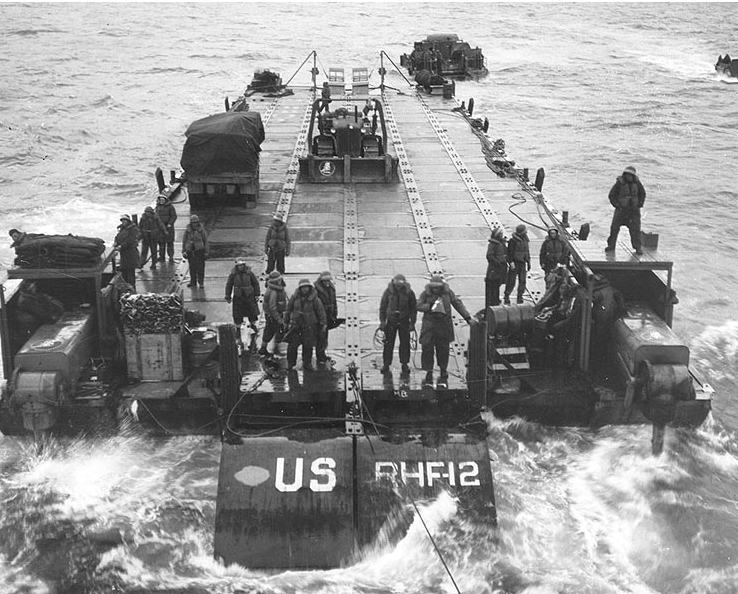
Rhino ferry RHF-12 off Normandy during the first days of the invasion, 6-9 June 1944.
(details) A Rhino in front of a LST(details) Maintenance of large outboard engines of the Rhineferries
(details) The Rhino is held by track tractors(details) An RF in the process of unloading(details) Landing of a Rhinoferry(details) A Rhinotug(details) On the right, a wreck of Rhinoferry
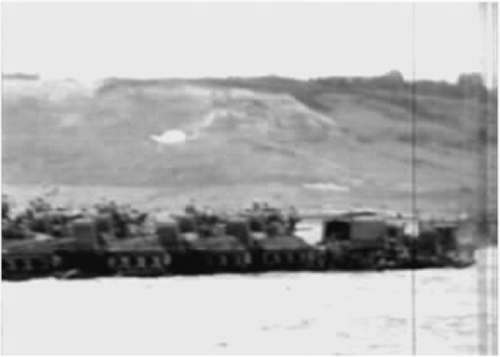
(details) On a Rhino pontoon, the tanks of the 66th Armoured Regiment of the 2nd U.S. Armored Division landed on June 10 at Omaha Beach. They are also "waterproofed" (see air sleeves, intake and exhaust)(details) A well loaded RF2 rhinos pontoons and one dukw on the right
(details)(details) Large outboard engines from the Rhinoferries, found in Crépon in 2004