

(Excerpts from "June 6 at dawn" by David HOWARTH, translation, to the Presses de la Cité)
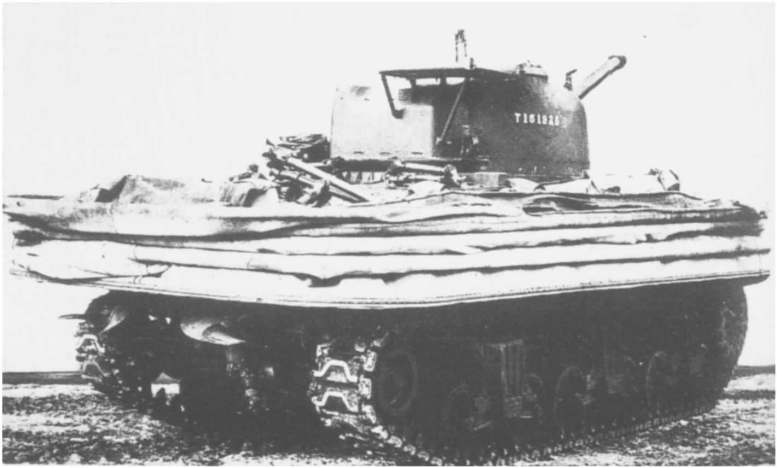
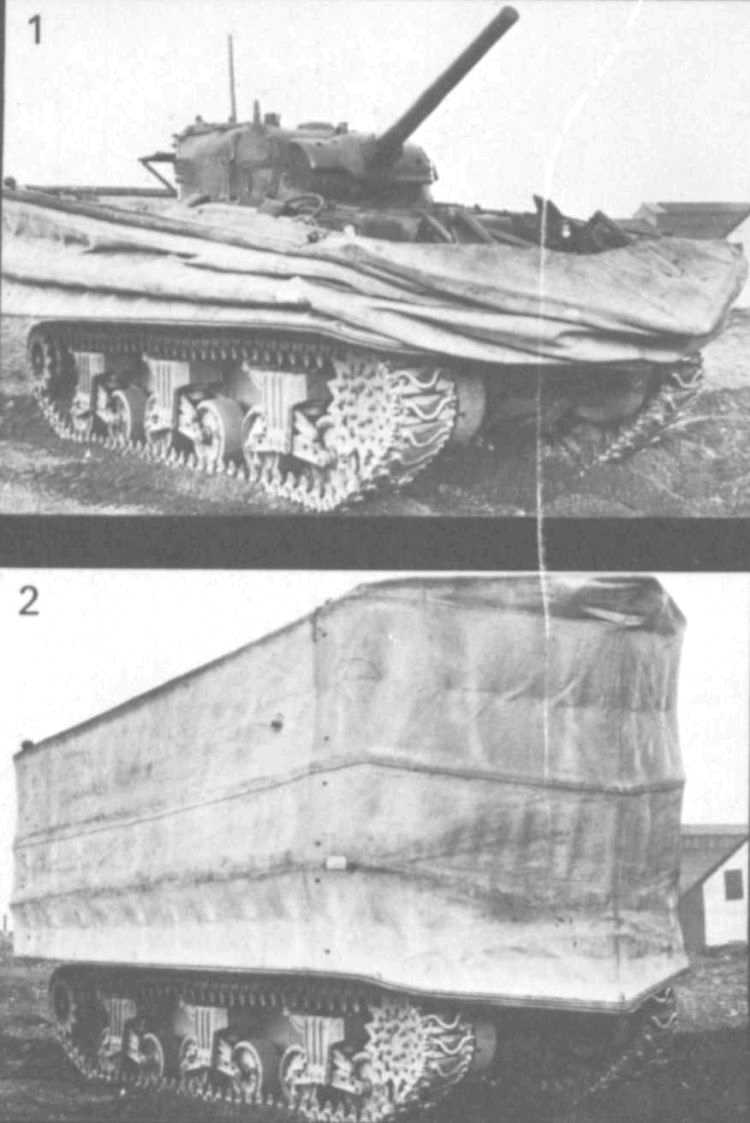
These amphibious tanks were a new invention and were used on all beaches. Those destined for Omaha were on board sixteen barges, commanded by a reserve ship sign, Dean L. Rockwell, who came to the navy for love of boxing, so curious that it might seem. Originally from Detroit, he was a professional boxer and had never seen the sea, except on his wedding trip to Florida. In Detroit, he learned that Gene Tunney, the heavyweight, then a corvette captain, was conducting a recruitment campaign. Out of admiration for Tunney, Rockwell joined the Navy as a physical education instructor.
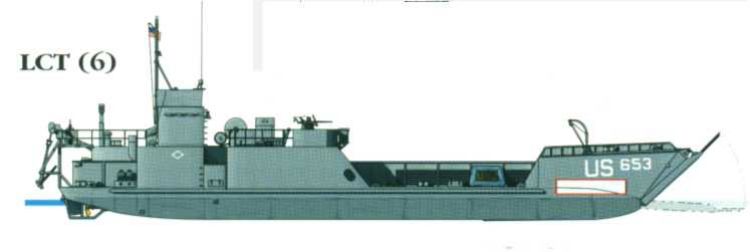
It was a disappointment. He did not approve of the methods employed by the navy in this field and his incessant criticism earned him a reputation as a Bolshevik. To punish him, his superiors assigned him to the landing barges, considered by them, as a kind of suicide weapon. There Rockwell discovered his vocation. True sailors could find these hideous, unmanageable buildings unable to hold the sea, but he gave them a kind of passion and, because of this, quickly gained control of their handling.
He was then a non-commissioned officer but was soon given command of one of these barges. He became an officer and, at the time of landing, was at the head of a fleet, making him perfectly happy. In March, summoned to Dartmouth naval base, he learned that he had been chosen for a new task, to be executed in liaison with the army. First upset, he quickly changed his mind, as he was taught the existence of amphibious tanks by asking him to study the technique of launching them from a landing barge. Here too, he quickly became very expert and, in so doing, conceived the greatest admiration for the tank crews.
The crossing was very difficult for the crews of the barges but probably even more difficult for those of the tanks. After a false departure, they left Portland at 9:15 a.m., with the prospect of twenty hours of travel in front of them. The sea grew deeper and deeper. These barges had three sections, bolted to each other, with the machines in the rear. Loaded with four tanks, they worked hard, giving the impression of being able to break through the middle. The sea often swept the bridge. Rockwell himself had to admit that they behaved very badly. Governing was very difficult, keeping his position in training, impossible. The collisions were numerous. None were of a gravity character, but at any time the barges had to manoeuvre, fell across the blades and departed from the convoy, while the helmsman frantically turned his wheel.
Most of the men of the tanks had sea sickness from end to end. They were also concerned about the conditions they would encounter in front of the French coast. Would they be able to launch their gear or would all their training remain lost? The same concern weighed on Rockwell's mind. Everyone knew that amphibious tanks could not float in bad weather, it was so obvious that no one had ever risked an armored tank and their own life trying it. In this case, the orders provided, the barges would push to the beach to land there directly. The decision would be made on the spot, a judicious arrangement in itself, but which, given the importance of the role of tanks in the landing, placed an extremely heavy responsibility on the shoulders of young officers.
Before reaching the launch point, the sixteen barges were to be separated into two groups of eight. (one group for Vierville and the other for Colleville) In each of these groups, the most senior naval officer and army officer would consult each other to decide the solution to be adopted. Nobody told them how to decide if they didn't agree.
The night only added to the difficulties. Rockwell or any of the barge commanders could not sleep. At dawn, Rockwell was delighted and somewhat surprised to see its sixteen buildings still floating and relatively grouped. He led them through the line of infantry transports, wet fifteen kilometers from the earth, following channels previously marked by the dredgers, and then also dislodged the warships that were waiting for the time to open fire. The two groups then separated, the Rockwell group headed towards the western end of the beach, the other towards the east.
As soon as the day was sufficient to make it possible to appreciate the hollows, Rockwell acquired a certainty: the tanks could not win the land by their own means. The officer of the highest rank army was on another barge. Rockwell, preparing to talk, mounted on one of the tanks and called him by phone. To his great satisfaction he found, in his correspondent, the echo of his own thoughts.
"I don't think we can do it. Would you like to take us to the beach?
- Most certainly."


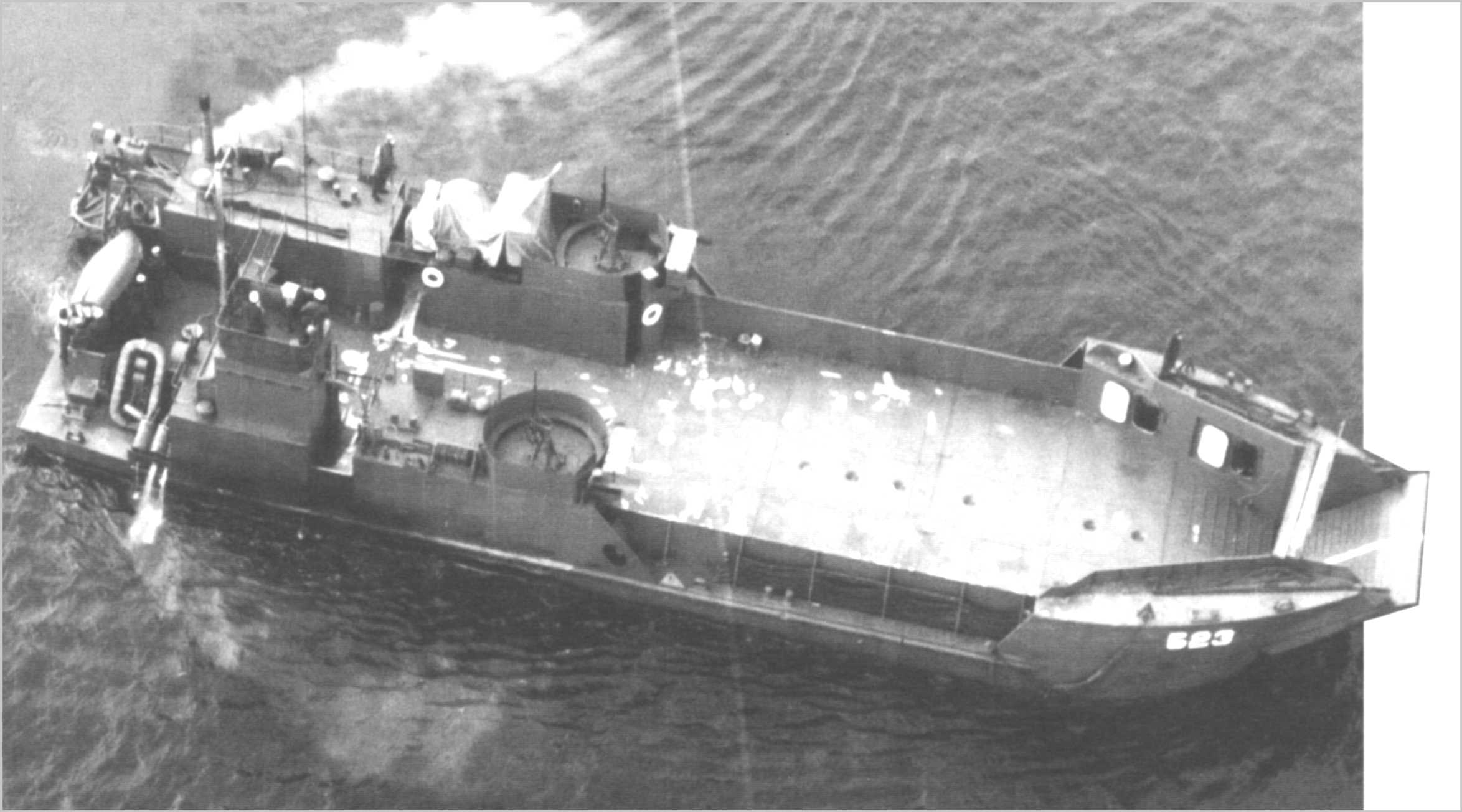


The eight large barges, which were very vulnerable because they were unarmed, would therefore expose themselves to the danger that the use of DDs had to avoid, but Rockwell had always been prepared for it and the prospect did not displease him. The important thing was to put the tanks down without worrying about what might happen to the barges.
At this point, they were moving forward in line, heading east ready to launch the gears. He told them to prepare to shoot down 90 degrees to be on the front line, and ordered the execution at 5:30 a.m. All carried out the evolution to perfection and headed towards Omaha. This view fills Rockwell with pride.
The other group (the one who was to go in front of Colleville) decided to launch. In less than three minutes, twenty-seven of the thirty-two DDs were thus found at the bottom of the Channel, 135 men drowned or struggling to save their lives. The heavy barges could hardly collect survivors, the best they could do was to throw life belts at sea to allow swimmers to wait for lighter boats to arrive.
Thus, in the eastern part of the beach, the infantrymen received the assistance of only five DD, instead of the thirty-two planned.
Rockwell did not see, with his eyes, this tragic proof of the correctness of the decision, he was too absorbed to look at the earth and its watch. Time was indeed of paramount importance. If he arrived two minutes too early, he would be at the end of the naval bombardment; if he arrived two minutes too late, the infantry would not have the tanks at the time when it needed them most.
However, the launch point of the tanks had been chosen according to the speed of the tanks and the barges were faster, so we had to waste time. The problem would not have been arduous in ordinary circumstances, but it was far from it. The shells of the battleships and cruisers passed over Rockwell's head. On either side of the landing barge area, destroyers and ground artillery spit out of all their tubes. The hovering of the planes, although they were invisible above the clouds, added to all this fumes. Then, when Rockwell approached the beach, the rocket barges started their particularly terrifying bursts, while, on their own buildings, the tanks started their engines.
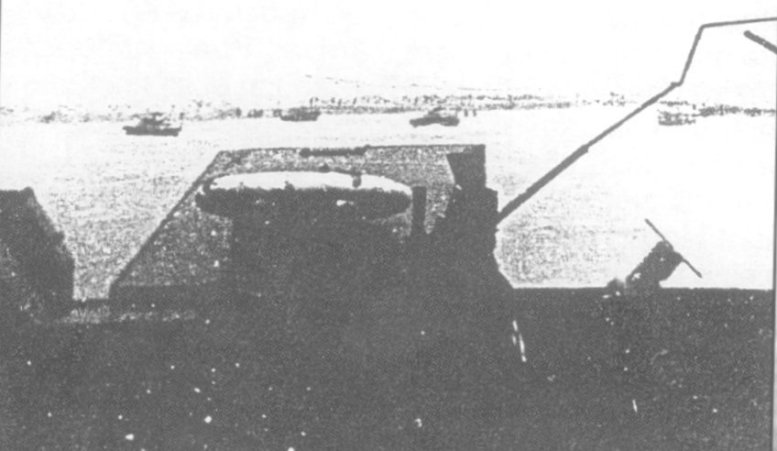
The smoke was then almost completely concealing the coast, only the top of the cliffs was still untied on the sky. For a while Rockwell lost sight of his bitters. Fortunately, a laugh briefly swept the smoke at the outlet of one of the valleys, allowing to see villas. Rockwell found that the current was drifting its buildings eastward. He made them oblique on starboard and increased speed. At the exact moment when the naval bombardment ceased to move more inside, the barges were in front of the points they had to reach, having only six hundred meters left to travel.


That was the scene Rockwell had never stopped imagining since he was assigned to landing ships, with one exception, however: he expected to approach under fire. So far, however, not the smallest opposition had emerged. In the air, he could not have recognized whether the Germans responded. Only badly launched rockets had fallen to his neighbourhood.
Despite the remoteness of the naval bombardment, the tumult did not diminish. Now it came from the engines of his four tanks and from the gun of the first who was already firing over the ramp. The huge beach, covered with obstacles, seemed quiet. The villas were in ruins, the cliffs were deserted, smoke was rising here and there from the grasses burned. In front of his eyes, no man, alive or dead, appeared. Everything looked like a place ravaged by some earthquake and abandoned by its inhabitants. During these two minutes, from 6:27 to 6:29, during which the barges approached the rollers, stopped and failed, it was possible to imagine the hope that the bombardment had played its part, that the defences were destroyed.
The ramp of the Rockwell barge fell, the first DD advanced, tipped from the nose, descended in a meter fifty of water, and progressed to the sand, fifty meters from there, among the rollers that broke on it. It was at that time that the Germans became animated. Perhaps they had deliberately waited, but, more likely, the gunners had just come out of the shelters whose resistance to large projectiles had been so badly appreciated. Rockwell saw tongues of fire spring to the side of the heights. During the first seconds, the shot was misadjusted and the second tank was able to descend. Then, three barges, to the right, were hit, in rapid succession, by a 88 mm piece that took the beach of enfilade.
Rockwell watched his third DD leave the ramp, standing side by side with the enemy. He passed, however, soon followed by the fourth. Rockwell then raised the ramp and put his machine back.
It was H time, very precisely. The tanks were on the ground, Rockwell had only one mission: to bring his buildings safely, if he could. Seven failed, but two burned. Other rooms had opened fire, in the cliffs, however, they were no longer shooting at the barges. Rockwell saw the first of his tanks negotiate his way through the obstacles. Barely had he travelled ten meters after he came out of the water, and surrounded himself with flames. Looking behind him, Rockwell saw the new target of the Germans: the boats bringing the infantry forward under a hail of shells. (Cie A of 116th Regiment).