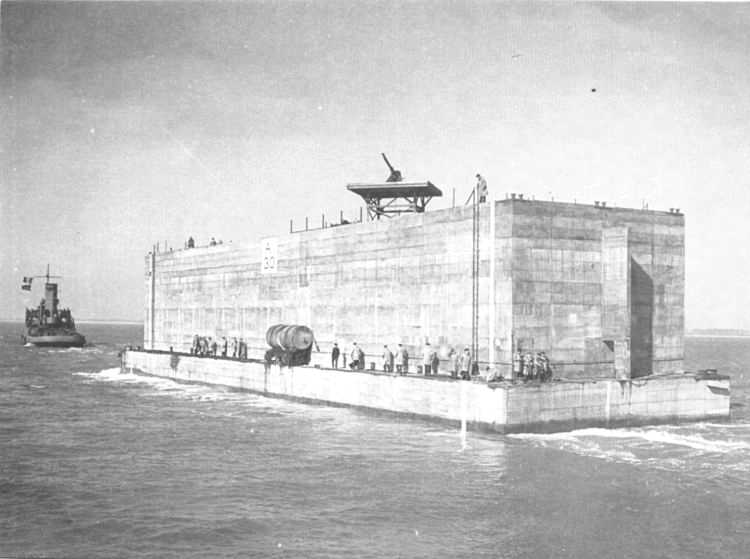
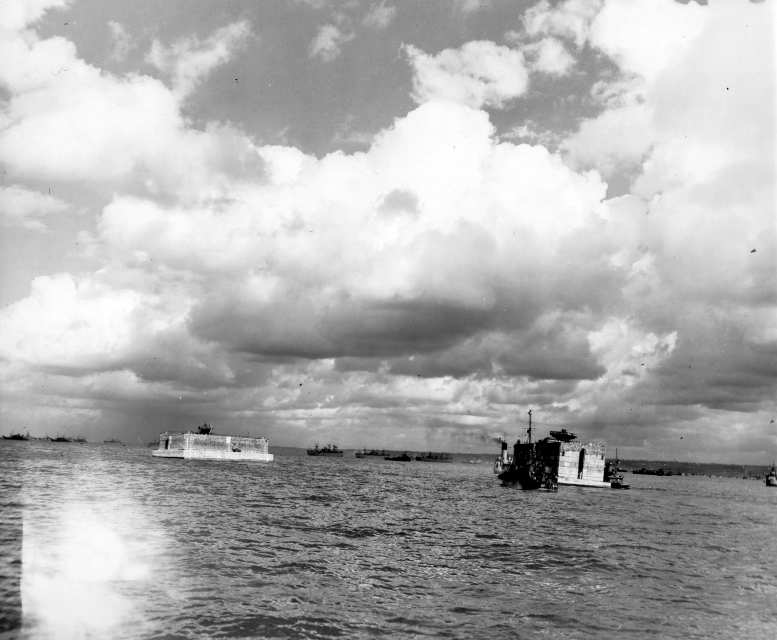
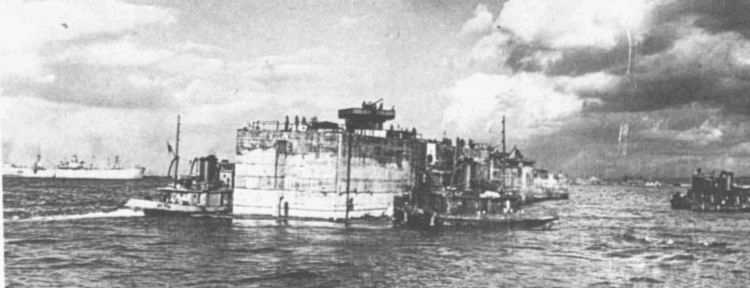
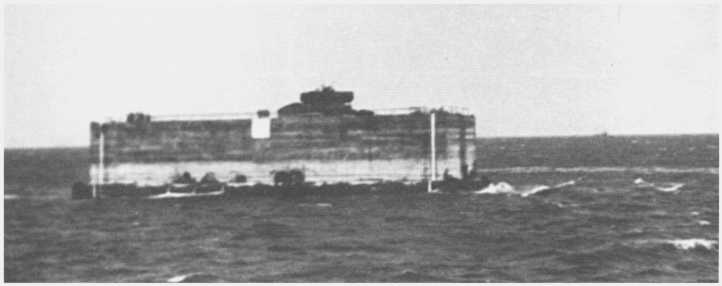
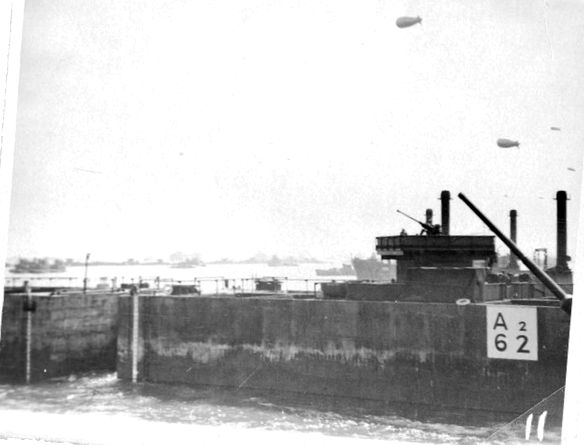
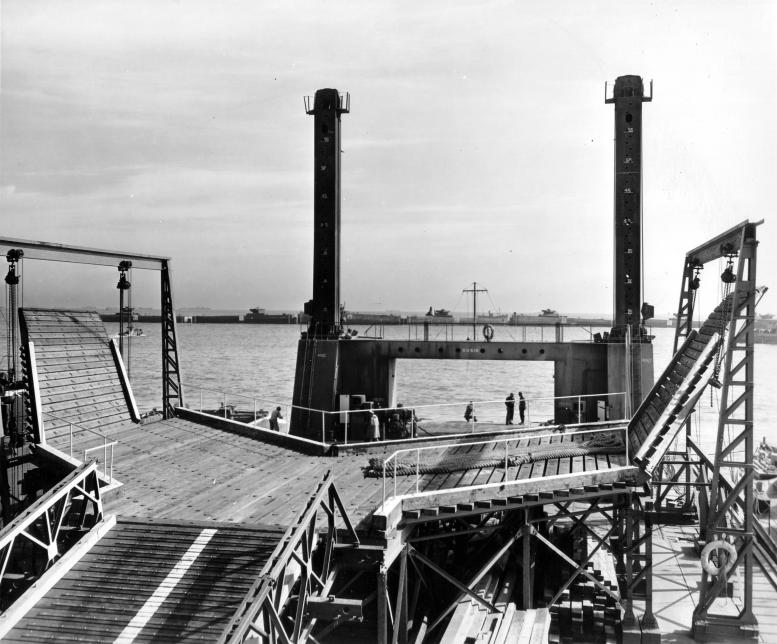
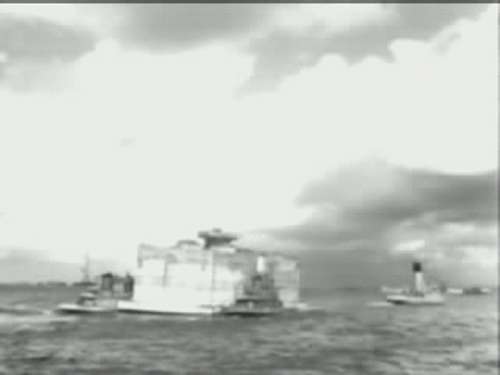
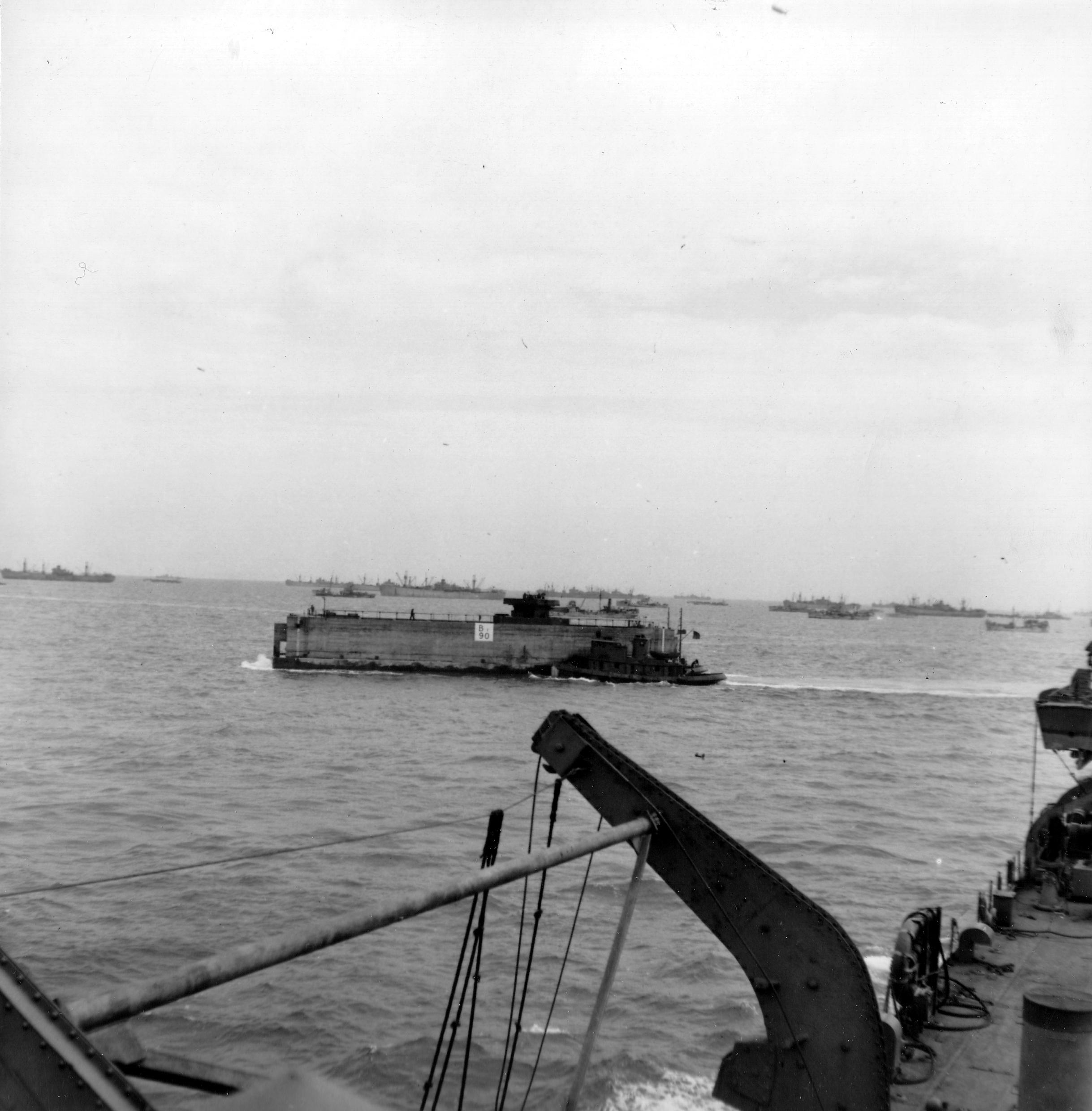
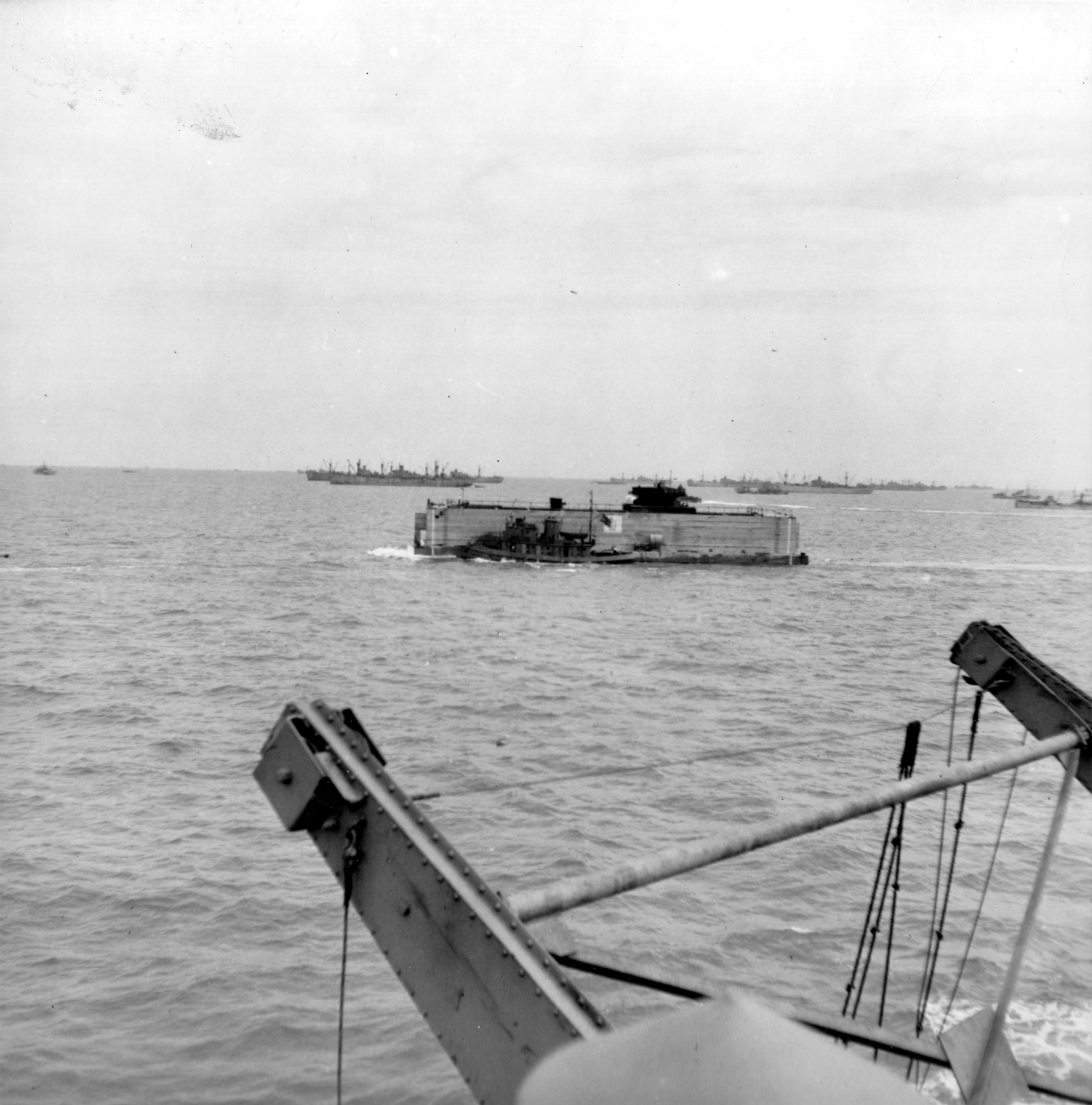
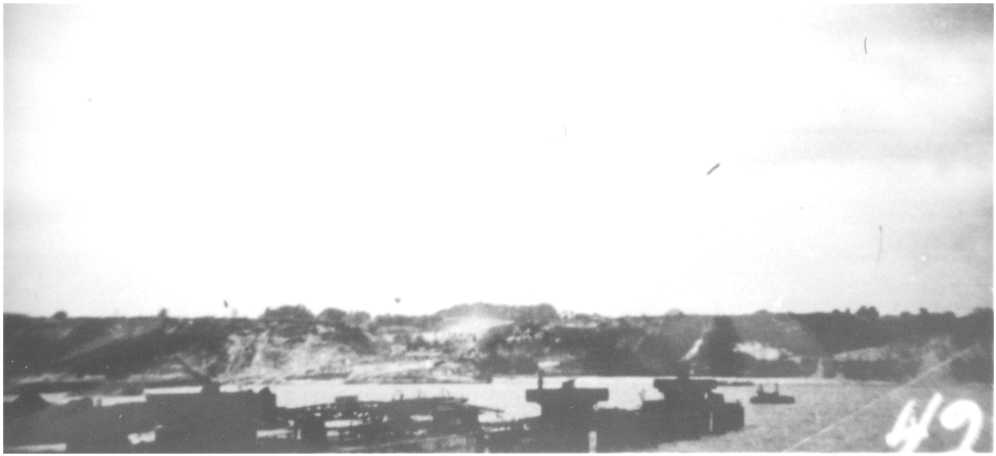
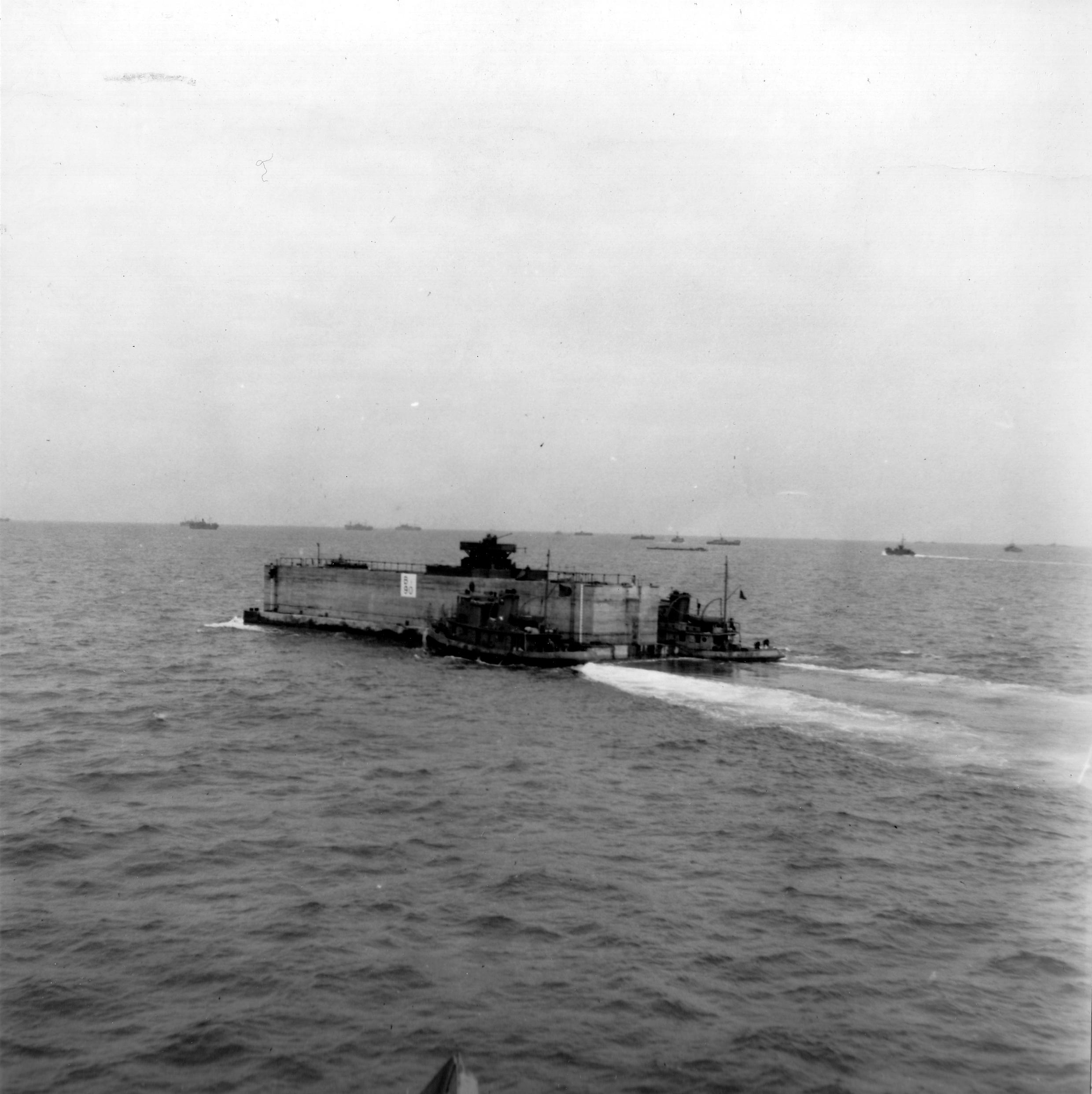
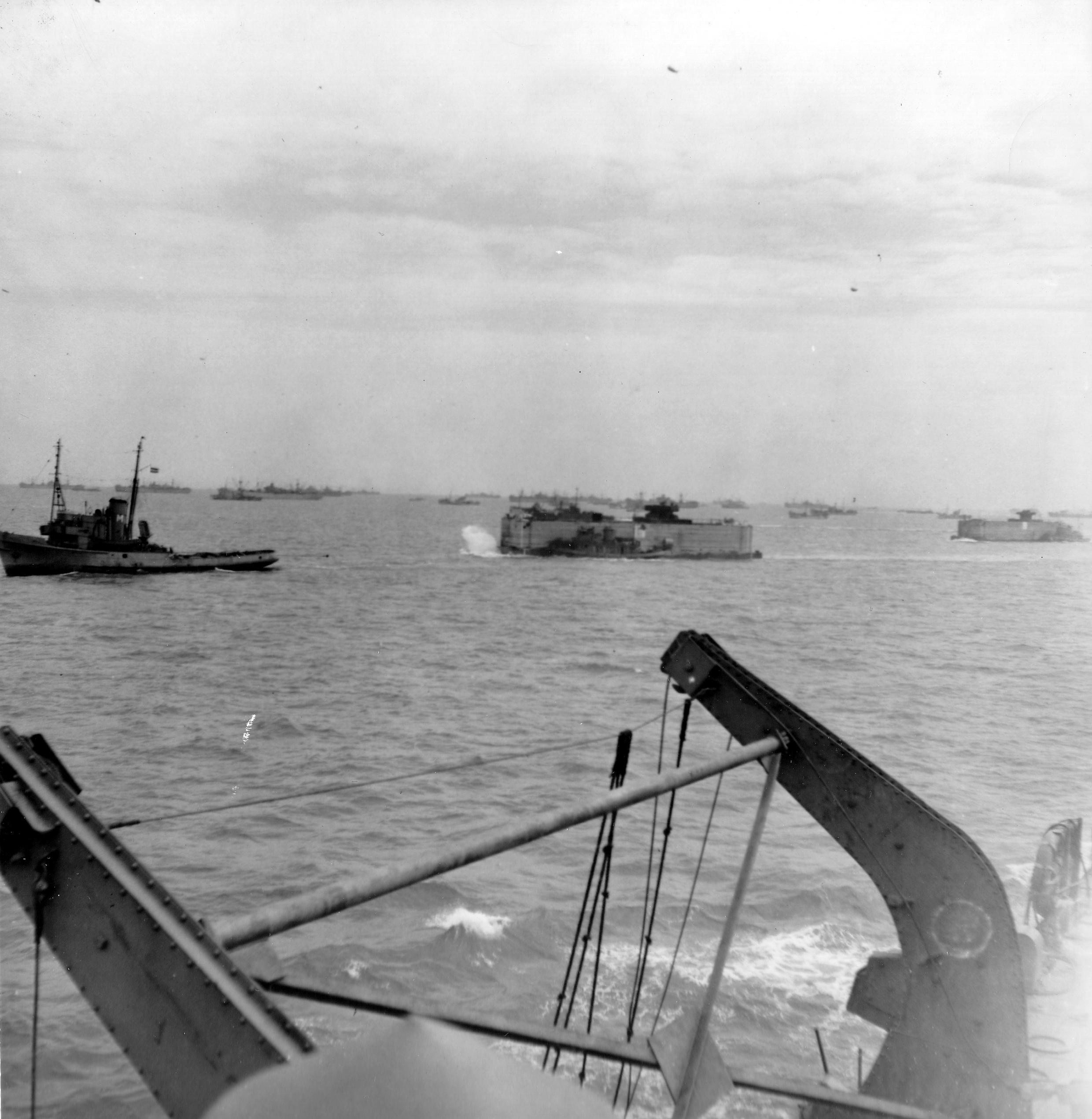
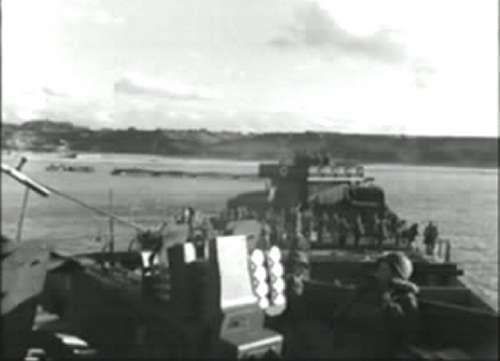
Standard layouts of caissons There were 6 different models to adapt to the funds:______________________(details) In this photo, which may be dated 8 or 9 June, we can see the first 3 caissons of the open sea dyke.
(details) Lobnitz pontoon, with at the bottom the North Phoenix dyke completed(details)
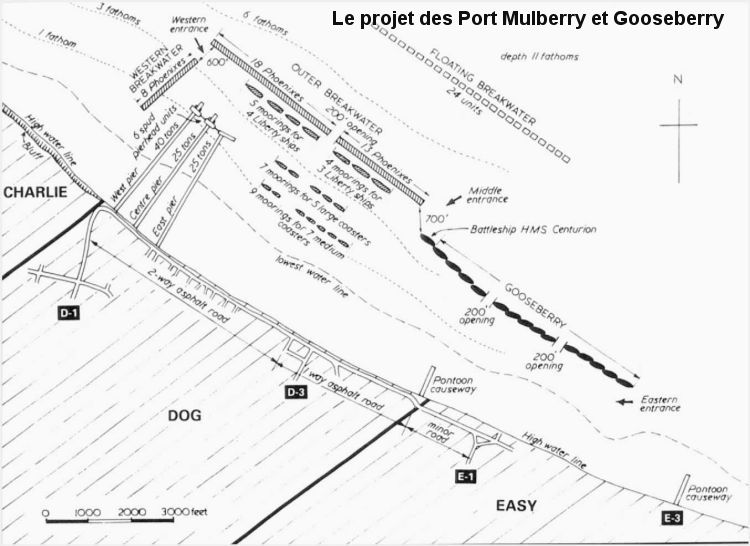
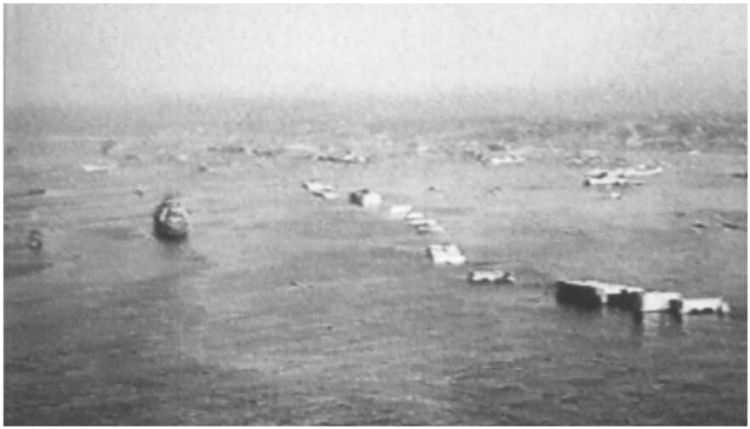
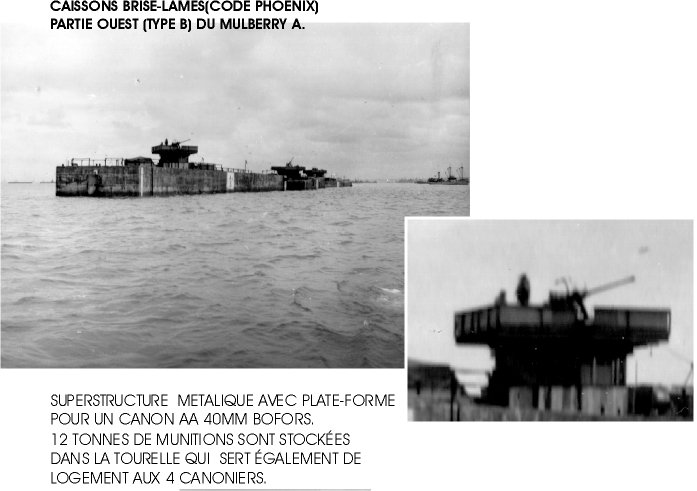
Originally, 31 caissons were planned on the offshore dyke and 8 on the west crossing. The setting-up of the caissons has been gradual. On the West Crossing, the first three were placed on June 8. A total of 7 caissons were in place on June 18. The 3 caissons adjacent to the "Centurion " battleship were placed on 9 and 10 June. At the offshore dike, 12 caissons were placed for 11 June and 24 in total for 18 June.
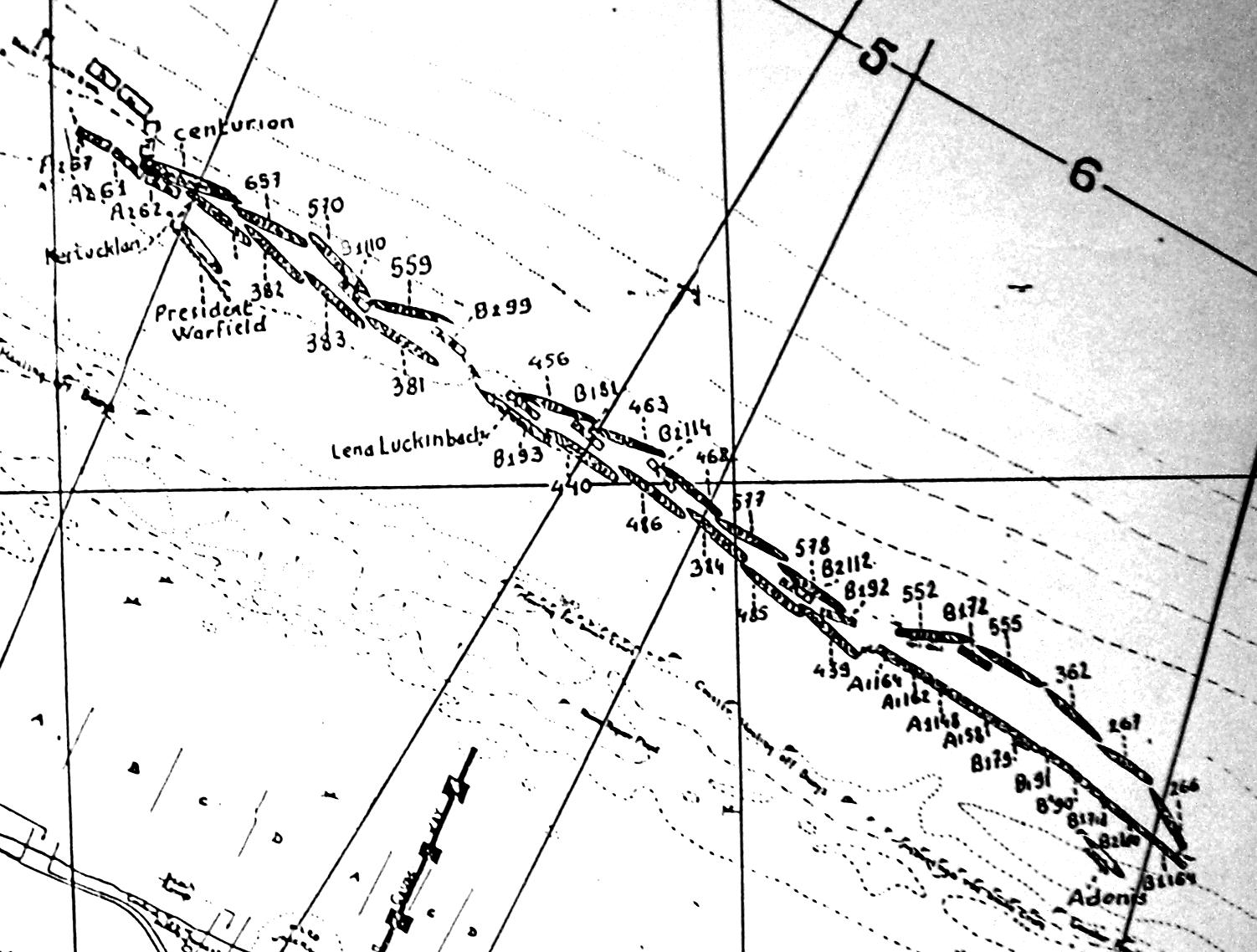
(see details) The above sketch shows the situation of these 34 caissons just before the storm that left only 7 caissons intact on the offshore dyke. ______________________The Gooseberry dyke at Autumn 1949 (see details)(details)
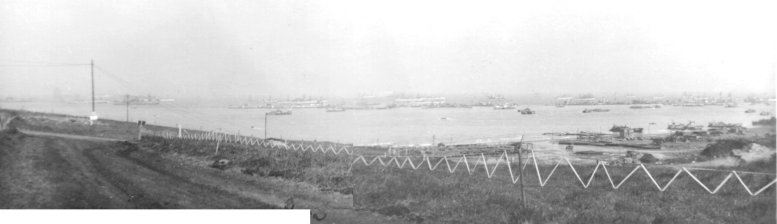
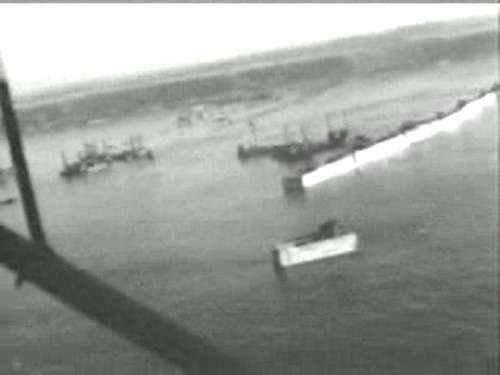
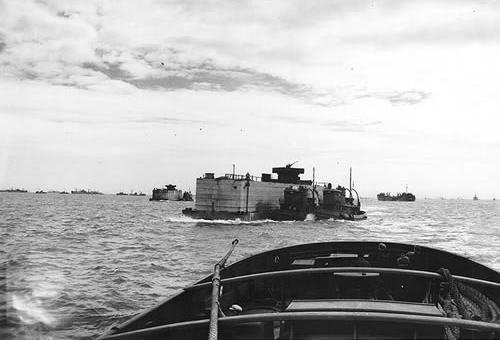
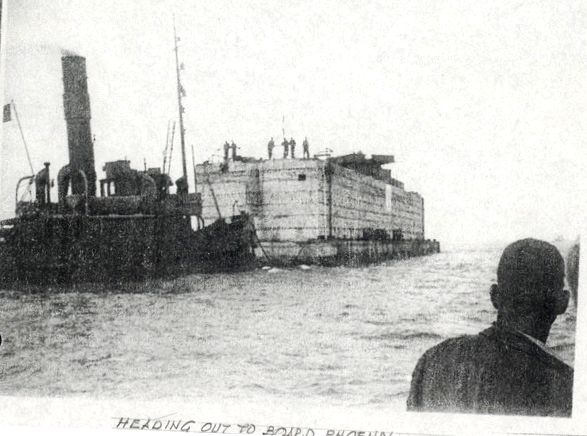
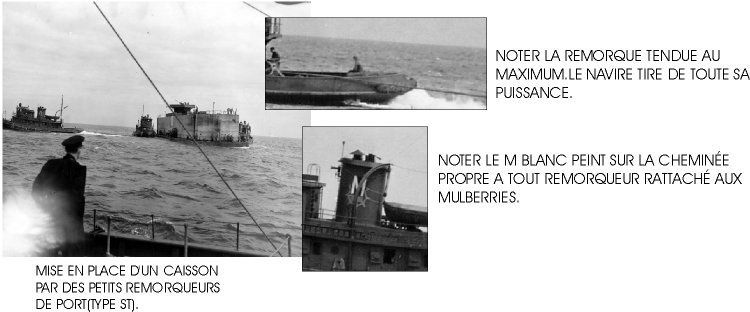
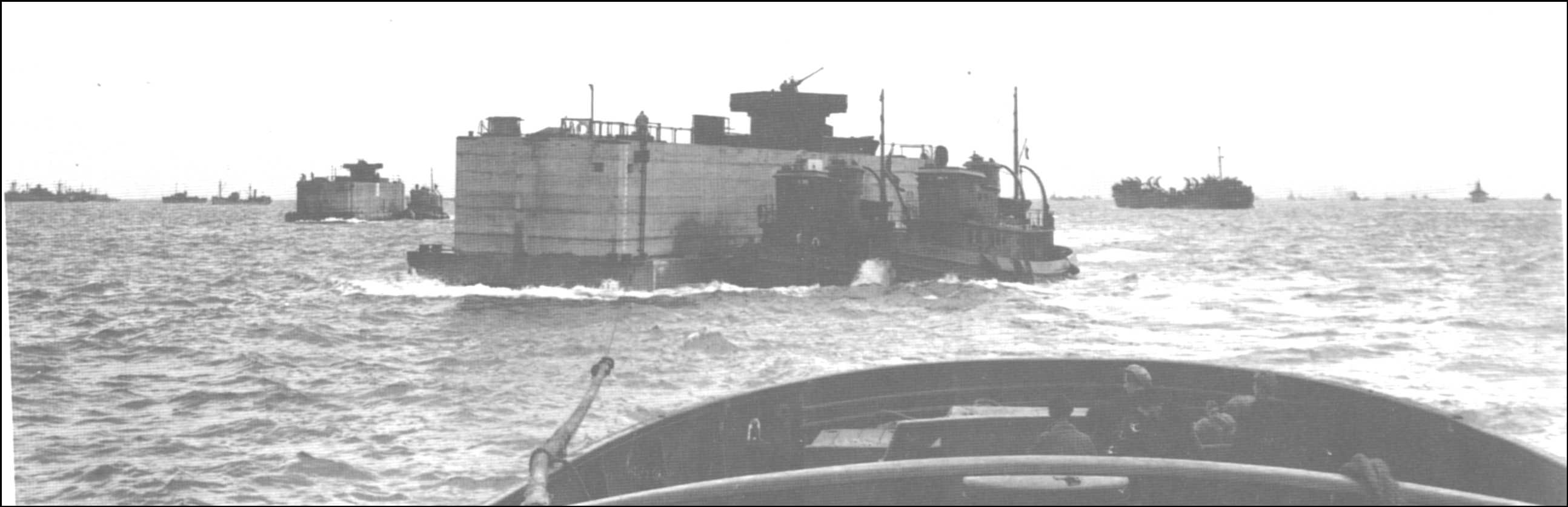
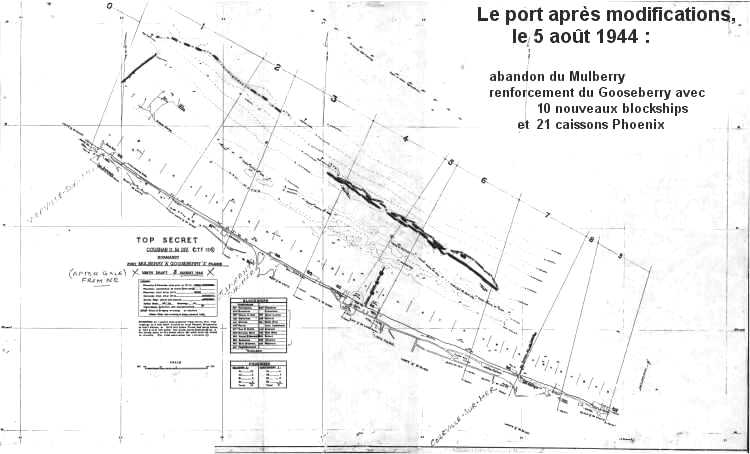
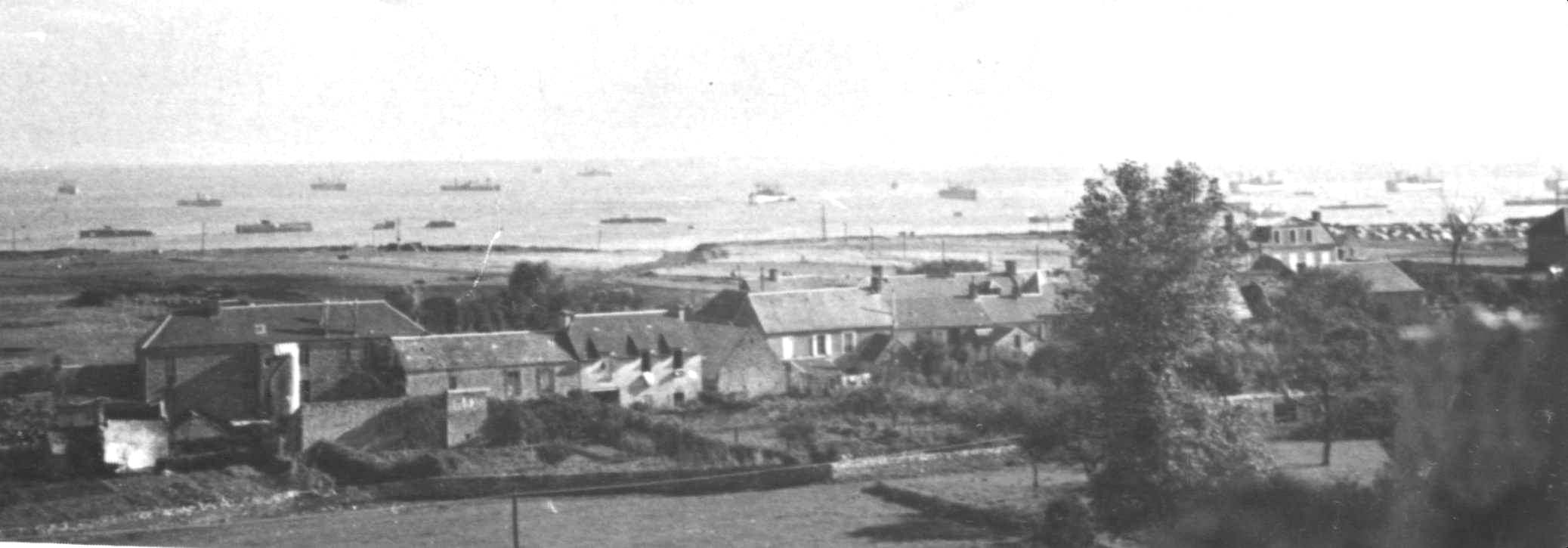
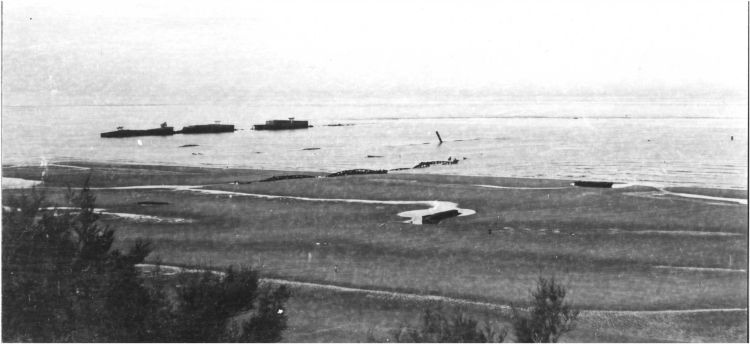
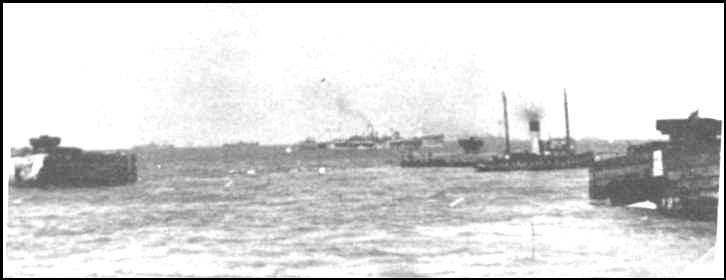
After the storm, 18 caissons came to strengthen in September the Gooseberry as shown above.The port then took the final form, as indicated below (updated 5 August 44): (see details)Lea crosses W with the Phoenix N°Details Gooseberry with blockship and Phoenix numbers ______________________(details) In this photograph taken from the bell tower, we can see some cargo ships wet off the coast and the remains of the 7 Phoenix caissons remaining from the offshore dyke after the storm. (Photo GCA, Sept 44)The West Crossing(details) The west crossover of pontoons Phoenix and the remains of Bridges in autumn 1949(details) The Phoenix dam of reinforcement, in front of Colleville, circa 1950(details) Phoenix caissons waiting for placement, next to a Lobnitz
The Phoenixs dismantled from the offshore dyke (some still emerge during the large low tides, but all are still at the bottom in the form of piles of reinforced concrete debris, dangerous wrecks)(details) The sea dyke
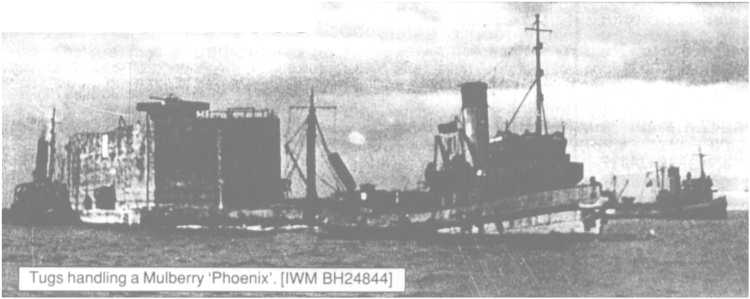
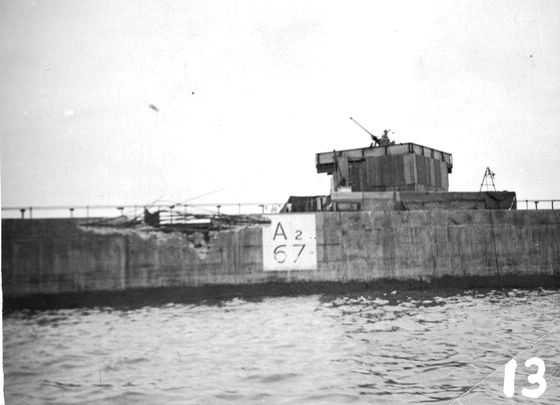
A tugThis Phoenix was hit by a German shell(details)