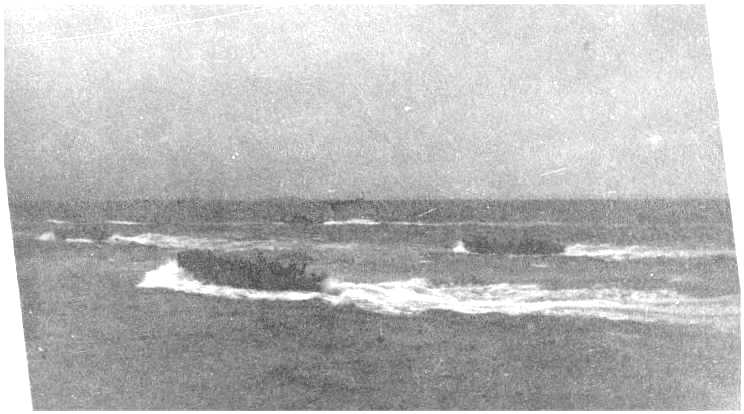
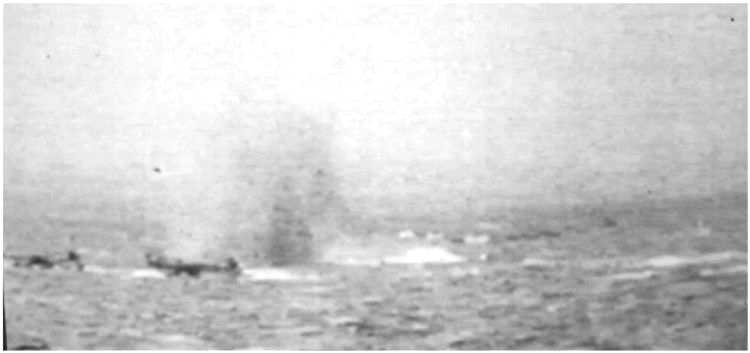
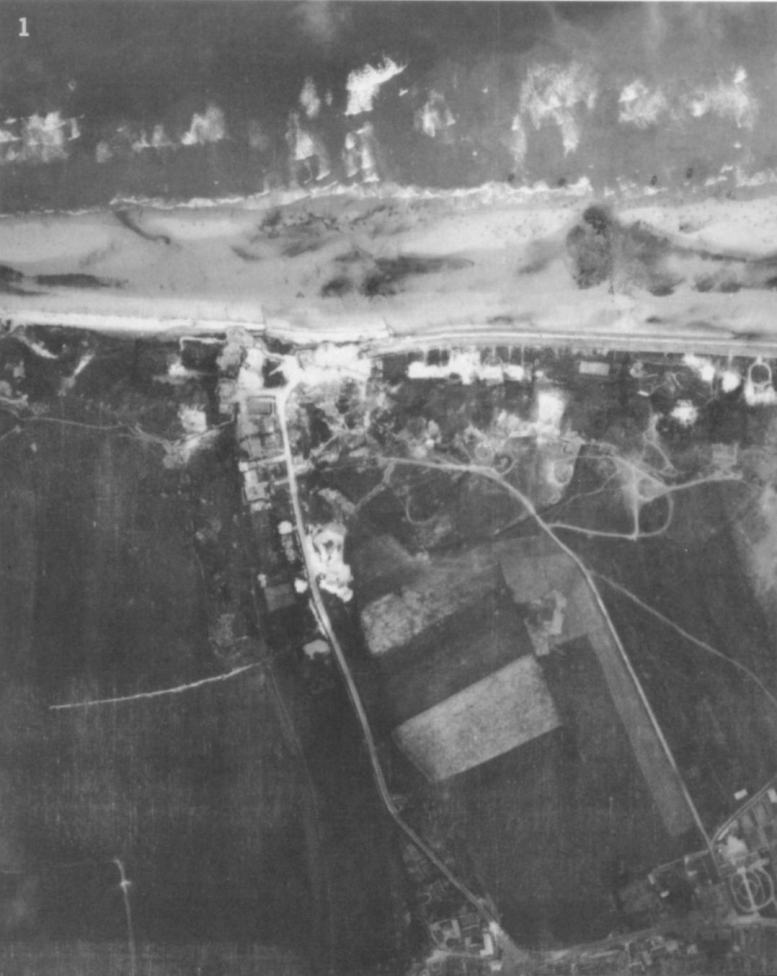


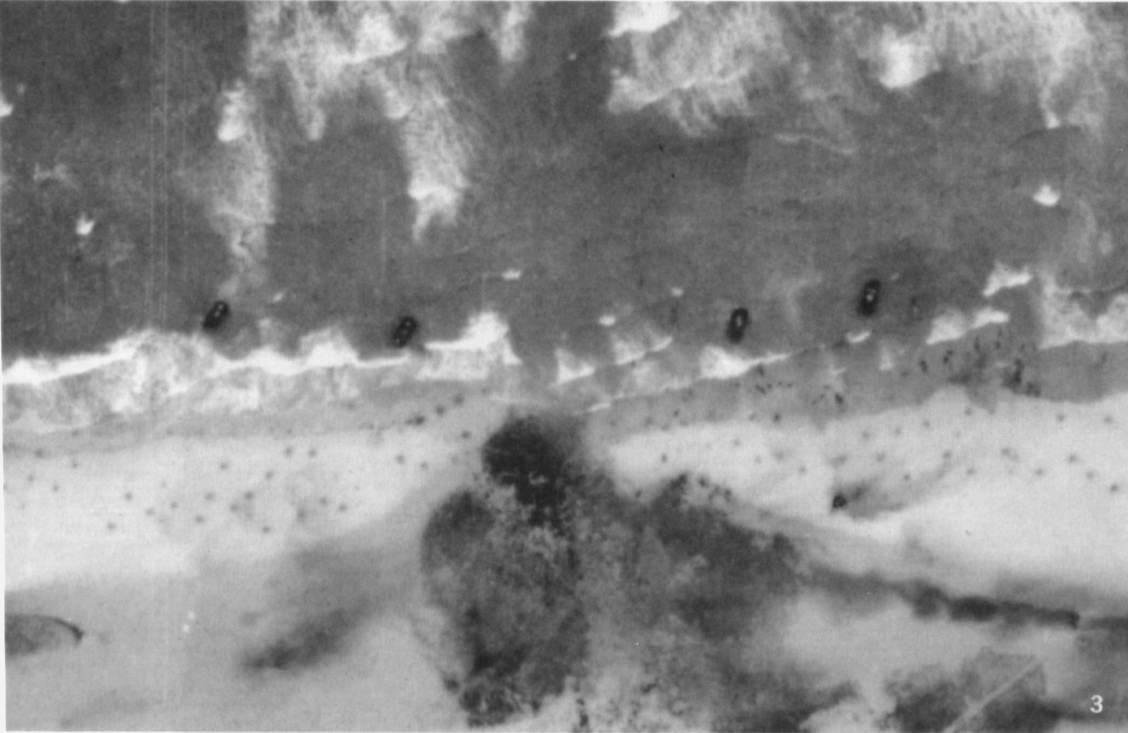
The company was loaded on 6 LCA planned for the time H and the command section on a 7th LCA planned 1/2 hour later.
One of the 6 LCA sank about 2 km away. and the following Rangers saw men jumping overboard and sinking, driven by their loading.
At H + 6 minutes, the remaining 5 LCA heeled in about 1.50m of water, about 30m from the first line of obstacles. Leaving the barge on three lines, that of the middle the first, the other two to the right and the left, the men suffered an intense and precise fire of automatic weapons. The good order was quickly broken when they tried to dive under the water or throw themselves aside and roll under the waves. Four mortar shells directly struck an LCA that "disintegrated". Losses followed before even arriving on the sand and some of the survivors felt they could not continue and came back to shelter in the water while others took refuge behind the closest obstacles. The survivors of a right-sided barge organized a small line of fire on the first metres of sand, completely exposed to enemy fire.
Very quickly, all the officers in the company, including Captain Taylor N. Fellers, were killed and all non-commissioned officers killed or injured. The men deprived of leaders abandoned any attempt to move forward and concentrated their efforts to save the wounded, many of whom were drowning in the rising tide. Later, a few men were able to reach the seafront wall by remaining at the waterfront and rising with the tide. Fifteen minutes after the landing, Company A was out of action for the day.
Company A/116 had barely fired a shot. Almost certainly, she didn't kill a single German. She was to climb up the valley of Vierville and be at the top of the cliffs by 7:30 a.m., but at 7:30 a.m., a handful of survivors were on the beach or in the water, practically without weapons. She had lost 80% of her strength and all her executives.
But his sacrifice was not in vain.
Of the 170 Company A men who landed, 91 were killed in the first few minutes, 64 were injured. Of the 170 men, 35 were from Bedford, Virginia. Of those 35, 19 were killed during the day.
As early as the evening, 32 survivors were regrouped with 24 men of reinforcements disembarked under Lieutenant George Bradbury, the Company's new CO. They were to participate in the junction with the Pointe du Hoc and the take of Grancamp two days later.
Several books have detailed the agony of Company A on the beach of Vierville, notably that of General S.L.A. Marshall dans "Battle at best" and the Stephen Ambrose in "D-Day" .
