


2431
See also the history of the CieC/2ndRanger Bn (in English,
directly derived from the operational VCs)

Company C of the 2nd Rangers Battalion loses half of its staff
by landing under the house "Gambier" and the WN73
(extracts)
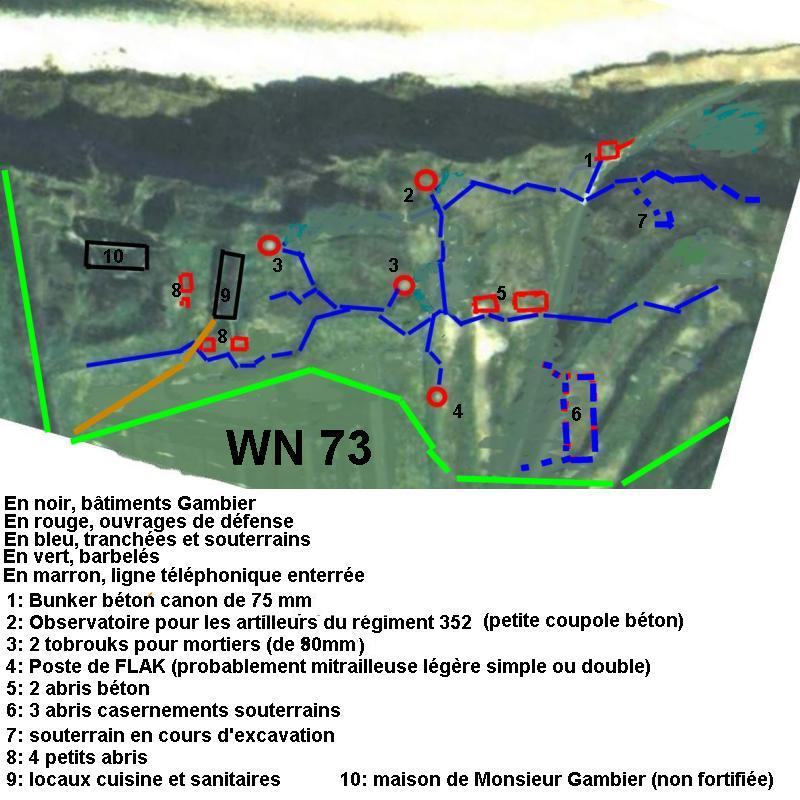
In its mission, Company C of the 2nd Rangers Battalion was to land at the western end of the beach of Vierville and follow Company A/116 through the valley of Vierville, cross the village, turn right and clean the area between the sea and the coastal road between Vierville and Pointe du Hoc. The Germans had in this area about twenty casemates, shelters, "Tobrouks", and cannon locations, plus a radar station, (WN 73.74, 76). The program provided 2 hours for Cie to complete this mission.
It all depended on Cie A/116 who had to make sure of Vierville. But Company A/116 had been destroyed on the beach. The Cie C/2Rangers arrived a few minutes later, at 6:45 a.m., isolated, just west of the Vierville Valley. The nearest American troops were far to the east, at Saint-Laurent.
The company's 64 rangers were divided into 2 British LCAs
Arriving on the heels of the naval bombardment, and before the Germans opened fire, the Rangers were in a good mood. "It's gonna be cake," said one of them. "I think they don't know we're coming." Sergeant Donald Scribner remembers the men of his boat singing "Happy Birthday" for Sergeant Walter Geldon - June 6 was Geldon's 3rd wedding anniversary - They applauded when the LCT(R) launched their rockets, grumbled when they fell too short in the water. Their disappointment increased when, according to Lieutenant Gerald Heaney: "there was no one on the beach in front of us and we were going to approach a corner that had not been crossed by other American soldiers."
When the Heaney LCA heeled on a sand bank, the English pilot shouted, "I'm not going any further," and he lowered the ramp. The German machine gun fire tore the ship apart. The first soldier outside was hit. Heaney saw that he wouldn't have a chance if he went down the ramp, he went over the edge.
"All around me men were killed or injured. I ran as fast as I could to the sand, and I remember being so exhausted when I reached it that that's all I could do to go to the cliff."
Shells (probably WN73 mortars) hit Captain Ralph E's LCA 418 barge. Gorranson, killing a dozen men and shaking each other hard. The captain of Company C, Captain Ralph Goranson, remembers, "Traversing the beach was like a dream, all movements of body and mind were automatic." He managed to reach the shelter at the base of the cliff. For Sergeant Marvin Lutz, crossing the beach was "like a horrible nightmare." Despite everything, as for his commander, he was instinctively moving, the result of the training.
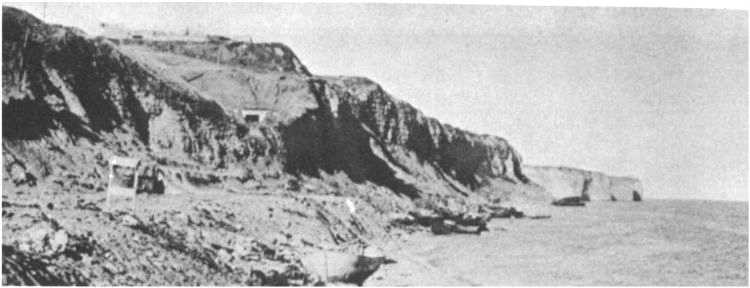
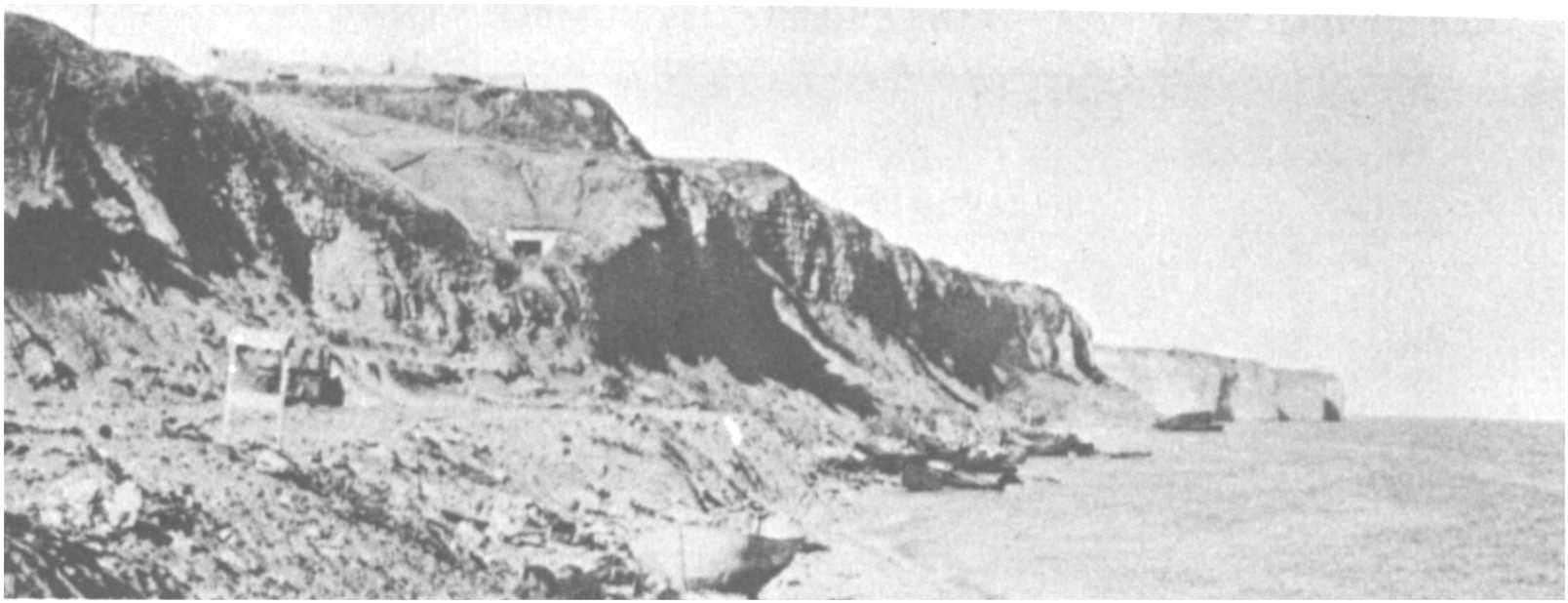
The cliff was steep, about 30 meters high, just west of the Vierville valley. At its base the Rangers were out of sight German machine guns but vulnerable to mortars and grenades dropped from the top of the cliff. They were "pure-press" grenades, so called because of their shape. As they descended, Private Michaël Gargas warned: "Beware, here's another one!"
An enemy machine gun concentrated its fire on the ramp of the second boat, LCA 1038, and hit 15 Rangers disembarking. Sergeant Scribner's boat was hit three times by artillery. The first shell ripped out the ramp completely, killing the men from the front and covering the others with blood. The second hit the port side. Scribner began climbing on the starboard edge when he noticed a 60mm mortar shell at the bottom of the boat. He stopped to pick it up, when the third shell tore off the starboard side. He managed to throw himself in the water.
"I was wearing a radio, my rifle, my grenades, and I was starting to sink. I felt like I wouldn't stop."
Scribner got away, arrived on the sand - he doesn't remember how - and tried to run on the beach. "I remember diving three times. Every time, the machine gun bullets slipped on the sand in front of me. I didn't stop because I knew what was going to happen. I was diving because I was too tired." When he got to the foot of the cliff, "I was looking back, and I saw Walter Geldon stretched out, with his raised hand asking for help. Walter didn't make it. He died on the third anniversary of his marriage."
Lieutenant Sidney Salomon, head of the 2nd section of Cie C, was the first out of his boat. He went to the right, from water to the chest, as machine gun and rifle fire swept the Rangers away. The second one to go out, Sergeant Oliver Reed, was hit. Solomon caught up with him and pulled him out of under the ramp that was rising with the waves. He told Reed to do his best, and started swimming towards the sand. "During this time, the Germans had found the right rise for the ramp. Rangers after Rangers were hit by light weapons fire as they jumped into the water, and in addition mortar shells fell around the ship, producing water geysers."
Solomon arrived at the base of the cliff. He looked back. " Inert bodies, where they had fallen, blood spots blushed the sand. Some injured were dragged as far as possible, some with a look of despair and astonishment on their tortured and painful face. Others were trying to get up, only to be hit again by the shots. Bodies rolled forward and backwards at the edge of the water, the Channel rejoiced in exerting its power on man and playing with bodies like a cat with a mouse."
Of the 68 rangers in Cie C, 19 died, 18 injured, 31 managed to reach the foot of the cliff. The company had not yet fired a single shot.