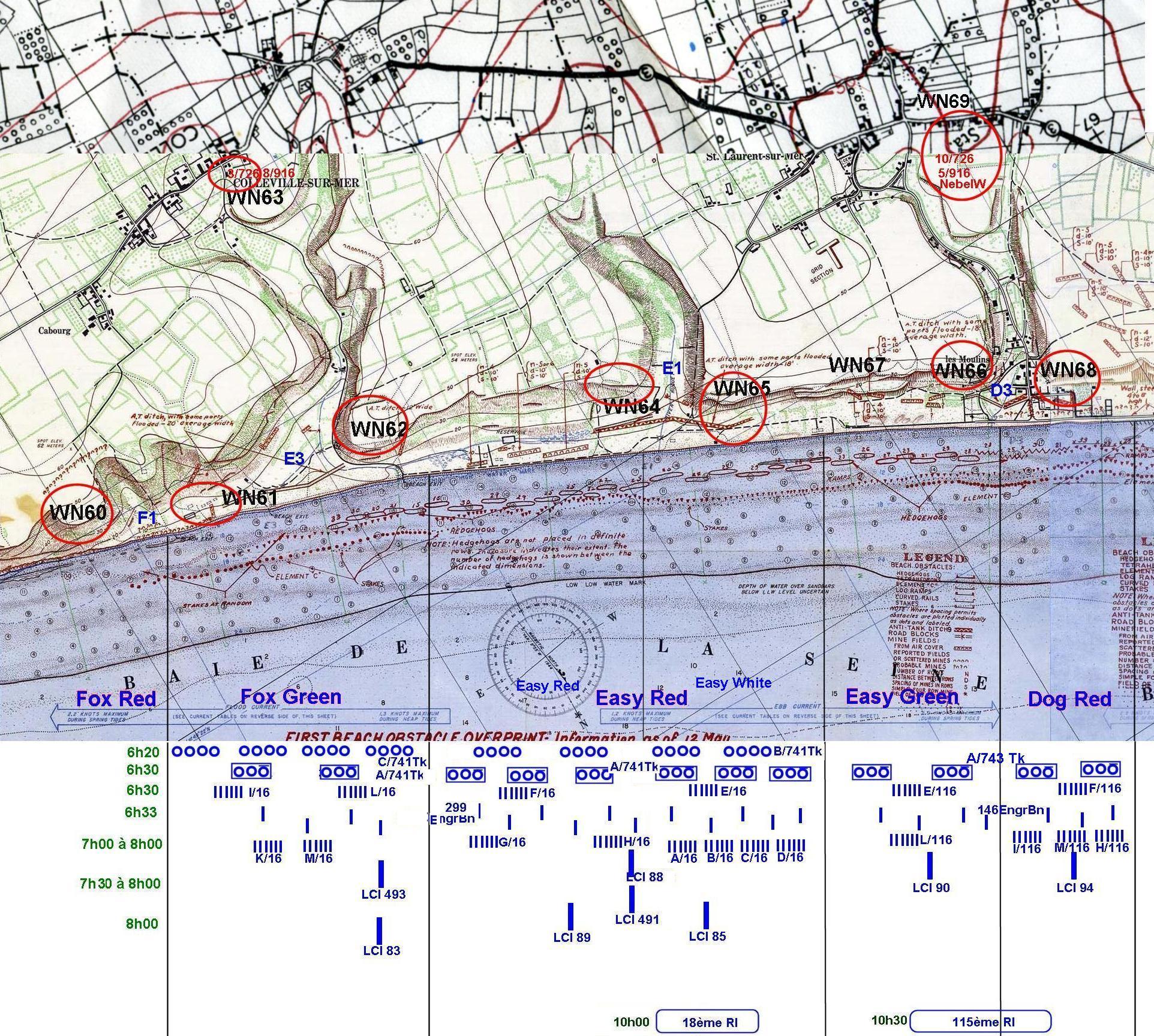
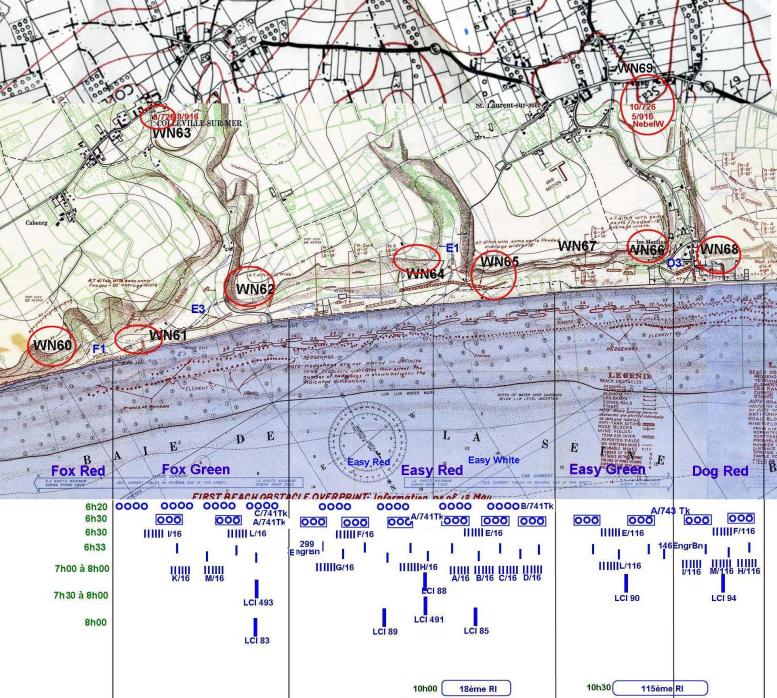
The beach areas planned for the assault were located between the Saint-Laurent valleys (exit D3) and Le Ruquet (exit E1), which corresponded to the areas named Dog Red and Easy Green, (assigned to part of the 29th US Infantry Division), and the West Easy Red sector, assigned to part of the 1st US Infantry Division. On June 6, all the troops landed were attached to the 1st Division alone. It was only on 7 June that the 29th Division staff was to regain control of its units.
- In the days that followed, the Americans divided the Easy Red sector into two equal parts, west an Easy White sector and east an Easy Red sector reduced by 50%, in order to better exploit the beach for the landings of reinforcements and supplies -
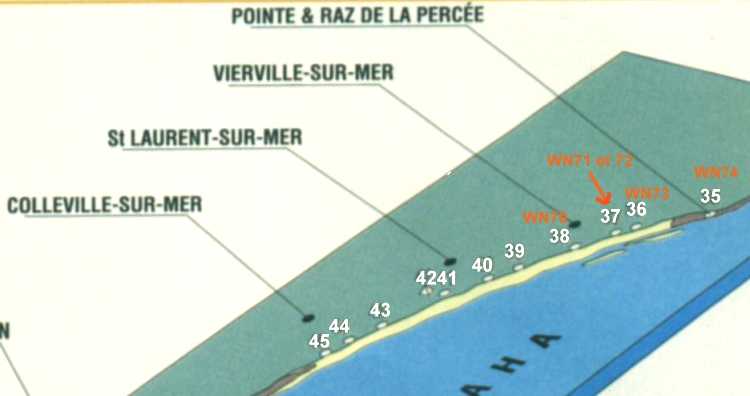
On the other hand, on the German side, the defences consisted of coastal fortified areas, the WN 68 and 66-67 around the Moulins, and the WN69, in the village (western part of the village, around the old station), both PC of the companies 5/916 and 10/726 and the seat of a Nebelwehrfer rocket launcher unit capable of launching 320mm incendiary rockets on the beach. To the east, the fortified coastal points WN 64 and 65 defended the Ruquet Valley.
US beach areas with planned landings, and German fortified points Each batonnet represents a LCVP, a LCM or an LCI, each small circle represents a tank. Scheduled schedules are shown in green
Artillery preparation prior to landing
The landings at Saint-Laurent were to be preceded by aerial and naval bombardments, in the half hour before the hour H, intended to "amollier" all known positions and demoralize German troops.
To achieve this goal, 24 Liberators B24 Squadrons (approximately 108 quadrimotors carrying approximately 400 tons of bombs of 50 and 225 kg) were to bomb WN 68, 66-67, 65 and 64, behind Saint-Laurent beach, between 0600 and 0625 in the morning (H-30 to H-5). The Nebel werfers were not known to the Americans. In the absence of visibility due to the ceiling of the clouds, it was planned to delay the time to release the bombs so that on average they fell further away from the landing vessels, thereby ensuring their safety. As a result, bombs have generally fallen largely inland, completely missing their objectives.
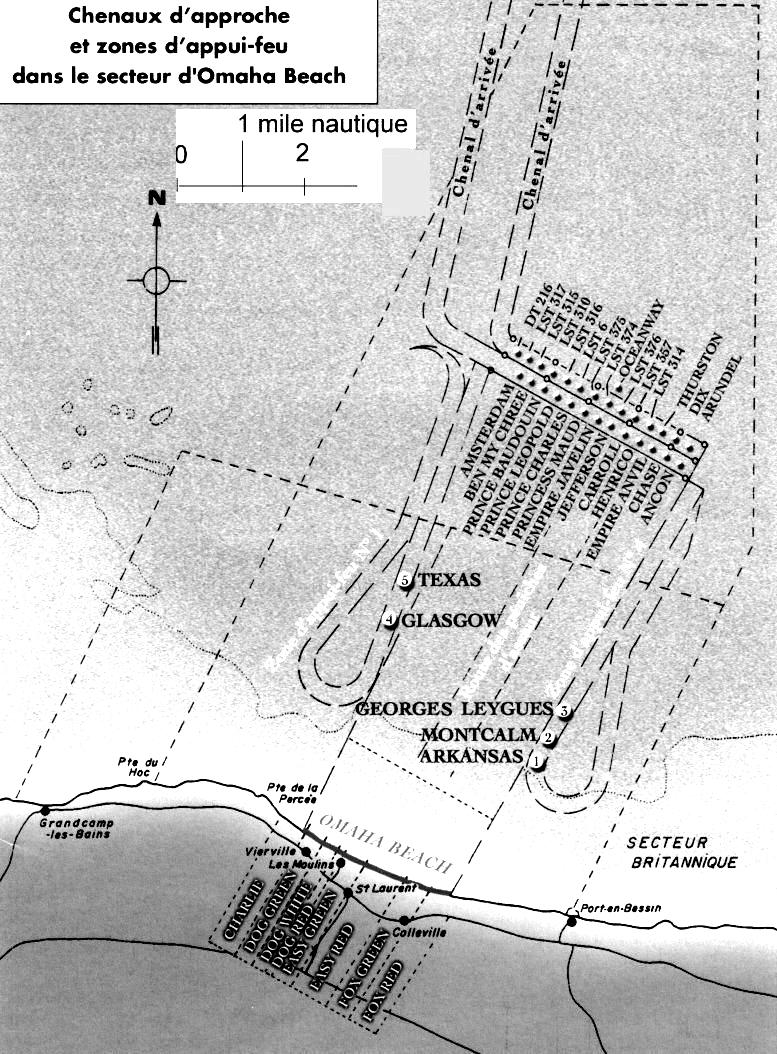
The naval bombardment was to last from 0550 to 0627 hours (H-40 to H-3). It was to be provided by many vessels of all types, grouped into "Fire Support Group", FSG (fire support groups). These FSGs were also responsible for bombing the Colleville defences and the Longue long range battery (4 150mm guns) that could intervene on the fleet at sea. Bombardment vessels were:
1 former battleship "USS Arkansas", armed with 12 305mm guns and numerous 127mm guns, 2 French light cruisers, "Montcalm" and "Georges-Leygues", each armed with 9 150mm guns, 6 destroyers (US and British) armed with 127mm guns, "Baldwin", "Harding", "Melbreak", "Emmon", "Tanatside" and "Doyle" and transformed landing barges, which may approach the beach due to their low draught: (for outputs D3 and E1) 3 LCT(R) rocket launchers, LCT(R) 450, 452 and 464 2 LCT(G) barges armed with 2 114mm guns, LCG 687 and LCG 811 TCLs carrying 105mm tanks and armoured howitzers that were capable of firing from the sea.
The duration of this artillery preparation was too short to be truly effective. By comparison, during American landings on Japanese-held islands in the Pacific Ocean, several days of bombardment were frequent, but the Japanese could not expect reinforcements. This was not the case in France and the Allies could not afford to risk the arrival of German reinforcements, warned by long-term bombings.
Objectives of the Naval Forces
The first landings
After these preliminary bombardments, the landings were to follow in successive waves, guided by the presence of escorts responsible for indicating to the landing craft the affected beaches (Escorters PC 618 and SC1360)
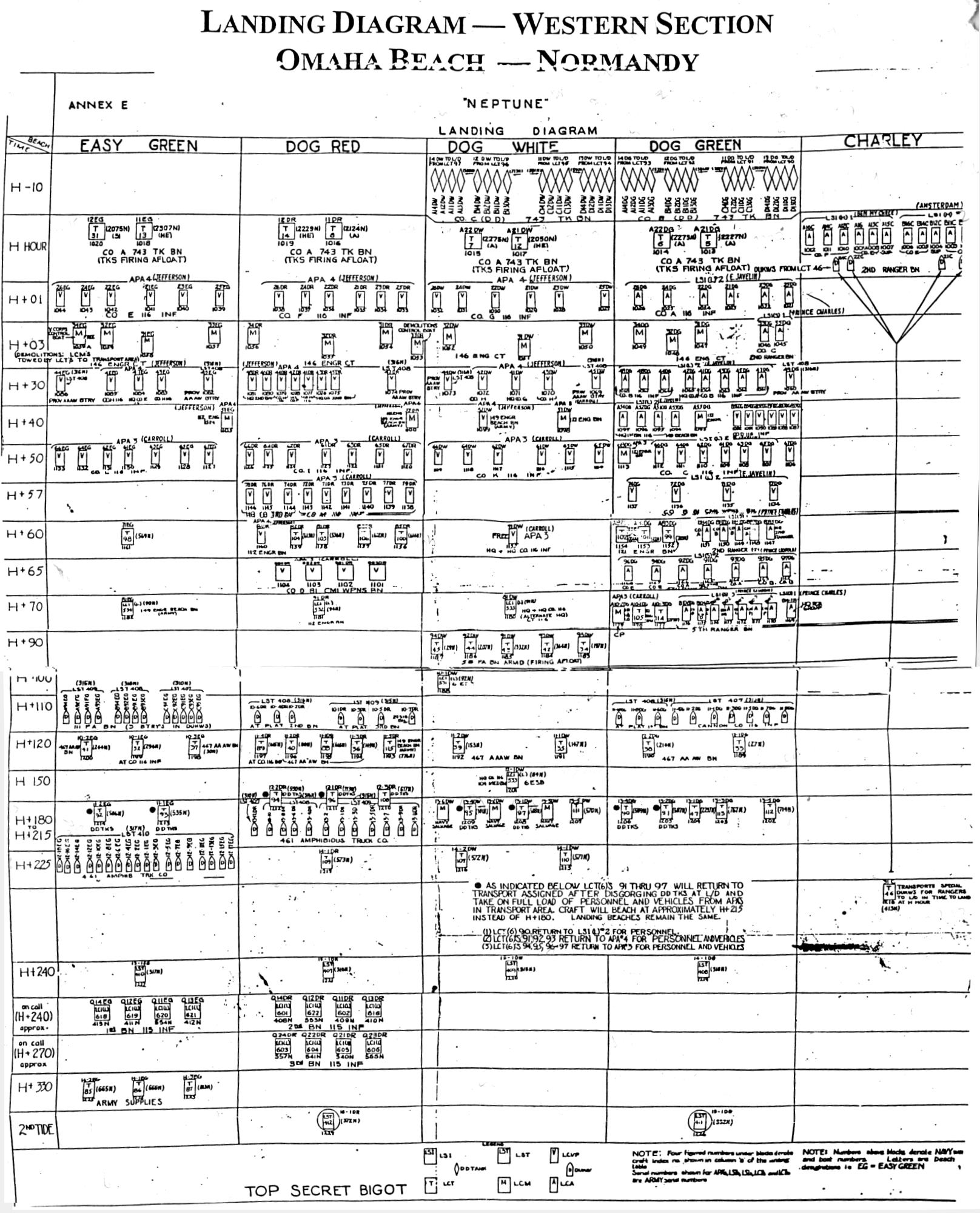
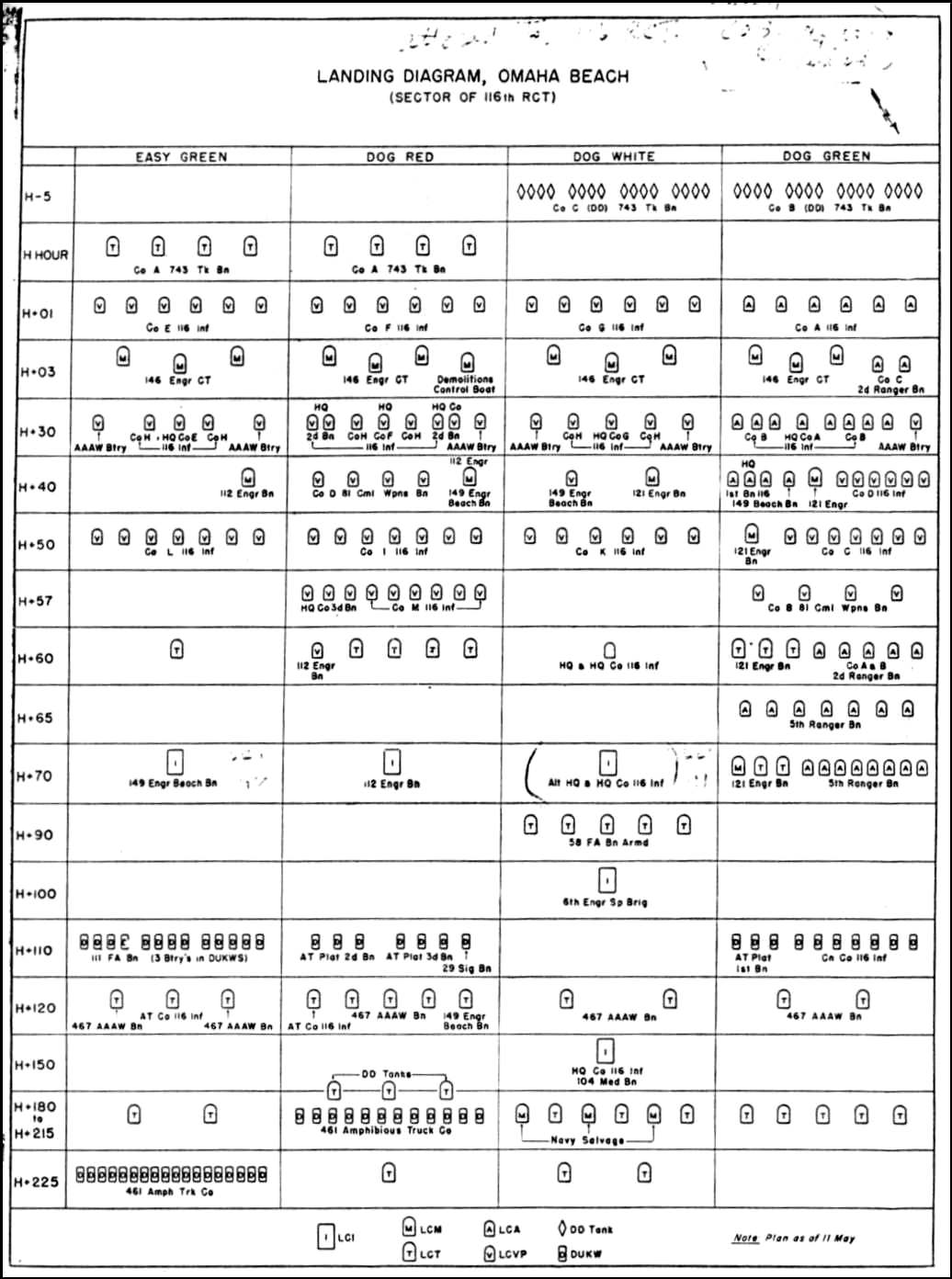
Tanks - At the time of H, 6:30 (or H-10, 6:20 for the tanks ampihibies on Easy Red), were to land the tanks:
on Dog Red and Easy Green, 8 standard Shermann tanks (Cie A/743 Tank Bn) accompanied by 4 Engineer Tankdozers landed from 4 LCT(A) (A like Armoured, armored cad, specially protected by metal plates) - (LCT(A)2050, 2229, 2037, 2075).
on Easy Red West, 8 Sherman amphibious tanks (Cie B/741 Tank Bn) - LCT 602 and 549, and 6 standard Sherman tanks (Cie A/741 Tank Bn) accompanied by 3 tankdozers, landed from 3 LCT(A) - LCT 2228, 2043, 2008
Their role was to create surprise and to support the assault companies by their fire and attract German fire to them and thus protect the engineering teams charged at the same time to remove the beach obstacles.
Assault infantry At H time and then at H+30 or 40 (6.30, 7.00, 7.20 and 7.27), were to land:
On Dog Red, F/116, then I, H, M/116, on LCVP from LSI Thomas Jefferson and Charles Caroll
on Easy Green, the companies E/116, then L/116, on LCVP from the same LSI
Their role was to seize the exit road of D3 (Les Moulins).
On Easy Red West, the company E/16 -(province LSI Henrico), then the 4 companies of Battalion I/16 (Cies A, B, C, D/16 - provenance LSI Samuel Chase) that came in reinforcement of the first waves. Purpose: the exit E1 Le Ruquet.
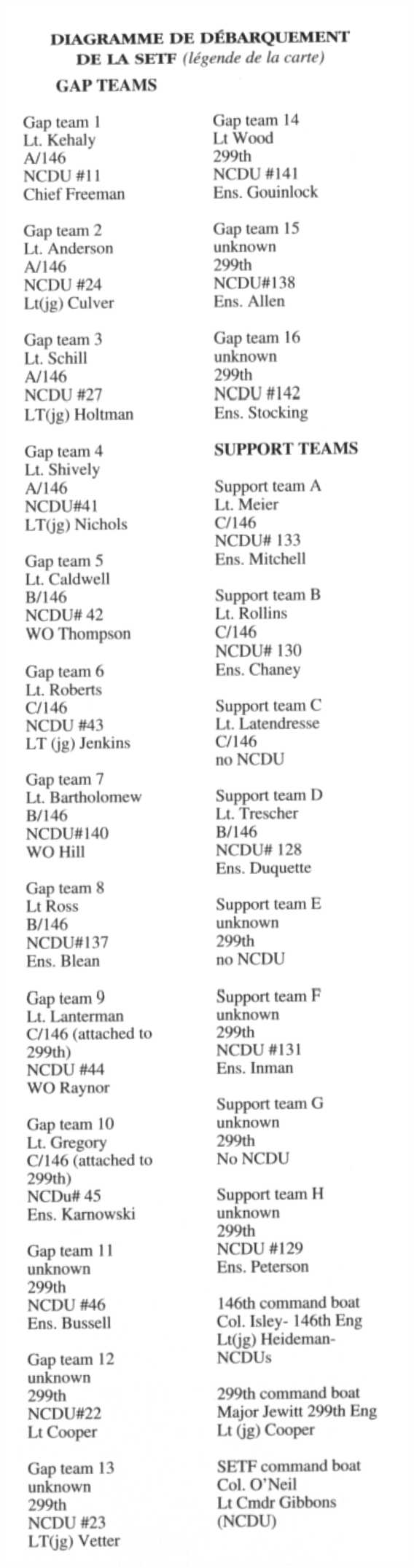
The Engineering groups responsible for beach obstacles At the time H+3 (6h03),7 LCM was to land 7 "Gapteams" of the SETF (Special Engineer Task Force, charged on the LSI "Prices Maud"), each combining about 45 engineers (of 146th EngrBn) and marine (of NCDU, Naval Demolition Unit) (detail of the teams)). Their role was to create 7 marked passages riddled with obstacles, 45m wide across the beach, 2 on Dog Red, 2 on Easy Green and 3 on Easy Red West. Each Gapteam was to be reinforced by one of the 7 tankdozers landed at H+0, to push back the destroyed obstacles to the explosive. At H+8 and H+25, 6 other LCMs had to land to strengthen the Gapteam according to the progress of their work.
Combat Engineers, Medical Services Between H+65 and H+120 (7h35 at 8h30), taking advantage of the marked passages through the obstacles, three large LCIs were to land at tide becoming the first elements of Engineering and medical services: on Dog Red at 7:40 am, LCI 94 with Cie B/104 Med Bn (the medical battalion of the 29th Division) and MP (Military Police) On Easy Green at 7:40 a.m., LCI 90 with Cie A/149 Eng Bn and B/7 Beach Bn, the first elements of the 6th Special Engineer Brigade. on Easy Red West at 8:30 a.m., LCI 85 with Cie A/1 Med Bn (the medical battalion of the 1st Division)
From 8am until about 10am the next waves of assault would consist mainly of LCT and DUKW amphibious trucks carrying through the marked channels of artillery units, DCA and Engineering. In particular:
the 101st artillery battalion(111 FA Bn) with 12 howitzers of 105 on DUKW, (on Dog Red)
Part of the 6th and 5th Special Engineering Brigades, tasked with operating the western and eastern parts of Omaha Beach.
These units were to support the advance of the assault troops inward, demining and opening roadways to the 116th regiment assembly area (Bathillons II and III) south of Saint-Laurent. From this assembly area, the 116th regiment had to pursue its objectives by reaching the Formigny-Isigny road before the end of the day.
The arrivals of reinforcements 2 reinforcement regiment, the 115th RCT (of the 29th DI) and the 18th RCT (of the 1st DI) could land at 10:30, depending on the needs, usually from preloaded LCI:
First Battalion II/115, on Dog Red at 10:30 a.m., with LCI 408, 553, 409, 410. (each of the 4 battalion companies was on an LCI with 200 men) Battalion I/115, on Easy Green at 10.30, with LCI 412, 554, 411, 413. Then at 11:00, on Dog Red, Battalion III/115, with LCI 555, 540, 541, 557.
The 18th RCT, was to land at 9:45 am on Easy Red West: First Battalion II/18, with LCI 489 and 18 LCVP and 2 LCM of LSI "Anne Arundel", at 9:45 a.m. Then the Battalions 1/18 and III/18 and the regiment's PC, with 10 LCI, No. 488, 498, 406, 494, 490, 495, 496, 497, 487, 93, at 10:00
In the afternoon, on Dog Red, the advanced PCs of the 29th Division were to be disembarked. At the mid-day, on Easy Red West, the advanced PCs of the 1st Division, then the Vth Corps, were to be disembarked from various LCT
The third regiment of the 29th Division, the 175th RCT, being part of Force B (force O support force), was to be disembarked on 7 June.
LSI and LST were wet in 2 large lines at 8 nautical miles off Omaha Beach. The ships wet from 2am on June 6, and immediately began to launch and load the LCVP and LCA assault barges. The landing barge route was located between the large warships that provided naval fire support and were closer. The departure line of the barges was 2 miles from the coast.
the objectives of the "Liberators" on the beach OmahaThe main LSIs (carrying assailers, each of which charged about one battalion or a thousand soldiers, with their landing barges, LCA, LCVP or LCM
The deployments of the naval ground control groups. In principle, each battalion was assigned a NFCP (Navy Fire Control Party) group in conjunction with a warship.
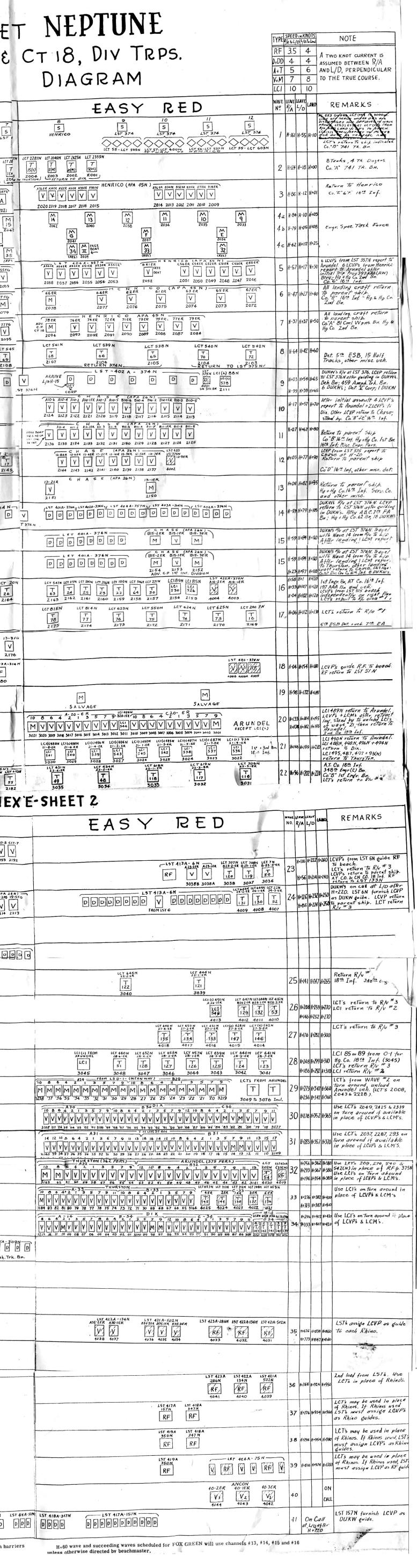
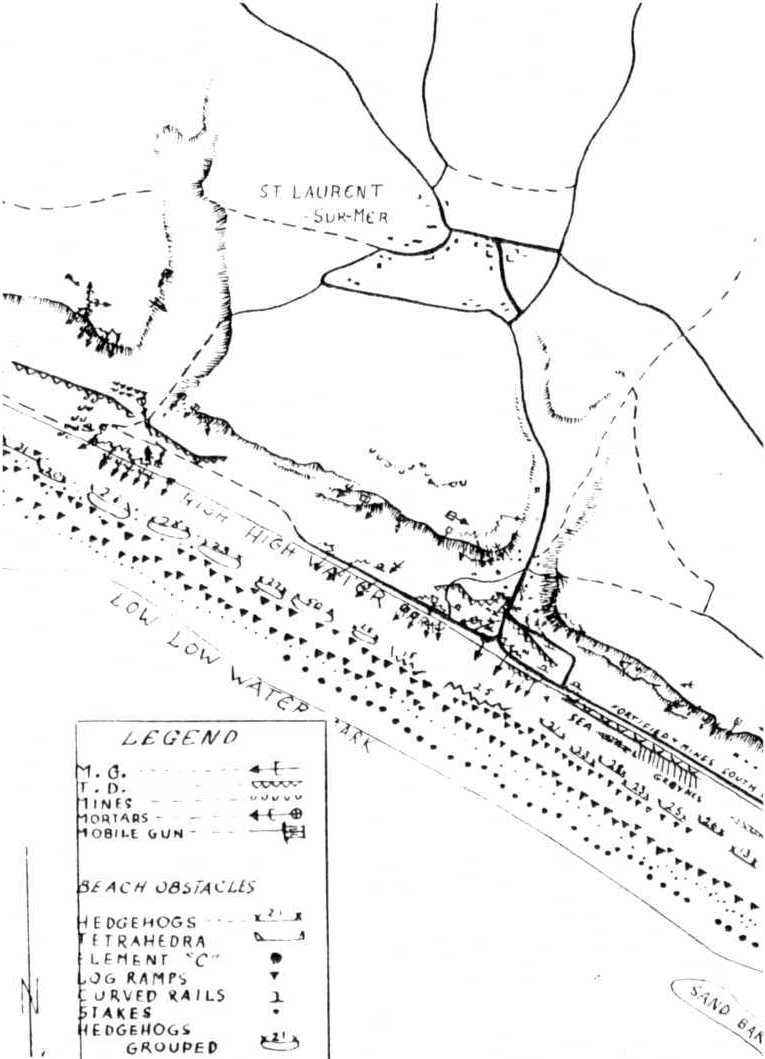
Details Landing Diagram Easy RedThe obstacles of the beaches in St-Laurent and the Ruquet
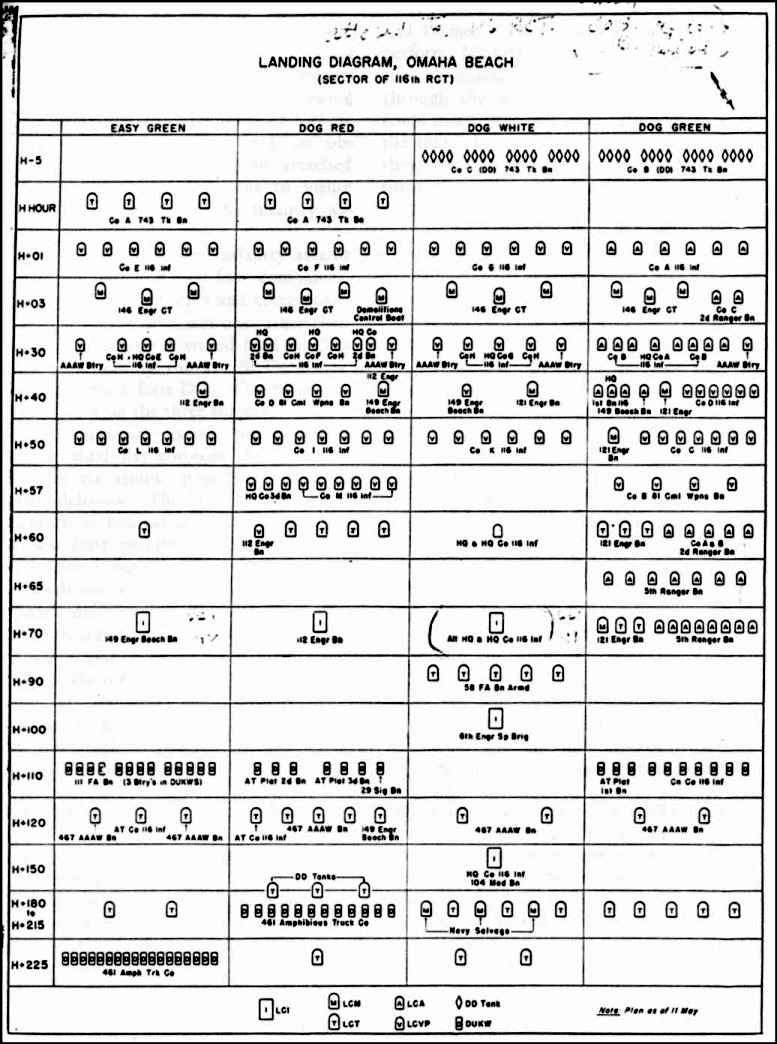
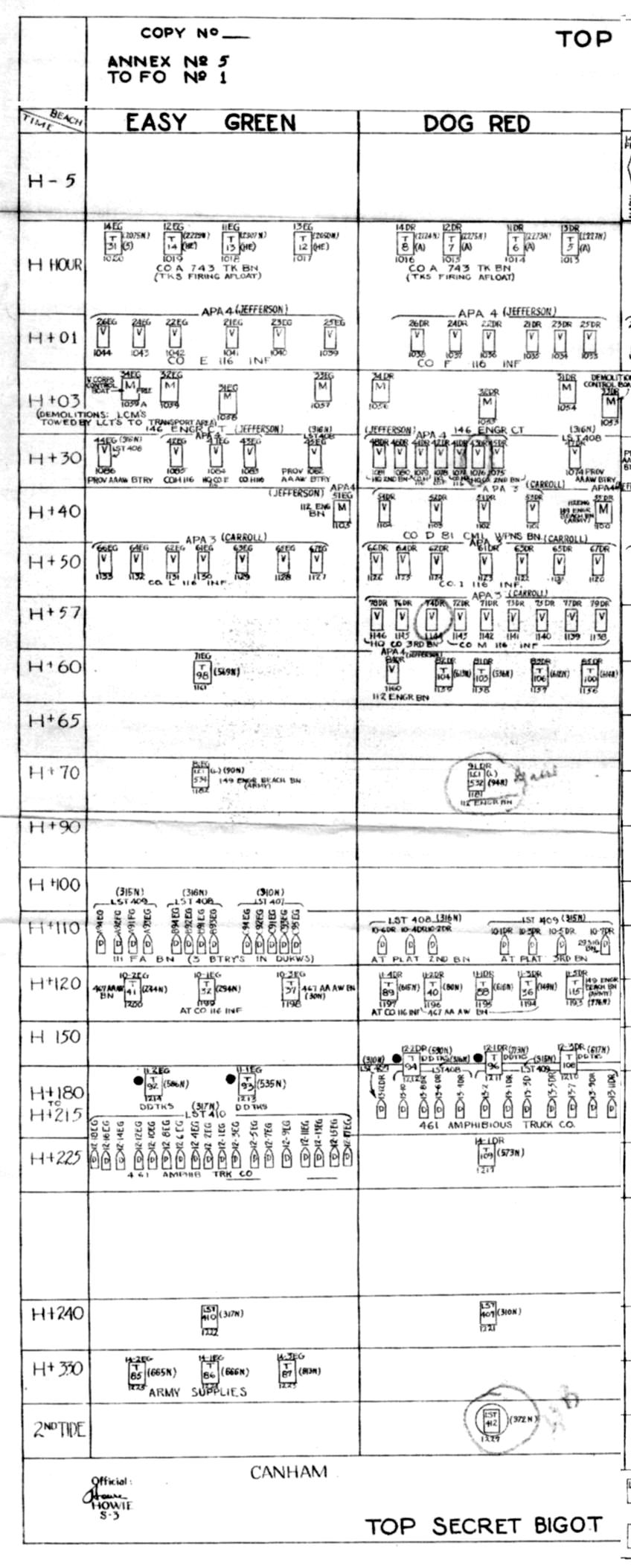
(details)US Beach Areas and German Fortified Points(details) The diagram of the landings planned. The 2 left-hand columns indicate the Dog Red and Easy Green sectors, i.e. from D3(St-Laurent) to E1(Le Ruquet)Landing Diagram Easy Green - Dog RedLanding Diagram on 6 June on the western half of Omaha Beach (forecasts) from Charlie (Vierville) to Easy Green (Saint-Laurent) including the 115th RCT