
1 - Artillery preparation before disembarkation
The landings at Vierville were to be preceded by aerial and naval bombardments, in the half hour before H-hour, intended to "amollier" all known positions and demoralize German troops.
121 - Air bombardment
A bombardment of the main fortified points of the beach by more than 400 quadrimotors "Liberators" B24 distributed in "box", in the 1/2 hour before the landings.
122 - Naval bombardments
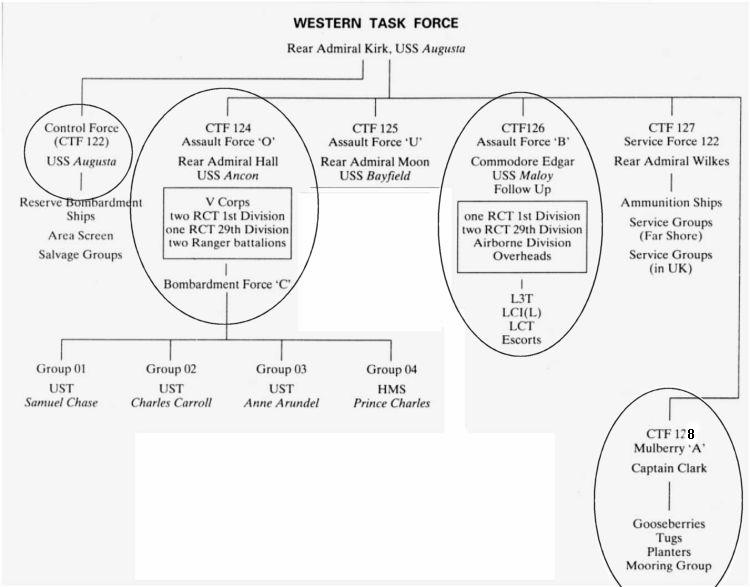
From H-40 to H-3, a violent bombardment of all coastal defences was to be carried out by all kinds of ships, forming 6 "Fire Support Group" or FSG (fire support groups).
There was, able to fire on the coast of Vierville,
1 battleship armed with 356mm and 127mm guns,
1 150mm gun cruiser,
4 destroyers armed with 127mm guns,
2 LCT (R) rocket launchers,
1 LCT(G) barge armed with 2 114mm guns,
TCAs carrying 105mm tanks and armoured howitzers capable of firing from their LTC, low-draught vessels.
small LCS (Landing Craft Support) barges armed with heavy machine guns and rockets, with low draught and capable of approaching the coast.
The duration of this artillery preparation was too short to be truly effective. By comparison, during American landings on Japanese-held islands in the Pacific Ocean, several days of bombing were frequent, but the Japanese could not expect reinforcements.This was not the case in France and the Allies could not afford to risk the arrival of German reinforcements, warned by long-term bombings.
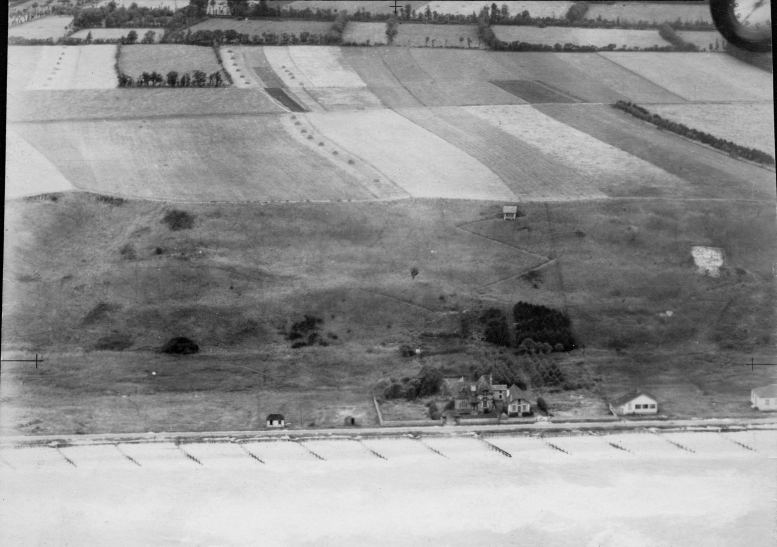
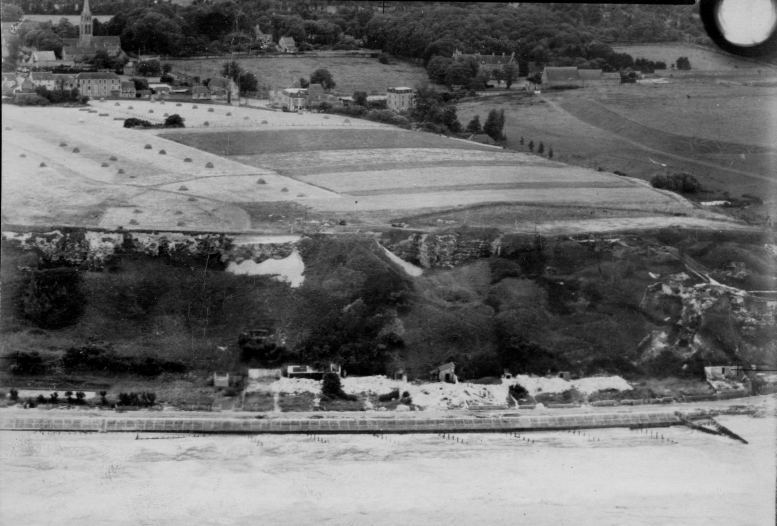
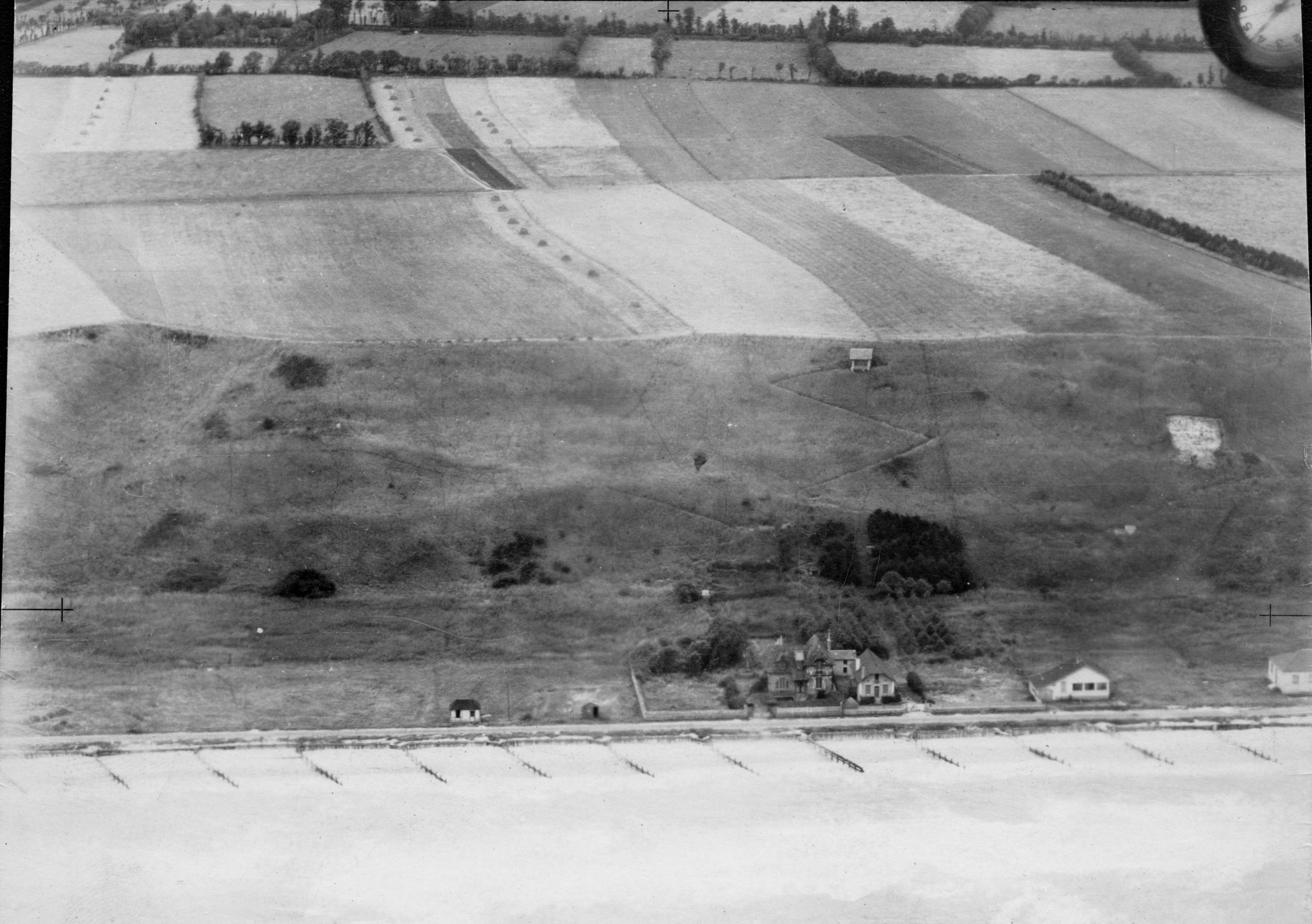
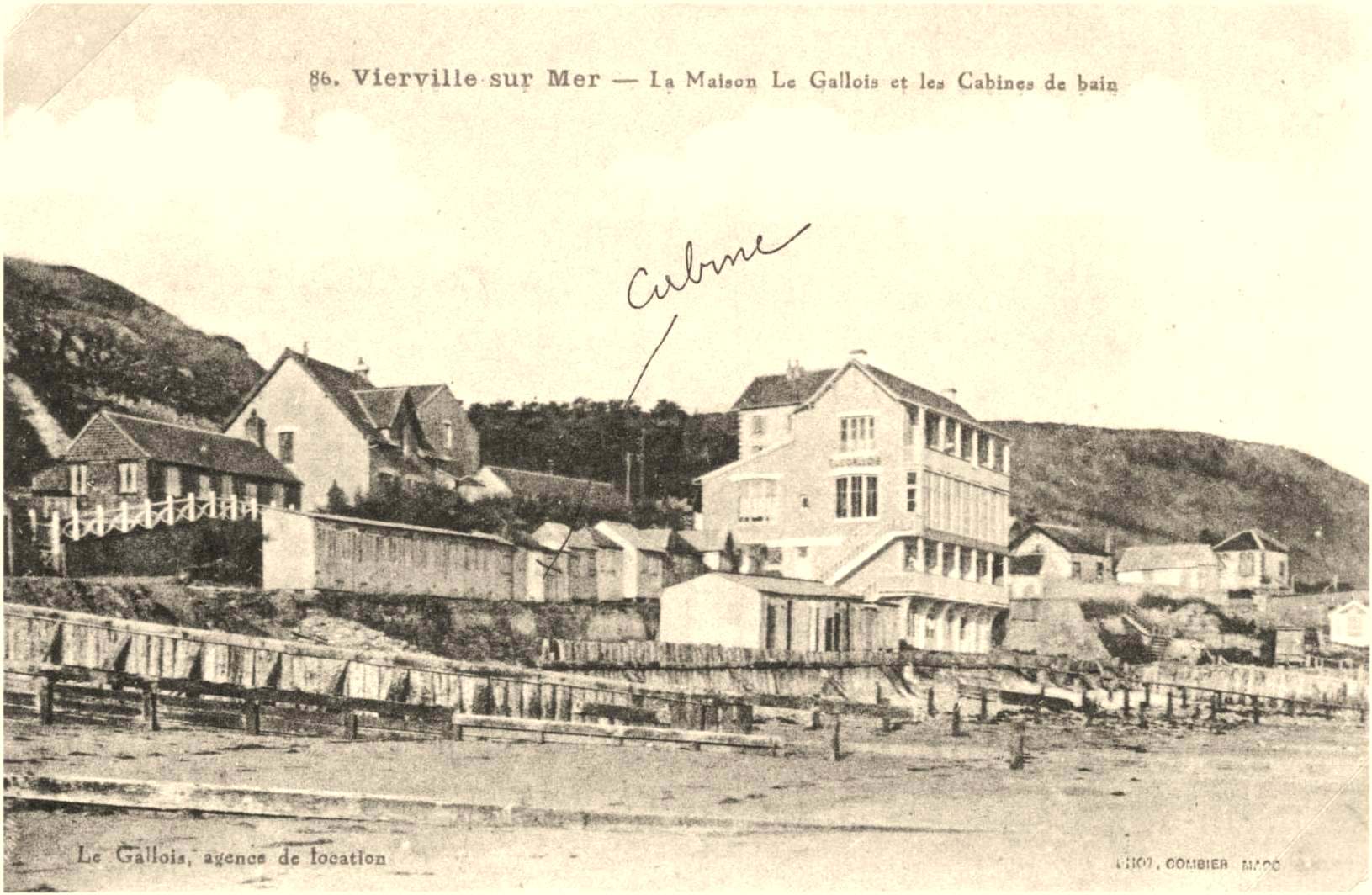
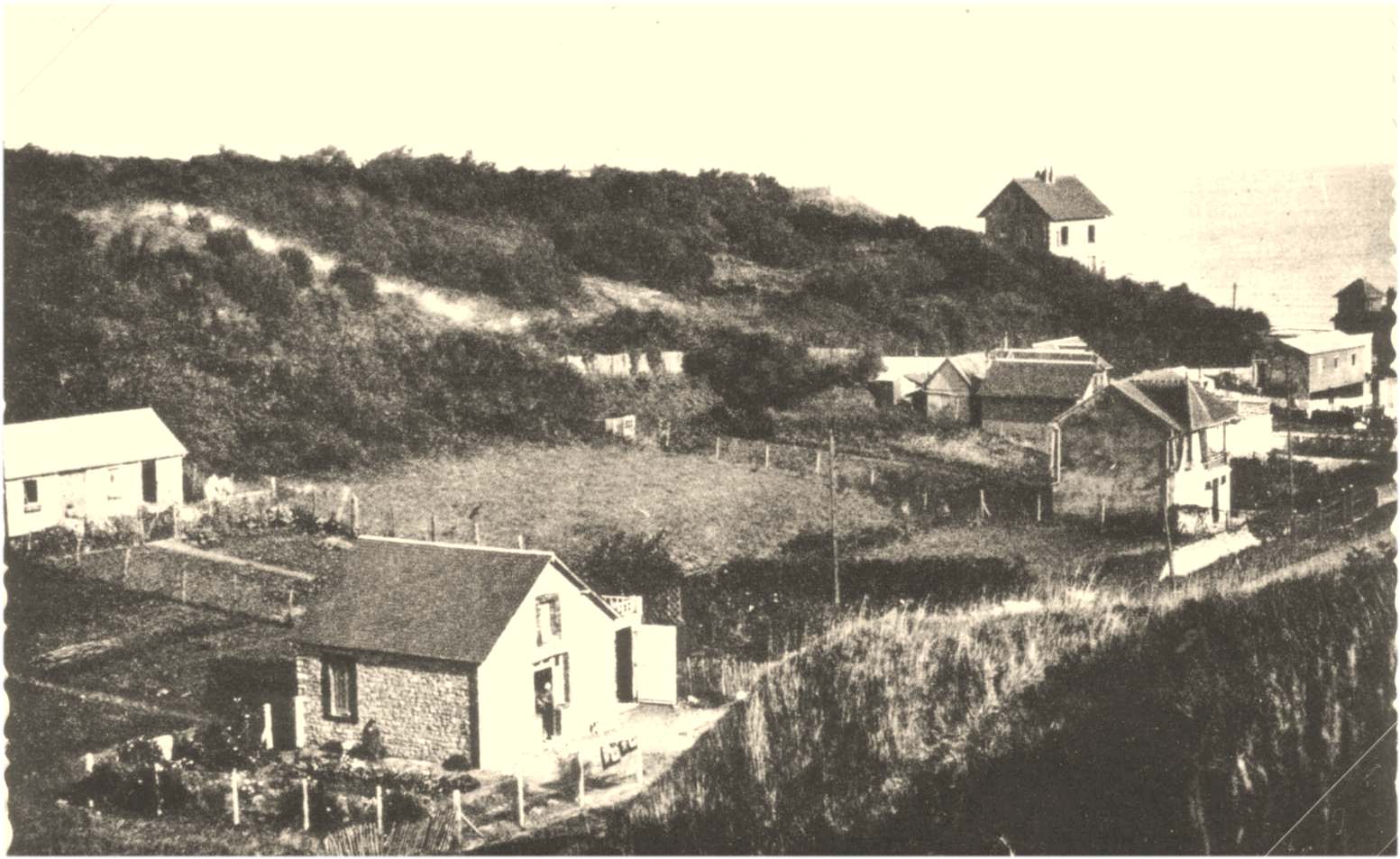
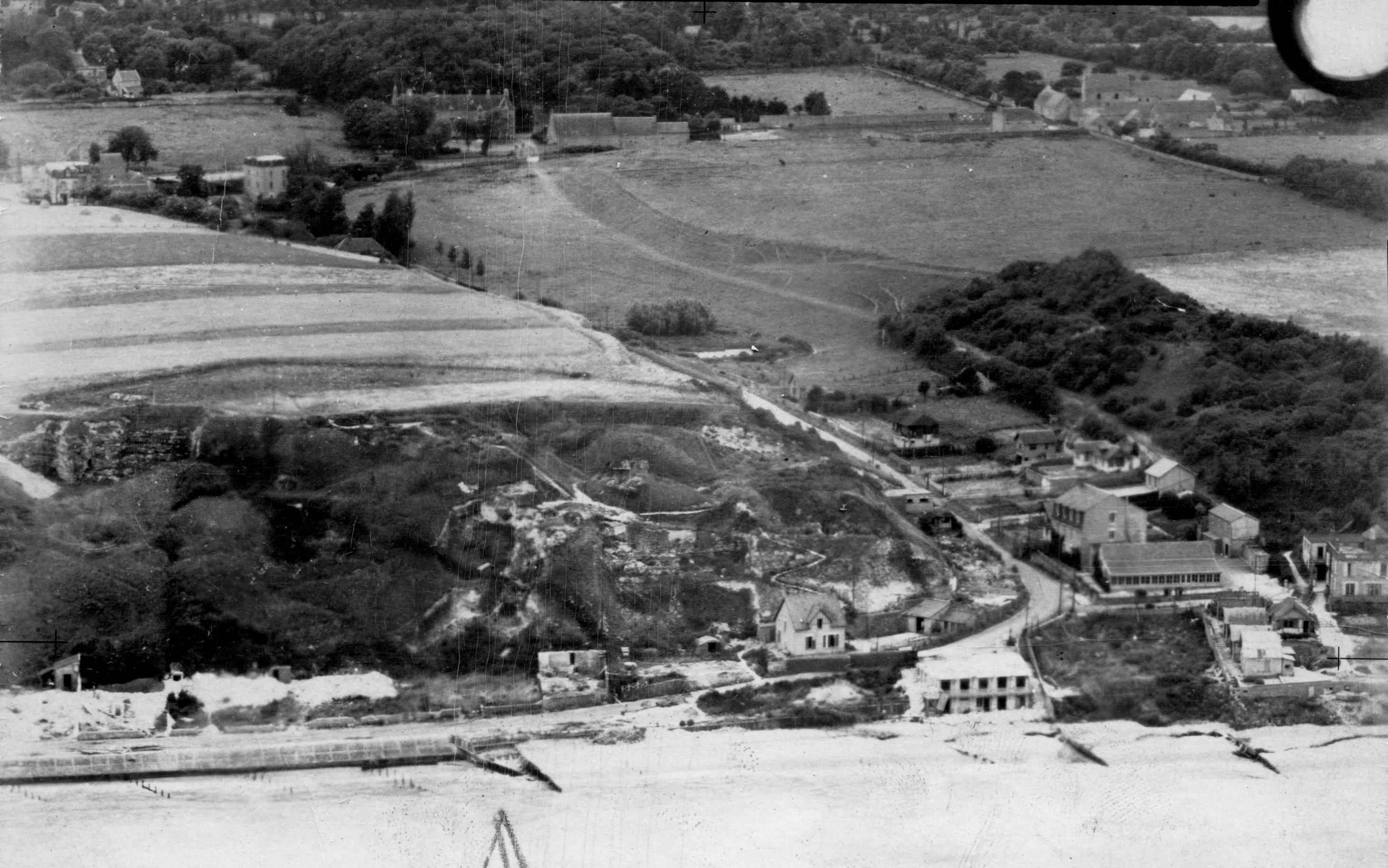
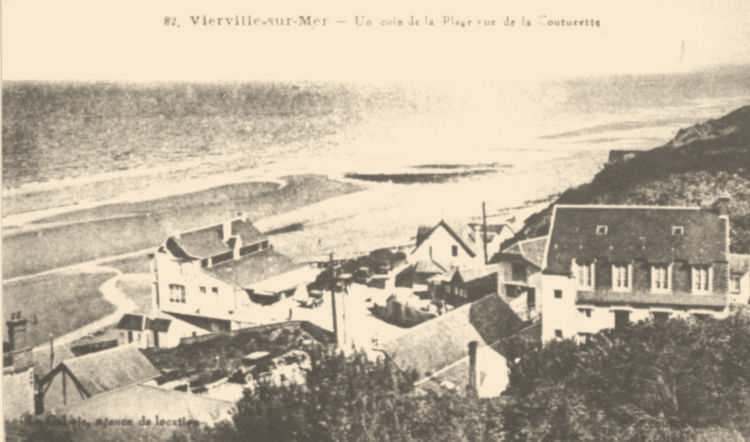
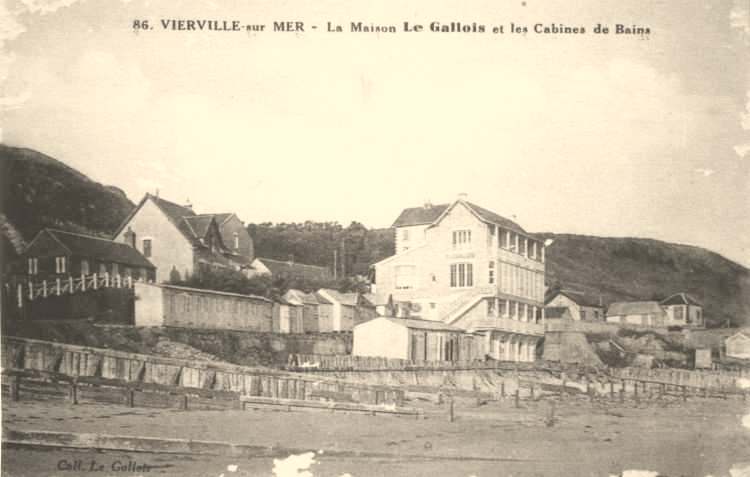
(details) 49 - About the right of the current Philippe Marchal villa. One of the first photos of the beach, taken in June 43 after the site was chosen for the future landing. We see the few villas that are east of the Parmentier and Brise Caline villas, before their destruction at the beginning of 44 by the Germans.
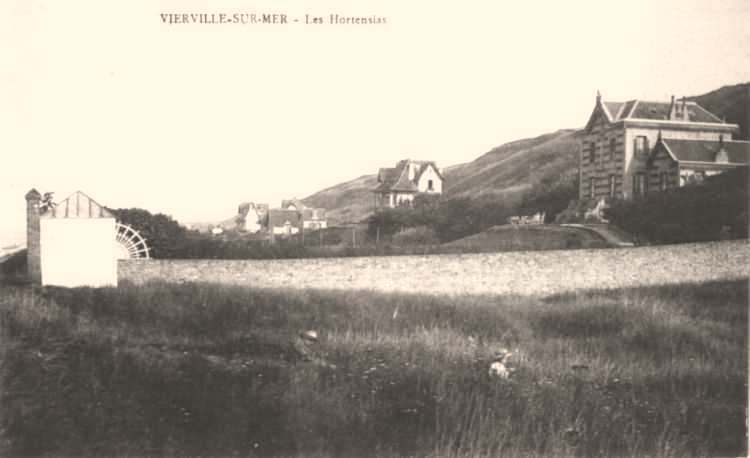
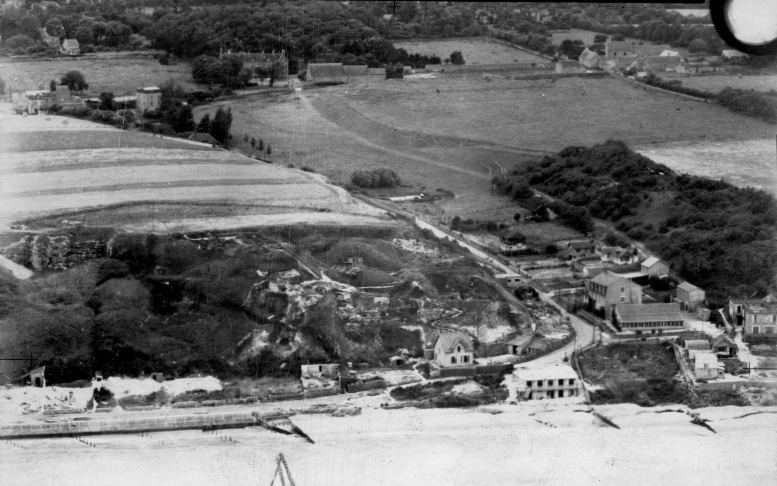
(details)To the right the villa Hardelay, in the center the villa Chevalier, all in ruins before 6 June

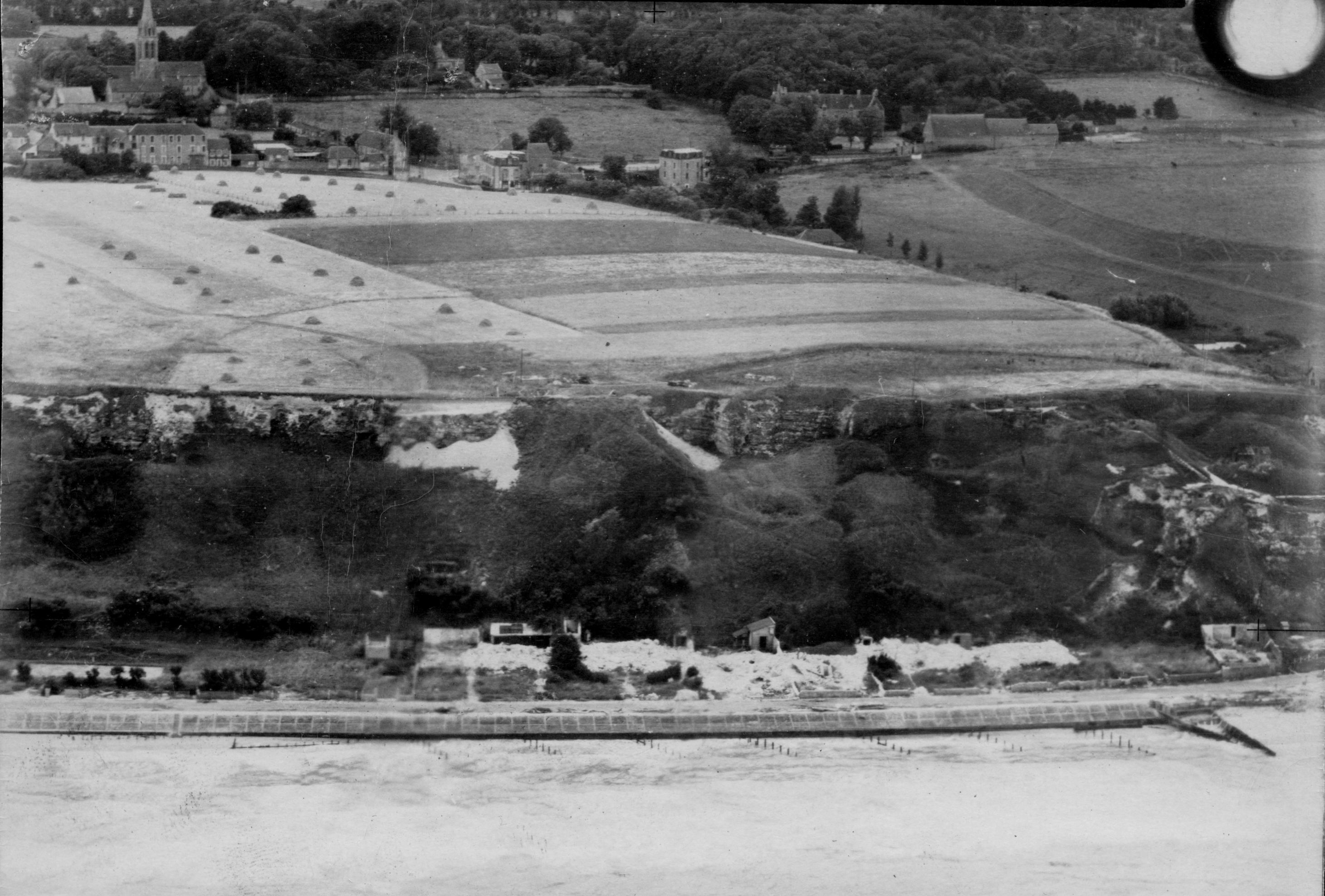
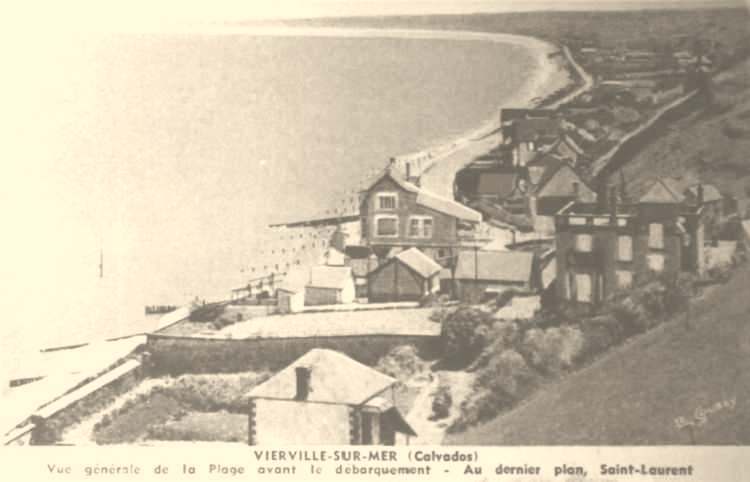
(details) Aerial view of the descent of Vierville in 1939, indicating the main buildings

(details)
On the left the villas Parmentier and Mathy, also in ruins on June 6th
2 - Landings
Day D and time H were set for the first waves of assault to be landed at dawn and with a tide low enough to discover the underwater obstacles of the beach.
That time was important. He forced the first waves to cross 250 to 300m over the beach, and he gave half an hour to the engineers to clear passages in the middle of obstacles before the arrival of larger forces and reinforcements, at high tide.
On 6 June, the sea was low at 0525, high at about 1030, the sun rose at 0558 and the hour H was set at 0630. All these times were GMT+2, time used by the Allies, while the official time in France was GMT+1 and the local peasants had often kept the GMT solar time.
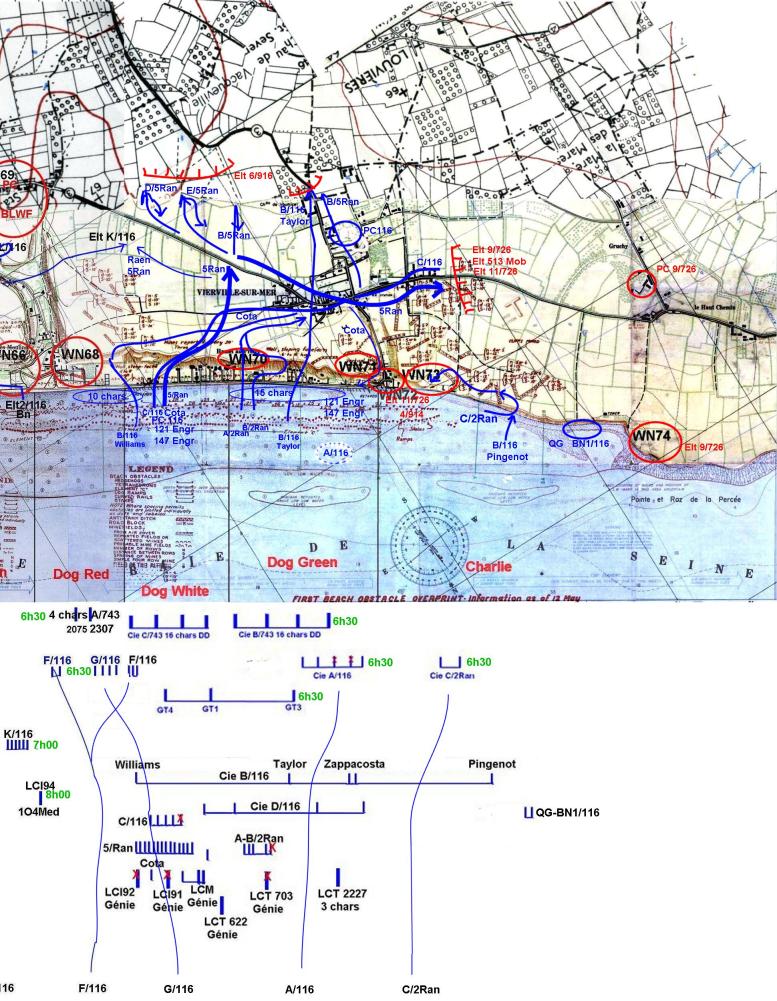
The territory of Vierville had been divided into 3 sub-sectors of beach: from West to East: Charlie, Dog Green and Dog White.
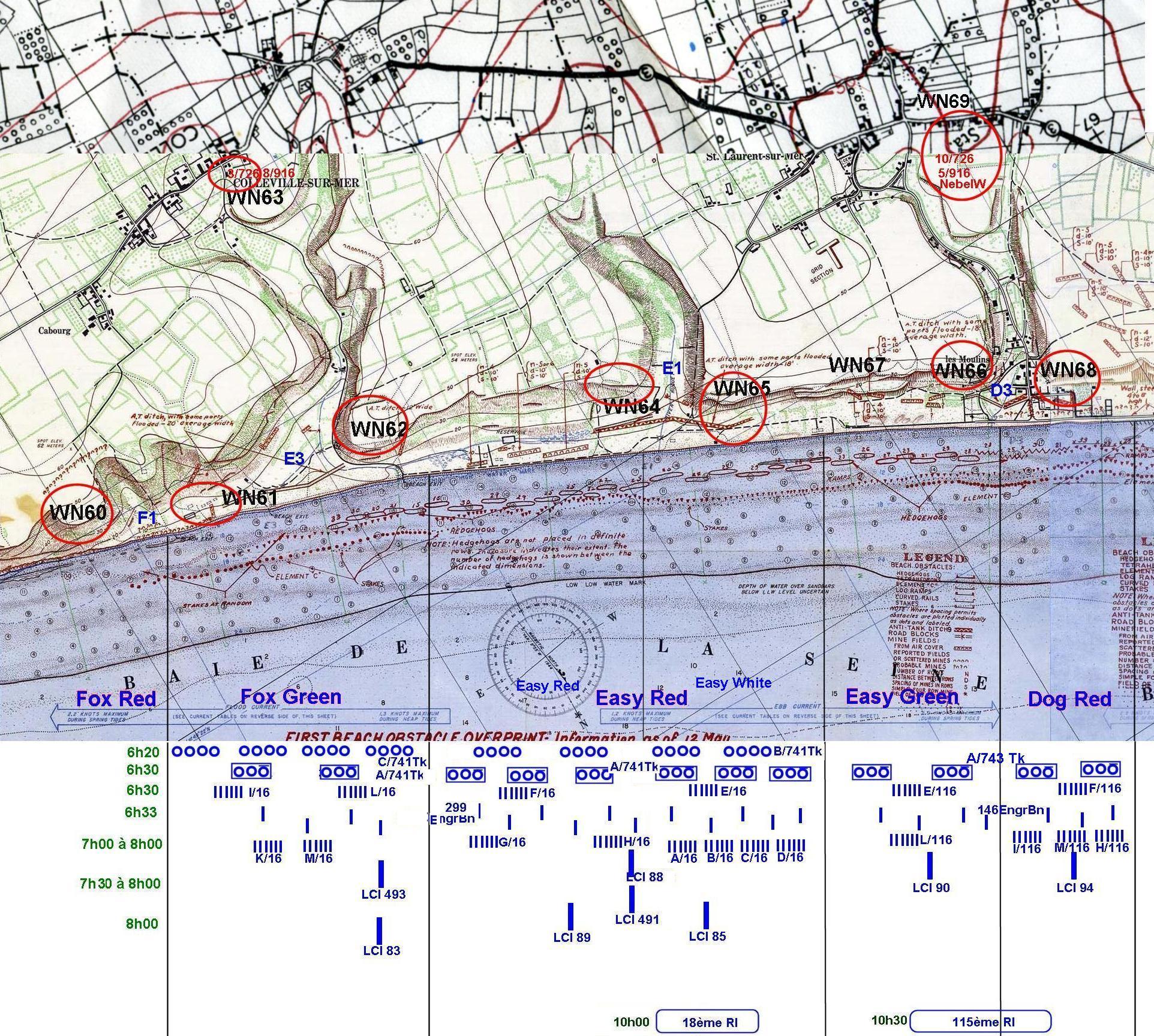
Beyond St-Laurent, the Dog Red and Easy Green sectors, and Colleville, the Easy Red and Fox Green sectors extended.
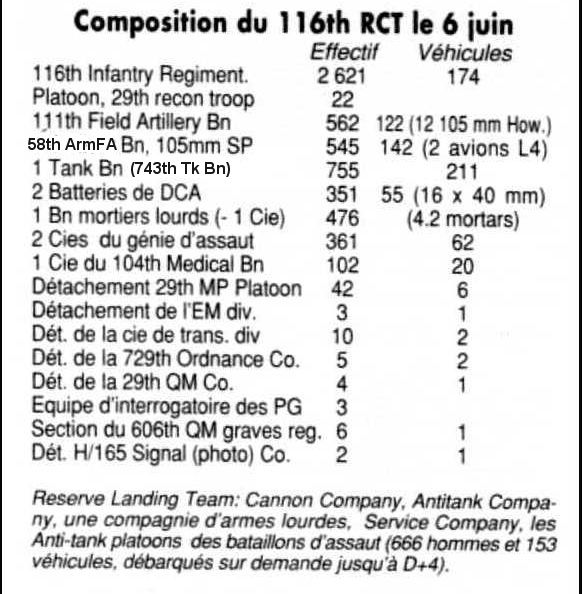
On Dog Green (900 metres between the descent of Vierville and the villa Chevalier), the 1st battalion of the 116°Regiment (4 companies A, B, C, D, of 200h each) was to land with its support in tanks and engineering, and to capture the descent of Vierville and then regroup south of Vierville before heading towards the objctives inside..
The 2nd Battalion (4 companies E, F, G, H) was assigned to the Dog White, Dog Red and Easy Green sectors. He was to take over the D3 beach exit and then regroup south of Saint-Laurent.
The 3rd battalion (4 companies I, K, L, M) came in support of the first two, disembarking from Dog White to Easy Green.
The Provisional Ranger Force of two battalions (two times six companies of 60 men each), attached to the 116° Reg., had special missions:
--- The D, E, F companies of the 2°Bataillon had to land directly at the point of the Hoc at the Hour H to destroy there the German battery of 6 cannons of 155mm.
--- Company C of the 2°Bataillon was to land at 6:30 a.m. on the Charlie sector, just west of exit D1(Vierville), and attack the enemy positions of the Point de la Percée passing through the top of the cliff.
--- If the attack at Pointe du Hoc was successful at H+30 (7h00), the 5°Bataillon of Rangers at 6 companies and the A and B companies of 2°Bataillon were to land there in support; but without news of Pointe du Hoc at 7h00, it was assumed that the attack on Pointe du Hoc had failed, and these units were then to land on Dog Green at H+60 (7h30) and go directly to the ground at Pointe du Hoc to destroy the dangerous battery.
The Forecast chart of landings specifies the timing of the waves of assault on Vierville from H (6h00) to H+225 (10h15).
The 16th infantry regiment of the 1st Division was to land on Easy Red and Fox Green (plages in front of Colleville and Le Ruquet) and take the exits of beach E1, E3 and F1 and regroup south of Colleville and the hamlet of Cabourg, before leaving towards the interior of the land and towards the objectives of the day.

3 - The intended movements inwards
The 1st battalion of the 116th Infantry Regiment was to have crossed the beach defences at Vierville within two hours of its landing.
The companies were to make their way to the battalion assembly area, 1 km away. in the land, immediately south of Vierville.
The enemy strong points protecting the exits had to be neutralized early enough to allow the opening to road traffic towards H+180, i.e. 9.30 am, the beginning of the landings of the vehicles in large quantities.
After the capture of Vierville, Battalion 1/116 was to advance west along the coastal road with the Rangers, and clean up enemy defences from the bridgehead to the Vire estuary. He would then be ready to take the next 7 June Isigny and the important bridge that is there, and then make the link to the West with the VIIth Corps.
In Saint-Laurent, the 2nd and 3rd battalion of the 116th regiment were to carry out missions from the Moulins to the village of Saint-Laurent and then to Formigny and take over the RN13
The 115th Infantry Regiment, disembarking on Dog White and Dog Red as reinforcement in the middle of the morning, should, if necessary, assist in the cleaning of German strong points.
At Colleville, the 16th regiment (1st Division) was to perform similar missions from the beaches of Colleville and the Ruquet to the village, then to Ste Honorine and Surrain, acting as liaison with the British troops who were to have taken Port-en-Bessin, and to carry the front to the RN13.
The 18th regiment (1st division), disembarking in reinforcement on Easy Red, was to help clean up the remaining fortified points from midday.
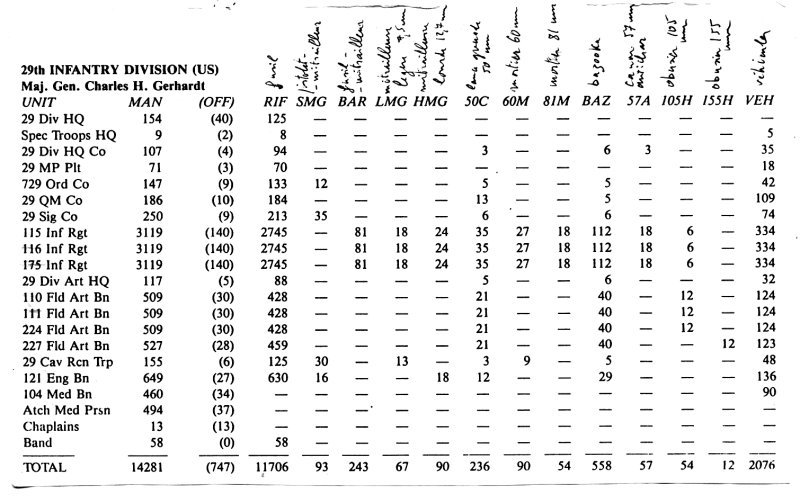
On June 6th the command of the disembarked troops was carried out by the advance PC of the 1st Division (General Huebner at Colleville-Le Ruquet). The 2 regiments disembarked from the 29th Division were attached to it. It was only on 7 June at 00:00 that the PC of the 29th Division (General Gehrardt, based in Vierville) was to resume command of all the troops of the 29th.


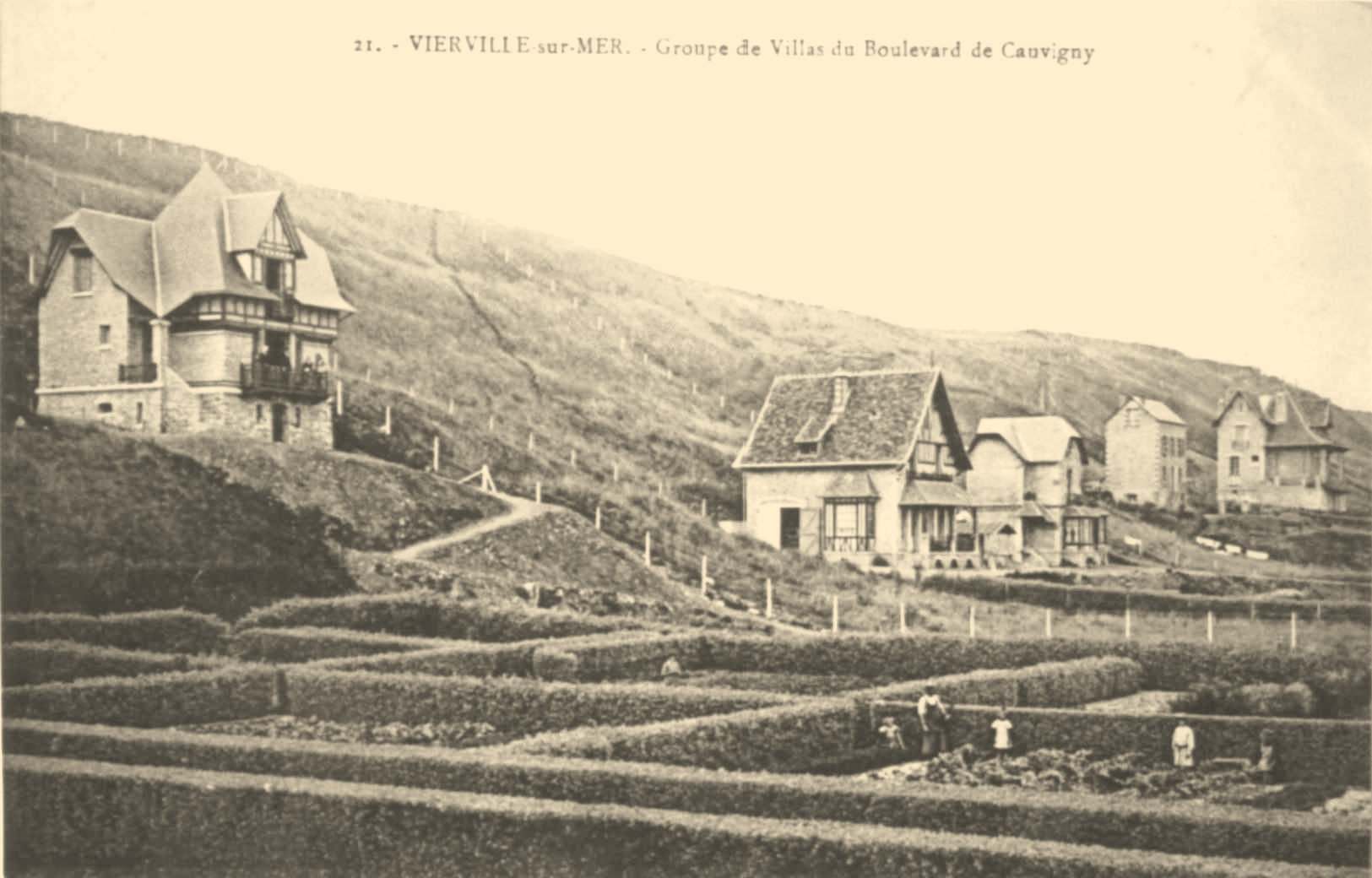
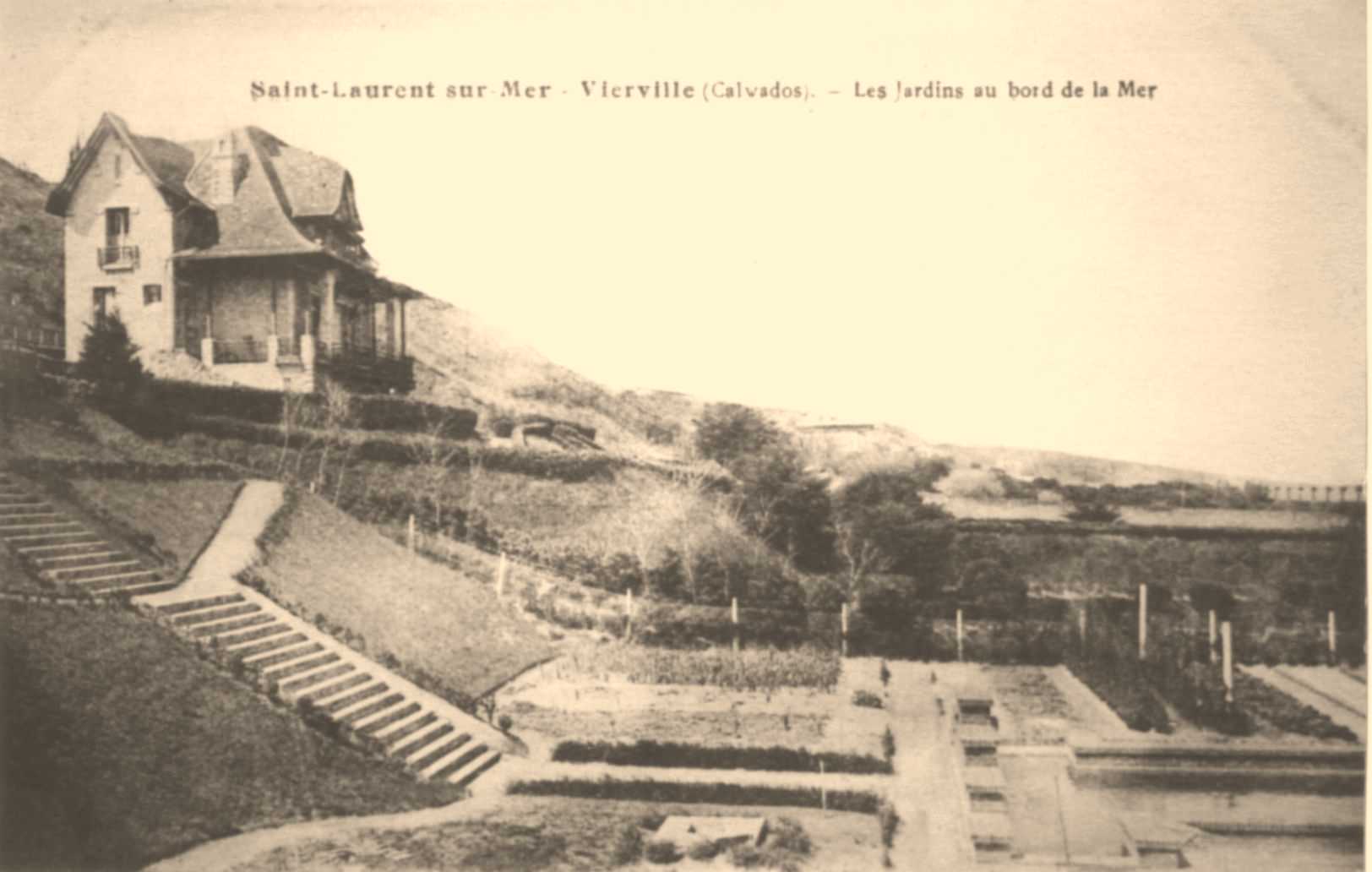
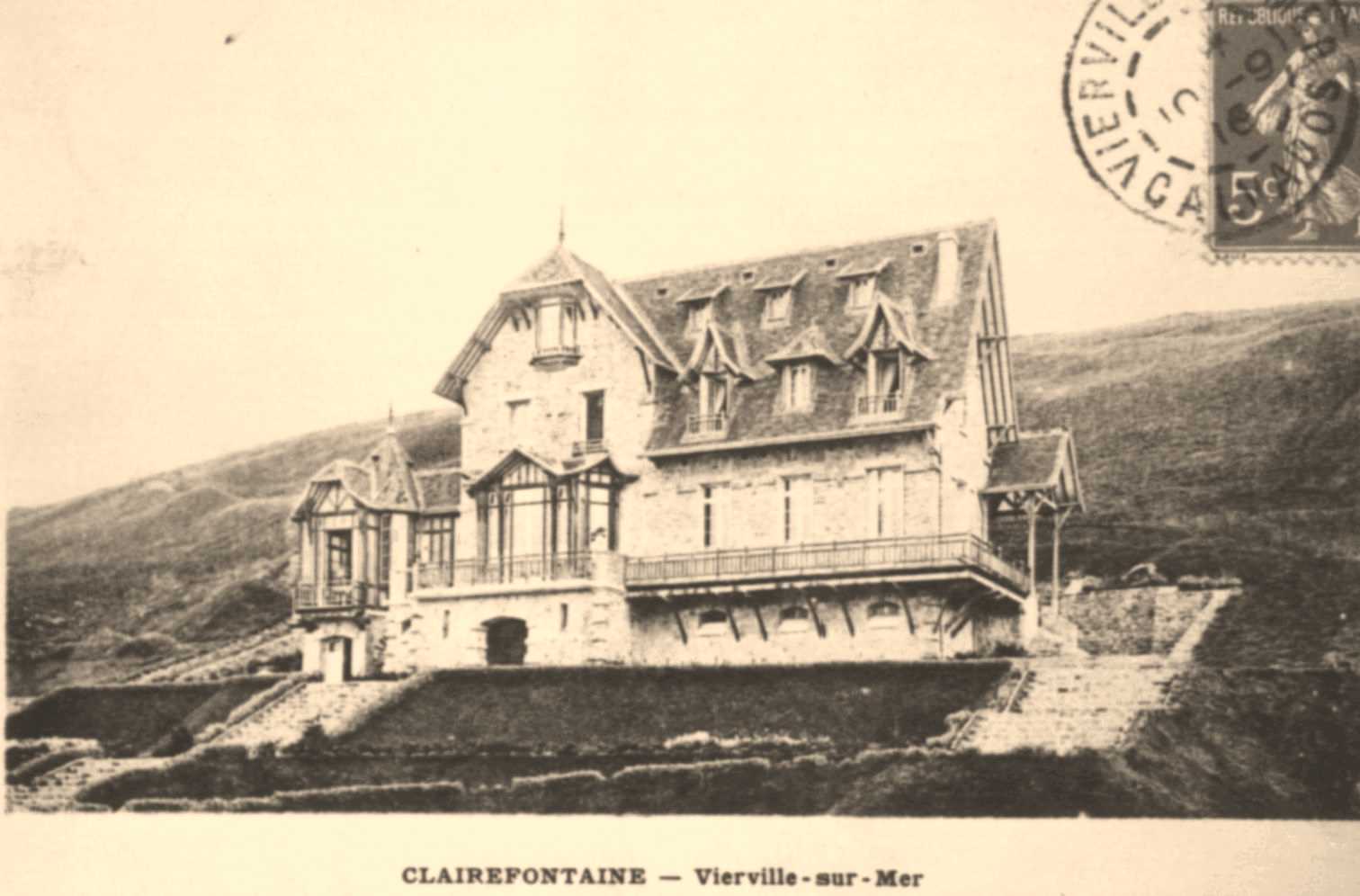
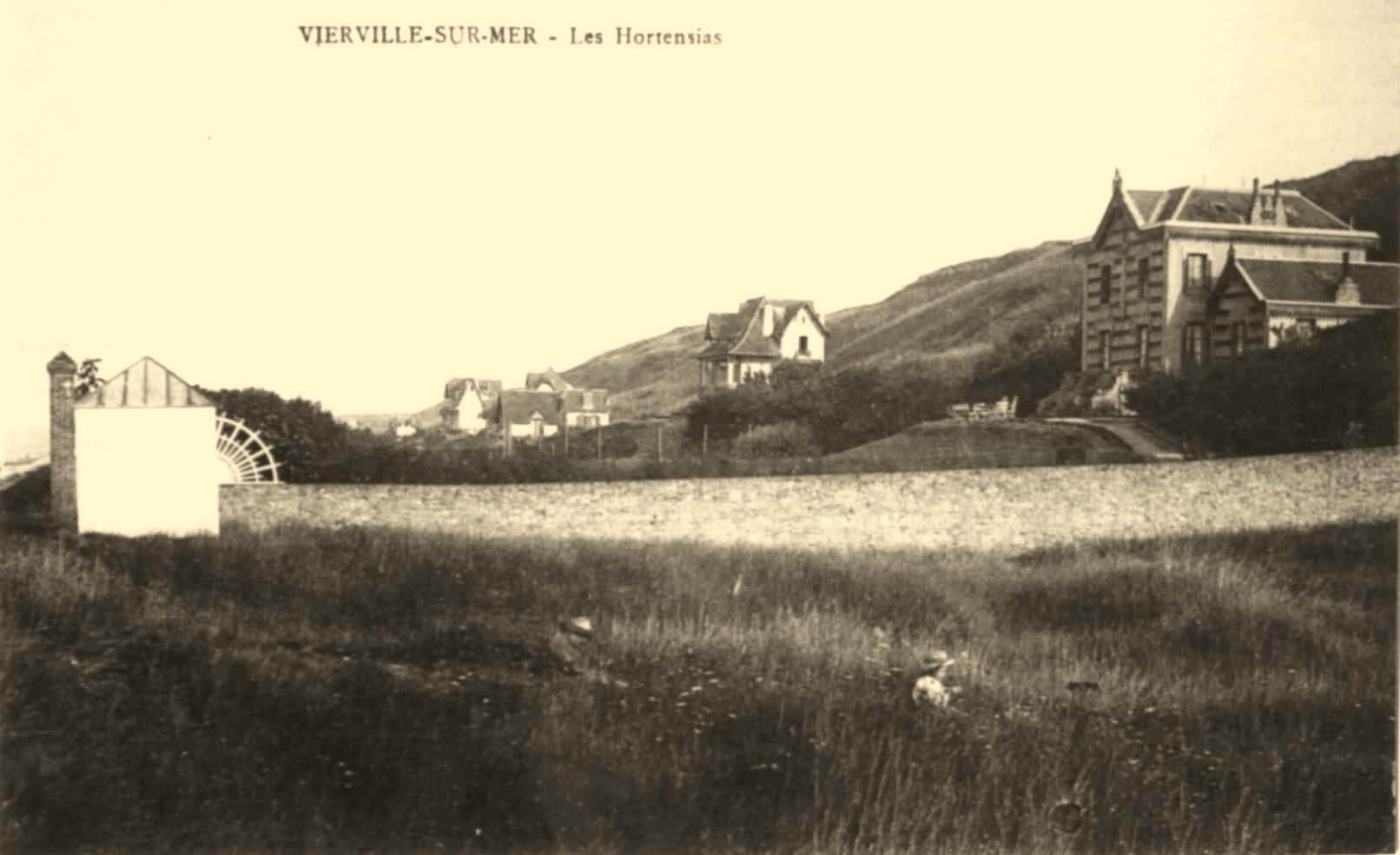
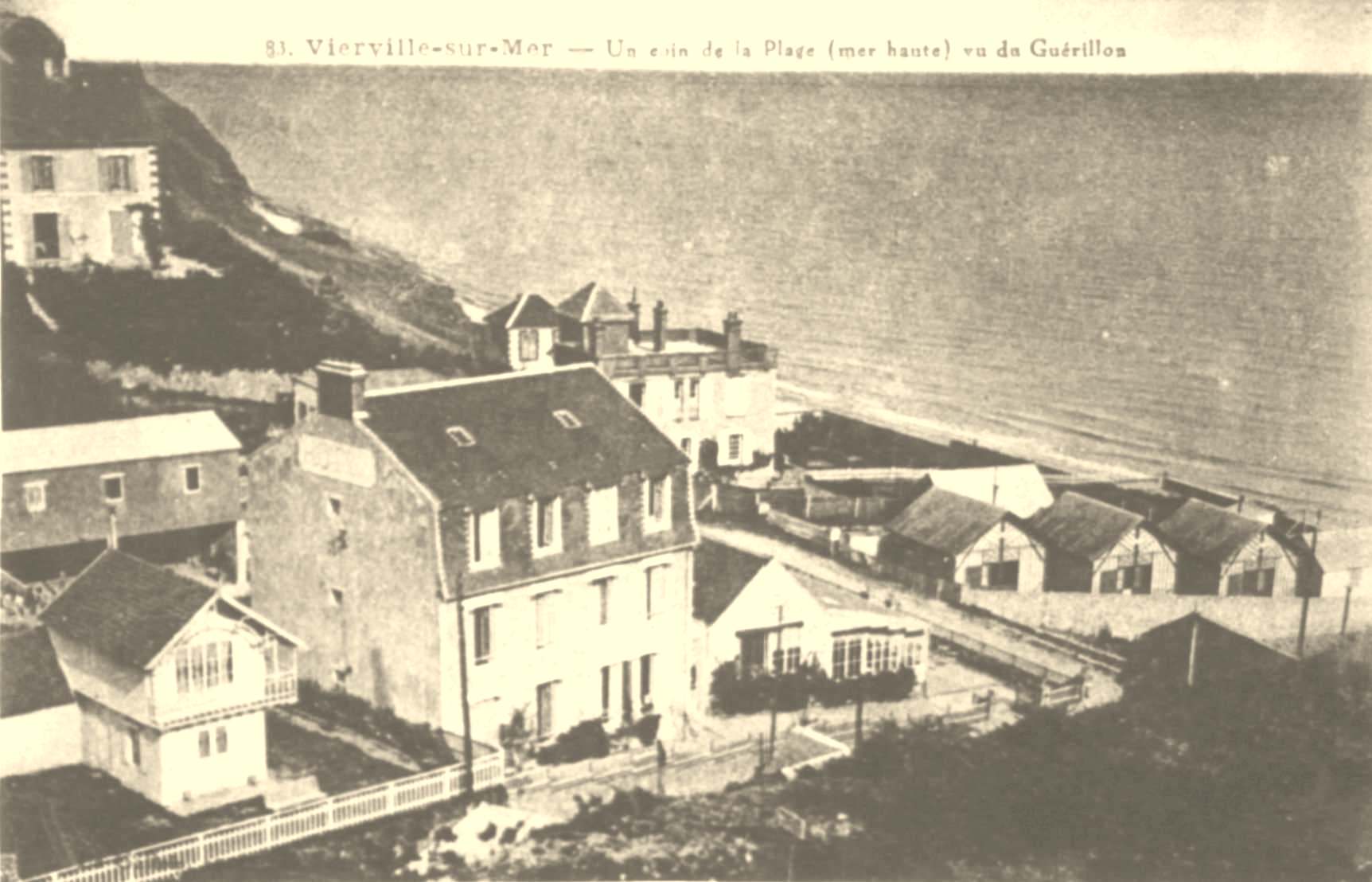
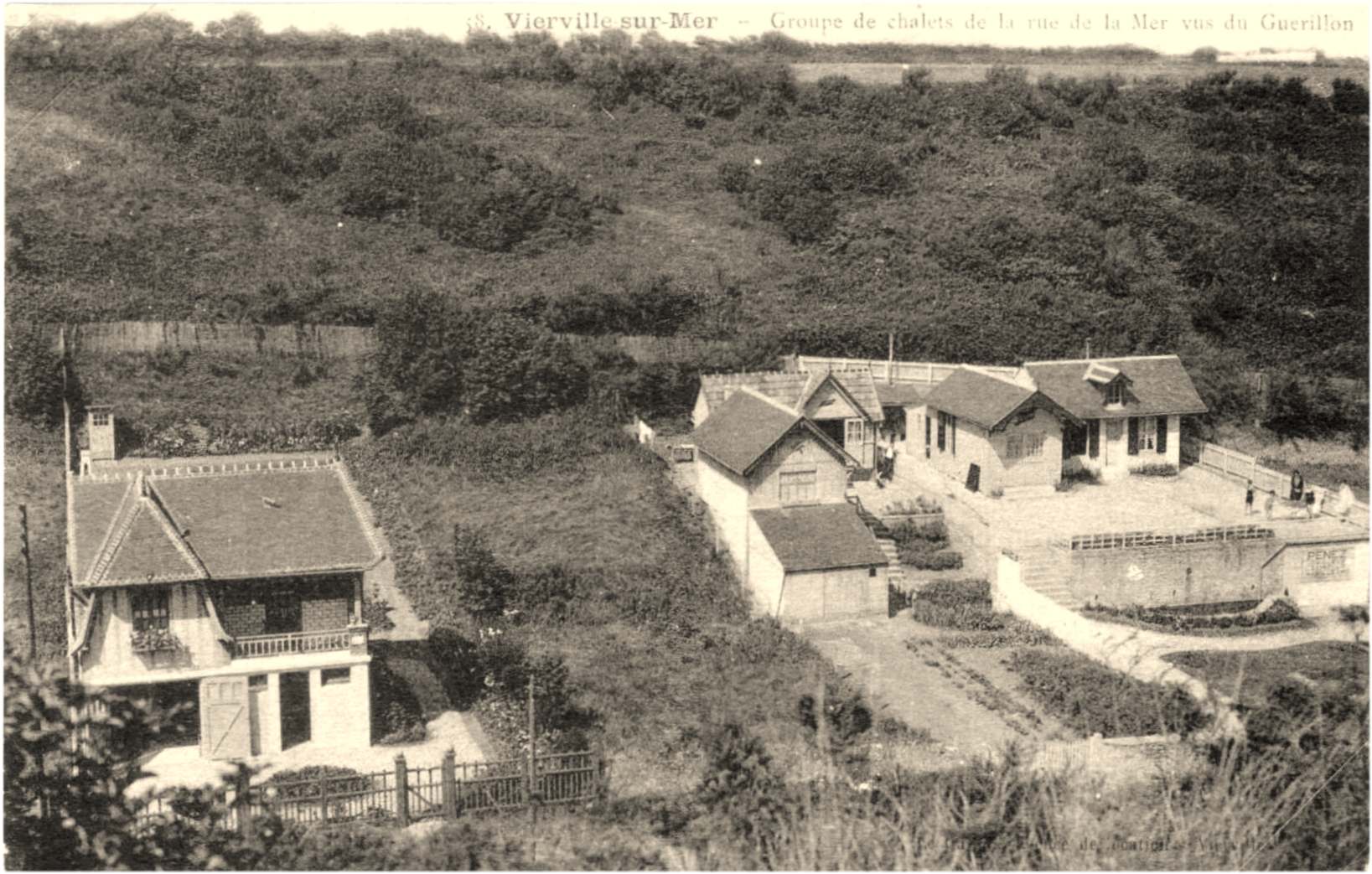
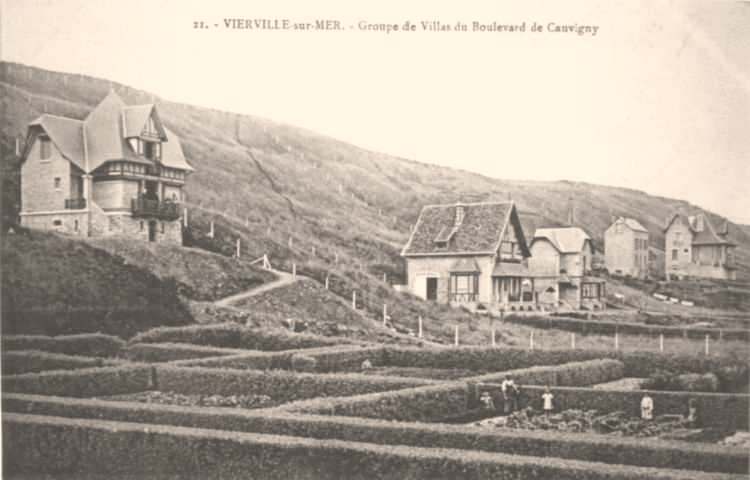
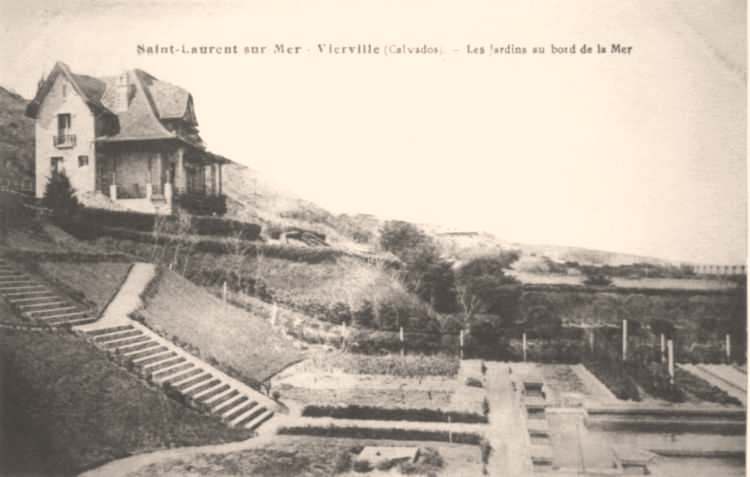
The villas in the descent of Vierville, before the war and in 1943 (below, June 30, 43)