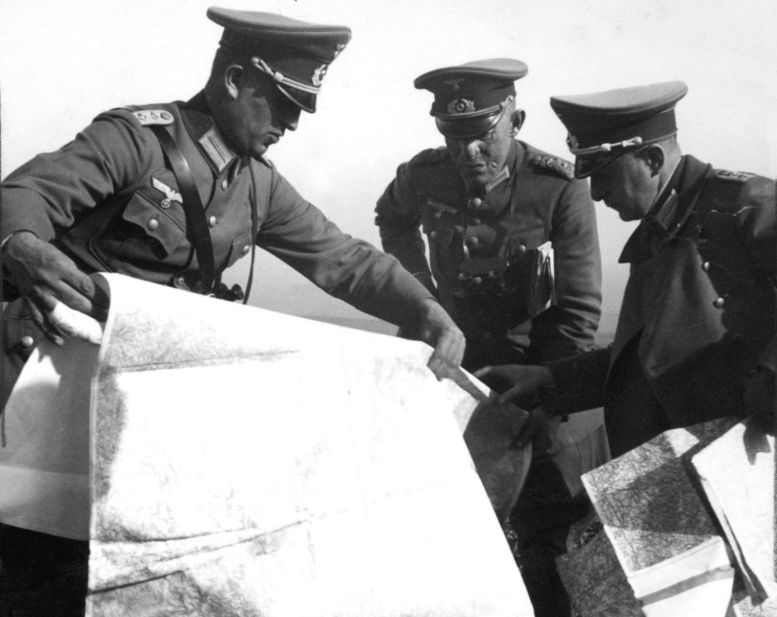



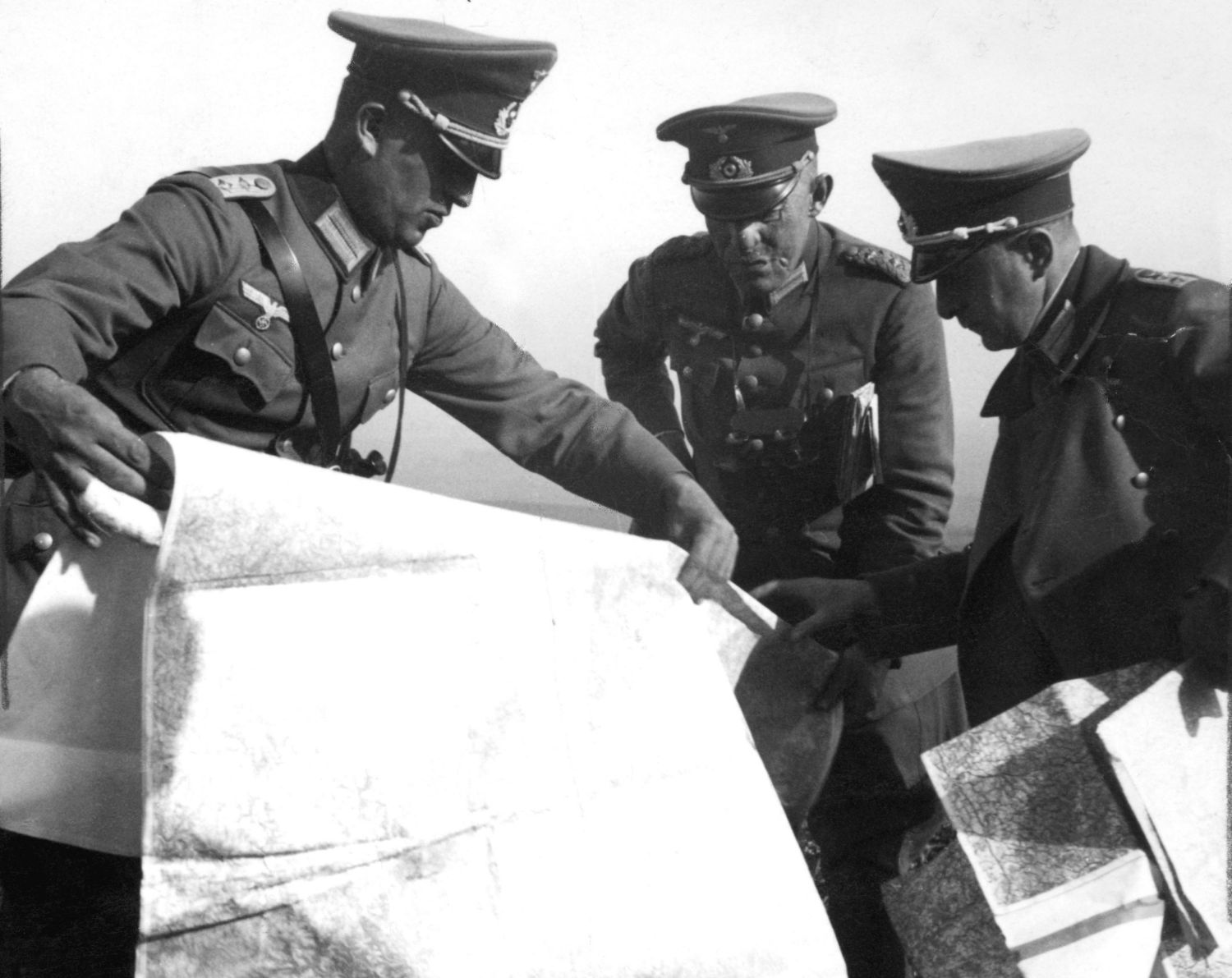
Significant German movements took place on Sunday, June 4. The 352ème German DI was then put on full alert, it was the only unit on the Normandy front to wait for the Disembarkation for good thanks to the flair of its 2ème Office. General Kraiss then chose to stay with his troops at Molay-Littry, his headquarters at 352èmeInstead of going to the "Kriegspiele" in Rennes, where he was summoned with his counterparts. He had then justified with his superiors the warning of his division by maneuvers.
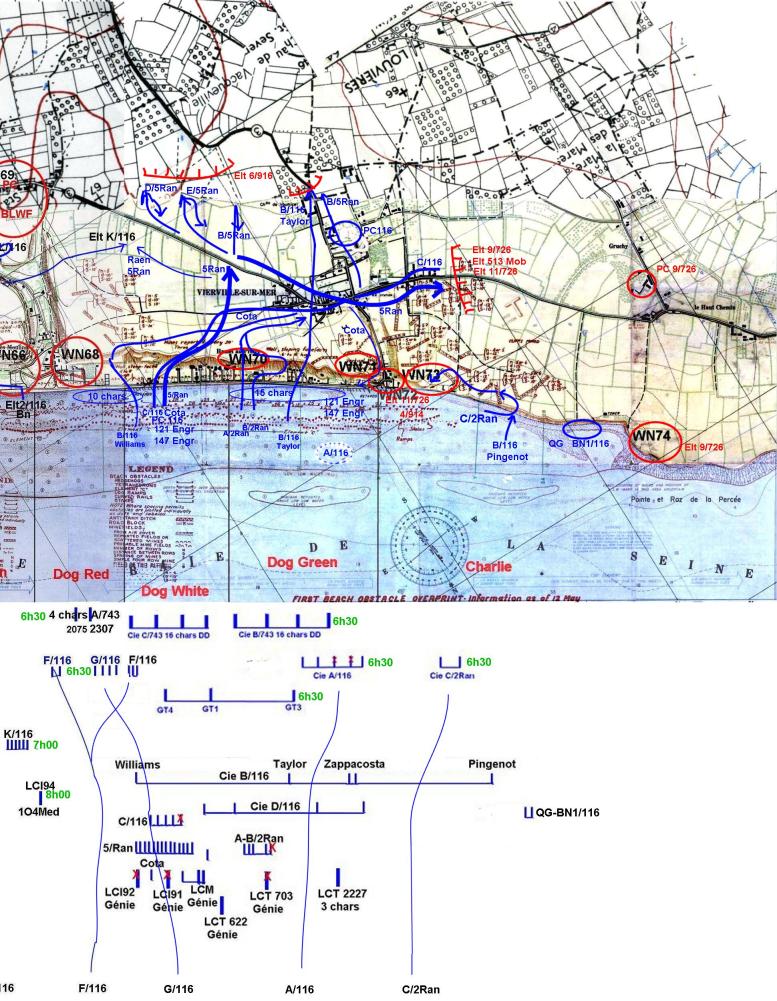
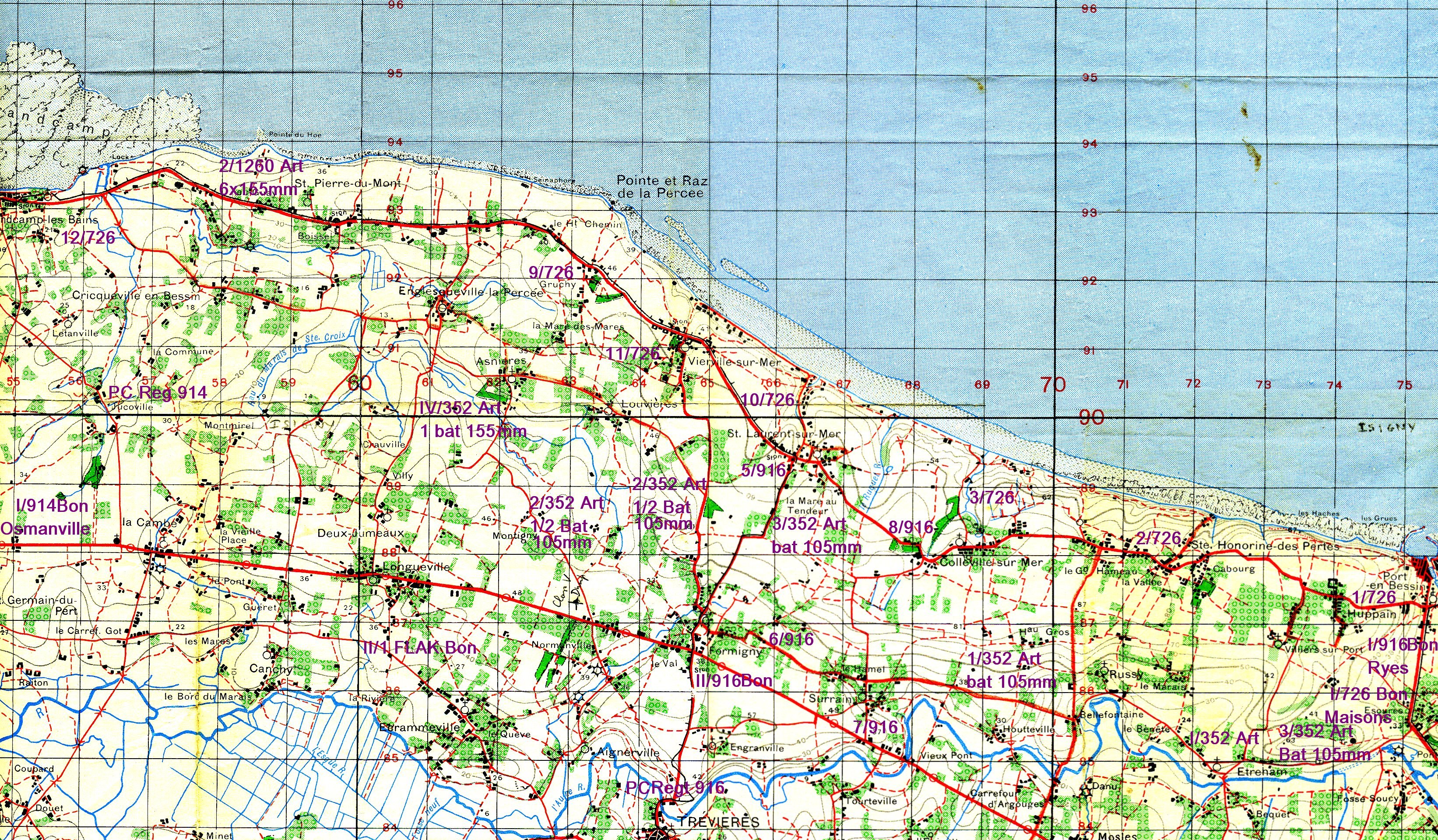
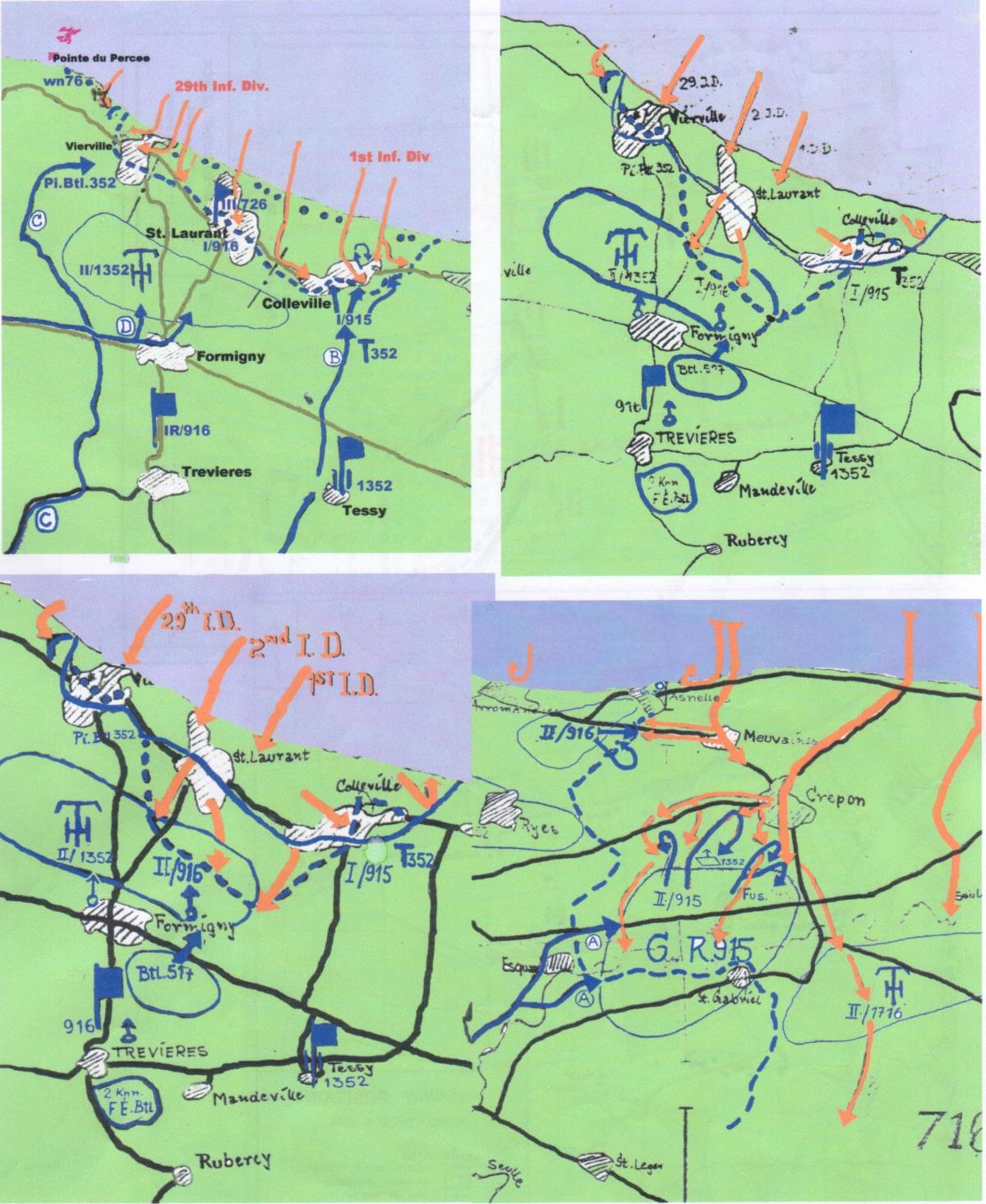
Colonel Goth in Trevières was responsible for the Vierville area in Arromanches, with his 916ème Infantry Regiment, reinforced by several 726 companiesème RI. Between Vierville and Ste-Honorine, he had deployed battalion 2/916 (PC in Formigny, Captain Grimme) with his 4 companies located in St-Laurent, Colleville, Surrain and Formigny. On the front line, in the WN, he had 3 spare companies of the 726ème, the 11th in Vierville, the 10th in St-Laurent, and the 3rd east of Colleville. In the evening of 3 June he met Colonel Heyna of 914, knowing that he was low in strength in the Vierville area.ème Regiment, whose area began just west of the village and had asked for reinforcements.
Heyna already had one less company, detached for the guard of headquarters of 84ème Body in St-Lô. After discussing the situation and its risks, Heyna had admitted that he had an interest in strengthening his visible right flank in the event of an attack on Bessin.
The two officers were aware that the foreigners in their units ("Germans" from Poland, Russia, Czech Republic, etc...) were not sure and that they had no hope of reinforcements apart from the Meyer Group (the 915ème Regiment and the Battalion of Fusiliers 352 - the Battalion of Recognition -).
Heyna had thus detached in Vierville on Sunday 4 June 2 sections, about 80 men, who immediately reinforced the WN of the beach. The Division also advanced to the villages of St-Laurent and Colleville at least 2 small 50mm anti-tank guns of the Divisional Anti-tank Company PAK 352.
These adjustments were made on the evening of 4 June, with the consent of General Kraiss.
The forecasts of the Major Block of the 352° Intelligence Service were realized with the landing, but in the day, General Kraiss, at the Molay-Littry, (his PC of the 352nd Division), appeared rather ill informed, both about the general situation and about what was happening in Vierville.
At 02:00 on 6 June, he was warned of parachuting south of Carentan (in fact parachuting mannequins simulating fire and explosions).
At 03:10, worried about the risk of separation of the 709th Division, its neighbour in the Cotentin, he sent his reserve, the Kampfgruppe "Meyer" (the 2 battalions of the 915th Reg. and the Fusiliers battalion, all of which were loaded on requisitioned civilian trucks), stationed in the Bayeux area. In fact, these parachutings didn't threaten 352nd.
Kraiss quickly realized his mistake, learning the appearance of the Allied fleet and then the bombings on the coast of Arromanches at Vierville, and at 0550, he ordered Meyer, whose head had reached the Cerisy forest, to suspend his movements. He stopped Meyer for 2 hours, even after learning the landings in force on his entire forehead (from 06:30).
It was at 0735, that he decided, he divided the Kampfgruppe Meyer into 2, and he ordered one of the 2 battalions (the I/915) to go to Colleville to attack the disembarked Americans, (the other units of the Kampfgruppe being sent to Arromanches).
The I/915, which was then at Blay (West of Bayeux), was to be supported by 6 of the 15 "Marder" assault guns of 1PZ/352 Panzer Jager Abt. and the STUDs of 2PZ/352 stationed in Colombières.
Battalion 2/915 should have arrived at about 9:30 am on Colleville, but delayed by aviation, it was really engaged only in the afternoon.
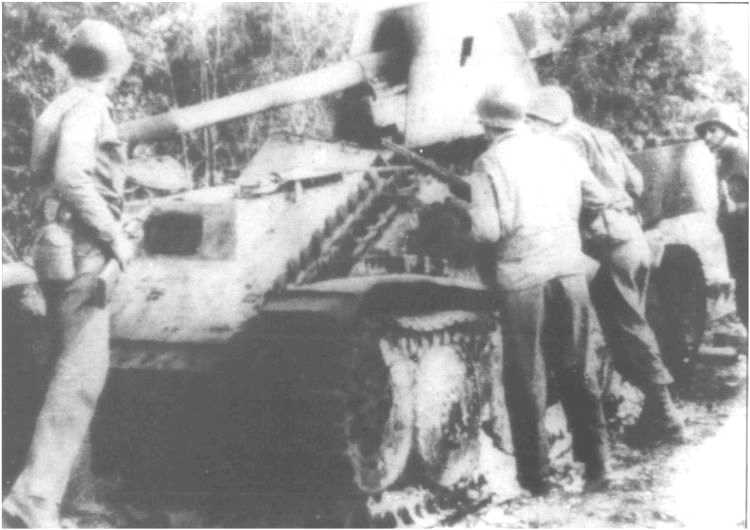
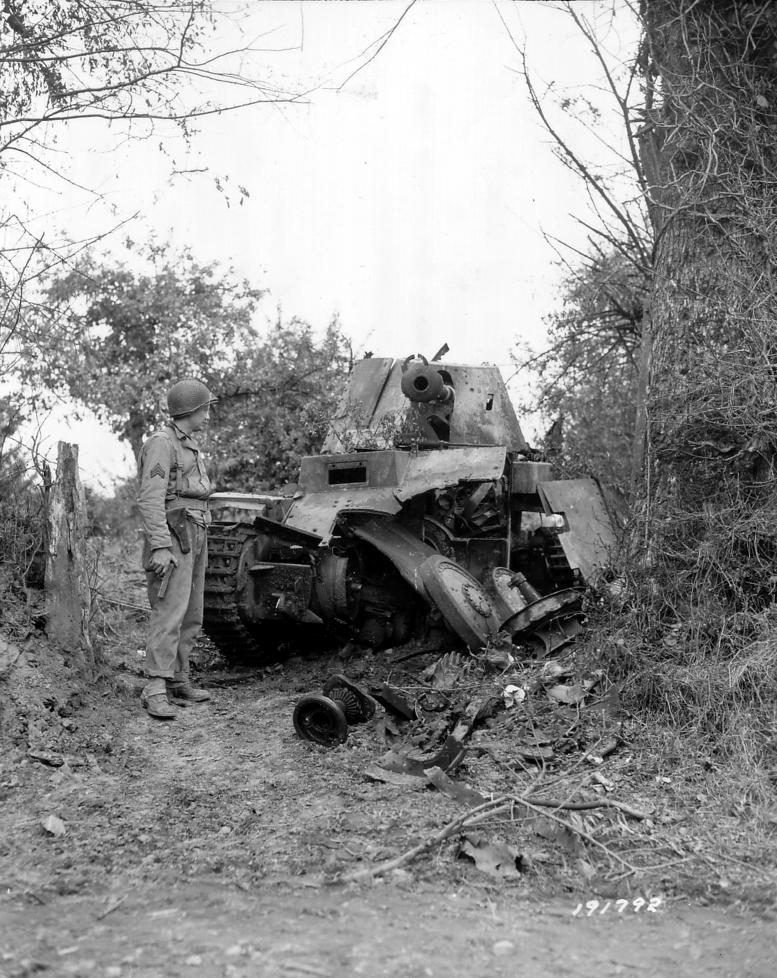
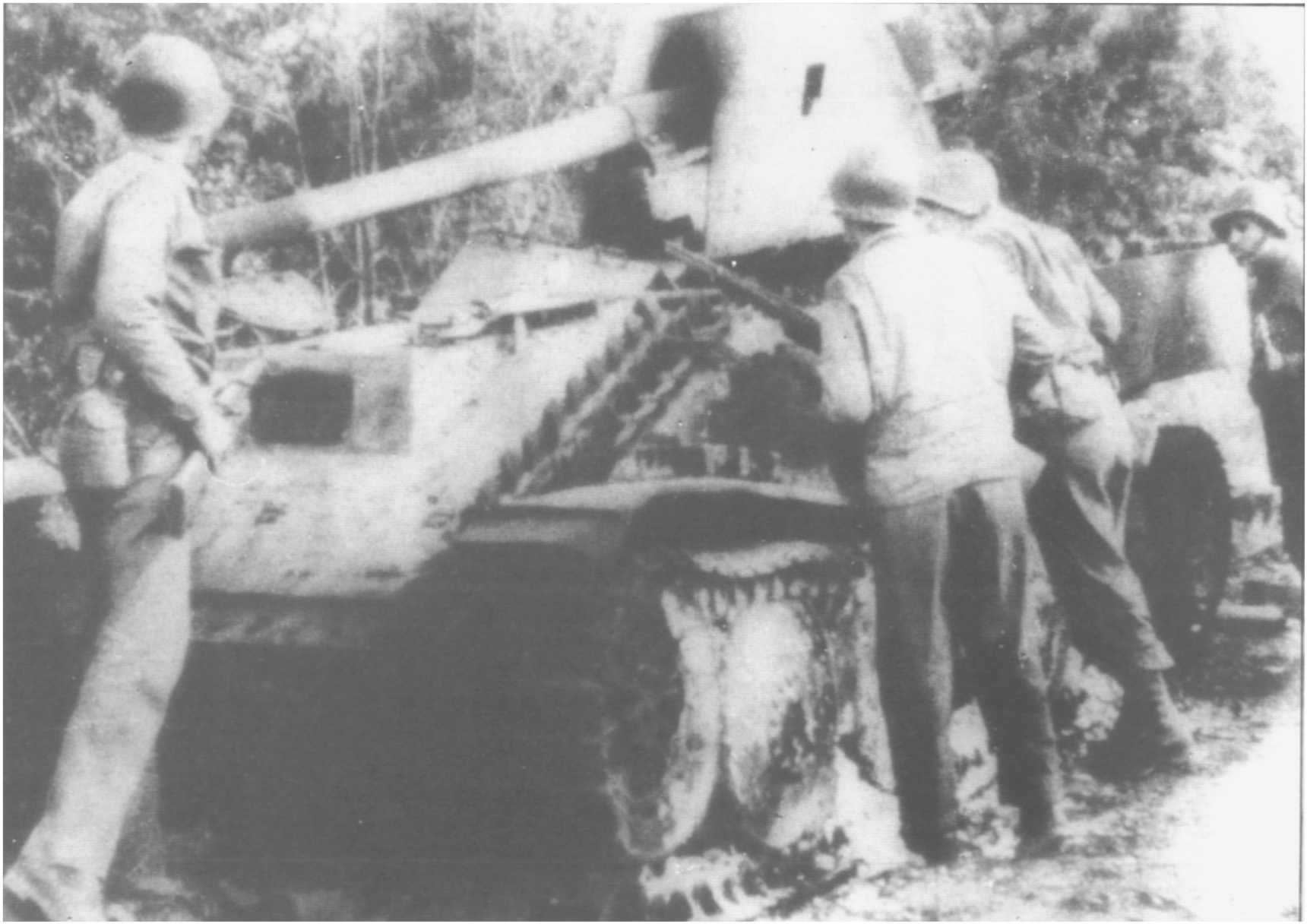
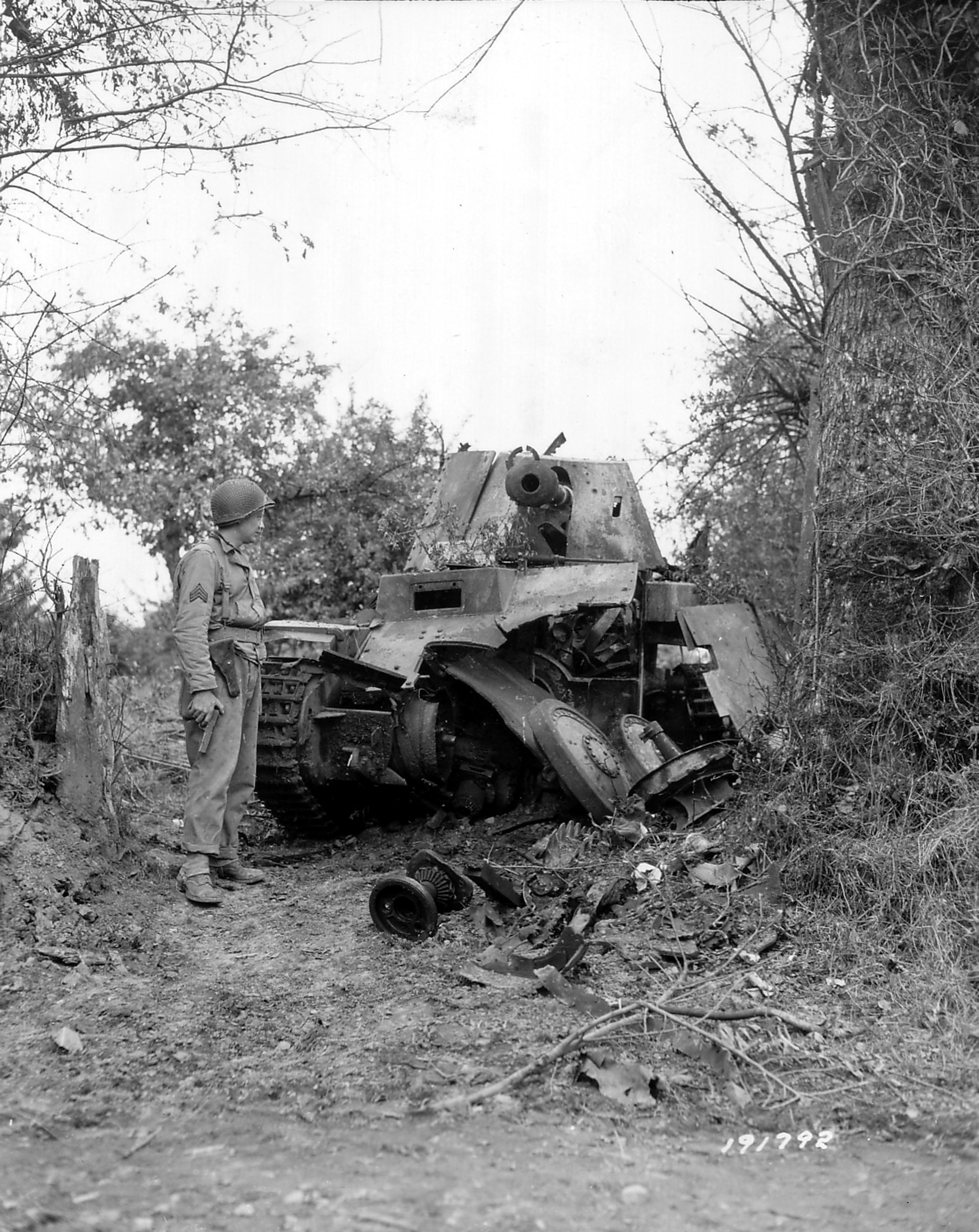
As for the tanks "Marder" and "STUD" attacked at Engranville (at the NE of Trevières) by the cannons of the Navy, they seem to have hardly exceeded Formigny, except some "Marder" and STUD, including a Marder observed destroyed at the wood of Saffray, but without the knowledge by whom, naval artillery, aviation, or otherwise?? They seem to have been removed during the day and sent to Bayeux and Arromanches. A STUD was also observed destroyed just north of Colleville.
According to a German veteran, a Marder pilot, 5 or 6 of these vehicles drove to the coast from Trevières. They were taken to the side of Formigny under heavy fire from Marine, an ammunition truck exploded, the column was stopped, and the Marders retreated, losing a machine (he found destroyed in the woods of Safray?, cf. Memories of Michel Hardelay)
At 0835, General Kraiss sent the remaining 2 battalions of the Kampfgruppe (II/915 and the Fusiliers battalion), along with the rest of the PZJagAbt. to Arromanches, where they arrived only in the late afternoon. They were repulsed and practically destroyed in Crépon north of Bayeux by the British who had largely pierced the front and had tanks in numbers. Colonel Meyer was killed in combat.
For its part, the 84th Corps (PC in St-Lô) had the 30th Mobile Brigade ("Mobile", as it travels by bike) between St-Lô and Coutances. He seems to have sent one of his 3 small battalions, the 513th Abteilung, from 2am to the coast at Pointe du Hoc and the Percaea. He may have intervened in Vierville to help block the US advance west of Vierville. This battalion also had small self-propelled guns of 47mm, they also did not intervene, perhaps because of aviation.
The other 2 battalions, the 517th and 518th Abteilung, were sent to Tour-en-Bessin and Formigny for 7 June.
The Regiment of Flak N°32 (88mm guns both anti-tank and anti-aircraft), stationed in Maisy (near Grandcamp) was repositioned in Formigny in the morning to block any American armored tanks.
Locally on Omaha, the WN74 at La Percée was able to witness the apparent failure of the landings in Vierville and the halt of all landings since 8:30 am on the beach of Vierville.
But he was too far away to realize the favorable evolution for the assailants with the resumption of landings beyond Saint-Laurent and the capture of Vierville by soldiers infiltrated by the cliffs.
At about 12.00 p.m., he sent a reassuring report from the Percaea, suggesting that the Americans were blocked and destroyed on the beach of Vierville and the landings stopped. He apparently didn't know about Vierville's loss. However, there was no German company really available to defend Vierville borough, all the combat sections of the 11th/726, reinforced by the 80 men of the 914th Regiment were on the coast in the WN 70 to 73.
The loss of WN 70 appears to have been reported very early in the morning, but the neutralization of WN71, 72 and 73 was probably not reported when it occurred mid-day.
As for the situation in Vierville, it was only late in the day that the Germans became aware of it.
The German PCs of Trevières (916th Regiment) and Molay-Littry (352nd DI) therefore thought the situation in hand for them in Vierville.
We have the very instructive testimony of Private Wegner of the 3rd company of the 914° Regiment, in station since 4 June at the WN72 of Vierville
In the early morning, the PC of 916th Reg. (at Trevières), sent Cie 7/916 (cantoned at Surrain) to strengthen the defence of Colleville, and Cie 6/916 (cantoned at Formigny) to strengthen the defence of St-Laurent. They may have been elements of this company that blocked the 5th Rangers from 10:00 a.m. to 2:00 p.m. south of Vierville, and were arrested in Ormel by Lt. Taylor.
These troops were strengthened in the afternoon only by elements of Battalion II/915, and by elements of the "Forst Pioneers" (Festung Pionere) stationed at the Bayeux SO.
West of Vierville, Cie 9/726 stationed in Gruchy, Englesqueville and La Percée (reinforced by an element of the 30th mobile brigade arriving in the day at La Percée) established an effective dam in the morning against the thrust towards the point of the Hoc from Vierville. This is where his commander, Captain Gründschloss (resident of Gruchy Castle) was killed.

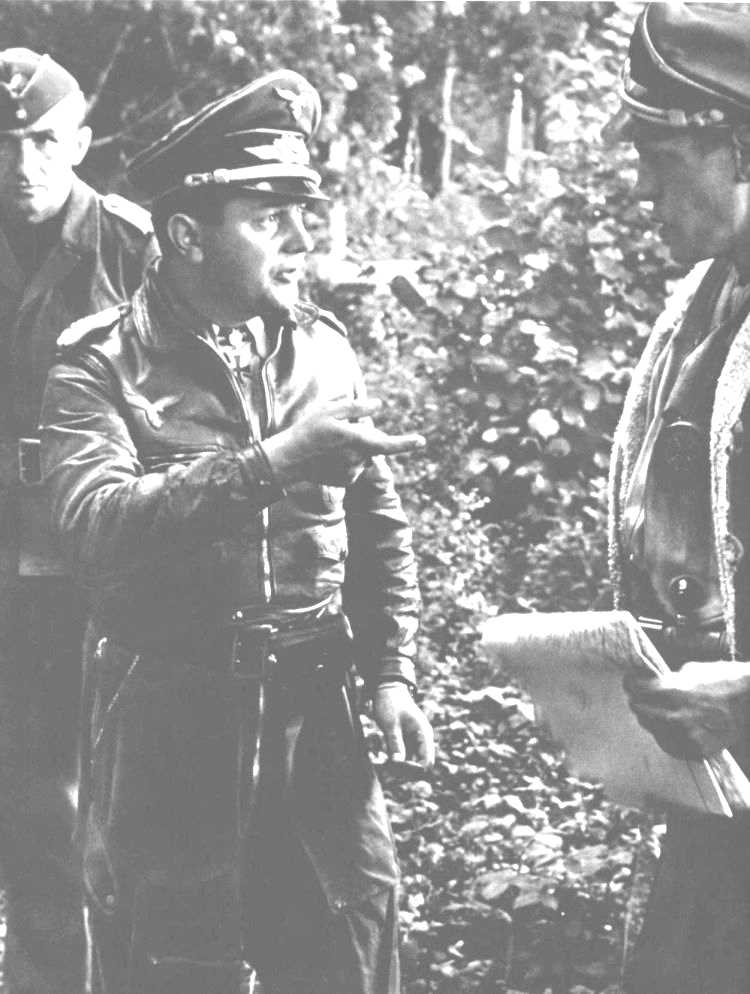



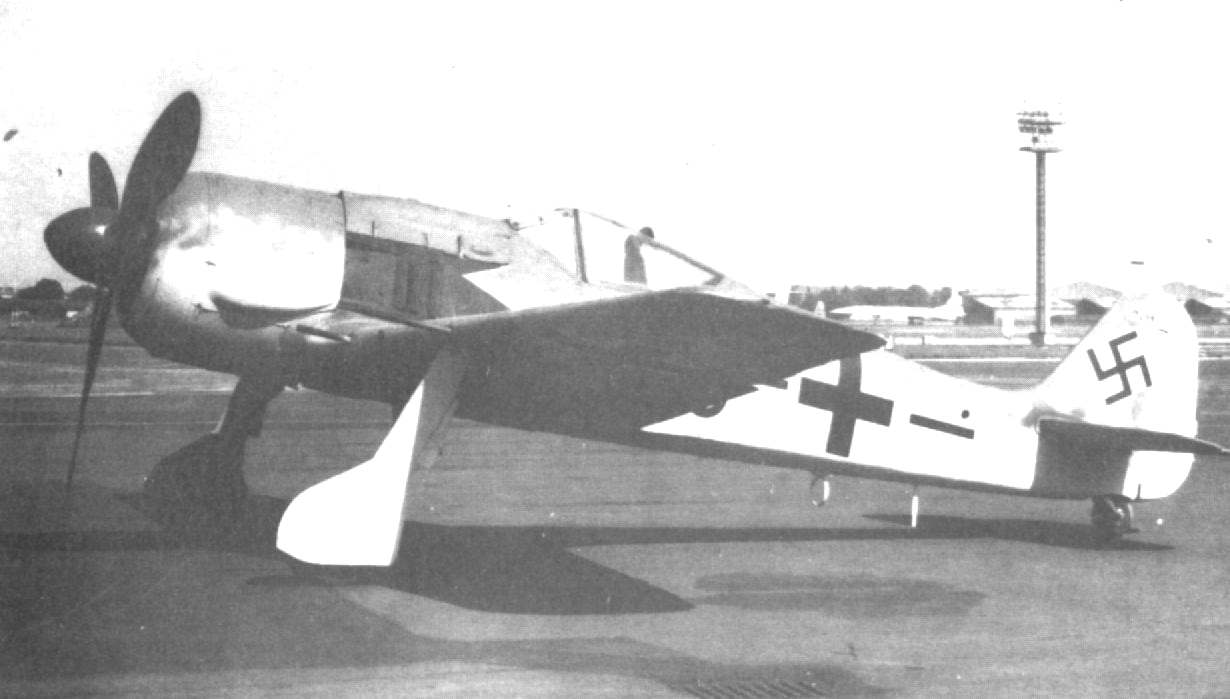
German aircraft appeared once, at around 9:00 a.m., two Focke-Wulf 190 German fighters from the east flew over the beach of Vierville. They were piloted by Major Joseph Priller and Sergeant Heinz Wodarczyk. They were flying at an altitude of 50 metres.
All the DCA guns (75, 40, 20 and 12.7mm) in the fleet fired, missing of course these 2 aircraft probably flying at more than 600 km/h, but reaching other fleet vessels.
The absence of enemy aircraft in the area of attack was a considerable asset for the Americans. It is easy to imagine what the intervention of fighter-bombers would have meant during the critical hours of the morning, when the attacking troops were massed on the narrow beach strip.

(details) a German FW 190 fighter