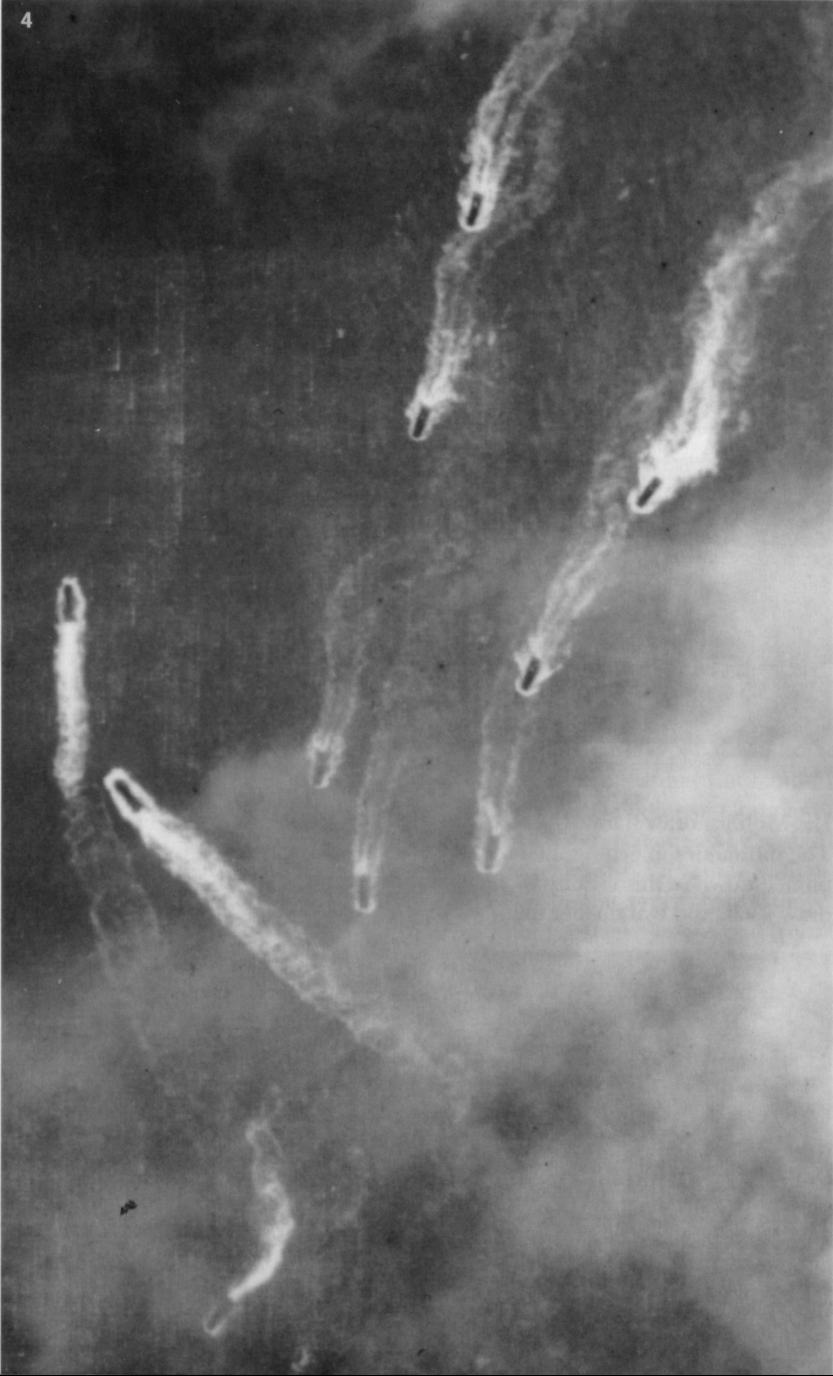
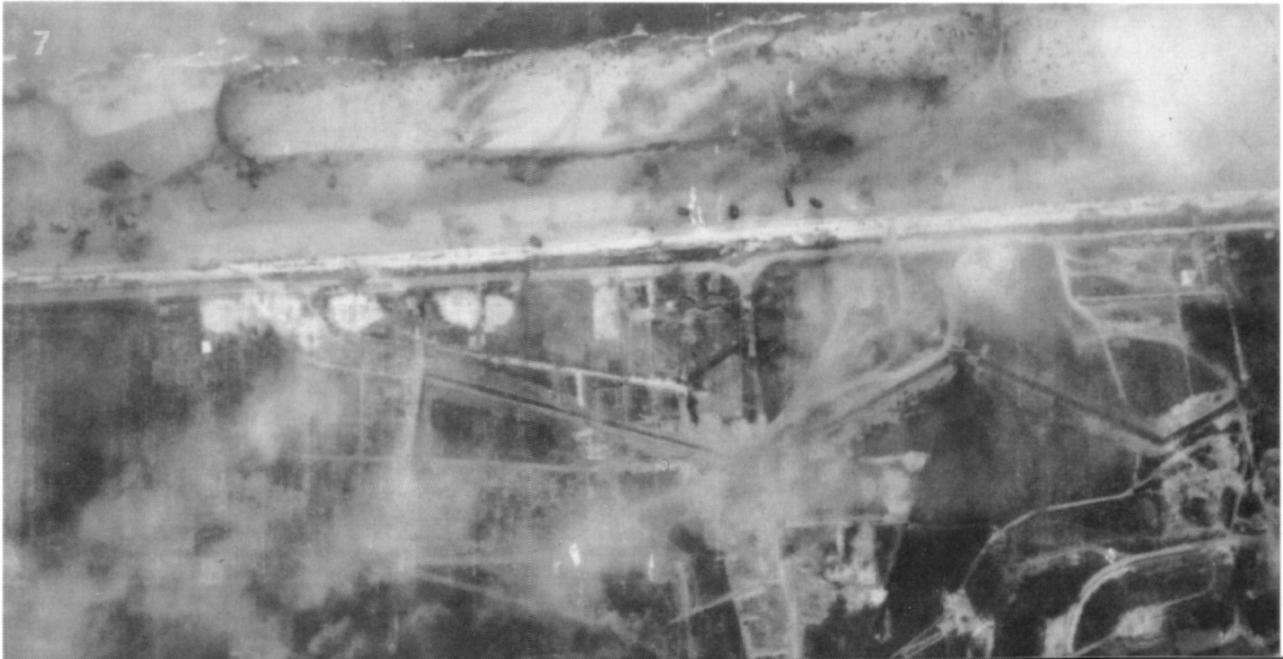
The 5th Rangers Battalion arrives at 08:00 on Dog White
behind company C/116
The 15 LCA carrying the 5th Rangers Battalion (about 450 Rangers divided into 6 small companies of 65 Rangers each) were waiting in a gathering area at sea, north of Englesqueville, for an order to land as reinforcements at Pointe du Hoc.
If they were warned before 7:00 a.m. that the attack on the peak of the Hoch had succeeded (the agreed message was "Praise the Lord" - "Praise be the Lord") they had to land there.
If they did not receive this information, assuming the mission failed at Pointe du Hoc, they had to land on Dog Green, climb to Vierville and leave inland to attack the peak of the Hoc.
An LCA was sunk by the sea during this expectation, with its men (half of the Cie F/5Ran) being recovered by a nearby LCT. They landed around 9:00 on Dog Red, Saint-Laurent.
Lieutenant-Colonel Max Schneider, who was in command of the Rangers, delayed his decision as late as possible. At 7:15 a.m., still without any news from Colonel Rudder at Pointe du Hoc, he could not wait any longer and ordered to head to Vierville.
"Schneider had to choose," later wrote Captain John Raaen, commanding the HQ company of the 5th Rangers Battalion. "the desire was strong to go to the point to assist the 2nd battalion, but the orders were to go back to Vierville, and we went back."
Afterward, this proved to be a very good decision. The Rangers brought a 116th Reg. He was very weakened with essential support in Vierville, while Rudder's men were soon to be able to accomplish their mission alone at Pointe du Hoc.
As the shore approached, Colonel Schneider realized well what was happening in front of the Vierville descent and on his indications the flotilla moved towards Dog White.
Captain Raaen later commented: "Schneider was thinking quickly, he was not going to sacrifice his battalion in an unnecessary assault, so he made a second decision: he ordered British crews of his LCA to move east, parallel to the beach, until they found the relative tranquility of Dog White Beach 500 m away. There our two LCA columns came forward and the assault began."
Sergeant Victor Fast was Schneider's interpreter. For him, "the presence of Schneider's mind and his clever calculations - usually the Rangers are not afraid to make a decision - have saved a lot of lives, perhaps hundreds."
On the smoky part of Dog White, 14 of the 15 barges carrying the 5th Rangers Battalion reached land at about 8:00 a.m., well grouped into 2 waves, probably between the 1st American cemetery and the Richard villa. The sea had climbed well, we had passed the mid-marée and the beach was only 70 meters deep.
The first wave on the beach consisted of half of the Battalion HQ and the companies "A", "B", and "E". The second wave, comprising the other half of the battalion headquarters and the "C", "D" companies, and the remaining section of the "F" repeated the gestures of the first wave.
To their right, the great LCI 91 (carrying engineers and staff) was hit by artillery and was on fire while the Rangers' LCA were crossing neighbouring obstacles, but none of their barges were hit.
The battalion's 450 men crossed the beach to the seafront, losing only 5 or 6 men under sporadic light weapons fire. They found shelter from the wooden wall and the pebbly slope entirely occupied by troops of the 116° Reg. (including Cie C/116) and the sand behind covered with soldiers.
Here. a few testimonies from the Rangers on this landing.