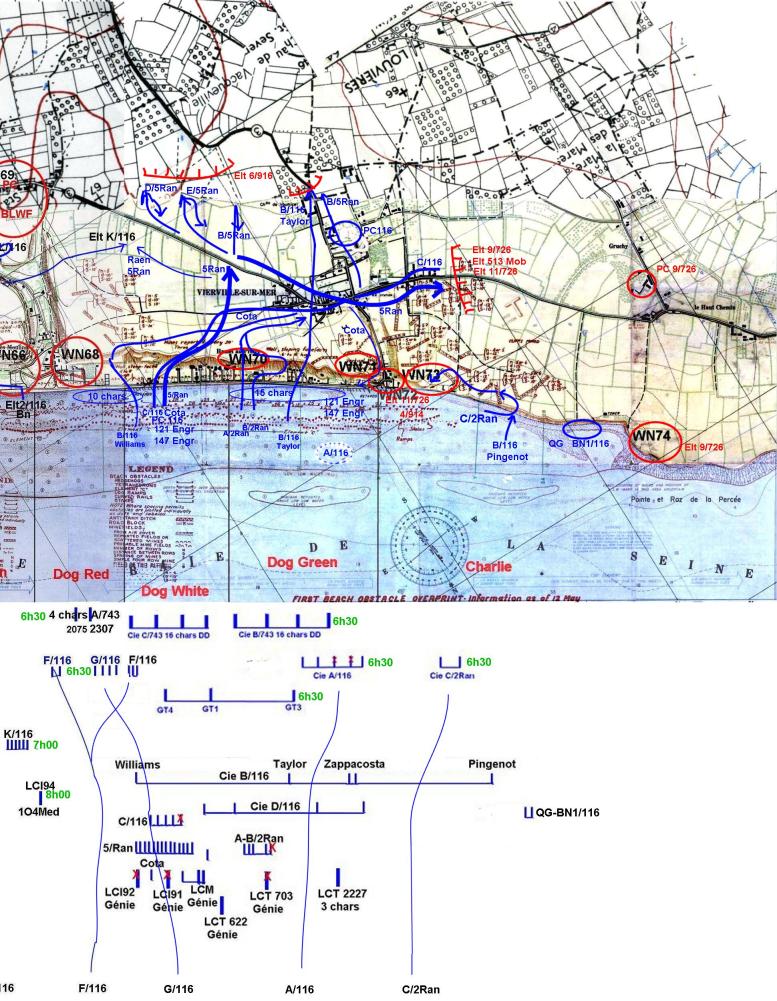

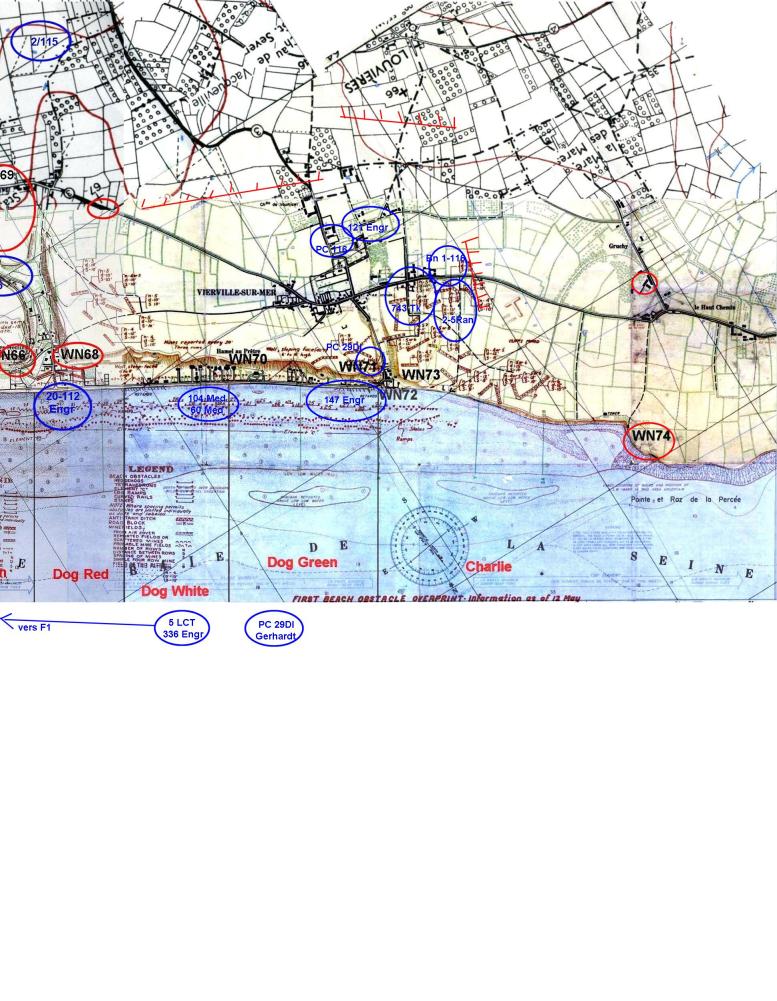



The Germans around Vierville were also tired, demoralized, disorganized and unable to act together. Behind the hedges, their snipers and their machine guns could delay, harass and stop the American advance, but they could not repel the Rangers and survivors of the 1st Battalion of 116th Reg. .
The 4 WN fortified areas on the beach were neutralized, even if they would not be cleaned until the next day. It is likely that some of their German occupants managed to retreat in the afternoon and night of June 6. Many were killed, (70 German grenadiers found on 7 and 8 June, at WN71, 72 and 73) and others went away when the Americans came to contact. In fact, they had little more ammunition and they were very often non-German soldiers and little motivated by the 716th Division (Cie 11/726). See the account of Grenadier Wegner at WN72.
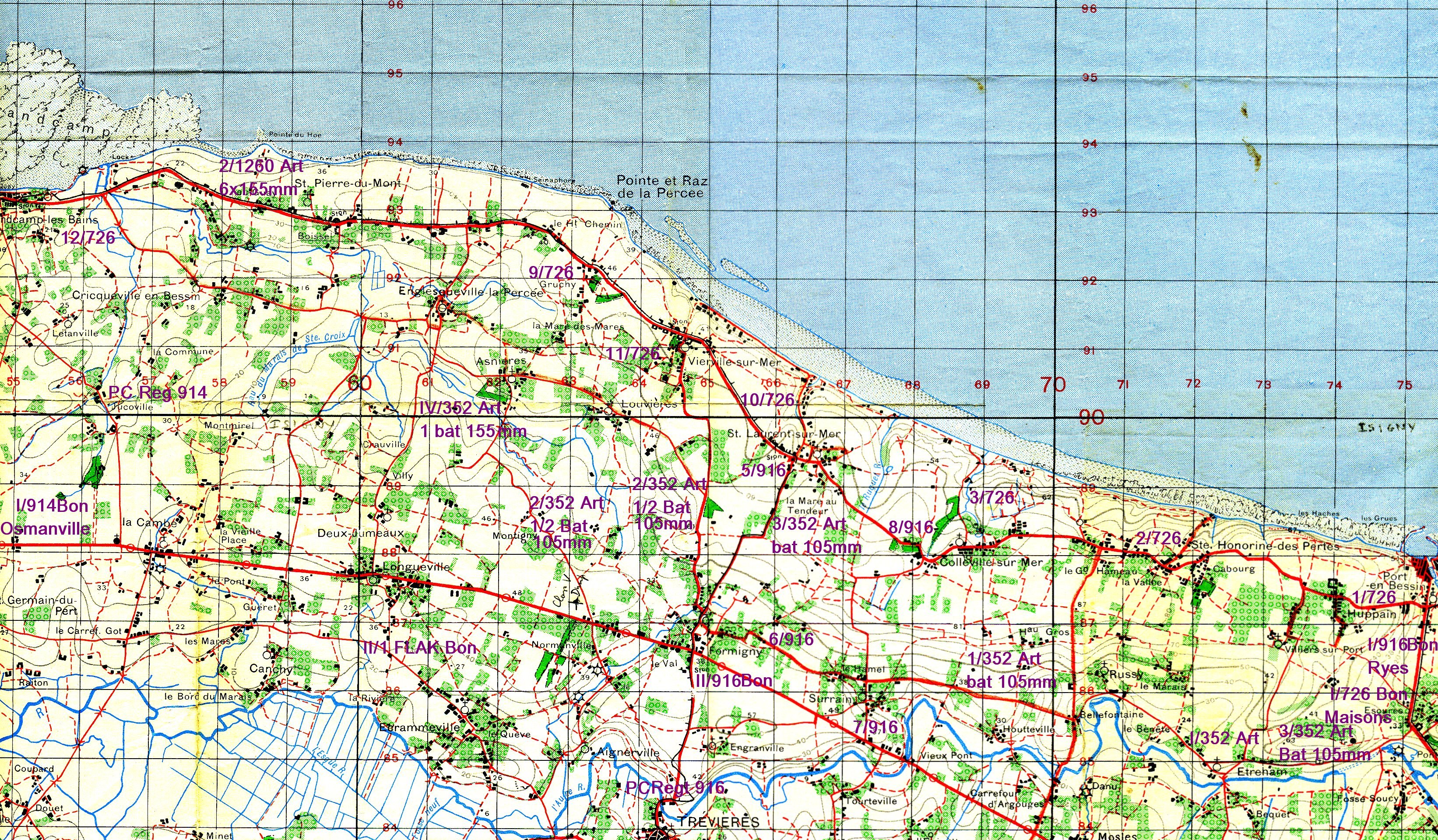
Most of the devastating German artillery fire on the beach during the day had been from the 352°Div field artillery. which included just behind Omaha 12 150mm and 12 105mm howitzers, all perfectly camouflaged in hedges. At the end of the day, this artillery had no more ammunition and it was folded in the night and probably resettled further south (Trevières?).
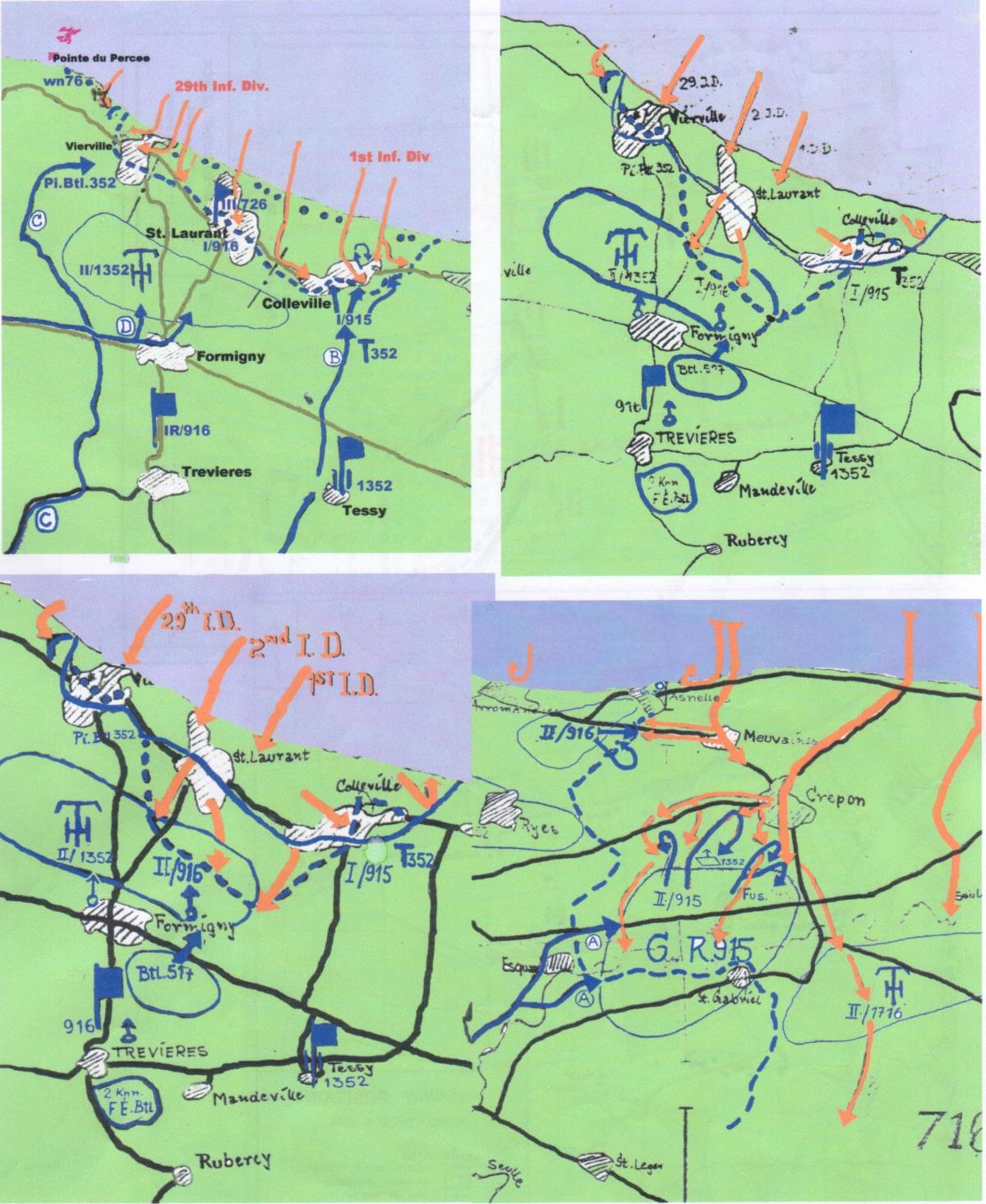
The absence of an effective response was noted. A vigorous counter-attack in the Vierville area could have repelled to the beach of the few Americans, without connections or heavy weapons. Instead, German power had eroded into defensive actions by small isolated groups, but effective in prohibiting penetration.
The Americans had overcome a critical period but the fact that almost all units of 352°Div. the Germans had virtually no immediate strength, either for the afternoon or for the next day.
Thus a counter-attack was ordered from Louvières on Vierville, for the night of 6-7, by the sappers of the Pioneere Abteilung 352 (the engineers battalion of the 352nd Division). The operation was only felt from dawn, with limited and temporary success, but it was still a concern for the US Command.
Allied aerial supremacy on D-day was absolute. It was only at night that a certain German activity took place near Omaha, mainly directed against ships, with guided bombs and with the release of magnetic mines.
On the other hand, the Allied air forces had deployed throughout the day, attacking any visible German traffic, and beginning the programme of isolation of the fighting zone by destroying the cities-carrefours of roads (Caen, Saint-Lô, Falaise, etc.). Bayeux escaped destruction only because she was very close to her capture by the British.