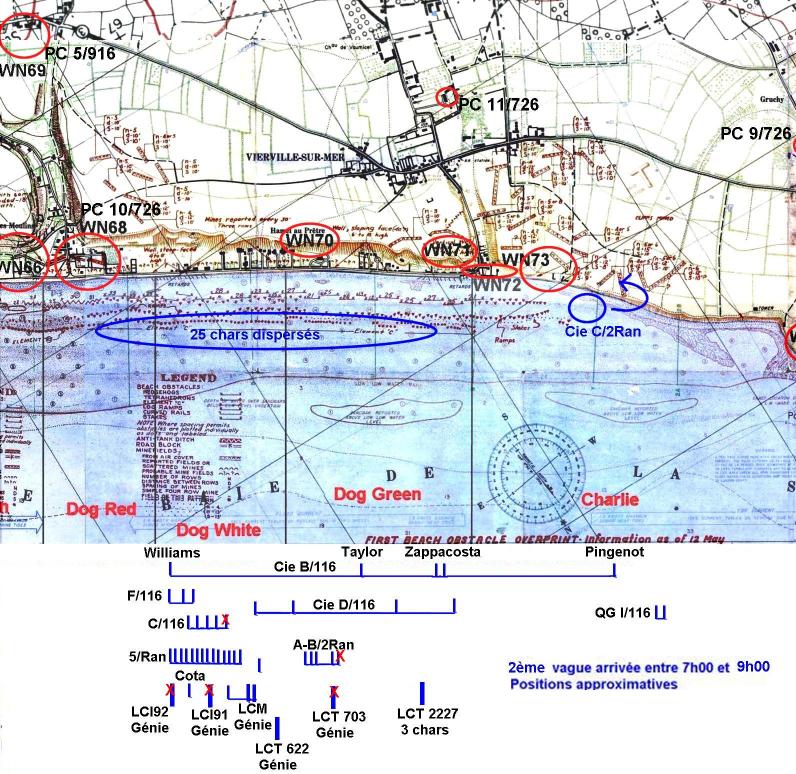
Details - the second wave of assault in front of Vierville, 7:00 a.m. to 9:00 a.m.


(details)A LCVP just evaporated, we see a tank on the beach.
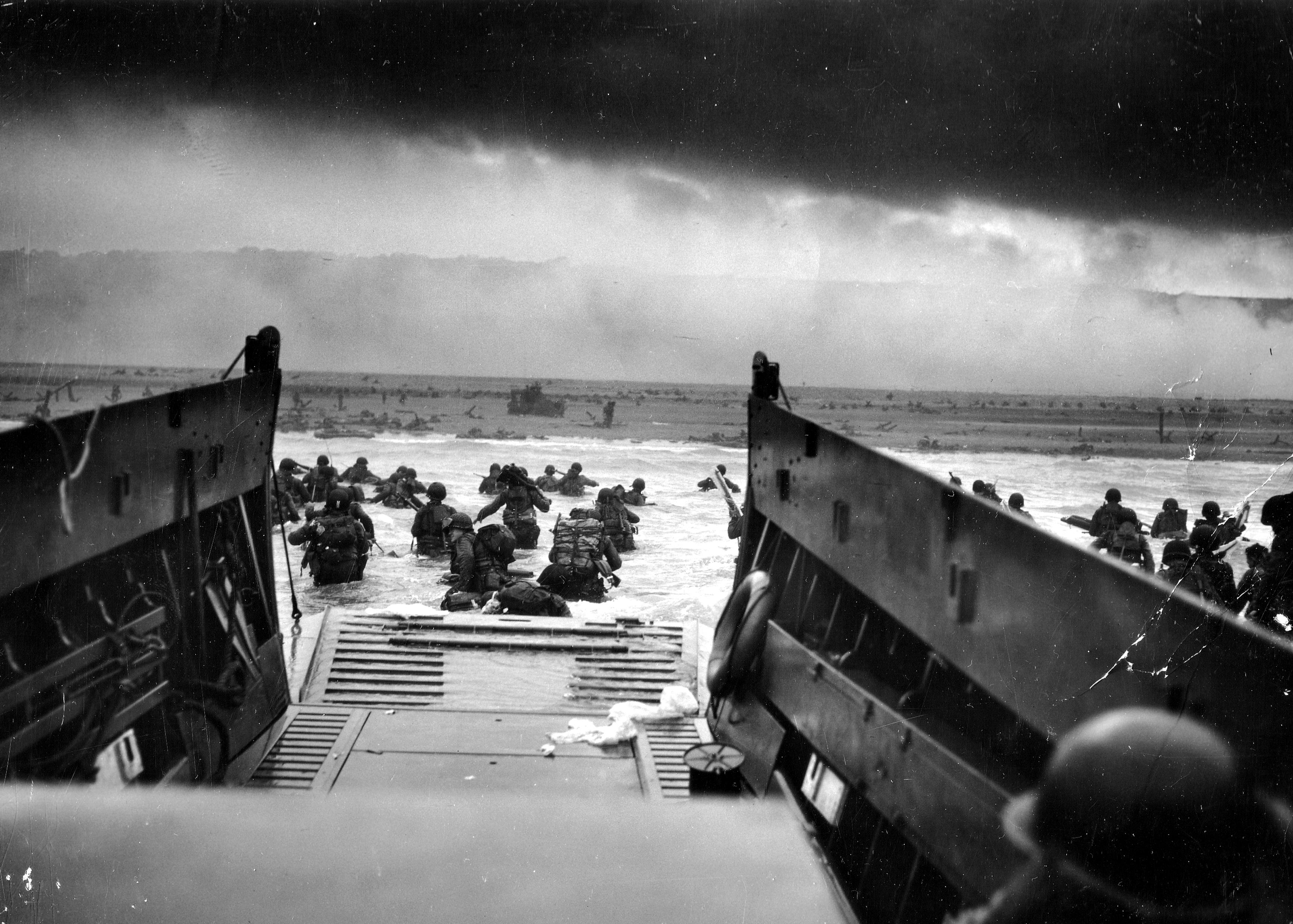
First wave soldiers on the pebbly slope
(Saint-Laurent?)

obstacles are covered

253
Company D (heavy weapons)
116th Infantry Regiment
Various stories
Company D/116, that of the heavy weapons of the 1st Battalion, (12.7mm heavy mortars and 81mm mortars) was to approach grouped on Dog Green at 7:10am. It was dispersed on Dog White and Dog Green, with heavy losses and played only a small role in the rest of the operations.
She lost 39 killed and 32 wounded on that day, with much of her equipment.
Three of his barges had serious difficulties as they were embarking water, one of them was abandoned far offshore and its section arrived only in the afternoon.
Another was cast by a shell 400 metres from the shore, half of the force reached the sand.
A third section was disembarked 150 metres from the water's edge, and suffered enormous losses. Nearly two hours passed before the scattered survivors reached the shore with a mortar and no ammunition.
A section landed a machine gun and a mortar in the morning.
Another section arrived on the beach with only two machine guns, a mortar and a small amount of ammunition.
Here are some testimonies from the survivors:
"Captain Walter Schilling of D.C. was in the lead ship. The company approached an area where there was no one, no fire; Schilling remarked to Private George Kobe, "Look, I think it's going to be easy." Shortly afterwards, before the ramp was lowered, Schilling was killed by a shell.
Lieutenant William Gardner, a West Point graduate of the company, described by Sergeant Robert Slaughter as "young, distinguished, full of walkers. He had all the qualities to become a high-ranking officer in the Army." The ramp fell about 150m from the shore. The men came out without loss. Gardner ordered them to disperse and remain bent. He was killed by a machine gun fire on the beach.
"I saw the movie "The Longest Day" Tells Slaughter, "they take out boats and cross the beach like rockets, but it didn't happen like that. You got out of the boat, fell into the water, and if you didn't stay there hidden, you were killed."
" Colonel Canham passed, his right arm in a splint, the Colt gun in his left hand. He screamed and yelled at the officers to get their men out of the beach. "Get out of here, and go kill Germans." There was an officer sheltered with mortars in a trench. Right in front of me, the colonel shouted: "Get out of there and command your men!" To another lieutenant, he shouted: "Make men rise and move beyond the slope!"